Original | Odaily Planet Daily (@OdailyChina)
Author | Golem (@web3_golem)
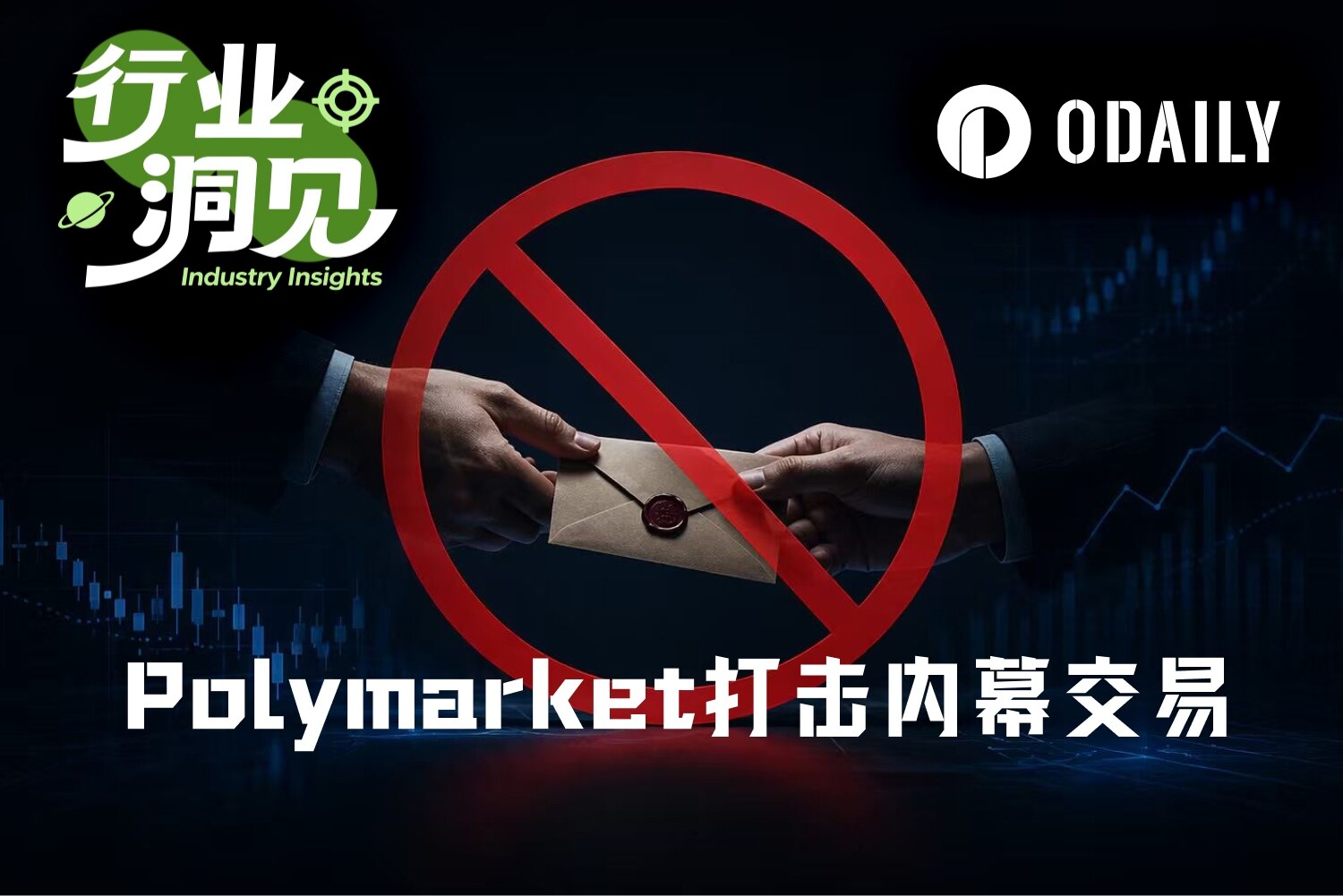
Not long after, facing the jury, Sergeant Major Gannon Ken Van Dyke would surely recall the moment he stood on the deck of the USS Iwo Jima waiting for sunrise.
On the evening of January 2, 2026, Trump ordered the U.S. military to raid Venezuela and capture the Maduro couple. The mission concluded in the early hours of January 3, and the Maduros were taken to the USS Iwo Jima for transport to the United States. Several hours later, the 38-year-old Sergeant Major Van Dyke, holding a rifle, stood on the deck with three other soldiers, took a photo, and shared it on social media. The atmosphere was relaxed at that moment, but the joy in his heart could not be shared with anyone.
Because he was a leaker, an insider who used inside information to make huge profits on Polymarket. A few days before the U.S. military operation, Van Dyke placed a series of bets on Polymarket, including whether Maduro would step down before January 31, 2026, and whether the U.S. military would attack Venezuela before January 31, 2026. Van Dyke placed a total bet of $33,933 and ultimately profited over $409,000, a return of over 1200%.

Gannon Ken Van Dyke
Van Dyke was not the only one who used inside information to profit from this capture operation. According to monitoring by Odaily Seer先知频道, before the arrest of the Venezuelan president, three addresses on Polymarket had placed bets on his ouster in advance, accumulating profits of $630,400. Among them, address 0x31a5 (0x31a5...8eD9) invested $34,000 and profited $409,000; address 0xa72D (0xa72D...eBd4) invested $5,800 and profited $75,000; address SBet365 invested $25,000 and profited $145,600.
At the time, there was much speculation in the market about the identities of these insider addresses, but it was not known that the address earning the most profit specifically belonged to Van Dyke.
For safety, after seeing reports about the insider trading related to the mission, Van Dyke also deleted his Polymarket account and changed the email address registered with the cryptocurrency exchange account, attempting to cover up the evidence of the transactions.
Despite this, after nearly 4 months of joint investigation by Polymarket and the U.S. Department of Justice, Van Dyke was still caught.
On April 23, the U.S. Department of Justice announced the arrest of Van Dyke. He was charged with crimes including illegally using government confidential information for personal gain, theft of non-public government information, commodities fraud, wire fraud, and conducting illegal monetary transactions. The Department of Justice stated that Van Dyke is expected to appear in court in North Carolina later, and his defense lawyer information has not yet been disclosed.
This is the first arrest action by U.S. authorities against an insider using confidential information to bet on prediction markets. The final trial outcome may have a profound impact on the large amount of insider trading behavior existing in future prediction markets.
But before this, in fact, Polymarket's new enhanced market integrity rules had already made insiders unable to sit comfortably.
Polymarket's Enhanced Market Integrity Rules
On March 23, Polymarket released enhanced market integrity rules and incorporated them into the user terms of service. The new rules clearly state that insider trading and any transactions by personnel who may influence the outcome are strictly prohibited on Polymarket, specifically the following behaviors:
- Trading using stolen confidential information: If a user possesses confidential information about the outcome or potential outcome of the subject event, and using this information would violate an existing duty of trust or confidentiality owed to another person or entity, that user must not conduct any contract transactions;
- Must not trade using illegal insider information: If a user knows or has reason to know that the person providing the information would themselves be prohibited from using it to trade, the user must not use confidential information obtained from a person who owes an existing duty of trust or confidentiality to conduct transactions;
- Must not trade while able to influence the outcome: If a user has sufficient power or influence to affect the outcome of the subject event, that user must not conduct any contract transactions; users also must not trade on the instructions of persons possessing such power or influence.
To help users better understand what kind of behavior would be defined as insider trading, Polymarket also provided specific examples in the market integrity rules on the Polymarket main site and U.S. site, such as military personnel cannot bet on upcoming military operations, political election candidates cannot personally or encourage anyone to bet on their own election results, company CEOs cannot personally or encourage anyone to bet on 'mention markets' involving themselves, etc.
To effectively combat such insider trading, Polymarket has also established a multi-layer monitoring system. When Polymarket or the community (Odaily Note: Any user can now report suspected insider trading behavior) discovers suspicious trading activity, Polymarket will initiate a review, and if necessary, take disciplinary action, ban wallet addresses, initiate legal proceedings, or refer the matter to law enforcement.
Before Van Dyke's arrest, insiders might have thought Polymarket's market integrity rules were just bluster, because on a platform with no KYC and cryptocurrency settlements, trying to penetrate on-chain addresses to uncover the insider behind the screen is extremely difficult and something Polymarket would not be willing to do.
But this thinking is very naive. First, current regulation and on-chain tracking technology are actually very sophisticated and powerful; users may not perform KYC on Polymarket, but they will definitely perform KYC on exchanges and other entry/exit channels. Except for top-tier hackers, average users facing such investigations basically have nowhere to hide. Second, to争取 (win) support from U.S. regulators, Polymarket will also actively cooperate with law enforcement investigations into insider trading. For typical insider cases like Van Dyke's, they would spare no effort even if it costs manpower and resources.
Analyzing this far, if you are an insider with knowledge of some minor event, you might still侥幸 (be侥幸侥幸侥幸侥幸侥幸侥幸侥幸侥幸侥幸侥幸侥幸侥幸侥幸侥幸侥幸侥幸侥幸侥幸侥幸侥幸侥幸侥幸侥幸侥幸侥幸侥幸侥幸侥幸侥幸侥幸侥幸侥幸侥幸侥幸侥幸侥幸侥幸侥幸侥幸侥幸侥幸侥幸侥幸侥幸侥幸侥幸侥幸侥幸侥幸侥幸侥幸侥幸侥幸侥幸侥幸侥幸侥幸侥幸侥幸侥幸侥幸侥幸侥幸侥幸侥幸侥幸侥幸侥幸侥幸侥幸侥幸侥幸侥幸侥幸侥幸侥幸侥幸侥幸侥幸侥幸侥幸侥幸侥幸侥幸侥幸侥幸侥幸侥幸侥幸侥幸侥幸侥幸侥幸侥幸侥幸侥幸侥幸侥幸侥幸侥幸侥幸侥幸侥幸侥幸侥幸侥幸侥幸侥幸侥幸侥幸侥幸侥幸侥幸侥幸侥幸侥幸侥幸侥幸侥幸侥幸侥幸侥幸侥幸侥幸侥幸侥幸侥幸侥幸侥幸侥幸侥幸侥幸侥幸侥幸侥幸侥幸侥幸侥幸侥幸侥幸侥幸侥幸侥幸侥幸侥幸侥幸侥幸侥幸侥幸侥幸侥幸侥幸侥幸侥幸侥幸侥幸侥幸侥幸侥幸侥幸侥幸侥幸侥幸侥幸侥幸侥幸侥幸侥幸侥幸侥幸侥幸侥幸侥幸侥幸侥幸侥幸侥幸侥幸侥幸侥幸侥幸侥幸侥幸侥幸侥幸侥幸侥幸侥幸侥幸侥幸侥幸侥幸侥幸侥幸侥幸侥幸侥幸侥幸侥幸侥幸侥幸侥幸侥幸侥幸侥幸侥幸侥幸侥幸侥幸侥幸侥幸侥幸侥幸侥幸侥幸侥幸侥幸侥幸侥幸侥幸侥幸侥幸侥幸侥幸侥幸侥幸侥幸侥幸侥幸侥幸侥幸侥幸侥幸侥幸侥幸侥幸侥幸侥幸侥幸侥幸侥幸侥幸侥幸侥幸侥幸侥幸侥幸侥幸侥幸侥幸侥幸侥幸侥幸侥幸侥幸侥幸侥幸侥幸侥幸侥幸侥幸侥幸侥幸侥幸侥幸侥幸侥幸侥幸侥幸侥幸侥幸侥幸侥幸侥幸侥幸侥幸侥幸侥幸侥幸侥幸侥幸侥幸侥幸侥幸侥幸侥幸侥幸侥幸侥幸侥幸侥幸侥幸侥幸侥幸侥幸侥幸侥幸侥幸侥幸侥幸侥幸侥幸侥幸侥幸侥幸侥幸侥幸侥幸侥幸侥幸侥幸侥幸侥幸) think that you are not like Van Dyke engaging in insider trading on such a high-profile event or are not a U.S. citizen, so U.S. regulators or Polymarket can't do anything to you.
Polymarket and regulators certainly cannot treat every case of insider trading the same way they treated Van Dyke. For insider trading behaviors with small profits and limited impact, uncovering the insider's true identity or going through judicial procedures itself seems like "making a fuss over nothing". But Polymarket also has a killer move against these insider trades—banning addresses. And this move is the rule that all insiders, all users, should truly fear, as it is even shaking Polymarket's core narrative.
The Cost
On April 23, the prediction market Kalshi disclosed that it had fined three congressional candidates who bet on their own election results and banned them from the platform for 5 years. Do you think they made huge profits from this? Actually, the combined fines for the three candidates were less than $8,000, and one of them only bet $100.
Being able to handle insider trading so quickly is thanks to the KYC and compliance system Kalshi built from its inception. But if such small-amount, low-impact insider trading were placed on Polymarket, it might not even be noticed, let alone handled.
This is not because Polymarket subjectively condones insider trading, but because the self-regulatory difficulty of Polymarket itself is very high. Due to features like no KYC, low account creation barriers, and on-chain anonymity, Polymarket finds it difficult to manage and review users like Kalshi does. This creates a breeding ground for insiders. When the economic incentive for insider trading is high enough and the risk is low enough, human nature cannot withstand the test.
Odaily Planet Daily previously analyzed when insiders used Polymarket to obtain illegal profits in the Maduro capture operation that insider trading is a double-edged sword for Polymarket (related reading:When War is Settled Before the News: How Prediction Markets 'Priced' the Maduro Capture Action 6 Days Early).
On one hand, insider trading often means releasing information ahead of mainstream media, which brings trading volume and information disclosure speed超越 (surpassing) media to Polymarket. Pricing ahead of time and predicting event outcomes has gradually become Polymarket's core narrative. But on the other hand, insider trading also means information is leaked in advance, and interested parties will naturally resist it. Especially when regulators believe insider trading threatens traditional information security, Polymarket needs to choose between its own safety and the advantages brought by insider trading.
Judging from the results, the introduction of the enhanced market integrity rules has already表明 (indicated) Polymarket's stance, but the cost is that user trust in the platform may also erode.
Banning user addresses is itself a sensitive issue for a decentralized platform, because一旦 (once) abused or误伤 (wrongly applied), it can cause user resentment and concerns about fund safety. Allowing people from all over the world to participate in prediction markets and ensuring free entry and exit of funds has always been one of Polymarket's core competencies. But when Polymarket赋予 (grants) itself the power to ban suspicious user accounts, not only will insiders no longer dare to trade on Polymarket, but normally profitable users will also worry whether the platform will use this as an excuse to prevent withdrawals. Once the floodgates of account banning are opened, they may never be closed again.
In summary, although cracking down hard on insider trading can ensure Polymarket's safety at the regulatory level, it will inevitably weaken Polymarket's前瞻性 (foresight) and准确性 (accuracy) in predicting event outcomes, and will also make users worry more about the safety of their funds. In the end, the matured Polymarket will become an平庸的 (mediocre) adult.