Afghanistan Stablecoins: An Overlooked Crypto Innovation Hub

比推2026-01-26 tarihinde yayınlandı2026-01-26 tarihinde güncellendi

Özet

An Afghan startup, HesabPay, is using blockchain-based stablecoin technology to transform humanitarian aid delivery in conflict zones like Afghanistan and Syria. Founded by Sanzar Kakar after the Taliban’s return disrupted Afghanistan’s financial system, the platform enables direct digital cash transfers via mobile wallets, bypassing traditional banks and high fees. The system is used by organizations including the UNHCR and Mercy Corps to distribute aid efficiently and transparently. In Afghanistan, it supports over 65,000 active wallets moving around $60 million in Afghan afghani-pegged stablecoins monthly. In Syria, where banking access is limited, dollar-backed crypto aid offers a lifeline. Blockchain ensures traceability and accountability, allowing real-time monitoring of fund usage and reducing fraud risks. While the model offers significant advantages over physical cash, experts note potential vulnerabilities, including political interference and technical barriers. Nonetheless, it represents a scalable innovation in aid distribution for fragile states.

Author: Aryn Baker, The New York Times

Compiled by: Felix, PANews

Original Title: Afghan Stablecoins, An Unexpected Hub of Crypto Innovation


At a bustling currency exchange in northwestern Syria, a 46-year-old farmer clutched a plastic card as if it were her lifeline. She had never heard of cryptocurrency, but this card contained $500 worth of crypto, helping her restart her farm after nearly 14 years of civil war.

As the teller confirmed the total and withdrew cash for Hala Mahmoud Almahmoud's account, the farmer smiled with relief and paused to express her gratitude. She asked where such technology came from.

The answer surprised her: Afghanistan.

Many might not imagine that this blockchain-based innovation in cash transfers originates from a country known for the Taliban's authoritarian rule and skeptical stance toward the internet. Yet, in this nearly isolated nation, an Afghan startup is developing tools aimed at transforming how humanitarian aid is delivered in conflict-ravaged countries.

Zakia Hussain, a 26-year-old programmer at the startup HesabPay, said, "We have faced these challenges ourselves, so we know how to create effective solutions." It was HesabPay that designed the technology behind the card held by Ms. Almahmoud.

Hala Mahmoud Almahmoud outside her home near Latamina, Syria. She received $500 in cryptocurrency aid to help reopen her farm.

The United Nations Refugee Agency (UNHCR) was one of the early supporters of the platform. The agency uses it to support over 86,000 families in Afghanistan, making it one of the largest public blockchain aid projects globally. Mercy Corps, the charitable organization that donated to Ms. Almahmoud, partnered with HesabPay to extend aid to Syria and is currently developing projects for Sudan and Haiti.

In Syria, accessing funds from abroad is highly complex. Cash is scarce, international banks avoid the region, and remittance companies like Western Union charge up to 10% in transfer fees. HesabPay enables organizations like Mercy Corps to bypass these obstacles.

Sanzar Kakar, an Afghan-American entrepreneur and founder of HesabPay, previously ran Afghanistan's largest payroll processing company. However, the 2021 U.S. withdrawal from Afghanistan and the Taliban's return to power triggered a financial collapse. Sanctions halted international remittances, and the central bank became paralyzed.

To address the country's growing financial insecurity, Kakar turned to blockchain technology. He created HesabPay (meaning "account" in the local language), a mobile-based application that allows instant transfers from one digital wallet to another, bypassing banks and the Taliban government. He stated that the Afghan government has granted his company a formal financial license to operate.
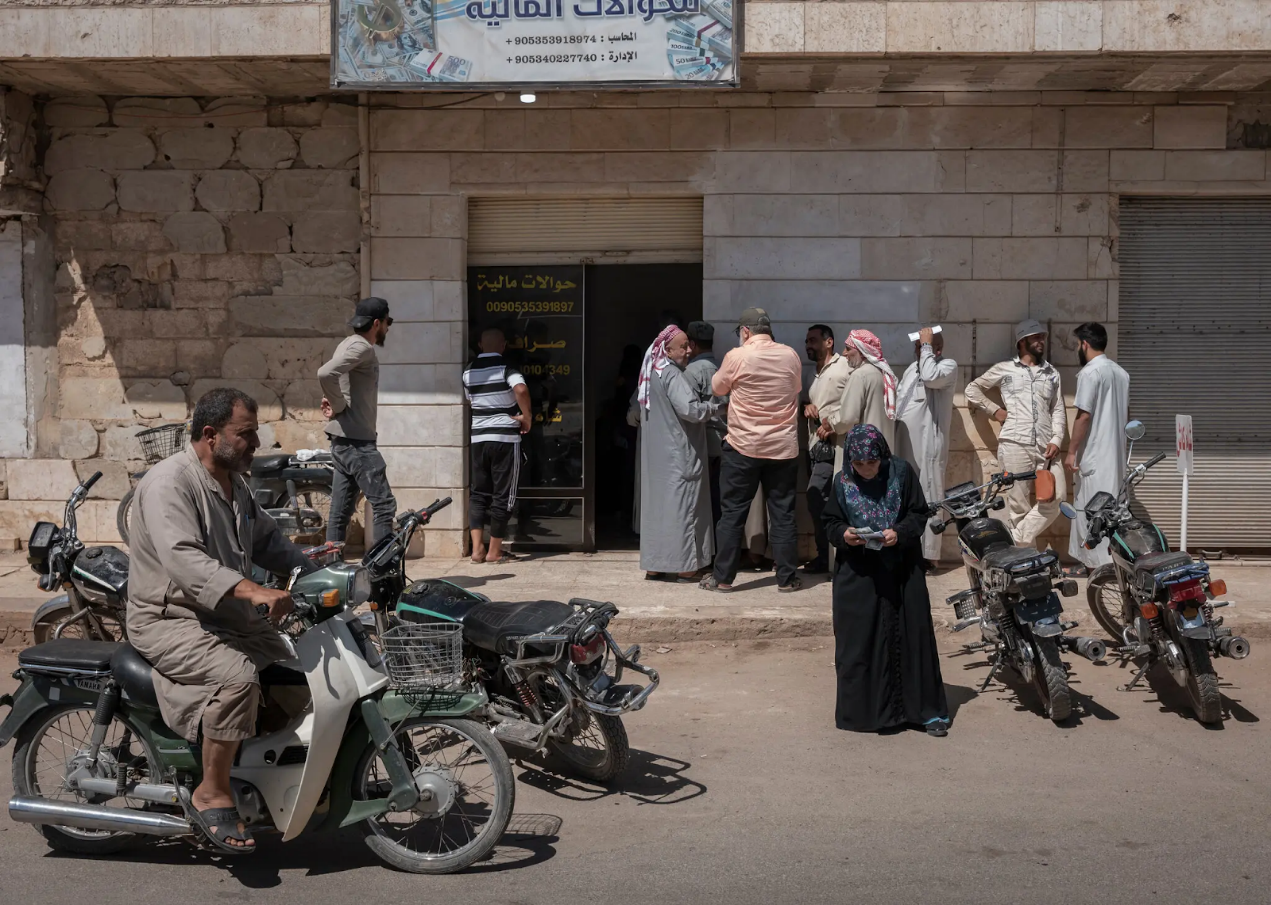
The aid organization Mercy Corps, which donated funds, partnered with HesabPay to extend the platform's services to Syria.

Today, the platform has over 650,000 wallets in Afghanistan, with about 50,000 actively used, transferring approximately $60 million worth of Afghan afghani stablecoins (stablecoins pegged to the Afghan currency) monthly.

Since February 2025, the UN has used HesabPay to distribute nearly $25 million to returning Afghans through 80,000 digital wallets. Carmen Hett, the UNHCR's corporate treasurer, said, "This helps reduce transaction fees, shorten waiting times, and enhance traceability, real-time monitoring, and accountability."

Ric Shreves, an expert in decentralized financial solutions and president of the Decentralized Cooperation Foundation, noted that it is not surprising for organizations like Mercy Corps and the UN to turn to blockchain-based fund transfers for aid. He stated, "For such organizations, this approach offers almost all advantages compared to traditional aid methods."

However, he pointed out that risks remain, especially when payment systems are based on local currency stablecoins, as in Afghanistan. (In Syria, the cryptocurrency in HesabPay wallets is backed by the U.S. dollar, a more stable option.) Just as wallets can be shut down for interacting with sanctioned individuals, they could theoretically be closed for political reasons by a central bank.
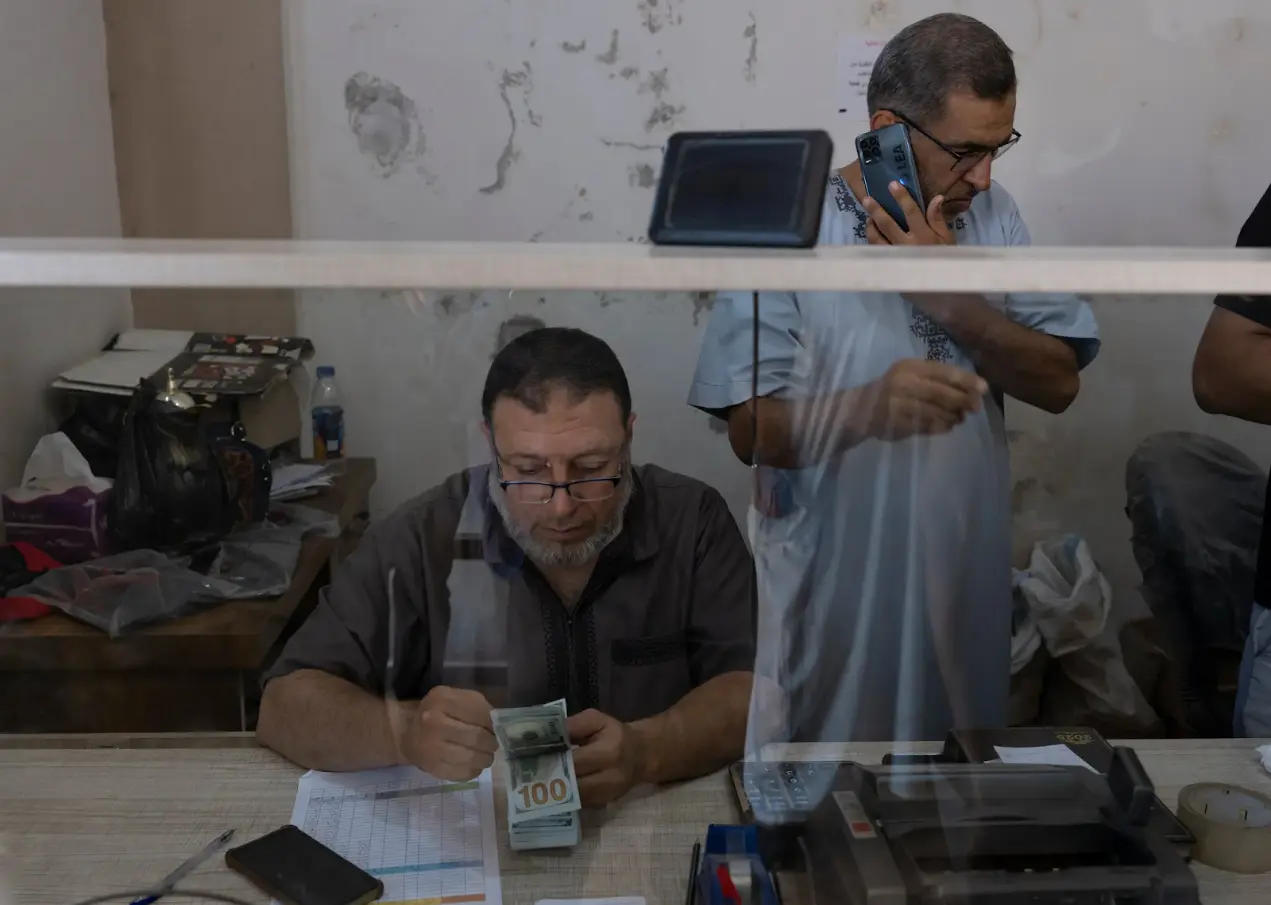
Using blockchain technology makes it easier for Mercy Corps to send funds to Syria, where cash is scarce and international banks typically do not operate.

Ric Shreves added, "When we provide people with non-physical transaction methods, it also means these transactions can potentially be blocked through technological means." He further noted that digital currencies are clearly safer than cash, but they still cannot be hidden under a mattress like cash.

In recent years, aid organizations have increasingly opted for cash assistance, viewing it as a quick and dignified form of aid. However, cash assistance has a drawback: it is difficult to track where the money goes. Donors want to see their contributions reach those in need. Since former President Trump significantly cut U.S. foreign aid early last year, organizations like Mercy Corps face greater pressure to demonstrate the effectiveness and integrity of their aid.

This is where blockchain comes into play, creating a digital record that accurately tracks how much money was sent, to whom, and where it went. Scott Onder, Mercy Corps' chief investment officer, stated that this combination of speed and accountability "might help regain the trust of those who have become skeptical about the effectiveness of aid."

HesabPay also includes additional security measures, such as real-time dashboards to track wallet activity and cross-check it with international compliance databases. The company stated that the system is designed to detect illegal activities like terrorist financing, money laundering, and cyber fraud, immediately alerting users to suspicious transactions. For aid donors, this provides a level of oversight that is nearly impossible to achieve in fragile countries.

Abdul Moti Hammoud, a resident of Halfaya, lost a leg after accidentally triggering a landmine while driving a tractor. He is a beneficiary of the aid organization Mercy Corps.

During a recent online demonstration, Nigel Pont, the company's senior advisor, clicked on a purple dot representing a HesabPay agent in Afghanistan. Dozens of light blue beneficiary wallets unfolded, showing recent transfer records. Another click revealed where the funds went. Suddenly, a wallet turned red, triggering a suspected fraud alert—a slightly awkward moment during the live demo but precisely the risk the system is designed to identify.

"From an aid donor's perspective, this is incredibly valuable," said Nigel Pont, former chief strategy officer at Mercy Corps. "A system that automatically flags fraud risks means you can verify immediately, rather than waiting six months for a report that someone stole $20,000." Nigel Pont acknowledged that no system can completely eliminate corruption, but then again, neither can cash.

Twenty-two-year-old Abdul Halim Hasan was waiting in line at the same currency exchange in Syria as Ms. Almahmoud. He said he imagines a day when HesabPay could be used like a regular bank account—receiving funds, paying bills, and saving money securely. For now, though, his HesabPay card allows him to access the funds needed to restart his life after the war, and that is enough.


Twitter:https://twitter.com/BitpushNewsCN

Bitpush TG Discussion Group:https://t.me/BitPushCommunity

Bitpush TG Subscription: https://t.me/bitpush

Original link:https://www.bitpush.news/articles/7605966

İlgili Sorular

QWhat is the innovative blockchain-based cash transfer system mentioned in the article, and where was it developed?

AThe innovative system is called HesabPay, and it was developed in Afghanistan.

QWhich major international organization is an early supporter of the HesabPay platform, and how many families in Afghanistan have they supported with it?

AThe United Nations High Commissioner for Refugees (UNHCR) is an early supporter, and they have used the platform to support over 86,000 families in Afghanistan.

QWhat are two key advantages of using a blockchain system like HesabPay for humanitarian aid delivery, according to the article?

ATwo key advantages are the speed of transactions and the enhanced traceability, real-time monitoring, and accountability it provides for donors.

QWhat is a potential risk associated with using a local currency stablecoin, as opposed to a dollar-backed one, in a system like HesabPay?

AA potential risk is that a wallet or the system could theoretically be shut down by a country's central bank for political reasons, as it is tied to the local currency.

QWhat specific feature does HesabPay have to help ensure the security and integrity of aid distribution?

AHesabPay has a real-time dashboard that tracks wallet activity, cross-references it with international compliance databases, and immediately flags suspicious transactions related to terrorism financing, money laundering, or cyber fraud.

İlgili Okumalar

AI Agent Completely Transforms Web3 Gaming: From the Rugpull Bakery Bot Controversy to the New 2026 Agent Paradigm

This article explores how the AI Agent paradigm is fundamentally transforming Web3 gaming, moving from a disruptive force to a core, legitimized element. It begins with the controversy in the competitive baking game Rugpull Bakery, where automated scripts caused fairness issues. Instead of banning them, the developers integrated AI Agents into the official gameplay by providing technical documentation (skill.md, agent.json), marking a shift towards "Agentic Gaming." The piece outlines three primary implementation models for AI Agents in Web3 games by 2026: 1. **Autonomous Competitors & Economic Entities:** AI Agents act as independent players with unique strategies. Examples include TEN Protocol's poker agents, AI Arena's trainable NFT fighters, and Satoshi Strike Force's "Digital Athletes" trained on player data. The Somnia blockchain is highlighted as a dedicated "Agentic L1" infrastructure supporting this model at scale. 2. **Modular Infrastructure & Programmable Environments:** This model, exemplified by EVE Frontier, allows AI Agents to program game world logic itself. Using "Smart Assemblies" (e.g., Smart Turrets, Smart Gates), Agents can modify shared economic and physical rules on-chain, creating dynamic, player/AI-built worlds. The ERC-8183 standard further enables these automated entities to hire other AI services for complex tasks. 3. **Hybrid Companions & Dynamic Adaptation:** Here, AI serves as a collaborative partner. In Parallel Colony, highly autonomous AI Avatars work alongside human players who provide high-level guidance. Illuvium plans to use AI to make NPCs dynamic and responsive, creating personalized, emergent narratives for each player. The conclusion posits that Web3 gaming has reached a "post-human" inflection point. Blockchains' transparency and programmability, combined with new standards and infrastructure like Somnia, make integrating and governing AI Agents not just viable but essential. The future lies in a symbiotic digital order where players transition from manual laborers to commanders and partners of algorithmic intelligence.

marsbit1 saat önce

AI Agent Completely Transforms Web3 Gaming: From the Rugpull Bakery Bot Controversy to the New 2026 Agent Paradigm

marsbit1 saat önce

Saylor's Purchase of 1550 Bitcoin Is a Bad Trade

**Title: Saylor's Purchase of 1,550 Bitcoins Was a Bad Trade** The article critically analyzes Strategy's recent move of selling 32 bitcoins followed by a much larger purchase of 1,550 bitcoins. While appearing bullish, the author argues this trade is detrimental to MSTR shareholders. The core argument revolves around the concept of "breakeven modified Net Asset Value (mNAV)," a key metric for Strategy. To increase Bitcoin per share (BPS) for MSTR holders, Strategy must issue new shares at a premium high enough that the funds raised can buy more bitcoin than the bitcoin backing each existing share. Currently, this breakeven mNAV is estimated at 1.30. The recent trade failed on two counts: 1. The shares for the $181 million raise were issued at an mNAV *below* the 1.30 breakeven point. Selling "cheap" shares to buy bitcoin actually *reduces* BPS. 2. Only $101.3 million of the raised funds were used to buy bitcoin; the rest went to boost the company's dollar reserves. The breakeven mNAV calculation assumes *100%* of proceeds are used for bitcoin purchases. Diverting funds, even if mNAV were high, dilutes BPS. The result is an estimated 0.19% decrease in Bitcoin per share for MSTR holders. In exchange, Strategy merely extended its operational runway for its dollar reserves from ~6.3 months to 7 months. The author interprets this as Strategy prioritizing the survival and development of its STRC business over its stated core goal of increasing MSTR's BPS. This constitutes a gamble: if sacrificing MSTR value leads to improved market sentiment and a recovery in STRC's price (and thus mNAV), the whole system could work. If not, Strategy may be forced into a cycle of further diluting MSTR to stay afloat, potentially leading to deferred STRC dividends or corporate decline. The article concludes with a hope for price recovery for Bitcoin, MSTR, and STRC.

Foresight News1 saat önce

Saylor's Purchase of 1550 Bitcoin Is a Bad Trade

Foresight News1 saat önce

The AI Bear Market Lasting Two Days Is Over; Why Did Funds Buy Back Storage Stocks First?

After a severe two-day selloff in early June that erased over $1 trillion from U.S. chip stock market value, capital is flowing back first to the memory sector. The correction was not driven by a collapse in AI demand but rather a market reassessment of high expectations. Stocks like Broadcom faced selling pressure despite strong AI revenue guidance, signaling a shift in focus from who has an "AI story" to who can most rapidly translate AI demand into verifiable profits and earnings per share (EPS). Memory companies, such as Micron and SK Hynix, are leading the recovery because their EPS growth is more immediately verifiable. The AI server boom directly increases demand for high-bandwidth memory (HBM) and high-capacity server DRAM, tightening supply and driving up contract prices for conventional DRAM and NAND Flash. This price increase, coupled with a shift to higher-margin products, flows directly into near-term revenue and profitability, as evidenced in recent earnings reports. In contrast, other AI semiconductor segments like GPUs, ASICs, and optical modules, while central to the long-term AI infrastructure story, face longer and less certain paths to EPS validation. Their growth depends more on future product cycles, customer adoption timelines, and capital expenditure plans. The rebound in memory stocks highlights a market preference for assets with shorter, more transparent EPS conversion cycles following the recent de-risking phase. However, this does not negate the potential of other AI hardware segments should they provide clearer near-term order visibility. The episode has raised the validation bar for all AI-related investments.

marsbit1 saat önce

The AI Bear Market Lasting Two Days Is Over; Why Did Funds Buy Back Storage Stocks First?

marsbit1 saat önce

İşlemler

Spot
Futures
活动图片





