Adding Another Oracle, Polymarket's Ambition Exposed

Odaily星球日报2026-04-03 tarihinde yayınlandı2026-04-03 tarihinde güncellendi

Özet

Polymarket, a leading prediction market platform, has announced the integration of Pyth Network as its oracle provider for settling prediction markets related to traditional assets. This new batch of markets will cover commodities like gold, silver, WTI crude oil, and natural gas, as well as U.S. stocks including NVIDIA, Apple, Tesla, and ETFs. Pyth will supply real-time pricing data via WebSocket, enabling second-by-second sampling and live charts for traders. This move is part of Polymarket’s ongoing expansion of its oracle infrastructure. Initially reliant on UMA’s optimistic oracle for subjective events like elections, the platform later integrated Chainlink for automated crypto price settlements (e.g., BTC and ETH). With Pyth—known for its institutional data sources like Jump Trading and Jane Street—Polymarket now extends into traditional finance, forming a multi-layered oracle system: UMA for social and political events, Chainlink for crypto, and Pyth for traditional assets. By expanding its data sources, Polymarket is broadening the scope of tradable futures—effectively turning real-world uncertainties into betable markets. The end goal appears to be a unified super-platform where any verifiable event—macro data, earnings, sports, weather, or AI releases—can be priced and traded.

Original | Odaily Planet Daily (@OdailyChina)

Author | Azuma (@azuma_eth)
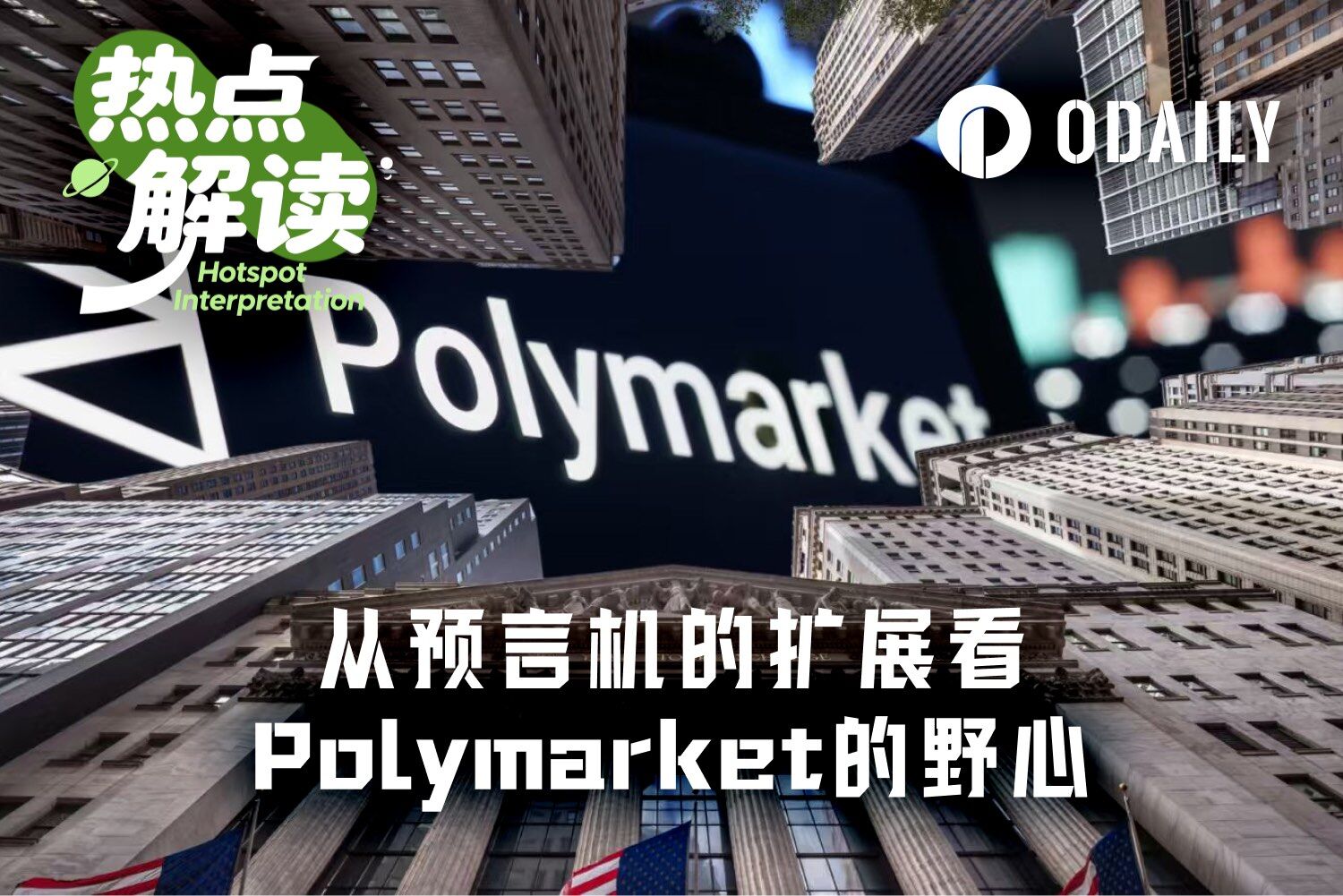
On the evening of April 2, prediction market leader Polymarket officially announced the integration of the oracle service Pyth Network, which will become the settlement data source for a new batch of traditional asset-related prediction events launched by Polymarket.

According to statements from Polymarket and Pyth Network, this batch of events will first cover commodities such as gold, silver, WTI crude oil, and natural gas, over a dozen U.S. stocks including NVIDIA, Apple, Tesla, Coinbase, Palantir, as well as major stock indices and some exchange-traded funds (ETFs) — for example, "Will gold rise or fall this hour?", "Will silver be above or below the target price by a certain time?"...

Pyth Network will provide real-time price data via WebSocket, and Polymarket will sample this data every second and publish it as real-time charts, allowing traders to continuously see the market's position relative to their own positions.

Mustafa Aljadery, Product Lead at Polymarket, stated in the announcement: "The outcome of predictions involving millions of dollars can often hinge on a single price point, so it is essential to ensure the absolute accuracy of the data source. Pyth Network provides this guarantee, enabling Polymarket to further expand into high-stakes financial markets."

Polymarket's Oracle Expansion

This is not the first time Polymarket has expanded its oracle services.

Polymarket initially relied primarily on UMA's Optimistic Oracle mechanism. UMA's logic is essentially a "social consensus oracle" — proposers submit results, challengers initiate disputes, and voters make the final ruling. This mechanism is particularly suitable for subjective, unstructured events without a single standard answer, such as political elections, policy changes, and social hot topics.

However, subjective judgments often also mean room for controversy. Historically, Polymarket has repeatedly sparked discussions within the community about manipulation risks and fairness due to settlement disputes with UMA.

In September 2025, when Polymarket began to heavily promote cryptocurrency price movement events, it urgently needed to introduce a more deterministic data source to reduce the possibility of human intervention. To this end, Polymarket chose to partner with Chainlink at that time. By combining the use of Chainlink Data Streams (responsible for providing low-latency, timestamped market prices) and Chainlink Automation (responsible for executing on-chain result settlements at preset times), the BTC, ETH, and other crypto asset price movement event markets on Polymarket could be settled automatically and quickly, while allowing users to view low-latency, verifiable prices of related assets in real-time.

In a sense, the integration with Chainlink was Polymarket's first step in extending its reach from "social consensus prediction" to "automated price judgment," but Polymarket's goals clearly extend beyond the cryptocurrency market.

Compared to Chainlink, Pyth Network's characteristic is that its data is provided directly by trading firms, exchanges, market makers, and banks worldwide. These institutions actively participate in pricing in global markets, and Pyth Pro obtains data from the highest quality data publishers in the network, including Jump Trading, Blue Ocean, LMAX, and Jane Street, among others. Perhaps considering its global market characteristics, Polymarket ultimately selected Pyth Network for the data source of traditional financial assets this time.

A Glimpse into Polymarket's Ambition

With the partnership with Pyth Network finalized, Polymarket has formed a clear multi-tiered oracle architecture:

  • UMA: Non-standard event layer, responsible for politics, society, breaking news, macro events;
  • Chainlink: Crypto asset layer, responsible for on-chain asset price feeds like BTC, ETH, and automated price settlement;
  • Pyth Network: Traditional finance layer, providing high-frequency price data for traditional assets like U.S. stocks, commodities, indices, sourced from institutions.

From UMA representing non-standard events, to Chainlink focused on the crypto-native market, and now Pyth Network specializing in global financial markets, each time Polymarket introduces a new oracle service, it pushes the platform into broader markets. The expansion of oracles is essentially the expansion of "tradable futures" — the more data sources, the more dimensions of the real world can be incorporated into the betting scope.

If this logic continues to develop, there is almost no upper limit to the markets Polymarket can incorporate in the future. Macroeconomic data, corporate earnings reports, sporting events, weather changes, and even AI model releases can be integrated through different oracles. As long as a verifiable data source exists, a corresponding market can be built. The uncertainties of the real world will be continuously broken down into bettable events.

From this perspective, Polymarket's endgame may be far more than just a simple prediction market; it could be a "future trading platform" covering all uncertainties. When all kinds of uncertain events can be uniformly incorporated into the same mechanism, everything becomes bettable, and everything becomes priced. Oracles are merely a technical expansion, but what they point to behind the scenes is an emerging, one-stop super platform that far exceeds everyone's estimates.

İlgili Sorular

QWhat is the latest oracle service integrated by Polymarket, and what type of assets does it cover?

APolymarket has integrated Pyth Network as its latest oracle service. It covers traditional assets such as gold, silver, WTI crude oil, natural gas, over a dozen U.S. stocks (including Nvidia, Apple, Tesla, Coinbase, Palantir), major stock indices, and some exchange-traded funds (ETFs).

QWhat was the primary oracle mechanism used by Polymarket in its early stages, and what type of events was it suitable for?

AIn its early stages, Polymarket primarily relied on UMA's Optimistic Oracle mechanism. This mechanism, based on social consensus, was suitable for subjective, non-structured events like political elections, policy changes, and social hot topics.

QWhy did Polymarket choose to integrate Chainlink's oracle service in 2025?

AIn 2025, Polymarket integrated Chainlink's oracle service to introduce a more deterministic data source for cryptocurrency price movement events. This was done to reduce the possibility of human intervention and enable automatic, fast settlement of markets for assets like BTC and ETH, with real-time, verifiable price data.

QWhat is the key characteristic of Pyth Network's data that likely influenced Polymarket's decision to partner with them for traditional financial assets?

APyth Network's data is provided directly by trading firms, exchanges, market makers, and banks (such as Jump Trading, Blue Ocean, LMAX, and Jane Street) that actively participate in pricing across global markets. Its global market characteristics made it a suitable choice for Polymarket's expansion into traditional financial assets.

QAccording to the article, what is the potential ultimate vision or 'endgame' for Polymarket as suggested by its multi-layered oracle architecture?

AThe article suggests that Polymarket's ultimate vision is to become a 'future trading platform' that covers all uncertainties. By expanding its oracle services, it aims to make virtually any real-world uncertainty with a verifiable data source—from macroeconomic data and sports events to weather changes and AI model releases—into a tradable market, creating a one-stop super platform for pricing and betting on the future.

İlgili Okumalar

STRC Breaks Below $95: Why Does It Continue to Depeg? Is There Default Risk?

"STRC Falls Below $95: Why the Persistent Depegging and Is There Default Risk?" The article discusses the recent decline in the price of STRC, a perpetual preferred stock issued by Strategy (MSTR) designed to trade around a $100 par value. As of publication, STRC traded at $94.65, raising market concerns. STRC is described as a high-yield cash flow product, offering an 11.50% annual dividend paid monthly. Its "preferred" status grants it priority over common stock for dividends and in liquidation. Key reasons cited for the price depegging include: 1. **Bitcoin's Price Drop:** MSTR's assets are heavily tied to Bitcoin (BTC), which fell over 21% from its recent high, pressuring all Strategy-related products. 2. **Competitive Pressure:** Rival Strive Asset Management's similar product, SATA, offers daily dividends and has maintained its $100 par value with a ~13% yield. In response, Strategy has proposed changing STRC's dividend frequency from monthly to bi-weekly, pending shareholder vote. 3. **Technical Selling:** A break below $100 may have triggered algorithmic selling and stop-losses, exacerbating the decline. Regarding default risk, the analysis suggests it is currently low. Strategy founder Michael Saylor confirmed the June 2026 dividend rate remains at 11.50% with no cuts or suspensions. The company's massive reserve of 843,706 BTC provides a significant backstop for its obligations. Industry opinions are mixed. Some analysts view the BTC holdings as reliable support for dividends, while critics like Peter Schiff warn of potential dividend cuts leading to price crashes and lawsuits. Others highlight inflation risk and the company's ability to reduce dividends without a formal default. In summary, STRC's drop is attributed to BTC volatility, competition, and technical factors. While immediate default risk appears contained, the product faces challenges from market conditions and competitive dynamics.

marsbit5 dk önce

STRC Breaks Below $95: Why Does It Continue to Depeg? Is There Default Risk?

marsbit5 dk önce

AI Trading Cools, South Korean Stocks Plunge 1.8%, Spot Gold Rises 1%, Bitcoin Dives

A sell-off in AI-related stocks, triggered by Broadcom's disappointing earnings forecast, sent shockwaves through global markets. South Korea's KOSPI led Asia's decline, plunging 1.8% as the risks from concentrated chip stock gains and surging leveraged investments came to the fore. The tech-heavy Nasdaq 100 futures fell 0.5% following Broadcom's 14% after-hours plunge, which signaled a slower-than-expected transition to AI clients. This pullback extended Wall Street's weakness, halting the S&P 500's nine-day rally amid hawkish Fed signals and renewed Middle East tensions. South Korean authorities convened an emergency meeting, pledging "immediate measures" against market volatility and warning of record-high stock margin debt. The adjustment rippled across assets: Bitcoin fell to around $64,000, its lowest since February, while safe-haven gold rose 1% on bargain hunting. Oil prices dipped on Middle East ceasefire news. Market analysts noted the sell-off was driven by profit-taking after massive gains, particularly in chip stocks like Samsung and SK Hynix, which now dominate the KOSPI. Wall Street banks are divided on Korea's outlook, with Goldman Sachs raising its target while Citigroup and others warn of overvaluation and a potential bubble. Bridgewater's Ray Dalio noted that great technological shifts often create bubbles. Meanwhile, Fed officials' hints at potential future rate hikes added to the cautious mood ahead of key U.S. jobs data.

华尔街日报32 dk önce

AI Trading Cools, South Korean Stocks Plunge 1.8%, Spot Gold Rises 1%, Bitcoin Dives

华尔街日报32 dk önce

Seeking Alpha's Hot Article: Why Might the U.S. Stock Market Crash in June?

In a recent Seeking Alpha article, financial professor and analyst Damir Tokic argues that the US stock market may be poised for a significant crash in June 2026. The core thesis centers on a "mega-bubble" in equities, particularly within the technology sector, which has driven the S&P 500 to near-record valuations, with a Shiller P/E ratio exceeding 40—a level comparable to the 2000 dot-com bubble. Tokic identifies two primary catalysts for a potential collapse. First, he points to unsustainable market exuberance fueled by what he terms the "Trump Stimulus"—massive AI capital expenditure by tech giants, which he believes is politically driven and cannot last. Second, and more urgently, he highlights the escalating Iran war as a critical threat. The ongoing closure of the Strait of Hormuz has created a severe global energy supply crunch. Strategic petroleum reserves are projected to hit critically low operational levels by June, potentially causing oil prices to spike above $200 per barrel and triggering a severe, supply-driven inflationary shock. This scenario, Tokic warns, would force the Federal Reserve's hand. Despite currently maintaining a dovish bias, the Fed would likely be compelled to officially pivot to a hawkish stance at its June FOMC meeting to combat soaring inflation and bond yields. He contends that such a shift—or even a failure to act, which would destroy Fed credibility—could be the trigger that punctures the market bubble. The resulting downturn, he concludes, could rival the bear markets of 2000 and 2008, advising investors to prepare for a major correction.

marsbit54 dk önce

Seeking Alpha's Hot Article: Why Might the U.S. Stock Market Crash in June?

marsbit54 dk önce

AI PC Battle: Bet on the Toll Booth, Not the Camp

**Title:** The AI PC Battle: Don't Bet on Sides, Bet on the Tollbooth **Summary:** The AI PC competition is moving beyond simple "x86 vs. Arm" narratives. The core investment thesis should focus on identifying which players can sustain margins, cash flow, and pricing power throughout the upgrade cycle, rather than backing a particular architecture. The opportunity is analyzed in three layers: 1. **The Advanced Foundry Tollbooth:** TSMC is positioned to collect "tolls" regardless of which chip designer wins, due to its dominant ~70% share in advanced semiconductor manufacturing, which is essential for high-end AI PC chips. 2. **Compute & Platform Spillover:** AMD represents an offensive in the x86 CPU+GPU space, while NVIDIA leverages its GPU and CUDA software stack dominance. Both benefit from the demand for increased local AI compute. 3. **Architecture Diffusion & Turnaround Plays:** ARM and Intel offer potential for significant upside (elasticity), but investments here require stricter discipline due to higher execution risks and competitive challenges. The industry is transitioning from concept to shipment validation. While short-term forecasts for AI PC adoption have been revised down slightly due to tariffs and procurement delays, the long-term trend towards AI becoming a standard PC feature remains intact. The key driver for upgrade cycles will be whether compelling enterprise applications (e.g., privacy-sensitive computing, low-latency inference) emerge beyond consumer-focused features like meeting summarization. Investment strategy should prioritize companies with platform-level advantages and recurring revenue streams. TSMC offers high certainty as the foundational tollbooth. AMD presents a strong offensive play within the established ecosystem. ARM and Intel are higher-risk, higher-potential-reward turnaround bets. The report cautions against chasing short-term hype and emphasizes a disciplined, long-term approach focused on buying ecosystem strength and cash-flow certainty after market enthusiasm subsides. **Key Risks:** Underwhelming AI PC applications slowing upgrade cycles; slow improvement in Windows on Arm compatibility; macro/tariff impacts on PC demand; potential advanced node supply-demand mismatches affecting TSMC; high overall AI sector valuations making stocks vulnerable to a risk-off shift in markets.

marsbit1 saat önce

AI PC Battle: Bet on the Toll Booth, Not the Camp

marsbit1 saat önce

İşlemler

Spot
Futures
活动图片