Adding Another Oracle, Polymarket's Ambition Exposed

Odaily星球日报2026-04-03 tarihinde yayınlandı2026-04-03 tarihinde güncellendi

Özet

Polymarket, a leading prediction market platform, has announced the integration of Pyth Network as its oracle provider for settling prediction markets related to traditional assets. This new batch of markets will cover commodities like gold, silver, WTI crude oil, and natural gas, as well as U.S. stocks including NVIDIA, Apple, Tesla, and ETFs. Pyth will supply real-time pricing data via WebSocket, enabling second-by-second sampling and live charts for traders. This move is part of Polymarket’s ongoing expansion of its oracle infrastructure. Initially reliant on UMA’s optimistic oracle for subjective events like elections, the platform later integrated Chainlink for automated crypto price settlements (e.g., BTC and ETH). With Pyth—known for its institutional data sources like Jump Trading and Jane Street—Polymarket now extends into traditional finance, forming a multi-layered oracle system: UMA for social and political events, Chainlink for crypto, and Pyth for traditional assets. By expanding its data sources, Polymarket is broadening the scope of tradable futures—effectively turning real-world uncertainties into betable markets. The end goal appears to be a unified super-platform where any verifiable event—macro data, earnings, sports, weather, or AI releases—can be priced and traded.

Original | Odaily Planet Daily (@OdailyChina)

Author | Azuma (@azuma_eth)
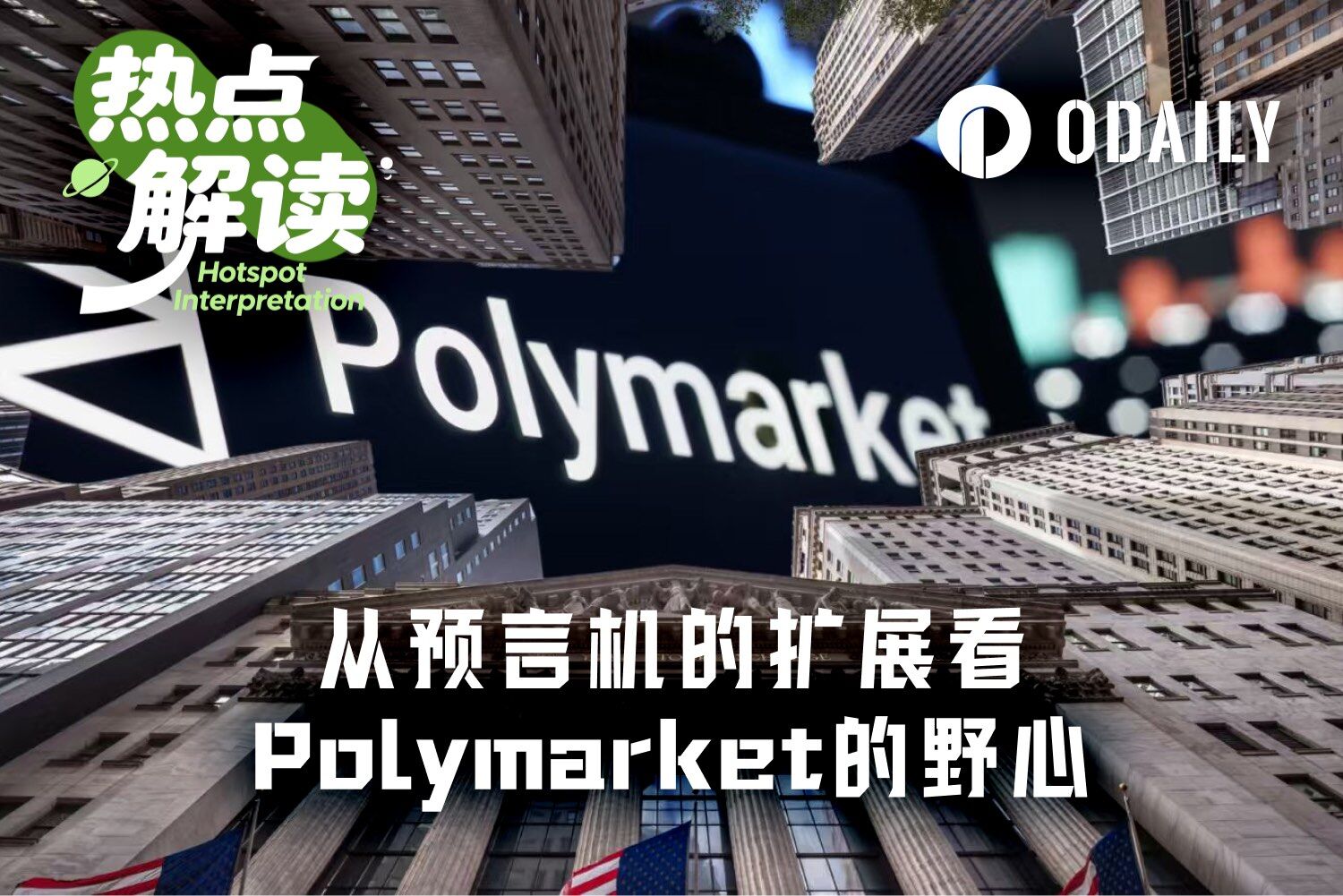
On the evening of April 2, prediction market leader Polymarket officially announced the integration of the oracle service Pyth Network, which will become the settlement data source for a new batch of traditional asset-related prediction events launched by Polymarket.

According to statements from Polymarket and Pyth Network, this batch of events will first cover commodities such as gold, silver, WTI crude oil, and natural gas, over a dozen U.S. stocks including NVIDIA, Apple, Tesla, Coinbase, Palantir, as well as major stock indices and some exchange-traded funds (ETFs) — for example, "Will gold rise or fall this hour?", "Will silver be above or below the target price by a certain time?"...

Pyth Network will provide real-time price data via WebSocket, and Polymarket will sample this data every second and publish it as real-time charts, allowing traders to continuously see the market's position relative to their own positions.

Mustafa Aljadery, Product Lead at Polymarket, stated in the announcement: "The outcome of predictions involving millions of dollars can often hinge on a single price point, so it is essential to ensure the absolute accuracy of the data source. Pyth Network provides this guarantee, enabling Polymarket to further expand into high-stakes financial markets."

Polymarket's Oracle Expansion

This is not the first time Polymarket has expanded its oracle services.

Polymarket initially relied primarily on UMA's Optimistic Oracle mechanism. UMA's logic is essentially a "social consensus oracle" — proposers submit results, challengers initiate disputes, and voters make the final ruling. This mechanism is particularly suitable for subjective, unstructured events without a single standard answer, such as political elections, policy changes, and social hot topics.

However, subjective judgments often also mean room for controversy. Historically, Polymarket has repeatedly sparked discussions within the community about manipulation risks and fairness due to settlement disputes with UMA.

In September 2025, when Polymarket began to heavily promote cryptocurrency price movement events, it urgently needed to introduce a more deterministic data source to reduce the possibility of human intervention. To this end, Polymarket chose to partner with Chainlink at that time. By combining the use of Chainlink Data Streams (responsible for providing low-latency, timestamped market prices) and Chainlink Automation (responsible for executing on-chain result settlements at preset times), the BTC, ETH, and other crypto asset price movement event markets on Polymarket could be settled automatically and quickly, while allowing users to view low-latency, verifiable prices of related assets in real-time.

In a sense, the integration with Chainlink was Polymarket's first step in extending its reach from "social consensus prediction" to "automated price judgment," but Polymarket's goals clearly extend beyond the cryptocurrency market.

Compared to Chainlink, Pyth Network's characteristic is that its data is provided directly by trading firms, exchanges, market makers, and banks worldwide. These institutions actively participate in pricing in global markets, and Pyth Pro obtains data from the highest quality data publishers in the network, including Jump Trading, Blue Ocean, LMAX, and Jane Street, among others. Perhaps considering its global market characteristics, Polymarket ultimately selected Pyth Network for the data source of traditional financial assets this time.

A Glimpse into Polymarket's Ambition

With the partnership with Pyth Network finalized, Polymarket has formed a clear multi-tiered oracle architecture:

  • UMA: Non-standard event layer, responsible for politics, society, breaking news, macro events;
  • Chainlink: Crypto asset layer, responsible for on-chain asset price feeds like BTC, ETH, and automated price settlement;
  • Pyth Network: Traditional finance layer, providing high-frequency price data for traditional assets like U.S. stocks, commodities, indices, sourced from institutions.

From UMA representing non-standard events, to Chainlink focused on the crypto-native market, and now Pyth Network specializing in global financial markets, each time Polymarket introduces a new oracle service, it pushes the platform into broader markets. The expansion of oracles is essentially the expansion of "tradable futures" — the more data sources, the more dimensions of the real world can be incorporated into the betting scope.

If this logic continues to develop, there is almost no upper limit to the markets Polymarket can incorporate in the future. Macroeconomic data, corporate earnings reports, sporting events, weather changes, and even AI model releases can be integrated through different oracles. As long as a verifiable data source exists, a corresponding market can be built. The uncertainties of the real world will be continuously broken down into bettable events.

From this perspective, Polymarket's endgame may be far more than just a simple prediction market; it could be a "future trading platform" covering all uncertainties. When all kinds of uncertain events can be uniformly incorporated into the same mechanism, everything becomes bettable, and everything becomes priced. Oracles are merely a technical expansion, but what they point to behind the scenes is an emerging, one-stop super platform that far exceeds everyone's estimates.

İlgili Sorular

QWhat is the latest oracle service integrated by Polymarket, and what type of assets does it cover?

APolymarket has integrated Pyth Network as its latest oracle service. It covers traditional assets such as gold, silver, WTI crude oil, natural gas, over a dozen U.S. stocks (including Nvidia, Apple, Tesla, Coinbase, Palantir), major stock indices, and some exchange-traded funds (ETFs).

QWhat was the primary oracle mechanism used by Polymarket in its early stages, and what type of events was it suitable for?

AIn its early stages, Polymarket primarily relied on UMA's Optimistic Oracle mechanism. This mechanism, based on social consensus, was suitable for subjective, non-structured events like political elections, policy changes, and social hot topics.

QWhy did Polymarket choose to integrate Chainlink's oracle service in 2025?

AIn 2025, Polymarket integrated Chainlink's oracle service to introduce a more deterministic data source for cryptocurrency price movement events. This was done to reduce the possibility of human intervention and enable automatic, fast settlement of markets for assets like BTC and ETH, with real-time, verifiable price data.

QWhat is the key characteristic of Pyth Network's data that likely influenced Polymarket's decision to partner with them for traditional financial assets?

APyth Network's data is provided directly by trading firms, exchanges, market makers, and banks (such as Jump Trading, Blue Ocean, LMAX, and Jane Street) that actively participate in pricing across global markets. Its global market characteristics made it a suitable choice for Polymarket's expansion into traditional financial assets.

QAccording to the article, what is the potential ultimate vision or 'endgame' for Polymarket as suggested by its multi-layered oracle architecture?

AThe article suggests that Polymarket's ultimate vision is to become a 'future trading platform' that covers all uncertainties. By expanding its oracle services, it aims to make virtually any real-world uncertainty with a verifiable data source—from macroeconomic data and sports events to weather changes and AI model releases—into a tradable market, creating a one-stop super platform for pricing and betting on the future.

İlgili Okumalar

Arthur Hayes' New Article: It's 'No-Trade Zone' Time

Arthur Hayes argues that the current market is in a "no-trade zone," a period of high uncertainty created by two converging forces: the deflationary shock from AI and the inflationary shock from geopolitics. AI agents are rapidly displacing knowledge workers, eroding their incomes and creditworthiness, which will eventually trigger a deflationary financial crisis in consumer credit-dependent Western economies. Simultaneously, the war in the Middle East, particularly the potential disruption to shipping through the Strait of Hormuz, threatens global energy supplies and could force nations to abandon the dollar system. Hayes outlines three main scenarios: 1) A return to normalcy, where the deflationary AI shock remains the primary concern; 2) The "Tehran Toll Booth," where Iran controls the Strait and demands payment in gold or yuan, accelerating the end of dollar hegemony; and 3) "Empire Strikes Back," where the US destroys Iran's capabilities but risks a catastrophic regional war that sends commodity prices soaring. In all but the most extreme scenarios, Hayes posits that the key driver for Bitcoin's price will be the *quantity* of money, not its price (interest rates). He expects that governments, forced to fund wars and stockpile resources, will have to print money, expanding the money supply. This would be bullish for fixed-supply assets like Bitcoin, even if it occurs alongside rising rates. However, he cautions that until this liquidity is explicitly unleashed (e.g., when bond market volatility spikes), the risk/reward for new long positions is poor. His current strategy is to wait for a clear signal of monetary expansion before deploying capital, preferring to hold gold and select crypto assets in the meantime.

marsbit38 dk önce

Arthur Hayes' New Article: It's 'No-Trade Zone' Time

marsbit38 dk önce

a16z Founder: In the Agent Era, What Truly Matters Has Changed

Marc Andreessen, co-founder of a16z, argues that the current AI boom is not an overnight success but the culmination of 80 years of research, now delivering practical results. He emphasizes that this era is defined by the convergence of four key capabilities: large language models (LLMs), reasoning, coding, and agents capable of recursive self-improvement. Andreessen describes the agent architecture—combining an LLM with a shell, file system, markdown, and cron/loop—as a fundamental shift beyond chatbots. This structure leverages existing software components, allowing agents to maintain state, introspect, and extend their own functionality. He predicts a move away from traditional GUI and browser-based interactions toward an "agent-first" world where software is primarily operated by bots, not humans, with people simply stating their goals. He draws parallels to the 2000 internet bubble but notes key differences: current AI infrastructure investments are led by cash-rich giants and quickly monetized. He highlights that scaling constraints involve not just GPUs but the entire chip ecosystem. Open source and edge inference are crucial for democratizing knowledge and enabling low-latency, cost-effective applications on local hardware. Finally, Andreessen identifies significant non-technical challenges: potential short-term cybersecurity crises, the need for "proof of human" identity solutions, financial infrastructure for agents, and institutional resistance from sectors like education and healthcare. He cautions that societal adoption will be slower than technological change.

marsbit49 dk önce

a16z Founder: In the Agent Era, What Truly Matters Has Changed

marsbit49 dk önce

İşlemler

Spot
Futures
活动图片