Aave Labs’ Revenue-Sharing Proposal Triggers Governance Debate Within AAVE Community

TheNewsCrypto2026-01-03 tarihinde yayınlandı2026-01-03 tarihinde güncellendi

Özet

Aave Labs has proposed sharing revenue from its new business ventures with AAVE token holders, sparking a governance debate within the community. Critics, including prominent members, argue that Aave Labs retains excessive control, citing past decisions that favored the company over the decentralized autonomous organization (DAO). They demand full transparency and control over brand assets, ownership, and revenue flows, emphasizing that token holders bear governance risks and should be rewarded accordingly. The proposal is part of Aave's broader strategy to expand beyond crypto lending into real-world assets and other innovations, with the upcoming V4 upgrade enabling modular architecture and safer development. Aave Labs contends that a company-led structure ensures faster execution and competitiveness, though it offers revenue sharing as a compromise. The announcement positively impacted AAVE's price, which rose significantly following the news.

Aave Labs is considering a proposal to share revenue with AAVE token holders generated from new businesses built outside the core Aave protocol. While Aave Labs is putting forward the idea, the Aave DAO remains the governing body of the protocol.

However, some AAVE holders are unhappy, arguing that Aave Labs holds more control than the DAO. Past governance votes rejected giving the DAO full ownership of Aave’s brand assets, and fees from CoW Swap integrations were reportedly routed to private Aave Labs wallets, not the DAO. Community members such as Marc Zeller and BrazenSeeker have raised concerns, warning that these moves could lead to quiet privatization of parts of the Aave ecosystem.

Aave’s Expansion Plans Spark Governance and Revenue Debate

The Critics inside the AAVE community are that some of the DAO members and long-term token holders are asking for 100% control and clarity over the money and power flow in the ecosystem. They demand this 100% control because the AAVE token holders own and govern the protocol, and they say that the Revenue should reward those who take the governance risk. Instead of asking for the money, they first ask for clarity and rules on Brand usage, Asset Ownership, and Revenue flow.

AAVE mainly focuses on Crypto lending, and the AAVE team believes that AAVE can grow bigger. The AAVE wants to expand into real-world assets and attract more users and developers. This creates AAVE as a new revenue source. The AAVE V4 is the major reason for this plan because it introduces the modular architecture and allows use cases without risking the Core protocol. It also supports RWA-backed loans and custodian-based lending, which makes it easier for the developer to innovate safely.

On the other hand, the AAVE labs clearly say that AAVE needs to grow beyond the Crypto lending and not all the revenue comes directly from the Protocol, and they are proposing to share some of these revenues with the AAVE Holders through governance as a compromise. The AAVE Labs believes that 100% DAO control over everything would slow the execution, and the company-led structure helps move faster and compete.

This news impacted the price of AAVE to move upwards as the community got the potential benefits that could help the holders. AAVE is currently trading at the price of $161.90 with 6.60% increase in 24 hours and an 8.48% increase in the past 5 days.

Highlighted Crypto News:

‌BlackRock Clients Add 3,199 BTC in Fresh Institutional Buying

TagsAAVEAave Labs

Trend Kriptolar

İlgili Sorular

QWhat is the main proposal from Aave Labs that has triggered a governance debate?

AAave Labs is proposing to share revenue with AAVE token holders generated from new businesses built outside the core Aave protocol.

QWhy are some AAVE token holders unhappy with Aave Labs?

ASome holders are unhappy because they believe Aave Labs holds more control than the DAO, citing past governance votes that rejected full DAO ownership of brand assets and instances where fees were routed to private Aave Labs wallets instead of the DAO.

QWhat are the expansion plans for Aave beyond its core crypto lending business?

AAave plans to expand into real-world assets (RWA) and attract more users and developers, with Aave V4 introducing modular architecture to support new use cases like RWA-backed loans and custodian-based lending without risking the core protocol.

QWhat is Aave Labs' argument against giving the DAO 100% control over all operations?

AAave Labs argues that 100% DAO control would slow down execution, and a company-led structure allows for faster movement and better competition in the market.

QHow did the market react to the news of Aave Labs' revenue-sharing proposal?

AThe news positively impacted the price of AAVE, which saw a 6.60% increase in 24 hours and an 8.48% increase over the past 5 days, trading at $161.90.

İlgili Okumalar

DRAM ETF Issuer: Samsung, SK Hynix, Micron All Surpass $1 Trillion, the AI Era of Memory Chips Has Only Just Begun

Authors: Dave Mazza, Thomas DiFazio | Source: Deep Tide TechFlow The article, written by Roundhill Investments (issuer of the DRAM ETF), responds to Morningstar's caution about investing in memory chip stocks. Morningstar warns of the sector's history of boom-bust cycles, a lack of economic moats, and potential momentum-driven overvaluation. Roundhill argues the current situation is structurally different due to AI. Key points in Roundhill's rebuttal include: * **Changed Demand & Supply Dynamics:** AI infrastructure, not consumer electronics, is now the primary growth driver for memory demand. New, strict long-term supply agreements with hyperscalers reflect the high capital intensity of advanced manufacturing. * **Existence of a Moat:** High-Bandwidth Memory (HBM), essential for AI, has extremely high manufacturing barriers. The market is dominated by Samsung, SK Hynix, and Micron, with new entrants blocked by technological complexity and long lead times for equipment like ASML's EUV machines. * **Strong Fundamental Outlook:** Analyst consensus projects the three companies will rank among the world's most profitable by 2027, with combined profits of $704 billion on over $1 trillion in revenue. Their operating margins have already reached record highs. * **Valuation Re-rating:** Despite significant stock price gains, memory stocks trade at attractive valuations (e.g., a median NTM P/E of 8.37x for the DRAM ETF) relative to projected explosive EPS growth. Roundhill suggests historical valuation frameworks may no longer apply given the new profitability paradigm. Conclusion: Roundhill contends the rally is justified by fundamentals, marking a structural shift for the memory industry into a new era of sustained, AI-driven demand against constrained supply, rather than a repeat of past cycles.

marsbit18 dk önce

DRAM ETF Issuer: Samsung, SK Hynix, Micron All Surpass $1 Trillion, the AI Era of Memory Chips Has Only Just Begun

marsbit18 dk önce

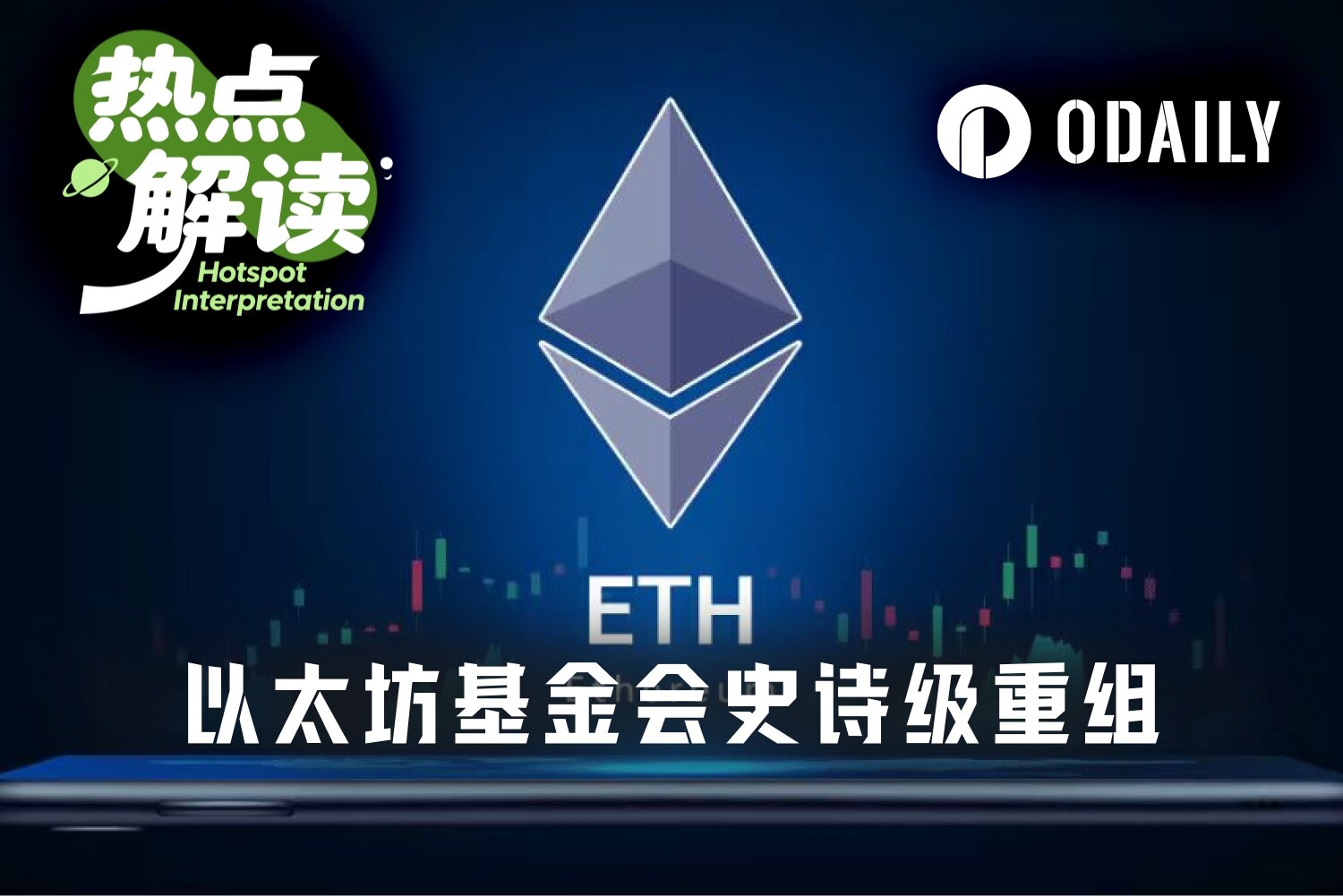
EF's Epic Reorganization: 20% Layoffs, Budget Halved, Is Ethereum Gearing Up for a Leaner Future?

The Ethereum Foundation (EF) has announced a major organizational restructuring, involving a 20% staff reduction (approx. 54 employees) and a division into functional clusters like Protocol, Access, User, Community, and Institutional layers. Co-founder Vitalik Buterin further revealed plans to cut the EF's budget by around 40% over the coming years, aiming to reduce its annual spending rate from about 15% to roughly 5% by 2030, transitioning to an endowment-driven model. This overhaul is seen as a long-overdue correction to the EF's ambiguous role. As Ethereum grew, the foundation faced persistent criticism over ETH sales, perceived lack of execution, and unclear strategy, often becoming a focal point for community frustration amid ETH's price stagnation. The reform aims to redefine the EF's boundaries, narrowing its focus to core protocol research, public goods funding, and ecosystem coordination, while offloading more applied development work to the broader market. Concurrently, ecosystem forces like the newly formed Ethlabs (founded by ex-EF researchers) and other independent groups are stepping in to fill the space, signaling a shift from a centralized model to a more distributed, collaborative ecosystem structure. The move was notably praised by Solana co-founder toly, who viewed a "leaner" EF as potentially more decisive and agile.

Odaily星球日报58 dk önce

EF's Epic Reorganization: 20% Layoffs, Budget Halved, Is Ethereum Gearing Up for a Leaner Future?

Odaily星球日报58 dk önce

Dragonfly Partner Haseeb: The Fastest-Growing Companies of the Future May All Get Stuck at 149 Employees

Dragonfly partner Haseeb explores the distorted economics of AI model pricing, drawing parallels to tax policy. He notes that startups and small teams (under 150 users) enjoy heavily subsidized, fixed-price AI subscriptions (like Claude Code), where the marginal cost of an additional token is effectively zero. This creates a powerful incentive for them to maximize token usage ("token-maxxing") and innovate aggressively with AI automation. In contrast, large enterprises (over 150 users) are forced onto "Enterprise" plans, paying per-token API fees with high (~75%) markups. This acts like a steep "tax" on AI-powered labor, disincentivizing marginal automation and experimental use, and encouraging them to retain more human workers. Haseeb argues this pricing creates a "150-person cliff," a regulatory notch similar to labor laws in France that discourage firms from growing past 50 employees. He predicts the fastest-growing future companies may deliberately cap their headcount at 149 to avoid the punitive enterprise pricing. This would foster an "AI-first" management philosophy obsessed with automation and outsourcing to stay lean. While not intentionally designed, this bifurcated pricing could become one of the most influential de facto tax policies, shaping how AI replaces labor—not through mass layoffs at big firms, but through agile, AI-native startups outcompeting them.

marsbit1 saat önce

Dragonfly Partner Haseeb: The Fastest-Growing Companies of the Future May All Get Stuck at 149 Employees

marsbit1 saat önce

İşlemler

Spot
Futures

Popüler Makaleler

AAVE Nasıl Satın Alınır

HTX.com’a hoş geldiniz! Aave Protocol (AAVE) satın alma işlemlerini basit ve kullanışlı bir hâle getirdik. Adım adım açıkladığımız rehberimizi takip ederek kripto yolculuğunuza başlayın. 1. Adım: HTX Hesabınızı OluşturunHTX'te ücretsiz bir hesap açmak için e-posta adresinizi veya telefon numaranızı kullanın. Sorunsuzca kaydolun ve tüm özelliklerin kilidini açın. Hesabımı Aç2. Adım: Kripto Satın Al Bölümüne Gidin ve Ödeme Yönteminizi SeçinKredi/Banka Kartı: Visa veya Mastercard'ınızı kullanarak anında Aave Protocol (AAVE) satın alın.Bakiye: Sorunsuz bir şekilde işlem yapmak için HTX hesap bakiyenizdeki fonları kullanın.Üçüncü Taraflar: Kullanımı kolaylaştırmak için Google Pay ve Apple Pay gibi popüler ödeme yöntemlerini ekledik.P2P: HTX'teki diğer kullanıcılarla doğrudan işlem yapın.Borsa Dışı (OTC): Yatırımcılar için kişiye özel hizmetler ve rekabetçi döviz kurları sunuyoruz.3. Adım: Aave Protocol (AAVE) Varlıklarınızı SaklayınAave Protocol (AAVE) satın aldıktan sonra HTX hesabınızda saklayın. Alternatif olarak, blok zinciri transferi yoluyla başka bir yere gönderebilir veya diğer kripto para birimlerini takas etmek için kullanabilirsiniz.4. Adım: Aave Protocol (AAVE) Varlıklarınızla İşlem YapınHTX'in spot piyasasında Aave Protocol (AAVE) ile kolayca işlemler yapın.Hesabınıza erişin, işlem çiftinizi seçin, işlemlerinizi gerçekleştirin ve gerçek zamanlı olarak izleyin. Hem yeni başlayanlar hem de deneyimli yatırımcılar için kullanıcı dostu bir deneyim sunuyoruz.

398 Toplam GörüntülenmeYayınlanma 2024.12.11Güncellenme 2026.06.02

AAVE Nasıl Satın Alınır

Tartışmalar

HTX Topluluğuna hoş geldiniz. Burada, en son platform gelişmeleri hakkında bilgi sahibi olabilir ve profesyonel piyasa görüşlerine erişebilirsiniz. Kullanıcıların AAVE (AAVE) fiyatı hakkındaki görüşleri aşağıda sunulmaktadır.

活动图片