a16z Partner: Three Paths for Crypto Projects to Find PMF

marsbit2026-06-09 tarihinde yayınlandı2026-06-09 tarihinde güncellendi

Özet

Author: Jason Rosenthal. Compiler: Shenchao TechFlow. Finding Product-Market Fit (PMF) is the most critical variable for a company's survival. In the crypto space, misaligned growth hacking and airdrops often mask the absence of true PMF. However, leading teams are now finding PMF faster. Here are three proven paths for crypto projects to achieve PMF: 1. **Co-build with Anchor Clients:** Partner with the most sophisticated potential clients in your field and develop the product based on their specific needs. Their adoption serves as the strongest validation, more valuable than media coverage or TVL metrics. This approach is shaping current product roadmaps, as seen in collaborations between crypto startups and traditional finance. 2. **Position Ahead of an Exponential Curve:** Identify and position yourself ahead of a major emerging trend before the market fully realizes it. The most evident current curve is the rise of AI Agents as autonomous economic actors. Projects like AgentCash by Merit Systems, which enables AI Agents to pay for API access with crypto, are building foundational payment rails for the impending Agent economy. 3. **Be Your Own First and Best Customer:** The most enduring infrastructure companies don't wait for external validation. They first build and prove their technology by using it to power their own applications at scale before offering it to others. Matter Labs exemplifies this by anchoring its ZKsync technology in a concrete application, Car...

Author: Jason Rosenthal

Compiled by: Deep Tide TechFlow

Deep Tide Guide: a16z Crypto operating partner Jason Rosenthal outlines three current paths for crypto projects to find Product-Market Fit: collaborating with top-tier clients to build, positioning on the exponential growth curve of AI Agents, and becoming your own first user. The article uses case studies from LayerZero, AgentCash, ZKsync, etc., offering direct reference value for teams pivoting or still searching for PMF.

Product-Market Fit (PMF) is the most critical variable determining a company's survival. Find it, and you have a chance. Fail to find it, and nothing else can save you.

@jasonrosenthal tweeted:

Finding and achieving Product-Market Fit is the most powerful and important thing for any early-stage startup. I've spent a significant part of my career on this, across multiple companies. Here are 5 strategies for finding PMF in Web3.

Throwing more money at the problem just extends the runway to a bad ending. Growth hacking and continuous airdrops disconnected from a real strategy are less a path to PMF and more a way to mask the fact that you haven't found it yet. Some of crypto's most powerful weapons (tokens and network effects) can even mislead projects about their PMF.

The good news is that top teams are now finding PMF faster. Killer applications like stablecoins have been proven, and traditional finance and broader consumer groups are accelerating their entry.

Here are three models that are working. If your project is pre-PMF or pivoting, pay close attention.

1. Partner with Top Clients, Build to Their Specifications

Identify the most sophisticated potential clients in your field and build the product together with them. Their needs are your product spec sheet.

This is slower than building a generic product and iterating publicly. But if your first client handles trillions in daily transaction volume, their adoption is more valuable than any press coverage, TVL numbers, or retail attention. The essential definition of PMF is your product resonating broadly with customers, and these flagship clients are the best indicator.

Judging by the high-profile partnership announcements and product launches between crypto startups and traditional finance firms, product roadmaps are now being written by institutional clients. Blockchains are beginning to host global financial infrastructure.

2. Identify an Exponential Growth Curve and Position Ahead of It
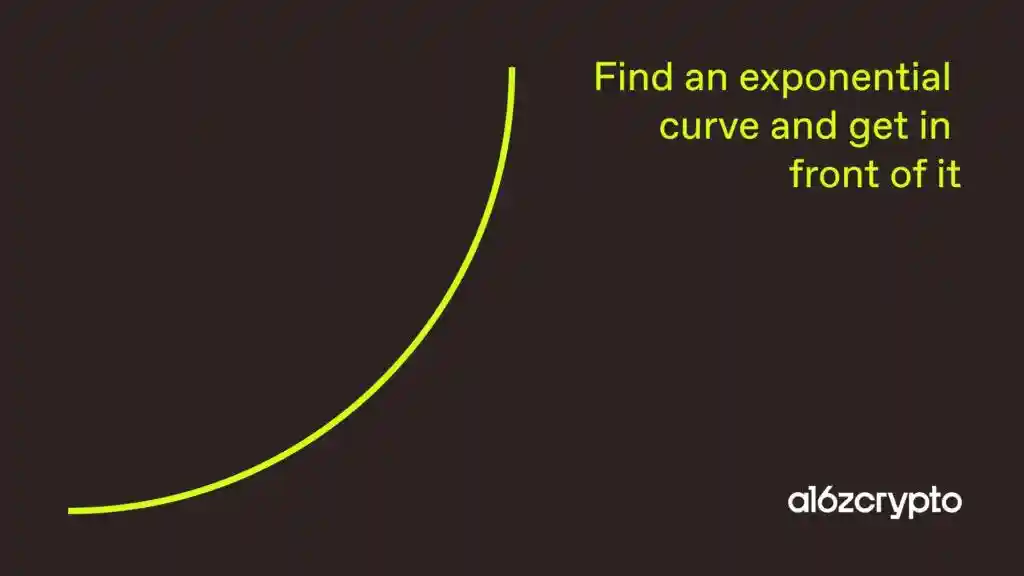
PMF sometimes comes from serving an existing market better. Other times it comes from seeing where a market is going before it fully realizes it itself, and positioning early enough.

The most obvious current curve: AI Agents are becoming economic actors. They autonomously call APIs, deploy capital, and execute transactions at machine speed. The assumption of "human-in-the-loop" is collapsing faster than most expected.

Take Agent commercialization. Samuel Ragsdale and Ryan Sproule at Merit Systems saw this early and are building AgentCash on the x402 protocol. AgentCash enables AI Agents to pay for API access using cryptocurrency, an infrastructure that allows Agents to conduct programmatic transactions without human-managed billing.

Payment is the key link that turns Agents from "assistants" into "participants." Whoever builds these payment rails now will own a foundational layer when the Agent economy arrives.

3. Be Your Own First (and Best) Customer
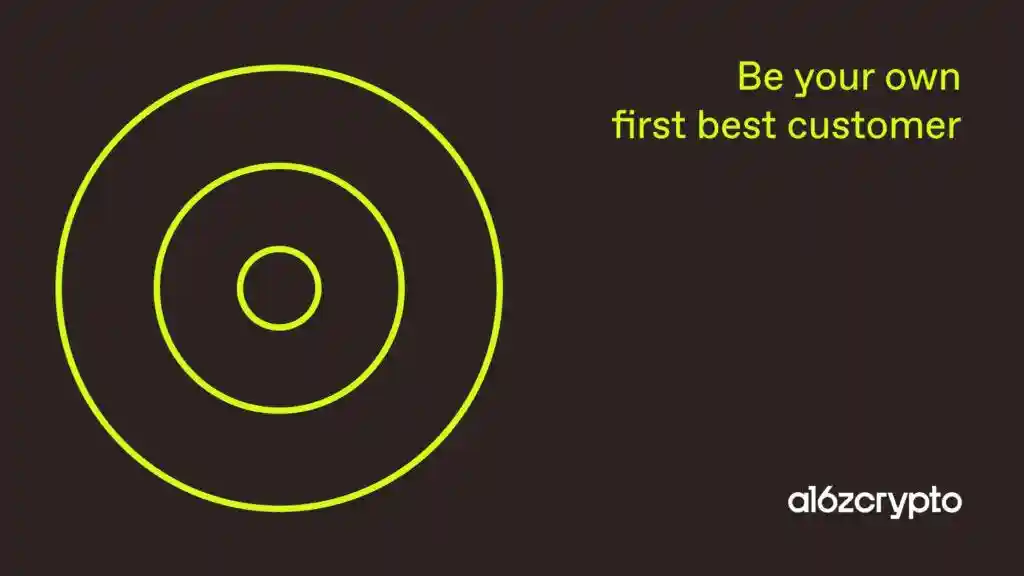
The most enduring infrastructure companies don't wait for external developers to validate their technology. They build applications on their own rails first, proving capability through live operation, and then invite others to use it.

Amazon executed this playbook masterfully. AWS wasn't sold to startups from day one. Amazon first built the infrastructure needed for its own e-commerce business, proving it at massive scale, before gradually opening it to others.

Matter Labs' Alex Gluchowski is running the same playbook.

Instead of pitching Prividium as an abstract enterprise product, he anchored it to a specific application: tokenized deposits. The result is Cari Network. U.S. regional banks like Huntington Bancshares, First Horizon, M&T Bank, KeyCorp, Old National Bancorp can now transfer customer deposits across banks in real-time on a blockchain rail, while the funds never leave the regulated banking system. ZKsync didn't just build the rail; it found the killer application on it.

Three models, one underlying logic: The fastest path to PMF isn't fumbling in the dark, but choosing the right battlefield and fighting with conviction before everyone else jumps in.

Co-build with the client whose validation compounds. Position ahead of the curve before consensus forms. Be your own first and best customer.

Pick the model that fits your product, and execute.

İlgili Sorular

QAccording to the article, what are the three proven paths for crypto projects to achieve Product-Market Fit (PMF)?

AThe three paths are: 1. Co-build products with top-tier clients based on their specific needs. 2. Position ahead of an exponential growth curve, such as the AI Agent economy. 3. Be your own first and best customer by building applications on your own infrastructure to prove its capabilities.

QHow does the article illustrate the strategy of 'binding top clients to build products'?

AThe article illustrates this by noting that current product roadmaps are being written by institutional clients. It suggests finding sophisticated potential clients and co-building products with them, using their demands as the product specification. This is considered more valuable than generic metrics like media coverage or TVL data.

QWhat example is given in the article for finding an exponential growth curve and positioning ahead of it?

AThe example given is the rise of AI Agents becoming economic actors. Specifically, the article mentions the project AgentCash, built on the x402 protocol by Merit Systems, which enables AI Agents to pay for API access with cryptocurrency, thus laying foundational payment rails for the upcoming Agent economy.

QWhat analogy does the article use to explain the strategy of 'being your own first customer'?

AThe article uses the analogy of Amazon Web Services (AWS). It states that AWS was not initially sold to startups; Amazon first built the infrastructure for its own e-commerce business, proved it at scale, and then gradually opened it to others.

QHow is Matter Labs' Alex Gluchowski applying the 'be your own first customer' strategy according to the article?

AInstead of selling Prividium as an abstract enterprise product, Alex Gluchowski anchored it to a specific application: tokenized deposits. This resulted in the Cari Network, which allows US regional banks to transfer customer deposits in real-time on a blockchain, with funds remaining within the regulated banking system. This demonstrates ZKsync finding a killer application on its own rails.

İlgili Okumalar

A Brief History of the Lithography Machine: How a Beam of Light Walked Sixty-Nine Years

A Brief History of Lithography: 69 Years of Light In July 2026, reports of a Chinese state-backed company producing five immersion DUV lithography machines sent shockwaves through Wall Street, wiping roughly $44 billion from ASML's market cap in a single day. This event signaled a crack in the long-held assumption of Western monopoly over advanced chipmaking equipment. The journey began in 1957 when Jay Lathrop coined the term "photolithography." Early contact aligners (1960s) gave way to PerkinElmer's revolutionary projection aligners in 1973, boosting yields dramatically. GCA's step-and-repeat system (1978) established the modern stepper blueprint. However, within a decade, Japanese firms like Nikon and Canon, supported by a strong domestic market, captured nearly 90% of the global market from American pioneers, who ultimately exited the business. ASML, founded in a leaky shed in 1984, rose to dominance through key strategic moves: the TWINSCAN dual-stage platform (2001) and the acquisition of SVG, gaining access to Intel. A pivotal moment came in the early 2000s with the industry at a 193nm wavelength impasse. While most invested in the costly 157nm path, TSMC's Burn Lin proposed immersion lithography—using water between the lens and wafer. ASML bet on this simpler idea and, with Zeiss, delivered the first commercial immersion tool in 2004, effectively ending the 157nm roadmap and leaving competitors behind. The subsequent push for Extreme Ultraviolet (EUV) lithography was an even greater marathon. Deemed the least promising option in 1997, EUV's development, led by ASML, required vacuum chambers, reflective optics, and a complex tin-droplet laser plasma source. Critical to its eventual success (first high-volume manufacturing in 2018) was the 2012 "Customer Co-Investment Program," where Intel, TSMC, and Samsung provided upfront funding and equity, sharing the immense risk and cost. Today, ASML holds a near-total monopoly in EUV and immersion DUV. The core lesson of this 69-year history is not merely one of technological invention but of sustained partnership. Successive leaders—PerkinElmer, GCA, Nikon—were not ultimately defeated by superior technology but by losing the vital connection to customers willing to tolerate years of iteration, fund long-term R&D, and integrate early, imperfect tools into their production lines. The "light" that completed the journey was always carried by those patient, invested partners.

marsbit11 dk önce

A Brief History of the Lithography Machine: How a Beam of Light Walked Sixty-Nine Years

marsbit11 dk önce

CryptoQuant Analyst Claims 'Frightening Scenario and Simultaneously Promising Signal for Bitcoin' Reveals Ultimate Bottom Point! Here Are the Details

Bitcoin, the leading cryptocurrency, entered a bear market after hitting a historic high of $126,000 in October 2025 and has since fallen over 50%. As BTC recently dropped to around $57,000, opinions diverge on whether the bottom has been reached, with some expecting a drop closer to $50,000. According to a pseudonymous CryptoQuant analyst, the Bitcoin bear market may be nearing its end. The analyst notes that as selling pressure following the all-time high weakens, price corrections are becoming shorter and recovery periods more substantial. The July decline was only slightly below lows seen in early February, and BTC has remained relatively stable around $60,000 since, indicating diminished seller influence. Positive technical signals are also cited, with MACD and RSI showing bullish signals, positive divergences, and oversold conditions, collectively suggesting a potential bottom formation for BTC. However, the analyst does not rule out a final sell-off in the short term. They suggest the ultimate market bottom could be around $51,336, corresponding to the 61.8% Fibonacci retracement level. The $50,000 area is highlighted as a crucial historical support zone, aligning with the average investor cost basis and the 200-week moving average—conditions similar to bottoms in previous bear markets. *This is not investment advice.

cryptonews.ru1 saat önce

CryptoQuant Analyst Claims 'Frightening Scenario and Simultaneously Promising Signal for Bitcoin' Reveals Ultimate Bottom Point! Here Are the Details

cryptonews.ru1 saat önce

İşlemler

Spot
活动图片