Author: a16z crypto
Compiled by: Shenchao TechFlow
Shenchao TechFlow Introduction: Argentina is one of the markets with the highest cryptocurrency adoption rates globally, but what truly deserves attention goes beyond the inflation hedging narrative. After the crisis eased, stablecoin usage did not recede; instead, it solidified into a habit. This is a sample that cannot be ignored for understanding stablecoin stickiness, dollarization trends, and the direction of payment systems in emerging markets.
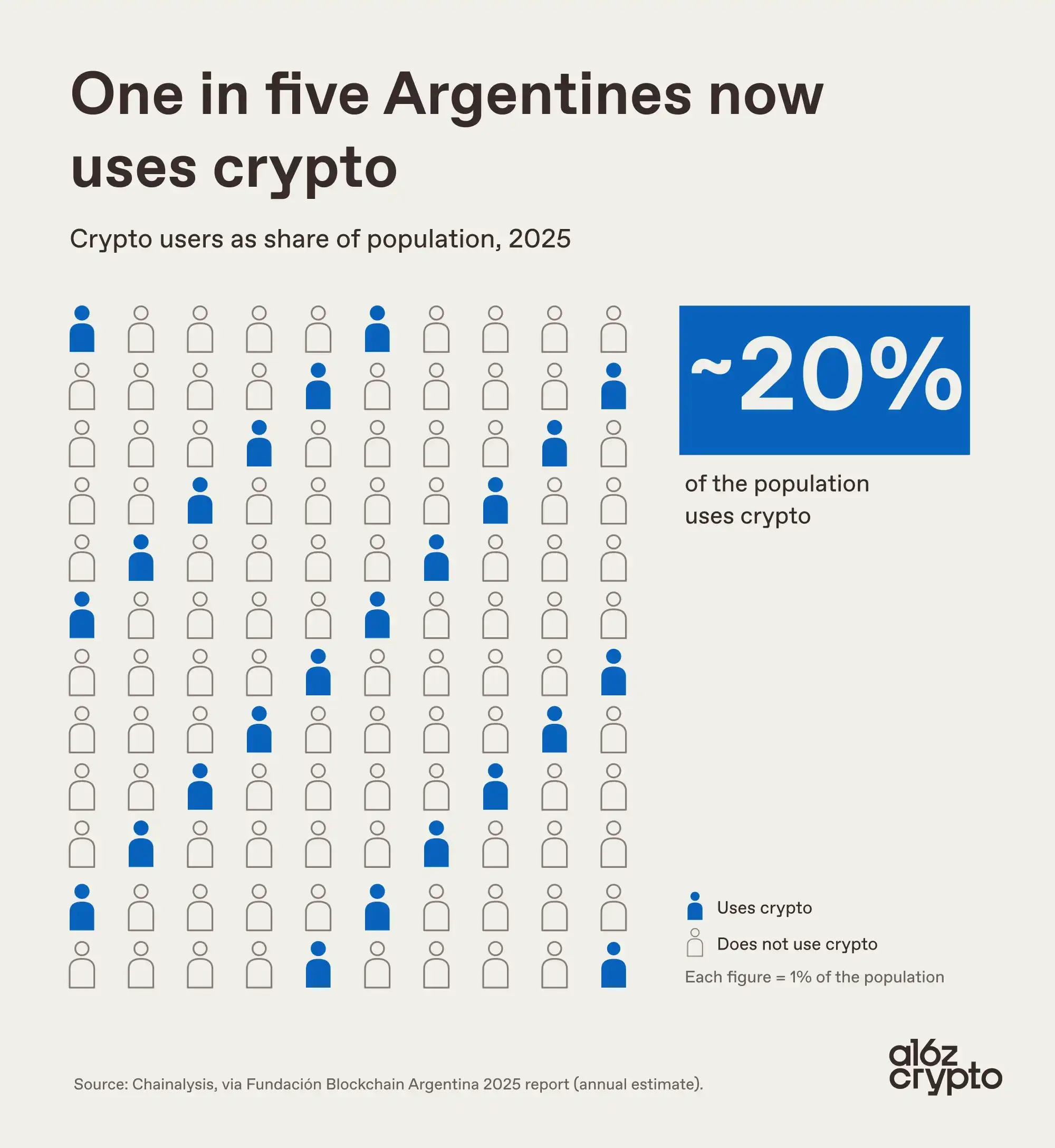
Where in the world are people using cryptocurrency? How are they using it? Let's start with Argentina. There, 1 in 5 people use cryptocurrency, making it one of the countries with the highest penetration rate in Latin America.
This has happened quickly. In 2024, downloads of the top 15 crypto apps in Argentina almost doubled, growing 93% compared to the previous year.
Argentinians' preference for the U.S. dollar predates cryptocurrency. Between 2001 and 2002, the government froze bank deposits and forcibly converted dollar deposits and loans into pesos through Decree 214/2002. After the dollar peg ended, the exchange rate plummeted from 1 peso to nearly 4 pesos per dollar, erasing about three-quarters of the peso's dollar value. This crisis deepened distrust in the peso and reinforced the habit of storing savings in physical U.S. dollars outside the banking system—such as under the mattress or in a safe.
Stablecoins began gaining traction in Argentina after the government re-imposed capital controls in 2019. Within months, the government capped the official monthly foreign exchange purchase quota for Argentines at $200, with additional eligibility rules shutting many out entirely. U.S. dollar-pegged stablecoins became another way to hold dollars without relying on the official market.
Recently, stablecoins have accounted for a growing share of contractor payments. In April 2024, year-on-year inflation reached 289%, and the proportion of Argentine contractors receiving salaries in USDC also rose during the same period.
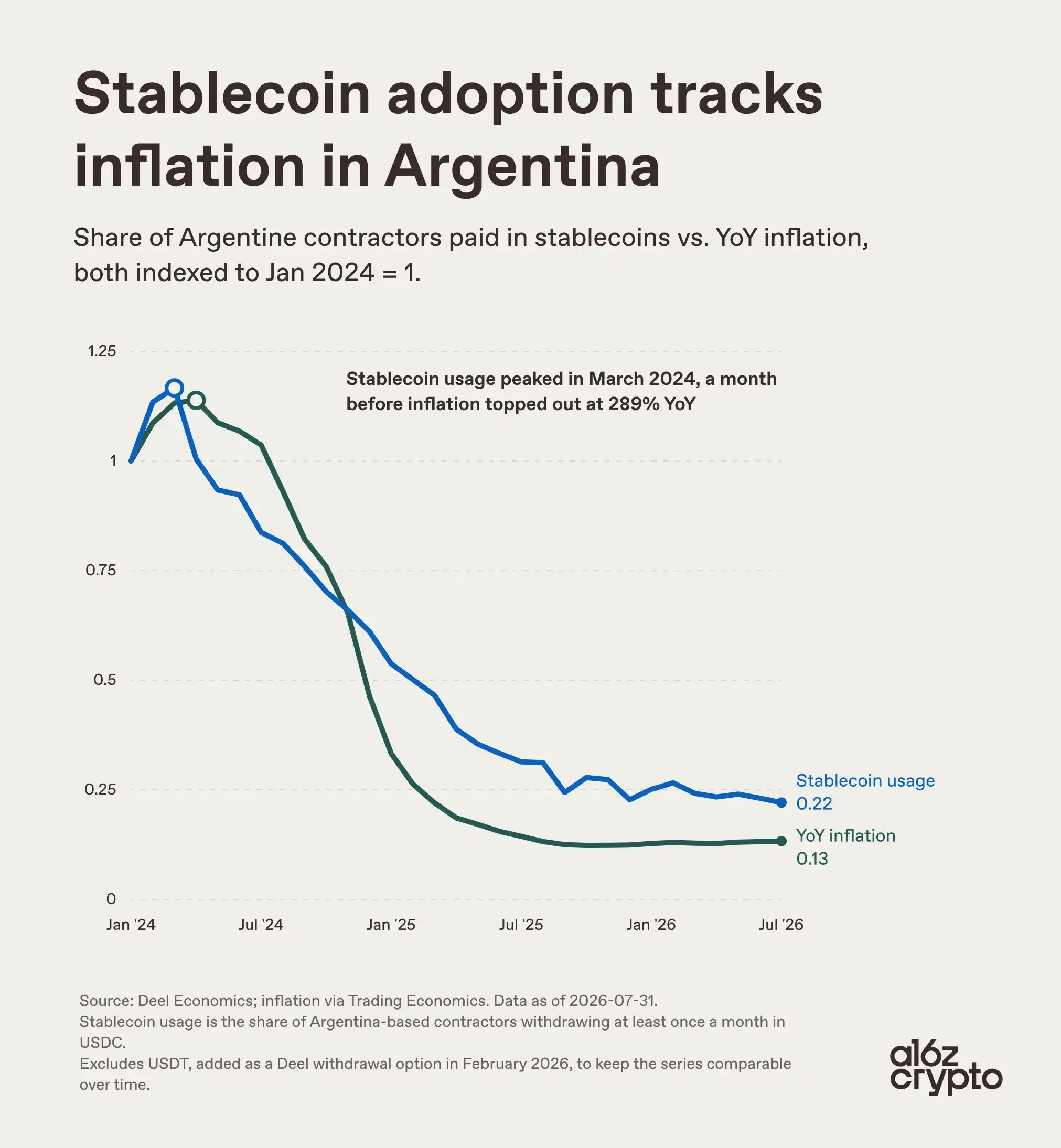
The above data comes from a16z portfolio company Deel, which helps manage payroll in over 160 countries. Using this dataset as an indicator, we can observe both the monthly percentage of Argentine contractors paid in USDC and the changes in year-on-year inflation rates.
Since both metrics are indexed to January 2024, we see their relative changes from that point, not their raw values. For a period, the two metrics appeared to move in sync. Subsequently, inflation slowed, and stablecoin usage also seemed to decline. As of July 2026, both remain at roughly one-fifth of their respective peaks.
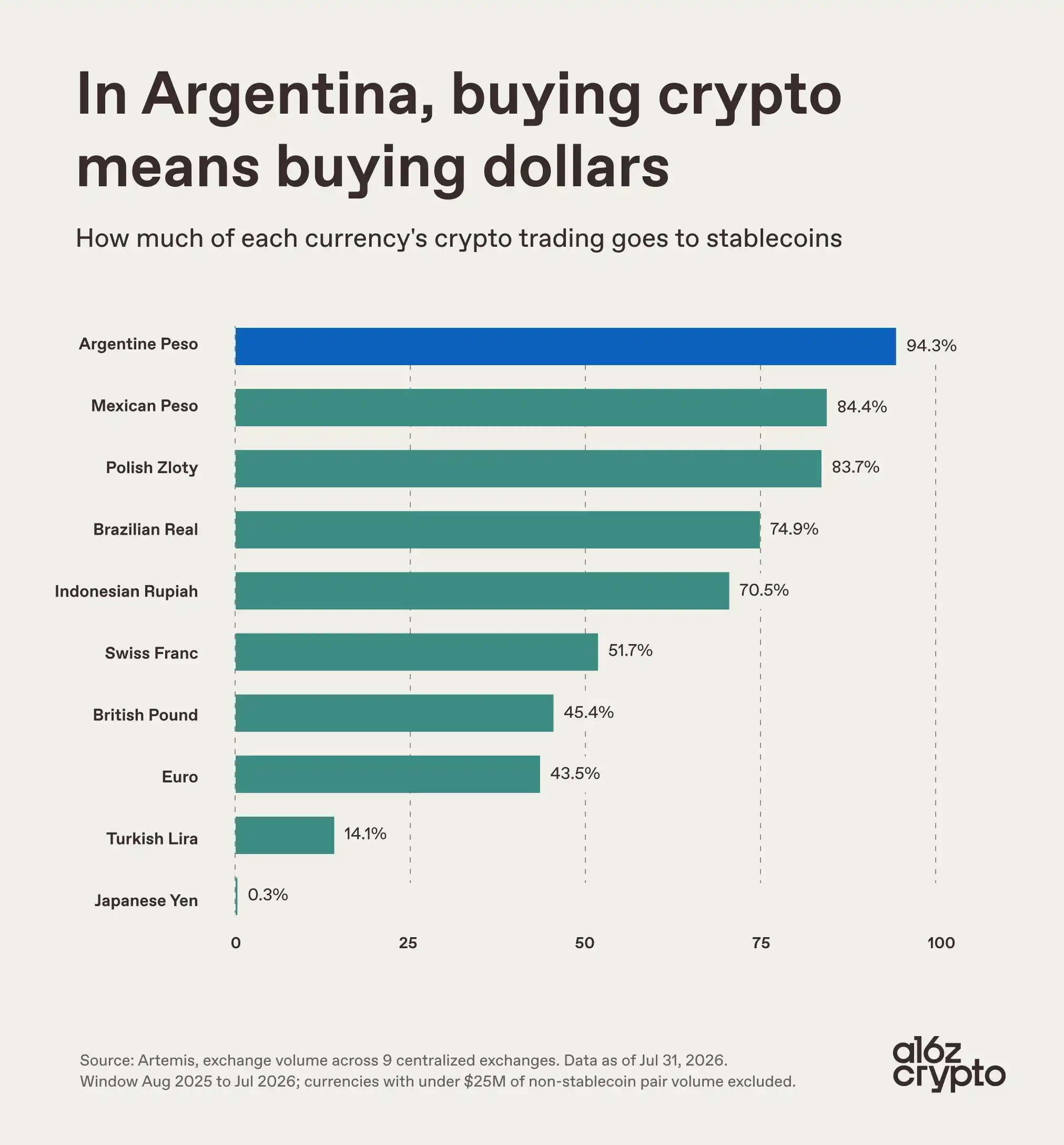
In Argentina, "buying cryptocurrency" with pesos essentially means "buying dollars." A significant 94% of peso-to-cryptocurrency trades flow into stablecoins—the highest stablecoin share among all major currencies tracked by Artemis.
Interestingly, for several years, the price of a crypto-dollar was substantially higher than a dollar purchased at the official exchange rate.
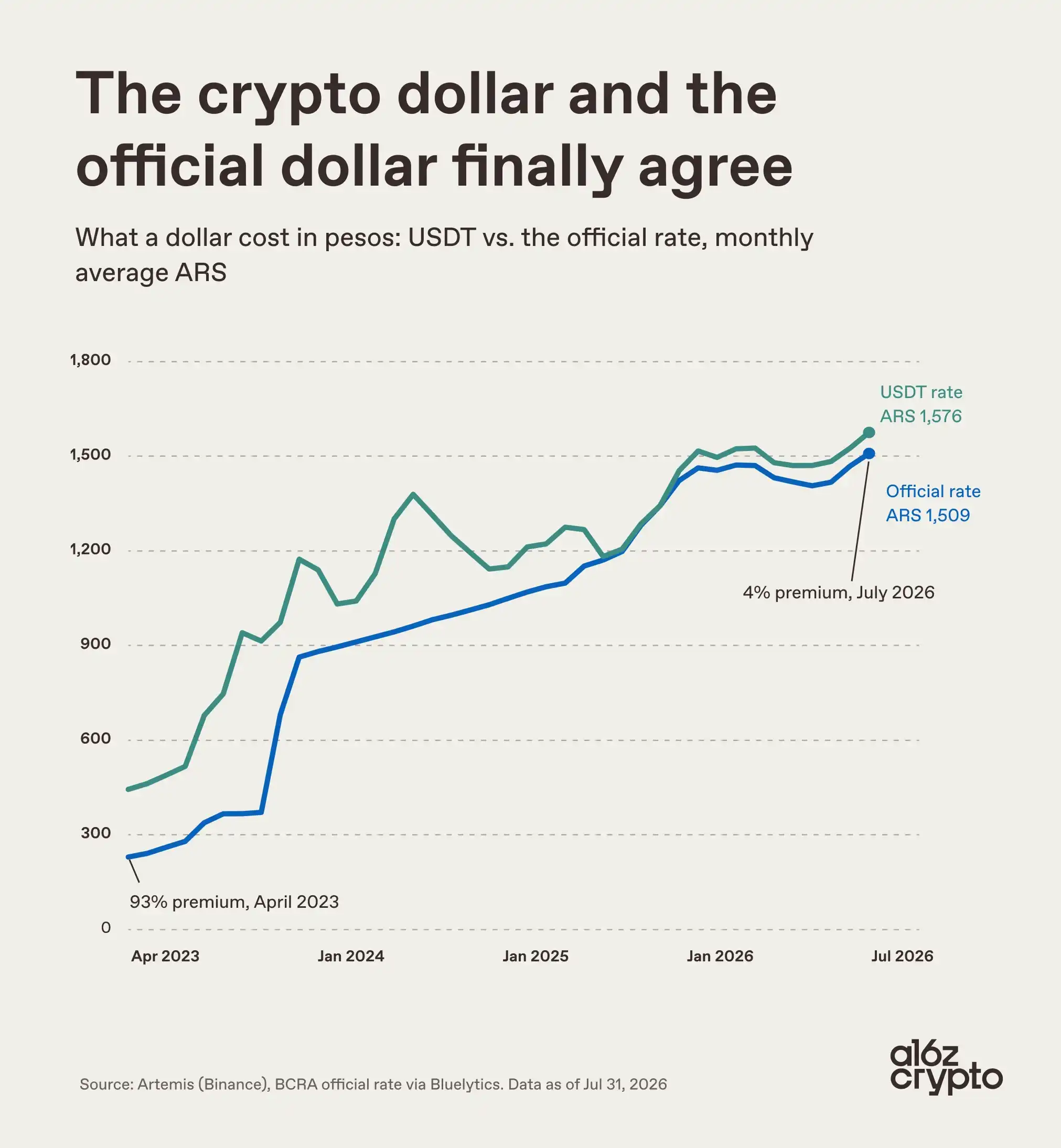
By 2023, the country's capital controls prevented many Argentines from accessing official dollars, pushing the gap between the official exchange rate and the parallel market rate above 100%. Stablecoins became an alternative as they are tradeable 24/7 and unaffected by such controls. After Argentina removed most restrictions on personal dollar purchases in April 2025, the two rates largely converged.
As of August 28, 2026, the price of a digital dollar is about 4% more expensive than a dollar purchased through the official market.
Argentina's economic crisis appears to be cooling down for now. Inflation has fallen, purchasing dollars is legal again, and the initial pressures that drove many Argentines toward stablecoins have eased. One might expect usage to decline accordingly. But that's not the case.
Usage in wages hasn't disappeared; it has plateaued. Downloads for Lemon, one of Argentina's largest crypto wallets, continue to climb quarter after quarter, even as monthly inflation has dropped from 25.5% to 2.1%.

For Argentines, stablecoins may no longer be just an inflation hedge—they might be turning into a habit.