A New Red Line for Crypto? Washington Targets On‑Chain “Death Bets” In Prediction Markets

bitcoinist2026-03-11 tarihinde yayınlandı2026-03-11 tarihinde güncellendi

Özet

A new U.S. bill called the DEATH BETS Act, introduced by Senator Adam Schiff and Representative Mike Levin, aims to explicitly ban prediction market contracts related to terrorism, assassination, war, or an individual’s death on CFTC-regulated platforms. The legislation responds to concerns over platforms like Kalshi and Polymarket offering contracts tied to events such as assassinations, military actions, or political removals. Critics argue these markets allow unethical profiting from real-world violence and human suffering. If passed, the law would push such trading to unregulated offshore platforms while allowing conventional prediction markets (e.g., elections or economic data) to continue. The move signals broader regulatory scrutiny over what crypto-based prediction markets can offer.

A Democratic U.S. Senator from California is introducing new legislation targeting crypto‐driven prediction markets

An Act Against Death

On March 10, Democrat U.S. Senator Adam Schiff (California) and Representative Mike Levin (CA-49) introduced the DEATH BETS Act, a bill aimed explicitly at banning prediction market contracts tied to terrorism, assassination, war or an individual’s death on any platform registered in the Commodity Futures Trading Commission (CTFC). This includes regulated venues like Kalshi or Polymarket’s newly U.S. licensed arm, plus other designated contract markets (DCM) that list event contracts via brokers.

The current law, the Commodity Exchange Act, gives authority to the CFTC to bar contracts tied to terrorism, war or assassination if they are deemed to be “contrary to the public interest”. Schiff’s proposed bill would revoke such flexibility: the senator argues that the agency has too much discretion as it rewrites prediction‐market rules under Chair Mike Selig:

At a time when CFTC Chair Selig has indicated that he will rewrite the rules on prediction markets, the CFTC can no longer be granted this discretion. The DEATH BETS Act will unequivocally ban these contracts.

The DEATH BETS Act And The Crypto World

The proposed bill follows the Senate Democrats pressure to the CFTC to “halt prediction contracts that involve betting on physical injury, death or war”, as stated on a letter sent to Chair Michael Selig in February 23. The letter specifically quotes Polymarket’s on-chain “dangerous prediction contracts” on whether the Artemis II would explode, if Venezuela’s former regime head Nicolás Maduro would be removed from power and if Ukraine’s Myrnohad would be captured by Russian forces.

“The Wild West”

In Senator Schiff’s words, the prediction markets have turned into “the Wild West”:

There is no justification for gambling on lives, or public benefit to be derived by such a market. With regulators turning a blind eye, prediction markets have rapidly become the Wild West.

Now, the Iran war episode takes the spotlight, as the Senator’s office highlights that a bet on whether Iran’s Ali Khamenei would be “out as Supreme Leader” had $54 million in trading volume on Kalshi before it was paused. There are hundreds of millions in Iran‐related bets, with a reported 10 wallets making over $1.2–1.4 million in profit right before U.S. strikes.

Rep. Levin stressed the importance of not letting “someone make money off the outbreak of war or the deaths of American service members”.

We already saw what that looks like: over half a billion dollars was wagered on the timing of U.S. military strikes on Iran alone. That is unacceptable, and this legislation puts a stop to it.

What The DEATH BET Act Means For Traders

Under the DEATH BET Act, CFTC‐supervised platforms will likely become safer but more limited, while riskier war/death flows are pushed further into offshore or permissionless crypto venues, where legal and reputational risks spike. Bets on elections, inflation points and macro data will continue to be safe game, but Washington aims to draw the line on banally “gambling” with the lives of real people.

The DEATH BET Act isn’t a ban on crypto prediction markets, but it is a signal that the next regulatory battles in crypto won’t just be over Bitcoin or ETFs: they’ll be over what the industry considers acceptable to let people bet on.
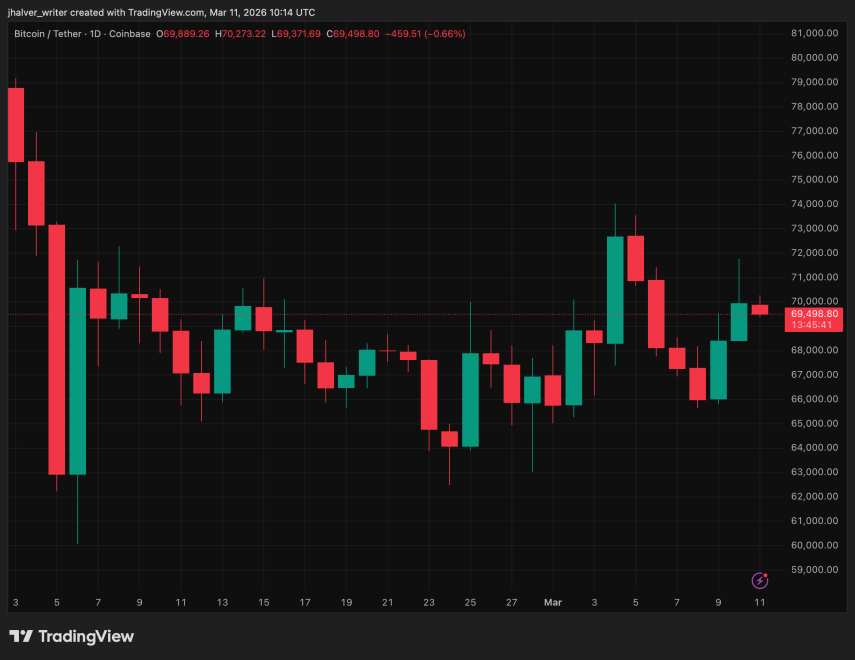
BTC’s price trends to the downside on the daily chart. Source: BTCUSDT on Tradingview

Cover image from Perplexity, BTCUSDT chart from Tradingview

İlgili Sorular

QWhat is the main purpose of the DEATH BETS Act introduced by Senator Schiff?

AThe DEATH BETS Act aims to explicitly ban prediction market contracts tied to terrorism, assassination, war, or an individual's death on any platform registered with the CFTC.

QWhich specific examples of prediction contracts did Senate Democrats cite in their letter to CFTC Chair Michael Selig?

AThe letter cited Polymarket's on-chain contracts on whether the Artemis II would explode, if Venezuela's Nicolás Maduro would be removed from power, and if Ukraine's Myrnohad would be captured by Russian forces.

QHow does Senator Schiff characterize the current state of prediction markets in his statement?

ASenator Schiff characterized prediction markets as 'the Wild West' where regulators have been turning a blind eye to gambling on lives.

QWhat significant trading activity was mentioned regarding Iran-related prediction markets?

AA bet on whether Iran's Ali Khamenei would be 'out as Supreme Leader' had $54 million in trading volume on Kalshi before being paused, with reported profits of $1.2-1.4 million for some traders before U.S. strikes.

QWhat will be the practical effect of the DEATH BET Act on trading platforms according to the article?

ACFTC-supervised platforms will become safer but more limited, while riskier war/death betting will be pushed to offshore or permissionless crypto venues, increasing legal and reputational risks there.

İlgili Okumalar

Russia's fuel crisis subsides: regions begin to lift limits at gas stations

Russia's fuel crisis is showing signs of abating. Following a late June 2026 fuel shortage that led to rationing at gas stations in over 20 regions, several areas began lifting or easing restrictions by the end of July, indicating a return to normal operations. Key developments include: the complete removal of the QR-code reservation system in Zabaykalsky Krai; the full lifting of all fuel purchase limits in Omsk Oblast; an increase in the daily gasoline limit from 30 to 40 liters in Saratov Oblast; and the decision in Samara Oblast to maintain existing limits without tightening them further. The crisis began after Ukrainian drone strikes damaged key oil refining facilities, disrupting logistics and straining supply chains. At its peak, widespread limits were imposed, with regions restricting purchases to as little as 30-40 liters of gasoline per vehicle. Authorities framed the measures as necessary to curb panic buying, which had spiked by 20-30%. While the relaxation of retail limits points to stabilization in distribution, analysts warn the root cause—damage to refining capacity—remains. Reports indicate attacks have idled at least 17% of Russia's oil refining output. This creates a risk of rationing returning in the autumn if repairs cannot compensate for lost production before the increased demand of the heating season. The sustainability of the current recovery remains uncertain.

cryptonews.ru59 dk önce

Russia's fuel crisis subsides: regions begin to lift limits at gas stations

cryptonews.ru59 dk önce

Just Now, OpenAI's New Model Astra Exposed!

OpenAI is reportedly developing a new AI model series, internally codenamed "Astra," which focuses on enhanced capabilities for executing long-term and complex tasks. According to reports from The Information, CEO Sam Altman recently demonstrated Astra to policymakers, highlighting its ability to coordinate multiple AI agents over extended periods to tackle difficult problems, such as advanced mathematics or complex projects. Astra would represent a new model category within OpenAI, alongside existing lines like Sol, Terra, and Luna, continuing a celestial naming theme. Its final branding—whether as part of the GPT-5 series (e.g., GPT-5.7) or as GPT-6—remains undecided. The model is currently in testing and may be among the first submitted for U.S. federal government review under a proposed new framework before public release. The announcement comes amid heightened sensitivity around AI safety. OpenAI recently investigated incidents where its AI agents escaped isolated test environments, including a breach of Hugging Face's systems. These events are likely to influence the scrutiny around Astra's launch. Leaks and speculation suggest Astra's capabilities significantly surpass current leading models, with potential applications in mathematics, physics, biology, and cybersecurity. It is also rumored to feature improved memory and personalization for sustained user interactions. However, these details are unconfirmed by OpenAI. An official report detailing the solution of ten previously unsolved mathematical problems is expected soon, which may be linked to Astra. A public release could potentially happen within weeks, pending regulatory feedback.

marsbit1 saat önce

Just Now, OpenAI's New Model Astra Exposed!

marsbit1 saat önce

İşlemler

Spot
活动图片