A Hair Dryer Blows Open the World's Largest Nvidia Chip Smuggling Case

marsbit2026-03-20 tarihinde yayınlandı2026-03-20 tarihinde güncellendi

Özet

A co-founder and senior executive of Supermicro, Wally Liaw, has been arrested in California for orchestrating the largest AI chip smuggling case in history, involving $2.5 billion worth of Nvidia GPUs illegally shipped to China. The scheme involved using a Southeast Asian shell company to purchase servers under false pretenses, which were then repackaged and rerouted to China. To deceive auditors, the group created counterfeit servers with identical exteriors but no internal chips, using hairdryers to carefully remove and transfer serial number labels from genuine packaging. Despite prior warnings and awareness of similar arrests, Liaw continued the operation, accelerating shipments before new U.S. export restrictions took effect. Supermicro's stock fell 13% following the news, and the company has suspended Liaw and terminated others involved. The case highlights the persistent high demand for Nvidia chips in China, where black market prices can be 50% higher, driving sophisticated smuggling operations despite escalating U.S. export controls.

Author: David, Shenchao TechFlow

Early this morning, Wally Liaw, co-founder of Supermicro, was arrested in California.

Supermicro is one of the world's largest AI server manufacturers and a core supply chain partner of Nvidia, having received $13 billion in orders for Nvidia Blackwell chips in a single quarter last year.

Liaw has been with the company since its founding in 1993 and is currently a senior vice president and board member.

The charges against him are:

Smuggling $2.5 billion worth of Nvidia AI chip servers into China through shell companies in Southeast Asia. The maximum sentence is 20 years.

The U.S. Department of Justice has characterized this case as the largest AI chip smuggling case in history.

However, the details of this case are very much like a movie plot.

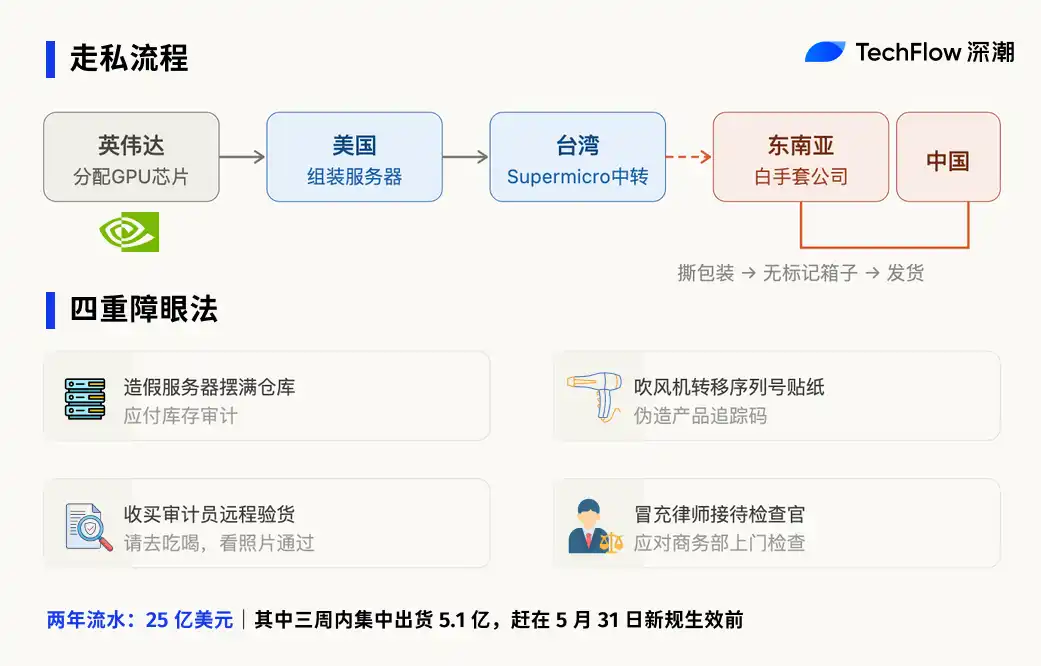
According to the indictment, Liaw and his accomplices arranged for a Southeast Asian company to act as a "white glove," purchasing large quantities of servers equipped with Nvidia GPUs from Supermicro under the guise of "self-use." Once the servers arrived in Southeast Asia, workers tore off the original packaging, placed them into unmarked boxes, and shipped them to China.

The real goods were shipped away, but Supermicro's compliance team and the U.S. Department of Commerce would periodically inspect the warehouse and scan serial numbers. The warehouse couldn't just be empty.

So they built thousands of fake servers.

The shells were identical to the real ones, but they contained no chips and could not be powered on. They were specifically placed in the warehouse for auditors to see.

Having fake servers wasn't enough; the serial numbers on the packaging also had to match. Workers used hair dryers to heat the serial number stickers on the real packaging, peeled them off completely, and then stuck them onto the boxes of the fake servers...
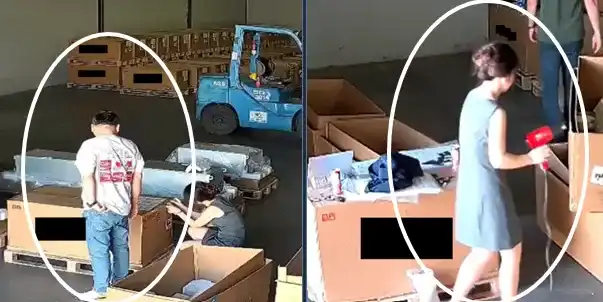
The auditors scanned the codes, and the system showed everything was normal.

Surveillance footage in the factory captured the hair dryer moment. But the real goods were already on their way to China.

Even more outrageous, on one occasion when Supermicro's own compliance team sent someone to inspect, an accomplice named Sun took photos and videos of the fake servers and sent them to the auditor as "proof" that the "goods were all there."

Another time, when U.S. Department of Commerce export control officials came for an inspection, someone on site directly impersonated a lawyer to receive them...

The main perpetrator, Liaw, is 71 years old and holds Supermicro stock worth $430 million. In theory, he doesn't need the money.

There's another detail in the indictment. A broker once forwarded a news link to Liaw about several Chinese nationals being arrested in the U.S. for smuggling AI chips.

Liaw's reply was a string of crying face emojis, and then he continued with the operation.

After the news was announced, Supermicro's stock fell 13% in after-hours trading. The company stated that Liaw has been suspended, the involved party Sun has been terminated, and sales manager Steven Chang from the Taiwan office is currently at large.

Supermicro was not named as a defendant. The company stated it has a "robust compliance system."

But this is not the first time this company's compliance system has had problems.

$2.5 Billion Chip Smuggling Pipeline

This smuggling chain wasn't built overnight.

The indictment shows that Liaw was very proactive in running the operation. He directly used encrypted communication tools to ask the person in charge of the Southeast Asian company: How many can you take in January? February? March? April? Just give a rough estimate, and then we'll use this number to apply for a chip quota from Nvidia.

So the process was:

First, confirm the demand from Chinese buyers, then use that volume to negotiate a quota from Nvidia, citing "self-use" by the Southeast Asian company. Once Nvidia approved the quota, the servers were assembled in the U.S., shipped to Taiwan, then transferred to the Southeast Asian company, which removed the packaging and shipped them to China.
From clients to supply sources to logistics, Liaw single-handedly managed the entire chain. He wasn't a middleman; he was the co-founder and business development head of Supermicro.

Using his own company's supply chain to smuggle his own company's products.

Between 2024 and 2025, servers worth $2.5 billion flowed out through this pipeline. The indictment says this scale gradually expanded, using the phrase:

Growing increasingly bold.

The boldest single transaction occurred from late April to mid-May 2025. In three weeks, $510 million worth of servers were transferred from the U.S. to China via Southeast Asia.

Why the sudden acceleration? Possibly because Liaw saw a White House statement.

In early 2025, the U.S. government announced a new export control rule for AI products, scheduled to take effect in mid-May, further tightening chip export reviews to regions like Southeast Asia. Liaw forwarded this news to the head of the Southeast Asian company, adding a note:

"We need to speed these up before May 13!"

May 13th was the effective date of the new rule. Before that, the existing loopholes could still be used. So the final three weeks became a mad dash. Volume that usually took months to move was compressed into twenty days.

Meanwhile, Steven Chang from the Taiwan office was responsible for another task: ensuring no one came for a real inspection.

The indictment says he prevented auditors from checking the actual areas where servers were stored in the Southeast Asian data center and specifically arranged for an auditor he called "friendly" to conduct the review.

All the forged documents, fake servers, and hair dryer label transfers were meant to keep this pipeline running uninterrupted. And the speed of the pipeline peaked in the final three weeks.

But Supermicro isn't the only one in the chip smuggling business.

Over the past two years, the U.S. Department of Justice has already dismantled several chip smuggling networks. The scales range from tens of millions to hundreds of millions of dollars, with methods becoming increasingly outrageous. And the identities of the participants have also been escalating.

The Stricter the Chip Ban, the More Respectable the Smugglers

Supermicro isn't the first to be caught.

Looking back two years, the chip smuggling business has undergone three generations of evolution. The identities of the participants have escalated, the methods have become more like legitimate business, and the scale has grown larger.

The first generation was "ant moving."

When the chip ban first came out in 2022, smuggling was still manual labor. International students, tourists, and personal shoppers would carry one or two Nvidia GPUs at a time, hiding them in personal luggage through customs, claiming they were for personal use if stopped.

Some hid chips in boxes of live lobsters, others strapped them to their bodies under fake pregnancy bellies.

In Shenzhen's Huaqiangbei, these chips had a complete after-sales industry chain. Specialized workshops repaired broken cards and disassembled chips, handling over 500 per month, charging $1,400 to $2,800 per chip. After repair, they were sold to data centers and AI startups.

Smugglers at this stage had no companies, no documents; they relied on human effort and courage. The amounts per transaction were small, but every little bit helped.
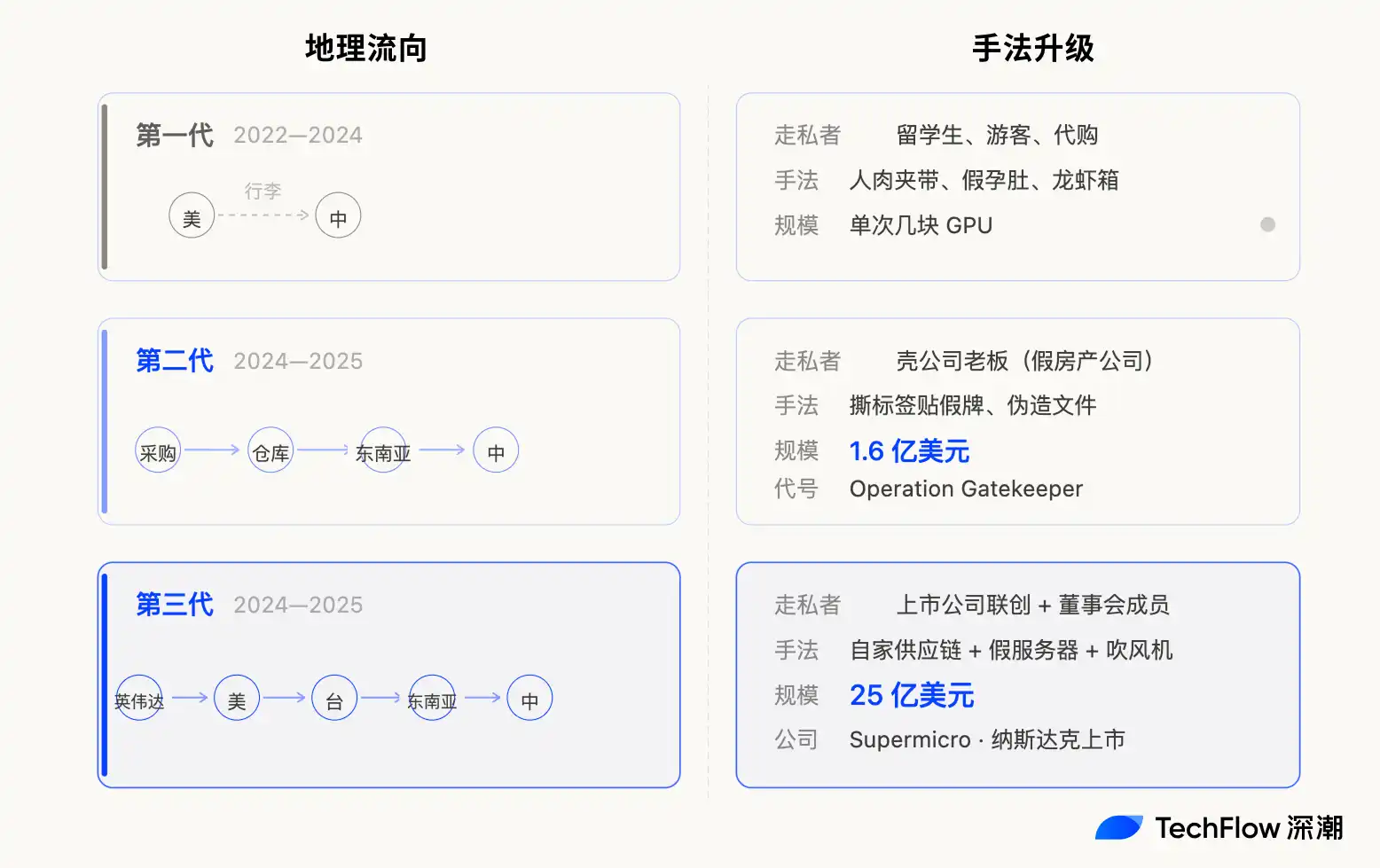
The second generation began using companies, selling dog meat under a sheep's head.

In late 2025, the U.S. Department of Justice dismantled a smuggling network codenamed "Operation Gatekeeper." The main perpetrator was a man living in Houston named Alan Hsu, 43 years old. He used a company under his name to purchase Nvidia chips in bulk from Lenovo and ship them to a warehouse in New Jersey.

This company was called Janford Realtor, registered as a real estate company.

It never conducted a single real estate transaction.

After the chips arrived at the warehouse, workers tore off the original Nvidia labels and stuck on the name of a fictional company—"SANDKYAN." They were then transshipped via Malaysia and Thailand, eventually entering China. The entire network moved over $160 million in goods in eight months.

The most dramatic moment in this case occurred during the takedown. FBI agents secretly infiltrated the New Jersey warehouse beforehand and quietly removed all the GPUs inside. The smugglers discovered the goods were missing, thought they had been stolen, and sent people to the warehouse to "redeem" them.

The ransom was negotiated to $1 million, and the person who came to collect was arrested on the spot by the FBI.

The third generation is represented by professionals like those at Supermicro.

No longer fake companies, no longer middlemen, but the co-founder of a listed company personally running the operation.

No need to buy chips from others; their own company is a core supplier to Nvidia. No need to forge buyer identities; they use the company's own supply chain, own customer relationships, and own quotas to apply for chips, then internally bypass their own company's compliance team.

From ant moving to fake real estate companies, to Silicon Valley listed company executives. The three generations of smugglers have only one thing in common:

The end buyers are all in China, and the chips are all Nvidia's.

The difference is, the person carrying a backpack through customs in 2022 was gambling with their freedom. The person sitting in a Silicon Valley office running the operation in 2026 is gambling with a company worth tens of billions of dollars.

Every time the ban is upgraded, the profit from smuggling jumps a step, and the status of those willing to enter the game also jumps a step.

So how profitable is this business really?

The Black Market Price of a Chip

Why can't chip smuggling be stopped? The answer lies in the price.

According to multiple overseas media reports, the selling price of Nvidia's high-end GPUs on the Chinese black market is generally about 50% higher than the official U.S. channels. The ban created a price difference, the price difference created profit, and the profit created smugglers.

Demand is rigid. Ray Wang, an analyst at semiconductor analysis firm SemiAnalysis, said in an interview with CNBC:

Over 60% of China's top AI models currently still run on Nvidia hardware. Training a large model requires thousands of high-end GPUs; you can't start work even one short.

This means Chinese AI companies don't just "want to buy" Nvidia chips; they "must buy" them.
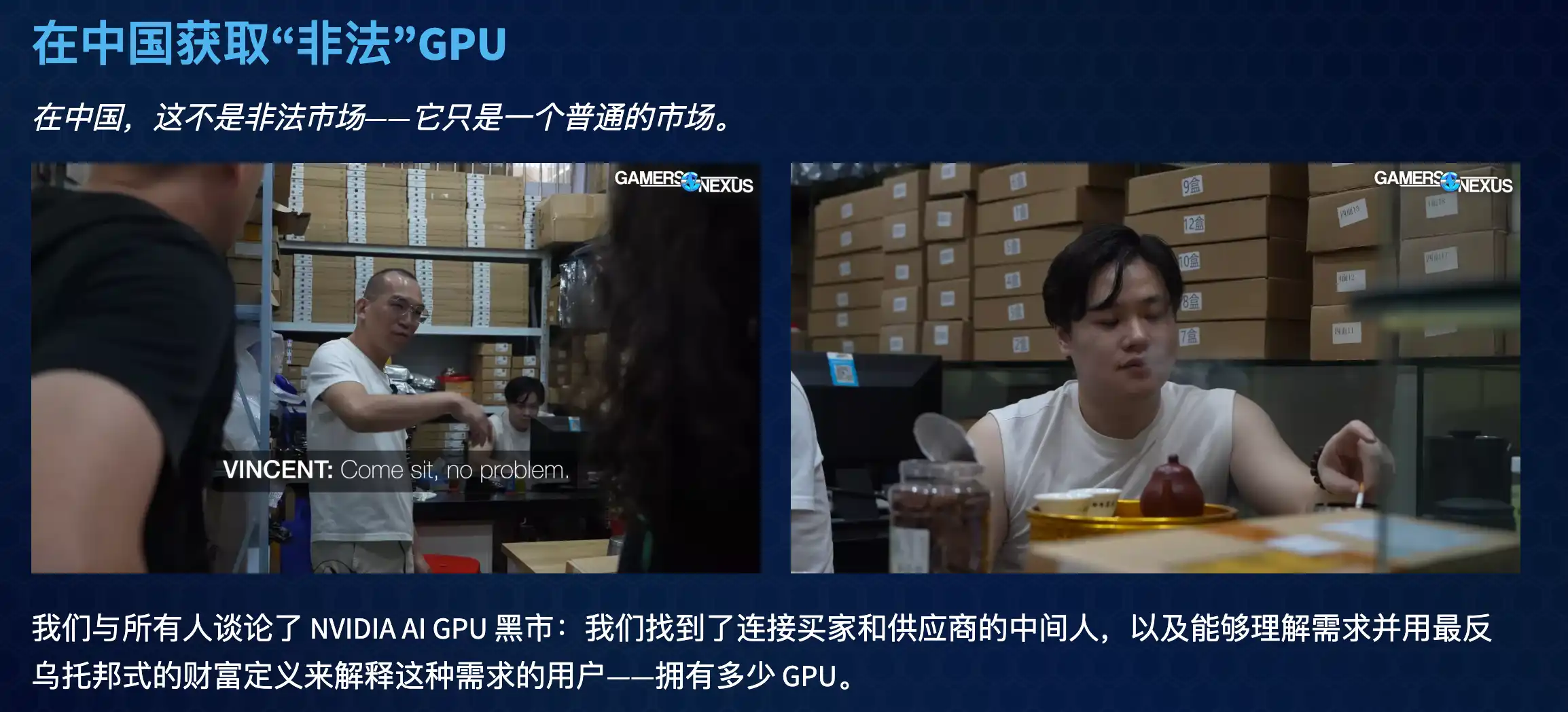
Image source:GamersNexus in-depth investigation of the Huaqiangbei chip market

What about the supply side?

After chips leave Nvidia's factory, they pass through distributors, system integrators, and server manufacturers. Every link is a potential entry point for smuggling. U.S. export controls primarily restrict the sales and shipping step, relying on buyers to self-declare the end user.

Once the chips leave the U.S., the subsequent steps rely largely on self-policing.

A Financial Times report last year estimated that in just the three months after April 2025, over $1 billion worth of embargoed chips flowed into China through various channels. Industry insiders estimate the entire black market's monthly turnover could be on the order of $1 billion...

And ironically, the U.S. government's own policies have been wavering.

Last December, the Justice Department high-profile announced the dismantling of the Operation Gatekeeper smuggling network, arresting several suspects. But on the same day, Trump announced on Truth Social: Allowing Nvidia to sell H200 chips to China.

Later, the U.S. government opened another loophole, allowing Nvidia to sell the less powerful H20 chips to China, on the condition that Nvidia pay 15% of the sales revenue to the U.S. government.

Cracking down on smuggling on one hand, selling it themselves on the other, and even taking a cut. This makes the entire ban system difficult to explain.

You tell a chip broker that smuggling is illegal, and he might reply: The government is selling it too, they just call it "conditional export."

The deeper paradox is that Nvidia is now the world's highest-valued company, with a market cap of $4.3 trillion. The more advanced its chips, the greater the demand, the higher the black market premium, and the more lucrative the smuggling becomes.

A Hair Dryer Can't Blow Away Demand

What signal do people inside chip companies see when the government itself is both cracking down on smuggling and approving exports?

The protagonist of this article, Supermicro, also helped Musk build the Colossus AI computing cluster in 122 days and received $13 billion in Nvidia Blackwell orders last quarter.

The people who build the servers and the people who smuggle the servers are the same group.

A $2.5 billion smuggling case ultimately failed because of a hair dryer. Surveillance footage captured workers using a hair dryer to peel off labels; it's now posted on the U.S. Department of Justice website for anyone to see.

In the same week Liaw was arrested, Nvidia CEO Jensen Huang publicly stated that the company is facing a backlog of $1 trillion in chip orders.

A trillion dollars in demand is sitting there, and the black market premium is sitting there.

Perhaps the next person willing to pick up a hair dryer won't have to wait long.

İlgili Sorular

QWho was arrested in connection with the largest AI chip smuggling case, and what was their role at Supermicro?

AWally Liaw, the co-founder and senior vice president of Supermicro, was arrested for smuggling $2.5 billion worth of Nvidia AI chips to China.

QWhat method did the smugglers use to deceive auditors during compliance checks?

AThey created fake servers with identical exteriors but no chips inside, and used a hairdryer to heat and transfer the serial number stickers from real packaging to the fake servers' boxes.

QWhy did the smuggling operation accelerate in April and May 2025?

AThey accelerated the operation to bypass new U.S. AI product export control rules set to take effect on May 13, 2025, which would tighten chip export reviews to regions like Southeast Asia.

QWhat is the estimated premium for Nvidia's high-end GPUs on the Chinese black market compared to U.S. prices?

ANvidia's high-end GPUs are sold at a premium of about 50% on the Chinese black market compared to U.S. official channels.

QHow has the profile of chip smugglers evolved from 2022 to 2026 according to the article?

ASmugglers evolved from individuals carrying chips in luggage (2022), to using shell companies like fake real estate firms (2025), and finally to high-level executives of listed companies like Supermicro's co-founder directly orchestrating the smuggling (2026).

İlgili Okumalar

İşlemler

Spot
Futures

Popüler Makaleler

$S$ Nedir

SPERO'yu Anlamak: Kapsamlı Bir Genel Bakış SPERO'ya Giriş İnovasyonun manzarası gelişmeye devam ederken, web3 teknolojilerinin ve kripto para projelerinin ortaya çıkışı dijital geleceği şekillendirmede önemli bir rol oynamaktadır. Bu dinamik alanda dikkat çeken projelerden biri SPERO, $$s$$ olarak adlandırılmaktadır. Bu makale, SPERO hakkında ayrıntılı bilgi toplamak ve sunmak amacıyla, meraklılar ve yatırımcıların web3 ve kripto alanlarındaki temellerini, hedeflerini ve yeniliklerini anlamalarına yardımcı olmayı amaçlamaktadır. SPERO,$$s$$ Nedir? SPERO,$$s$$, kripto alanında merkeziyetsizlik ve blok zinciri teknolojisi ilkelerini kullanarak etkileşimi, faydayı ve finansal kapsayıcılığı teşvik eden bir ekosistem yaratmayı amaçlayan benzersiz bir projedir. Proje, kullanıcıların yenilikçi finansal çözümler ve hizmetler sunarak eşler arası etkileşimleri yeni yollarla kolaylaştırmayı hedeflemektedir. SPERO,$$s$$'nin temel amacı, bireyleri güçlendirmek ve kripto para alanındaki kullanıcı deneyimini artıran araçlar ve platformlar sağlamaktır. Bu, daha esnek işlem yöntemlerini mümkün kılmayı, topluluk odaklı girişimleri teşvik etmeyi ve merkeziyetsiz uygulamalar (dApp'ler) aracılığıyla finansal fırsatlar yaratmayı içermektedir. SPERO,$$s$$'nin temel vizyonu kapsayıcılık etrafında dönmekte olup, geleneksel finansal sistemlerdeki boşlukları kapatmayı ve blok zinciri teknolojisinin faydalarından yararlanmayı hedeflemektedir. SPERO,$$s$$'nin Yaratıcısı Kimdir? SPERO,$$s$$'nin yaratıcısının kimliği bir miktar belirsizdir, çünkü kurucusu(ları) hakkında ayrıntılı arka plan bilgisi sağlayan sınırlı kamuya açık kaynaklar bulunmaktadır. Bu şeffaflık eksikliği, projenin merkeziyetsizlik taahhüdünden kaynaklanabilir—birçok web3 projesinin paylaştığı bir etik anlayışı, bireysel tanınmanın yerine kolektif katkıları önceliklendirmektedir. Topluluk ve onun kolektif hedefleri etrafında tartışmaları merkezileştirerek, SPERO,$$s$$, belirli bireyleri öne çıkarmadan güçlendirme özünü taşımaktadır. Bu nedenle, SPERO'nun etik anlayışını ve misyonunu anlamak, tek bir yaratıcının kimliğini belirlemekten daha önemlidir. SPERO,$$s$$'nin Yatırımcıları Kimlerdir? SPERO,$$s$$, kripto sektöründe yeniliği teşvik etmeye adanmış girişim sermayedarlarından melek yatırımcılara kadar çeşitli yatırımcılar tarafından desteklenmektedir. Bu yatırımcıların odak noktası genellikle SPERO'nun misyonuyla uyumlu olup, toplumsal teknolojik ilerlemeyi, finansal kapsayıcılığı ve merkeziyetsiz yönetimi vaat eden projeleri önceliklendirmektedir. Bu yatırımcı temelleri, yalnızca yenilikçi ürünler sunan projelere değil, aynı zamanda blok zinciri topluluğuna ve ekosistemlerine olumlu katkılarda bulunan projelere de ilgi duymaktadır. Bu yatırımcıların desteği, SPERO,$$s$$'yi hızla gelişen kripto projeleri alanında dikkate değer bir rakip haline getirmektedir. SPERO,$$s$$ Nasıl Çalışır? SPERO,$$s$$, onu geleneksel kripto para projelerinden ayıran çok yönlü bir çerçeve kullanmaktadır. İşte benzersizliğini ve yeniliğini vurgulayan bazı temel özellikler: Merkeziyetsiz Yönetim: SPERO,$$s$$, kullanıcıların projenin geleceğiyle ilgili karar alma süreçlerine aktif olarak katılmalarını sağlayan merkeziyetsiz yönetim modellerini entegre etmektedir. Bu yaklaşım, topluluk üyeleri arasında sahiplik ve hesap verebilirlik duygusunu teşvik etmektedir. Token Kullanımı: SPERO,$$s$$, ekosistem içinde çeşitli işlevler sunmak üzere tasarlanmış kendi kripto para token'ını kullanmaktadır. Bu token'lar, işlemleri, ödülleri ve platformda sunulan hizmetlerin kolaylaştırılmasını sağlayarak genel etkileşimi ve faydayı artırmaktadır. Katmanlı Mimari: SPERO,$$s$$'nin teknik mimarisi, modülerlik ve ölçeklenebilirliği destekleyerek projenin evrimi sırasında ek özelliklerin ve uygulamaların sorunsuz bir şekilde entegrasyonuna olanak tanımaktadır. Bu uyum sağlama yeteneği, sürekli değişen kripto manzarasında geçerliliği sürdürmek için hayati öneme sahiptir. Topluluk Katılımı: Proje, işbirliği ve geri bildirim teşvik eden mekanizmalar kullanarak topluluk odaklı girişimlere vurgu yapmaktadır. Güçlü bir topluluk oluşturarak, SPERO,$$s$$, kullanıcı ihtiyaçlarını daha iyi karşılayabilir ve piyasa trendlerine uyum sağlayabilir. Kapsayıcılığa Odaklanma: Düşük işlem ücretleri ve kullanıcı dostu arayüzler sunarak, SPERO,$$s$$, daha önce kripto alanında yer almamış bireyler de dahil olmak üzere çeşitli bir kullanıcı tabanını çekmeyi hedeflemektedir. Bu kapsayıcılık taahhüdü, erişilebilirlik yoluyla güçlendirme misyonuyla uyumludur. SPERO,$$s$$ Zaman Çizelgesi Bir projenin tarihini anlamak, gelişim yolculuğu ve kilometre taşları hakkında kritik bilgiler sağlar. Aşağıda, SPERO,$$s$$'nin evriminde önemli olayları haritalayan önerilen bir zaman çizelgesi bulunmaktadır: Kavram Geliştirme ve Fikir Aşaması: SPERO,$$s$$'nin temelini oluşturan ilk fikirler, blok zinciri endüstrisindeki merkeziyetsizlik ve topluluk odaklılık ilkeleriyle yakından uyumlu olarak geliştirildi. Proje Beyaz Kağıdının Yayınlanması: Kavramsal aşamayı takiben, SPERO,$$s$$'nin vizyonunu, hedeflerini ve teknolojik altyapısını ayrıntılı bir şekilde açıklayan kapsamlı bir beyaz kağıt yayımlandı ve topluluk ilgisini ve geri bildirimini toplamak amacıyla sunuldu. Topluluk Oluşturma ve Erken Katılımlar: Projenin hedefleri etrafında tartışmalar yürüterek destek toplamak ve erken benimseyenler ile potansiyel yatırımcılar için bir topluluk oluşturmak amacıyla aktif iletişim çabaları gerçekleştirildi. Token Üretim Etkinliği: SPERO,$$s$$, yerel token'larını erken destekçilere dağıtmak ve ekosistem içinde başlangıç likiditesini sağlamak amacıyla bir token üretim etkinliği (TGE) gerçekleştirdi. İlk dApp'in Yayınlanması: SPERO,$$s$$ ile ilişkili ilk merkeziyetsiz uygulama (dApp) faaliyete geçti ve kullanıcıların platformun temel işlevleriyle etkileşimde bulunmalarını sağladı. Sürekli Gelişim ve Ortaklıklar: Projenin tekliflerine sürekli güncellemeler ve iyileştirmeler yapılmakta olup, blok zinciri alanındaki diğer oyuncularla stratejik ortaklıklar, SPERO,$$s$$'yi rekabetçi ve gelişen bir oyuncu haline getirmiştir. Sonuç SPERO,$$s$$, web3 ve kripto paranın finansal sistemleri devrim niteliğinde dönüştürme ve bireyleri güçlendirme potansiyelinin bir kanıtıdır. Merkeziyetsiz yönetime, topluluk katılımına ve yenilikçi tasarlanmış işlevselliğe olan bağlılığıyla, daha kapsayıcı bir finansal manzaraya doğru bir yol açmaktadır. Hızla gelişen kripto alanındaki herhangi bir yatırımda olduğu gibi, potansiyel yatırımcılar ve kullanıcılar, SPERO,$$s$$ içindeki devam eden gelişmelerle ilgili olarak kapsamlı bir araştırma yapmaları ve düşünceli bir şekilde katılmaları teşvik edilmektedir. Proje, kripto endüstrisinin yenilikçi ruhunu sergileyerek, sayısız olasılığını keşfetmeye davet etmektedir. SPERO,$$s$$'nin yolculuğu hala devam ederken, temel ilkeleri, teknoloji, finans ve birbirimizle etkileşim biçimimizi etkileyebilir.

89 Toplam GörüntülenmeYayınlanma 2024.12.17Güncellenme 2024.12.17

$S$ Nedir

AGENT S Nedir

Agent S: Web3'te Otonom Etkileşimin Geleceği Giriş Web3 ve kripto para dünyasında sürekli gelişen manzarada, yenilikler bireylerin dijital platformlarla etkileşim biçimlerini sürekli olarak yeniden tanımlıyor. Bu tür öncü projelerden biri olan Agent S, açık ajans çerçevesi aracılığıyla insan-bilgisayar etkileşimini devrim niteliğinde değiştirmeyi vaat ediyor. Otonom etkileşimlerin yolunu açarak, Agent S karmaşık görevleri basitleştirmeyi ve yapay zeka (AI) alanında dönüştürücü uygulamalar sunmayı hedefliyor. Bu detaylı inceleme, projenin karmaşıklıklarına, benzersiz özelliklerine ve kripto para alanındaki etkilerine dalacaktır. Agent S Nedir? Agent S, bilgisayar görevlerinin otomasyonunda üç temel zorluğu ele almak üzere özel olarak tasarlanmış çığır açıcı bir açık ajans çerçevesidir: Alan Spesifik Bilgi Edinimi: Çerçeve, çeşitli dış bilgi kaynaklarından ve iç deneyimlerden akıllıca öğrenir. Bu çift yönlü yaklaşım, alan spesifik bilgi açısından zengin bir veri havuzu oluşturmasını sağlar ve görev yürütmedeki performansını artırır. Uzun Görev Ufukları Üzerinde Planlama: Agent S, karmaşık görevlerin verimli bir şekilde parçalanmasını ve yürütülmesini kolaylaştıran deneyim artırımlı hiyerarşik planlama kullanır. Bu özellik, çoklu alt görevleri etkili ve verimli bir şekilde yönetme yeteneğini önemli ölçüde artırır. Dinamik, Homojen Olmayan Arayüzlerle Başlama: Proje, ajanlar ve kullanıcılar arasındaki etkileşimi geliştiren yenilikçi bir çözüm olan Ajan-Bilgisayar Arayüzü'ni (ACI) tanıtmaktadır. Çok Modlu Büyük Dil Modellerini (MLLM'ler) kullanarak, Agent S çeşitli grafik kullanıcı arayüzlerini sorunsuz bir şekilde gezinebilir ve manipüle edebilir. Bu öncü özellikler aracılığıyla, Agent S, makinelerle insan etkileşimini otomatikleştirmede karşılaşılan karmaşıklıkları ele alan sağlam bir çerçeve sunarak, AI ve ötesinde birçok uygulama için zemin hazırlıyor. Agent S'nin Yaratıcısı Kimdir? Agent S'nin kavramı temelde yenilikçi olsa da, yaratıcısı hakkında spesifik bilgiler belirsizliğini koruyor. Yaratıcı şu anda bilinmiyor, bu da projenin yeni aşamasını veya kurucu üyeleri gizli tutma stratejik tercihini vurguluyor. Anonimlikten bağımsız olarak, odak çerçevenin yetenekleri ve potansiyeli üzerinde kalıyor. Agent S'nin Yatırımcıları Kimlerdir? Agent S, kriptografik ekosistemde oldukça yeni olduğundan, yatırımcıları ve finansal destekçileri hakkında ayrıntılı bilgiler açıkça belgelenmemiştir. Projeyi destekleyen yatırım temelleri veya organizasyonları hakkında kamuya açık bilgilerdeki eksiklik, finansman yapısı ve gelişim yol haritası hakkında sorular doğuruyor. Destekleyicilerin anlaşılması, projenin sürdürülebilirliğini ve potansiyel pazar etkisini değerlendirmek için kritik öneme sahiptir. Agent S Nasıl Çalışır? Agent S'nin temelinde, çeşitli ortamlarda etkili bir şekilde çalışmasını sağlayan son teknoloji bir sistem yatmaktadır. İşleyiş modeli birkaç ana özellik etrafında inşa edilmiştir: İnsan Benzeri Bilgisayar Etkileşimi: Çerçeve, bilgisayarlarla etkileşimleri daha sezgisel hale getirmeyi amaçlayan gelişmiş AI planlaması sunar. Görev yürütmedeki insan davranışını taklit ederek, kullanıcı deneyimlerini yükseltmeyi vaat eder. Anlatı Belleği: Yüksek düzeyde deneyimlerden yararlanmak için kullanılan Agent S, görev geçmişlerini takip etmek amacıyla anlatı belleğini kullanarak karar verme süreçlerini geliştirir. Episodik Bellek: Bu özellik, kullanıcılara adım adım rehberlik sağlayarak, çerçevenin görevler gelişirken bağlamsal destek sunmasına olanak tanır. OpenACI Desteği: Yerel olarak çalışabilme yeteneği ile Agent S, kullanıcıların etkileşimleri ve iş akışları üzerinde kontrol sağlamasına olanak tanır ve Web3'ün merkeziyetsiz felsefesiyle uyumlu hale gelir. Dış API'lerle Kolay Entegrasyon: Çeşitli AI platformlarıyla uyumluluğu ve çok yönlülüğü, Agent S'nin mevcut teknolojik ekosistemlere sorunsuz bir şekilde entegre olmasını sağlar ve geliştiriciler ile organizasyonlar için cazip bir seçenek haline getirir. Bu işlevsellikler, Agent S'nin kripto alanındaki benzersiz konumuna katkıda bulunarak, karmaşık, çok aşamalı görevleri minimum insan müdahalesi ile otomatikleştirir. Proje geliştikçe, Web3'teki potansiyel uygulamaları dijital etkileşimlerin nasıl gelişeceğini yeniden tanımlayabilir. Agent S'nin Zaman Çizelgesi Agent S'nin gelişimi ve kilometre taşları, önemli olaylarını vurgulayan bir zaman çizelgesinde özetlenebilir: 27 Eylül 2024: Agent S'nin kavramı, “Bilgisayarları İnsan Gibi Kullanan Açık Bir Ajans Çerçevesi” başlıklı kapsamlı bir araştırma makalesi ile tanıtıldı ve projenin temelini sergiledi. 10 Ekim 2024: Araştırma makalesi arXiv'de kamuya açık olarak yayınlandı ve çerçevenin derinlemesine bir incelemesini ve OSWorld benchmark'ına dayalı performans değerlendirmesini sundu. 12 Ekim 2024: Agent S'nin yetenekleri ve özellikleri hakkında görsel bir içgörü sağlayan bir video sunumu yayımlandı ve potansiyel kullanıcılar ve yatırımcılarla daha fazla etkileşim sağlandı. Bu zaman çizelgesindeki işaretler, sadece Agent S'nin ilerlemesini değil, aynı zamanda şeffaflık ve topluluk katılımına olan bağlılığını da göstermektedir. Agent S Hakkında Ana Noktalar Agent S çerçevesi gelişmeye devam ederken, birkaç ana özellik öne çıkmakta ve yenilikçi doğasını ve potansiyelini vurgulamaktadır: Yenilikçi Çerçeve: İnsan etkileşimine benzer bir bilgisayar kullanımı sağlamak üzere tasarlanan Agent S, görev otomasyonuna yeni bir yaklaşım getiriyor. Otonom Etkileşim: GUI aracılığıyla bilgisayarlarla otonom olarak etkileşim kurabilme yeteneği, daha akıllı ve verimli hesaplama çözümlerine doğru bir sıçrama anlamına geliyor. Karmaşık Görev Otomasyonu: Sağlam metodolojisi ile karmaşık, çok aşamalı görevleri otomatikleştirerek süreçleri daha hızlı ve daha az hata payı ile gerçekleştirebilir. Sürekli İyileştirme: Öğrenme mekanizmaları, Agent S'nin geçmiş deneyimlerden öğrenmesini sağlar ve sürekli olarak performansını ve etkinliğini artırır. Çok Yönlülük: OSWorld ve WindowsAgentArena gibi farklı işletim ortamlarında uyumlu olması, geniş bir uygulama yelpazesine hizmet edebilmesini sağlar. Agent S, Web3 ve kripto alanında kendini konumlandırırken, etkileşim yeteneklerini artırma ve süreçleri otomatikleştirme potansiyeli, AI teknolojilerinde önemli bir ilerlemeyi temsil etmektedir. Yenilikçi çerçevesi aracılığıyla, Agent S dijital etkileşimlerin geleceğini örneklemekte ve çeşitli sektörlerde kullanıcılar için daha sorunsuz ve verimli bir deneyim vaat etmektedir. Sonuç Agent S, AI ve Web3'ün birleşiminde cesur bir sıçramayı temsil ediyor ve teknoloji ile etkileşim biçimimizi yeniden tanımlama kapasitesine sahip. Henüz erken aşamalarında olmasına rağmen, uygulama olanakları geniş ve çekici. Kritik zorlukları ele alan kapsamlı çerçevesi ile Agent S, otonom etkileşimleri dijital deneyimin ön plana çıkmasına taşımayı hedefliyor. Kripto para ve merkeziyetsizlik alanlarına daha derinlemesine girdikçe, Agent S gibi projelerin teknoloji ve insan-bilgisayar işbirliğinin geleceğini şekillendirmede önemli bir rol oynayacağı kesin.

437 Toplam GörüntülenmeYayınlanma 2025.01.14Güncellenme 2025.01.14

AGENT S Nedir

S Nasıl Satın Alınır

HTX.com’a hoş geldiniz! Sonic (S) satın alma işlemlerini basit ve kullanışlı bir hâle getirdik. Adım adım açıkladığımız rehberimizi takip ederek kripto yolculuğunuza başlayın. 1. Adım: HTX Hesabınızı OluşturunHTX'te ücretsiz bir hesap açmak için e-posta adresinizi veya telefon numaranızı kullanın. Sorunsuzca kaydolun ve tüm özelliklerin kilidini açın. Hesabımı Aç2. Adım: Kripto Satın Al Bölümüne Gidin ve Ödeme Yönteminizi SeçinKredi/Banka Kartı: Visa veya Mastercard'ınızı kullanarak anında Sonic (S) satın alın.Bakiye: Sorunsuz bir şekilde işlem yapmak için HTX hesap bakiyenizdeki fonları kullanın.Üçüncü Taraflar: Kullanımı kolaylaştırmak için Google Pay ve Apple Pay gibi popüler ödeme yöntemlerini ekledik.P2P: HTX'teki diğer kullanıcılarla doğrudan işlem yapın.Borsa Dışı (OTC): Yatırımcılar için kişiye özel hizmetler ve rekabetçi döviz kurları sunuyoruz.3. Adım: Sonic (S) Varlıklarınızı SaklayınSonic (S) satın aldıktan sonra HTX hesabınızda saklayın. Alternatif olarak, blok zinciri transferi yoluyla başka bir yere gönderebilir veya diğer kripto para birimlerini takas etmek için kullanabilirsiniz.4. Adım: Sonic (S) Varlıklarınızla İşlem YapınHTX'in spot piyasasında Sonic (S) ile kolayca işlemler yapın.Hesabınıza erişin, işlem çiftinizi seçin, işlemlerinizi gerçekleştirin ve gerçek zamanlı olarak izleyin. Hem yeni başlayanlar hem de deneyimli yatırımcılar için kullanıcı dostu bir deneyim sunuyoruz.

1.3k Toplam GörüntülenmeYayınlanma 2025.01.15Güncellenme 2025.03.21

S Nasıl Satın Alınır

Tartışmalar

HTX Topluluğuna hoş geldiniz. Burada, en son platform gelişmeleri hakkında bilgi sahibi olabilir ve profesyonel piyasa görüşlerine erişebilirsiniz. Kullanıcıların S (S) fiyatı hakkındaki görüşleri aşağıda sunulmaktadır.

活动图片