A Company Once on the Verge of Collapse Now Has a Market Cap Surpassing Bitcoin

marsbit2026-06-22 tarihinde yayınlandı2026-06-22 tarihinde güncellendi

Özet

"Once nearly bankrupt, SK Hynix now surpasses Bitcoin in market cap." On June 22, SK Hynix's market value reached $1.35 trillion, exceeding Bitcoin's $1.29 trillion, driven by soaring demand for its High-Bandwidth Memory (HBM), a critical component for AI training. As NVIDIA's primary HBM supplier with over 60% market share, the company reported a 72% operating profit margin in Q1. Its remarkable turnaround stems from a 13-year bet on HBM technology, initiated in 2009 and rescued by SK Group's acquisition in 2012. The company plans a Nasdaq listing, potentially attracting more institutional capital. This milestone highlights a market preference for tangible AI infrastructure assets—like HBM with its physical scarcity and verifiable revenue—over narrative-driven crypto-AI projects, which remain in early developmental stages and lack comparable proof of scalable demand or economic models. The capital shift underscores the premium placed on real-world supply constraints and profitability in the current AI boom.

Author:Zhou,ChainCatcher

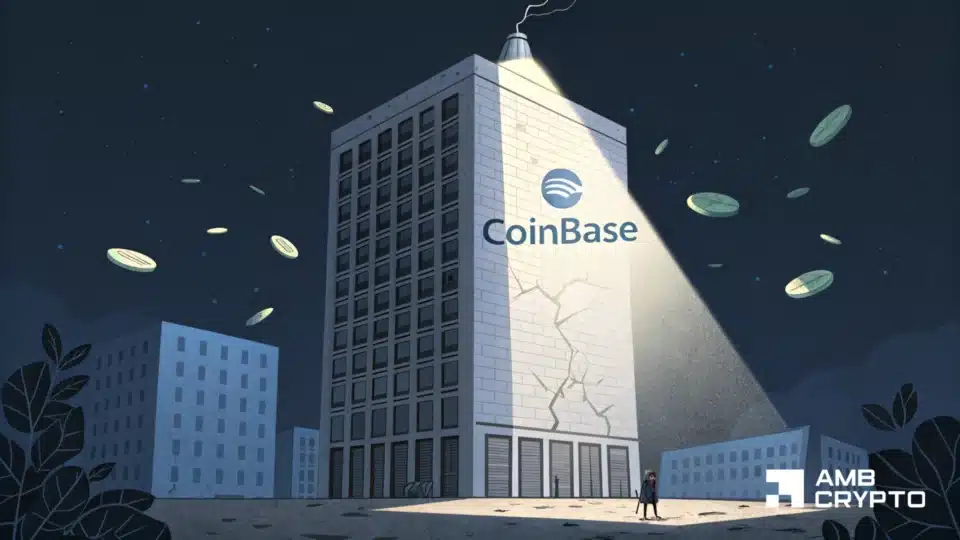
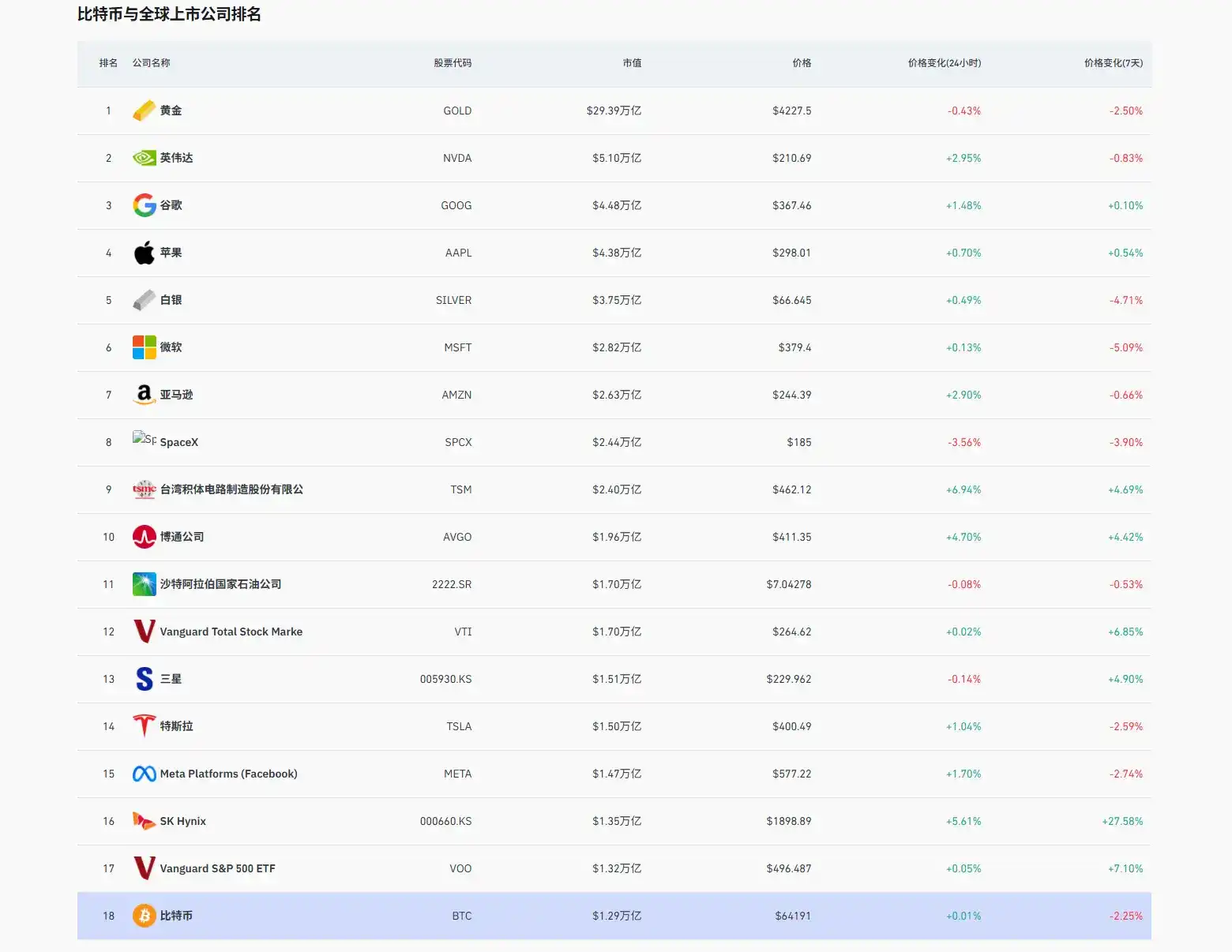
On June 22, a surge in SK Hynix's stock price propelled its market capitalization to $1.35 trillion, surpassing Bitcoin's total market cap of approximately $1.29 trillion. At one point during the trading session, it even overtook Samsung Electronics to become South Korea's highest-valued company.

According to Coinglass data, in the global asset rankings, SK Hynix rose to 16th place, while Bitcoin slid to 18th.
HBM, and a 13-Year Gamble

The core driver of SK Hynix's recent rally is HBM (High Bandwidth Memory). AI training and inference place extremely high demands on memory bandwidth, and SK Hynix is NVIDIA's primary HBM supplier, holding a market share exceeding 60%.

Financial reports show SK Hynix's Q1 revenue was 52.58 trillion won, with operating profit at 37.61 trillion won, achieving a profit margin of 72%. Analysts' current consensus for SK Hynix's Q2 operating profit is around 62~65 trillion won, with some brokerage houses' optimistic forecasts already revised upwards to over 68 trillion won.

In early April this year, most market expectations for Q2 were still in the 50 trillion won range. Since then, with persistently strong memory prices, brokerages have generally made significant upward revisions. Management stated during the earnings call that the structural memory shortage driven by artificial intelligence would last for at least several years and plans to significantly increase capital expenditure to expand advanced capacity.

Reportedly, SK Hynix began betting on HBM technology as early as 2009, a time when almost no one paid attention to this complex technology with limited initial demand. From the first generation of HBM to HBM3E, this all-or-nothing gamble lasted nearly 13 years, only reaching its coronation moment with the advent of ChatGPT.
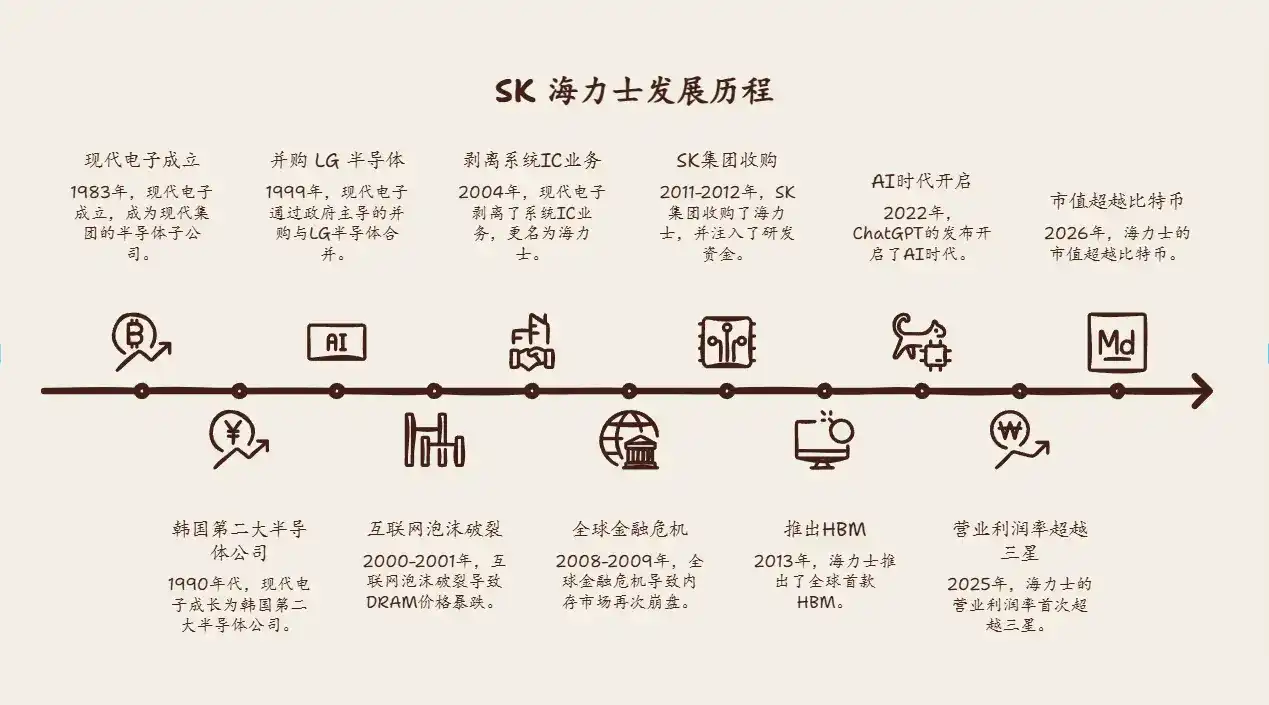
Image Source: AI Generated

SK Hynix's journey to this point cannot be separated from a critical external rescue. After the dot-com bubble burst in 2001, Hynix was deeply mired in a debt crisis, its stock price once falling to junk levels. It even negotiated a sale to Micron Technology, which ultimately failed. For the following decade, the company remained under creditor control.

In 2012, SK Group Chairman Chey Tae-won overrode board opposition and acquired the company for approximately $3 billion through its investment holding subsidiary SK Square, renaming it SK Hynix and injecting substantial R&D funding. This investment enabled the company to continue advancing the then-niche HBM technology. Currently, SK Square holds about 20% of SK Hynix shares, making it the largest single shareholder.

It is worth noting that SK Square itself once attempted to enter the crypto market. In 2021, it acquired a 35% stake in the Korean crypto exchange Korbit for about 90 billion won and planned to issue its own token, SK Coin. According to public reports, after the Terra/LUNA crash in 2022, the market cooled sharply, and the SK Coin issuance plan was subsequently shelved, with no substantial progress since.

According to a Reuters report citing informed sources, SK Hynix plans to list on NASDAQ as early as August this year, which would lower the trading threshold for U.S. institutional and passive funds and potentially attract further capital inflows. NVIDIA CEO Jensen Huang recently stated that NVIDIA's collaboration with SK Hynix is expected to bring South Korea business opportunities worth hundreds of billions of dollars in the future.

Why is Capital Buying In? Crypto AI in the Mirror

In this wave of AI, the market is more willing to pay a premium for segments that already have real orders and visible supply bottlenecks. Assets directly involved in the AI supply side—computing power, memory, and electricity—have received priority allocation due to their quantifiable revenue and verifiable barriers.

HBM production capacity is highly concentrated in the hands of SK Hynix, Samsung, and Micron, with expansion cycles taking 2 to 3 years. This physical scarcity is not built on narratives; it is locked in by production cycles and technological barriers. The valuation logic of the memory industry is also shifting from "cyclical stock" to "growth stock."

SK Hynix's market cap surpassing Bitcoin is the capital market's public statement on two types of scarcity. With such high barriers already formed at the physical layer, the situation of Crypto AI is worth re-examining.

The Crypto AI sector has been telling a story for the past two years: decentralized computing power will reshape AI infrastructure, and open networks will surpass closed enterprise data centers. The potential of this direction is real, but standing before the market cap figure of SK Hynix today, several realities are worth confronting directly.

The IC3 report jointly released by Cornell University and 12 other universities points out that the convergence of Crypto and AI is still in its early stages, and the noise surrounding this intersection has overshadowed practical progress. Decentralized computing power, data markets, and governance mostly remain at the conceptual stage.

At the project level, taking Bittensor, one of the most representative projects in the Crypto AI sector, as an example, its token TAO has fallen 20% over the past 3 months. Bittensor co-founder const posted on platform X, stating that the project's economic incentive layer is still dominated by the core team, who chose to prioritize rapid iteration at the cost of maintaining centralization, and it is estimated to take another year and a half to complete the core mechanism construction. In other words, their underlying mechanisms are still being patched.

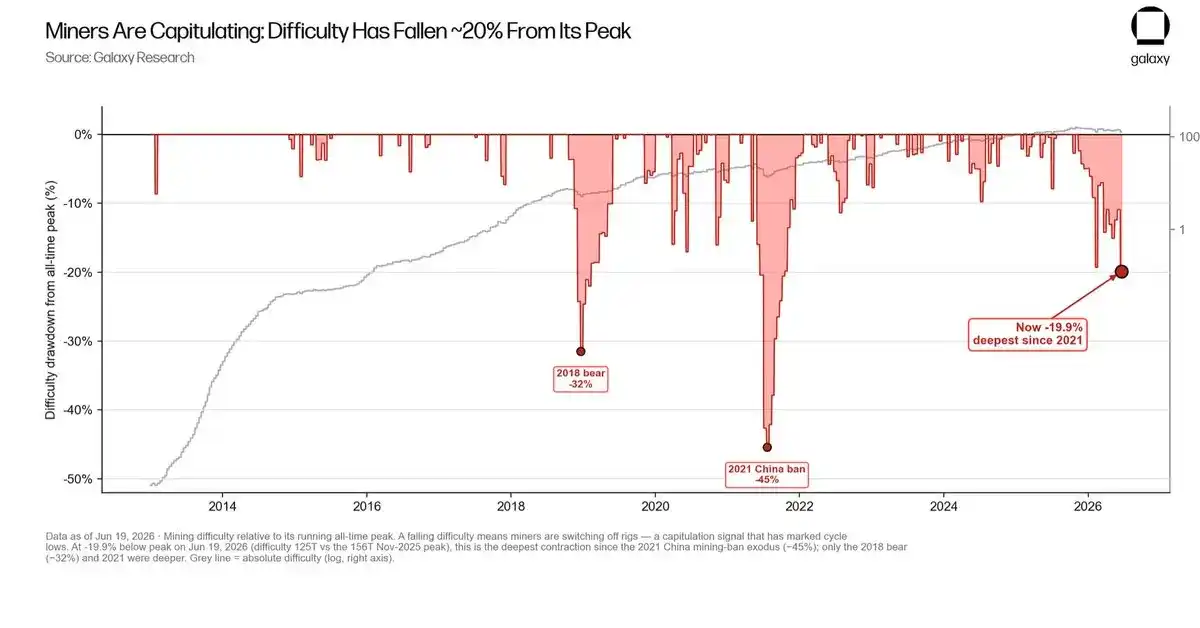
Crypto mining companies, which are closer to the hardware layer, are also facing challenges. According to Galaxy Research data, Bitcoin miners are entering a "capitulation period." The current network mining difficulty has dropped more than 20% from its historical high, marking the largest decline since China's crackdown on Bitcoin mining in 2021, with some miners continuing to exit the network or shut down equipment.
Seeking transformation, mining companies like Core Scientific, TeraWulf, and Hut 8 have announced moves into AI and high-performance computing. However, according to a VanEck report, this transformation faces a short-term funding gap of about $50 billion, with long-term capital needs around $221 billion. Furthermore, the industry has only delivered about 25% of the leased AI capacity—companies missing construction milestones already face investor downgrades.

The IC3 report jointly released by Cornell University and 12 other universities mentions that the convergence of Crypto and AI is still in its early stages, and the noise surrounding this intersection has overshadowed practical progress. Decentralized computing power, data markets, and governance mostly remain at the conceptual stage.

In terms of funding, Arthur Hayes pointed out in his recent article "Reality Test" that since the release of ChatGPT in 2022, the AI industry has cumulatively issued about $1.5 trillion in debt, roughly equivalent to the increase in U.S. M2 money supply during the same period—AI has absorbed almost all new liquidity; Bitcoin never had a chance. Hayes believes this is not a logic of "if AI falls, funds will flow back to crypto." The upcoming large-scale IPOs of Anthropic and OpenAI will further siphon market funds. Once the AI bubble bursts, bank credit contraction will simultaneously tighten liquidity, and Bitcoin will be sold off alongside AI.

Since the second half of last year, many traders previously active in the crypto market have shifted their attention to U.S. and South Korean stocks, chasing the AI hardware trend. The logic of capital flowing into AI infrastructure is also straightforward: real orders, physical barriers, quantifiable profit margins.

This certainty is the fundamental reason capital is willing to pay a high premium today, whereas the AI narrative in the crypto market lacks precisely this kind of certainty.

In other words, the dividends of AI infrastructure are currently more inclined to be captured by entities with technological barriers and real supply capabilities. In this process, crypto networks need to more clearly define their position in the value chain.

Trend Kriptolar

İlgili Sorular

QWhat is the primary driver behind SK Hynix's recent stock surge and its market capitalization surpassing that of Bitcoin?

AThe primary driver is the high demand for HBM (High Bandwidth Memory), a critical component for AI training and inference. SK Hynix is the dominant supplier (over 60% market share) of HBM to Nvidia, with strong financial results and optimistic analyst forecasts fueling the stock rise.

QHow did SK Hynix survive its financial crisis in the early 2000s and eventually thrive in the AI era?

AAfter a near-bankruptcy in the 2001 dot-com bust, SK Hynix was acquired in 2012 by SK Square, a subsidiary of SK Group, for about $3 billion. This investment provided crucial R&D funding, allowing the company to persist in developing HBM technology, which was a niche and unproven field at the time. This 13-year bet ultimately paid off with the AI boom.

QWhat are the key challenges faced by the Crypto AI sector according to the article?

AThe Crypto AI sector faces challenges including a lack of tangible progress beyond conceptual stages (e.g., decentralized compute and data markets), immature project infrastructure (e.g., Bittensor's core mechanisms still under development), significant capital shortfalls for miners trying to pivot to AI, and competition for liquidity that is being absorbed by traditional AI infrastructure with more proven, revenue-generating models.

QWhat does the article suggest is a major reason capital is favoring companies like SK Hynix over Crypto AI projects?

ACapital favors companies like SK Hynix due to their 'deterministic' value proposition: real, quantifiable orders, physical supply bottlenecks with high barriers to entry (2-3 year expansion cycles), and verifiable profit margins. This contrasts with the more speculative and narrative-driven nature of many Crypto AI projects, which lack similar immediate, proven fundamentals.

QWhat perspective does Arthur Hayes offer on the relationship between the AI funding boom and Bitcoin's market performance?

AArthur Hayes argues that the AI industry has absorbed virtually all new liquidity (issuing ~$1.5 trillion in debt since ChatGPT's launch), leaving little for Bitcoin. He contends that Bitcoin's fate is currently tied to AI's; if the AI bubble bursts, a subsequent credit contraction would likely lead to Bitcoin being sold off alongside AI assets, rather than benefiting from a capital rotation.

İlgili Okumalar

Conversation with Co-founder of Hyperdash: Why is Hyperliquid Still Severely Undervalued?

Interview Summary with Hanson Birringer, Co-founder of Hyperdash: Why Hyperliquid Remains Undervalued In an interview on *The Rollup*, Hanson Birringer, Co-founder and Chief Revenue Officer of Hyperdash—a trading data analytics platform for Hyperliquid—shared his investment thesis on the Hyperliquid ecosystem. He described Hyperliquid as a pure play on three key crypto super-trends: perpetual contracts, real-world assets (RWAs), and stablecoins. The platform is an open-source, decentralized, and high-performance financial system uniquely positioned to bridge traditional institutional capital with decentralized finance. Birringer highlighted Hyperliquid's leadership in perpetual DEX trading and its recent innovation of RWA perpetual contracts. He emphasized the significance of USDC becoming a core quoting asset, which, by allocating 90% of its backend yield from assets like US treasuries to a protocol buyback fund, creates substantial, programmatic buy pressure for the Hype token. He addressed regulatory challenges, noting that Hyperliquid's policy team is actively engaging with US regulators like the CFTC to establish clear rules for decentralized venues. Once achieved, regulated brokers could route orders directly to Hyperliquid's backend, tapping into its low-cost liquidity layer. Regarding revenue, Birringer was optimistic, citing the immense size of traditional financial markets. Even capturing a small fraction of global trading volume in products like RWA perpetuals could lead to exponential growth for the protocol. The recently launched Grayscale Hyperliquid ETF, seeded by their SPV (Hyper Holdings Global), provides a compliant on-ramp for institutional investors drawn to the clear "cash flow + token buyback" model. Finally, he discussed Hyperdash's acquisition of Imperator, enhancing its data and node infrastructure to serve both retail traders and traditional asset managers. His bullish case rests on Hyperliquid's potential to provide unprecedented global access to dollar-based capital markets. He struggled to articulate a bear case, seeing the long-term trends of internet adoption and financial inclusion as powerful tailwinds.

marsbit50 dk önce

Conversation with Co-founder of Hyperdash: Why is Hyperliquid Still Severely Undervalued?

marsbit50 dk önce

DeepSeek V4 'Full-Blooded Edition' Leaked, Could Be Released As Early As Tomorrow

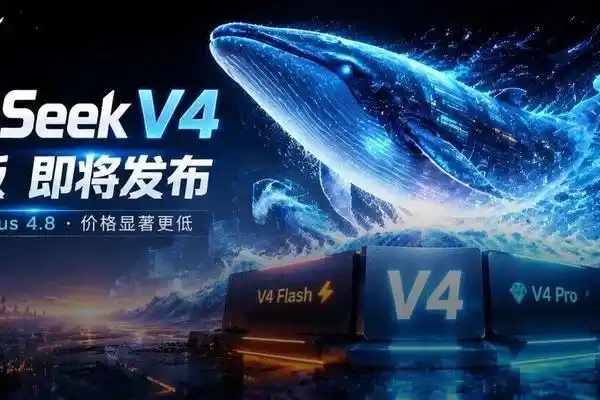
The highly anticipated full release of DeepSeek V4 is imminent, expected to launch as early as tomorrow after nearly three months of waiting. A select group has already received access to the GA (General Availability) beta, which includes two versions: DeepSeek V4 Flash and DeepSeek V4 Pro. Early testers report that V4's overall performance is close to the level of Opus 4.8, with coding capabilities rivaling GPT-5.6 Sol. Its agent abilities are significantly enhanced, and 3D/SVG generation has improved notably. While it may not surpass the recently released Kimi K3 in performance, its expected price point is significantly lower. The official release will introduce a new "peak/off-peak" pricing model for its API. For example, deepseek-v4-pro will cost $0.87 per million output tokens during standard times and $1.74 during peak hours. The flash version is even more aggressive at $0.28/$0.56 per million tokens, with cached input tokens priced extremely low at $0.0028. This makes V4 a strong contender in terms of cost-effectiveness, potentially offering Opus-level capabilities at a fraction of the cost, continuing DeepSeek's reputation as a "price disruptor" in the AI market. Initial demos showcasing V4's capabilities have begun circulating, including generated 3D simulation games, HTML games blending elements of Minecraft and No Man's Sky, and classic games like a "Cut the Rope" clone. The final GA version is set to replace the older deepseek-chat and deepseek-reasoner models, which will be retired on July 24th.

marsbit59 dk önce

DeepSeek V4 'Full-Blooded Edition' Leaked, Could Be Released As Early As Tomorrow

marsbit59 dk önce

WEEX Labs Weekly Observation: The 'Power Restructuring' of AI Infrastructure and the 'Deep Dive Movement' into the Real Economy

WEEX Labs Weekly Review: AI Infrastructure's "Power Restructuring" and the "Deep Dive" into the Real Economy Mid-July 2026 marks a pivotal shift in the global AI industry. The allocation of computing power is transferring from cloud giants to compute resource owners, while the core value of AI is solidifying around its penetration into physical industry, moving beyond the race for model parameters. The era of fragmented model development is over, replaced by a capital-intensive, integrated chain driven by hard tech. Key developments this week include Meta's planned entry into the cloud computing market with "MetaCompute." This move by social media giants with massive GPU clusters challenges traditional cloud providers like AWS, integrating compute, models, and data into one-stop services, which will squeeze smaller rental providers and shift enterprise focus towards underlying model ecosystems. Chinese foundational models like DeepSeek-V4 and Tencent's Hy-3 are pushing towards "utility" status through open-source releases and extreme cost reductions via MoE architectures. This lowers entry barriers for enterprises, allowing them to focus resources on private deployment and deep business integration. Embodied intelligence, particularly humanoid robots, is transitioning from lab demos to real-world factory applications, driven by policies promoting large-scale, practical deployment in logistics and manufacturing. The value focus is shifting from spectacle to stable industrial data and real operational efficiency. Global governance, through forums like WAIC, is evolving from theoretical ethics to practical operational frameworks for "Sovereign AI," raising geopolitical compliance barriers and making auditability and data sovereignty core design requirements from the outset. WEEX Labs Insights: The current transformation shows AI's prosperity is deeply embedding into the fabric of global manufacturing. Strategic recommendations include: 1) leveraging open-source models for private, proprietary knowledge bases; 2) maintaining cloud provider diversity to avoid vendor lock-in from integrated model ecosystems; and 3) seeking opportunities in the "embodied infrastructure" supporting robots, such as data collection, industrial simulation, and factory AI adaptation services.

marsbit1 saat önce

WEEX Labs Weekly Observation: The 'Power Restructuring' of AI Infrastructure and the 'Deep Dive Movement' into the Real Economy

marsbit1 saat önce

Is WEEX TradFi Reliable? What You Should Know Before Your First Trade of U.S. Stock Tokens

In recent years, cryptocurrency users have expanded their focus beyond Bitcoin and Ethereum to include popular traditional financial (TradFi) assets like Nvidia, Apple, and Tesla stocks. This shift raises key questions: What do these TradFi assets represent on crypto trading platforms? How do they differ from traditional stock ownership? And how can users assess the reliability of platforms offering such products? TradFi products, such as those offered by WEEX TradFi (including NVDA, MSFT, AAPL, TSLA, and QQQ tokens), are blurring the lines between crypto and traditional markets. They allow users to trade based on the price movements of traditional assets within a familiar digital asset trading environment. However, it's crucial to understand that trading a "stock token" is not equivalent to owning the actual stock. Users are participating in price speculation, not gaining shareholder rights like dividends or voting. A key feature of these products is 7x24 trading, offering flexibility beyond traditional market hours. While convenient, this also introduces unique risks, such as potential liquidity gaps and volatility when underlying markets are closed. For users evaluating TradFi products, reliability hinges on transparency and risk management. Critical factors include understanding the product mechanism, how prices track the underlying assets, and the associated risks—especially when using leverage. Popular stocks and indices are still subject to company performance, macroeconomic shifts, and sector trends. Ultimately, TradFi represents a new gateway connecting crypto users to global markets. The future points toward integrated trading environments where the distinction between "crypto investor" and "traditional investor" fades. For newcomers, a platform's reliability stems not from promises, but from a clear understanding of the product, a comprehensive view of risks, and informed judgment of the platform's capabilities.

marsbit1 saat önce

Is WEEX TradFi Reliable? What You Should Know Before Your First Trade of U.S. Stock Tokens

marsbit1 saat önce

İşlemler

Spot

Popüler Makaleler

BITCOIN Nedir

HarryPotterObamaSonic10Inu (ERC-20)'yu ve Kripto Alanındaki Yerini Anlamak Son yıllarda, kripto para piyasası, hem ticaret yapanların hem de topluluk etkileşimi ve eğlence değeri arayanların ilgisini çeken meme coin'lerin popülaritesinde bir artış gördü. Bu benzersiz token'lar arasında, kripto para dokusuna kültürel referansları harmanlayan ilginç bir proje olan HarryPotterObamaSonic10Inu (ERC-20) bulunmaktadır. Bu makale, HarryPotterObamaSonic10Inu'nun temel yönlerini, mekanizmalarını, topluluk odaklı ethosunu ve daha geniş kripto manzarasıyla etkileşimini incelemektedir. HarryPotterObamaSonic10Inu (ERC-20) Nedir? Adından da anlaşılacağı gibi, HarryPotterObamaSonic10Inu, Ethereum blok zinciri üzerinde inşa edilen bir meme coin'dir ve ERC-20 standardı altında sınıflandırılmaktadır. Geleneksel kripto paraların pratik kullanılabilirlik veya yatırım potansiyeline odaklandığı durumların aksine, bu token eğlence değeri ve topluluğunun gücü üzerine kuruludur. Proje, bağlı kullanıcıların bir araya gelebileceği, fikirlerini paylaşabileceği ve çeşitli kültürel fenomenlerden ilham alan etkinliklere katılabileceği bir ortam yaratmayı hedeflemektedir. HarryPotterObamaSonic10Inu'nun dikkate değer özelliklerinden biri işlemlerde sıfır vergi olmasıdır. Bu çekici unsur, küçük ölçekli yatırımcıları caydırabilecek ek ücretlerden yoksun olarak ticareti ve topluluk katılımını teşvik etmeyi amaçlamaktadır. Coin'in toplam arzı bir milyar token olarak belirlenmiştir; bu, topluluk içinde önemli bir dolaşım sağlama niyetini göstermektedir. HarryPotterObamaSonic10Inu (ERC-20) Yaratıcısı HarryPotterObamaSonic10Inu'nun kökenleri bir miktar gizemlidir; yaratıcısı hakkında spesifik bilgilerin ne olduğu bilinmemektedir. Bu token'ın geliştirilmesi, belirli bir ekip veya açık bir plan eksikliği ile gerçekleşmiştir; bu durum, meme coin sektöründe oldukça yaygındır. Proje, topluluğunun heyecanı ve katılımına dayalı olarak organik bir şekilde ortaya çıkmıştır. HarryPotterObamaSonic10Inu (ERC-20) Yatırımcıları Dış yatırımlar ve destekler söz konusu olduğunda, HarryPotterObamaSonic10Inu da belirsiz kalmaktadır. Token, bilinen herhangi bir yatırım fonunu veya önemli bir kurumsal desteği listelememektedir. Bunun yerine, projenin can damarı, kolektif eylem ve kripto alanındaki katılım yoluyla büyüme ve sürdürülebilirlik sağlayan temel topluluğudur. HarryPotterObamaSonic10Inu (ERC-20) Nasıl Çalışır? Bir meme coin olarak, HarryPotterObamaSonic10Inu, genellikle varlık değerini yöneten geleneksel çerçevelerin dışında çalışmaktadır. Projenin nasıl çalıştığını tanımlayan birkaç özelliği vardır: Sıfır Vergi İşlemleri: İşlemlerde vergi ücreti olmadan, kullanıcılar gizli maliyet endişesi olmadan token'ı serbestçe alıp satabilirler. Topluluk Etkileşimi: Proje, topluluk etkileşimi üzerine kuruludur ve sosyal medya platformlarını kullanarak heyecan yaratarak katılımı kolaylaştırır. Tartışmalar, içerik paylaşımı ve katılım, projenin erişimini genişletmeye ve destekleyiciler arasında sadakat oluşturmaya yardımcı olan kritik unsurlardır. Pratik Kullanılabilirlik Yok: HarryPotterObamaSonic10Inu'nun mali ekosistem içinde somut bir kullanılabilirlik sunmadığı belirtilmelidir. Daha ziyade, eğlence ve topluluk etkinlikleri için bir token olarak sınıflandırılmaktadır. Kültürel Referans: Token, popüler kültürden unsurları zekice harmanlayarak ilgi çekmektedir ve hem meme meraklıları hem de kripto takipçileriyle bağlantı kurmaktadır. HarryPotterObamaSonic10Inu, meme coin'lerin, daha geleneksel kripto para projelerinden nasıl farklı çalıştığını örneklendirmektedir; bu projeler, utilitarist varlıklar yerine yenilikçi sosyal yapıların bir parçası olarak piyasaya girmektedir. HarryPotterObamaSonic10Inu (ERC-20) Zaman Çizelgesi HarryPotterObamaSonic10Inu'nun tarihi, birkaç dikkate değer kilometre taşı ile işaretlenmiştir: Oluşum: Token, birçok kripto meraklısının hayal gücünü yakalayan bir viral meme'den ortaya çıkmıştır. Spesifik yaratım tarihleri mevcut değildir ve bu onun organik yükselişini vurgulamaktadır. Borsa Listelemeleri: HarryPotterObamaSonic10Inu, topluluğun daha kolay erişim ve ticaret yapabilmesini sağlamak için çeşitli borsalarda yer bulmuştur. Topluluk Katılım İnisiyatifleri: Yarışmalar, sosyal medya kampanyaları ve hayranlar ile destekçilerden içerik üretimini içeren topluluk etkileşimini artırmayı amaçlayan devam eden etkinlikler. Gelecek Genişleme Planları: Projenin yol haritası, kültürel temalarına ilişkin bir NFT koleksiyonu, ticari ürünler ve bir e-ticaret sitesi başlatılmasını içermektedir; bu da topluluğun daha fazla katılımını sağlamayı ve ekosistemine daha fazla boyut kazandırmayı hedeflemektedir. HarryPotterObamaSonic10Inu (ERC-20) Hakkında Kilit Noktalar Topluluk Odaklı Doğası: Proje, kullanıcı katılımını geliştirme önceliği taşır ve böylece kullanıcıların sürecin en önünde yer almasını sağlar. Meme Coin Sınıflandırması: Eğlenceye dayalı kripto paranın doruk noktasıdır ve geleneksel yatırım araçlarından ayrılmaktadır. Bitcoin ile Doğrudan İlişki Yok: Ticker ismindeki benzeliğe rağmen, HarryPotterObamaSonic10Inu ayırt edicidir ve Bitcoin veya diğer yerleşik kripto paralarla herhangi bir ilişkisi yoktur. İşbirliğine Odaklanma: HarryPotterObamaSonic10Inu, sahipleri arasında işbirliği ve hikaye paylaşımı için bir alan oluşturmak üzere tasarlanmıştır ve bu da yaratıcılık ve topluluk bağlarını sağlamaktadır. Gelecek Beklentileri: Başlangıçta belirlendiği temalardan NFTs ve ticari ürünlere genişleme arzusu, projenin dijital kültürde daha ana akıma girebilmesi için bir yol haritası çizmektedir. Meme coin'ler, kripto para topluluğunun hayal gücünü çalmaya devam ederken, HarryPotterObamaSonic10Inu (ERC-20), kültürel bağları ve topluluk merkezli yaklaşımıyla öne çıkmaktadır. Geleneksel bir hizmet odaklı token modeliyle uyumlu olmasa da, özünde destekçileri arasında sağlanan neşe ve dostluğu vurgulayarak, giderek dijitalleşen bir çağda kripto paraların evrilen doğasını göstermektedir. Proje gelişmeye devam ettikçe, topluluk dinamiklerinin blockchain teknolojisi dünyasındaki seyrini nasıl etkilediğini izlemek önemli olacaktır.

2.1k Toplam GörüntülenmeYayınlanma 2024.04.01Güncellenme 2024.12.03

BITCOIN Nedir

BTC Nasıl Satın Alınır

HTX.com’a hoş geldiniz! Bitcoin (BTC) satın alma işlemlerini basit ve kullanışlı bir hâle getirdik. Adım adım açıkladığımız rehberimizi takip ederek kripto yolculuğunuza başlayın. 1. Adım: HTX Hesabınızı OluşturunHTX'te ücretsiz bir hesap açmak için e-posta adresinizi veya telefon numaranızı kullanın. Sorunsuzca kaydolun ve tüm özelliklerin kilidini açın. Hesabımı Aç2. Adım: Kripto Satın Al Bölümüne Gidin ve Ödeme Yönteminizi SeçinKredi/Banka Kartı: Visa veya Mastercard'ınızı kullanarak anında Bitcoin (BTC) satın alın.Bakiye: Sorunsuz bir şekilde işlem yapmak için HTX hesap bakiyenizdeki fonları kullanın.Üçüncü Taraflar: Kullanımı kolaylaştırmak için Google Pay ve Apple Pay gibi popüler ödeme yöntemlerini ekledik.P2P: HTX'teki diğer kullanıcılarla doğrudan işlem yapın.Borsa Dışı (OTC): Yatırımcılar için kişiye özel hizmetler ve rekabetçi döviz kurları sunuyoruz.3. Adım: Bitcoin (BTC) Varlıklarınızı SaklayınBitcoin (BTC) satın aldıktan sonra HTX hesabınızda saklayın. Alternatif olarak, blok zinciri transferi yoluyla başka bir yere gönderebilir veya diğer kripto para birimlerini takas etmek için kullanabilirsiniz.4. Adım: Bitcoin (BTC) Varlıklarınızla İşlem YapınHTX'in spot piyasasında Bitcoin (BTC) ile kolayca işlemler yapın.Hesabınıza erişin, işlem çiftinizi seçin, işlemlerinizi gerçekleştirin ve gerçek zamanlı olarak izleyin. Hem yeni başlayanlar hem de deneyimli yatırımcılar için kullanıcı dostu bir deneyim sunuyoruz.

8.1k Toplam GörüntülenmeYayınlanma 2024.12.12Güncellenme 2026.06.02

BTC Nasıl Satın Alınır

$BITCOIN Nedir

DİJİTAL ALTIN ($BITCOIN): Kapsamlı Bir Analiz DİJİTAL ALTIN ($BITCOIN) Tanıtımı DİJİTAL ALTIN ($BITCOIN), geleneksel değerli metallerin özelliklerini merkeziyetsiz teknolojilerin yeniliği ile birleştirmeyi amaçlayan Solana ağı üzerinde çalışan blockchain tabanlı bir projedir. Bitcoin ile aynı isme sahip olmasına rağmen, genellikle bir değer saklama aracı olarak algılandığı için “dijital altın” olarak anılmaktadır; DİJİTAL ALTIN, Web3 ortamında benzersiz bir ekosistem yaratmak için tasarlanmış ayrı bir tokendir. Hedefi, uygulanabilir bir alternatif dijital varlık olarak kendini konumlandırmaktır, ancak uygulamaları ve işlevleri ile ilgili ayrıntılar hala gelişmektedir. DİJİTAL ALTIN ($BITCOIN) Nedir? DİJİTAL ALTIN ($BITCOIN), Solana blockchain'inde kullanılmak üzere açıkça tasarlanmış bir kripto para tokenidir. Bitcoin'in yaygın olarak tanınan bir değer saklama rolü sağlamasının aksine, bu token daha geniş uygulamalara ve özelliklere odaklanıyor gibi görünmektedir. Dikkate değer yönler şunlardır: Blockchain Altyapısı: Token, yüksek hızlı ve düşük maliyetli işlemleri yönetme kapasitesi ile bilinen Solana blockchain'inde inşa edilmiştir. Arz Dinamikleri: DİJİTAL ALTIN'ın maksimum arzı 100 katrilyon token (100P $BITCOIN) ile sınırlıdır, ancak dolaşımdaki arzı ile ilgili ayrıntılar şu anda açıklanmamıştır. Kullanım Alanı: Kesin işlevler açıkça belirtilmemiş olsa da, token'ın merkeziyetsiz uygulamalar (dApps) veya varlık tokenizasyon stratejileri ile ilgili çeşitli uygulamalar için kullanılabileceğine dair işaretler bulunmaktadır. DİJİTAL ALTIN ($BITCOIN) Yaratıcısı Kimdir? Şu anda, DİJİTAL ALTIN ($BITCOIN) arkasındaki yaratıcıların ve geliştirme ekibinin kimliği bilinmemektedir. Bu durum, merkeziyetsiz finans ve meme coin fenomenleriyle uyumlu olan birçok yenilikçi proje arasında yaygındır. Böyle bir anonimlik, topluluk odaklı bir kültürü teşvik edebilirken, yönetişim ve hesap verebilirlik konusundaki endişeleri artırmaktadır. DİJİTAL ALTIN ($BITCOIN) Yatırımcıları Kimlerdir? Mevcut bilgiler, DİJİTAL ALTIN ($BITCOIN) için bilinen herhangi bir kurumsal destekçi veya önde gelen risk sermayesi yatırımı olmadığını göstermektedir. Proje, geleneksel finansman yolları yerine topluluk desteği ve benimsemeye odaklanan bir eşler arası modelde çalışıyor gibi görünmektedir. Faaliyetleri ve likiditesi esas olarak PumpSwap gibi merkeziyetsiz borsalarda (DEX'ler) yer almakta olup, bu da onun taban hareketine vurgu yapmaktadır. DİJİTAL ALTIN ($BITCOIN) Nasıl Çalışır DİJİTAL ALTIN ($BITCOIN) 'ın operasyonel mekanikleri, blockchain tasarımı ve ağ özellikleri temelinde açıklanabilir: Konsensüs Mekanizması: Solana'nın benzersiz tarih kanıtı (PoH) ile bir hisse kanıtı (PoS) modelini birleştirerek, proje ağın yüksek performansına katkıda bulunan verimli işlem doğrulamasını sağlar. Tokenomik: Belirli deflasyonist mekanizmalar kapsamlı bir şekilde detaylandırılmamış olsa da, geniş maksimum token arzı, henüz tanımlanmamış mikro işlemler veya niş kullanım durumlarına hitap edebileceğini ima etmektedir. Etkileşim: Solana'nın daha geniş ekosistemi ile entegrasyon potansiyeli bulunmaktadır; bu, çeşitli merkeziyetsiz finans (DeFi) platformlarını içermektedir. Ancak, belirli entegrasyonlarla ilgili ayrıntılar belirtilmemiştir. Önemli Olayların Zaman Çizelgesi DİJİTAL ALTIN ($BITCOIN) ile ilgili önemli kilometre taşlarını vurgulayan bir zaman çizelgesi: 2023: Token'ın Solana blockchain'inde ilk dağıtımı, sözleşme adresi ile işaretlenmiştir. 2024: DİJİTAL ALTIN, PumpSwap gibi merkeziyetsiz borsalarda işlem görmeye başladıkça görünürlük kazanır ve kullanıcıların bunu SOL karşısında ticaret yapmasına olanak tanır. 2025: Proje, topluluk odaklı etkileşimlere yönelik potansiyel ilgi ve ara sıra ticaret faaliyetleri görür, ancak şu ana kadar dikkate değer ortaklıklar veya teknik ilerlemeler belgelenmemiştir. Kritik Analiz Güçlü Yönler Ölçeklenebilirlik: Temel Solana altyapısı, yüksek işlem hacimlerini destekleyerek $BITCOIN'in çeşitli işlem senaryolarındaki faydasını artırabilir. Erişilebilirlik: Token başına potansiyel düşük ticaret fiyatı, perakende yatırımcıları çekebilir ve parçalı mülkiyet fırsatları sayesinde daha geniş katılımı kolaylaştırabilir. Riskler Şeffaflık Eksikliği: Kamuya açık olarak bilinen destekçilerin, geliştiricilerin veya bir denetim sürecinin olmaması, projenin sürdürülebilirliği ve güvenilirliği konusunda şüpheler doğurabilir. Piyasa Volatilitesi: Ticaret faaliyeti büyük ölçüde spekülatif davranışa dayanmakta olup, bu da yatırımcılar için önemli fiyat dalgalanmalarına ve belirsizliklere yol açabilir. Sonuç DİJİTAL ALTIN ($BITCOIN), hızla gelişen Solana ekosisteminde ilginç ama belirsiz bir proje olarak ortaya çıkmaktadır. “Dijital altın” anlatısını kullanmaya çalışırken, Bitcoin'in değer saklama rolünden ayrılması, amaçlanan faydasının ve yönetişim yapısının daha net bir şekilde tanımlanması gerekliliğini vurgulamaktadır. Gelecekteki kabul ve benimseme, mevcut belirsizliklerin giderilmesine ve operasyonel ile ekonomik stratejilerinin daha açık bir şekilde tanımlanmasına bağlı olacaktır. Not: Bu rapor, Ekim 2023 itibarıyla mevcut olan sentezlenmiş bilgileri kapsamaktadır ve araştırma döneminin ötesinde gelişmeler yaşanmış olabilir.

203 Toplam GörüntülenmeYayınlanma 2025.05.13Güncellenme 2025.05.13

$BITCOIN Nedir

Tartışmalar

HTX Topluluğuna hoş geldiniz. Burada, en son platform gelişmeleri hakkında bilgi sahibi olabilir ve profesyonel piyasa görüşlerine erişebilirsiniz. Kullanıcıların BTC (BTC) fiyatı hakkındaki görüşleri aşağıda sunulmaktadır.

活动图片