Debate: Korean Workers Fear Unemployment, While Musk Envisions a Society 'Without Work'?

marsbit2026-08-03 tarihinde yayınlandı2026-08-03 tarihinde güncellendi

Özet

While South Korean auto workers fear job losses from robotics, Elon Musk envisions a future where AI and robots render most work optional. This article explores the growing tension between immediate anxieties over automation and long-term visions of a post-work society. The piece begins with recent strikes at Hyundai's Korean plants, where unions, amid standard wage negotiations, also sought job guarantees against advancing robotics—specifically mentioning Boston Dynamics' Atlas. This reflects how anxiety about technological displacement is emerging even before robots are fully capable of replacing skilled labor on assembly lines. The author argues that while current robotics still struggle with the nuanced, experiential knowledge of veteran workers, the *perception* of imminent replacement is fueling social conflict prematurely. This modern "Luddite" sentiment is compared to the 19th-century English textile workers who smashed machines. Historically, Luddites weren't simply anti-technology; they were protesting the rapid devaluation of their skills and the unequal distribution of productivity gains. Similarly, today's workers ask who will bear the cost of transition and share in the new wealth created by machines. In contrast, figures like Elon Musk propose an optimistic endpoint: with AI and robotics driving extreme abundance, the link between work and survival could break. He suggests concepts like "Universal High Income" could allow society to share the technological b...

Over 200 years ago, British textile workers took up hammers to smash machines. More than two centuries later, similar sentiments have emerged in a South Korean automobile factory.

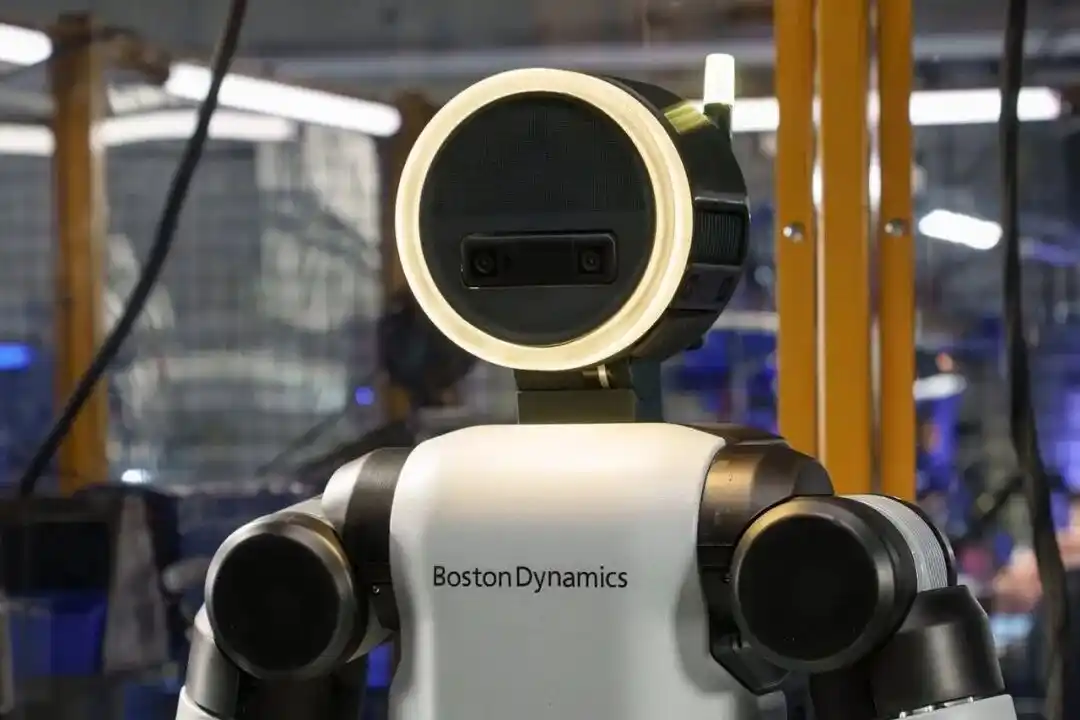
In July of this year, the union at Hyundai Motor's South Korean operations launched a series of partial strikes. On the surface, this appears to be a familiar labor-management negotiation: wage increases, performance bonuses, and retirement age were all among the union's demands. However, this year, an issue with a distinctly contemporary feel was added—job security in the age of AI and robotics. As early as the strike vote stage in June, the Hyundai Motor union proposed seeking employment guarantees concerning advanced robotics technology. Korean media subsequently linked this demand to Hyundai Motor Group's planned introduction of Boston Dynamics' Atlas humanoid robots. Ultimately, over 86% of the approximately 40,000 union members voted in favor of striking.

Therefore, simply summarizing this incident as "Hyundai workers protesting robots taking their jobs" is not entirely accurate. The actual strikes in July were primarily triggered by the breakdown of negotiations over wages and other labor-management issues; robots were not the sole or even the most direct catalyst for this round of strikes. However, another fact is equally noteworthy: robots have officially entered the union's negotiation purview. Even before they have been deployed on a large scale on Hyundai's production lines, they have already prompted tens of thousands of industrial workers to start contemplating a question that once seemed quite distant—what happens to people?

This scene easily evokes the "Luddite movement" during the British Industrial Revolution two centuries ago. But what is truly worth discussing today may no longer be "whether humans are about to start smashing machines again," but rather a more subtle misalignment: robots may still be a long way from truly replacing large numbers of skilled industrial workers, yet social conflicts surrounding robot replacement have already emerged prematurely.

And just as this anxiety appears early, a recent interview with Elon Musk coincidentally presents an almost diametrically opposite vision of the future. In a latest interview published by The Economist, Musk once again discussed the long-term outcome of AI and robotics: digital AI will take on an increasing amount of cognitive labor, while robots become the physical-world execution end for AI. Following this trajectory, eventually, almost all necessary work could potentially be performed by machines.

While Hyundai Motor workers worry about Atlas taking away some jobs on the production line, Musk imagines a day when the vast majority of work no longer requires human completion.

The real point of divergence thus becomes clear: the issue may not only be whether robots will replace labor, but also how humanity understands "losing work." Today's society is still built on a solid chain—work generates income, income supports consumption and life, therefore losing work inherently means losing economic security.

What Musk describes is a different scenario: when AI and robots push the productive capacity for goods and services to a sufficiently high level, society enters a state of "extreme abundance," where the cost of supplying food, housing, transportation, healthcare, and a multitude of services continuously declines. People no longer necessarily have to sell their labor to obtain means of subsistence, and work gradually transforms from a means of survival into a personal choice.

This is also the context for his repeated proposals in recent years for "Universal High Income." AI and robots create immense productivity, with the technological dividend ultimately translating into universal prosperity. Robots "taking jobs" might even become a prerequisite for humanity to break free from the necessity of "having to work to live."
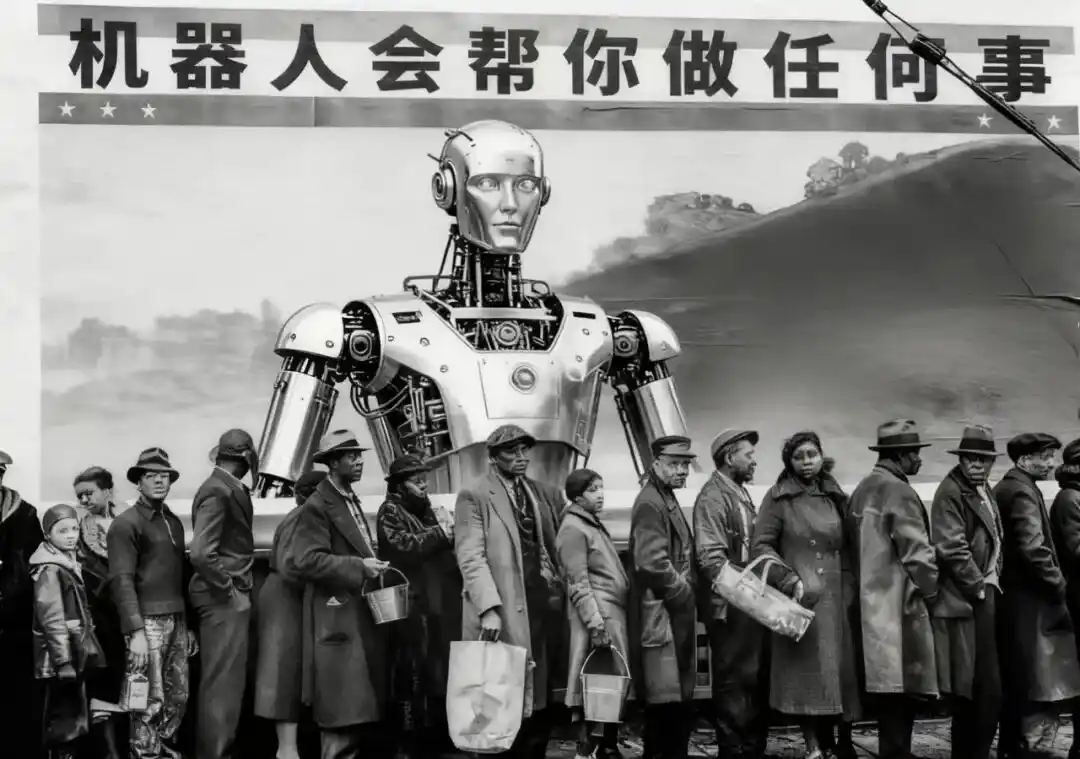
Thus, Luddism sees the unemployment risk behind machines, while Musk sees the potential for freedom behind machines; Hyundai Motor workers hope to protect their jobs before robots enter the factory, while Musk anticipates robots ultimately eliminating the very necessity of "having to work." These two seemingly contradictory logics also sharpen the same question: as machines create increasing wealth, who ultimately shares in this wealth?

Robots Aren't Skilled Workers Yet, But Unemployment Anxiety Has Arrived First

The concerns of Hyundai Motor workers are not hard to understand. The Hyundai Motor Group has publicly displayed an aggressive robotics strategy, and Boston Dynamics' Atlas is also continuously progressing from lab demonstrations towards industrial operations. Against this industrial backdrop, an automobile worker seeing Atlas lifting, walking, and handling components, and then seeing companies continuously emphasize AI, smart manufacturing, and automation, will naturally ask: five years from now, will the person standing next to this production line still be me?

Social media has further compressed this anxiety into a highly transmissible logical chain: companies buy robots, robots enter factories, human workers are laid off. An advance in a robot's capability, a procurement plan, or an experimental video can quickly be combined into a story of "a certain profession's countdown." Long-term technological trends are folded into an imminent reality, so the imagination of robot replacement outpaces the robots themselves.

The problem is, real industrial production is far from that simple. Automobile manufacturing is already one of the most automated industries globally. Highly standardized processes like welding, painting, stamping, and material handling have been covered by industrial robots for decades. What humanoid robots today truly need to conquer are precisely the areas traditional automation has never fully resolved: flexible assembly, harness operation, cross-station mobility, temporary anomaly handling, and the vast array of subtle and complex variations between different parts and working conditions.

The most valuable aspect of a skilled industrial worker is far from merely having two arms. How to install a part when it has slight dimensional variation, what a change in feel during tightening signifies, where to check first when a machine makes a certain sound, how to compensate in the next step after a slight deviation in the previous process—these experiences formed over years constitute the immense tacit knowledge in industrial production. They are rarely fully written into SOPs, yet they determine whether a production line can truly operate stably.

This is precisely one of the hardest barriers for current robots to cross. Being able to pick up a part in a demo environment is a completely different engineering problem from being able to perform the same action stably thousands of times over eight consecutive hours; being able to complete an assembly once does not mean being able to meet the yield rate, cycle time, safety requirements, and costly downtime risks demanded by a real production line. For many robotics companies, the journey from "can do" to "can do stably long-term" remains a lengthy path to industrialization.

Therefore, from the perspective of current technological reality, the notion that "tens of thousands of automobile workers will immediately be replaced by humanoid robots" is clearly an oversimplification. A more realistic situation today might be this: the long-term possibilities of technology are being prematurely realized in public discourse, and people are beginning to feel uneasy about that future even before robots truly possess comprehensive replacement capabilities.

But this does not mean the anxieties of the Hyundai Motor workers in South Korea are meaningless. On the contrary, when a technology has the potential to redefine production relations, the fermentation of social sentiment often precedes the technology's large-scale maturity. This prematurely emerging anxiety may not be accurately predicting tomorrow, but it likely already poses a question that will eventually need to be answered seriously.

Re-understanding Luddism: What They Feared Was Never Just a Machine

"Luddism" is often used as a slightly pejorative term today. People who reject new technology are labeled Luddites; those who express concerns about AI or robots are also easily categorized as conservative or anti-technology. Over time, Luddism has almost become synonymous with "technological backlash."

But the historical Luddite movement was far more complex than this label suggests. During the rapid mechanization of the British textile industry in the early 19th century, many participants in the Luddite movement were themselves skilled artisans with years of training. Machines did not bring only higher production efficiency; they simultaneously disrupted existing skill systems, wage structures, and labor relations. Once-scarce craftsmanship could rapidly depreciate, low-skilled laborers could enter production with the help of machines, the bargaining power of skilled workers declined, and the livelihoods of some were directly impacted. Machines ultimately became the most tangible object of their anger.
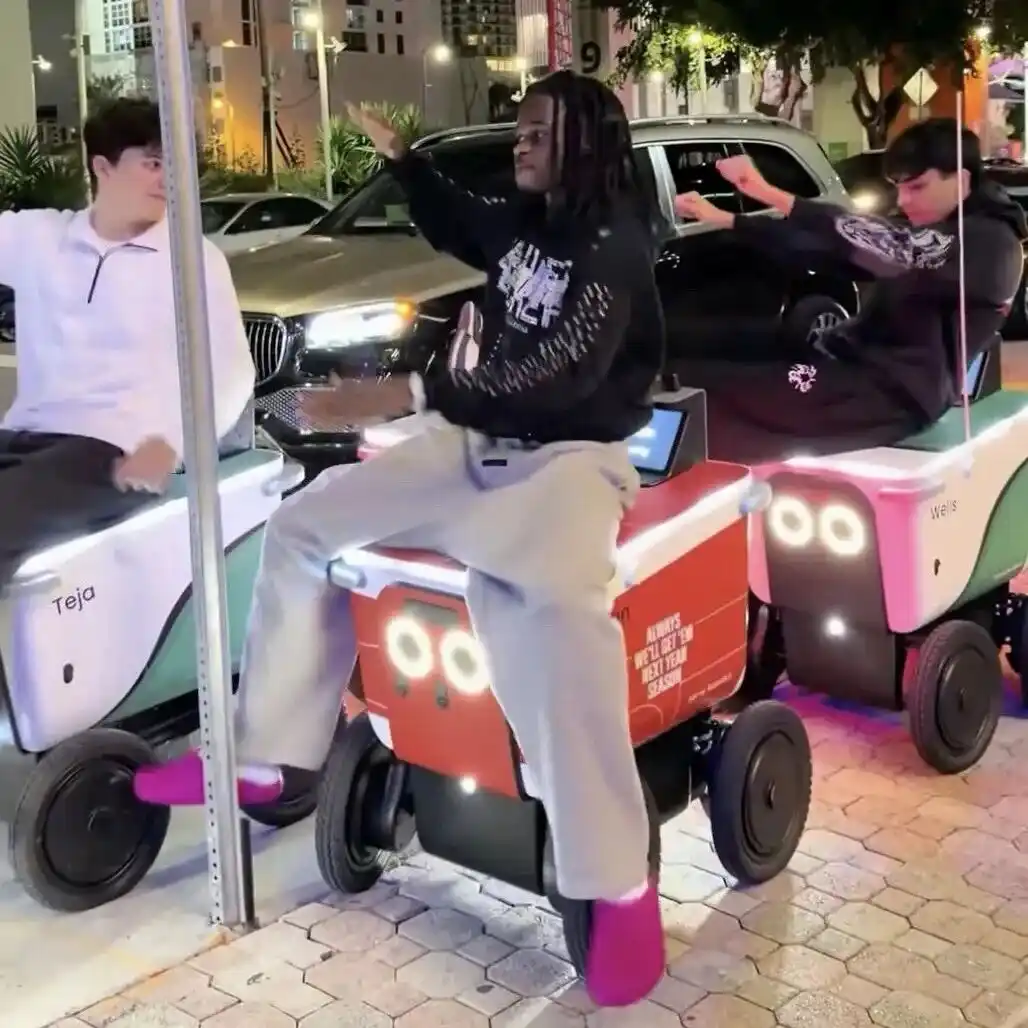
Looking back more than 200 years later, we of course know that machines did not destroy human society. The Industrial Revolution ultimately created an economic scale far larger than the handicraft era and gave rise to many professions that did not exist before. Therefore, judging the Luddites from today's perspective seems easy: they overestimated the threat posed by machines and underestimated the capacity of technological progress to create new opportunities.

Yet this "hindsight correctness" overlooks a very important issue. Standing before a worker in 1811, he did not know how much the global economy would grow in 100 or even 200 years, nor did he know when new occupations would emerge. What he could feel was that his wages were falling, his skills were depreciating, and his next job was uncertain. The overall benefits brought by technological progress typically take a long time to diffuse, but the costs incurred by technological substitution can be concentrated on a specific group of people in a very short time.

Today's Hyundai Motor workers facing Atlas are essentially in a similar position. Robotics companies might tell them automation can improve efficiency, economists might explain that new technologies ultimately create new jobs, tech companies might depict a future where humans are freed from repetitive labor—these assertions may all hold true. But the questions workers truly care about are more concrete: when will my position disappear? How much will the skills I've accumulated over 20 years be worth in five years? Will part of the productivity gains the company achieves through robots become benefits for employees? If industrial transformation indeed incurs costs, why should those costs first fall upon those being replaced?

Therefore, understanding the re-emergence of Luddite sentiment in the robotics era as some people fearing new technology again is an overly simplistic and labeled view. Textile workers 200 years ago and automobile workers today are essentially asking the same question: after machines create greater efficiency, who ultimately shares in that efficiency?

The Hardest Part Is Never the Endgame, But How to Get There

What Musk describes is a society where "work becomes optional." According to his estimation, by around 2036, the productivity brought by AI and robots may already be so high that "money" itself becomes less important than it is today, and people will no longer necessarily have to work for survival; labor will become more of a choice.

Such an endgame is certainly attractive enough, but it carries an extremely important implicit condition: the immense productivity created by robots and the resulting material abundance it brings must ultimately be shareable by the entire society.

Some do not believe in this viewpoint. As the renowned scholar Zhang Xiaoyu states in "Technology and Civilization: Our Era and Future," "If slave laborers benefited from technological progress, it was only because the development of productivity brought about by technological progress turned past luxuries into today's mass consumer goods."

If machines belong to a few companies, computing power is concentrated in a few enterprises, data and capital are likewise concentrated in a few entities, and the goods and services created by robots are still distributed entirely dependent on the existing income system, then continuously increasing production efficiency will not automatically grant each individual more wealth.

After all, during the last wave of the internet boom, the term "techno-elite" had already become a label for Silicon Valley entrepreneurs.

This is also why Musk ultimately had to propose "Universal High Income." In a sense, he appears to stand at the other extreme of Luddism, yet still needs to answer the question posed by the Luddite movement two centuries ago—how should the wealth created by machines be distributed.

What is truly complex may not be the distant endgame Musk depicts. If one day robots can indeed perform the vast majority of necessary labor, society might already have formed new income systems, security frameworks, and social contracts matching that reality. The stage most prone to conflict is actually the intermediate phase leading to that future—the "painful transition period" many foresee—which is happening today.
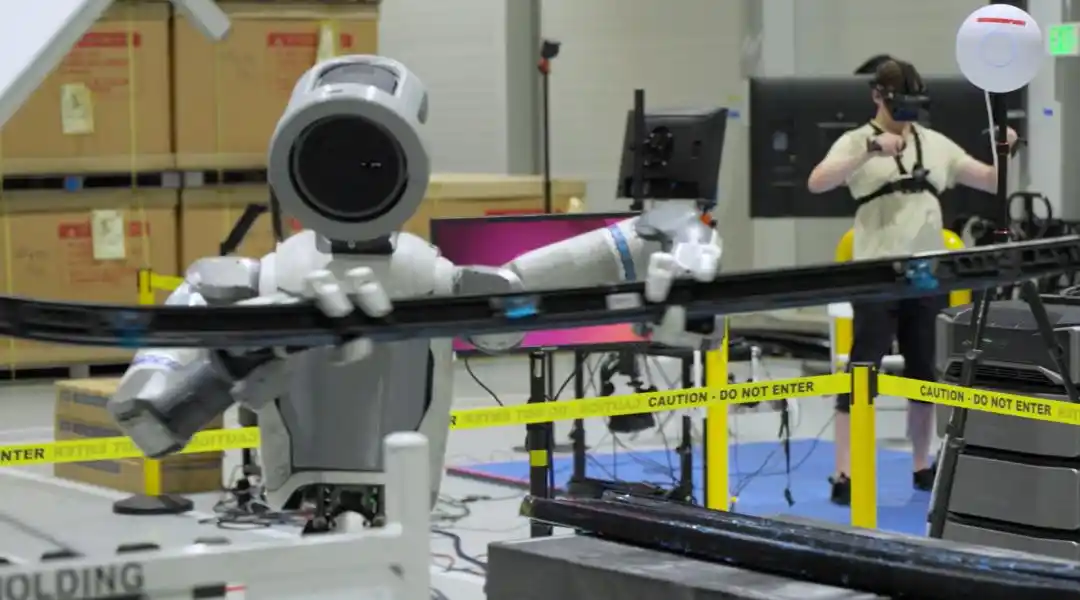
Robots won't suddenly jump from replacing 0% of jobs to replacing 100% in a single day. A more likely scenario is that they first replace 5%, then 10%; some highly standardized positions diminish first, certain skills begin to depreciate, some people become direct beneficiaries of the productivity红利 (dividend) through AI and robots, while others bear the costs of transition first. The worst-case scenario is that companies achieve higher profits, but retraining systems for workers are not yet mature; new jobs are emerging, but not necessarily in the places where people lost their old jobs.

Technological capabilities usually improve along a continuous curve, but social institutions do not automatically upgrade in sync with technology. This is why Michael Burry, the investor原型 (prototype) for "The Big Short," in response to Musk's views on AI, robots, and Universal High Income, left that impactful statement: "Before that happens, there will be a revolution."

Whether this statement is overly pessimistic is certainly debatable, but it at least accurately points out the process most easily glossed over in Musk-style futurism: how exactly do we navigate the several decades from today's society, which relies on labor for income, to that future society where work is optional?

The anxiety of Hyundai Motor workers occurs precisely at the very beginning of this long transitional path.

Wood Straightened by the Ink Line: Technology Also Needs Its Own "Rules and Frameworks"

Therefore, the "Luddism" reappearing in the robotics era need not be simply mocked. Smashing machines certainly cannot halt the industrial revolution; history has long proven that when a technology can continuously improve production efficiency and reduce costs, it is ultimately difficult to exclude from society through resistance. The same holds for today's humanoid robots; as long as costs continue to fall, reliability improves, and return on investment gradually becomes viable, their entry into factories, warehouses, commercial services, and even household life will become a long-term industrial trend.

But acknowledging the irreversibility of the trend does not mean society can only sit back and let technology determine everything. The industrial civilization of the past two centuries has never consisted solely of advancements in engines, electricity, computers, and robots. The eight-hour workday, minimum wage, occupational safety, labor contracts, social insurance, product liability, and various industrial standards are also part of the institutional legacy created by the Industrial Revolution. Many rules were initially seen as restrictions on efficiency but ultimately formed the foundation upon which technology could enter society on a large scale.
The development measures, management measures, and industry guidelines increasingly emerging today around artificial intelligence, robotics, data, security, and ethics are precisely part of the process of rediscovering boundaries in this new round of technological revolution. As robots truly enter production and daily life, these rules will become increasingly concrete: what kind of labor-management consultation should precede robots entering production lines, how should productivity gains from automation be distributed, who bears the retraining costs for those displaced by technological substitution, how is liability determined after a robot causes a safety incident, which high-risk scenarios must retain human-in-the-loop—these questions will ultimately become part of robot industrialization.

They may not seem as exciting as robots running, doing backflips, or completing a complex operation, but they are likely to determine whether robots can truly pass through the final gate between technological demonstration and industrial application.

"Wood is straightened by the ink line; metal is sharpened on the whetstone." The ink line may seem to restrict the direction of the wood, yet it also allows it to ultimately become a pillar. Norms are similar for technology. Genuinely mature technological optimism does not require pretending that technology creates no problems. The more a society believes robots can ultimately create immense productivity, the more it should place discussions about benefit distribution, employment transition, safety liability, and human dignity on the table for early debate, before that productivity is released on a massive scale.

So perhaps the anxiety of the Hyundai Motor workers in South Korea has indeed arrived somewhat early. Today's humanoid robots are still a considerable engineering distance away from becoming a truly reliable automobile worker capable of long-term substitution for a skilled human worker. But discussions about how society should face them once they truly enter factories are not early at all.

They should perhaps start even earlier.

This article is from the WeChat public account "AI Wu Zao," author: Peng Kunfang

Trend Kriptolar

İlgili Sorular

QWhat is the main conflict highlighted in the article between Korean auto workers and Elon Musk's vision?

AThe article highlights a fundamental conflict between immediate anxiety and long-term optimism regarding technological disruption. Korean auto workers at Hyundai are anxious about robots potentially taking their jobs in the near future, seeking employment guarantees. In contrast, Elon Musk envisions a distant future where AI and robots create such material abundance that work becomes optional, necessitating concepts like 'Universal High Income.'

QWhy does the article argue that comparing the Hyundai workers' concerns to 'Luddism' is an oversimplification?

AThe article argues it's an oversimplification because the original Luddites and modern workers are not merely 'anti-technology.' Their core concern is the same: who benefits from the increased productivity created by machines? They fear that the costs of technological transition (job loss, skill devaluation) will be borne by workers, while the profits and efficiency gains are captured by capital owners, without a fair redistribution mechanism.

QWhat key technical challenge does the article identify for humanoid robots like Boston Dynamics' Atlas to fully replace skilled auto workers?

AThe key challenge is mastering the vast amount of 'tacit knowledge' possessed by skilled workers. This includes handling part tolerances, interpreting sensory feedback (sound, touch) during assembly, compensating for variations, and managing unforeseen anomalies. Moving from a one-time demonstration to performing these complex, judgment-based tasks reliably for thousands of cycles under real production pressure and safety constraints remains a significant engineering hurdle.

QAccording to the article, what is the 'most difficult' part of reaching Elon Musk's vision of a post-work society?

AThe most difficult part is the transitional period or 'growing pains.' The article states that the hardest phase is not the distant endpoint where work is optional, but the decades-long middle stage where robots incrementally replace 5%, then 10% of jobs. Conflict may arise if social institutions (retraining, income support, new labor contracts) fail to evolve synchronously with technological capabilities, leaving displaced workers to bear the costs while benefits are concentrated.

QWhat historical parallel does the article draw to suggest that regulations and social frameworks are necessary for the robotics revolution?

AThe article draws a parallel to the Industrial Revolution, which produced not just engines and machines but also crucial social and institutional frameworks like the eight-hour workday, minimum wage, workplace safety standards, and social insurance. Similarly, for robots to be widely integrated, society needs to proactively establish rules for fair benefit sharing, retraining responsibilities, safety liability, and ethical deployment, forming the necessary 'guardrails' for sustainable technological adoption.

İlgili Okumalar

İşlemler

Spot

Popüler Makaleler

DOGE M Nedir

Doge Matrix ($doge m): Topluluk Destekli Kripto Paranın Yeni Türü Giriş Kripto para dünyası sürekli evrilen bir manzaraya sahipken, yeni projeler sürekli olarak ortaya çıkmakta ve her biri yatırımcıların ve meraklıların ilgisini çekmeyi hedeflemektedir. Bu alandaki en son katılımcılardan biri, $doge m sembolü ile temsil edilen Doge Matrix'tir. Bu proje, Dogecoin etrafındaki popüler meme kültürüne dayanan kökleri sayesinde dikkat çekmiş ve web3 alanında kendine bir yer edinmiştir. Bu makale, Doge Matrix'in genel bir analizini sunmayı amaçlamakta; genel bakış, yaratıcı, yatırımcılar, işlevsellik, zaman çizelgesi ve dikkat çekici yönleri kapsayacaktır. Doge Matrix ($doge m) Nedir? Doge Matrix, görünüşte Dogecoin'in geniş çekiciliği üzerine inşa edilen, topluluk destekli bir kripto para projesidir. Dogecoin, Shiba Inu maskotu ve meme kökenleri ile bilinen bir dijital para birimidir. Doge Matrix'in genel hedefleri geniş bir şekilde tanımlanmamış olsa da, topluluk katılımı ve desteğini kullanma taahhüdü ile karakterize edilmektedir. Geleneksel kripto paralardan farklı olarak, genellikle altyapı teknolojileri aracılığıyla fayda veya içsel değer vurgulayan Doge Matrix, kripto paraların kültürel fenomenini benimseyen bir alanda kendini konumlandırmaktadır; özellikle meme tabanlı varlıkların ethos'u ile özdeşleşenlere hitap etmektedir. Dogeoin topluluğunun güçlü yönlerinden yararlanan Doge Matrix, daha geniş bir ekosistemin parçası olarak faaliyet göstermekte ve kripto para ve dijital alanla ilgilenen kullanıcıların katılımını ve etkileşimini davet etmektedir. Doge Matrix'in ($doge m) Yaratıcısı Kimdir? Doge Matrix'in yaratıcısının kimliği bilinmemektedir. Bu şeffaflık eksikliği, bazı projelerin kurucularının kimliklerini açıklamadan başlatıldığı kripto para alanında yaygın bir durumdur. Kurucu ekip hakkında bilgi eksikliği, potansiyel yatırımcılar arasında projenin hesap verebilirliği ve yönü hakkında sorular doğurabilir. Doge Matrix'in ($doge m) Yatırımcıları Kimlerdir? Şu anda, Doge Matrix'i destekleyen yatırımcılar veya yatırım fonları hakkında kamuya açık bir bilgi bulunmamaktadır. Proje, esasen topluluk desteğine dayanmakta ve kurumsal yatırım yerine bu desteği kullanmaktadır. Bu model, girişimin topluluk destekli doğası ile uyumlu olup, projenin yönünün katılımcılar tarafından şekillendirildiği bir ortam yaratmaktadır. Doge Matrix ($doge m) Nasıl Çalışır? Doge Matrix'in operasyonel mekanizmaları ile ilgili ayrıntılar biraz belirsizdir ve bu durum, meme coin alanındaki projelerin genel bir eğilimini yansıtmaktadır; burada yenilikçi işlevsellikler her zaman net bir şekilde ifade edilmemektedir. Bununla birlikte, Doge Matrix'in mevcut kripto para ekosisteminden yararlanmayı ve kullanıcı katılımını teşvik etmeyi amaçladığı görünmektedir; ayrıca Dogecoin ile ilişkilendirilen tanıdık kültürel referansları kullanmaktadır. Potansiyel olarak benzersiz özellikleri, teknolojik ilerlemelerden ziyade topluluk etkileşimlerinden kaynaklanmakta ve token sahipleri arasında paylaşılan deneyimleri ve işbirliğini vurgulamaktadır. Kesin yenilikler açıkça belirtilmemiş olsa da, proje, topluluk üyelerinin katılabileceği, fikir paylaşabileceği ve projenin potansiyelini ileriye taşıyabileceği bir alan yaratmaktadır. Doge Matrix'in ($doge m) Zaman Çizelgesi Projenin zaman çizelgesine bakmak, şimdiye kadar tanımlayıcı olayları ortaya koymaktadır: 25 Kasım 2024: Doge Matrix, erken tarihindeki önemli bir dönüm noktası olarak tüm zamanların en yüksek değerine ulaştı. 1 Ocak 2025: Aksine, Doge Matrix tüm zamanların en düşük değerine ulaştı ve bu durum, kripto paralarla sıkça ilişkilendirilen dalgalanmayı göstermektedir; özellikle bir projenin yaşam döngüsünün erken aşamalarında. Devam Ediyor: Proje, topluluğu tarafından aktif bir şekilde işlem görmeye ve desteklenmeye devam etmekte, ancak belirli gelecekteki dönüm noktaları veya hedefler henüz açıklanmamıştır. Doge Matrix ($doge m) Hakkında Ana Noktalar Topluluk Odaklılık Doge Matrix'in merkezinde topluluk katılımına olan taahhüt bulunmaktadır. Proje, üyeleri arasında işbirliği ve ortak hedefler üzerine inşa edilmiştir ve kolektif çabanın önemini vurgulamaktadır. Genellikle tanımlı bir liderlik yapısına sahip merkezi projelerin aksine, Doge Matrix şu anda her topluluk üyesinin sesinin önemli olduğu daha akışkan bir yönetişim yaklaşımını sergilemektedir. Dalgalanma Kripto para piyasası, dalgalanması ile ünlüdür ve Doge Matrix de bu durumdan muaf değildir. Fiyat geçmişi, yüksek ve düşük değerler arasında önemli dalgalanmaları yansıtmaktadır; bu durum birçok yeni kripto para için tipik olmakla birlikte, yeni token'lara yapılan yatırımlarla ilişkili riskleri vurgulamaktadır. Ayrıntılı Bilgi Eksikliği Doge Matrix hakkında en çarpıcı özelliklerden biri, teknolojik altyapısı ve operasyonel mekanizmaları ile ilgili ayrıntılı bilginin kıtlığıdır. Bu belirsizlik, potansiyel yatırımcıların projeye katılmadan önce kapsamlı bir araştırma yapmalarını gerektirmektedir. Sonuç Özetle, Doge Matrix ($doge m), topluluk katılımı ve kültürel anlamda önem taşıyan projelerin yeni bir dalgasını temsil etmektedir. Belirli ayrıntılardan yoksun olsa da—örneğin, net bir liderlik, tanımlı hedefler ve ayrıntılı işlevsellik—proje, meme kültürünün yerleşik çekiciliğinden yararlanarak kripto topluluğunda ilgi uyandırmayı başarmıştır. Kripto para alanındaki herhangi bir yatırımda olduğu gibi, doğasında var olan riskleri anlamak ve kapsamlı bir araştırma yapmak, potansiyel katılımcılar için esastır. Doge Matrix, kripto endüstrisinin dinamik, bazen öngörülemez doğasının bir hatırlatıcısı olarak durmakta; sürekli evrim ve topluluk destekli girişimlere olan heyecan ile işaretlenmektedir.

432 Toplam GörüntülenmeYayınlanma 2025.02.03Güncellenme 2025.02.03

DOGE M Nedir

$M Nedir

Mantis'i Anlamak ($M): Zincirler Arası İşlemde Yeni Bir Dönem Web3 ve kripto para dünyasının sürekli gelişen manzarasında, yeni projeler kullanıcı deneyimini artırmayı ve merkeziyetsiz finans ekosistemindeki işlevsel olanakları genişletmeyi amaçlayan yenilikçi çözümler sunmaya çalışıyor. Dikkat çeken projelerden biri, zincirler arası etkileşim ve niyet tabanlı uzlaşma ilkeleri üzerine kurulu öncü bir protokol olan Mantis ($M). Bu makale, Mantis'in temel işlevselliği, yaratıcıları, yatırım destekleri, yenilikçi özellikleri ve kritik dönüm noktaları dahil olmak üzere temel yönlerini inceliyor. Mantis ($M) Nedir? Mantis, çok alanlı niyet uzlaşma protokolü olarak tanımlanır ve kullanıcıların çeşitli blockchain platformları arasında karmaşık finansal işlemleri sorunsuz bir şekilde gerçekleştirmelerini sağlar. Protokol, üç ana katman üzerinden çalışır: Niyet İfadesi: Kullanıcılar, DISE LLM adlı gelişmiş bir AI dil modeli aracılığıyla doğal dil kullanarak işlem hedeflerini ifade edebilirler. Örneğin, bir kullanıcı belirli bir kayma toleransı ile Ethereum (ETH) ile Solana (SOL) takası yapmak istediğini ifade edebilir. İcra: Bu katman, kullanıcı niyetlerini yerine getirmek için rekabet eden bir çözücü ağı kullanır. İşlemler, kullanıcı taleplerinin en iyi şekilde karşılanmasını sağlayan İsteklerin Tesadüfü (CoWs) ve Emir Akışı İhaleleri (OFAs) gibi mekanizmalarla gerçekleştirilir. Uzlaşma: Mantis, Inter-Blockchain Communication (IBC) protokolünü kullanarak atomik zincirler arası işlemleri mümkün kılar ve kullanıcıların Ethereum, Solana ve Cosmos dahil olmak üzere çeşitli desteklenen zincirler arasında işlem yapmalarını sağlar. Mantis, tüm süreç boyunca işlemlerin bütünlüğünü korumak için kriptografik kanıtlar kullanarak yerel getiri üretimi sunmak üzere tasarlanmıştır. Yaratıcılar ve Geliştirme Ekibi Mantis, blockchain etkileşim çözümlerine vurgu yapan araştırma odaklı bir kuruluş olan Composable Foundation tarafından tasarlanmıştır. Bu vakıf, Mantis'in mimarisi ve işlevselliğini bilgilendiren kapsamlı araştırma ve geliştirme çabalarına katkıda bulunan Harvard Üniversitesi ve Lizbon Üniversitesi gibi saygın akademik kurumlarla işbirliği yapmaktadır. Composable Foundation'ın blockchain alanında yeniliği teşvik etme konusundaki kararlılığı, Mantis'i çoklu blockchain ağları arasında artan etkileşim talebine yönelik sağlam bir çözüm olarak konumlandırmaktadır. Yatırımcılar ve Destek Bireysel yatırımcılarla ilgili belirli detaylar kamuya açıklanmamış olsa da, Mantis çeşitli kuruluşlardan önemli destek almaktadır: IBC destekli zincirlerden ekosistem hibeleri, protokolün büyümesini ve merkeziyetsiz finans ekosistemleri içindeki entegrasyonunu destekler. Altyapı sağlayıcılarıyla stratejik ortaklıklar, Mantis'in ağ yeteneklerini ve dağıtım stratejilerini geliştirmektedir. Composable Foundation'ın hazinesi aracılığıyla finansman, sürekli gelişim ve operasyonel maliyetler için sürdürülebilir finansal destek sağlamaktadır. Bu işbirlikçi çabalar, paydaşlar arasında zincirler arası işlevselliği artırmanın önemine ve Mantis'in altyapısal yeniliklerinin potansiyel faydasına dair bir uzlaşmayı yansıtmaktadır. Ana Yenilikler Mantis, işlevselliğini ve faydasını artıran birkaç öncü yenilikle kendini farklı kılar: Zincir Bağımsız Niyetler: Kullanıcılar, herhangi bir desteklenen zincirden işlem başlatabilirken, başka bir zincirde uzlaşma yapabilirler. Bu esneklik, kullanıcıları güçlendirir ve farklı platformlar arasında etkileşimi artırır. AI Destekli Arayüz: DISE LLM entegrasyonu, kullanıcıların doğal dil kullanarak karmaşık DeFi işlemleri gerçekleştirmelerini sağlar, böylece etkileşimleri basitleştirir ve blockchain teknolojisini daha geniş bir kitleye erişilebilir hale getirir. Zincirler Arası MEV Yakalama: Mantis, çözücüler arasında rekabet yoluyla maksimum çıkarılabilir değer (MEV) için iç bir pazar oluşturur. Bu yenilikçi yaklaşım, karmaşık işlemlerde daha büyük verimlilik ve değer çıkarımı sağlar. Modüler Uzlaşma Katmanı: Protokol, sıfır bilgi kanıtları ve iyimser rolluplar gibi çeşitli doğrulama yöntemlerini destekleyerek, ortaya çıkan blockchain teknolojilerine uyum sağlayabilen çok yönlü bir çerçeve sunar. Tarihsel Zaman Çizelgesi Mantis'in gelişimi, yolculuğunu ve büyümesini belirleyen birkaç kritik dönüm noktası ile işaretlenmiştir: | Yıl | Dönüm Noktası | |———–|————————————————————————–| | 2022 | Composable Foundation'ın araştırma bölümünde ilk konsept geliştirilmesi. | | Q3 2024 | Solana ve Ethereum arasında köprüleme yetenekleri ile testnet'in başlatılması. | | Q1 2025 | Ana ağ lansmanı ile birlikte beklenen Token Üretim Etkinliği (TGE). | | Q2 2025 | DISE LLM entegrasyonu ve zincirler arası yeteneklerin genişletilmesi bekleniyor. | | 2025 H2 | Daha fazla IBC güncellemeleri ile 15'ten fazla zincir için planlanan destek. | Bu zaman çizelgesi, Mantis'in evrimini, kavramsal tartışmalardan aktif uygulamaya ve gelecekteki büyüme aşamalarına kadar özetlemektedir. Ekosistem Büyüme Stratejisi Mantis'in ekosistem büyüme stratejisi, kullanıcı katılımını ve geliştirici etkileşimini teşvik etmeyi amaçlayan birkaç girişim içermektedir: Kredi Sistemi: Kullanıcılar, likidite sağlayarak ve referans programlarına katılarak protokol kredileri kazanabilirler. Bu krediler, gelecekte teşvikler için kullanılabilir, böylece güçlü bir kullanıcı topluluğu oluşturur. Modüler Yazılım Geliştirme Kiti (SDK): Bu araç seti, geliştiricilerin Mantis'in altyapısını kullanarak niyet odaklı modellere dayalı uygulamalar oluşturmasını sağlar ve böylece ekosistem içinde yeniliği teşvik eder. Yönetim Modeli: Protokol olgunlaştıkça, $M token sahipleri protokol yönetiminde söz sahibi olacak, önerilen güncellemeler ve değişiklikler üzerinde oy kullanabilecek, böylece topluluk katılımını ve merkeziyetsizliği artıracaktır. Mantis, zincirler arası mimaride önemli bir ilerlemeyi temsil etmektedir. Gelişmiş AI algoritmalarını sağlam bir uzlaşma çerçevesi ile sorunsuz bir şekilde entegre ederek, Mantis çoklu zincir ekosistemlerindeki parçalanma sorunlarını ele almayı hedeflemektedir. Yenilikçi yaklaşımı, geliştirilmiş kullanıcı deneyimlerini önceliklendirirken, merkeziyetsizlik ve güvenlik ilkelerine bağlı kalmakta ve blockchain teknolojilerinin gelecekteki etkileşimi için yeni bir standart belirlemektedir. Mantis, büyüme ve uygulama yolculuğuna devam ederken, Web3 ve merkeziyetsiz finans alanındaki rekabetçi manzarada dikkatle izlenmesi gereken bir proje olma vaadini taşımaktadır. Sınırları aşma ve kullanıcı katılımını artırma konusundaki odaklanmasıyla, Mantis kripto para alanındaki gelecekteki gelişmelerin ayrılmaz bir parçası olmaya hazırlanıyor.

86 Toplam GörüntülenmeYayınlanma 2025.03.18Güncellenme 2025.03.18

$M Nedir

M Nasıl Satın Alınır

HTX.com’a hoş geldiniz! MemeCore (M) satın alma işlemlerini basit ve kullanışlı bir hâle getirdik. Adım adım açıkladığımız rehberimizi takip ederek kripto yolculuğunuza başlayın. 1. Adım: HTX Hesabınızı OluşturunHTX'te ücretsiz bir hesap açmak için e-posta adresinizi veya telefon numaranızı kullanın. Sorunsuzca kaydolun ve tüm özelliklerin kilidini açın. Hesabımı Aç2. Adım: Kripto Satın Al Bölümüne Gidin ve Ödeme Yönteminizi SeçinKredi/Banka Kartı: Visa veya Mastercard'ınızı kullanarak anında MemeCore (M) satın alın.Bakiye: Sorunsuz bir şekilde işlem yapmak için HTX hesap bakiyenizdeki fonları kullanın.Üçüncü Taraflar: Kullanımı kolaylaştırmak için Google Pay ve Apple Pay gibi popüler ödeme yöntemlerini ekledik.P2P: HTX'teki diğer kullanıcılarla doğrudan işlem yapın.Borsa Dışı (OTC): Yatırımcılar için kişiye özel hizmetler ve rekabetçi döviz kurları sunuyoruz.3. Adım: MemeCore (M) Varlıklarınızı SaklayınMemeCore (M) satın aldıktan sonra HTX hesabınızda saklayın. Alternatif olarak, blok zinciri transferi yoluyla başka bir yere gönderebilir veya diğer kripto para birimlerini takas etmek için kullanabilirsiniz.4. Adım: MemeCore (M) Varlıklarınızla İşlem YapınHTX'in spot piyasasında MemeCore (M) ile kolayca işlemler yapın.Hesabınıza erişin, işlem çiftinizi seçin, işlemlerinizi gerçekleştirin ve gerçek zamanlı olarak izleyin. Hem yeni başlayanlar hem de deneyimli yatırımcılar için kullanıcı dostu bir deneyim sunuyoruz.

534 Toplam GörüntülenmeYayınlanma 2025.07.02Güncellenme 2026.06.02

M Nasıl Satın Alınır

Tartışmalar

HTX Topluluğuna hoş geldiniz. Burada, en son platform gelişmeleri hakkında bilgi sahibi olabilir ve profesyonel piyasa görüşlerine erişebilirsiniz. Kullanıcıların M (M) fiyatı hakkındaki görüşleri aşağıda sunulmaktadır.

活动图片