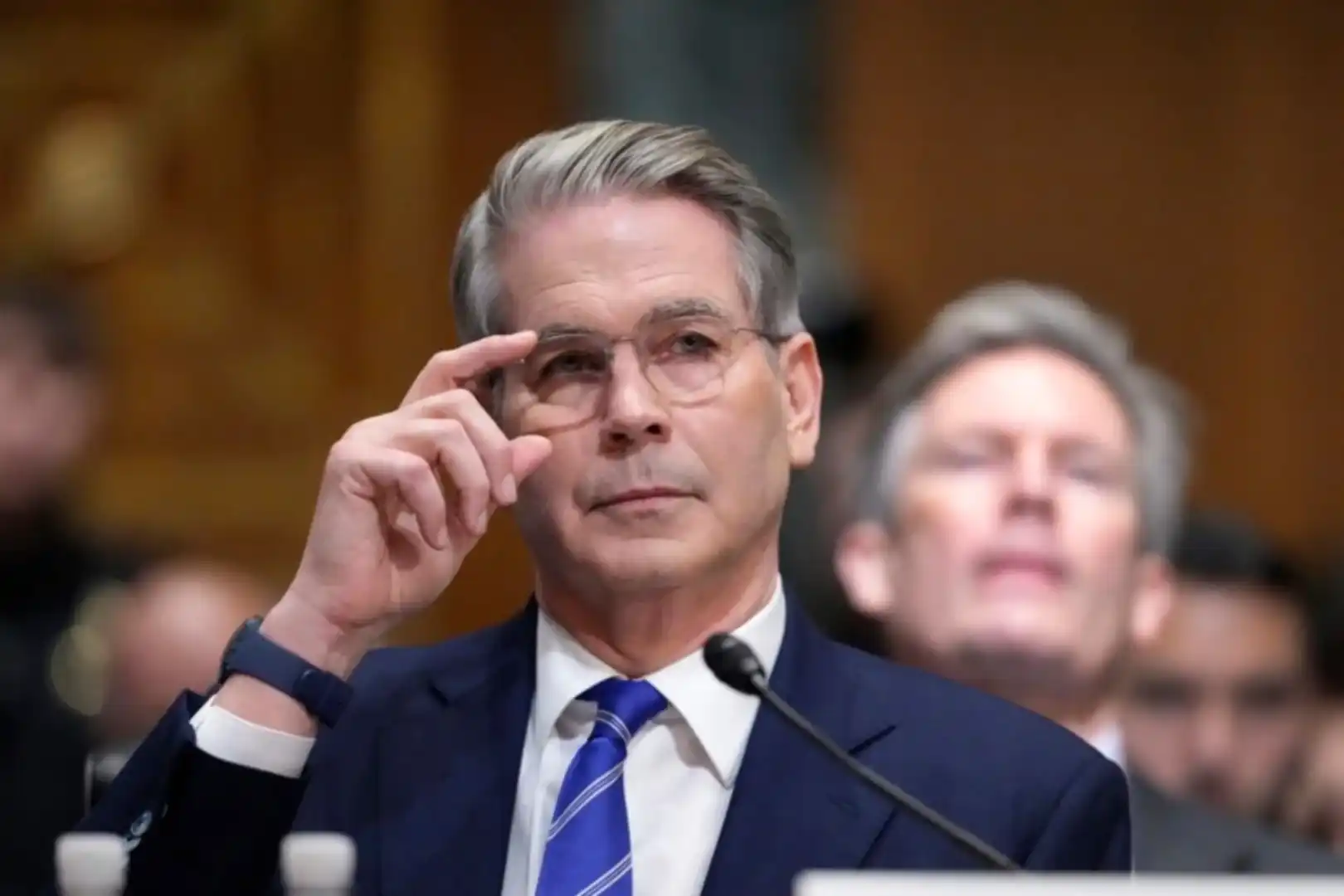
U.S. Market Trend (August 20): U.S. Treasury Intervention Halts Stock Decline; Moderna's Cancer Vaccine Breakthrough Sparks 180% Surge

marsbit2026-08-20 tarihinde yayınlandı2026-08-20 tarihinde güncellendi

Özet

U.S. Stocks Rebound on Treasury Intervention; Moderna Soars 180% on Cancer Vaccine Breakthrough Key Points: • U.S. stocks ended a three-day decline, with the rebound driven primarily by the U.S. Treasury Department's move to significantly increase its long-term bond repurchase ceiling. This action briefly pushed the 30-year Treasury yield down by about 10 basis points, easing long-term interest rate pressures. • Despite this, the market faced a countervailing force from the hawkish July FOMC meeting minutes, which revealed broader support for potential rate hikes among officials due to lingering inflation concerns. • Moderna shares skyrocketed nearly 180% after announcing positive Phase 3 trial results for its personalized mRNA cancer vaccine in partnership with Merck, which also rose nearly 13%. This fueled a major rally in the healthcare sector. • Contrary to the broader market, the Philadelphia Semiconductor Index fell over 2%, highlighting persistent pressure on the AI hardware chain. Concerns include AI's potential inflationary impact and questions about application-side cash flows supporting high capital expenditures. • Commodities and cryptocurrencies rallied alongside the equity rebound, supported by a weaker dollar and lower long-term yields. Geopolitical risks continued to underpin oil prices. Outlook: Market focus shifts to whether long-term bond yields stabilize post-intervention, upcoming U.S. economic data (jobless claims, Philly Fed index), and the impact of ...

Author: Trend Research
The three major U.S. stock indices ended their three-day losing streak, but this rebound was not smooth.

After the U.S. Treasury Department raised the long-term bond buyback limit, the 30-year Treasury yield once plummeted by 10 basis points, providing support for stocks, bonds, gold, and crypto assets simultaneously. The minutes from the Federal Reserve's July meeting were hawkish, showing a broader consensus for interest rate hikes than the voting results suggested, with several officials still concerned about inflation. In market performance, the breakthrough in mRNA cancer vaccines ignited the healthcare sector, with Moderna surging nearly 180% and Merck & Co. gaining nearly 13%, leading the Dow. However, the Philadelphia Semiconductor Index (SOX) fell over 2% against the trend, with Broadcom down 4.6%. Nvidia was one of the few losers among the "Magnificent Seven." While long-term interest rate risks were temporarily suppressed, pressure on the AI hardware chain has not been fully alleviated. Moving forward, long-term bonds are the master switch, and the SOX is the thermometer for tech recovery.

U.S. Treasury Raises Long-Term Bond Buyback Limit, 30-Year Treasury Yield Plummets

The most critical variable on Wednesday came from the U.S. Treasury Department. The Treasury announced it would at least double the long-term bond buyback limit, raising the single-operation cap to $4 billion. Following the news, the 30-year Treasury yield once plunged by about 10 basis points, significantly easing pressure on long-term interest rates.

By the close of the bond market, the 10-year Treasury yield was around 4.64%, up about 6 basis points on the day; the 2-year Treasury yield was around 4.16%, largely unchanged; and the 30-year Treasury yield was around 5.19%, down about 9 basis points on the day. The policy signal truly suppressed the long end, while the short end and 10-year yield did not fall sharply in sync.

Wall Street interpreted this move as another realization of the "Trump put," with the Treasury intervening as long-term bond yields surged to dangerous levels. The U.S. federal government debt officially surpassed $40 trillion on Wednesday, more than doubling in a decade. The risk of a "debt death spiral" is shifting from theoretical discussion to a real constraint.

The U.S. dollar index weakened alongside the decline in long-term bond yields, falling to its lowest level since late May. The yen rebounded nearly 1% intraday, while offshore Chinese yuan rose above 6.73 for the first time in over three years.

Fed Meeting Minutes Lean Hawkish, Rate Hike Consensus Broader Than Voting Results

The minutes from the Federal Reserve's July meeting, released on the same day, conveyed a hawkish tone. They revealed that more than the three dissenting members at the July meeting supported a rate hike, with several believing action would be needed if inflation did not decline. Some officials suggested AI could push inflation higher, and staff viewed inflation expectations with an upside bias. Waller also proposed reducing the number of FOMC meetings from eight to six per year.

The interpretation by the "new Fed whisperer" was more direct: rate hikes received "broader support." This means uncertainty around the September meeting is greater than previously anticipated by the market. Even with July's CPI and PPI cooling, concerns about inflation within the Fed have not subsided.

The hawkish tone of the minutes created a policy counterbalance to the Treasury's "market rescue" operation. One department is suppressing long-term rates, while another is hinting at possible further rate hikes. The market initially traded on the Treasury's short-term positive, but the shadow of the hawkish minutes has not dissipated.

Healthcare Takes the Lead as mRNA Cancer Vaccine Breakthrough Ignites Sector

Moderna was the standout stock on Wednesday. The company, jointly with Merck, announced success in a Phase III trial of its personalized mRNA cancer vaccine for melanoma. Moderna closed up nearly 180%, while Merck gained nearly 13%, leading the Dow.

The S&P 500 Healthcare sector rose 3.2%, marking its biggest single-day gain since April 2025. Following valuation declines and policy debates post-COVID vaccines, the Phase III success in cancer treatment is prompting a reassessment of the commercial potential of the mRNA technology platform. Biotech, pharmaceutical, and healthcare ETFs collectively strengthened.

Retail earnings also provided market support. Target reported better-than-expected results and raised its full-year outlook, while Estée Lauder surged on strong revenue from China. The consumer sector did not signal a broad recession, which is another reason the indices did not continue to decline.

Semiconductors Remain the Weak Link, Philadelphia Semiconductor Index Falls Over 2% Against Trend

Against the backdrop of the broader market rebound, the Philadelphia Semiconductor Index (SOX) fell over 2%. Broadcom led the decline, down 4.6%, while Marvell Technology closed up nearly 10%, buoyed by news of its custom chip collaboration with Google. Among the "Magnificent Seven," only Nvidia closed down about 1%, while Tesla rebounded over 4%.

The weakness in the chip sector has two contexts: First, the Fed minutes mentioned some officials believe AI could fuel inflation. If AI investment itself becomes a driver of inflation, the interest rate narrative for AI would be discounted. Second, concerns about AI financing persist. OpenAI's Q2 revenue growth slowed, and operating losses widened, leading the market to question whether application-level cash flow can support higher capital expenditures.

This indicates the market is differentiating between two types of tech assets. One is the giants and software assets supported by declining rates; the other is the hardware chain with high prior gains, crowded positioning, and strong ties to AI capital expenditures. A decline in long-term bond yields can ease valuation pressure but does not automatically resolve positioning and expectation issues within semiconductors.

The SOX is more telling than the Nasdaq. The Nasdaq can be supported by the Magnificent Seven and software, while the SOX better reflects market confidence in the AI hardware cycle. As long as the SOX continues to underperform the broader market, a tech recovery can hardly be considered complete.

Commodities and Crypto Rebound in Sync; Geopolitical Premiums Persist

Commodities continue to reflect geopolitical premiums. WTI crude futures rose 1.05% to $85.83 per barrel, and Brent crude futures gained 0.66% to $91.62 per barrel. U.S.-Iran negotiations remain deadlocked; Trump backtracked a day later, saying maybe negotiations would resume "at some point." Iran-related risks continue to support oil prices.

Gold rebounded sharply, with COMEX gold futures up 2.83% to $4,489.40 per ounce, briefly surpassing $4,500 intraday. A weaker dollar and falling long-term yields jointly boosted precious metals, with silver up 2.8%.

Cryptocurrencies also strengthened. Bitcoin rose above $69,000 intraday, up over 8% from the daily low; Ethereum surged 10% at one point. The collective reaction of these assets is clear: as long as long-term bond yields are no longer out of control, the market will immediately return to buying high-beta assets.

Today's Focus

Thursday's market focus lies in three directions.

First, whether long-term Treasury yields can stabilize. Whether the Treasury's buybacks can continue to suppress the 30-year yield will determine if the U.S. stock recovery can shift from a technical rebound to more stable capital inflows.

Second, U.S. initial jobless claims and the Philadelphia Fed Manufacturing Index. Following the hawkish Fed minutes, the market will interpret every growth and employment data point more sensitively. If data continues to show strength, rate pressures may return to the market; if data weakens, tech stock recovery will still depend on whether the SOX can halt its decline.

Third, the follow-up reaction to SK Hynix's buyback plan. SK Hynix announced plans to repurchase and cancel 40 trillion won worth of shares and pledged to return at least 50% of cash flow to shareholders. After SanDisk's 35% gain last week, memory stock valuations are already high. The mood-boosting effect of this news on the memory sector warrants attention.

İlgili Sorular

QWhat was the main reason for the U.S. stock market halting its decline on August 20th, as mentioned in the article?

AThe main reason was intervention by the U.S. Treasury Department, which announced an increase in the long-term bond repurchase ceiling, causing the 30-year Treasury yield to plunge and providing support for risk assets.

QWhat significant development caused Moderna's stock price to surge nearly 180%?

AModerna's stock surged nearly 180% following the announcement that its personalized mRNA cancer vaccine, developed in partnership with Merck, achieved success in a Phase 3 trial for melanoma.

QHow did the Federal Reserve's July meeting minutes released on the same day contrast with the Treasury's action?

AThe Fed's minutes were interpreted as more hawkish, revealing that support for an interest rate hike was broader than the official vote indicated, creating a policy counterbalance to the Treasury's market-supportive action.

QWhich key technology sector index underperformed the broader market despite the rally, and what were the cited reasons?

AThe Philadelphia Semiconductor Index (SOX) underperformed, falling over 2%. Reasons included Fed officials' concerns that AI investment could fuel inflation and ongoing market worries about AI application cash flows supporting high capital expenditures.

QWhat are the three focal points for the market on the following day (Thursday) as outlined in the article?

AThe three focal points are: 1) Whether long-term Treasury yields can stabilize after the Treasury's intervention. 2) The U.S. initial jobless claims and Philadelphia Fed Manufacturing Index data for clues on growth and Fed policy. 3) The market's reaction to SK Hynix's massive share buyback announcement.

İlgili Okumalar

BTC Sees Largest Single-Day Short Liquidation in History: Overnight $1.1 Billion Short Positions Evaporate, But Calling a Bull Return is Premature

Bitcoin experienced its largest single-day short liquidation in history, with approximately $1.191 billion in short positions being forcibly closed within 24 hours as the price surged nearly 7% to approach $70,000. This event, occurring on the evening of August 19, resulted in total liquidations of about $1.345 billion across the network. The massive short squeeze was attributed to a combination of catalysts: a White House meeting between former President Trump and crypto industry executives fueling regulatory optimism, and a more substantial signal from the U.S. Treasury doubling its liquidity support for long-term bond repurchases, hinting at looser macro liquidity for risk assets. Data showed strong institutional buying, with U.S. spot Bitcoin ETFs seeing significant inflows. The liquidation process itself created a feedback loop, accelerating the price rise as forced buy-backs pushed prices higher. This event surpassed the previous record for BTC perpetual short liquidations set during the volatile "5.19" period in 2021. While such extreme short liquidations have historically signaled a potential medium-term bottom formation, analysts caution that the market often undergoes weeks of consolidation and "cooling off" afterward. Current sentiment remains mixed, with the Fear & Greed Index still in "Fear" territory, and the key test for the rally being whether it can sustain momentum to challenge higher resistance levels like $75,000. The article concludes by warning against immediate "bull market is back" assumptions, emphasizing that history provides context but not guaranteed outcomes.

marsbit11 dk önce

BTC Sees Largest Single-Day Short Liquidation in History: Overnight $1.1 Billion Short Positions Evaporate, But Calling a Bull Return is Premature

marsbit11 dk önce

Websea Global RWA Summit Successfully Held: Focusing on New Opportunities in China-Kazakhstan Digital Economy, Releasing Signals of Cross-border Collaboration

Websea Global RWA Summit Successfully Held: Focusing on China-Kazakhstan Digital Economy Opportunities, Releasing Signals for Cross-Border Synergy When traditional industries seek new channels for globalization and digital technologies reshape capital, assets, and collaboration methods, an industrial dialogue connecting China, Kazakhstan, and global markets took place in Almaty. On August 18, 2026, the "2026 Global RWA Real-World Asset Tokenization Enterprise Globalization Resource Matching & China-Kazakhstan Industrial Investment Conference," co-hosted by Websea, concluded successfully in Almaty, Kazakhstan. Centered on RWA digitization, cross-border industrial synergy, and investment promotion, the summit gathered industry representatives, investors, digital economy practitioners, creators, and media from China and Kazakhstan to explore the future of a digital economy community. The event shifted focus from mere "project showcases" to fostering deeper "industrial synergy." It featured project roadshows and panel discussions on topics like "Mining Future·Digital Empowerment," "Real Estate Renewal·Urban Evolution," "Green Energy·RWA Opportunities," and "The Globalization Logic of Real Economy." Mr. Yerbol Kharbayev, Chairman of the Kazakhstan Association of Special Economic Zones, emphasized that RWA's significance lies not only in technology but in enhancing asset transparency, collaboration efficiency, and cross-border connectivity through digitization. The discussions highlighted a move towards a deeper "Digital Economy Community" between China and Kazakhstan. Key points included the need for an open, transparent, and stable business environment to attract long-term investment and the crucial role of synergy between governments, enterprises, platforms, and communities. The summit facilitated strategic cooperation signings and targeted B2G/B2B matching, providing a direct channel for Chinese enterprises exploring the Central Asian market. As an invited digital asset platform, Websea participated in brand presentations and the launch of initiatives like a Creator Alliance and a Web3 MCN agency. Herbert Sim, Global CMO of Websea, stated that platform development is fundamentally rooted in user trust and real experience. He expressed gratitude for user and partner trust, underscoring Websea's commitment to asset security, transaction experience, risk awareness, and user rights protection. Websea aims to contribute to the global digital economy through optimized services and open collaboration. The summit also launched the Web3 Beauty Alliance - Central Asia Chapter, a China-Kazakhstan Quality Creator Alliance, and Web3 MCN agencies, expanding the dialogue beyond industry and capital to include technology, content, community, and brand building. The event concluded by signaling that the future of the digital economy will be co-created by a broad range of participants. It requires institutional and infrastructural support, long-term commitment from enterprises, and the sustained trust of users, partners, and communities. With the summit's conclusion, a new chapter in China-Kazakhstan industrial synergy and digital economy cooperation has begun. Websea will use this as a starting point to continue exploring a secure, open, and sustainable digital future alongside global users and partners.

marsbit20 dk önce

Websea Global RWA Summit Successfully Held: Focusing on New Opportunities in China-Kazakhstan Digital Economy, Releasing Signals of Cross-border Collaboration

marsbit20 dk önce

Russia's Banking Bleed and the Crypto Hunt: Citizens Have Withdrawn 24 Billion Euros from Banks This Year; Bill Limiting Total Crypto Purchases Set to Take Effect

**Title: Russia's Banking System Bleeds Cash as Citizens Turn to Crypto, But New Law Imposes Strict Limits** **Summary:** Russia is witnessing a significant outflow of cash from its banking system, with citizens withdrawing approximately €24.4 billion in the first seven months of 2026. This trend accelerated in July, marking the highest monthly increase for the year. Major banks like Gazprombank and Sberbank have reported substantial deposit losses. Simultaneously, cryptocurrency transaction volumes have surged, with an estimated daily trading volume of around $650 million. Officials note that annual crypto transactions exceed 10 trillion rubles, largely occurring outside regulated channels. Citizens are increasingly using crypto as a tool to hedge against currency depreciation and financial uncertainty. In response, President Putin signed the "Digital Currency and Digital Rights Law," with key provisions taking effect on September 1, 2026. This law severely restricts access for ordinary citizens. Non-qualified retail investors will be limited to purchasing only about $3,600 worth of cryptocurrency (initially Bitcoin, Ethereum, and USDT) per year through any single licensed intermediary. Qualified investors and businesses face no such limits for cross-border settlements. Official explanations for the cash exodus cite technical factors like tax changes and digital payment disruptions. However, analysts and media point to deeper public concerns over potential asset freezes, economic instability related to the war, and a lack of trust in the financial system. Notably, September 1 also marks the public launch of the Digital Ruble, Russia's central bank digital currency (CBDC). This creates a dual dynamic: tightening control over decentralized crypto assets while introducing a state-controlled digital currency for payments. For ordinary Russians, traditional banking is losing appeal, crypto access is being capped, and the new Digital Ruble offers a third, fully state-managed pathway.

marsbit45 dk önce

Russia's Banking Bleed and the Crypto Hunt: Citizens Have Withdrawn 24 Billion Euros from Banks This Year; Bill Limiting Total Crypto Purchases Set to Take Effect

marsbit45 dk önce

Household & Personal Care Giant Quietly Becomes the Champion in 'Chip Cleaning'

Kao, the renowned Japanese consumer goods giant known for laundry detergent and facial cleansers, has quietly become a leader in the semiconductor precision cleaning agent market, as revealed in its recent financial report. The company's chemical business, which includes semiconductor precision cleaning agents, achieved net sales of 2472 billion yen (approx. RMB 104.4 billion) in the first half of fiscal 2026, growing 9.4% year-on-year and becoming its fastest-growing segment. Notably, Kao holds about a 60% market share in cleaning agents for package substrates and is also a leader in specific chemicals for NAND flash manufacturing processes. Its products have entered the supply chains of major chipmakers like TSMC, Samsung, and Kioxia. Kao's journey into semiconductors began with its core expertise in surface science, developed from its origins in soap and detergent manufacturing. The 1987 Montreal Protocol, which phased out ozone-depleting solvents like Freon, created a demand for alternative cleaning solutions. Leveraging its deep knowledge of surfactants and purification, Kao launched its "CLEANTHROUGH" aqueous cleaning agent in 1991, entering the precision cleaning market. Over the past three decades, Kao has expanded its product line to cover both front-end (wafer fabrication) and back-end (packaging) semiconductor processes. Its "precision interface control technology" addresses key challenges like particle removal, photoresist stripping, and cleaning complex structures in advanced packaging without damaging delicate materials. Beyond cleaning, Kao's portfolio extends to adjacent processes like dry film photoresist stripping. A key to Kao's success is its customer-centric business model. The company operates "Fine Cleaning Centers" in Japan and Taiwan, where it collaborates directly with clients on process development. This deep integration, coupled with the high cost and risk of switching validated materials in semiconductor production, creates strong customer loyalty. As the AI boom drives demand for complex chip packaging like CoWoS, which requires more numerous and difficult cleaning steps, Kao is strategically positioned. The company plans to defend its back-end dominance while expanding into DRAM and logic semiconductor markets. Kao's story mirrors that of other Japanese firms like Ajinomoto (ABF film) and TOTO (electrostatic chucks), which leveraged deep-rooted core technologies from seemingly unrelated industries to achieve leadership in critical, niche segments of the semiconductor supply chain.

marsbit46 dk önce

Household & Personal Care Giant Quietly Becomes the Champion in 'Chip Cleaning'

marsbit46 dk önce

İşlemler

Spot
活动图片