MemeCore to List on Nasdaq as Part of $1 Billion Deal

cryptonews.ru2026-08-21 tarihinde yayınlandı2026-08-21 tarihinde güncellendi

Özet

MemeCore has entered into a $1 billion agreement with publicly-traded company ZeroStack (NASDAQ: ZSTK), which develops decentralized AI infrastructure. Key ecosystem participants Puple AI Inc. and Blockcat Pte. Ltd. are involved in the deal. As part of the agreement, these companies will transfer 925.9 million MemeCore ($M) tokens to ZeroStack at $1.08 per token, totaling $1 billion in assets. In return, they will receive 3.5 million shares of ZeroStack and warrants to purchase up to an additional 36.2 million shares. The warrant exercise price is set at $25.19, over 12 times ZeroStack's recent market price. Issuing the additional shares requires shareholder approval per Nasdaq rules and will be subject to a lock-up period of up to 10 years. This transaction will allow MemeCore to go public and link its meme culture-based blockchain ecosystem with ZeroStack's decentralized AI focus. The companies also plan to explore collaboration in decentralized AI, digital assets, consumer applications, and blockchain economics.

MemeCore has entered into a $1 billion agreement with public company ZeroStack (NASDAQ: ZSTK), which is developing decentralized infrastructure for AI. The deal involves Puple AI Inc. and Blockcat Pte. Ltd. — key participants in the MemeCore ecosystem. The project is a blockchain ecosystem founded on meme culture.

As part of the agreement, Puple AI and Blockcat will transfer 925.9 million MemeCore ($M) tokens to ZeroStack at a price of $1.08 per token. The total value of the transferred assets will be $1 billion. In return, the companies will receive 3.5 million shares of ZeroStack and rights to acquire up to an additional 36.2 million shares.

The share price under the warrants is fixed at $25.19 — more than 12 times higher than ZeroStack's recent market share price. The issuance of additional shares will require approval from ZeroStack shareholders in accordance with Nasdaq rules. Furthermore, these shares will be subject to a lock-up period of up to 10 years.

The deal will enable MemeCore to go public and connect its ecosystem with ZeroStack's focus on decentralized AI. The companies also intend to explore opportunities for cooperation in the fields of decentralized AI, digital assets, consumer applications, and blockchain economy.

Image: Magnific

end-content
İlgili Sorular

QWhat is the main business of ZeroStack, the company involved in the deal with MemeCore?

AZeroStack develops decentralized infrastructure for AI.

QWhat are the two key participants in the MemeCore ecosystem that are part of this transaction?

AThey are Puple AI Inc. and Blockcat Pte. Ltd.

QHow many MemeCore ($M) tokens are being transferred to ZeroStack as part of the deal?

A925.9 million MemeCore ($M) tokens are being transferred.

QWhat is the significant multiple difference between the warrant price for ZeroStack shares and its recent market price?

AThe warrant price is set at $25.19, which is over 12 times higher than ZeroStack's recent market share price.

QWhat is one major condition mentioned for the issuance of additional ZeroStack shares to the companies?

AThe issuance of additional shares requires approval from ZeroStack's shareholders according to Nasdaq rules.

İlgili Okumalar

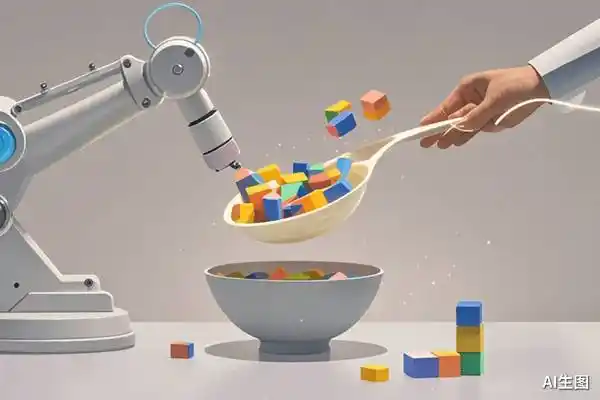
Robotic GPT-3 Moment Shakes Silicon Valley: Zero Lines of Code, Learns Instantly, with Investments from Jensen Huang and Fei-Fei Li

Generalist AI's newly released robot foundation model GEN-1.5 is being hailed as the "GPT-3 moment" for embodied AI. The model demonstrates remarkable one-shot and few-shot learning capabilities in physical manipulation tasks. By watching a single 3-12 second demonstration video (physical prompting) without any training or code, the robot can attempt the task with a 59% average success rate across 10 tasks. With just 5 minutes of demonstration data and minimal fine-tuning (10 gradient steps), the success rate jumps to 83%. The most significant breakthrough is the emergence of spontaneous, improvisational problem-solving abilities not present in the training data. For instance, after learning to sweep blocks with a brush, the robot can adapt to use a banana similarly or switch to a completely new "scoop-and-pour" strategy when given a dustpan. Other emergent behaviors include removing obstacles, correcting errors, and spontaneously sorting objects. These capabilities stem from over 8 months of large-scale pre-training on physical interaction data, suggesting the existence of a Scaling Law for embodied intelligence—where model generalization improves with more data and training time. This approach drastically reduces the cost and expertise needed to teach robots new skills, potentially democratizing robot programming. The release coincides with a surge in the humanoid robotics sector, marked by events like the World Robot Conference and significant investments. While the demonstrated tasks are still relatively simple, the scaling trend and emergent behaviors point toward a future where general-purpose robot "brains" could be easily adapted to various hardware "bodies," reshaping the industry's competitive landscape.

marsbit1 saat önce

Robotic GPT-3 Moment Shakes Silicon Valley: Zero Lines of Code, Learns Instantly, with Investments from Jensen Huang and Fei-Fei Li

marsbit1 saat önce

İşlemler

Spot
活动图片