dYdX Changes Tack and Starts Anew, This Time Partnering with Robinhood: Will It Succeed?

Foresight News2026-07-02 tarihinde yayınlandı2026-07-02 tarihinde güncellendi

Özet

On July 1st, dYdX Labs, in partnership with Robinhood Crypto, launched the Beta version of Arcus, a new decentralized exchange (DEX). Deployed on the newly launched Robinhood Chain (an L2 built on Arbitrum), Arcus supports spot trading for 95 tokenized stocks and plans to introduce cross-asset perpetual contracts. This marks a separate, new product line for the dYdX team, distinct from the existing dYdX Chain. Arcus's core features promise 24/7 trading, self-custody, and institutional-grade liquidity. Initial offerings include zero-fee web-based spot trading and a perpetual contracts testnet. Future plans involve using tokenized stocks as collateral and providing access to Pre-IPO investments. The platform is not available to users in the US, Canada, the UK, and other restricted jurisdictions. This move follows dYdX's v4 upgrade, which, while achieving full decentralization, faced criticism over performance and tokenomics, leading to a loss of market share. Arcus represents a strategic pivot, leveraging Robinhood's vast user base to target the RWA (Real World Assets) sector and global 24/7 trading. The dYdX Foundation clarified that Arcus is a parallel product incubated by dYdX Labs, and the original dYdX Chain continues to operate independently. While no official token plans have been announced, market participants speculate about potential new tokens or airdrops from the Arcus project.


Author: Mahe, Foresight News


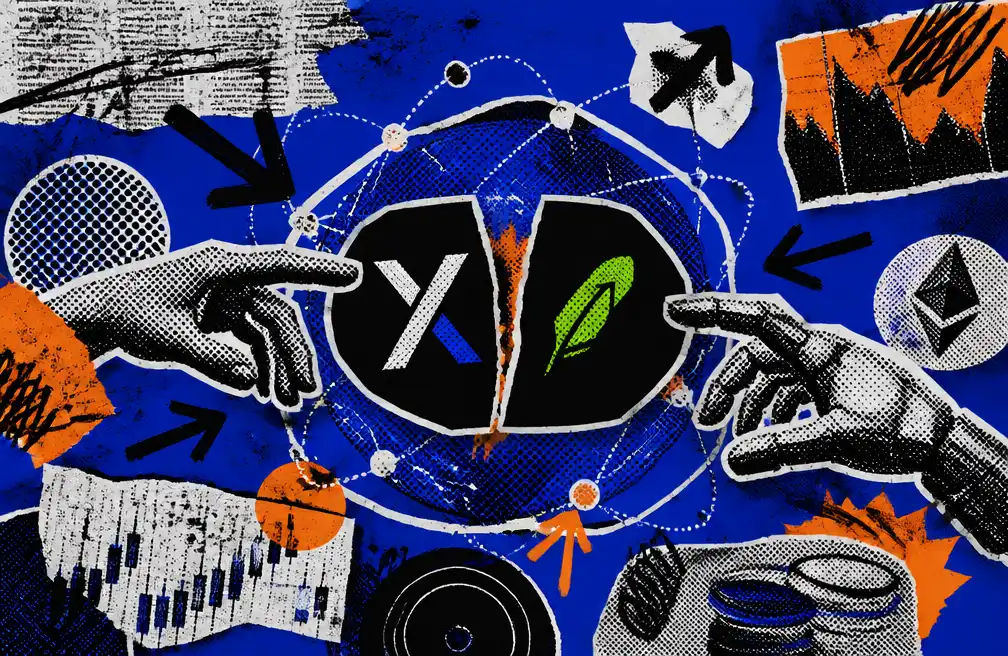
On July 1st, Arcus, a DEX jointly created by dYdX Labs and Robinhood Crypto, officially launched its Beta version. The platform, deployed on Robinhood Chain, supports spot trading of 95 tokenized stocks and plans to launch cross-asset perpetual contracts. Arcus is not an iterative product of dYdX Chain, but rather a brand new product line from the dYdX team. Concurrently, Robinhood Chain, an L2 built on the Arbitrum technology stack, has officially launched its public mainnet.
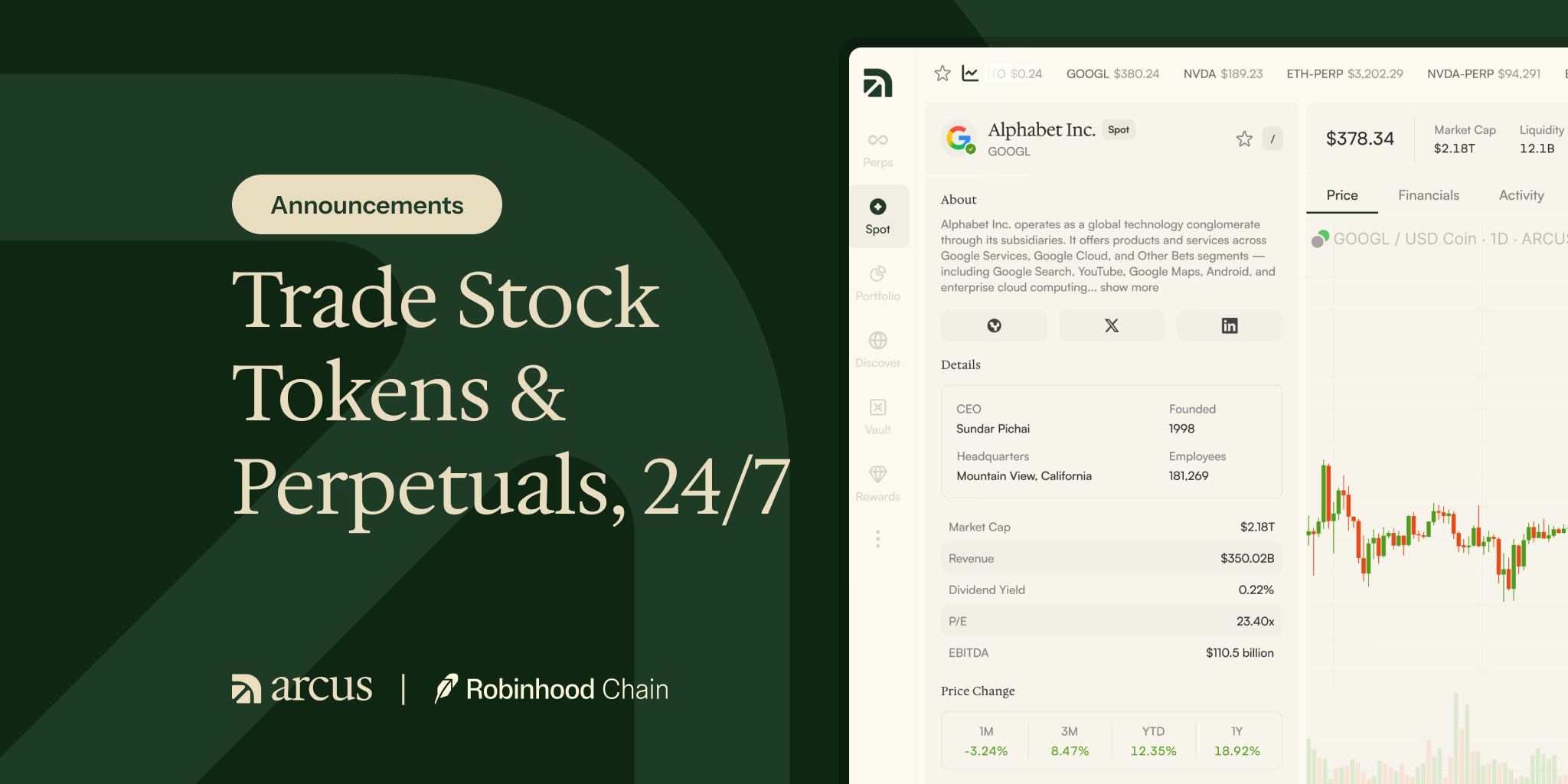


Its DYDX token surged from $0.15 to $0.24 before the announcement, but after the announcement landed, it had dropped to $0.13 this morning, erasing all gains. Its current market cap is $115 million, with an FDV of $136 million.


Future Functionality: Using Tokenized Stocks as Collateral, Access to Pre-IPOs


According to the dYdX website, Arcus is strategically driven by dYdX founder Antonio Juliano as a board member, with Eddie Zhang serving as CEO and Founder. Eddie Zhang is the President of dYdX and was previously the Co-founder and CEO of Pocket Protector.


Arcus's core selling point is a 24/7, round-the-clock trading environment free from market hour restrictions, combined with self-custody, institutional-grade liquidity, and high-performance execution. Currently launched features include:

  • Perpetual Contracts: Already on testnet, targeting whales, market makers, and professional traders. Public testing will follow later.
  • Spot Trading: 95 Stock Token markets are open, with no waiting for listings. Covers 80+ US and international large/mid/small-cap stock tickers, indices (e.g., SPY, QQQ), commodities (from precious metals to energy markets), and crypto assets (BTC, ETH, SOL, etc.). Web platform spot trading fees are 0%, with no commission.
  • Liquidity & Execution: Deep liquidity provided by institutional market makers, supports API trading (order management, account data, market data).
  • Funding & Access: Supports instant deposits with cash or cryptocurrency, with future support for Apple Pay, Google Pay, etc. iOS App coming soon. The platform emphasizes permissionless, unrestricted access but explicitly states it is not available to users in the US, Canada, the UK, or restricted jurisdictions.


Features to be launched later or in Beta:

  • Pre-IPO Access Channel: Gain early investment access to hot pre-IPO companies like OpenAI before they go public.
  • Tokenized Stocks as Collateral: In the future, users will be able to use their tokenized stock holdings as collateral for perpetual trading, enabling cross-asset strategies (e.g., long Apple while shorting Oil).


A Fresh Start After Being Marginalized?


Since its launch in 2018, dYdX has been a pioneer among Perp DEXs, with cumulative trading volume exceeding $1 trillion. However, the v4 version, while achieving full decentralization, made compromises in performance and user experience. Coupled with heavily criticized tokenomics, this led to its rapid marginalization.


Arcus leverages Robinhood Chain's nearly 28 million customers (across 38 countries and three continents) to provide a retail-level traffic entry point. Robinhood Wallet users in 120+ countries/regions can access Stock Tokens and trade spot via DEXs like Arcus. Furthermore, the application explicitly prioritizes access for dYdX traders, stakers, validators, and participants into the Arcus ecosystem.


Arcus is designed as a community-owned protocol, combining dYdX's DeFi innovation experience with Robinhood's expertise in building financial products.


Simply put, the dYdX team hasn't abandoned its original chain but is seeking a breakthrough in the RWA sector and the 24/7 global trading scene through this new project. Traditional financial markets are limited by opening hours and geography. By putting assets like stocks, indices, and commodities on-chain, Arcus enables round-the-clock trading, unlocks productivity (lending, collateralization), and DeFi integration.


The launch of Arcus does not affect the independent operation of dYdX Chain. dYdX v4 remains a community-owned, fully open-source protocol, with user funds and positions fully accessible on dYdX Chain.


The dYdX Foundation has confirmed ongoing support for the chain. Arcus is more like a "parallel product" incubated by dYdX Labs, driven by the original core team but positioned to focus on the exchange itself rather than full ecosystem governance.


Currently, Arcus's official website and channels have not announced any specific token plans or timelines. However, given dYdX's history of notable airdrops, market participants generally have expectations for a potential new token or airdrop from Arcus.

Trend Kriptolar

İlgili Sorular

QWhat is Arcus and which companies collaborated to launch it?

AArcus is a new DEX platform. It is a joint venture between dYdX Labs and Robinhood Crypto.

QOn which blockchain is Arcus deployed and what is its key initial feature?

AArcus is deployed on the Robinhood Chain. A key initial feature is the support for spot trading of 95 tokenized stocks.

QWhat was the market reaction of the DYDX token to the Arcus announcement?

AThe DYDX token initially rose from $0.15 to $0.24 before the announcement. After the official announcement, it fell back to $0.13, erasing all gains.

QAccording to the article, what are two major future functionalities planned for Arcus?

ATwo planned future functionalities are: 1) Providing access to Pre-IPO investments for companies like OpenAI, and 2) Allowing tokenized stocks to be used as collateral for perpetual trading.

QHow does the article describe the relationship between Arcus and the original dYdX Chain (v4)?

AThe article states that Arcus does not affect the independent operation of the dYdX Chain. Arcus is described as a "parallel product" incubated by dYdX Labs, focusing on the exchange itself, while dYdX v4 remains a fully community-owned and open-source protocol.

İlgili Okumalar

Bitwise Chief Investment Officer: STRC Plunge is a Bottom Signal, Bull Market to Start in Autumn

Bitwise CIO: STRC's Plunge Signals Market Bottom, Bull Run Likely This Fall Bitwise CIO Matt Hougan analyzes the recent sharp decline of Strategy's perpetual preferred shares (STRC) and its implications for the bitcoin market. STRC, a product designed for stable, high-yield income, fell dramatically from its $100 target to $75 amid concerns about Strategy's ability to maintain dividends as bitcoin prices dropped. While Strategy's overall balance sheet remains strong, with ample assets to cover liabilities, market panic stemmed from its right to suspend STRC dividends. In response, Strategy introduced a new framework, committing to sell bitcoin as needed to fund dividends and allowing STRC to float freely, abandoning the $100 peg mechanism. This shift marks a change in Strategy's role from a consistent net buyer to a more dynamic participant in the bitcoin market. Hougan views the STRC volatility and related sell-off in MicroStrategy (MSTR) stock as classic late-cycle behavior, where mismatched leverage is being purged from the system. He draws parallels to the GBTC premium unwind after the 2021 bull market. This necessary deleveraging, he argues, is a precursor to finding a market bottom. Key bottoming signals to watch include MSTR trading at a discount to its net asset value (NAV), crypto fear & greed indices hitting extreme lows, and sustained negative bitcoin funding rates. Hougan concludes that as excess leverage is cleared, the market is nearing its bottom, setting the stage for a new bull cycle to begin in the autumn. The next major wave of buyers, he believes, will be institutional investors like banks, asset managers, and pension funds.

marsbit48 dk önce

Bitwise Chief Investment Officer: STRC Plunge is a Bottom Signal, Bull Market to Start in Autumn

marsbit48 dk önce

The Largest Upgrade Since The Merge? How Glamsterdam Will Affect Ethereum?

Ethereum's next major upgrade, Glamsterdam (combining consensus layer "Gloas" and execution layer "Amsterdam"), is scheduled for late 2026 and considered the most significant overhaul since The Merge. It aims to fundamentally enhance L1 performance and architecture to prepare for substantial capacity increases. The upgrade centers on three core changes: 1. **Enshrined PBS (ePBS - EIP-7732):** Integrates the Proposer-Builder Separation directly into the protocol, eliminating reliance on external relays. This extends the window for processing execution payloads, allowing nodes more time to handle larger blocks and more data, paving the way for a higher Gas Limit. 2. **Block-Level Access Lists (BALs - EIP-7928):** Provides a pre-declared "map" in the block header of all state data (accounts, storage) that transactions will access and modify. This enables potential parallel transaction processing and faster state synchronization for nodes. 3. **Gas Repricing (EIP-8037):** Overhauls the gas model to more accurately reflect the real resource costs for nodes. It separates computation costs from state storage costs, making operations that create permanent state data (like new accounts) more expensive, while computation-heavy operations become relatively cheaper. These changes work together to solve the trilemma of scaling: giving nodes more time to process larger blocks (ePBS), reducing execution bottlenecks (BALs), and controlling unsustainable state growth (Gas Repricing). The goal is a credible path to a higher Gas Limit (e.g., 200M gas) without compromising decentralization by overburdening node hardware. For users: * Transaction fees for simple transfers may decrease and become more stable due to increased block space, but state-intensive operations (contract deployment) may cost more. * Gas estimation by wallets will improve in accuracy. * L2 data posting costs could become more stable long-term due to increased Blob capacity. * EIP-7708 will standardize logs for ETH transfers, improving tracking for wallets and exchanges. Node operators must upgrade clients, but ETH holders need take no action. In essence, Glamsterdam doesn't just raise the block size limit; it re-engineers Ethereum's core block production, execution, and economic models to enable sustainable, decentralized scaling.

marsbit1 saat önce

The Largest Upgrade Since The Merge? How Glamsterdam Will Affect Ethereum?

marsbit1 saat önce

İşlemler

Spot

Popüler Makaleler

DYDX Nasıl Satın Alınır

HTX.com’a hoş geldiniz! dYdX (DYDX) satın alma işlemlerini basit ve kullanışlı bir hâle getirdik. Adım adım açıkladığımız rehberimizi takip ederek kripto yolculuğunuza başlayın. 1. Adım: HTX Hesabınızı OluşturunHTX'te ücretsiz bir hesap açmak için e-posta adresinizi veya telefon numaranızı kullanın. Sorunsuzca kaydolun ve tüm özelliklerin kilidini açın. Hesabımı Aç2. Adım: Kripto Satın Al Bölümüne Gidin ve Ödeme Yönteminizi SeçinKredi/Banka Kartı: Visa veya Mastercard'ınızı kullanarak anında dYdX (DYDX) satın alın.Bakiye: Sorunsuz bir şekilde işlem yapmak için HTX hesap bakiyenizdeki fonları kullanın.Üçüncü Taraflar: Kullanımı kolaylaştırmak için Google Pay ve Apple Pay gibi popüler ödeme yöntemlerini ekledik.P2P: HTX'teki diğer kullanıcılarla doğrudan işlem yapın.Borsa Dışı (OTC): Yatırımcılar için kişiye özel hizmetler ve rekabetçi döviz kurları sunuyoruz.3. Adım: dYdX (DYDX) Varlıklarınızı SaklayındYdX (DYDX) satın aldıktan sonra HTX hesabınızda saklayın. Alternatif olarak, blok zinciri transferi yoluyla başka bir yere gönderebilir veya diğer kripto para birimlerini takas etmek için kullanabilirsiniz.4. Adım: dYdX (DYDX) Varlıklarınızla İşlem YapınHTX'in spot piyasasında dYdX (DYDX) ile kolayca işlemler yapın.Hesabınıza erişin, işlem çiftinizi seçin, işlemlerinizi gerçekleştirin ve gerçek zamanlı olarak izleyin. Hem yeni başlayanlar hem de deneyimli yatırımcılar için kullanıcı dostu bir deneyim sunuyoruz.

156 Toplam GörüntülenmeYayınlanma 2024.12.13Güncellenme 2026.06.02

DYDX Nasıl Satın Alınır

Tartışmalar

HTX Topluluğuna hoş geldiniz. Burada, en son platform gelişmeleri hakkında bilgi sahibi olabilir ve profesyonel piyasa görüşlerine erişebilirsiniz. Kullanıcıların DYDX (DYDX) fiyatı hakkındaki görüşleri aşağıda sunulmaktadır.

活动图片