US National Debt Set to Break WWII Record Soon

cryptonews.ru2026-08-13 tarihinde yayınlandı2026-08-13 tarihinde güncellendi

Özet

According to the U.S. Congressional Budget Office, the national debt of the United States is approaching the record levels seen in 1946 and is projected to exceed that peak in 2030. The total debt currently stands at approximately $39.9 trillion. This figure includes securities held in federal accounts, which were not counted in the World War II-era debt calculations. The CBO forecasts the debt will reach 101% of GDP by the end of fiscal year 2026, surpass the 1946 peak of 106% shortly after, and climb to 120% by 2036. The current debt situation differs significantly from the post-World War II period. In 1944, wartime spending peaked at 42.7% of GDP but fell to 14% by 1949 as mobilization ended, aiding debt reduction. Today, there is no clear end date for high spending pressures. The CBO's latest projections estimate spending at 24.4% of GDP and revenues at 17.8% in 2036. The sustained spending growth is largely driven by rising costs for social security and healthcare benefits, fueled by an aging population. The number of Americans aged 65 and older is nearly three times greater than 50 years ago and is expected to increase by another 15% between 2027 and 2036.

According to the Congressional Budget Office, the United States' national debt is approaching the level of 1946. The agency estimates this threshold will be exceeded in 2030.

The current total US debt is approximately $39.9 trillion. This includes securities held in federal accounts, which were not included in the WWII-era debt calculations. However, according to CBO projections, this figure will reach 101% by the end of fiscal year 2026. It will then surpass the 1946 peak of 106% and grow to 120% by 2036.

However, the current US debt situation differs from that of WWII. According to sources, in 1944, when wartime production peaked, expenditures amounted to 42.7% of GDP. By 1949, after military demobilization ended, they had dropped to 14%, helping to reduce the country's debt burden. Currently, no one can pinpoint an end date for US spending problems. According to the latest projection from the Congressional Budget Office, in 2036, expenditures will be 24.4% of GDP and revenues will be 17.8%.

The spending increase is linked to growth in benefit payments and healthcare costs as the population continues to age. The number of Americans aged 65 and older is nearly three times greater than it was 50 years ago. Their number will grow by 15% between 2027 and 2036.

end-content

İlgili Sorular

QAccording to the Congressional Budget Office, when is the U.S. national debt projected to exceed the 1946 record level?

AIt is projected to exceed the 1946 record level in 2030.

QWhat percentage of GDP did U.S. spending reach at its peak in 1944, and what was it in 1949?

AU.S. spending reached 42.7% of GDP in 1944 at its wartime peak, and it fell to 14% in 1949 after the end of war mobilization.

QWhat is the current total U.S. national debt, and what does this figure include?

AThe current total U.S. national debt is approximately $39.9 trillion. This figure includes securities held in federal accounts, which were not counted in the debt measure from WWII.

QWhat are the primary reasons cited for the projected growth in U.S. government spending over the coming years?

AThe primary reasons are increasing benefit payments and healthcare costs due to the continuing aging of the population.

QWhat is the projected U.S. debt-to-GDP ratio by the end of fiscal year 2026 and by 2036?

AIt is projected to reach 101% by the end of fiscal year 2026, exceed the 1946 peak of 106% by 2030, and grow to 120% by 2036.

İlgili Okumalar

GPT-5 Also Has Tip-of-the-Tongue Moments, Google Tested 4.5 Million Times: The Keys Are Lost

Google researchers have discovered that advanced AI models like GPT-5 and Gemini 3 experience a phenomenon akin to the human "tip-of-the-tongue" state, where they possess knowledge but fail to retrieve it. Their study, "Empty Shelves or Lost Keys?" (ICML 2026), introduces the "Knowledge Portrait" framework to analyze factual knowledge in models, distinguishing between failure to encode a fact versus failure to recall it. Testing on 13 models across 2.15 million queries from the WikiProfile benchmark revealed that state-of-the-art models successfully encode 95-98% of facts into their parameters. However, when asked directly, they fail to recall 26-34% of these known facts. Enabling chain-of-thought ("thinking") reasoning reduces this recall failure to 11-12%, recovering 40-65% of the previously unrecalled but encoded facts. The research identifies two key bottlenecks: recalling obscure ("long-tail") facts and answering reversed queries (e.g., "Who is Tom Cruise's mother?" vs. "Whose son is Tom Cruise?"). While scaling model size effectively reduces encoding failures, it does little to improve recall rates. In larger models, recall failure becomes the dominant source of factual errors, accounting for over 70% of mistakes in GPT-5.2. The findings suggest that for top models, the primary challenge is no longer storing knowledge but accessing it efficiently. Future accuracy gains may depend more on improved inference-time methods and "meta-cognitive" abilities, enabling models to recognize when they need to engage in deeper reasoning to retrieve information they already know.

marsbit15 dk önce

GPT-5 Also Has Tip-of-the-Tongue Moments, Google Tested 4.5 Million Times: The Keys Are Lost

marsbit15 dk önce

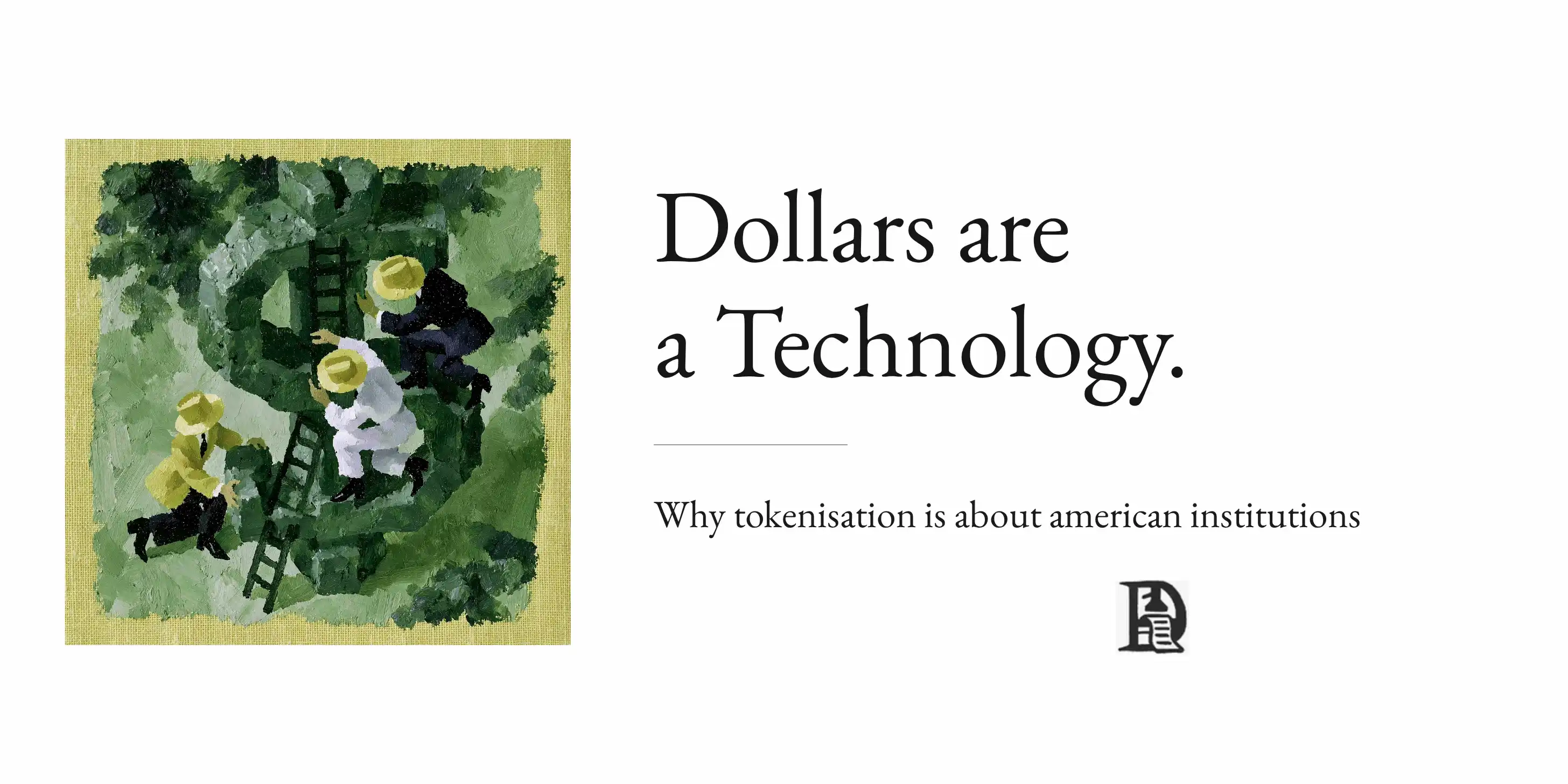
The Dollar is a Technology: Stablecoins Are Exporting U.S. Institutions to the World

This article argues that stablecoins and blockchain infrastructure are becoming a vehicle for exporting American financial systems globally. The core thesis is that the U.S. dollar, as a "technology," is increasingly embedded in blockchain rails, moving beyond a reserve currency to represent the institutional stability of the United States itself. The piece highlights three key areas where this is happening: 1. **Cross-border payments and trade finance:** Companies like Keyrails use stablecoins and blockchain to streamline and secure trade finance for emerging markets (e.g., Nigeria-China trade), offering faster, often cheaper dollar liquidity than traditional systems. 2. **Programmable collateral and credit:** Platforms like SemiLiquid allow institutions to use tokenized assets (e.g., treasuries, stocks) as "programmable collateral" for loans without moving them from custody, unlocking capital efficiency and improving transparency in institutional lending. 3. **Financing real-world assets:** Protocols like USD.AI create lending markets for productive, hard-to-finance assets like AI GPUs, connecting global stablecoin liquidity to physical capital. The author concludes that the true value of these new blockchain-based financial platforms lies not just in transaction volume, but in the deep, hard-to-replicate "context" (data, trust, operational knowledge) they build around specific economic activities like trade and asset finance. This represents crypto's evolution into an operating system for real-world capital formation, moving beyond speculation.

marsbit18 dk önce

The Dollar is a Technology: Stablecoins Are Exporting U.S. Institutions to the World

marsbit18 dk önce

Ethereum Glamsterdam Upgrade: Largest-Scale Underlying Restructuring Yet, Mainnet Date Still Undecided

The upcoming Ethereum "Glamsterdam" upgrade is viewed by core developers as the most significant protocol-level refactoring since The Merge, fundamentally altering how the network processes transactions and manages its state to advance L1 scaling. Its core goals are: accelerating processing via parallelization, increasing capacity, and enhancing sustainability through adjusted fees that better reflect long-term data storage costs. The upgrade features two headline proposals. First, **ePBS (EIP-7732)** on the consensus layer aims to formalize proposer-builder separation directly within the protocol, eliminating reliance on off-chain relayers. This built-in mechanism is designed to provide a more secure and efficient block production pipeline, extending the critical validation window to allow the network to handle more data, particularly for Layer2s. Second, **BALs (EIP-7928)** on the execution layer introduces block-level access lists. These lists specify the data each transaction will access beforehand, allowing the network to identify and safely execute non-conflicting transactions in parallel, rather than strictly sequentially. This also speeds up new node synchronization. Glamsterdam also includes配套 proposals to reprice storage costs (aiming for a predictable ~120 GiB annual state growth) and the cost of data-reading operations to better align with modern hardware costs and prevent spam. Regarding the timeline, the initial schedule targeting a mainnet activation on September 16, 2026, has likely been delayed. Following the launch of a new dedicated testnet (Plataberget), the deployments on the Sepolia and Holesky testnets are now expected in September, with the mainnet launch potentially pushed to Q4 2026 or later, as developers prioritize correctness over a fixed date.

marsbit19 dk önce

Ethereum Glamsterdam Upgrade: Largest-Scale Underlying Restructuring Yet, Mainnet Date Still Undecided

marsbit19 dk önce

İşlemler

Spot
活动图片