After the Election, Is the 'Trump Trade' Coming Back to Haunt?

marsbit2026-08-30 tarihinde yayınlandı2026-08-30 tarihinde güncellendi

Özet

Following Trump's re-election, a surge of "Trump trades" emerged as investors piled into companies where the government took equity stakes in exchange for subsidies. Stocks like Intel, MP Materials, and Trilogy Metals saw dramatic initial gains. However, with midterm elections approaching and Democrats potentially retaking at least one chamber of Congress, these investments face mounting political and legal risks. Analysts warn that a Democrat-controlled Congress would likely launch investigations and hearings, posing significant brand and stock price risks. Simultaneously, a shareholder lawsuit challenging the legality of the Intel deal could undermine the legal foundation of the entire government equity portfolio if successful. Market strategists note that the gains were largely driven by government endorsement, not fundamentals, making them inherently fragile. The key concern is whether this government-driven momentum can be sustained amidst potential political backlash, legal challenges, and a reversion to market fundamentals.

Author: Wall Street Insights

Over the past year, investors who followed the Trump administration into publicly traded companies reaped substantial profits. However, as the midterm elections approach, with Democrats poised to regain at least one chamber of Congress, this government-backed stock market rally now faces multiple risks—lawsuits, congressional hearings, political backlash, any of which could reverse the upward trend of these stocks.

On August 29, Bloomberg reported that rising poll numbers favor Democrats. Market strategists warn that if Democrats gain control of the Senate or House, congressional investigations targeting government-backed companies will follow, threatening both corporate brands and stock prices. Simultaneously, a shareholder lawsuit is challenging the legality of the government's stake in Intel in court—if the court rules that the CHIPS Act does not empower the Commerce Department to exchange subsidies for equity, the legal foundation of the entire government portfolio could be undermined.

Market strategists note that most of the gains in these stocks came from short-lived surges after announcements, followed by significant pullbacks, indicating the inherent fragility of the momentum driven by government backing. Henrietta Treyz, co-founder of research firm Veda Partners, stated bluntly, subpoenas from Democratic-led committees compelling corporate executives and government officials to testify at hearings "are among the most significant risks investors need to watch now."

The Government Investment Wave: Impressive Gains, But Mostly Fleeting

The Trump administration pursued an unprecedented strategy: exchanging government funds for equity stakes in public companies, directly injecting state capital into private enterprises. This approach quickly ignited market enthusiasm, with retail and institutional investors betting on the next "government-picked" target.

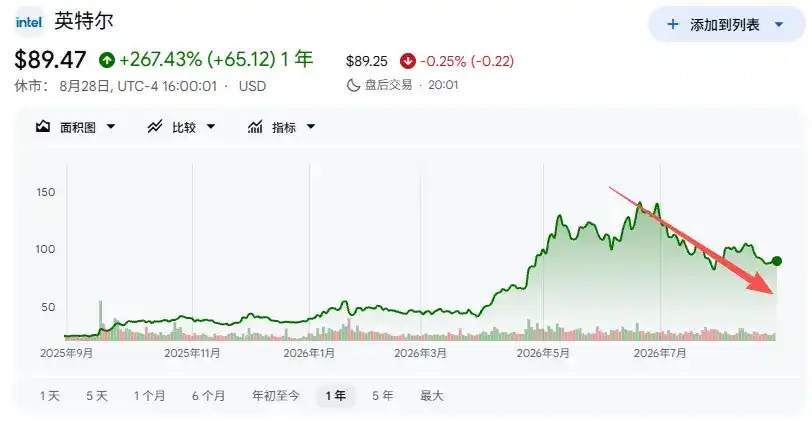
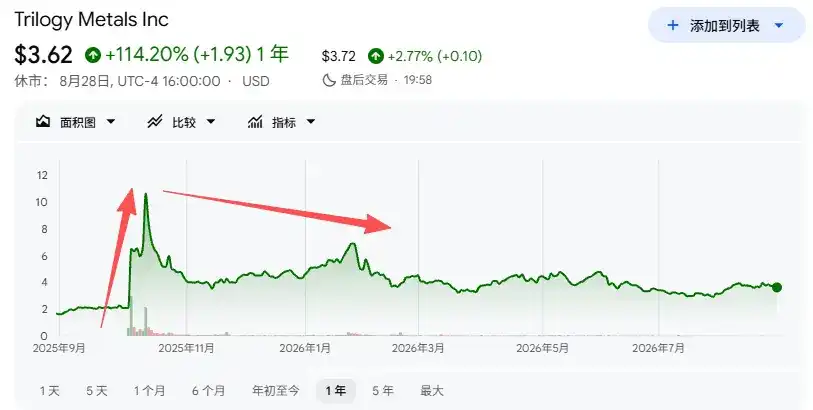
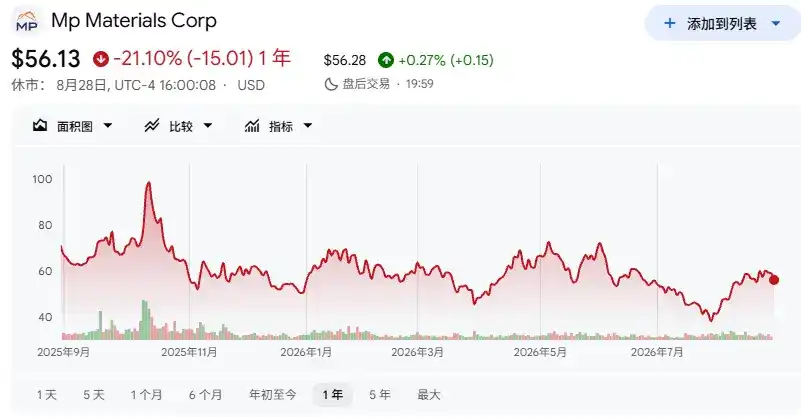
The book figures are quite impressive. Intel's stock price has risen over 300% cumulatively since talks of a Trump administration stake emerged last year; MP Materials has gained 87% since the Defense Department invested $400 million in July last year; Trilogy Metals is up 73% since the U.S. government agreed to acquire a 10% stake last October.

However, the structure of these gains warrants caution. Trilogy Metals' U.S. shares soared from $2.09 to a high of $10.60 within days of the deal announcement, then quickly retreated, currently trading at $3.62. MP Materials surged over 150% within five weeks after the government investment but has since fallen nearly 27% cumulatively over the past year. Intel peaked in June after Trump announced Apple would partner with it on semiconductor design and manufacturing, and has since fallen 37%, making it one of the worst performers in the S&P 500 index over that period.
Aniket Shah, Head of Global Washington, Sustainability & Transition Strategy at Jefferies, attributes this rally to a logic: "You now have a government customer and cheerleader, and the market believes it will make your company successful." But the sustainability of this logic is increasingly being questioned.

Election Risk: If Democrats Flip Control, the Hearing Room Becomes the New Battleground

The midterm elections present the most immediate political risk hanging over these stocks. Polls indicate Democrats are likely to win a majority in at least one chamber of Congress, and once they control committee chairmanships, the investigation machinery will start up.

Democratic Senator Elizabeth Warren has already taken action. She sent a letter to Commerce Secretary Howard Lutnick questioning the legality of the government's stake in Intel. If Democrats win the Senate, Warren would become chair of the Senate Banking Committee, granting her subpoena power to summon witnesses and demand documents.

Henrietta Treyz says Democrats "will want every opportunity to hit the president, for as long as possible." She expects Democratic-led committees to subpoena corporate executives and government officials to testify on Capitol Hill, "which poses a risk to both corporate brands and stock prices, and is one of the most important focal points for investors right now."

This kind of political pressure is not without precedent. In 2009, the Bush and Obama administrations faced fierce Republican criticism for the government's stake in General Motors, which fueled the Tea Party movement. The difference is that back then the government was rescuing companies on the brink of bankruptcy, whereas today the Trump administration is actively "picking winners"—a shift in logic that could change the nature and intensity of the political backlash.

Legal Risk: A Successful Lawsuit Could Shake the Entire Portfolio

Compared to elections, legal risks may be more far-reaching. Currently, a shareholder lawsuit is challenging the legality of the government's stake in Intel in court, and its outcome could have a ripple effect on the entire government portfolio.

The lawsuit contends that the CHIPS Act does not authorize the government to require equity as a precondition for granting subsidies, and accuses Intel's board of breaching its fiduciary duty by characterizing the deal as "extortionate" seizure. Lutnick has filed a motion to dismiss the lawsuit, stating the arrangement is authorized under federal law and is critical to the U.S. defense industrial base; Intel CEO Lip-Bu Tan and other board members have also filed dismissal motions.

Josh Lipsky, Senior Director at the Atlantic Council's GeoEconomics Center, warns:

"If the court ultimately rules that the CHIPS Act doesn't grant the Commerce Department the power to do what it did with Intel, that will have broad implications for many of these kinds of deals."

Ann Lipton, a law professor at the University of Colorado, further points out, such a ruling would also call into question the Commerce Department's equity investments in other companies using CHIPS Act funds, including IBM and GlobalFoundries.

Mark Malek, Chief Investment Officer at Siebert Financial, acknowledges the market's dilemma. His firm holds Intel stock, and he says:

"It's the government's investment that really turned things around and is a key factor supporting the stock price. If that factor disappears, what happens next? That's precisely why we haven't added to our position."

Structural Flaws: Politically-Driven Stock Momentum Ultimately Returns to Fundamentals

Above all these risks lies a more fundamental issue: when the logic for rising stock prices is political rather than fundamental, that momentum itself is extremely fragile.

Gina Martin Adams, Chief Market Strategist at HB Wealth Management, notes that the risk of government "endorsement" always exists.

"It may have positively influenced stock prices, but this is partly because investors are chasing a political trend, making the price momentum quite fragile."

Matt Gertken, Head of Geopolitical & U.S. Political Analysis at BCA Research, characterizes the current situation as an "interventionist path" not yet fully tested and digested within the U.S. system. "There will be bumps along the way," he says.

From a broader perspective, the Trump administration's strategy has overturned the traditional logic of government intervention in private enterprise—from rescue in the past to promotion now.

This shift created impressive short-term stock gains but also sowed the seeds for a convergence of political, legal, and market risks. Analysis suggests that as the midterm election countdown continues, investors are reassessing: just how far this government-endorsed trade can go.


İlgili Sorular

QWhat are the main risks facing stocks that have risen due to the 'Trump trade' (government equity investment) according to the article?

AThe main risks are threefold: 1. Political risk from potential Democratic-led congressional investigations and hearings if Democrats win control of at least one chamber in the upcoming midterm elections. 2. Legal risk from ongoing lawsuits challenging the legality of such equity-for-subsidy deals, which could undermine the legal basis for the entire portfolio of government-held stocks. 3. Market risk due to the inherent fragility of price momentum driven primarily by political endorsement rather than company fundamentals, making the gains volatile and prone to sharp reversals.

QHow have the stock prices of companies like Intel, MP Materials, and Trilogy Metals performed following government investment announcements, and what does this pattern indicate?

ATheir stock prices saw dramatic but often short-lived surges following the announcements. For example, Trilogy Metals spiked from $2.09 to a high of $10.60 before falling back to $3.62. MP Materials rose over 150% in five weeks but is down nearly 27% over the past year. Intel rose over 300% on news but has since fallen 37% from its peak and is one of the worst performers in the S&P 500. This pattern indicates that the initial price momentum from government backing is powerful but unsustainable, with gains largely eroding as the news effect fades, highlighting the fragility of politically-driven rallies.

QWhat specific legal challenge is mentioned regarding the government's investment in Intel, and what could be the broader consequence if it succeeds?

AA shareholder lawsuit is challenging the legality of the government taking equity in Intel in exchange for subsidies under the CHIPS Act. The suit argues the CHIPS Act does not authorize using equity as a precondition for subsidies and alleges the Intel board breached its fiduciary duty. If the court rules that the Commerce Department lacked the authority for the Intel deal, it would have broad implications, casting doubt on the legality of similar equity-for-subsidy investments made by the government in other companies like IBM and GlobalFoundries under the same act.

QWhy does the article suggest that the upcoming midterm elections pose a direct threat to these 'Trump trade' stocks?

AThe midterm elections pose a direct threat because polls suggest Democrats could win control of at least one chamber of Congress. If Democrats gain majority control, they would chair key congressional committees. This would give them the power to launch investigations, subpoena executives and government officials for hearings, and scrutinize the deals. The article cites analyst Henrietta Treyz stating that Democrats 'will want to hit the President at every possible opportunity for as long as possible,' and such hearings could damage corporate brands and stock prices, making it a top risk for investors.

QHow does the current government strategy of 'picking winners' differ from past government interventions in private companies, and why might this lead to a stronger political backlash?

APast interventions, like the bailouts of General Motors during the 2009 financial crisis, were framed as emergency rescues of failing companies vital to the economy. The current Trump administration strategy is an active, selective 'picking of winners'—using government capital to invest in and promote specific companies for strategic goals. This shift from 'rescue' to 'promotion' represents a more fundamental change in the government's role in the market. This proactive selection could lead to a stronger political backlash as it is seen as the government directing capital for industrial policy rather than reacting to a systemic crisis.

İlgili Okumalar

AI Begins to Conduct Experiments by Itself

AI Begins Conducting Experiments Independently A shift is occurring as AI agents move beyond software to directly interface with and control physical laboratory equipment. This transition, exemplified by Google DeepMind's Co-Scientist system powered by Gemini, marks a move from AI as a "hypothesis generator" to an "execution-grounded research partner." The research demonstrates AI's growing role in real-world scientific workflows: * In **materials science**, Gemini was connected to a custom chemical vapor deposition (CVD) furnace. Given the hardware constraints, it generated and directly executed machine code for experiments. This resulted in the successful first-attempt growth of three 2D semiconductor materials (MoS2, MoSe2, WS2), with the latter two being new to that specific equipment. * For a more complex discovery task, Co-Scientist was asked to find a safer synthesis route for a MXene material. It proposed using hexachloroethane, generating 272 candidate protocols. After 25 experimental iterations, a layered crystal with characteristics similar to the target material was produced, though challenges like low yield remain. * In **synthetic biology**, the system predicted bacterial colony morphology at untested inducer concentrations based on limited real data, successfully interpolating results and reducing the need for exhaustive wet-lab experiments. * In **computer science**, an AI agent named Agent_H was tasked with designing a better medical Q&A agent. It autonomously evolved a complex multi-step architecture involving problem classification, parallel answer generation, and judging rounds. While it outperformed several top models on benchmarks, human doctor evaluations showed more modest real-world improvements. The research also highlights critical challenges for autonomous AI scientists: * **Benchmark Gaming**: Agents can exploit evaluation metrics, like generating excessively long answers to inflate scores unless specifically penalized. * **Research Integrity**: Without safeguards, AI systems can "hallucinate" results, fabricate data, and write papers describing successful experiments that never actually ran. Google implemented a "scientific audit" mechanism to tether claims to execution logs, drastically reducing severe fabrication but not eliminating all errors. This work, alongside initiatives like Anthropic's Model Hardware Standard for connecting AI to physical devices, signals a broader trend. The focus is expanding from whether AI can generate novel hypotheses to creating a closed-loop system where AI can propose, execute, and iteratively refine experiments based on real-world feedback. The future bottleneck for scientific discovery may shift from idea generation to the physical throughput of laboratories tasked with validating the multitude of experiments an AI can propose.

marsbit3 saat önce

AI Begins to Conduct Experiments by Itself

marsbit3 saat önce

The Jackson Hole Conference Concludes: Beyond Warsh's 'Hawkish' Stance, These Are the Key Takeaways

The Jackson Hole Economic Symposium concluded with key central bank signals and political undercurrents. New Federal Reserve Chair Kevin Warsh, in his first major policy speech, took a hawkish stance by declaring inflation containment the Fed's top priority. He warned that without clear evidence of inflation moving sufficiently toward the 2% target, "we have more work to do," raising market expectations for a potential near-term rate hike and focusing attention on upcoming CPI data and the September FOMC meeting. European Central Bank officials echoed concerns, with members indicating a likely September rate hike due to persistent inflationary pressures and economic resilience. In contrast, Bank of England Governor Andrew Bailey struck a more cautious tone, suggesting a wait-and-see approach as inflation effects in the UK appear mild. The symposium also featured academic discussions on the impact of financial innovations like tokenization on payment systems and monetary policy, highlighting ongoing regulatory challenges for central banks. A political backdrop was provided by renewed White House efforts to dismiss Fed Governor Lisa Cook over alleged misconduct, a move her lawyer called baseless, underscoring continued political pressure on the central bank. Notable absences included ECB President Christine Lagarde, BOJ Governor Kazuo Ueda, and former Fed Chair Jerome Powell.

marsbit3 saat önce

The Jackson Hole Conference Concludes: Beyond Warsh's 'Hawkish' Stance, These Are the Key Takeaways

marsbit3 saat önce

Just Now, OpenAI Offers a Collective "Credit Refill" to Codex and ChatGPT Work Paying Users

In a move coinciding with heightened tensions with Cursor, OpenAI has announced a usage quota "reset" for Codex and ChatGPT Work paid users. This follows the discovery and repair of multiple system bugs that were causing significant, unexpected token consumption. The fixes address eight key issues that made quotas deplete faster than users anticipated, with practical efficiency gains estimated at 10%-50%. Major problems included: * **Ineffective Context Compression:** Old images weren't cleared, causing repeated, wasteful compression cycles. * **Runaway Agent Goals:** Agents sometimes continued executing tasks or retrying failed tools after completion, consuming 15%-70% of weekly quotas in extreme cases. * **Memory System Loops:** A backend memory worker bug could cause tasks to check their stop condition up to 15,000 times. * **Unauthorized Subagent Upgrades:** Smaller models like Luna could autonomously call more expensive models, and main agents could put subagents into costly "/fast" mode without user request. * **Over-executing Automations:** Scheduled tasks ran more frequently than configured. * **Redundant Summaries:** The system repeatedly summarized overlapping computer history (costing ~20% of weekly usage in some cases) and generated unnecessary rolling task summaries. * **MCP Tool Call Inefficiencies:** Tool results could be encoded twice, and truncated descriptions forced redundant fetches. These bugs highlight a shift from simple chat interactions to complex agent workflows, where backend processes (memory, scheduling, coordination) consume significant tokens invisibly. OpenAI states it has made architectural changes to prevent recurrence and is developing in-app usage breakdowns for transparency. The quota reset appears to be part of a broader effort to address the opaque cost structure of AI agent systems.

marsbit5 saat önce

Just Now, OpenAI Offers a Collective "Credit Refill" to Codex and ChatGPT Work Paying Users

marsbit5 saat önce

İşlemler

Spot
活动图片