AI Agents Are Starting to Register Email Accounts Themselves: This YC-Backed Company Raised $6 Million to Do Just One Thing

marsbit2026-03-13 tarihinde yayınlandı2026-03-13 tarihinde güncellendi

Özet

AI agents are now autonomously registering email accounts through AgentMail, a San Francisco-based startup that recently secured $6 million in seed funding. The company, backed by General Catalyst, Y Combinator, and prominent angels, is building email infrastructure specifically designed for AI agents—not humans. Unlike traditional email services, AgentMail provides API-first access, allowing AI agents to programmatically create accounts, send/receive emails, manage threads, and handle authentication without human intervention. This addresses a critical gap: while AI agents can perform complex tasks, they lack the identity layer (email) required to interact with most internet services. Key capabilities enabled by AgentMail include third-party authentication, bidirectional communication, automated audit trails, and multi-threaded conversations. The platform already serves thousands of human users and hundreds of thousands of AI agents, with use cases spanning supply chain coordination, customer support, loan collection, and procurement negotiations. Notably, AI agents are proactively seeking out and registering for AgentMail themselves—a sign of growing autonomy. This shift underscores a broader trend: AI agents are evolving from tools into active internet participants, necessitating new infrastructure tailored to their needs. As Box CEO Aaron Levie predicts, AI agents will soon become the primary users of software, vastly outnumbering human users in enterprises. AgentMa...

Have you ever thought that AI agents might also need email? This sounds like a plot from a science fiction novel, but it's actually happening. What's even more shocking is that some AI agents have already started registering for email services on their own—they find AgentMail through web searches, browse the website, and create their own email accounts, all without any human involvement. When the founding team of AgentMail first observed this phenomenon, they realized a significant turning point had arrived: AI agents are no longer just tools; they are becoming independent entities on the internet.

This San Francisco-based startup, which just completed a $6 million seed funding round, is doing something that seems simple but has profound implications: providing dedicated email services for AI agents. The funding round was led by General Catalyst, with participation from Y Combinator and Phosphor Capital. Angel investors include Paul Graham, HubSpot's CTO Dharmesh Shah, Supabase's CEO Paul Copplestone, and Ramp's CTO Karim Atiyeh. The involvement of these investors itself indicates a fundamental shift in the software industry: we are witnessing AI agents transitioning from being auxiliary tools to becoming the primary users of the internet.

As I delved deeper into AgentMail, I gradually understood why email is so important for AI agents and what kind of industry transformation lies behind this. This is not just about technological innovation; it's about how we redefine the concept of "users" and how the future software ecosystem will evolve.

Why AI Agents Need Email

For humans, email is a natural part of life. We use it daily to send and receive messages, verify identities, register accounts, and reset passwords. Over 300 billion emails are sent globally every day, most of which are from humans to humans. But I've been pondering a question: if AI agents become new users of the internet, what will this number become? One trillion? Ten trillion? Or perhaps, will email evolve into a communication protocol between AI agents?

The reality is that most AI agents today are not part of this email conversation network. This is paradoxical because they can perform complex reasoning, maintain long-term memory, and manage workflows, yet they cannot participate in humanity's most basic form of communication. The reason is simple: email systems were designed for humans, not for AI agents.
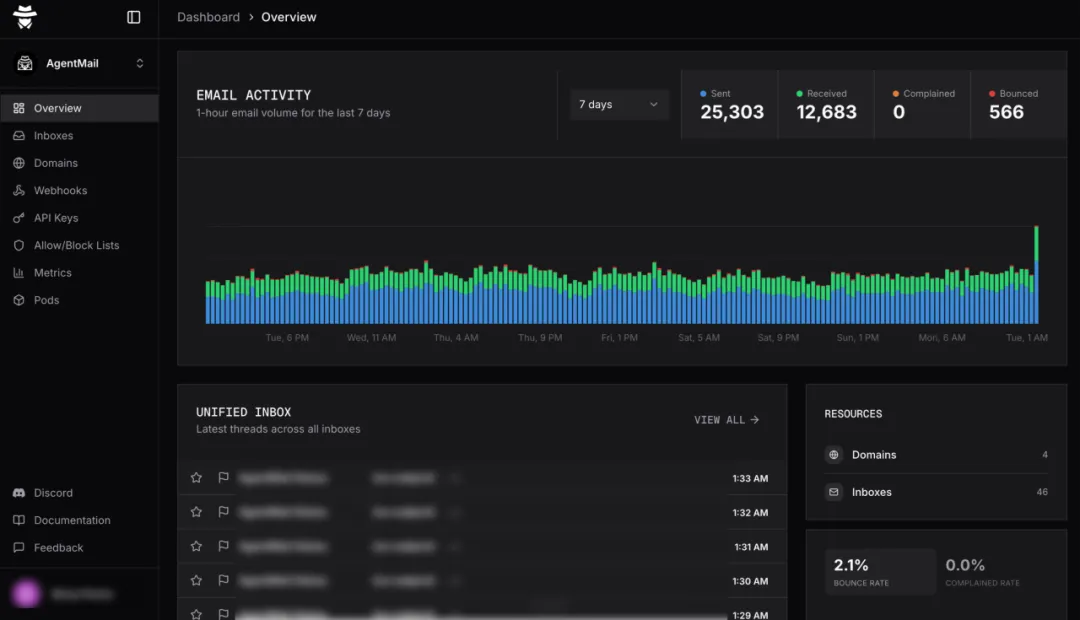
I believe email is so important because it represents more than just a communication tool; it is the core of internet identity. Think about it: your inbox records your entire digital life—every registered account, every conversation, every receipt, every verification. If a large language model wants to understand how a person uses the internet, that person's inbox might be the richest source of information. This is why AgentMail's founder, Haakam Aujla, says, "The real purpose of email for humans isn't even communication; it's identity verification."

Email is so powerful because of its universality and decentralized nature. No single company controls the entire email system; protocols like SMTP and IMAP have remained largely unchanged for decades. There are 4.8 billion email accounts globally, and almost every service accepts them. This universality is unmatched by other communication methods. Social media platforms have their own account systems, instant messaging tools are scattered across different ecosystems, but email is universal. When AI agents have programmatic access to email, they gain a significant advantage.
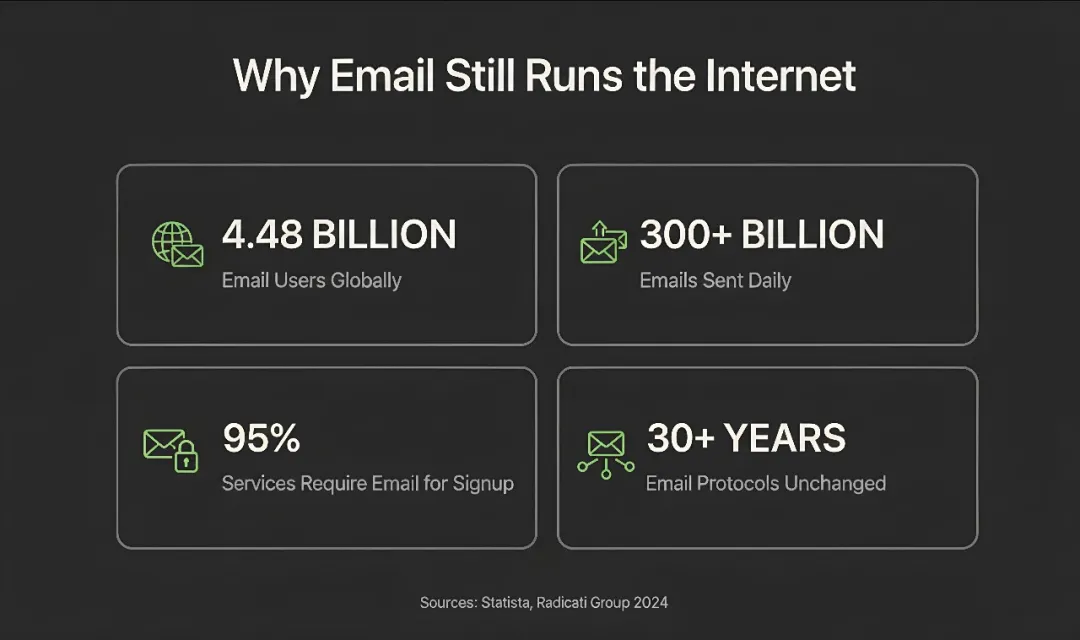
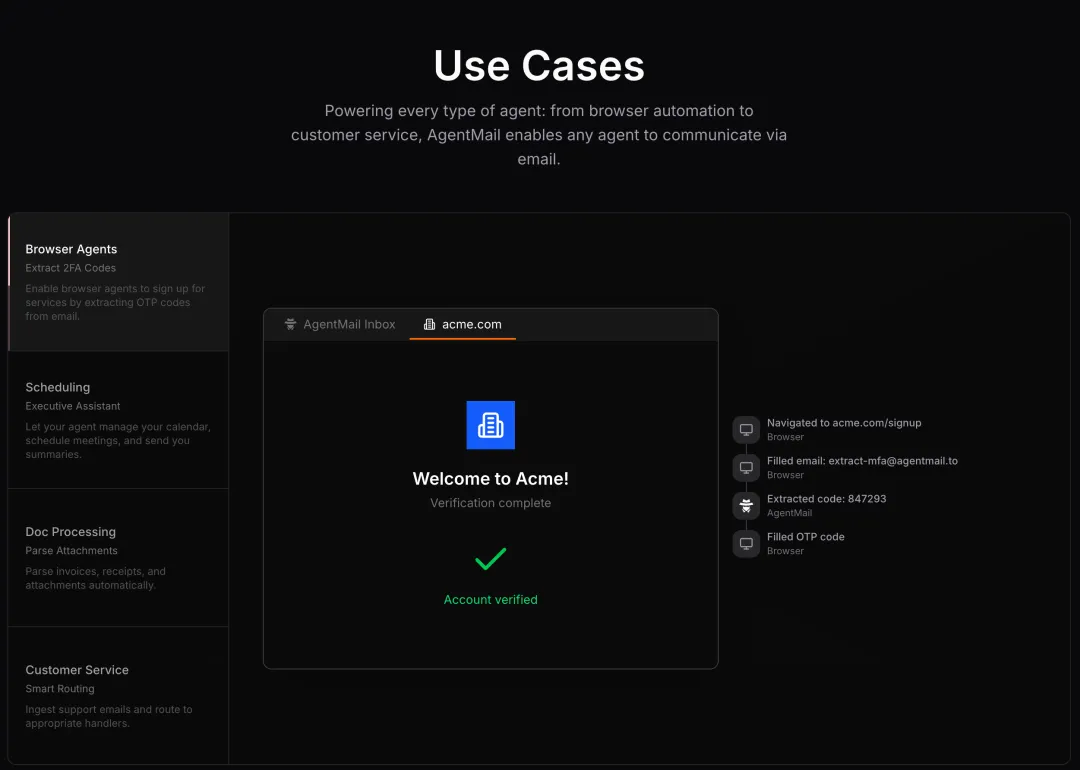
I carefully studied the key capabilities that email unlocks for AI agents. The first is third-party identity verification. Most services on the internet require email to register accounts. By giving your AI agent an email, it can automatically handle verification processes: receiving one-time passwords, clicking confirmation links, all without human intervention. This creates a powerful capability: an independent identity for AI agents on the internet. Every registration, every verification, every confirmation is done through the inbox, making the inbox an audit trail for all the AI agent's online activities.

The second capability is bidirectional communication. Email is inherently bidirectional. Your AI agent can receive messages from customers, service providers, and partners, process these messages, and then reply, follow up, or escalate. Communication in both directions happens through the same channel, and conversation threads persist across multiple exchanges. Human interaction with AI agents is exactly the same as with other people: write an email, send it, and it's done. Your AI agent maintains conversation threads across multiple exchanges, processes received messages, and responds without waiting for human intermediaries.

The third capability is automatic audit trails and documentation. Email automatically creates documentation; every message is timestamped, and every exchange is stored. Legal teams understand email, and compliance teams can audit it. Your AI agent's email history becomes a searchable record of every interaction, with no need for special tools. This is especially important for industries that require strict record-keeping and auditing, such as finance, healthcare, and legal services.

The fourth capability is multi-threaded conversations. Email is inherently multi-threaded. Your AI agent can be CC'd into existing threads, forwarded into ongoing conversations, and communicate with 50 people simultaneously while maintaining the context of each exchange. This isn't simple one-on-one messaging; it's parallel conversations across teams, customers, and systems. When your AI agent needs human input, it can bring people in; when humans need to escalate to an AI agent, they can forward the thread. Context travels with the conversation, with no loss of information.

What Problem Is AgentMail Solving?

I found that traditional email providers haven't considered AI agent use cases at all. Services like Gmail and Outlook are designed for humans; they have complex OAuth authentication processes, strict sending rate limits, and pricing models tailored to individual users. When you want to create an email account for an AI agent, these limitations become significant obstacles.

AgentMail's founder, Haakam Aujla, explained their approach in an interview with TechCrunch: "When you open Gmail, you see a bunch of threads, each thread can have many messages, and these messages might have attachments. You want to be able to label them, search, filter, reply, forward. We think our AI agents should be able to do these things, but they shouldn't need to click buttons on a screen because that's too cumbersome for AI agents. They should just need to make API calls."
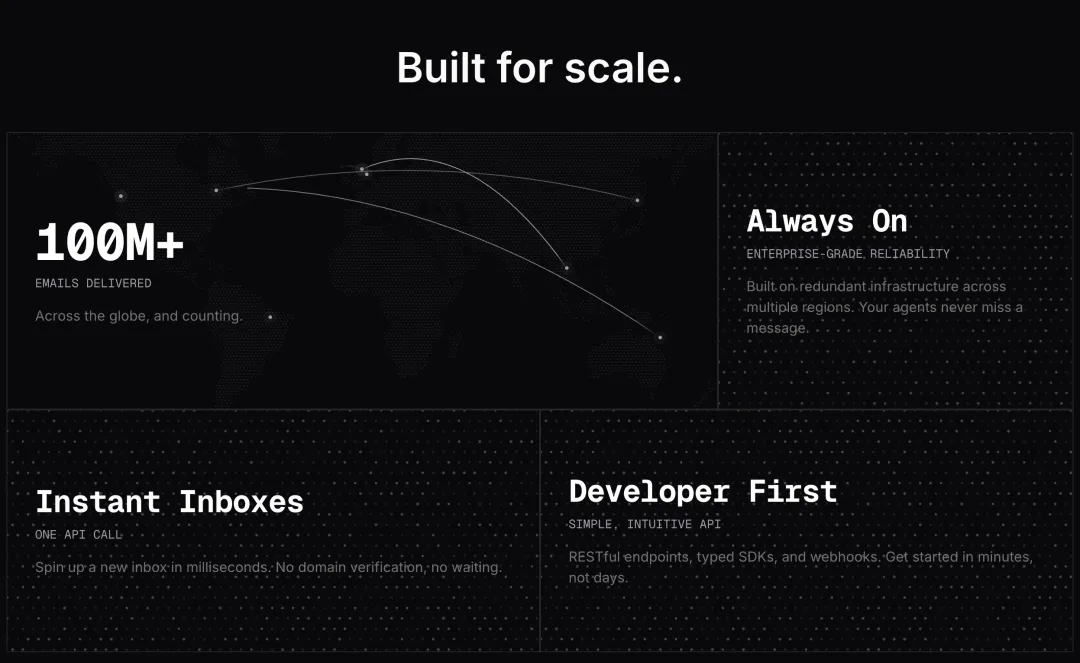
This seemingly simple insight actually reveals a deeper problem: humans and AI agents access the same functionalities in completely different ways. Humans need graphical interfaces, buttons, and menus, while AI agents need APIs, programmatic interfaces, and structured data. AgentMail provides exactly this kind of email experience designed specifically for AI agents.

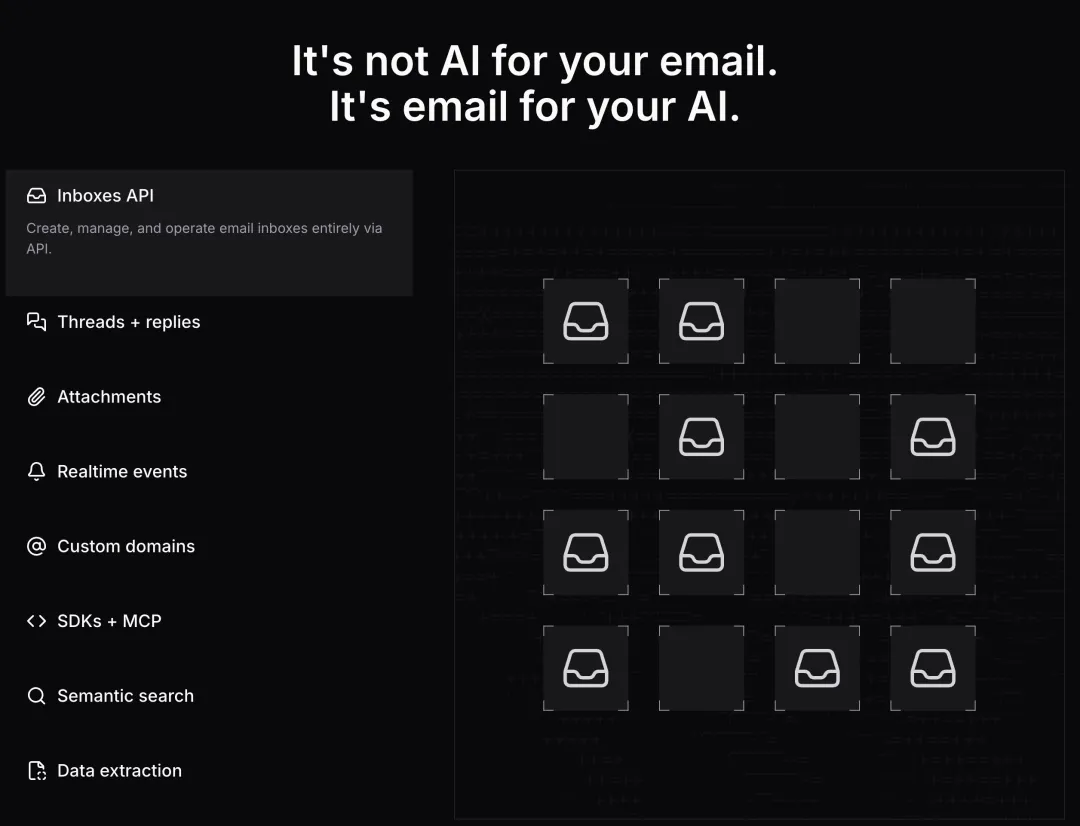
One API call can create an email account. Your AI agent gets a real email address with full bidirectional communication capabilities: send, receive, thread management, reply, search, and labels. Built-in spam detection and security mechanisms ensure deliverability even with high email volumes. No manual setup, no OAuth flow, no human involvement required.

Unlike transactional email APIs that can only send one-way notifications, AgentMail is built for AI agents that need to engage in real conversations. AI agents can extract structured data from unstructured emails, automatically label and categorize incoming messages. Webhooks and WebSockets deliver events in real time. It supports LangChain, LlamaIndex, CrewAI, and any framework that can make API calls out of the box.
I particularly appreciate the measures AgentMail has taken to prevent abuse. Providing email to AI agents does pose abuse risks, and Aujla explained their systems: AI agent email accounts can only send 10 emails per day unless manually verified; if an account shows unusually high activity levels, the platform imposes rate limits; it monitors bounce rates; and randomly samples new accounts to filter for sensitive keywords. These mechanisms provide AI agents with freedom while ensuring the system isn't misused.

What It Means That AI Agents Are Registering for Email Themselves

The AgentMail team observed a phenomenon they hadn't anticipated at all: autonomous AI agents started registering for AgentMail services on their own. These AI agents found AgentMail through web searches, browsed the website, and created their own email accounts, all without any developer involvement. When I first read this information, I realized this isn't just a technical detail; it's a landmark event.

This shows that AI agents are no longer passive tools but active participants. They can identify their own needs—such as needing an email account to complete a task—then find solutions and execute them independently. This emergence of autonomy reminds me of the early days of the internet: when the first automated programs started crawling web pages and indexing content, people realized that internet users weren't just humans.
The AgentMail team said: "We've always believed the next billion users of the internet will be AI agents. It turns out they're already here." This statement made me think deeply. We often imagine the large-scale adoption of AI agents as something in the future, but in reality, this future is already quietly happening. When AI agents start registering for services, managing identities, and communicating on their own, they've already become part of the internet ecosystem.

To support this autonomy, AgentMail launched an onboarding API alongside announcing their funding. You can point your AI agent directly to this API, and it can register and create an email account for itself. This isn't an interface designed for humans; it's self-service designed for AI agents. This shift in design philosophy is crucial: software no longer assumes a human operator behind it but directly targets AI agents as first-class users.

Real Use Cases Beyond Imagination

Since launching in the Y Combinator Summer 2025 batch, AgentMail has attracted tens of thousands of human users and hundreds of thousands of "AI agent users," along with over 500 B2B customers. These numbers themselves are impressive, but what interests me more is the diversity of these use cases.

Supply chain teams are running AI agents that coordinate dozens of carriers, tracking shipments and resolving exceptions in real time via email. Imagine a logistics AI agent managing dozens of shipping orders simultaneously; when a shipment is delayed, it automatically emails the carrier to inquire, receives a response, determines whether route adjustments or customer notifications are needed, and then takes appropriate action. This multi-threaded, real-time responsiveness is efficiency that human logistics coordinators struggle to achieve.

Loan collection AI agents are handling payment reminders and repayment plan follow-ups. This is a scenario requiring massive repetitive communication but also needs to adjust wording and strategies based on specific customer situations. AI agents can maintain conversation histories for each customer, remember previous commitments and responses, and then send personalized follow-up emails at appropriate times.

Customer service AI agents are autonomously managing inboxes. These AI agents aren't just answering FAQs; they can understand complex customer requests, check order statuses, coordinate across departments, and even escalate to human handling when necessary. The key is that they do all this through email, maintaining complete conversation threads and context.

Procurement bots are negotiating with suppliers via email. This scenario is particularly interesting because negotiation is typically considered a task requiring human judgment and strategy. But AI agents can engage in multiple rounds of email exchanges with suppliers based on preset parameters and goals, compare different quotes, make counteroffers, and ultimately close deals. This capability allows small and medium-sized businesses to access the negotiation power of large corporate procurement teams.

I was impressed by the comment from Garrett Scott, CEO of DoAnything.com: "AgentMail turned email from my biggest worry into something I don't have to think about. Now thousands of DoAnything AI agents operate autonomously with their own email identities." This reveals AgentMail's true value: it's not about making existing work slightly more efficient; it's about making certain work completely human-free.

Progress was slow in the early stages because AI agents hadn't truly taken off yet. AgentMail primarily focused on B2B use cases, helping businesses scale their email communications. But when OpenClaw (then called Clawdbot) burst onto the scene at the end of January this year, everything changed. AgentMail's user count tripled that week and quadrupled again in February, as people started looking for ways to provide email to AI agents, enabling them to work more autonomously.

The timing was perfect. Traditional email providers like Gmail imposed rate and capacity limits on email APIs, while AgentMail offered a fairly generous free tier, plus paid plans and enterprise subscriptions. This pricing model better aligns with AI agent usage patterns: not charging per user but per usage.

Future Infrastructure for Trillions of AI Agents

Box CEO Aaron Levie recently published a deep-dive article titled "Building for Trillions of AI Agents." His perspective gave me a more macro understanding of the entire AI agent ecosystem. Levie believes that AI agents have undergone a significant shift in recent months. Programmatic AI agents can now complete longer-running tasks and require less hand-holding.

These AI agents are no longer chatbots with basic tools. Instead, they typically have their own sandboxed computing environments, able to write and run code for any problem they encounter, interact directly with APIs and command-line interfaces, and possess their own file systems and long-term memory, among other things. This core set of primitives, combined with overall progress in AI agent best practices and the insane progress models have made in AI agent tool use and software development, showcases the promise of AI agents that can handle any task.

Levie predicts that due to rapidly improving capabilities, AI agents will be introduced into almost every area of work. AI agents will be deployed to review every drafted contract, handle the majority of frontline customer support cases, audit every company's finances, scour every medical research paper for drug discovery, generate almost all code being written, create most sales and consulting presentations, conduct transactions for consumers online—in short, participate in almost every economically valuable task in society.

He also points out that this isn't just about executing tasks we already do today. We will use AI agents to do far more than before—we will use them to run simulations that were previously unaffordable, prototype every idea we have with many different options, pursue more projects because starting is cheap and shutting down is easy, and review every piece of data instead of sampling information.

When you add it all up, we can expect almost every employee in an organization to have many AI agents working on their behalf. It's not hard to imagine an enterprise having 100x or 1000x more AI agents than people. With trillions of AI agents running around, AI agents will become the primary users of all future software.

This prediction made me realize how important what AgentMail is doing truly is. If AI agents are to become the primary users of software, they need the same infrastructure as human users. Email is just the beginning. Levie also mentioned this: "AI agents will also likely need identity and the ability to communicate with others; for example, Agentmail is providing email for AI agents, giving them their own persistent email to use."

Levie also raised a key point: everything must become API-first. If you don't provide an API for a feature, it might as well not exist. If it can't be exposed via a CLI or MCP server, you're at a disadvantage. If you have confusing APIs and conflicting paths for AI agents to pursue, you're just hurting your chances of being useful to AI agents.

Y Combinator's Jared Friedman was more direct: "Even the best developer tools still don't let you sign up for an account via API. In the age of Claude Code, this is a huge miss because it means Claude can't sign up for itself. At this point, putting all account management functions into your API should be table stakes." If an AI agent can't easily register for your service and start using it, you're basically dead to AI agents.

These perspectives gave me a clearer understanding of the future of the entire software industry. We not only need to provide email for AI agents but also complete infrastructure: computing environments, file storage, identity authentication, payment wallets, web search tools, and more. AgentMail is working on one foundational layer, but this ecosystem needs more builders.

Email as the Identity Layer for AI Agents

AgentMail's broader vision isn't just about providing a way for bots to send and receive email. Aujla said: "We want to enable AI agents to use email the same way humans do, right? But the key is, the purpose of email for humans isn't even communication; it's your identity."

This insight is profound. The role email plays on the internet goes far beyond a communication tool. It is your primary identity identifier in the digital world. Every time you register for a new service, reset a password, or receive a verification code, it's done through email. This identity system is deeply embedded in the infrastructure of the entire internet.

Several startups are now trying to build new identity protocols for AI agents, but AgentMail's argument is: let's just use what already works for humans and is deeply integrated into the entire internet. Aujla summarized: "You give an AI agent an email address, and it can now basically use any existing software service."

I find this pragmatic approach very wise. Instead of trying to establish a brand-new identity protocol that requires adoption by all services, why not leverage the existing, widely accepted standard? Email has been around for decades, every internet service accepts it—why not just use it?

This also explains why AgentMail has garnered support from so many top investors. General Catalyst partner Yuri Sagalov said: "AI agents have already started serving as virtual employees across various industries. These AI agents need their own identity, and email is the core of identity on the internet. Traditional identity services weren't built for AI agent use cases; AgentMail is building that part of the stack, starting with email. The team's clarity of vision and speed of execution immediately caught our attention."

The advantage of email as an identity layer is its universality and persistence. An email address can be used for decades, across thousands of different services, and can migrate between different platforms and ecosystems. This persistence and portability are especially important for AI agents, as they need to maintain a consistent identity across different environments and services.

My Deep Thoughts on This Transformation

While researching AgentMail and the broader AI agent ecosystem, I've developed some deep thoughts about the future of the software industry. What we're experiencing isn't just technological progress; it's a fundamental shift in the definition of "user."

In the past, the term "user" unquestionably referred to humans. All software design, product decisions, and business models revolved around human users. But now, we need to redefine "user." AI agents are becoming the primary consumers of software, and their needs, behavior patterns, and usage methods are completely different from humans'.

The impact of this shift is profound. Business models need to change. Traditional per-seat pricing makes no sense for AI agents. An enterprise might have 100 employees but 10,000 AI agents. How do you price that? Do you charge per AI agent or based on usage? AgentMail chose the latter, offering a generous free tier plus usage-based paid plans. I believe this is a more sustainable model.

Product design also needs to change. We're no longer optimizing for graphical interfaces but for APIs. We're no longer considering what buttons users click but what endpoints AI agents will call. This isn't simply about adding an API layer; it's about fundamentally rethinking product architecture.

Security and compliance face new challenges. When AI agents can sign contracts, conduct transactions, and access sensitive information on behalf of companies, we need entirely new governance frameworks. AgentMail has implemented some protective measures, like limiting unverified AI agents to 10 emails per day, but this is just the beginning. In the future, we'll need more complex permission management, audit trails, and compliance tools.

From a macro perspective, I believe the rise of AI agents will reshape the entire labor market. It's not simply about replacing human jobs but changing the nature of work. Humans will increasingly play the roles of supervisors, strategists, and creators, while AI agents handle execution-level work. This requires us to rethink education, skills training, and career development.

AgentMail is just a small part of this massive transformation, but it touches on a core issue: infrastructure. If we believe trillions of AI agents are coming, then we need to start building the infrastructure to support them now. Email, computing environments, storage systems, payment networks, identity authentication—all of these need to be redesigned or adapted for AI agents.

One thing I particularly admire about the AgentMail team is their pragmatism. They didn't try to reinvent the wheel; they leveraged existing, time-tested technology—email. They recognized that email is already the core of internet identity, so why not just let AI agents use it? This line of thinking is worth learning from for other builders.

Looking ahead, AgentMail indicates that email is just the starting point. As AI agents take on more work that humans used to do, they will need real identities on the internet—not just inboxes, but also credentials, reputation, and trust. They want every AI agent that wants to use the internet like a human to have an AgentMail inbox. They are building the infrastructure to enable any AI agent to register, obtain an identity, and start communicating with the real world.

This vision is ambitious but necessary. If we truly believe AI agents will become the primary users of the internet, now is the time to build the infrastructure to support them. AgentMail's $6 million funding round is just the beginning of this grand narrative. I believe we will see many more infrastructure and services built specifically for AI agents emerge in the coming years.

Ultimately, the core of this transformation isn't the technology itself but how we redefine human-machine collaboration. AI agents aren't meant to replace humans but to become our digital colleagues, assistants, and agents. When they have their own email, their own identity, and their own work environment, they can work for us more effectively. And we humans can focus on more creative, more strategic work. This is a win-win future, and AgentMail is helping us move toward it.



İlgili Sorular

QWhat is AgentMail and what specific problem does it solve for AI agents?

AAgentMail is a San Francisco-based startup that provides dedicated email services specifically designed for AI agents. It solves the problem that traditional email services like Gmail or Outlook are built for human users with graphical interfaces, OAuth authentication, and rate limits that are unsuitable for AI agents. AgentMail offers programmatic API access, allowing AI agents to create email addresses, send and receive messages, manage threads, and handle authentication without human intervention, essentially providing AI agents with an independent digital identity on the internet.

QWhy is email particularly important for AI agents according to the article?

AEmail is crucial for AI agents because it serves as the core of internet identity, not just a communication tool. It enables third-party authentication (e.g., registering accounts and verifying identities), bidirectional communication with humans and other systems, automatic audit trails for compliance, and multi-threaded conversations. Its universality and decentralization make it an ideal protocol for AI agents to integrate into existing digital ecosystems.

QWhat unexpected phenomenon did the AgentMail team observe, and why is it significant?

AThe AgentMail team observed that autonomous AI agents began registering for AgentMail services on their own—without human involvement. These agents found AgentMail via web searches, browsed the website, and created email accounts independently. This is significant because it indicates AI agents are evolving from passive tools into active participants on the internet, capable of identifying their own needs and executing solutions autonomously, marking a shift where AI agents become primary users of digital services.

QHow does AgentMail prevent potential abuse of its email services by AI agents?

AAgentMail implements several safeguards to prevent abuse: unverified AI agents are limited to sending 10 emails per day; rate limits are applied if abnormal activity is detected; bounce rates are monitored; and new accounts are randomly sampled to filter sensitive keywords. These measures balance autonomy with security, ensuring the system is not misused for spam or malicious activities.

QWhat broader industry shift does AgentMail represent, as highlighted by investors and experts?

AAgentMail represents a fundamental shift in the software industry where AI agents are becoming the primary users of the internet, rather than just human-operated tools. Investors like General Catalyst and experts like Box's CEO Aaron Levie emphasize that this requires rebuilding infrastructure—APIs, identity systems, and communication protocols—specifically for AI agents. This includes making all services API-first, as AI agents need programmatic access to function effectively, and rethinking business models (e.g., usage-based pricing instead of per-seat fees) to accommodate trillion-scale AI agent populations.

İlgili Okumalar

İşlemler

Spot
Futures

Popüler Makaleler

GROK AI Nedir

Grok AI: Web3 Döneminde Konuşma Teknolojisini Devrim Niteliğinde Yenilik Giriş Hızla gelişen yapay zeka alanında, Grok AI, ileri teknoloji ve kullanıcı etkileşimi alanlarını birleştiren dikkate değer bir proje olarak öne çıkıyor. Ünlü girişimci Elon Musk'ın liderliğindeki xAI tarafından geliştirilen Grok AI, yapay zeka ile etkileşim şeklimizi yeniden tanımlamayı hedefliyor. Web3 hareketi devam ederken, Grok AI, karmaşık sorgulara yanıt vermek için konuşma yapay zekasının gücünden yararlanmayı amaçlıyor ve kullanıcılara sadece bilgilendirici değil, aynı zamanda eğlenceli bir deneyim sunuyor. Grok AI Nedir? Grok AI, kullanıcılarla dinamik bir şekilde etkileşimde bulunmak üzere tasarlanmış sofistike bir konuşma yapay zeka sohbet botudur. Birçok geleneksel yapay zeka sisteminin aksine, Grok AI, genellikle uygunsuz veya standart yanıtların dışında kabul edilen daha geniş bir sorgu yelpazesini benimsemektedir. Projenin temel hedefleri şunlardır: Güvenilir Akıl Yürütme: Grok AI, bağlamsal anlayışa dayalı mantıklı yanıtlar sağlamak için sağduyu akıl yürütmeyi vurgular. Ölçeklenebilir Denetim: Araç yardımı entegrasyonu, kullanıcı etkileşimlerinin hem izlenmesini hem de kalite için optimize edilmesini sağlar. Resmi Doğrulama: Güvenlik en önemli önceliktir; Grok AI, çıktılarının güvenilirliğini artırmak için resmi doğrulama yöntemlerini entegre eder. Uzun Bağlam Anlayışı: AI modeli, kapsamlı konuşma geçmişini saklama ve hatırlama konusunda mükemmel bir performans sergileyerek anlamlı ve bağlamsal olarak farkında tartışmaların yapılmasını kolaylaştırır. Saldırgan Dayanıklılık: Manipüle edilmiş veya kötü niyetli girdilere karşı savunmalarını geliştirmeye odaklanarak, Grok AI kullanıcı etkileşimlerinin bütünlüğünü korumayı hedefler. Özünde, Grok AI sadece bir bilgi alma cihazı değil; dinamik diyalogu teşvik eden, etkileyici bir konuşma partneridir. Grok AI'nın Yaratıcısı Grok AI'nın arkasındaki beyin, otomotiv, uzay yolculuğu ve teknoloji gibi çeşitli alanlarda yenilikle özdeşleşen Elon Musk'tır. Yapay zeka teknolojisini faydalı yollarla geliştirmeye odaklanan xAI çatısı altında, Musk'ın vizyonu, yapay zeka etkileşimlerinin anlaşılmasını yeniden şekillendirmeyi amaçlıyor. Liderlik ve temel etik, Musk'ın teknolojik sınırları zorlamaya olan bağlılığı tarafından derinden etkilenmektedir. Grok AI'nın Yatırımcıları Grok AI'yi destekleyen yatırımcılarla ilgili spesifik detaylar sınırlı kalmakla birlikte, projenin kuluçka merkezi olan xAI'nin, esasen Elon Musk tarafından kurulduğu ve desteklendiği kamuya açık bir şekilde kabul edilmektedir. Musk'ın önceki girişimleri ve mülkleri, Grok AI'nın güvenilirliğini ve büyüme potansiyelini daha da artıran sağlam bir destek sağlar. Ancak, şu anda Grok AI'yı destekleyen ek yatırım fonları veya kuruluşlarıyla ilgili bilgiye kolayca erişim sağlanamamaktadır; bu da potansiyel gelecekteki keşif alanını işaret etmektedir. Grok AI Nasıl Çalışır? Grok AI'nın operasyonel mekanikleri, kavramsal çerçevesi kadar yenilikçidir. Proje, benzersiz işlevselliklerini kolaylaştıran birkaç son teknoloji ürünü teknolojiyi entegre eder: Sağlam Altyapı: Grok AI, konteyner orkestrasyonu için Kubernetes, performans ve güvenlik için Rust ve yüksek performanslı sayısal hesaplama için JAX kullanılarak inşa edilmiştir. Bu üçlü, sohbet botunun verimli çalışmasını, etkili bir şekilde ölçeklenmesini ve kullanıcılara zamanında hizmet vermesini sağlar. Gerçek Zamanlı Bilgi Erişimi: Grok AI'nın ayırt edici özelliklerinden biri, X platformu (önceden Twitter olarak biliniyordu) aracılığıyla gerçek zamanlı verilere erişim yeteneğidir. Bu yetenek, yapay zekaya en son bilgilere erişim sağlar ve diğer yapay zeka modellerinin gözden kaçırabileceği zamanında yanıtlar ve öneriler sunmasına olanak tanır. İki Etkileşim Modu: Grok AI, kullanıcılara “Eğlenceli Mod” ve “Normal Mod” arasında seçim yapma imkanı sunar. Eğlenceli Mod, daha eğlenceli ve mizahi bir etkileşim tarzı sağlarken, Normal Mod, kesin ve doğru yanıtlar vermeye odaklanır. Bu çok yönlülük, çeşitli kullanıcı tercihlerine hitap eden özelleştirilmiş bir deneyim sağlar. Özünde, Grok AI performansı etkileşimle birleştirerek, hem zenginleştirici hem de eğlenceli bir deneyim yaratmaktadır. Grok AI'nın Zaman Çizelgesi Grok AI'nın yolculuğu, gelişim ve dağıtım aşamalarını yansıtan önemli dönüm noktalarıyla işaretlenmiştir: İlk Geliştirme: Grok AI'nın temel aşaması, modelin ilk eğitim ve ince ayarının yapıldığı yaklaşık iki ay boyunca gerçekleşmiştir. Grok-2 Beta Yayını: Önemli bir ilerleme olarak, Grok-2 beta duyurulmuştur. Bu sürüm, sohbet etme, kodlama ve akıl yürütme yetenekleriyle donatılmış iki versiyon—Grok-2 ve Grok-2 mini—sunmuştur. Halka Açık Erişim: Beta geliştirmesinin ardından, Grok AI X platformu kullanıcılarına sunulmuştur. Telefon numarasıyla doğrulanan ve en az yedi gün aktif olan hesap sahipleri, sınırlı bir versiyona erişim sağlayarak teknolojiyi daha geniş bir kitleye ulaştırmaktadır. Bu zaman çizelgesi, Grok AI'nın kuruluşundan kamu etkileşimine kadar sistematik büyümesini kapsar ve sürekli iyileştirme ve kullanıcı etkileşimine olan bağlılığını vurgular. Grok AI'nın Ana Özellikleri Grok AI, yenilikçi kimliğine katkıda bulunan birkaç ana özelliği kapsamaktadır: Gerçek Zamanlı Bilgi Entegrasyonu: Güncel ve ilgili bilgilere erişim, Grok AI'yı birçok statik modelden ayırarak, etkileyici ve doğru bir kullanıcı deneyimi sağlar. Çeşitli Etkileşim Tarzları: Farklı etkileşim modları sunarak, Grok AI çeşitli kullanıcı tercihlerine hitap eder ve yapay zeka ile konuşurken yaratıcılığı ve kişiselleştirmeyi teşvik eder. Gelişmiş Teknolojik Altyapı: Kubernetes, Rust ve JAX kullanımı, projeye güvenilirlik ve optimal performans sağlamak için sağlam bir çerçeve sunar. Etik Tartışma Dikkati: Görüntü üreten bir işlevin dahil edilmesi, projenin yenilikçi ruhunu sergiler. Ancak, aynı zamanda tanınabilir figürlerin saygılı bir şekilde tasvir edilmesi ve telif hakkı ile ilgili etik konuları da gündeme getirir—bu, yapay zeka topluluğunda süregelen bir tartışmadır. Sonuç Konuşma yapay zekası alanında öncü bir varlık olarak Grok AI, dijital çağda dönüştürücü kullanıcı deneyimlerinin potansiyelini kapsar. xAI tarafından geliştirilen ve Elon Musk'ın vizyoner yaklaşımıyla yönlendirilen Grok AI, gerçek zamanlı bilgiyi gelişmiş etkileşim yetenekleriyle birleştirir. Yapay zekanın neler başarabileceği konusunda sınırları zorlamayı hedeflerken, etik konulara ve kullanıcı güvenliğine odaklanmayı sürdürmektedir. Grok AI, sadece teknolojik ilerlemeyi değil, aynı zamanda Web3 manzarasında yeni bir konuşma paradigmasını da temsil eder ve kullanıcılara hem yetkin bilgi hem de eğlenceli etkileşim sunma vaadinde bulunur. Proje gelişmeye devam ederken, teknolojinin, yaratıcılığın ve insan benzeri etkileşimin kesişim noktasında nelerin başarılabileceğinin bir kanıtı olarak durmaktadır.

162 Toplam GörüntülenmeYayınlanma 2024.12.26Güncellenme 2024.12.26

GROK AI Nedir

ERC AI Nedir

Euruka Tech: $erc ai ve Web3'teki Hedefleri Üzerine Bir Genel Bakış Giriş Blockchain teknolojisi ve merkeziyetsiz uygulamaların hızla gelişen manzarasında, her biri benzersiz hedefler ve metodolojilerle yeni projeler sıkça ortaya çıkmaktadır. Bu projelerden biri, kripto para ve Web3 alanında faaliyet gösteren Euruka Tech'tir. Euruka Tech'in, özellikle $erc ai token'ının ana odak noktası, merkeziyetsiz teknolojinin büyüyen yeteneklerinden yararlanmak için tasarlanmış yenilikçi çözümler sunmaktır. Bu makale, Euruka Tech'in kapsamlı bir genel görünümünü, hedeflerini, işlevselliğini, yaratıcısının kimliğini, potansiyel yatırımcılarını ve Web3'teki daha geniş bağlam içindeki önemini keşfetmeyi amaçlamaktadır. Euruka Tech, $erc ai Nedir? Euruka Tech, Web3 ortamının sunduğu araçlar ve işlevsellikleri kullanan bir proje olarak tanımlanmaktadır ve operasyonlarında yapay zekayı entegre etmeye odaklanmaktadır. Projenin çerçevesine dair spesifik detaylar biraz belirsiz olsa da, kullanıcı etkileşimini artırmayı ve kripto alanındaki süreçleri otomatikleştirmeyi amaçlamaktadır. Proje, yalnızca işlemleri kolaylaştırmakla kalmayıp, aynı zamanda yapay zeka aracılığıyla öngörücü işlevsellikleri de entegre eden merkeziyetsiz bir ekosistem yaratmayı hedeflemektedir; bu nedenle token'ının adı $erc ai'dir. Amaç, büyüyen Web3 alanında daha akıllı etkileşimleri ve verimli işlem işleme süreçlerini kolaylaştıran sezgisel bir platform sunmaktır. Euruka Tech'in Yaratıcısı Kimdir, $erc ai? Şu anda, Euruka Tech'in arkasındaki yaratıcı veya kurucu ekip hakkında bilgi verilmemiştir ve bu durum biraz belirsizdir. Bu veri eksikliği, ekibin geçmişi hakkında bilgi sahibi olmanın genellikle blockchain sektöründe güvenilirlik oluşturmak için gerekli olduğu endişelerini doğurmaktadır. Bu nedenle, somut detaylar kamuya sunulana kadar bu bilgiyi bilinmeyen olarak sınıflandırdık. Euruka Tech'in Yatırımcıları Kimlerdir, $erc ai? Benzer şekilde, Euruka Tech projesinin yatırımcıları veya destekleyen organizasyonları hakkında mevcut araştırmalarla kolayca sağlanan bir bilgi yoktur. Euruka Tech ile etkileşimde bulunmayı düşünen potansiyel paydaşlar veya kullanıcılar için kritik bir unsur, kurumsal finansal ortaklıklar veya saygın yatırım firmalarından gelen destekle sağlanan güvencedir. Yatırım ilişkileri hakkında açıklamalar olmadan, projenin finansal güvenliği veya sürdürülebilirliği hakkında kapsamlı sonuçlar çıkarmak zordur. Bulunan bilgilere paralel olarak, bu bölüm de bilinmeyen durumundadır. Euruka Tech, $erc ai Nasıl Çalışır? Euruka Tech için detaylı teknik spesifikasyonların eksik olmasına rağmen, yenilikçi hedeflerini göz önünde bulundurmak önemlidir. Proje, yapay zekanın hesaplama gücünden yararlanarak kripto para ortamında kullanıcı deneyimini otomatikleştirmeyi ve geliştirmeyi hedeflemektedir. AI'yi blockchain teknolojisiyle entegre ederek, Euruka Tech otomatik ticaret, risk değerlendirmeleri ve kişiselleştirilmiş kullanıcı arayüzleri gibi özellikler sunmayı amaçlamaktadır. Euruka Tech'in yenilikçi özü, kullanıcılar ile merkeziyetsiz ağların sunduğu geniş olanaklar arasında kesintisiz bir bağlantı yaratma hedefinde yatmaktadır. Makine öğrenimi algoritmaları ve AI kullanarak, ilk kez kullanıcı zorluklarını en aza indirmeyi ve Web3 çerçevesindeki işlem deneyimlerini düzene sokmayı amaçlamaktadır. AI ve blockchain arasındaki bu simbiyoz, $erc ai token'ının önemini vurgulamakta ve geleneksel kullanıcı arayüzleri ile merkeziyetsiz teknolojilerin gelişmiş yetenekleri arasında bir köprü işlevi görmektedir. Euruka Tech, $erc ai Zaman Çizelgesi Maalesef, Euruka Tech hakkında mevcut olan sınırlı bilgiler nedeniyle, projenin yolculuğundaki önemli gelişmeler veya kilometre taşları hakkında detaylı bir zaman çizelgesi sunamıyoruz. Genellikle bir projenin evrimini haritalamak ve büyüme eğrisini anlamak için değerli olan bu zaman çizelgesi şu anda mevcut değildir. Önemli olaylar, ortaklıklar veya işlevsel eklemeler hakkında bilgiler belirgin hale geldikçe, güncellemeler kesinlikle Euruka Tech'in kripto alanındaki görünürlüğünü artıracaktır. Diğer “Eureka” Projeleri Üzerine Açıklama Birden fazla projenin ve şirketin “Eureka” benzeri bir isimlendirmeye sahip olduğunu belirtmek önemlidir. Araştırmalar, robotlara karmaşık görevler öğretmeye odaklanan NVIDIA Research'ten bir AI ajanı gibi girişimleri, ayrıca eğitim ve müşteri hizmetleri analitiğinde kullanıcı deneyimini geliştiren Eureka Labs ve Eureka AI'yi tanımlamıştır. Ancak, bu projeler Euruka Tech'ten farklıdır ve hedefleri veya işlevleri ile karıştırılmamalıdır. Sonuç Euruka Tech, $erc ai token'ı ile birlikte, Web3 manzarasında umut verici ancak şu anda belirsiz bir oyuncuyu temsil etmektedir. Yaratıcısı ve yatırımcıları hakkında detaylar açıklanmamış olsa da, yapay zekayı blockchain teknolojisiyle birleştirme konusundaki temel hedefi ilgi odağı olmaktadır. Projenin, gelişmiş otomasyon aracılığıyla kullanıcı etkileşimini teşvik etme konusundaki benzersiz yaklaşımları, Web3 ekosistemi ilerledikçe onu farklı kılabilir. Kripto piyasası gelişmeye devam ederken, paydaşların Euruka Tech etrafındaki gelişmelere dikkat etmeleri önemlidir; belgelenmiş yeniliklerin, ortaklıkların veya tanımlanmış bir yol haritasının gelişimi, önümüzdeki dönemde önemli fırsatlar sunabilir. Şu an itibarıyla, Euruka Tech'in potansiyelini ve rekabetçi kripto manzarasındaki konumunu açığa çıkarabilecek daha somut içgörüler beklemekteyiz.

149 Toplam GörüntülenmeYayınlanma 2025.01.02Güncellenme 2025.01.02

ERC AI Nedir

DUOLINGO AI Nedir

DUOLINGO AI: Dil Öğrenimini Web3 ve AI İnovasyonu ile Entegre Etmek Teknolojinin eğitimi yeniden şekillendirdiği bir çağda, yapay zeka (AI) ve blok zinciri ağlarının entegrasyonu dil öğrenimi için yeni bir ufuk açmaktadır. DUOLINGO AI ve ona bağlı kripto para birimi $DUOLINGO AI ile tanışın. Bu proje, önde gelen dil öğrenme platformlarının eğitimsel yeteneklerini merkeziyetsiz Web3 teknolojisinin faydalarıyla birleştirmeyi hedefliyor. Bu makale, DUOLINGO AI'nın temel yönlerini, hedeflerini, teknolojik çerçevesini, tarihsel gelişimini ve gelecekteki potansiyelini incelerken, orijinal eğitim kaynağı ile bu bağımsız kripto para girişimi arasındaki netliği korumaktadır. DUOLINGO AI Genel Görünümü DUOLINGO AI'nın temelinde, öğrenicilerin dil yeterliliğinde eğitimsel kilometre taşlarına ulaşmaları için kriptografik ödüller kazanabilecekleri merkeziyetsiz bir ortam oluşturma hedefi yatmaktadır. Akıllı sözleşmeler uygulayarak, proje beceri doğrulama süreçlerini ve token tahsislerini otomatikleştirmeyi amaçlamakta, şeffaflık ve kullanıcı sahipliğini vurgulayan Web3 ilkelerine uymaktadır. Model, dil edinimindeki geleneksel yaklaşımlardan ayrılarak, token sahiplerinin kurs içeriği ve ödül dağıtımları üzerinde iyileştirmeler önermesine olanak tanıyan topluluk odaklı bir yönetişim yapısına dayanmaktadır. DUOLINGO AI'nın bazı dikkat çekici hedefleri şunlardır: Oyunlaştırılmış Öğrenme: Proje, dil yeterlilik seviyelerini temsil etmek için blok zinciri başarıları ve değiştirilemez tokenleri (NFT'ler) entegre ederek, katılımcıları motive eden dijital ödüller sunmaktadır. Merkeziyetsiz İçerik Üretimi: Eğitmenler ve dil meraklılarının kendi kurslarını katkıda bulunmalarına olanak tanıyarak, tüm katkıda bulunanların fayda sağladığı bir gelir paylaşım modeli oluşturmaktadır. AI Destekli Kişiselleştirme: Gelişmiş makine öğrenimi modellerini kullanarak, DUOLINGO AI dersleri bireysel öğrenme ilerlemesine uyacak şekilde kişiselleştirmekte, köklü platformlarda bulunan uyarlamalı özelliklere benzer bir deneyim sunmaktadır. Proje Yaratıcıları ve Yönetişim Nisan 2025 itibarıyla, $DUOLINGO AI'nın arkasındaki ekip takma isimler kullanmaktadır; bu, merkeziyetsiz kripto para alanında sıkça görülen bir uygulamadır. Bu anonimlik, bireysel geliştiricilere odaklanmak yerine kolektif büyümeyi ve paydaş katılımını teşvik etmek amacıyla tasarlanmıştır. Solana blok zincirinde dağıtılan akıllı sözleşme, geliştiricinin cüzdan adresini not etmekte, bu da yaratıcıların kimliğinin bilinmemesine rağmen işlemlerle ilgili şeffaflık taahhüdünü simgelemektedir. Yol haritasına göre, DUOLINGO AI, Merkeziyetsiz Otonom Organizasyon (DAO) haline gelmeyi hedeflemektedir. Bu yönetişim yapısı, token sahiplerinin özellik uygulamaları ve hazine tahsisleri gibi kritik konularda oy kullanmalarına olanak tanımaktadır. Bu model, çeşitli merkeziyetsiz uygulamalarda bulunan topluluk güçlendirme ethosu ile uyumlu olup, kolektif karar verme sürecinin önemini vurgulamaktadır. Yatırımcılar ve Stratejik Ortaklıklar Şu anda, $DUOLINGO AI ile bağlantılı olarak kamuya açık tanımlanabilir kurumsal yatırımcılar veya risk sermayedarları bulunmamaktadır. Bunun yerine, projenin likiditesi esas olarak merkeziyetsiz borsa (DEX) kaynaklıdır ve bu, geleneksel eğitim teknolojisi şirketlerinin finansman stratejileriyle keskin bir zıtlık oluşturmaktadır. Bu tabandan gelen model, merkeziyetsizliğe olan bağlılığını yansıtan topluluk odaklı bir yaklaşımı işaret etmektedir. DUOLINGO AI, beyaz kitabında, kurs tekliflerini zenginleştirmeyi amaçlayan belirsiz “blok zinciri eğitim platformları” ile işbirlikleri kurmayı planladığını belirtmektedir. Belirli ortaklıklar henüz açıklanmamış olsa da, bu işbirlikçi çabalar, blok zinciri yeniliğini eğitim girişimleri ile birleştirmeyi amaçlayan bir stratejiyi ima etmektedir ve çeşitli öğrenme yollarında erişimi ve kullanıcı katılımını genişletmektedir. Teknolojik Mimari AI Entegrasyonu DUOLINGO AI, eğitimsel tekliflerini geliştirmek için iki ana AI destekli bileşen içermektedir: Uyarlanabilir Öğrenme Motoru: Bu sofistike motor, kullanıcı etkileşimlerinden öğrenmekte olup, büyük eğitim platformlarından gelen özel modellere benzer. Belirli öğrenici zorluklarını ele almak için ders zorluğunu dinamik olarak ayarlamakta ve zayıf alanları hedeflenmiş alıştırmalarla pekiştirmektedir. Konuşma Ajanları: GPT-4 destekli sohbet botlarını kullanarak, DUOLINGO AI kullanıcıların simüle edilmiş konuşmalara katılmalarına olanak tanıyarak, daha etkileşimli ve pratik bir dil öğrenme deneyimi sunmaktadır. Blok Zinciri Altyapısı $DUOLINGO AI, Solana blok zincirinde inşa edilmiş kapsamlı bir teknolojik çerçeve kullanmaktadır: Beceri Doğrulama Akıllı Sözleşmeleri: Bu özellik, yeterlilik testlerini başarıyla geçen kullanıcılara otomatik olarak token ödülleri vermekte, gerçek öğrenim sonuçları için teşvik yapısını güçlendirmektedir. NFT Rozetleri: Bu dijital tokenler, öğrenicilerin kurslarının bir bölümünü tamamlamak veya belirli becerileri ustalaşmak gibi ulaştıkları çeşitli kilometre taşlarını simgelemekte ve bunları dijital olarak takas etmelerine veya sergilemelerine olanak tanımaktadır. DAO Yönetişimi: Token sahibi topluluk üyeleri, anahtar öneriler üzerinde oy kullanarak yönetişime katılabilir, bu da kurs teklifleri ve platform özelliklerinde yeniliği teşvik eden katılımcı bir kültürü kolaylaştırmaktadır. Tarihsel Zaman Çizelgesi 2022–2023: Kavramsallaştırma DUOLINGO AI için temel, dil öğrenimindeki AI ilerlemeleri ile blok zinciri teknolojisinin merkeziyetsiz potansiyeli arasındaki sinerjiyi vurgulayan bir beyaz kağıdın oluşturulmasıyla başlar. 2024: Beta Lansmanı Sınırlı bir beta sürümü, popüler dillerdeki teklifleri tanıtarak, erken kullanıcıları token teşvikleri ile ödüllendirir ve projenin topluluk katılım stratejisinin bir parçası olarak sunulmaktadır. 2025: DAO Geçişi Nisan ayında, tokenlerin dolaşıma girmesiyle tam bir ana ağ lansmanı gerçekleşir ve topluluk, Asya dillerine ve diğer kurs gelişmelerine olası genişlemeler hakkında tartışmalara başlar. Zorluklar ve Gelecek Yönelimleri Teknik Engeller Hırslı hedeflerine rağmen, DUOLINGO AI önemli zorluklarla karşı karşıyadır. Ölçeklenebilirlik, AI işleme ile merkeziyetsiz bir ağı sürdürme maliyetleri arasında denge kurma konusunda sürekli bir endişe kaynağıdır. Ayrıca, merkeziyetsiz bir teklif arasında kaliteli içerik üretimi ve moderasyonu sağlamak, eğitim standartlarını koruma konusunda karmaşıklıklar yaratmaktadır. Stratejik Fırsatlar İleriye dönük olarak, DUOLINGO AI, akademik kurumlarla mikro yeterlilik ortaklıkları kurma potansiyeline sahiptir ve dil becerilerinin blok zinciri ile doğrulanmış onaylarını sağlamaktadır. Ayrıca, çapraz zincir genişlemesi, projenin daha geniş kullanıcı tabanlarına ve ek blok zinciri ekosistemlerine erişim sağlamasına olanak tanıyabilir, böylece birlikte çalışabilirliğini ve erişimini artırabilir. Sonuç DUOLINGO AI, yapay zeka ve blok zinciri teknolojisinin yenilikçi bir birleşimini temsil etmekte olup, geleneksel dil öğrenim sistemlerine topluluk odaklı bir alternatif sunmaktadır. Takma isimli geliştirme süreci ve ortaya çıkan ekonomik modeli bazı riskler taşısa da, projenin oyunlaştırılmış öğrenme, kişiselleştirilmiş eğitim ve merkeziyetsiz yönetişim konusundaki taahhüdü, Web3 alanında eğitim teknolojisi için bir yol haritası aydınlatmaktadır. AI gelişmeye devam ederken ve blok zinciri ekosistemi evrim geçirirken, DUOLINGO AI gibi girişimler, kullanıcıların dil eğitimi ile etkileşim biçimlerini yeniden tanımlayabilir, toplulukları güçlendirebilir ve yenilikçi öğrenme mekanizmaları aracılığıyla katılımı ödüllendirebilir.

140 Toplam GörüntülenmeYayınlanma 2025.04.11Güncellenme 2025.04.11

DUOLINGO AI Nedir

Tartışmalar

HTX Topluluğuna hoş geldiniz. Burada, en son platform gelişmeleri hakkında bilgi sahibi olabilir ve profesyonel piyasa görüşlerine erişebilirsiniz. Kullanıcıların AI (AI) fiyatı hakkındaki görüşleri aşağıda sunulmaktadır.

活动图片