Turn Off AI Before the Interview: What Kind of People is Anthropic Looking For?

marsbit2026-06-08 tarihinde yayınlandı2026-06-08 tarihinde güncellendi

Özet

"Shut Off AI Before the Interview: What Kind of People Anthropic Is Screening For" Anthropic, now the world's most valuable AI startup, has an exceptionally competitive hiring process. A key and distinctive element is its mandatory "culture interview," conducted without AI assistance. This interview focuses not on technical skills, but on assessing a candidate's core values, worldview, and perspective on long-term AI risks. Questions delve deeply into personal ethics, "unusual beliefs," and the candidate's willingness to thoughtfully critique Anthropic's own mission. The goal is to evaluate whether someone's convictions are genuinely their own and if they can articulate and defend them under pressure. A poor score here can veto otherwise successful technical interviews. This approach starkly contrasts with companies like Google, which now encourages using AI in interviews to assess "AI fluency." Anthropic's philosophy suggests that in an era where AI makes execution cheap and the generation of opinions nearly free, true scarcity lies in original, deeply held thought. The company seeks individuals who possess substance "after turning off the AI"—those who haven't outsourced their core thinking. This focus on aligning fundamental values contributes to Anthropic's high employee retention rate in a fast-moving industry.

Don't outsource your brain.

The other day, Anthropic just announced the completion of its H round of financing at $650 billion, with a valuation of $9.65 trillion, surpassing OpenAI ($8.52 trillion) to become the world's most valuable AI startup.

The bar for entering this company is visibly rising. Last year, Peter Bailis, CTO of Workday, gave up his CTO title to become an ordinary engineer at Anthropic.

In February this year, an HR professional in London joined Anthropic. She posted an announcement on LinkedIn about her new job, and subsequently received over 1,000 connection requests and more than 200 private messages. She had to post again publicly, asking candidates to stop calling her mobile number.

In May, Anthropic announced another bombshell: OpenAI co-founder Andrej Karpathy joined Anthropic's pretraining team.

Everyone wants to get into Anthropic.

But the way in, is to turn the AI off first.

01 "Interviewing Like a Psychotherapy Session"

Anthropic's interviews have 5 rounds, and AI is prohibited in every single one.

The most critical round is called the "Culture Interview". It has nothing to do with technical skills, only assessing the candidate's values, worldview, and views on AI risk.

Kevin Landucci, a career trainer in California who has worked with many candidates, says people generally find the interview "invasive, completely unlike a job interview, different from any previous one."

A person who did recruitment for Anthropic last year would particularly remind candidates to take this round seriously, because company leadership views AI safety as a long-term strategic issue, not just a business consideration.

The scoring method is even more unique. The culture interview can be conducted by anyone from any department. A candidate for an engineering role might be scored by someone from the marketing department. And they have veto power; even if all technical interviews are passed, a low score in this round will get the candidate rejected.

The questions get increasingly personal. Anthropic President Daniela Amodei described her classic question in a podcast:

What unusual beliefs do you hold? In what uncomfortable situation have you stood by one? She doesn't care *what* the candidate believes. She cares whether the person can maintain their stance when challenged and explain why.

Professional ethical dilemmas are a frequent topic in the culture interview. Landucci says interviewers will peel back the layers:

What were you thinking then, what did you do, how do you evaluate it looking back now? His advice is to show genuine discomfort, letting the interviewer see you really struggled with it. He recommends candidates discuss ethical dilemmas that are "significant enough to cause hesitation but not enough to shake the company's foundation," such as controversial decisions involving user data.

Most companies say they value candor and oppose flattery, but Anthropic has truly built this into its hiring system. Landucci reveals that the culture interview tests whether candidates dare to question the company itself, and the way it pursues its mission. Reasoned, evidence-based questioning scores very well.

A researcher who interviewed last year experienced a different flavor. He said the interviewer's questions came one after another, and he was interrupted whenever his answers stopped providing new information. This researcher talked about concrete, immediate risks, like the danger of people developing emotional dependence on chatbots.

The interviewer clearly felt these concerns were too superficial. He did not pass.

This detail is worth pondering. Emotional dependence is a real problem, and there has been plenty of public discussion about it. But in Anthropic's context, this might be seen as "superficial." It's a side effect of AI, not a fundamental AI risk.

Anthropic's founding team broke away from OpenAI, with the core motivation being their belief that AI could have overly profound impacts. A candidate who only focuses on product-level risks and doesn't demonstrate the ability to think about larger-scale issues will fall short in this evaluation system.

CEO Dario Amodei claims to spend 30% to 40% of his time managing company culture. For a company with over 3,000 employees, having added about 1,000 in the past six months, this is almost the most expensive investment a founder can make. He wants to ensure that everyone who comes in shares values aligned with Anthropic's.

Thus, in the fast-moving AI industry, Anthropic's two-year employee retention rate reaches 80%, the highest among peers. The probability of an engineer moving from OpenAI to Anthropic is 8 times the reverse, and from DeepMind it's 11 times. (Source: VC firm SignalFire)

02 When Execution Becomes Free, What Becomes Expensive Instead?

Even in Silicon Valley, Anthropic's approach is an outlier.

This year, Google announced an opposite reform to its interviews: candidates can use Gemini in technical interviews, and interviewers will directly assess their "AI fluency". Brian Ong, Google's VP of Hiring, said this is to make interviews more closely reflect real work scenarios.

Google CEO Sundar Pichai revealed in April this year that 75% of the company's new code is already AI-generated and reviewed by engineers.

Google's logic is: since daily work is human-AI collaboration, interviews should be too.

Faced with the same question of the AI era, two top AI companies give completely different answers. Anthropic believes the interview is precisely the time when AI needs to be taken away.

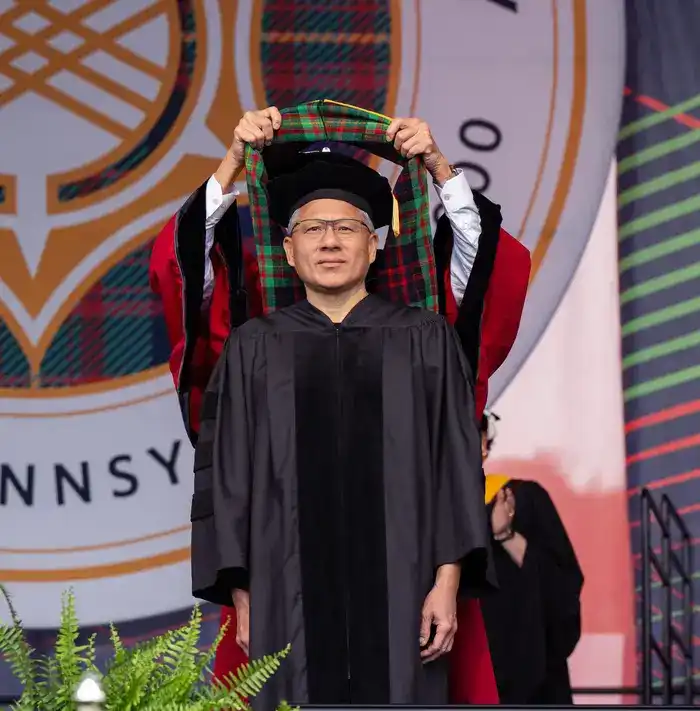
Jensen Huang's 2026 Carnegie Mellon University commencement speech contained a widely circulated line: "It's unlikely that AI will replace you, but a person who uses AI better than you might replace you". This phrase has been repeatedly quoted because it precisely taps into people's fear of AI while offering a way out: go learn AI.

The problem with this statement is that it anchors a person's value to their relationship with a tool, implying the logic that you must change as the tool changes, otherwise you'll be eliminated.
But a more worthwhile question is the reverse:

When execution becomes cheaper and cheaper, what becomes expensive instead?

03 What Anthropic is Selecting For

Anthropic's interviews offer one answer.

Daniela Amodei asking candidates "what unusual beliefs do you hold," interviewers encouraging you to question Anthropic itself—they are essentially assessing the same thing.

Today, the "production" of viewpoints is almost free. AI can generate arguments for any position; it can write well-reasoned articles supporting a direction, and can immediately write equally well-reasoned articles opposing it.

But precisely because of this, the gap between "holding" a position and "owning" a position is widening. Holding is a choice, while owning is who you fundamentally are.

Anthropic prohibiting AI use in interviews, and the culture interview's relentless probing for your genuine thoughts like a psychotherapy session, are both meant to confirm: the judgments and beliefs in your mind grew there on their own.

In other words, you haven't outsourced your thinking.

"A person who uses AI better than you might replace you" is correct at the execution level. But if taken as the whole answer, it leads people down an increasingly narrow path: constantly chasing what AI can do, then doing the part AI can't yet do, until that part is also learned by AI.

Anthropic's hiring logic points in another direction. It believes what is truly scarce in the AI era is not people who can harness AI, but people who still have something left after turning the AI off.


İlgili Sorular

QWhat is the key difference between Google's and Anthropic's approaches to using AI in job interviews?

AGoogle has reformed its interview process to allow candidates to use Gemini in technical interviews, assessing their 'AI fluency' to mirror real work scenarios. In contrast, Anthropic explicitly prohibits the use of AI in all five rounds of its interviews, believing the interview is precisely when AI must be removed to evaluate the candidate's intrinsic qualities.

QAccording to the article, what is the core purpose of Anthropic's 'culture interview'?

AThe core purpose of Anthropic's 'culture interview' is to assess a candidate's values, worldview, and perspective on AI risks. It is not related to technical skills and focuses on whether the candidate's fundamental beliefs align with Anthropic's. A low score in this round can lead to rejection, even if all technical interviews are passed.

QWhat does the example of a researcher who discussed 'emotional dependency on chatbots' illustrate about Anthropic's evaluation criteria?

AThis example illustrates that Anthropic looks for candidates who think about fundamental, large-scale risks of AI, not just product-level or secondary effects. The researcher's focus on 'emotional dependency' was likely deemed too superficial, showing that Anthropic's evaluation system favors those capable of contemplating AI's more profound and existential impacts.

QWhat does the article suggest becomes more valuable when execution becomes cheap due to AI?

AThe article suggests that when AI makes execution cheap, what becomes more valuable is genuine, independent thought and deeply held convictions. It highlights the growing gap between merely 'holding' a position (a choice) and 'owning' it (an intrinsic part of one's identity). Anthropic seeks individuals who have not outsourced their thinking.

QHow does the article contrast Jensen Huang's famous quote with Anthropic's hiring philosophy?

AThe article contrasts them by stating that Jensen Huang's quote ('AI won't take your job, someone using AI will') anchors human value to the relationship with a tool, implying one must constantly adapt to what AI can do. Anthropic's philosophy points in the opposite direction: it believes true scarcity in the AI era is not people who can use AI, but people who still have substance left when AI is turned off—those with intrinsic, non-outsourced judgment and belief.

İlgili Okumalar

Is AI Creating a New Class of 'Information Poor'?

AI is generating a new kind of "information poverty." The core issue isn't that AI denies answers to the poor; it's that it provides abundant, cheap, and plausible-sounding answers to everyone. This availability shifts the true scarcity from obtaining answers to possessing the **judgment to evaluate them** and the access to turn them into real-world opportunities. New information poverty thus describes those who have AI tools and outputs, but lack the complementary skills, authorization, and contextual experience to critically assess and act on them. Research reveals a multi-layered divide: access to AI is stratified by income and platform design (e.g., premium vs. free, embedded tools). In workplaces, usage heavily favors higher-paid, more experienced, or formally trained employees, with AI often automating entry-level tasks that were traditional stepping stones. Crucially, the heaviest users are often mid-career professionals whose existing expertise allows them to effectively judge and leverage AI outputs, while novices risk over-relying on them without building judgment. While controlled experiments show AI can significantly boost low-skilled workers' performance, real-world adoption and benefit are constrained by unequal social and organizational structures. Historically, general-purpose technologies first reward those with existing complementary capital. AI, by affecting judgment-based work, may accelerate and deepen this initial inequality gap, even if it narrows over decades. The danger lies in the illusion of competence it creates, potentially stunting the very critical thinking needed in an era where judgment is paramount.

marsbit14 dk önce

Is AI Creating a New Class of 'Information Poor'?

marsbit14 dk önce

Jensen Huang 'Saves' South Korean Stock Market: Locks In SK Hynix Memory, Chip Shortage to Continue

On June 5th, South Korea's stock market experienced a sharp decline, with major chipmakers like Samsung and SK Hynix dropping nearly 10%. Amidst the turmoil, NVIDIA CEO Jensen Huang's visit to Seoul played a dramatic role in boosting market sentiment. Following a dinner meeting with SK Group Chairman Chey Tae-won and SK Hynix CEO Kwak Noh-Jung, Huang confirmed that NVIDIA's new Vera CPU will utilize SK Hynix DRAM. The companies announced a multi-year technical partnership to co-develop next-generation memory for NVIDIA's AI infrastructure, covering products from data centers to personal AI and robotics. This collaboration extends beyond memory supply. SK Hynix is integrating NVIDIA's AI and Omniverse platform into its own semiconductor design and manufacturing processes, including computational lithography and creating digital twins of its fabrication plants for autonomous operation. While strengthening ties with SK Hynix, NVIDIA is diversifying its supply chain for the upcoming HBM4 memory, with Samsung, SK Hynix, and Micron all certified as suppliers for its Vera Rubin platform. Despite this, Huang warned that the global chip shortage, driven by relentless demand from AI factory construction, is expected to persist for several years across the entire supply chain. His visit underscores NVIDIA's systematic effort to deepen integration with South Korea's broader tech industry.

marsbit1 saat önce

Jensen Huang 'Saves' South Korean Stock Market: Locks In SK Hynix Memory, Chip Shortage to Continue

marsbit1 saat önce

Nasdaq Plunges 4.2% in a Single Day: Does "Black Friday" Burst the U.S. Stock Market Bubble?

The Nasdaq plunged 4.18% on June 5, 2026, its worst single-day drop in over a year, as a much stronger-than-expected US jobs report triggered fears of economic overheating and delayed Federal Reserve interest rate cuts. The selloff, centered on high-valuation tech and AI stocks like Nvidia and Broadcom, spread across major indices. The article examines whether this signals a market top. The strong May non-farm payrolls data, nearly double expectations, pushed bond yields higher, directly hurting rate-sensitive tech stocks. This exposed vulnerabilities in the crowded AI trade, where valuations had soared on narratives of infinite growth, despite emerging signs of slowing order momentum and corporate AI monetization challenges. Prior to the drop, market indicators flashed warning signs: historically high valuations (e.g., Shiller CAPE ratio near 39.5), extreme bullish sentiment, and high levels of leverage. Technical charts showed key support levels being breached. Wall Street is divided on the outlook. Bears, citing risks of "stagflation" and AI bubble comparisons to the dot-com era, warn of a potential significant correction. Bulls view the drop as a healthy correction within a bull market, underpinned by a strong economy and expected corporate earnings growth of around 7% in 2026. The immediate future hinges on upcoming key events: the May CPI inflation data and the mid-June FOMC meeting. Their outcomes will critically shape market expectations for the Fed's rate path. The article concludes that conditions for a major market top are aligning, marking a fragile transition from narrative-driven gains to a phase demanding validation from macroeconomic data and corporate fundamentals. Caution is advised.

marsbit1 saat önce

Nasdaq Plunges 4.2% in a Single Day: Does "Black Friday" Burst the U.S. Stock Market Bubble?

marsbit1 saat önce

Nasdaq Plunges 4.2% in a Single Day, Did 'Black Friday' Pop the U.S. Stock Bubble?

The Nasdaq Composite plummeted 4.18% on June 5, its biggest single-day drop since April 2025, triggering widespread debate over whether the U.S. stock market has peaked. The sell-off was sparked by a stronger-than-expected U.S. non-farm payrolls report, which fueled fears of economic overheating and pushed back market expectations for Federal Reserve rate cuts, leading to a sharp rise in Treasury yields. The AI sector, the primary driver of the recent bull market, suffered severe losses, with the Philadelphia Semiconductor Index crashing over 10%. Stocks like Nvidia, Broadcom, and Micron led the decline. Concerns are mounting about the sustainability of AI capital expenditures and high valuations, with signs of order cuts for next-generation chips emerging. Analyses point to several warning signs: historically high market valuations (e.g., elevated Shiller CAPE ratio, Buffett Indicator), extreme bullish sentiment indicators, and significant insider selling. The sell-off also caused a key technical breakdown, with the S&P 500 breaking below its short-term moving average and testing its 200-day moving average. Wall Street is divided on the outlook. Bears warn this could be the start of a bubble deflation or a "stagflation" scenario, while bulls view it as a healthy, overdue correction within a bull market driven by solid corporate earnings growth. A more moderate view suggests the easy liquidity-driven rally is over, and markets are entering a phase of fundamental stock-picking with potential for consolidation. The immediate future hinges on key upcoming events: the May CPI report and the mid-June FOMC meeting. Their outcomes will be critical in determining whether this is a temporary pullback or the beginning of a more significant trend reversal. The consensus is that the era of one-directional market gains may be ending, requiring increased investor caution.

Odaily星球日报1 saat önce

Nasdaq Plunges 4.2% in a Single Day, Did 'Black Friday' Pop the U.S. Stock Bubble?

Odaily星球日报1 saat önce

The First Case on AI Agents: What Was Adjudicated?

"The First 'Agent' Ruling: What Was Decided?" On April 30, the Guangzhou Internet Court issued a ruling—China's first behavior preservation order in the intelligent agent (AI agent) field. The defendant, an open-source AI agent software, was ordered to stop downloads, cease actions that bypassed a platform's technical protection measures, and delete related tutorials and data. The core issue: the software used the operating system's "accessibility service" permissions to automate user interactions within other apps without those platforms' authorization. This mirrors a recent US case where Amazon sued Perplexity for similar reasons—bypassing Amazon's API to directly scrape and interact with its pages—and won a preliminary injunction. Both rulings establish a crucial legal boundary for the AI agent era: agents cannot operate unchecked. The article argues the fundamental legal principle emerging is one of **dual authorization**. An AI agent requires both **user consent** AND **platform consent** to operate legitimately within that platform's ecosystem. Bypassing platform rules through system-level permissions, even with user permission, undermines platform responsibilities for content moderation, data security, and user privacy, creating liability issues. The piece uses the evolution of "Doubao Phone" (an AI-integrated smartphone) as a case study. Its initial, aggressive version that bypassed platform controls faced roadblocks. Its upcoming 2.0 version is reportedly pivoting to negotiate API access and authorization deals with major platforms (like Alibaba's ecosystem), seen as a strategic adaptation to the new regulatory reality. A global trend is identified: the era of unregulated, "wild west" growth for AI agents is ending, replaced by a **compliance race**. This raises barriers to entry, as securing platform authorizations becomes a new cost. Open-source status is also not a legal shield if the code facilitates bypassing technical protections. In conclusion, these first rulings target not the largest, but the most **aggressive and representative** cases. By setting precedent with them, regulators are efficiently steering the entire industry towards a new, more regulated operating paradigm defined by dual authorization and platform cooperation.

marsbit1 saat önce

The First Case on AI Agents: What Was Adjudicated?

marsbit1 saat önce

İşlemler

Spot
Futures

Popüler Makaleler

PEOPLE Nasıl Satın Alınır

HTX.com’a hoş geldiniz! ConstitutionDAO (PEOPLE) satın alma işlemlerini basit ve kullanışlı bir hâle getirdik. Adım adım açıkladığımız rehberimizi takip ederek kripto yolculuğunuza başlayın. 1. Adım: HTX Hesabınızı OluşturunHTX'te ücretsiz bir hesap açmak için e-posta adresinizi veya telefon numaranızı kullanın. Sorunsuzca kaydolun ve tüm özelliklerin kilidini açın. Hesabımı Aç2. Adım: Kripto Satın Al Bölümüne Gidin ve Ödeme Yönteminizi SeçinKredi/Banka Kartı: Visa veya Mastercard'ınızı kullanarak anında ConstitutionDAO (PEOPLE) satın alın.Bakiye: Sorunsuz bir şekilde işlem yapmak için HTX hesap bakiyenizdeki fonları kullanın.Üçüncü Taraflar: Kullanımı kolaylaştırmak için Google Pay ve Apple Pay gibi popüler ödeme yöntemlerini ekledik.P2P: HTX'teki diğer kullanıcılarla doğrudan işlem yapın.Borsa Dışı (OTC): Yatırımcılar için kişiye özel hizmetler ve rekabetçi döviz kurları sunuyoruz.3. Adım: ConstitutionDAO (PEOPLE) Varlıklarınızı SaklayınConstitutionDAO (PEOPLE) satın aldıktan sonra HTX hesabınızda saklayın. Alternatif olarak, blok zinciri transferi yoluyla başka bir yere gönderebilir veya diğer kripto para birimlerini takas etmek için kullanabilirsiniz.4. Adım: ConstitutionDAO (PEOPLE) Varlıklarınızla İşlem YapınHTX'in spot piyasasında ConstitutionDAO (PEOPLE) ile kolayca işlemler yapın.Hesabınıza erişin, işlem çiftinizi seçin, işlemlerinizi gerçekleştirin ve gerçek zamanlı olarak izleyin. Hem yeni başlayanlar hem de deneyimli yatırımcılar için kullanıcı dostu bir deneyim sunuyoruz.

471 Toplam GörüntülenmeYayınlanma 2024.12.12Güncellenme 2026.06.02

PEOPLE Nasıl Satın Alınır

Tartışmalar

HTX Topluluğuna hoş geldiniz. Burada, en son platform gelişmeleri hakkında bilgi sahibi olabilir ve profesyonel piyasa görüşlerine erişebilirsiniz. Kullanıcıların PEOPLE (PEOPLE) fiyatı hakkındaki görüşleri aşağıda sunulmaktadır.

活动图片