China's AI Computing Counterattack

marsbit2026-03-04 tarihinde yayınlandı2026-03-04 tarihinde güncellendi

Özet

Eight years after the ZTE crisis, China's AI industry is fighting back against U.S. chip restrictions. In 2018, ZTE nearly collapsed under U.S. sanctions but survived with heavy fines and oversight. Today, Chinese AI firms like DeepSeek are pivoting away from NVIDIA by developing domestic alternatives and optimizing algorithms to reduce reliance on foreign technology. DeepSeek’s V4 model will use entirely domestic chips, signaling a strategic shift toward computational independence. The real challenge isn’t just hardware—it’s NVIDIA’s CUDA ecosystem, which dominates global AI development with over 4.5 million developers. U.S. export controls have tightened since 2022, banning high-end chips like the A100, H100, and their downgraded versions. In response, Chinese companies are adopting technical workarounds like Mixture-of-Experts models, which activate only parts of the network during inference, slashing costs. DeepSeek’s API is up to 75x cheaper than competitors, driving rapid global adoption. By early 2026, Chinese models accounted for nearly 60% of API calls on OpenRouter. Domestic chips, such as Huawei’s Ascend series, are now capable of full-scale training, not just inference. Production lines in cities like Xinghua manufacture servers with homegrown processors, supporting major AI training projects. Meanwhile, the U.S. faces an electricity shortage as data centers consume growing power, while China benefits from greater energy capacity and lower costs. Chinese AI is...

Eight years ago, ZTE suffered a cardiac arrest.

On April 16, 2018, a ban issued by the U.S. Department of Commerce's Bureau of Industry and Security brought ZTE Corporation, the world's fourth-largest telecommunications equipment manufacturer with 80,000 employees and annual revenue exceeding 100 billion yuan, to a standstill overnight. The content of the ban was simple: for the next seven years, any American company was prohibited from selling components, goods, software, and technology to ZTE.

Without Qualcomm's chips, base station production halted. Without Google's Android authorization, there was no usable system for its phones. Twenty-three days later, ZTE issued an announcement stating that its main business activities could no longer continue.

However, ZTE ultimately survived, but at a cost of $1.4 billion.

A $1 billion fine, paid in one lump sum; a $400 million deposit, placed in an escrow account at a U.S. bank. Additionally, all senior executives were replaced, and a U.S. compliance supervision team was stationed within the company. For the full year of 2018, ZTE reported a net loss of 7 billion yuan, with revenue plummeting 21.4% year-on-year.

Yin Yimin, then chairman of ZTE, wrote in an internal letter: "We are in a complex industry that is highly dependent on the global supply chain." At the time, these words sounded like both reflection and helplessness.

Eight years later, on February 26, 2026, Chinese AI unicorn DeepSeek announced that its upcoming V4 multimodal large model would prioritize deep cooperation with domestic chip manufacturers, achieving for the first time a full-process non-NVIDIA solution from pre-training to fine-tuning.

In other words: We are not using NVIDIA anymore.

The market's first reaction to the news was skepticism. NVIDIA holds over 90% of the global AI training chip market share. Abandoning it—does that make commercial sense?

But behind DeepSeek's choice lies a question larger than commercial logic: What kind of computing independence does Chinese AI truly need?

What Exactly Is Being Strangled

Many people think the chip ban is about hardware. But what truly suffocates Chinese AI companies is something called CUDA.

CUDA, short for Compute Unified Device Architecture, is a parallel computing platform and programming model launched by NVIDIA in 2006. It allows developers to directly utilize the computing power of NVIDIA GPUs to accelerate various complex computational tasks.

Before the AI era arrived, this was just a tool for a few geeks. But when the wave of deep learning hit, CUDA became the foundation of the entire AI industry.

The training of AI large models is essentially massive matrix operations. And this is precisely what GPUs excel at.

Thanks to planning over a decade in advance, NVIDIA used CUDA to build a complete toolchain for global AI developers, spanning from underlying hardware to upper-layer applications. Today, all mainstream AI frameworks worldwide, from Google's TensorFlow to Meta's PyTorch, are deeply tied to CUDA at their core.

A PhD student in AI, from their first day of enrollment, learns, programs, and experiments in the CUDA environment. Every line of code they write reinforces NVIDIA's moat.
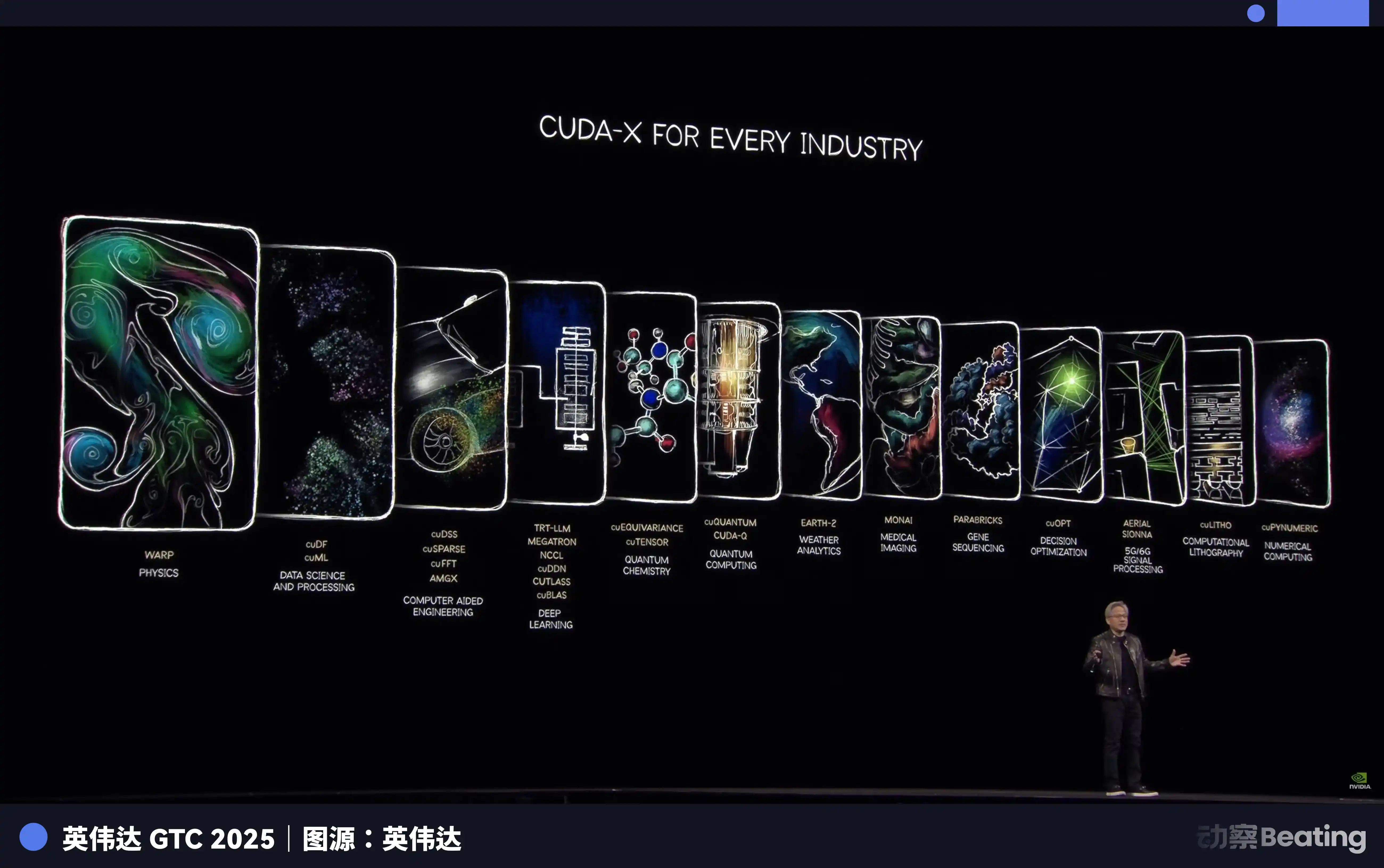
As of 2025, the CUDA ecosystem already boasts over 4.5 million developers, covers more than 3,000 GPU-accelerated applications, and is used by over 40,000 companies globally. This number means that over 90% of the world's AI developers are locked into NVIDIA's ecosystem.

The terrifying thing about CUDA is that it's a flywheel. The more developers use it, the more tools, libraries, and code are generated, making the ecosystem more prosperous; the more prosperous the ecosystem, the more it attracts additional developers. Once this flywheel starts spinning, it becomes almost impossible to stop.

The result is that NVIDIA sells you the most expensive shovel and also defines the only way to dig. Want to change shovels? Fine. But you'll have to rewrite all the experience, tools, and code accumulated over the past decade by hundreds of thousands of the smartest brains worldwide using that specific method.

Who pays for that cost?

So, when the first round of controls landed on October 7, 2022, with BIS restricting exports of NVIDIA's A100 and H100 to China, Chinese AI companies collectively felt a ZTE-like suffocation for the first time. NVIDIA subsequently launched "China-specific" A800 and H800 chips, reducing the inter-chip interconnect speed, barely maintaining supply.

But just a year later, on October 17, 2023, a second round of controls tightened further, banning A800 and H800 as well, and adding 13 Chinese companies to the Entity List. NVIDIA had to launch a further neutered version, the H20. By December 2024, the final round of controls during the Biden administration landed, strictly limiting even H20 exports.

Three rounds of controls, escalating step by step.

But this time, the story's direction is completely different from that of ZTE back then.

An Asymmetric Breakout

Under the ban, everyone thought the dream of Chinese AI large models would end there.

They were wrong. Faced with the blockade, Chinese companies did not choose a head-on confrontation but began a breakout. The first battlefield of this breakout was not in chips, but in algorithms.

From late 2024 to 2025, Chinese AI companies collectively turned to a technical direction: Mixture of Experts (MoE) models.

Simply put, this means splitting a huge model into many small experts, activating only the most relevant few when processing a task, rather than engaging the entire model.

DeepSeek's V3 is a typical example of this approach. It has 671 billion parameters, but only activates 37 billion of them during each inference, just 5.5% of the total. In terms of training cost, it used 2048 NVIDIA H800 GPUs, trained for 58 days, with a total cost of $5.576 million. In comparison, external estimates for GPT-4's training cost are around $78 million. A difference of an order of magnitude.

Extreme optimization in algorithms directly reflected in pricing. DeepSeek's API price is $0.028 to $0.28 per million input tokens, and $0.42 for output. GPT-4o's input price is $5, output $15. Claude Opus is even more expensive, $15 input, $75 output. Converted, DeepSeek is 25 to 75 times cheaper than Claude.

This price difference had a huge impact on the global developer market. In February 2026, on OpenRouter, the world's largest AI model API aggregation platform, the weekly call volume for Chinese AI models surged 127% in three weeks, surpassing the U.S. for the first time. A year earlier, Chinese models had less than 2% share on OpenRouter. A year later, it grew 421%, approaching 60%.
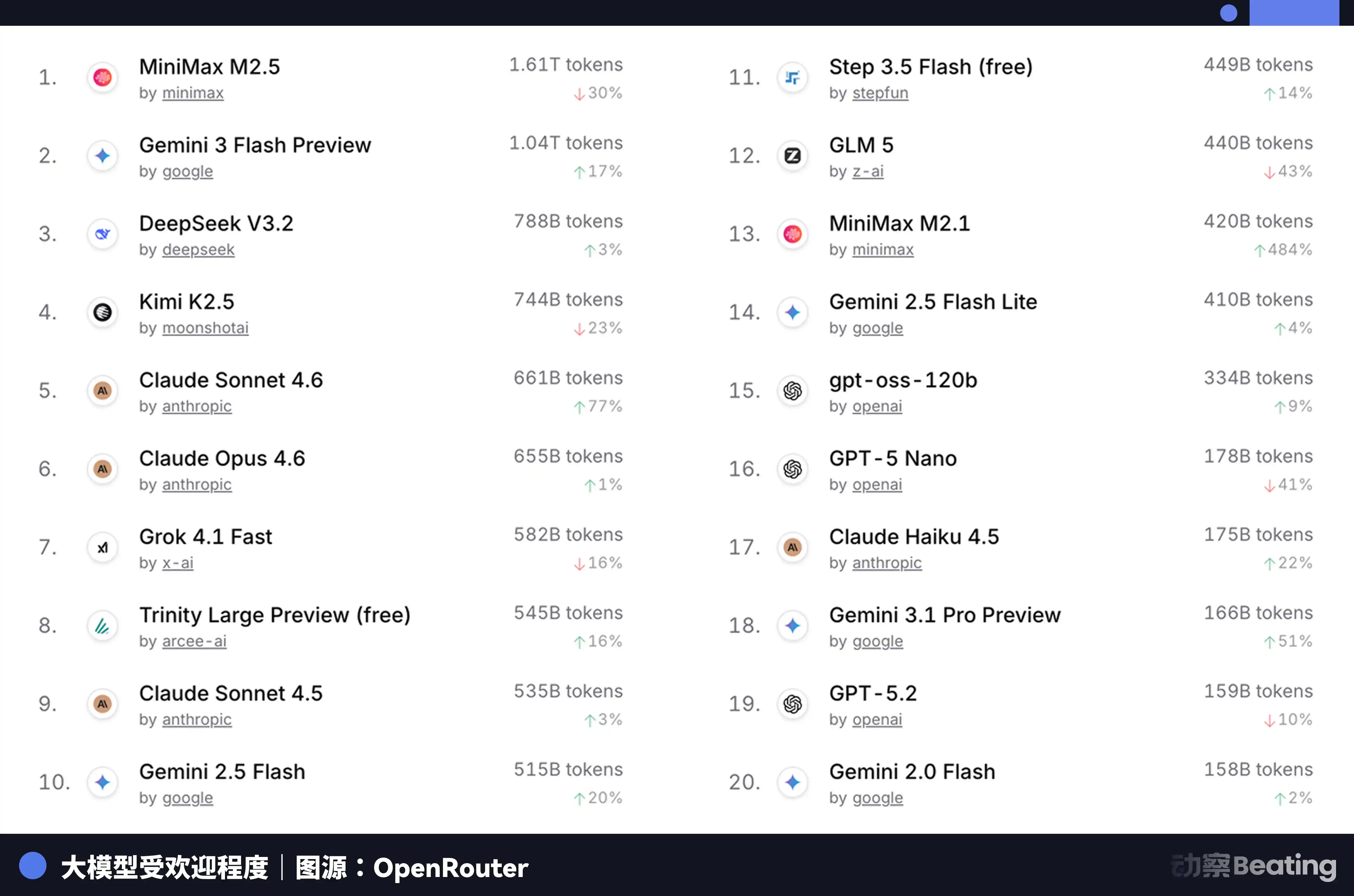
Behind this data lies a structural change that is easy to overlook. Starting in the second half of 2025, the mainstream scenario for AI applications shifted from chat to Agent. In Agent scenarios, the token consumption for a single task is 10 to 100 times that of simple chat. When token consumption grows exponentially, price becomes the decisive factor. The extreme cost-effectiveness of Chinese models恰好踩中了这个窗口 (happened to hit this window perfectly).

But the problem is, reducing inference cost does not solve the fundamental problem of training. A large model that cannot be continuously trained and iterated on new data will see its capabilities degrade rapidly. And training remains that unavoidable computing black hole.

So, where do the "shovels" for training come from?

The Backup Plan Goes Mainstream

Xinghua, Jiangsu, a small city in central Jiangsu, known for stainless steel and health food, previously had no relation to AI. But in 2025, a 148-meter-long production line for domestic computing servers was built and put into operation here, taking only 180 days from signing to production.

The core of this production line is two fully domestic chips: the Loongson 3C6000 processor and the Taichu Yuanqi T100 AI accelerator card. The Loongson 3C6000 is entirely self-developed, from instruction set to microarchitecture. Taichu Yuanqi emerged from the National Supercomputing Center in Wuxi and a Tsinghua University team, adopting a heterogeneous many-core architecture.

At full capacity, this line produces one server every 5 minutes. The total investment for this production line is 1.1 billion yuan, with an expected annual output of 100,000 units.

More importantly, clusters based on these domestic chips, comprising tens of thousands of cards, have begun undertaking real large model training tasks.

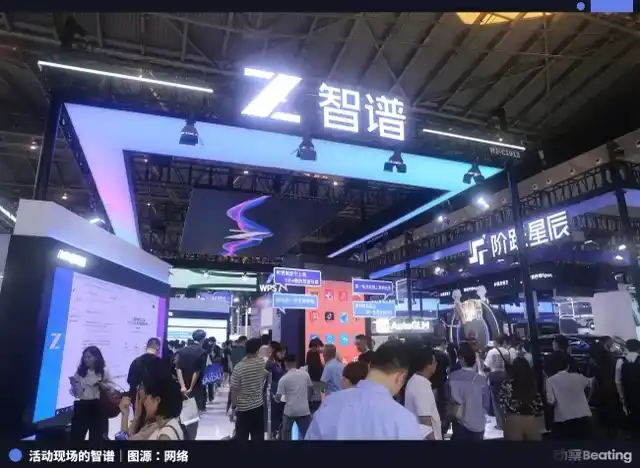
In January 2026, Zhipu AI, in collaboration with Huawei, released GLM-Image, the first SOTA image generation model fully trained from start to finish relying on domestic chips. In February, China Telecom's billion-parameter "Star" large model completed its full training process on a domestic 10,000-card computing pool in Shanghai's Lingang.
The significance of these cases is that they prove one thing: domestic chips have transitioned from "usable for inference" to "usable for training." This is a qualitative change. Inference only requires running a pre-trained model, which places relatively lower demands on the chip; training requires processing massive data, performing complex gradient calculations and parameter updates, demanding an order of magnitude higher requirements for chip computing power, interconnect bandwidth, and software ecosystem.

The core force承担这些任务 (undertaking these tasks) is Huawei's Ascend series chips. As of the end of 2025, the Ascend ecosystem had surpassed 4 million developers, with over 3,000 partners; 43 mainstream large models completed pre-training based on Ascend, and over 200 open-source models were adapted. At the MWC conference on March 2, 2026, Huawei also launched its new computing base, SuperPoD, for overseas markets.

Ascend 910B's FP16 computing power is already comparable to NVIDIA's A100. Although the gap still exists, it has gone from unusable to usable, and from usable to becoming good. Ecosystem building cannot wait until the chips are perfect; it must be rolled out on a large scale at the usable stage, using real business needs to force the iteration of chips and software. ByteDance, Tencent, and Baidu's targets for importing domestic computing servers普遍较上一年翻倍增长 (generally doubled compared to the previous year) in 2026. Data from the Ministry of Industry and Information Technology shows China's intelligent computing scale has reached 1590 EFLOPS. 2026 is becoming the first year of large-scale deployment for domestic computing.

U.S. Power Shortages and China's Overseas Expansion

In early 2026, Virginia, which carries a large amount of data center traffic globally, suspended approval for new data center construction projects. Georgia followed suit, extending the suspension until 2027. Illinois and Michigan also introduced restrictions.

According to data from the International Energy Agency, U.S. data center electricity consumption reached 183 TWh in 2024, accounting for about 4% of the nation's total electricity consumption. By 2030, this number is expected to double to 426 TWh, potentially exceeding 12%. Arm's CEO predicted that by 2030, AI data centers would consume 20% to 25% of U.S. electricity.

The U.S. power grid is already overwhelmed. The PJM grid, covering 13 eastern U.S. states, faces a 6GW capacity shortfall. By 2033, the U.S. overall faces a 175GW power capacity gap, equivalent to the electricity consumption of 130 million households. Wholesale electricity costs in data center concentrated areas are 267% higher than five years ago.

The end of computing power is energy. And on the energy dimension, the gap between China and the U.S. is even larger than in chips, just in the opposite direction.

China's annual electricity generation is 10.4 trillion kWh, while the U.S. is 4.2 trillion kWh; China's is 2.5 times that of the U.S. More crucially, residential electricity consumption in China accounts for only 15% of total electricity usage, while in the U.S. this proportion is 36%. This means China has far more industrial electricity surplus available for computing construction than the U.S.
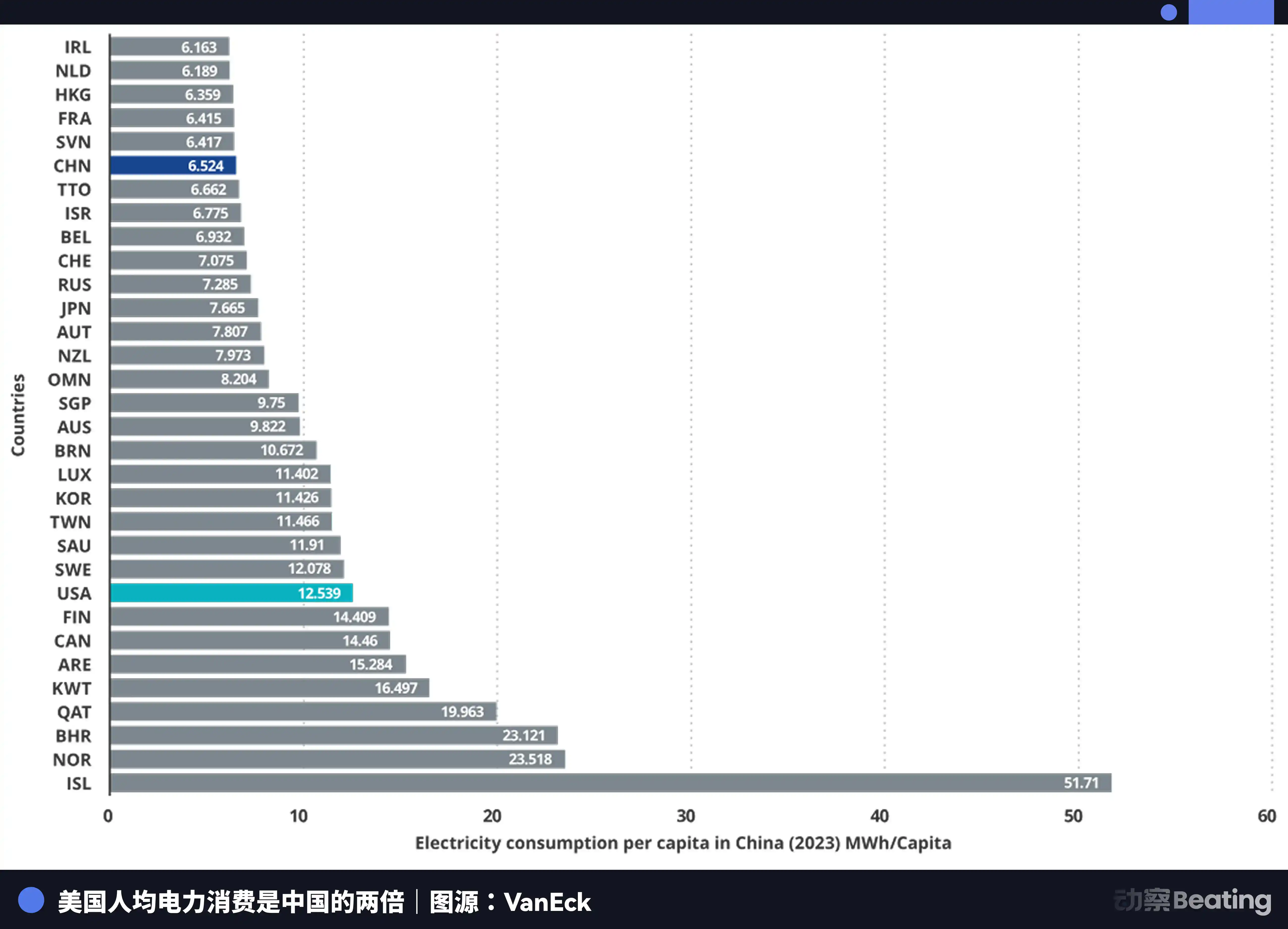
In terms of electricity prices, the price in U.S. AI company hubs is $0.12 to $0.15 per kWh, while industrial electricity prices in western China are about $0.03, only a quarter to a fifth of the U.S. price.

China's power generation growth is already 7 times that of the U.S.

Just as the U.S. worries about electricity, Chinese AI is quietly going global. But this time, what's going overseas is not products, not factories, but Tokens.

Tokens, the smallest unit of information processed by AI models, are becoming a new digital commodity. They are produced in Chinese computing factories and transmitted globally via submarine cables.

DeepSeek's user distribution data is telling: 30.7% in mainland China, 13.6% in India, 6.9% in Indonesia, 4.3% in the U.S., 3.2% in France. It supports 37 languages and is widely popular in emerging markets like Brazil. Globally, 26,000 enterprises have opened accounts, and 3,200 institutions have deployed the enterprise version.

In 2025, 58% of new AI startups included DeepSeek in their tech stack. In China, DeepSeek captured 89% market share. In other sanctioned countries, market share ranged from 40% to 60%.

This scene is reminiscent of another war about industrial autonomy forty years ago.

In Tokyo, 1986, under strong pressure from the U.S., the Japanese government signed the U.S.-Japan Semiconductor Agreement. The core clauses of the agreement were three: requiring Japan to open its semiconductor market, with U.S. chip market share in Japan必须达到 20% 以上 (must reach over 20%); strictly prohibiting Japanese semiconductors from being exported below cost; and imposing 100% punitive tariffs on $300 million worth of chips exported from Japan. Simultaneously, the U.S. vetoed Fujitsu's acquisition of Fairchild Semiconductor.

That year, the Japanese semiconductor industry was at its peak. In 1988, Japan controlled 51% of the global semiconductor market share, while the U.S. had only 36.8%. Six of the world's top ten semiconductor companies were Japanese: NEC ranked second, Toshiba third, Hitachi fifth, Fujitsu seventh, Mitsubishi eighth, and Panasonic ninth. In 1985, Intel lost $173 million in the U.S.-Japan semiconductor war,濒临破产 (on the verge of bankruptcy).

But after the agreement was signed, everything changed.

The U.S., through means like Section 301 investigations, launched a comprehensive suppression of Japanese semiconductor companies. Simultaneously, it扶持 (supported) South Korea's Samsung and Hynix to impact Japan's market with lower prices. Japan's DRAM share fell from 80% to 10%. By 2017, Japan's IC market share was only 7%. Once-invincible giants were either split up, acquired, or left the scene黯然离场 (dimly) amidst endless losses.
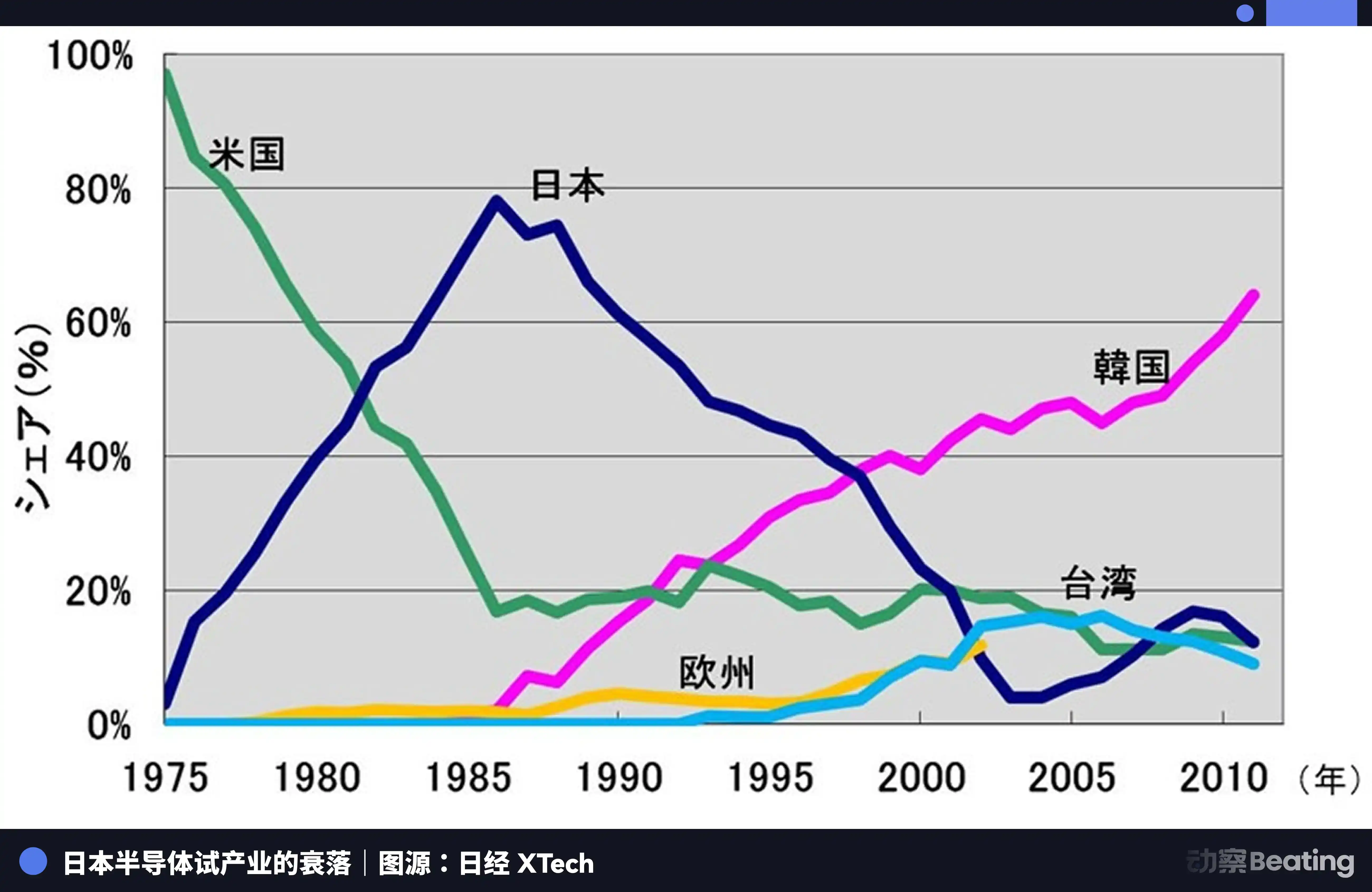
The tragedy of Japanese semiconductors was that they were content being the most excellent producer within a global division of labor system dominated by a single external force, but never thought to build an independent ecosystem of their own. When the tide went out, they found they had nothing but production itself.

Today, China's AI industry stands at a similar yet completely different crossroads.

Similar in that we同样面临着来自外部的巨大压力 (also face huge external pressure). Three rounds of chip controls, escalating step by step, the barrier of the CUDA ecosystem依然高耸 (still stands tall).

Different in that this time, we have chosen a more difficult path. From extreme optimization at the algorithm level, to the leap of domestic chips from inference to training, to the accumulation of 4 million developers in the Ascend ecosystem, to the penetration of global markets through Token exports. Every step on this path is building an independent industrial ecosystem that Japan never possessed back then.

Epilogue

On February 27, 2026, performance reports from three local AI chip companies were released on the same day.

Cambricon, revenue surged 453%, achieving full-year profitability for the first time. Moore Threads, revenue grew 243%, but with a net loss of 1 billion yuan. MetaX, revenue grew 121%, with a net loss of nearly 800 million yuan.

Half flame, half seawater.

The flame is the market's extreme hunger. The 95% void left by Jensen Huang is being filled, inch by inch, by the revenue figures of these local companies. Regardless of performance, regardless of the ecosystem, the market needs a second choice besides NVIDIA. This is a once-in-a-lifetime structural opportunity torn open by geopolitics.

The seawater is the huge cost of ecosystem building. Every cent of loss is real money paid to catch up with the CUDA ecosystem. It's R&D investment, software subsidies, the人力成本 (human cost) of engineers stationed at customer sites solving compilation issues one by one. These losses are not operational failures but the war tax that must be paid to build an independent ecosystem.

These three financial reports, more honestly than any industry report, record the true face of this computing war. It is not a triumphant victory march but a brutal battle of attrition, charging forward while bleeding.

But the form of the war has indeed changed. Eight years ago, we discussed the question of "whether we can survive." Today, we discuss the question of "what price must be paid to survive."

The price itself is progress.

İlgili Sorular

QWhat was the core reason behind the 'choking' feeling for Chinese AI companies during the chip ban, beyond just hardware restrictions?

AThe core reason was CUDA (Compute Unified Device Architecture), NVIDIA's parallel computing platform and programming model. It formed the foundational ecosystem for AI development, binding over 90% of global AI developers. Losing access to this deeply entrenched software and toolchain ecosystem, not just the hardware, was what caused severe disruption.

QHow did Chinese AI companies like DeepSeek initially respond to the compute restrictions in a 'non-confrontational' way?

AThey focused on algorithmic breakthroughs, specifically by adopting Mixture-of-Experts (MoE) models. This approach, as seen with DeepSeek V3, used a massive number of parameters (671B) but only activated a small fraction (5.5%) for each task, drastically reducing training and inference expenses, which gave them a significant price advantage.

QWhat key milestone demonstrated that domestic Chinese chips had achieved a qualitative leap in capability?

AThe key milestone was domestic chips transitioning from being 'usable for inference' to 'capable of training' large models. This was proven by instances like Zhipu AI's GLM-Image and China Telecom's 'Xingchen' model, which were fully trained on domestic万卡 (10,000-card) clusters using chips like Huawei's Ascend.

QWhat new advantage is emerging for China's AI industry, related to a fundamental resource constraint facing the US?

AA new advantage is emerging in energy capacity and cost. The US is facing a severe electricity shortage and high costs for powering data centers, while China has 2.5 times the total electricity generation, a larger industrial power allocation, and electricity costs that are only a quarter to a fifth of those in US AI hubs.

QHow is the current Chinese AI industry's situation both similar to and different from Japan's semiconductor industry in the 1980s?

AIt is similar in facing immense external pressure and sanctions from the US. However, it is different because instead of just being a superior manufacturer within a US-led ecosystem (like Japan), China is pursuing a more difficult path of building an independent, full-stack ecosystem—from algorithms and domestic chips to software and a global developer community—which Japan never achieved.

İlgili Okumalar

İşlemler

Spot
Futures

Popüler Makaleler

$S$ Nedir

SPERO'yu Anlamak: Kapsamlı Bir Genel Bakış SPERO'ya Giriş İnovasyonun manzarası gelişmeye devam ederken, web3 teknolojilerinin ve kripto para projelerinin ortaya çıkışı dijital geleceği şekillendirmede önemli bir rol oynamaktadır. Bu dinamik alanda dikkat çeken projelerden biri SPERO, $$s$$ olarak adlandırılmaktadır. Bu makale, SPERO hakkında ayrıntılı bilgi toplamak ve sunmak amacıyla, meraklılar ve yatırımcıların web3 ve kripto alanlarındaki temellerini, hedeflerini ve yeniliklerini anlamalarına yardımcı olmayı amaçlamaktadır. SPERO,$$s$$ Nedir? SPERO,$$s$$, kripto alanında merkeziyetsizlik ve blok zinciri teknolojisi ilkelerini kullanarak etkileşimi, faydayı ve finansal kapsayıcılığı teşvik eden bir ekosistem yaratmayı amaçlayan benzersiz bir projedir. Proje, kullanıcıların yenilikçi finansal çözümler ve hizmetler sunarak eşler arası etkileşimleri yeni yollarla kolaylaştırmayı hedeflemektedir. SPERO,$$s$$'nin temel amacı, bireyleri güçlendirmek ve kripto para alanındaki kullanıcı deneyimini artıran araçlar ve platformlar sağlamaktır. Bu, daha esnek işlem yöntemlerini mümkün kılmayı, topluluk odaklı girişimleri teşvik etmeyi ve merkeziyetsiz uygulamalar (dApp'ler) aracılığıyla finansal fırsatlar yaratmayı içermektedir. SPERO,$$s$$'nin temel vizyonu kapsayıcılık etrafında dönmekte olup, geleneksel finansal sistemlerdeki boşlukları kapatmayı ve blok zinciri teknolojisinin faydalarından yararlanmayı hedeflemektedir. SPERO,$$s$$'nin Yaratıcısı Kimdir? SPERO,$$s$$'nin yaratıcısının kimliği bir miktar belirsizdir, çünkü kurucusu(ları) hakkında ayrıntılı arka plan bilgisi sağlayan sınırlı kamuya açık kaynaklar bulunmaktadır. Bu şeffaflık eksikliği, projenin merkeziyetsizlik taahhüdünden kaynaklanabilir—birçok web3 projesinin paylaştığı bir etik anlayışı, bireysel tanınmanın yerine kolektif katkıları önceliklendirmektedir. Topluluk ve onun kolektif hedefleri etrafında tartışmaları merkezileştirerek, SPERO,$$s$$, belirli bireyleri öne çıkarmadan güçlendirme özünü taşımaktadır. Bu nedenle, SPERO'nun etik anlayışını ve misyonunu anlamak, tek bir yaratıcının kimliğini belirlemekten daha önemlidir. SPERO,$$s$$'nin Yatırımcıları Kimlerdir? SPERO,$$s$$, kripto sektöründe yeniliği teşvik etmeye adanmış girişim sermayedarlarından melek yatırımcılara kadar çeşitli yatırımcılar tarafından desteklenmektedir. Bu yatırımcıların odak noktası genellikle SPERO'nun misyonuyla uyumlu olup, toplumsal teknolojik ilerlemeyi, finansal kapsayıcılığı ve merkeziyetsiz yönetimi vaat eden projeleri önceliklendirmektedir. Bu yatırımcı temelleri, yalnızca yenilikçi ürünler sunan projelere değil, aynı zamanda blok zinciri topluluğuna ve ekosistemlerine olumlu katkılarda bulunan projelere de ilgi duymaktadır. Bu yatırımcıların desteği, SPERO,$$s$$'yi hızla gelişen kripto projeleri alanında dikkate değer bir rakip haline getirmektedir. SPERO,$$s$$ Nasıl Çalışır? SPERO,$$s$$, onu geleneksel kripto para projelerinden ayıran çok yönlü bir çerçeve kullanmaktadır. İşte benzersizliğini ve yeniliğini vurgulayan bazı temel özellikler: Merkeziyetsiz Yönetim: SPERO,$$s$$, kullanıcıların projenin geleceğiyle ilgili karar alma süreçlerine aktif olarak katılmalarını sağlayan merkeziyetsiz yönetim modellerini entegre etmektedir. Bu yaklaşım, topluluk üyeleri arasında sahiplik ve hesap verebilirlik duygusunu teşvik etmektedir. Token Kullanımı: SPERO,$$s$$, ekosistem içinde çeşitli işlevler sunmak üzere tasarlanmış kendi kripto para token'ını kullanmaktadır. Bu token'lar, işlemleri, ödülleri ve platformda sunulan hizmetlerin kolaylaştırılmasını sağlayarak genel etkileşimi ve faydayı artırmaktadır. Katmanlı Mimari: SPERO,$$s$$'nin teknik mimarisi, modülerlik ve ölçeklenebilirliği destekleyerek projenin evrimi sırasında ek özelliklerin ve uygulamaların sorunsuz bir şekilde entegrasyonuna olanak tanımaktadır. Bu uyum sağlama yeteneği, sürekli değişen kripto manzarasında geçerliliği sürdürmek için hayati öneme sahiptir. Topluluk Katılımı: Proje, işbirliği ve geri bildirim teşvik eden mekanizmalar kullanarak topluluk odaklı girişimlere vurgu yapmaktadır. Güçlü bir topluluk oluşturarak, SPERO,$$s$$, kullanıcı ihtiyaçlarını daha iyi karşılayabilir ve piyasa trendlerine uyum sağlayabilir. Kapsayıcılığa Odaklanma: Düşük işlem ücretleri ve kullanıcı dostu arayüzler sunarak, SPERO,$$s$$, daha önce kripto alanında yer almamış bireyler de dahil olmak üzere çeşitli bir kullanıcı tabanını çekmeyi hedeflemektedir. Bu kapsayıcılık taahhüdü, erişilebilirlik yoluyla güçlendirme misyonuyla uyumludur. SPERO,$$s$$ Zaman Çizelgesi Bir projenin tarihini anlamak, gelişim yolculuğu ve kilometre taşları hakkında kritik bilgiler sağlar. Aşağıda, SPERO,$$s$$'nin evriminde önemli olayları haritalayan önerilen bir zaman çizelgesi bulunmaktadır: Kavram Geliştirme ve Fikir Aşaması: SPERO,$$s$$'nin temelini oluşturan ilk fikirler, blok zinciri endüstrisindeki merkeziyetsizlik ve topluluk odaklılık ilkeleriyle yakından uyumlu olarak geliştirildi. Proje Beyaz Kağıdının Yayınlanması: Kavramsal aşamayı takiben, SPERO,$$s$$'nin vizyonunu, hedeflerini ve teknolojik altyapısını ayrıntılı bir şekilde açıklayan kapsamlı bir beyaz kağıt yayımlandı ve topluluk ilgisini ve geri bildirimini toplamak amacıyla sunuldu. Topluluk Oluşturma ve Erken Katılımlar: Projenin hedefleri etrafında tartışmalar yürüterek destek toplamak ve erken benimseyenler ile potansiyel yatırımcılar için bir topluluk oluşturmak amacıyla aktif iletişim çabaları gerçekleştirildi. Token Üretim Etkinliği: SPERO,$$s$$, yerel token'larını erken destekçilere dağıtmak ve ekosistem içinde başlangıç likiditesini sağlamak amacıyla bir token üretim etkinliği (TGE) gerçekleştirdi. İlk dApp'in Yayınlanması: SPERO,$$s$$ ile ilişkili ilk merkeziyetsiz uygulama (dApp) faaliyete geçti ve kullanıcıların platformun temel işlevleriyle etkileşimde bulunmalarını sağladı. Sürekli Gelişim ve Ortaklıklar: Projenin tekliflerine sürekli güncellemeler ve iyileştirmeler yapılmakta olup, blok zinciri alanındaki diğer oyuncularla stratejik ortaklıklar, SPERO,$$s$$'yi rekabetçi ve gelişen bir oyuncu haline getirmiştir. Sonuç SPERO,$$s$$, web3 ve kripto paranın finansal sistemleri devrim niteliğinde dönüştürme ve bireyleri güçlendirme potansiyelinin bir kanıtıdır. Merkeziyetsiz yönetime, topluluk katılımına ve yenilikçi tasarlanmış işlevselliğe olan bağlılığıyla, daha kapsayıcı bir finansal manzaraya doğru bir yol açmaktadır. Hızla gelişen kripto alanındaki herhangi bir yatırımda olduğu gibi, potansiyel yatırımcılar ve kullanıcılar, SPERO,$$s$$ içindeki devam eden gelişmelerle ilgili olarak kapsamlı bir araştırma yapmaları ve düşünceli bir şekilde katılmaları teşvik edilmektedir. Proje, kripto endüstrisinin yenilikçi ruhunu sergileyerek, sayısız olasılığını keşfetmeye davet etmektedir. SPERO,$$s$$'nin yolculuğu hala devam ederken, temel ilkeleri, teknoloji, finans ve birbirimizle etkileşim biçimimizi etkileyebilir.

89 Toplam GörüntülenmeYayınlanma 2024.12.17Güncellenme 2024.12.17

$S$ Nedir

AGENT S Nedir

Agent S: Web3'te Otonom Etkileşimin Geleceği Giriş Web3 ve kripto para dünyasında sürekli gelişen manzarada, yenilikler bireylerin dijital platformlarla etkileşim biçimlerini sürekli olarak yeniden tanımlıyor. Bu tür öncü projelerden biri olan Agent S, açık ajans çerçevesi aracılığıyla insan-bilgisayar etkileşimini devrim niteliğinde değiştirmeyi vaat ediyor. Otonom etkileşimlerin yolunu açarak, Agent S karmaşık görevleri basitleştirmeyi ve yapay zeka (AI) alanında dönüştürücü uygulamalar sunmayı hedefliyor. Bu detaylı inceleme, projenin karmaşıklıklarına, benzersiz özelliklerine ve kripto para alanındaki etkilerine dalacaktır. Agent S Nedir? Agent S, bilgisayar görevlerinin otomasyonunda üç temel zorluğu ele almak üzere özel olarak tasarlanmış çığır açıcı bir açık ajans çerçevesidir: Alan Spesifik Bilgi Edinimi: Çerçeve, çeşitli dış bilgi kaynaklarından ve iç deneyimlerden akıllıca öğrenir. Bu çift yönlü yaklaşım, alan spesifik bilgi açısından zengin bir veri havuzu oluşturmasını sağlar ve görev yürütmedeki performansını artırır. Uzun Görev Ufukları Üzerinde Planlama: Agent S, karmaşık görevlerin verimli bir şekilde parçalanmasını ve yürütülmesini kolaylaştıran deneyim artırımlı hiyerarşik planlama kullanır. Bu özellik, çoklu alt görevleri etkili ve verimli bir şekilde yönetme yeteneğini önemli ölçüde artırır. Dinamik, Homojen Olmayan Arayüzlerle Başlama: Proje, ajanlar ve kullanıcılar arasındaki etkileşimi geliştiren yenilikçi bir çözüm olan Ajan-Bilgisayar Arayüzü'ni (ACI) tanıtmaktadır. Çok Modlu Büyük Dil Modellerini (MLLM'ler) kullanarak, Agent S çeşitli grafik kullanıcı arayüzlerini sorunsuz bir şekilde gezinebilir ve manipüle edebilir. Bu öncü özellikler aracılığıyla, Agent S, makinelerle insan etkileşimini otomatikleştirmede karşılaşılan karmaşıklıkları ele alan sağlam bir çerçeve sunarak, AI ve ötesinde birçok uygulama için zemin hazırlıyor. Agent S'nin Yaratıcısı Kimdir? Agent S'nin kavramı temelde yenilikçi olsa da, yaratıcısı hakkında spesifik bilgiler belirsizliğini koruyor. Yaratıcı şu anda bilinmiyor, bu da projenin yeni aşamasını veya kurucu üyeleri gizli tutma stratejik tercihini vurguluyor. Anonimlikten bağımsız olarak, odak çerçevenin yetenekleri ve potansiyeli üzerinde kalıyor. Agent S'nin Yatırımcıları Kimlerdir? Agent S, kriptografik ekosistemde oldukça yeni olduğundan, yatırımcıları ve finansal destekçileri hakkında ayrıntılı bilgiler açıkça belgelenmemiştir. Projeyi destekleyen yatırım temelleri veya organizasyonları hakkında kamuya açık bilgilerdeki eksiklik, finansman yapısı ve gelişim yol haritası hakkında sorular doğuruyor. Destekleyicilerin anlaşılması, projenin sürdürülebilirliğini ve potansiyel pazar etkisini değerlendirmek için kritik öneme sahiptir. Agent S Nasıl Çalışır? Agent S'nin temelinde, çeşitli ortamlarda etkili bir şekilde çalışmasını sağlayan son teknoloji bir sistem yatmaktadır. İşleyiş modeli birkaç ana özellik etrafında inşa edilmiştir: İnsan Benzeri Bilgisayar Etkileşimi: Çerçeve, bilgisayarlarla etkileşimleri daha sezgisel hale getirmeyi amaçlayan gelişmiş AI planlaması sunar. Görev yürütmedeki insan davranışını taklit ederek, kullanıcı deneyimlerini yükseltmeyi vaat eder. Anlatı Belleği: Yüksek düzeyde deneyimlerden yararlanmak için kullanılan Agent S, görev geçmişlerini takip etmek amacıyla anlatı belleğini kullanarak karar verme süreçlerini geliştirir. Episodik Bellek: Bu özellik, kullanıcılara adım adım rehberlik sağlayarak, çerçevenin görevler gelişirken bağlamsal destek sunmasına olanak tanır. OpenACI Desteği: Yerel olarak çalışabilme yeteneği ile Agent S, kullanıcıların etkileşimleri ve iş akışları üzerinde kontrol sağlamasına olanak tanır ve Web3'ün merkeziyetsiz felsefesiyle uyumlu hale gelir. Dış API'lerle Kolay Entegrasyon: Çeşitli AI platformlarıyla uyumluluğu ve çok yönlülüğü, Agent S'nin mevcut teknolojik ekosistemlere sorunsuz bir şekilde entegre olmasını sağlar ve geliştiriciler ile organizasyonlar için cazip bir seçenek haline getirir. Bu işlevsellikler, Agent S'nin kripto alanındaki benzersiz konumuna katkıda bulunarak, karmaşık, çok aşamalı görevleri minimum insan müdahalesi ile otomatikleştirir. Proje geliştikçe, Web3'teki potansiyel uygulamaları dijital etkileşimlerin nasıl gelişeceğini yeniden tanımlayabilir. Agent S'nin Zaman Çizelgesi Agent S'nin gelişimi ve kilometre taşları, önemli olaylarını vurgulayan bir zaman çizelgesinde özetlenebilir: 27 Eylül 2024: Agent S'nin kavramı, “Bilgisayarları İnsan Gibi Kullanan Açık Bir Ajans Çerçevesi” başlıklı kapsamlı bir araştırma makalesi ile tanıtıldı ve projenin temelini sergiledi. 10 Ekim 2024: Araştırma makalesi arXiv'de kamuya açık olarak yayınlandı ve çerçevenin derinlemesine bir incelemesini ve OSWorld benchmark'ına dayalı performans değerlendirmesini sundu. 12 Ekim 2024: Agent S'nin yetenekleri ve özellikleri hakkında görsel bir içgörü sağlayan bir video sunumu yayımlandı ve potansiyel kullanıcılar ve yatırımcılarla daha fazla etkileşim sağlandı. Bu zaman çizelgesindeki işaretler, sadece Agent S'nin ilerlemesini değil, aynı zamanda şeffaflık ve topluluk katılımına olan bağlılığını da göstermektedir. Agent S Hakkında Ana Noktalar Agent S çerçevesi gelişmeye devam ederken, birkaç ana özellik öne çıkmakta ve yenilikçi doğasını ve potansiyelini vurgulamaktadır: Yenilikçi Çerçeve: İnsan etkileşimine benzer bir bilgisayar kullanımı sağlamak üzere tasarlanan Agent S, görev otomasyonuna yeni bir yaklaşım getiriyor. Otonom Etkileşim: GUI aracılığıyla bilgisayarlarla otonom olarak etkileşim kurabilme yeteneği, daha akıllı ve verimli hesaplama çözümlerine doğru bir sıçrama anlamına geliyor. Karmaşık Görev Otomasyonu: Sağlam metodolojisi ile karmaşık, çok aşamalı görevleri otomatikleştirerek süreçleri daha hızlı ve daha az hata payı ile gerçekleştirebilir. Sürekli İyileştirme: Öğrenme mekanizmaları, Agent S'nin geçmiş deneyimlerden öğrenmesini sağlar ve sürekli olarak performansını ve etkinliğini artırır. Çok Yönlülük: OSWorld ve WindowsAgentArena gibi farklı işletim ortamlarında uyumlu olması, geniş bir uygulama yelpazesine hizmet edebilmesini sağlar. Agent S, Web3 ve kripto alanında kendini konumlandırırken, etkileşim yeteneklerini artırma ve süreçleri otomatikleştirme potansiyeli, AI teknolojilerinde önemli bir ilerlemeyi temsil etmektedir. Yenilikçi çerçevesi aracılığıyla, Agent S dijital etkileşimlerin geleceğini örneklemekte ve çeşitli sektörlerde kullanıcılar için daha sorunsuz ve verimli bir deneyim vaat etmektedir. Sonuç Agent S, AI ve Web3'ün birleşiminde cesur bir sıçramayı temsil ediyor ve teknoloji ile etkileşim biçimimizi yeniden tanımlama kapasitesine sahip. Henüz erken aşamalarında olmasına rağmen, uygulama olanakları geniş ve çekici. Kritik zorlukları ele alan kapsamlı çerçevesi ile Agent S, otonom etkileşimleri dijital deneyimin ön plana çıkmasına taşımayı hedefliyor. Kripto para ve merkeziyetsizlik alanlarına daha derinlemesine girdikçe, Agent S gibi projelerin teknoloji ve insan-bilgisayar işbirliğinin geleceğini şekillendirmede önemli bir rol oynayacağı kesin.

252 Toplam GörüntülenmeYayınlanma 2025.01.14Güncellenme 2025.01.14

AGENT S Nedir

S Nasıl Satın Alınır

HTX.com’a hoş geldiniz! Sonic (S) satın alma işlemlerini basit ve kullanışlı bir hâle getirdik. Adım adım açıkladığımız rehberimizi takip ederek kripto yolculuğunuza başlayın. 1. Adım: HTX Hesabınızı OluşturunHTX'te ücretsiz bir hesap açmak için e-posta adresinizi veya telefon numaranızı kullanın. Sorunsuzca kaydolun ve tüm özelliklerin kilidini açın. Hesabımı Aç2. Adım: Kripto Satın Al Bölümüne Gidin ve Ödeme Yönteminizi SeçinKredi/Banka Kartı: Visa veya Mastercard'ınızı kullanarak anında Sonic (S) satın alın.Bakiye: Sorunsuz bir şekilde işlem yapmak için HTX hesap bakiyenizdeki fonları kullanın.Üçüncü Taraflar: Kullanımı kolaylaştırmak için Google Pay ve Apple Pay gibi popüler ödeme yöntemlerini ekledik.P2P: HTX'teki diğer kullanıcılarla doğrudan işlem yapın.Borsa Dışı (OTC): Yatırımcılar için kişiye özel hizmetler ve rekabetçi döviz kurları sunuyoruz.3. Adım: Sonic (S) Varlıklarınızı SaklayınSonic (S) satın aldıktan sonra HTX hesabınızda saklayın. Alternatif olarak, blok zinciri transferi yoluyla başka bir yere gönderebilir veya diğer kripto para birimlerini takas etmek için kullanabilirsiniz.4. Adım: Sonic (S) Varlıklarınızla İşlem YapınHTX'in spot piyasasında Sonic (S) ile kolayca işlemler yapın.Hesabınıza erişin, işlem çiftinizi seçin, işlemlerinizi gerçekleştirin ve gerçek zamanlı olarak izleyin. Hem yeni başlayanlar hem de deneyimli yatırımcılar için kullanıcı dostu bir deneyim sunuyoruz.

736 Toplam GörüntülenmeYayınlanma 2025.01.15Güncellenme 2025.03.21

S Nasıl Satın Alınır

Tartışmalar

HTX Topluluğuna hoş geldiniz. Burada, en son platform gelişmeleri hakkında bilgi sahibi olabilir ve profesyonel piyasa görüşlerine erişebilirsiniz. Kullanıcıların S (S) fiyatı hakkındaki görüşleri aşağıda sunulmaktadır.

活动图片