Written by: Curry, Shenchao TechFlow
In 1980, a used car salesman named Dennis Hope, who was unemployed, walked into a government office in San Francisco and claimed he wanted to "claim" ownership of the entire Moon.
The staff thought he was crazy.
But after scouring legal documents, the 1967 Outer Space Treaty only prohibited nations from claiming the Moon, not individuals. Hope exploited this loophole, sent a letter to the United Nations saying the Moon was his, and the UN didn't respond.
So Hope registered a company called "Lunar Embassy" and started selling plots of lunar land. Twenty dollars per acre, complete with a gold-embossed deed and a satellite photo.
45 years have passed, and Hope has sold 600 million acres of lunar land. His clients include famous actors like Tom Cruise and John Travolta, and reportedly even three former U.S. presidents. How much money did he make?
12 million dollars.
This business was labeled "profiteering and madness" in China and explicitly banned. But in the U.S., Hope remains at large, still selling deeds.
Now, a 22-year-old young man says:
Selling land is too low-end; I want to open a hotel on the Moon.
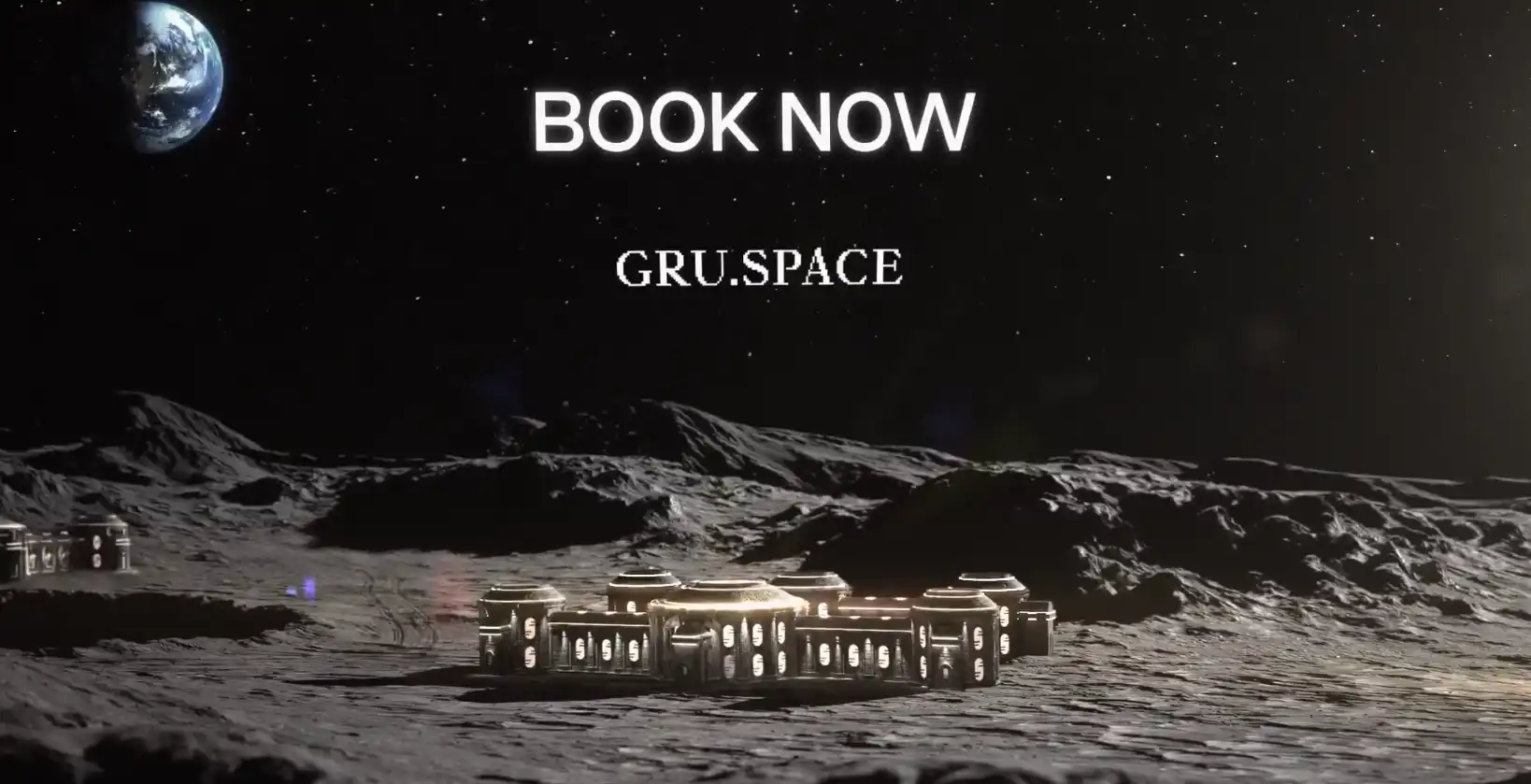
This company is called GRU Space, short for Galactic Resource Utilization. It just opened bookings for future hotel rooms last week.
The founder, Skyler Chan, holds dual degrees in Electrical Engineering and Computer Science from UC Berkeley. He graduated last May, a year ahead of the standard schedule.
We checked his resume, and it's indeed impressive: obtained a pilot's license from the Air Force at 16, wrote vehicle software at Tesla, built a NASA-funded 3D printer that was sent to space.
The company joined YC (Y Combinator), Silicon Valley's most famous startup incubator; Airbnb, Stripe, and Dropbox all came from there.
It also has backing from NVIDIA's support program and an investor who backed Musk's SpaceX and the military unicorn Anduril.
Sounds impressive, right?
The YC profile states clearly: 2 full-time employees.
2 people, aiming to get a hotel on the Moon within 6 years.
Even though I can't afford it, out of curiosity, I looked into their pricing structure.
There's a $1,000 application fee, non-refundable. If selected, you need to pay a deposit of $250,000 or $1 million. You can back out within 30 days, but after that, you can only get a refund once the hotel is built. The final room price "could exceed $10 million".
The timeline is as follows:
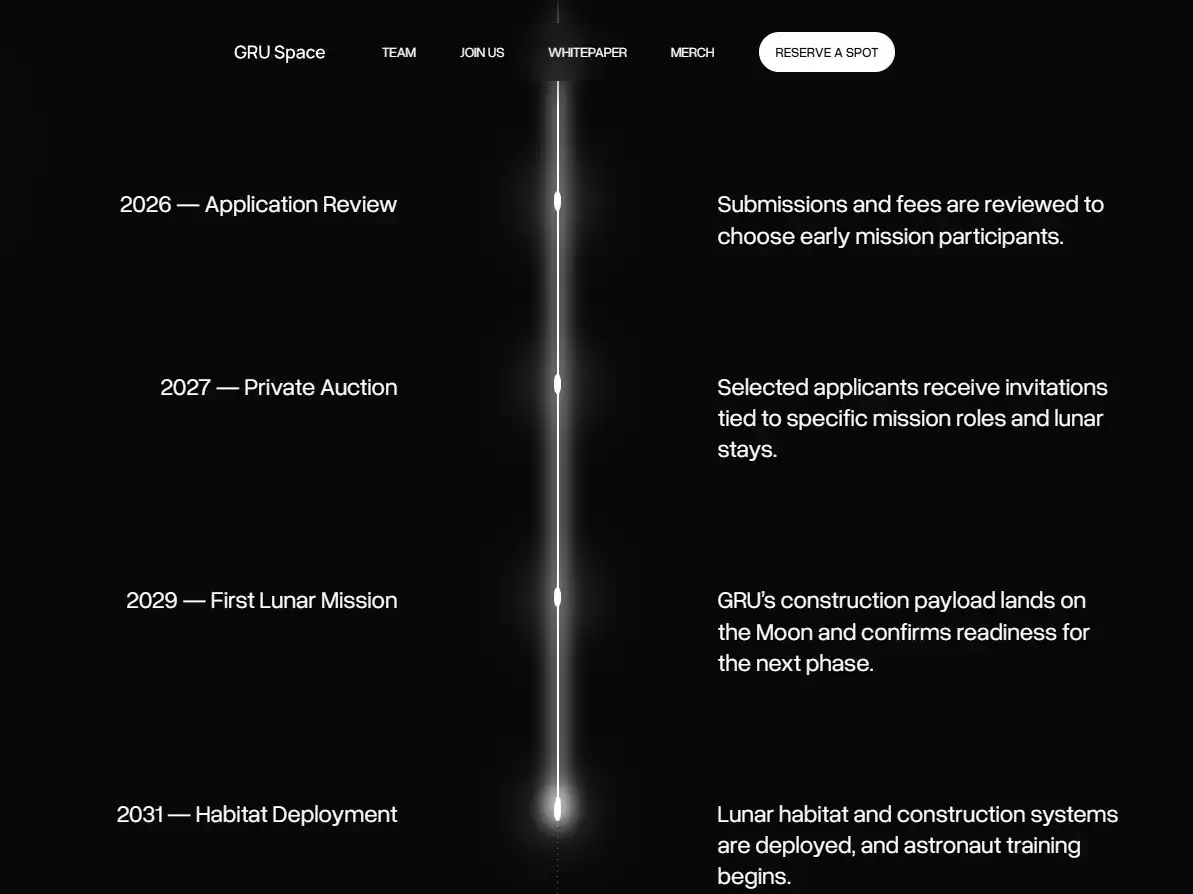
Application screening in 2026, a private auction in 2027, the first lunar landing test in 2029, hotel module deployment in 2031, and opening for business in 2032.
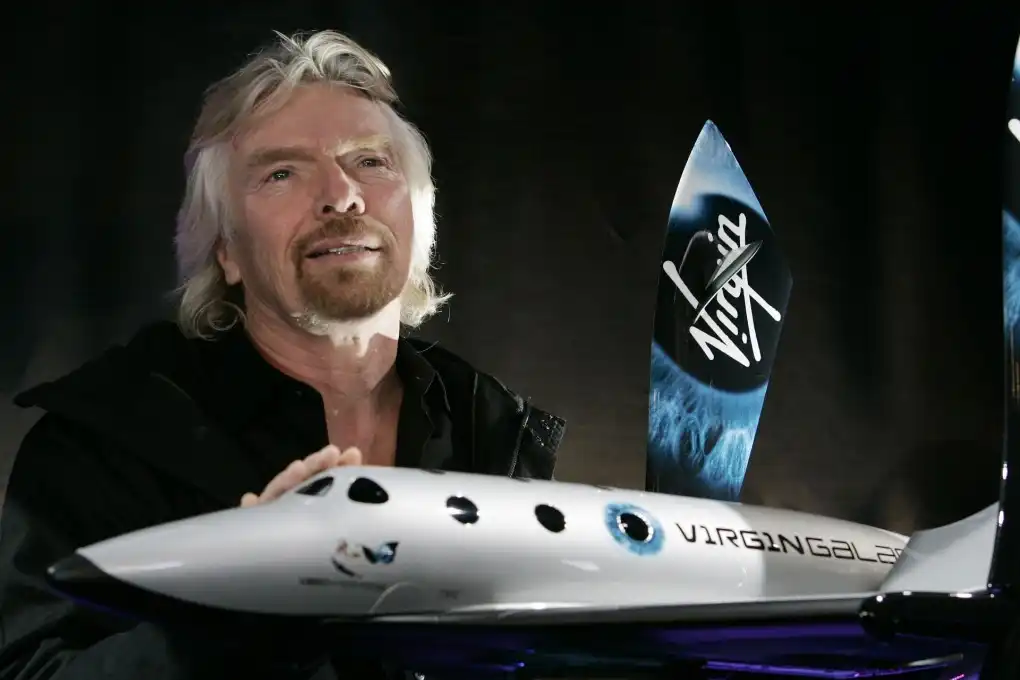
This model reminds me of Virgin Galactic. The space tourism company founded by British billionaire Richard Branson.
Branson is the owner of the Virgin Group, involved in airlines, records, cola, you name it. In 2005, he announced plans to take ordinary people to space and started collecting deposits, $200,000 per person. The first flight was initially promised for 2007.
Then it was 2008, 2009, 2010......
In 2011, a 75-year-old man named Alan Walton couldn't wait any longer and asked for a refund. He said he had already climbed Kilimanjaro, been to the North Pole, and skydived over Everest—space was the last item on his list, but he was old and really couldn't wait anymore.
In 2014, Virgin Galactic's spacecraft crashed during a test, killing one pilot. A group of customers requested and received refunds.
In 2021, Branson finally went to space himself. The customers breathed a sigh of relief, thinking their turn was finally coming.
In 2022, an 84-year-old man of Bulgarian descent, Chapadjiev, got his refund. He paid in 2007, waited 15 years, and was told "next year" every year. He said his relatives in Bulgaria kept asking him when he was going to space, and he couldn't answer.
Virgin Galactic's ticket price has now risen to $450,000, with a $150,000 deposit, $25,000 of which is non-refundable. Commercial flights have indeed started, but they only go to the edge of space for a few minutes before returning.
What GRU Space aims to do is take you to the Moon to stay for a few days. The difficulty is several orders of magnitude greater.
And Virgin Galactic spent 20 years, burned through billions of dollars, and suffered fatalities to get to where it is today. GRU Space has only 2 full-time employees and has given itself 6 years.
However, I don't think this is a scam.
The founder of GRU, that 22-year-old Berkeley graduate, states in the white paper that he knows this is a huge gamble. He doesn't hide it; he's proud of it. He says if successful, this will be the most influential event in human history.
That sounds arrogant, but the logic is consistent.
The Trump administration wanted to build a lunar base. The new NASA administrator, Jared Isaacman, is the billionaire who paid his own way to space and has stated that "initial facilities" will be built by 2030.
Chan is betting that the government won't have time to develop everything from scratch and will have to rely on commercial companies. He wants to be the one they depend on.
The project's white paper quotes a line:
"If America must build a lunar base within a decade, there is no time to invent from scratch those peculiar devices exclusive to the government."
So this $1 million deposit isn't buying a hotel room. It's buying a ticket to enter the race, a bet on the direction of U.S. space policy.
Finally, one detail.
The company is named GRU. The white paper ends with: "It's time to steal the Moon."
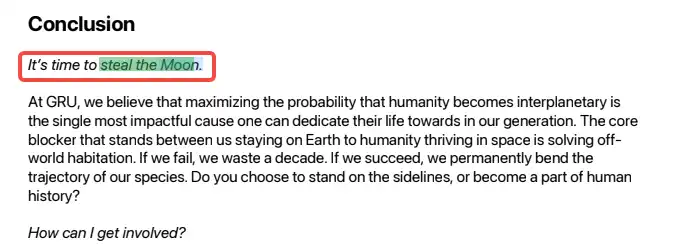
It's time to steal the moon.
Gru in Despicable Me also wanted to steal the moon. In the end, he didn't succeed but adopted three orphans and became a good father.
I wonder if Skyler Chan has seen that movie.
And I wonder, six years from now, will those who paid the deposit check into a lunar hotel, or will they, like the 84-year-old Chapadjiev, ultimately ask for a refund.
Anyway, the deposit is refundable after 30 days.
The Moon will still be there; it's not going anywhere.