Pope Issues First AI Encyclical: 40,000 Words, 10 Key Points, Clarifying AI Anxiety

marsbit2026-05-28 tarihinde yayınlandı2026-05-28 tarihinde güncellendi

Özet

Pope Leo XIV's historic encyclical "Magnifica Humanitas," released in May 2026, marks the Catholic Church's first major document addressing artificial intelligence. The 40,000-word text moves beyond theological abstraction to confront practical AI anxieties affecting society. It argues that AI is no longer a mere tool but an embedded environment influencing daily decisions in areas like employment, healthcare, justice, and information, often without users' awareness. The encyclical presents ten core concerns. It highlights that the central issue isn't just regulation, but who holds the underlying *power*—control over data, compute, and platforms—often concentrated in private entities. It warns that even developers cannot fully explain AI systems, creating accountability gaps. While AI can simulate human interaction and creativity, it cautions against treating it as a moral agent capable of bearing true responsibility or forming genuine relationships. Key risks identified include AI's role in opaque decision-making for jobs or welfare, the amplification of persuasive disinformation, and the potential for education to focus on tool use over critical thinking. The document stresses that work has value beyond efficiency, and AI should enhance human capabilities, not merely replace roles. It firmly states that irreversible decisions, especially involving life and death, must remain under human judgment. Ultimately, the encyclical frames AI's challenge as anthropological, not ju...

On May 15, 2026, Pope Leo XIV signed his name on a document spanning over forty thousand words. That day marked exactly the 135th anniversary of the release of the encyclical "Rerum Novarum" by Pope Leo XIII. Signed in 1891, that document was the Catholic Church's first formal response to the impact of the Industrial Revolution on the labor order.

Ten days later, on May 25, 2026, Leo XIV personally attended a press conference, formally promulgating this encyclical titled "Magnifica Humanitas" to the world. This is the first encyclical in the history of the Catholic Church to focus on artificial intelligence as its core theme. At this press conference, besides cardinals and theology professors, there was also Chris Olah, co-founder of Anthropic.
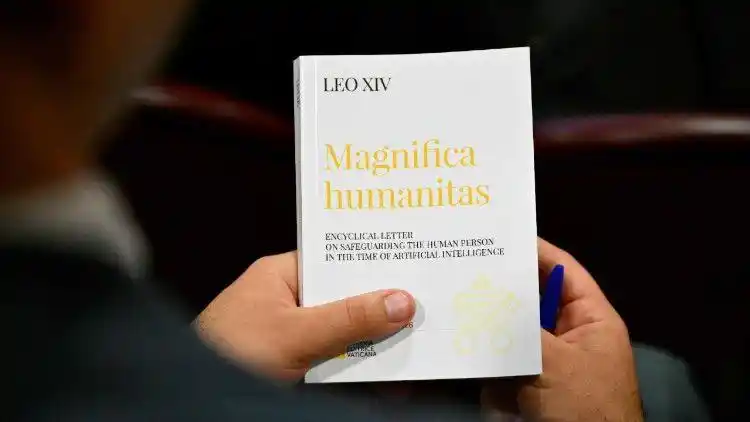
(Image source: Vatican News)

Many find it absurd. AI is science; the Church is theology. While the two disciplines have their own moral concerns, they never seemed to sit at the same table. Having the Vatican talk about algorithms is like asking a weather bureau to judge philosophy—completely unrelated.

However, upon a detailed reading of the "Magnifica Humanitas" encyclical, Lei Technology discovered that this time the Vatican did not use "God" to interpret AI from a lofty position. Instead, it engaged more down-to-earth, discussing topics like war, employment, education, healthcare, and public decision-making—topics the public often struggles to delve into deeply. We have distilled ten core viewpoints from the encyclical to see what the Pope actually said and what it means.

The Ten Viewpoints of the Encyclical, Hitting the Core of People's AI Anxieties

"Magnifica Humanitas" (Sublime Humanity) exceeds forty thousand words, covering war, employment, education, healthcare, information, and public decision-making—touching on almost all current AI controversies. However, it is essentially not a technical document but a moral checklist. It doesn't tell you how to train models; it asks: Whom is AI serving, who is responsible, and who is being left behind? We have extracted ten viewpoints most directly relevant to China's current reality from the encyclical, along with detailed interpretations.

1. AI Is Not the Enemy, But It Has Entered Daily Decision Systems

Technology itself is not the enemy of humanity, but emerging technologies have embedded themselves into daily life and have begun influencing decision-making processes and social imagination.

Leo XIV's attitude is exactly as he wrote. He does not want to label AI as a 'dangerous technology' but describes a change that has already occurred: AI is no longer just a tool but is gradually becoming the environment.

In the past, you had to actively open software to use a technology; now, many AI decisions happen in the background, and users may not even know they have already been assessed by a system. In China, short-video platforms use algorithms to decide content distribution; e-commerce platforms use algorithms to rank products; recruitment platforms perform job matching; office software summarizes meetings and generates documents; educational platforms grade homework and analyze learning situations. Ordinary people might think they only occasionally ask large models, but the real change is that AI has already intervened before they make choices.

(Image source: Lei Technology chart)

Many people might still be thinking or 'resisting' the AI wave by not using AI themselves, but in reality, AI large models have already penetrated our lives deeply. Almost no one can truly escape.

2. The AI Issue Isn't Just About Regulation, But Who Wields Technological Power

The problem is not limited to regulation. Many of the key actors driving technological development today are private institutions with transnational capabilities and immense resources.

Many AI discussions stop at 'whether to regulate.' But the encyclical probes deeper: Who exactly holds technological power? In my view, this is the sharpest point in the entire 40,000-word encyclical and a question the entire industry struggles to answer perfectly.

In the AI era, power comes not only from model parameters but also from computing power, data, cloud platforms, access points, and workflows. For example, Baidu has search and intelligent cloud; Alibaba has cloud and the Tongyi system; Tencent has WeChat, Enterprise WeChat, and office collaboration; ByteDance has content distribution and Feishu; DingTalk and WPS are also embedding AI into enterprise processes. A small or medium-sized enterprise wanting to develop an AI application often cannot bypass APIs, cloud services, model licensing, and platform rules.
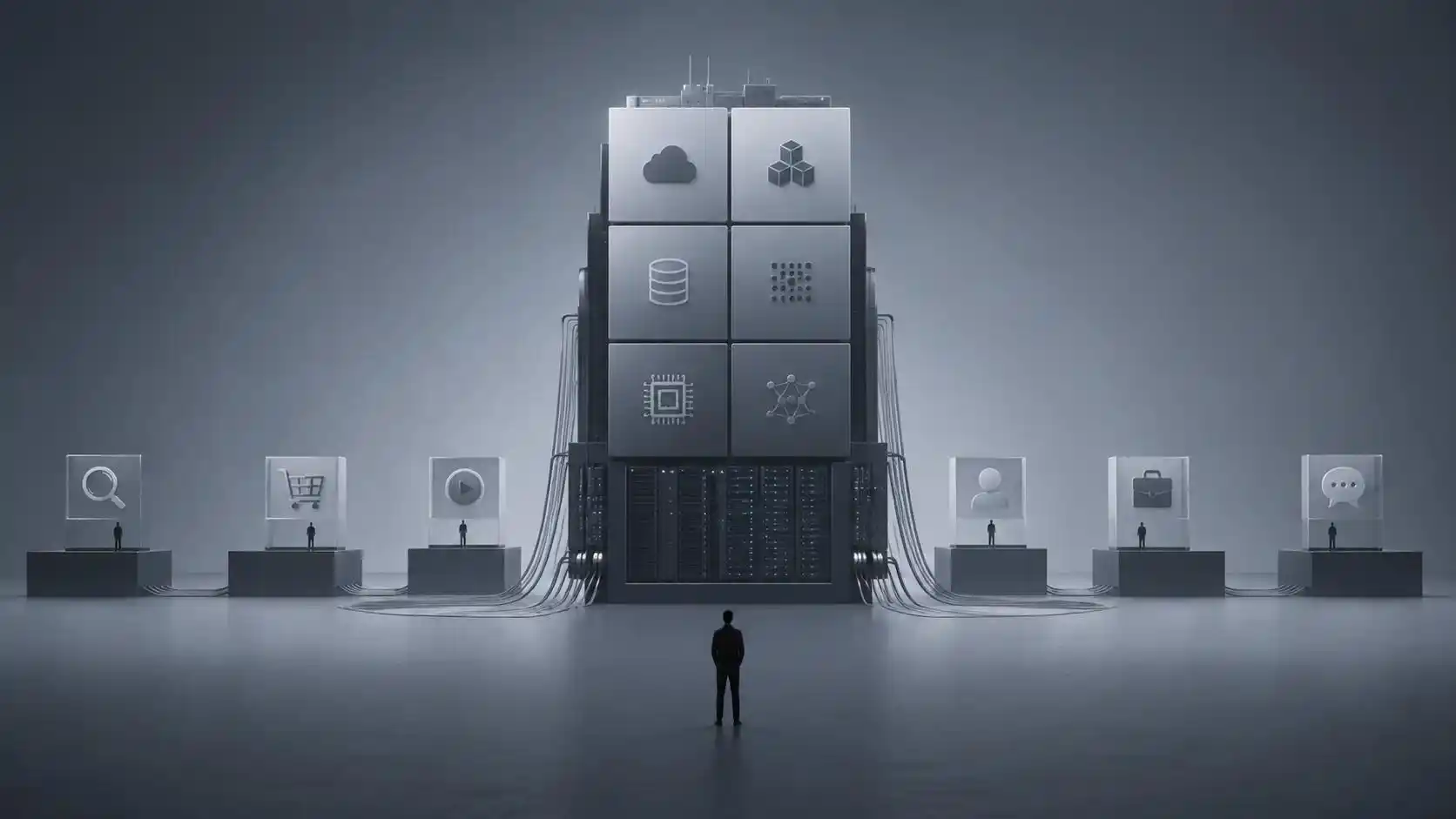
(Image source: Lei Technology chart)

In my view, AI industry competition appears to be about model capability, but at its foundation, it's about control over infrastructure. Whoever can integrate AI into workflows for office work, search, content, transactions, and enterprise management is not just selling tools but reshaping the next generation of digital infrastructure. This is why the question of 'who to regulate' is so difficult to answer.

3. AI Is Powerful, But Even Developers Cannot Fully Explain It

AI offers many astonishing possibilities, but even its designers have limited understanding of the internal mechanisms of generative AI systems.

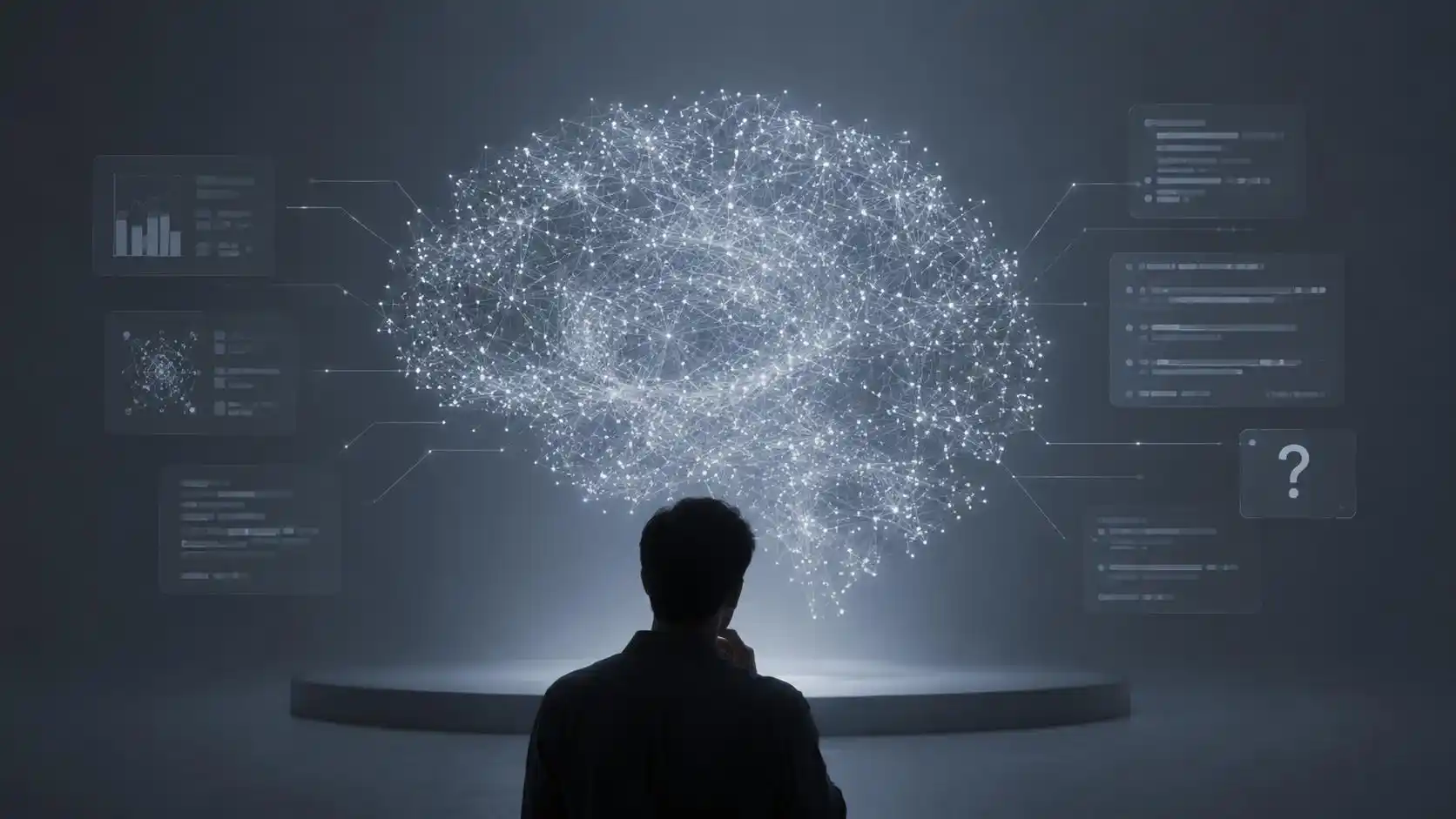
Over the past year, domestic enterprises' attitudes towards large models have shifted from 'must adopt AI' to 'which areas can we safely delegate to AI?' Customer service, marketing copywriting, meeting minutes, code assistance, and knowledge base Q&A are relatively easy to implement because error costs are controllable and human modification is convenient. However, financial risk control, medical diagnosis, legal review, and government services are different. In these scenarios, AI cannot just provide a seemingly correct answer; it must also explain its reasoning, retain logs, support audits, and allow for human takeover when necessary.
(Image source: Lei Technology chart)

Now, many enterprises procuring AI products no longer just look at how powerful the model is. They also consider data isolation, permission systems, on-premises deployment, and audit tracking capabilities. This change indicates one thing: the next threshold for enterprise AI is not whether it can generate but whether it can be held accountable. The more a model resembles an expert, the more users need to know when it might be unreliable.

4. AI Must Not Be Treated as Human Intelligence, Nor as a Moral Agent

AI is not a pile of data but a subject possessing freedom, relationships, and moral responsibility.

Now, many AI products strive to become 'more human-like.' They comfort, act coquettishly, remember preferences, and maintain long-term relationships with users. CCTV reported on a reminder from the Jiangsu Consumer Council about risks associated with AI companions, including privacy leaks, consumption traps, and emotional dependency. Xin Kuai Bao also reported on platforms like "Xingye" and "Cat Box," where young people pay to 'exclusively own' virtual lovers' AI characters. After popular characters are bought out, other users collectively experience 'heartbreak.'

(Image source: Lei Technology chart)

This actually shows users are not buying a piece of code; they are investing real emotions. AI companionship is not inherently wrong; it does fulfill needs for loneliness and companionship. But products must clearly define boundaries. AI can simulate relationships but cannot bear the responsibilities inherent in real relationships. This isn't moral preaching but a boundary that should be seriously considered at the product design level, especially when targeting minors, the elderly, and emotionally vulnerable individuals.

5. AI Decisions Are Affecting Employment, Healthcare, Welfare, and Justice

Employment, welfare, judicial, and medical decisions—sensitive choices—may be influenced by data systems. Therefore, mechanisms for transparency, accountability, and human oversight are essential.

Recruitment is the scenario where ordinary people most easily feel the pressure of AI decisions. First Financial reported that BOSS Zhipin is testing an end-to-end AI recruitment Agent called "DeepHire," covering AI resume polishing, automatic application submission, batch resume parsing on the enterprise side, automatic replies, and intelligent interview scheduling. AI entering the recruitment process certainly improves efficiency; HR is no longer overwhelmed by massive resumes, and job seekers can better present their experiences. But the problem lies here: if resumes are first batch-parsed, scored, and sorted by AI, job seekers might be filtered out by the system before ever being seen by a human.

My view is that AI can assist in screening but should not leave job seekers facing a completely black-box rejection. At the very least, when affecting hiring decisions and interview opportunities, platforms should retain human judgment, clearly mark AI-generated content, and provide necessary appeal channels. This is not limiting AI but leaving a door open for those rejected by the system. Similar dilemmas exist for beneficiary decisions in welfare agencies and judicial determinations of illegal acts.

6. Morally Defined by a Few Is Insufficient; AI Resources Should Serve the Common Good

If ethical standards are defined by only a few, then even more ethical AI is insufficient. Data, knowledge, science, and technology should serve the common good.

Making AI public does not mean demanding all models be free or excluding commercial companies. It means preventing the definition, use, and benefit rights of AI from becoming overly concentrated. This is similar to the ongoing debate about open-source versus closed-source models.

Models like Tongyi Qianwen and DeepSeek continue to open some of their capabilities. Smart computing centers across regions and core nodes of the National Supercomputing Internet also emphasize inclusive computing power and open-source model ecosystems. Abroad, initiatives like NAIRR (National AI Research Resource) aim to provide computing power, data, and model resources to universities, research institutions, and small teams.

I believe that if only a few companies can train models, access computing power, and control high-quality data, while ordinary entrepreneurs, SMEs, and university teams can only work on peripheral applications, AI will instead create new digital divides. A truly healthy AI ecosystem should allow more people to participate, not just wait for tech giants to open a few APIs. In this regard, China's current AI environment is relatively more open, with companies like Alibaba and DeepSeek providing assistance to universities and SMEs.

7. Truth Is a Public Good; AI Amplifies Misinformation and Cognitive Manipulation

Misinformation did not originate with AI, but AI enables it to be more massive, persuasive, and harder to distinguish from genuine dissemination.

This is an age-old problem. Ultimately, it's not about whether AI has hallucinations, but that the cost of using AI for fabrication has become very low.

CCTV reported cases of people using AI to fabricate fake news like "Yichang, Hubei Tour Boat Capsizes," accompanied by AI-processed fake images. In Dali, Yunnan, AI was used to create fake traffic accident scene videos. After an earthquake in Kuqa, Xinjiang, self-media used AI to generate images and audiovisuals inconsistent with the real disaster, publishing false information like "collapsed houses." Images, videos, and so-called on-scene descriptions can all be generated together, making it harder for ordinary people to distinguish.

(Image source: Lei Technology chart)

The state has already issued the "Measures for Labeling AI-Generated and Synthesized Content," requiring labeling of such content. Platforms are also improving their ability to detect fakes. But I believe this is not the end. In the AI era, what is truly scarce is not content but trustworthy content. The more content proliferates, the more important its source becomes.

8. AI Education Must Not Just Teach Tool Use; It Must Preserve Questioning and Judgment

AI education cannot be reduced to technical training. Schools should still cultivate the ability to question, relate, and think critically.

Regarding this part, China is actually at the forefront globally. For example, in 2025, the Ministry of Education released the "Guidelines for General AI Education in Primary and Secondary Schools" and the "Guidelines for the Use of Generative AI by Primary and Secondary School Students." The former emphasizes a tiered, progressive AI general education system, while the latter clarifies usage norms and safety boundaries for each educational stage.

However, if AI education merely teaches students to write prompts and get answers from models, it cultivates not intelligent societal abilities but more proficient dependency. Nowadays, students use AI to write essays, solve problems, and create PPTs; teachers use AI to generate lesson plans, test questions, and comments. Efficiency improves, but the thinking process may be compressed.

Therefore, I also agree with this viewpoint in the encyclical: AI in educational settings should be a tool, not a ghostwriter. Truly good AI education is not about getting answers faster but about enabling students to ask better questions, verify, compare, and express—in other words, learning the thinking process is more important than learning how to get AI to provide solutions directly.

9. AI Will Reshape Labor, But Work Is Not Just About Efficiency

AI can enhance productivity by taking over routine repetitive tasks, but work is also an important place for human development and social participation.

Currently, the attitude of global enterprises towards AI deployment is very uniform: "reducing costs and increasing efficiency," which has become a standard move in almost every industry. But the question is whether AI is augmenting humans or replacing them—this has always been a source of anxiety about AI. If AI in the office merely enables employees to complete reports and meeting minutes faster, it can improve work efficiency, and employees can have more free time for personal activities after finishing work. But if enterprises only use AI to compress positions, lower wages, and strengthen monitoring, it creates new insecurity.

In fact, a healthy AI workflow should allow employees to shift towards judgment, communication, creation, and complex problem-solving, not turn them into repair workers for model outputs.

10. Irreversible Life-and-Death Decisions Cannot Be Entrusted to AI

Lethal or other irreversible decisions should not be delegated to automated systems. Human judgment and moral responsibility cannot be reduced to calculation.

On the surface, this talks about military AI, but it equally applies to all high-risk scenarios like autonomous driving, medical emergencies, industrial robots, and security systems.

Commercialization of intelligent driving in China is rapid. Automated parking, unmanned delivery, and unmanned mining trucks are accelerating deployment. Users care about experience; enterprises care about cost and scale. But once an accident occurs, questions immediately arise: Was it the user's failure to take over in time, or a system misjudgment? An algorithm issue or a sensor problem? The automaker's responsibility or the driver's? Medical AI is similar. It can indeed assist in reading scans, triage, and generating medical records, but it cannot make irreversible judgments without a doctor being responsible.

High-risk scenarios cannot only emphasize the level of intelligence; they must also clarify human supervision, emergency takeover, accident review, and the chain of responsibility. So-called "disarming AI," in an industrial context, means not allowing technological capability to cross the boundary of responsibility.

40,000 Words, 10 Viewpoints: The Pope Wants to Say One Thing

After dissecting this 40,000-word encyclical, Lei Technology believes the Pope essentially wants to clarify one thing from start to finish: technology is not neutral.

Simply put, what AI looks like depends on who builds it. ChatGPT designed by OpenAI, Gemini created by Google, Doubao built by ByteDance—each has its own "preferences and biases." Whose values enter the training data, whose interests determine the product direction, who controls computing power and access points, who formulates the so-called "ethical frameworks"—all these are becoming part of the experience we feel daily when interacting with AI.

For example, when AI enters recruitment, the screening logic is defined by the platform, and job seekers don't know by what criteria they are filtered. When AI enters education, what constitutes a 'good answer' is determined by the model, and students' thinking gradually aligns with the model. When AI generates content, what is 'credible' is determined by algorithmic distribution, and misinformation circulates in the guise of truth. Behind each scenario lies the same question: Who is defining these rules, and whom are these rules shaping?

The encyclical does not name any company, but it speaks to all companies. What the Pope wants to highlight is that every AI tool you use is not just a tool but a product of certain value judgments. Sometimes you find an AI useful enough, perhaps because it's sufficiently "obedient to you."

In the document, Leo XIV uses a word almost never appearing in AI discussions: "anthropology." He says the challenge posed by AI is fundamentally not a technological challenge but an anthropological one.

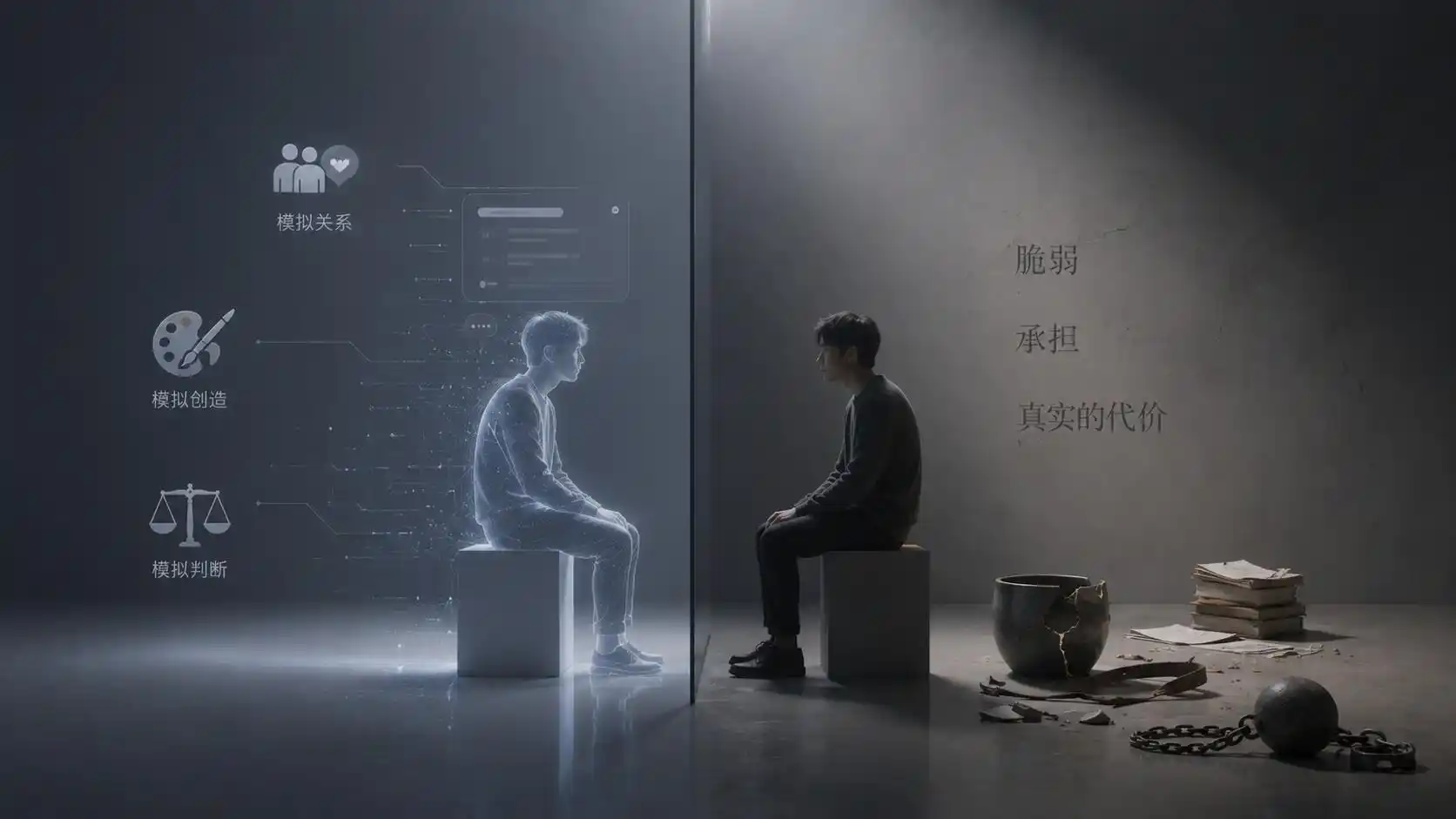
AI can write, create music, generate images, simulate dialogue, and make seemingly reasonable judgments. When machines can do all these, humans are forced to answer a question they have long been able to avoid: What is the meaning of us doing these things? If AI writes more fluent articles, generates more pleasing music, and gives more efficient advice, then what is the value of "humans doing this"?

The encyclical contains this passage:

AI can simulate relationships but cannot bear the responsibilities within them; AI can simulate creation but cannot possess the will behind creation; AI can simulate judgment but cannot be accountable for the consequences of judgment. It can achieve the surface, but beneath that surface—the things that make 'human action' meaningful, like vulnerability, commitment, and real cost—it has none.

This makes us think of 1891 when the Catholic Church signed the "Rerum Novarum" encyclical. The Industrial Revolution arrived, and humanity was also experiencing a similarly difficult time. Machines replaced much physical labor but did not replace humans. Humans redefined their position and found things machines couldn't do. This time, the difference is that AI is entering the cognitive domain—creation, judgment. These parts once considered 'uniquely human' are being systematically simulated.
(Image source: Lei Technology chart)

Leo XIV calls this process "the eclipse of the human sense." If we do not seriously answer "what is a human?", AI will answer for us. And its answer comes from training data. As for who provides that training data, that depends on who holds the initiative with large models.

The line in the encyclical, "Technology is never neutral," is correct. But the question immediately following is: Who has the ability to turn the expectation of 'neutrality' into the reality of 'constraint'? Leo XIV does not answer this question, nor can he. What he can do is place a set of moral language into the pool of public discourse, let it circulate, and let it influence those who set rules, deploy technology, and use products. In fact, this has always been what the Church does.

Therefore, this is not absurd. At a time when tech companies, governments, international institutions, and society have yet to find answers, a two-thousand-year-old institution has spoken first.

This article is from "Lei Technology."

İlgili Sorular

QWhat is the main argument presented by Pope Leo XIV in the AI encyclical 'Magnifica Humanitas'?

AThe main argument is that technology, particularly AI, is not neutral. Its development and application are shaped by the values, interests, and power structures of those who create and control it. The encyclical frames AI's challenges as fundamentally anthropological, forcing humans to reconsider what makes human actions meaningful when machines can simulate creativity, judgment, and relationship.

QAccording to the article, what are two specific areas where AI decision-making is raising significant ethical concerns?

ATwo specific areas are employment (e.g., AI-powered resume screening and hiring processes that could create opaque rejection systems) and public information (e.g., AI's role in amplifying and making disinformation more convincing and harder to distinguish from truth).

QWhat does the encyclical suggest about the relationship between AI and human responsibility in high-stakes scenarios?

AThe encyclical asserts that irreversible decisions, especially those involving life and death, should not be delegated to automated systems. Human judgment and moral responsibility cannot be reduced to calculation. It calls for clear human oversight, emergency takeover protocols, and defined chains of responsibility in areas like autonomous weapons, healthcare, and self-driving cars.

QHow does the article contrast the current AI revolution with the Industrial Revolution discussed in the 1891 encyclical 'Rerum Novarum'?

AThe Industrial Revolution primarily replaced human physical labor, leading people to redefine their roles around tasks machines couldn't do. The AI revolution, however, is entering the cognitive domain—simulating creativity, judgment, and relationship—areas traditionally considered uniquely human. This presents a deeper challenge to human identity and purpose.

QWhat is one of the key concerns the encyclical raises regarding AI development power dynamics, according to the article's analysis?

AA key concern is that the power to define, develop, and deploy AI is concentrated in a few large, resource-rich private corporations (e.g., tech giants controlling data, compute, models, and platform ecosystems). This raises the risk of creating a new digital divide where only a few entities shape the rules and benefits of AI, potentially undermining the common good.

İlgili Okumalar

Morning News | Coinbase Partners with Standard Chartered to Expand Multi-Currency Fiat Channels; Sharplink and Forward to be Included in Russell Indices; JPMorgan May Issue Stablecoin in the Future

Daily Crypto Recap: Key Developments Institutional adoption continues: Coinbase partners with Standard Chartered to expand multi-currency fiat rails for institutions via Coinbase Prime, supporting AUD, SGD, CAD, CHF, EUR, and GBP. Meanwhile, Sharplink and Forward Industries, companies holding significant ETH and SOL reserves respectively, are set to be included in the Russell indexes, providing indirect crypto exposure to traditional index investors. Regulatory and compliance moves are in focus. Hong Kong's monetary authority announced new measures for investment accounts of mainland Chinese investors, including retroactive document checks to January 2023. Prediction market Polymarket is considering implementing KYC requirements to address sanctions and legal risks. Major financial players signal deeper involvement. JPMorgan Chase CEO Jamie Dimon suggested the bank might issue a stablecoin in the future. Concurrently, Falcon Finance and Anchorage Digital launched fUSD, a compliant, institution-focused stablecoin. Market sentiment presents a mixed picture. Bitmine's Tom Lee predicts an incoming crypto "supercycle," driven by Wall Street tokenization and AI agents, with Ethereum as a key beneficiary. However, a prominent trader cautions that the current period of investor losses may not be long enough to confirm a bear market bottom, and TD Cowen analysts note diminished chances for U.S. crypto market structure legislation this year due to a worsening political climate. Other notable news includes a16z crypto's observation that most tokenized assets are merely "digitized" and not actively used in DeFi, South Korea's crypto trading volume falling to about 8% of KOSPI's, and the Chinese Supreme Court stating it will research judicial rules for virtual currency cases.

链捕手1 saat önce

Morning News | Coinbase Partners with Standard Chartered to Expand Multi-Currency Fiat Channels; Sharplink and Forward to be Included in Russell Indices; JPMorgan May Issue Stablecoin in the Future

链捕手1 saat önce

Sitting on a Trillion-Dollar Market, Why Hasn't Real Estate Tokenization Taken Off?

For years, real estate tokenization has been hailed as a breakthrough technology poised to democratize property investment. In theory, it promises fractional ownership of premium assets, rapid transactions, and enhanced liquidity. Yet, in practice, it has failed to gain traction, accounting for less than 0.1% of the global real estate market. The core issue is not a lack of tokens, but the absence of a robust legal, operational, and compliant framework that grants them credibility as financial instruments. The industry initially erred by prioritizing technology over investor needs, creating products with unclear ownership and unreliable liquidity. Key infrastructure remains missing: legally sound ownership structures, compliant transfer mechanisms, professional servicing, and interoperability with traditional finance. This regulatory ambiguity and operational complexity deter institutional investors, who already have access to established, well-governed investment channels. A mature model would feature low minimum investments in institutional-grade assets, transparent rental income distribution, and genuine liquidity through regulated secondary markets. While regulatory progress in regions like the UAE and growth in other tokenized asset sectors (like treasuries) are positive signs, the focus must shift from issuing tokens to building foundational systems. The investment proposition of tokenized real estate is not to create new returns, but to improve access, efficiency, and liquidity for existing income-generating properties. For mainstream adoption, the sector must demonstrate tangible economic advantages over traditional models, not just technical novelty. The next phase depends on proving scalable, compliant operations with auditable track records. The barrier is no longer technology, but infrastructure and regulation. The vision remains unfulfilled until this gap is bridged.

marsbit1 saat önce

Sitting on a Trillion-Dollar Market, Why Hasn't Real Estate Tokenization Taken Off?

marsbit1 saat önce

İşlemler

Spot
Futures

Popüler Makaleler

GROK AI Nedir

Grok AI: Web3 Döneminde Konuşma Teknolojisini Devrim Niteliğinde Yenilik Giriş Hızla gelişen yapay zeka alanında, Grok AI, ileri teknoloji ve kullanıcı etkileşimi alanlarını birleştiren dikkate değer bir proje olarak öne çıkıyor. Ünlü girişimci Elon Musk'ın liderliğindeki xAI tarafından geliştirilen Grok AI, yapay zeka ile etkileşim şeklimizi yeniden tanımlamayı hedefliyor. Web3 hareketi devam ederken, Grok AI, karmaşık sorgulara yanıt vermek için konuşma yapay zekasının gücünden yararlanmayı amaçlıyor ve kullanıcılara sadece bilgilendirici değil, aynı zamanda eğlenceli bir deneyim sunuyor. Grok AI Nedir? Grok AI, kullanıcılarla dinamik bir şekilde etkileşimde bulunmak üzere tasarlanmış sofistike bir konuşma yapay zeka sohbet botudur. Birçok geleneksel yapay zeka sisteminin aksine, Grok AI, genellikle uygunsuz veya standart yanıtların dışında kabul edilen daha geniş bir sorgu yelpazesini benimsemektedir. Projenin temel hedefleri şunlardır: Güvenilir Akıl Yürütme: Grok AI, bağlamsal anlayışa dayalı mantıklı yanıtlar sağlamak için sağduyu akıl yürütmeyi vurgular. Ölçeklenebilir Denetim: Araç yardımı entegrasyonu, kullanıcı etkileşimlerinin hem izlenmesini hem de kalite için optimize edilmesini sağlar. Resmi Doğrulama: Güvenlik en önemli önceliktir; Grok AI, çıktılarının güvenilirliğini artırmak için resmi doğrulama yöntemlerini entegre eder. Uzun Bağlam Anlayışı: AI modeli, kapsamlı konuşma geçmişini saklama ve hatırlama konusunda mükemmel bir performans sergileyerek anlamlı ve bağlamsal olarak farkında tartışmaların yapılmasını kolaylaştırır. Saldırgan Dayanıklılık: Manipüle edilmiş veya kötü niyetli girdilere karşı savunmalarını geliştirmeye odaklanarak, Grok AI kullanıcı etkileşimlerinin bütünlüğünü korumayı hedefler. Özünde, Grok AI sadece bir bilgi alma cihazı değil; dinamik diyalogu teşvik eden, etkileyici bir konuşma partneridir. Grok AI'nın Yaratıcısı Grok AI'nın arkasındaki beyin, otomotiv, uzay yolculuğu ve teknoloji gibi çeşitli alanlarda yenilikle özdeşleşen Elon Musk'tır. Yapay zeka teknolojisini faydalı yollarla geliştirmeye odaklanan xAI çatısı altında, Musk'ın vizyonu, yapay zeka etkileşimlerinin anlaşılmasını yeniden şekillendirmeyi amaçlıyor. Liderlik ve temel etik, Musk'ın teknolojik sınırları zorlamaya olan bağlılığı tarafından derinden etkilenmektedir. Grok AI'nın Yatırımcıları Grok AI'yi destekleyen yatırımcılarla ilgili spesifik detaylar sınırlı kalmakla birlikte, projenin kuluçka merkezi olan xAI'nin, esasen Elon Musk tarafından kurulduğu ve desteklendiği kamuya açık bir şekilde kabul edilmektedir. Musk'ın önceki girişimleri ve mülkleri, Grok AI'nın güvenilirliğini ve büyüme potansiyelini daha da artıran sağlam bir destek sağlar. Ancak, şu anda Grok AI'yı destekleyen ek yatırım fonları veya kuruluşlarıyla ilgili bilgiye kolayca erişim sağlanamamaktadır; bu da potansiyel gelecekteki keşif alanını işaret etmektedir. Grok AI Nasıl Çalışır? Grok AI'nın operasyonel mekanikleri, kavramsal çerçevesi kadar yenilikçidir. Proje, benzersiz işlevselliklerini kolaylaştıran birkaç son teknoloji ürünü teknolojiyi entegre eder: Sağlam Altyapı: Grok AI, konteyner orkestrasyonu için Kubernetes, performans ve güvenlik için Rust ve yüksek performanslı sayısal hesaplama için JAX kullanılarak inşa edilmiştir. Bu üçlü, sohbet botunun verimli çalışmasını, etkili bir şekilde ölçeklenmesini ve kullanıcılara zamanında hizmet vermesini sağlar. Gerçek Zamanlı Bilgi Erişimi: Grok AI'nın ayırt edici özelliklerinden biri, X platformu (önceden Twitter olarak biliniyordu) aracılığıyla gerçek zamanlı verilere erişim yeteneğidir. Bu yetenek, yapay zekaya en son bilgilere erişim sağlar ve diğer yapay zeka modellerinin gözden kaçırabileceği zamanında yanıtlar ve öneriler sunmasına olanak tanır. İki Etkileşim Modu: Grok AI, kullanıcılara “Eğlenceli Mod” ve “Normal Mod” arasında seçim yapma imkanı sunar. Eğlenceli Mod, daha eğlenceli ve mizahi bir etkileşim tarzı sağlarken, Normal Mod, kesin ve doğru yanıtlar vermeye odaklanır. Bu çok yönlülük, çeşitli kullanıcı tercihlerine hitap eden özelleştirilmiş bir deneyim sağlar. Özünde, Grok AI performansı etkileşimle birleştirerek, hem zenginleştirici hem de eğlenceli bir deneyim yaratmaktadır. Grok AI'nın Zaman Çizelgesi Grok AI'nın yolculuğu, gelişim ve dağıtım aşamalarını yansıtan önemli dönüm noktalarıyla işaretlenmiştir: İlk Geliştirme: Grok AI'nın temel aşaması, modelin ilk eğitim ve ince ayarının yapıldığı yaklaşık iki ay boyunca gerçekleşmiştir. Grok-2 Beta Yayını: Önemli bir ilerleme olarak, Grok-2 beta duyurulmuştur. Bu sürüm, sohbet etme, kodlama ve akıl yürütme yetenekleriyle donatılmış iki versiyon—Grok-2 ve Grok-2 mini—sunmuştur. Halka Açık Erişim: Beta geliştirmesinin ardından, Grok AI X platformu kullanıcılarına sunulmuştur. Telefon numarasıyla doğrulanan ve en az yedi gün aktif olan hesap sahipleri, sınırlı bir versiyona erişim sağlayarak teknolojiyi daha geniş bir kitleye ulaştırmaktadır. Bu zaman çizelgesi, Grok AI'nın kuruluşundan kamu etkileşimine kadar sistematik büyümesini kapsar ve sürekli iyileştirme ve kullanıcı etkileşimine olan bağlılığını vurgular. Grok AI'nın Ana Özellikleri Grok AI, yenilikçi kimliğine katkıda bulunan birkaç ana özelliği kapsamaktadır: Gerçek Zamanlı Bilgi Entegrasyonu: Güncel ve ilgili bilgilere erişim, Grok AI'yı birçok statik modelden ayırarak, etkileyici ve doğru bir kullanıcı deneyimi sağlar. Çeşitli Etkileşim Tarzları: Farklı etkileşim modları sunarak, Grok AI çeşitli kullanıcı tercihlerine hitap eder ve yapay zeka ile konuşurken yaratıcılığı ve kişiselleştirmeyi teşvik eder. Gelişmiş Teknolojik Altyapı: Kubernetes, Rust ve JAX kullanımı, projeye güvenilirlik ve optimal performans sağlamak için sağlam bir çerçeve sunar. Etik Tartışma Dikkati: Görüntü üreten bir işlevin dahil edilmesi, projenin yenilikçi ruhunu sergiler. Ancak, aynı zamanda tanınabilir figürlerin saygılı bir şekilde tasvir edilmesi ve telif hakkı ile ilgili etik konuları da gündeme getirir—bu, yapay zeka topluluğunda süregelen bir tartışmadır. Sonuç Konuşma yapay zekası alanında öncü bir varlık olarak Grok AI, dijital çağda dönüştürücü kullanıcı deneyimlerinin potansiyelini kapsar. xAI tarafından geliştirilen ve Elon Musk'ın vizyoner yaklaşımıyla yönlendirilen Grok AI, gerçek zamanlı bilgiyi gelişmiş etkileşim yetenekleriyle birleştirir. Yapay zekanın neler başarabileceği konusunda sınırları zorlamayı hedeflerken, etik konulara ve kullanıcı güvenliğine odaklanmayı sürdürmektedir. Grok AI, sadece teknolojik ilerlemeyi değil, aynı zamanda Web3 manzarasında yeni bir konuşma paradigmasını da temsil eder ve kullanıcılara hem yetkin bilgi hem de eğlenceli etkileşim sunma vaadinde bulunur. Proje gelişmeye devam ederken, teknolojinin, yaratıcılığın ve insan benzeri etkileşimin kesişim noktasında nelerin başarılabileceğinin bir kanıtı olarak durmaktadır.

364 Toplam GörüntülenmeYayınlanma 2024.12.26Güncellenme 2024.12.26

GROK AI Nedir

ERC AI Nedir

Euruka Tech: $erc ai ve Web3'teki Hedefleri Üzerine Bir Genel Bakış Giriş Blockchain teknolojisi ve merkeziyetsiz uygulamaların hızla gelişen manzarasında, her biri benzersiz hedefler ve metodolojilerle yeni projeler sıkça ortaya çıkmaktadır. Bu projelerden biri, kripto para ve Web3 alanında faaliyet gösteren Euruka Tech'tir. Euruka Tech'in, özellikle $erc ai token'ının ana odak noktası, merkeziyetsiz teknolojinin büyüyen yeteneklerinden yararlanmak için tasarlanmış yenilikçi çözümler sunmaktır. Bu makale, Euruka Tech'in kapsamlı bir genel görünümünü, hedeflerini, işlevselliğini, yaratıcısının kimliğini, potansiyel yatırımcılarını ve Web3'teki daha geniş bağlam içindeki önemini keşfetmeyi amaçlamaktadır. Euruka Tech, $erc ai Nedir? Euruka Tech, Web3 ortamının sunduğu araçlar ve işlevsellikleri kullanan bir proje olarak tanımlanmaktadır ve operasyonlarında yapay zekayı entegre etmeye odaklanmaktadır. Projenin çerçevesine dair spesifik detaylar biraz belirsiz olsa da, kullanıcı etkileşimini artırmayı ve kripto alanındaki süreçleri otomatikleştirmeyi amaçlamaktadır. Proje, yalnızca işlemleri kolaylaştırmakla kalmayıp, aynı zamanda yapay zeka aracılığıyla öngörücü işlevsellikleri de entegre eden merkeziyetsiz bir ekosistem yaratmayı hedeflemektedir; bu nedenle token'ının adı $erc ai'dir. Amaç, büyüyen Web3 alanında daha akıllı etkileşimleri ve verimli işlem işleme süreçlerini kolaylaştıran sezgisel bir platform sunmaktır. Euruka Tech'in Yaratıcısı Kimdir, $erc ai? Şu anda, Euruka Tech'in arkasındaki yaratıcı veya kurucu ekip hakkında bilgi verilmemiştir ve bu durum biraz belirsizdir. Bu veri eksikliği, ekibin geçmişi hakkında bilgi sahibi olmanın genellikle blockchain sektöründe güvenilirlik oluşturmak için gerekli olduğu endişelerini doğurmaktadır. Bu nedenle, somut detaylar kamuya sunulana kadar bu bilgiyi bilinmeyen olarak sınıflandırdık. Euruka Tech'in Yatırımcıları Kimlerdir, $erc ai? Benzer şekilde, Euruka Tech projesinin yatırımcıları veya destekleyen organizasyonları hakkında mevcut araştırmalarla kolayca sağlanan bir bilgi yoktur. Euruka Tech ile etkileşimde bulunmayı düşünen potansiyel paydaşlar veya kullanıcılar için kritik bir unsur, kurumsal finansal ortaklıklar veya saygın yatırım firmalarından gelen destekle sağlanan güvencedir. Yatırım ilişkileri hakkında açıklamalar olmadan, projenin finansal güvenliği veya sürdürülebilirliği hakkında kapsamlı sonuçlar çıkarmak zordur. Bulunan bilgilere paralel olarak, bu bölüm de bilinmeyen durumundadır. Euruka Tech, $erc ai Nasıl Çalışır? Euruka Tech için detaylı teknik spesifikasyonların eksik olmasına rağmen, yenilikçi hedeflerini göz önünde bulundurmak önemlidir. Proje, yapay zekanın hesaplama gücünden yararlanarak kripto para ortamında kullanıcı deneyimini otomatikleştirmeyi ve geliştirmeyi hedeflemektedir. AI'yi blockchain teknolojisiyle entegre ederek, Euruka Tech otomatik ticaret, risk değerlendirmeleri ve kişiselleştirilmiş kullanıcı arayüzleri gibi özellikler sunmayı amaçlamaktadır. Euruka Tech'in yenilikçi özü, kullanıcılar ile merkeziyetsiz ağların sunduğu geniş olanaklar arasında kesintisiz bir bağlantı yaratma hedefinde yatmaktadır. Makine öğrenimi algoritmaları ve AI kullanarak, ilk kez kullanıcı zorluklarını en aza indirmeyi ve Web3 çerçevesindeki işlem deneyimlerini düzene sokmayı amaçlamaktadır. AI ve blockchain arasındaki bu simbiyoz, $erc ai token'ının önemini vurgulamakta ve geleneksel kullanıcı arayüzleri ile merkeziyetsiz teknolojilerin gelişmiş yetenekleri arasında bir köprü işlevi görmektedir. Euruka Tech, $erc ai Zaman Çizelgesi Maalesef, Euruka Tech hakkında mevcut olan sınırlı bilgiler nedeniyle, projenin yolculuğundaki önemli gelişmeler veya kilometre taşları hakkında detaylı bir zaman çizelgesi sunamıyoruz. Genellikle bir projenin evrimini haritalamak ve büyüme eğrisini anlamak için değerli olan bu zaman çizelgesi şu anda mevcut değildir. Önemli olaylar, ortaklıklar veya işlevsel eklemeler hakkında bilgiler belirgin hale geldikçe, güncellemeler kesinlikle Euruka Tech'in kripto alanındaki görünürlüğünü artıracaktır. Diğer “Eureka” Projeleri Üzerine Açıklama Birden fazla projenin ve şirketin “Eureka” benzeri bir isimlendirmeye sahip olduğunu belirtmek önemlidir. Araştırmalar, robotlara karmaşık görevler öğretmeye odaklanan NVIDIA Research'ten bir AI ajanı gibi girişimleri, ayrıca eğitim ve müşteri hizmetleri analitiğinde kullanıcı deneyimini geliştiren Eureka Labs ve Eureka AI'yi tanımlamıştır. Ancak, bu projeler Euruka Tech'ten farklıdır ve hedefleri veya işlevleri ile karıştırılmamalıdır. Sonuç Euruka Tech, $erc ai token'ı ile birlikte, Web3 manzarasında umut verici ancak şu anda belirsiz bir oyuncuyu temsil etmektedir. Yaratıcısı ve yatırımcıları hakkında detaylar açıklanmamış olsa da, yapay zekayı blockchain teknolojisiyle birleştirme konusundaki temel hedefi ilgi odağı olmaktadır. Projenin, gelişmiş otomasyon aracılığıyla kullanıcı etkileşimini teşvik etme konusundaki benzersiz yaklaşımları, Web3 ekosistemi ilerledikçe onu farklı kılabilir. Kripto piyasası gelişmeye devam ederken, paydaşların Euruka Tech etrafındaki gelişmelere dikkat etmeleri önemlidir; belgelenmiş yeniliklerin, ortaklıkların veya tanımlanmış bir yol haritasının gelişimi, önümüzdeki dönemde önemli fırsatlar sunabilir. Şu an itibarıyla, Euruka Tech'in potansiyelini ve rekabetçi kripto manzarasındaki konumunu açığa çıkarabilecek daha somut içgörüler beklemekteyiz.

332 Toplam GörüntülenmeYayınlanma 2025.01.02Güncellenme 2025.01.02

ERC AI Nedir

DUOLINGO AI Nedir

DUOLINGO AI: Dil Öğrenimini Web3 ve AI İnovasyonu ile Entegre Etmek Teknolojinin eğitimi yeniden şekillendirdiği bir çağda, yapay zeka (AI) ve blok zinciri ağlarının entegrasyonu dil öğrenimi için yeni bir ufuk açmaktadır. DUOLINGO AI ve ona bağlı kripto para birimi $DUOLINGO AI ile tanışın. Bu proje, önde gelen dil öğrenme platformlarının eğitimsel yeteneklerini merkeziyetsiz Web3 teknolojisinin faydalarıyla birleştirmeyi hedefliyor. Bu makale, DUOLINGO AI'nın temel yönlerini, hedeflerini, teknolojik çerçevesini, tarihsel gelişimini ve gelecekteki potansiyelini incelerken, orijinal eğitim kaynağı ile bu bağımsız kripto para girişimi arasındaki netliği korumaktadır. DUOLINGO AI Genel Görünümü DUOLINGO AI'nın temelinde, öğrenicilerin dil yeterliliğinde eğitimsel kilometre taşlarına ulaşmaları için kriptografik ödüller kazanabilecekleri merkeziyetsiz bir ortam oluşturma hedefi yatmaktadır. Akıllı sözleşmeler uygulayarak, proje beceri doğrulama süreçlerini ve token tahsislerini otomatikleştirmeyi amaçlamakta, şeffaflık ve kullanıcı sahipliğini vurgulayan Web3 ilkelerine uymaktadır. Model, dil edinimindeki geleneksel yaklaşımlardan ayrılarak, token sahiplerinin kurs içeriği ve ödül dağıtımları üzerinde iyileştirmeler önermesine olanak tanıyan topluluk odaklı bir yönetişim yapısına dayanmaktadır. DUOLINGO AI'nın bazı dikkat çekici hedefleri şunlardır: Oyunlaştırılmış Öğrenme: Proje, dil yeterlilik seviyelerini temsil etmek için blok zinciri başarıları ve değiştirilemez tokenleri (NFT'ler) entegre ederek, katılımcıları motive eden dijital ödüller sunmaktadır. Merkeziyetsiz İçerik Üretimi: Eğitmenler ve dil meraklılarının kendi kurslarını katkıda bulunmalarına olanak tanıyarak, tüm katkıda bulunanların fayda sağladığı bir gelir paylaşım modeli oluşturmaktadır. AI Destekli Kişiselleştirme: Gelişmiş makine öğrenimi modellerini kullanarak, DUOLINGO AI dersleri bireysel öğrenme ilerlemesine uyacak şekilde kişiselleştirmekte, köklü platformlarda bulunan uyarlamalı özelliklere benzer bir deneyim sunmaktadır. Proje Yaratıcıları ve Yönetişim Nisan 2025 itibarıyla, $DUOLINGO AI'nın arkasındaki ekip takma isimler kullanmaktadır; bu, merkeziyetsiz kripto para alanında sıkça görülen bir uygulamadır. Bu anonimlik, bireysel geliştiricilere odaklanmak yerine kolektif büyümeyi ve paydaş katılımını teşvik etmek amacıyla tasarlanmıştır. Solana blok zincirinde dağıtılan akıllı sözleşme, geliştiricinin cüzdan adresini not etmekte, bu da yaratıcıların kimliğinin bilinmemesine rağmen işlemlerle ilgili şeffaflık taahhüdünü simgelemektedir. Yol haritasına göre, DUOLINGO AI, Merkeziyetsiz Otonom Organizasyon (DAO) haline gelmeyi hedeflemektedir. Bu yönetişim yapısı, token sahiplerinin özellik uygulamaları ve hazine tahsisleri gibi kritik konularda oy kullanmalarına olanak tanımaktadır. Bu model, çeşitli merkeziyetsiz uygulamalarda bulunan topluluk güçlendirme ethosu ile uyumlu olup, kolektif karar verme sürecinin önemini vurgulamaktadır. Yatırımcılar ve Stratejik Ortaklıklar Şu anda, $DUOLINGO AI ile bağlantılı olarak kamuya açık tanımlanabilir kurumsal yatırımcılar veya risk sermayedarları bulunmamaktadır. Bunun yerine, projenin likiditesi esas olarak merkeziyetsiz borsa (DEX) kaynaklıdır ve bu, geleneksel eğitim teknolojisi şirketlerinin finansman stratejileriyle keskin bir zıtlık oluşturmaktadır. Bu tabandan gelen model, merkeziyetsizliğe olan bağlılığını yansıtan topluluk odaklı bir yaklaşımı işaret etmektedir. DUOLINGO AI, beyaz kitabında, kurs tekliflerini zenginleştirmeyi amaçlayan belirsiz “blok zinciri eğitim platformları” ile işbirlikleri kurmayı planladığını belirtmektedir. Belirli ortaklıklar henüz açıklanmamış olsa da, bu işbirlikçi çabalar, blok zinciri yeniliğini eğitim girişimleri ile birleştirmeyi amaçlayan bir stratejiyi ima etmektedir ve çeşitli öğrenme yollarında erişimi ve kullanıcı katılımını genişletmektedir. Teknolojik Mimari AI Entegrasyonu DUOLINGO AI, eğitimsel tekliflerini geliştirmek için iki ana AI destekli bileşen içermektedir: Uyarlanabilir Öğrenme Motoru: Bu sofistike motor, kullanıcı etkileşimlerinden öğrenmekte olup, büyük eğitim platformlarından gelen özel modellere benzer. Belirli öğrenici zorluklarını ele almak için ders zorluğunu dinamik olarak ayarlamakta ve zayıf alanları hedeflenmiş alıştırmalarla pekiştirmektedir. Konuşma Ajanları: GPT-4 destekli sohbet botlarını kullanarak, DUOLINGO AI kullanıcıların simüle edilmiş konuşmalara katılmalarına olanak tanıyarak, daha etkileşimli ve pratik bir dil öğrenme deneyimi sunmaktadır. Blok Zinciri Altyapısı $DUOLINGO AI, Solana blok zincirinde inşa edilmiş kapsamlı bir teknolojik çerçeve kullanmaktadır: Beceri Doğrulama Akıllı Sözleşmeleri: Bu özellik, yeterlilik testlerini başarıyla geçen kullanıcılara otomatik olarak token ödülleri vermekte, gerçek öğrenim sonuçları için teşvik yapısını güçlendirmektedir. NFT Rozetleri: Bu dijital tokenler, öğrenicilerin kurslarının bir bölümünü tamamlamak veya belirli becerileri ustalaşmak gibi ulaştıkları çeşitli kilometre taşlarını simgelemekte ve bunları dijital olarak takas etmelerine veya sergilemelerine olanak tanımaktadır. DAO Yönetişimi: Token sahibi topluluk üyeleri, anahtar öneriler üzerinde oy kullanarak yönetişime katılabilir, bu da kurs teklifleri ve platform özelliklerinde yeniliği teşvik eden katılımcı bir kültürü kolaylaştırmaktadır. Tarihsel Zaman Çizelgesi 2022–2023: Kavramsallaştırma DUOLINGO AI için temel, dil öğrenimindeki AI ilerlemeleri ile blok zinciri teknolojisinin merkeziyetsiz potansiyeli arasındaki sinerjiyi vurgulayan bir beyaz kağıdın oluşturulmasıyla başlar. 2024: Beta Lansmanı Sınırlı bir beta sürümü, popüler dillerdeki teklifleri tanıtarak, erken kullanıcıları token teşvikleri ile ödüllendirir ve projenin topluluk katılım stratejisinin bir parçası olarak sunulmaktadır. 2025: DAO Geçişi Nisan ayında, tokenlerin dolaşıma girmesiyle tam bir ana ağ lansmanı gerçekleşir ve topluluk, Asya dillerine ve diğer kurs gelişmelerine olası genişlemeler hakkında tartışmalara başlar. Zorluklar ve Gelecek Yönelimleri Teknik Engeller Hırslı hedeflerine rağmen, DUOLINGO AI önemli zorluklarla karşı karşıyadır. Ölçeklenebilirlik, AI işleme ile merkeziyetsiz bir ağı sürdürme maliyetleri arasında denge kurma konusunda sürekli bir endişe kaynağıdır. Ayrıca, merkeziyetsiz bir teklif arasında kaliteli içerik üretimi ve moderasyonu sağlamak, eğitim standartlarını koruma konusunda karmaşıklıklar yaratmaktadır. Stratejik Fırsatlar İleriye dönük olarak, DUOLINGO AI, akademik kurumlarla mikro yeterlilik ortaklıkları kurma potansiyeline sahiptir ve dil becerilerinin blok zinciri ile doğrulanmış onaylarını sağlamaktadır. Ayrıca, çapraz zincir genişlemesi, projenin daha geniş kullanıcı tabanlarına ve ek blok zinciri ekosistemlerine erişim sağlamasına olanak tanıyabilir, böylece birlikte çalışabilirliğini ve erişimini artırabilir. Sonuç DUOLINGO AI, yapay zeka ve blok zinciri teknolojisinin yenilikçi bir birleşimini temsil etmekte olup, geleneksel dil öğrenim sistemlerine topluluk odaklı bir alternatif sunmaktadır. Takma isimli geliştirme süreci ve ortaya çıkan ekonomik modeli bazı riskler taşısa da, projenin oyunlaştırılmış öğrenme, kişiselleştirilmiş eğitim ve merkeziyetsiz yönetişim konusundaki taahhüdü, Web3 alanında eğitim teknolojisi için bir yol haritası aydınlatmaktadır. AI gelişmeye devam ederken ve blok zinciri ekosistemi evrim geçirirken, DUOLINGO AI gibi girişimler, kullanıcıların dil eğitimi ile etkileşim biçimlerini yeniden tanımlayabilir, toplulukları güçlendirebilir ve yenilikçi öğrenme mekanizmaları aracılığıyla katılımı ödüllendirebilir.

351 Toplam GörüntülenmeYayınlanma 2025.04.11Güncellenme 2025.04.11

DUOLINGO AI Nedir

Tartışmalar

HTX Topluluğuna hoş geldiniz. Burada, en son platform gelişmeleri hakkında bilgi sahibi olabilir ve profesyonel piyasa görüşlerine erişebilirsiniz. Kullanıcıların AI (AI) fiyatı hakkındaki görüşleri aşağıda sunulmaktadır.

活动图片