From 'The Big Short' to San Francisco: The Revelry and Dizziness Within the AI Bubble

marsbit2026-06-08 tarihinde yayınlandı2026-06-08 tarihinde güncellendi

Özet

From "The Big Short" to San Francisco: The Frenzy and Dizziness in the AI Bubble The article captures the intense, frenetic atmosphere in San Francisco, the epicenter of the current AI boom. Drawing a parallel to the "smell of money" from *The Big Short*, the author observes a city gripped by a singular status game centered entirely on AI and technology. This manifests in a palpable, caffeine-fueled anxiety ("people are shaking"), rampant comparison using vanity metrics like funding rounds, and pervasive "Big Bubble Behavior." The piece explores the city's stark contrasts: its dystopian streets versus beautiful vistas, and the disconnect between the doomsday concerns of some AI researchers and the optimistic, growth-focused "GTM" teams. It critiques the obsession with "math genius" founders as the new ticket to outsized returns, akin to scouting sports prodigies. Referencing economic historian Carlota Perez's "frenzy phase" and Karl Polanyi's "double movement," the author frames the boom as a period where financial speculation detaches from fundamentals, with society potentially becoming subordinate to a new economic force driven by "geniuses in data centers." Ultimately, while acknowledging the unprecedented wealth creation and party-like energy, the article concludes with cautionary advice: when the music is playing, you should dance, but don't get drunk. The core reminder is to stay grounded, avoid distorted judgment, and maintain perspective amidst the euphoria.

Original Title: What's That Smell in San Francisco?

Original Author: Spencer Yen

Original Translation: Peggy, BlockBeats

Editor's Note: San Francisco is once again becoming the intersection of technological revolution and financial bubbles. AI companies, research labs, venture capital, outdoor advertisements, and gossip networks collectively shape a highly exhilarated urban atmosphere: some are propelled forward by valuations and equity packages, others immerse themselves in apocalyptic visions of AGI, and some view math competition prodigies as the gateway to the next generation of outsized returns.

Drawing from the line "I smell money" in *The Big Short*, the author records observations after moving from New York to San Francisco: the density of technology, wealth creation, and information asymmetry in this city are real, and so are the anxiety, comparisons, and Big Bubble Behavior. When AI becomes San Francisco's only status game, innovation, speculation, belief, and fear begin to blend, forming the most immediate on-the-ground sample of this wave of AI fever.

The interest of this article lies not in hastily judging when the bubble will burst, but in showing *how* the bubble happens: how people talk, compare, invest, become anxious, and seek their own place within the narrative of "the future is coming." The music is still playing, the party isn't over, but the author concludes with a reminder to himself and all those within it: you can dance, but don't get drunk.

Below is the original text:

One of my favorite movie scenes is the Jenga scene in *The Big Short*: Ryan Gosling's character pitching a trade to short the US housing market to Steve Carell's hedge fund team.

In that conference room, with an obnoxiously confident, jerk-like aura, he has three props: his sidekick Chris, his quant Jiang, and a Jenga tower printed with mortgage bond ratings. His opening line is also brilliant: Do you smell that? What is that? What's that smell? Perfume? No. Opportunity? No. It's money. I smell money.
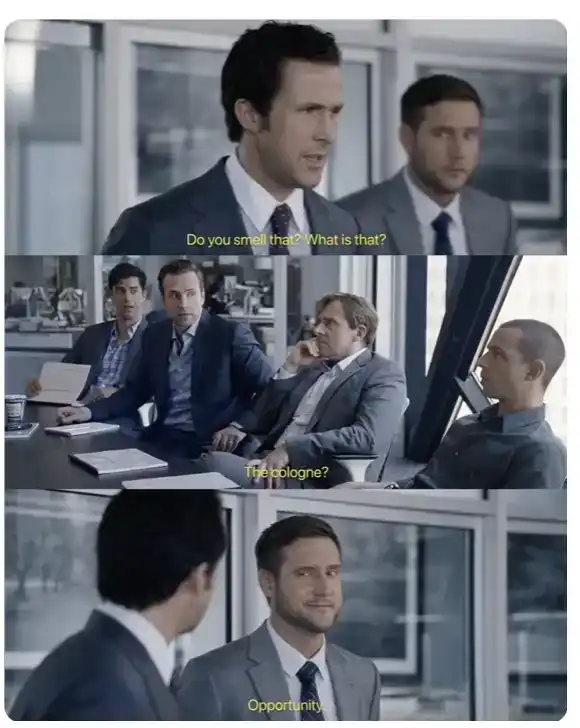
https://www.youtube.com/watch?v=YgF98vyn2fY

A few months ago, I moved from New York to San Francisco to join a friend's startup. Before moving, everyone told me: "You have to go to San Francisco," saying that's where everything is happening. So I've been grappling with this question: Is San Francisco really that important? Was I really missing something staying in New York?

My answer so far is: If you want to be at the center of this massive technological revolution and bubble, then this is indeed the place to be. The density here is real, the gossip networks are real, and consequently, the information asymmetry is also real.

During this time in San Francisco, I've accumulated some observations and thoughts. Here's what I've been 'smelling' in San Francisco:

1. People are trembling.

2. There's only one status game here.

3. A city that's always crying wolf.

4. Obsession with math prodigies.

What's struck me is how vastly different the human experience can be within the same city—walk on some streets and you'll feel like you're in hell; turn onto another and you'll see the bay, distant cypress trees, and beautiful scenery. The most techy, futuristic moments here are probably watching various autonomous vehicles roaming the city streets. Every time I see one of those new, friendly light-blue Waymo cars, I can't help but smile. Or, you might feel surveilled by Ava the AI BDR (AI Business Development Rep). I hate that ad. But credit where it's due, they successfully got me still talking about it with 'rage bait.' Every morning, right outside my apartment door, I see this monster:
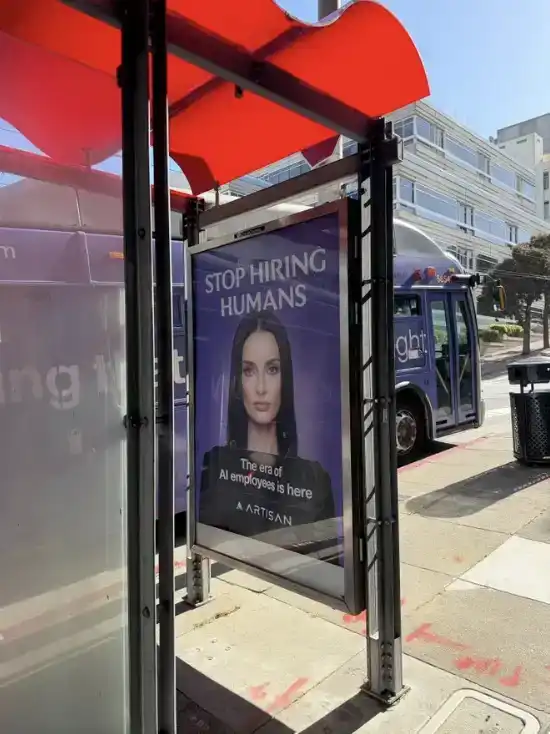
Why do people graffiti friend.com but not this garbage ad? Also, if you live nearby, let's grab ice cream sometime!

People in San Francisco are trembling

A few weeks ago, I was hanging out with my friend Jared (@imjaredz). He lives in New York but recently joined Cognition. We had lunch and coffee at the Cognition office. Nice vibe, good coffee, great rooftop. I asked him what he thought about the vibe in San Francisco.

"Have you noticed how people in San Francisco are all trembling?" I laughed, thinking: What? Trembling? Then I realized I had cold brew that morning, 300mg of caffeine, and was indeed a bit jittery. "Yeah, literally trembling. I'm not against people going full ADD, but next time you have a coffee chat, pay attention—see if they're trembling."

Bubbles and boom times bring this frenetic energy, as if if you don't 'make it' now, you'll never have another chance. I'm not immune either—after Jared's reminder, I noticed I seem to tremble sometimes too. That whole "grind to escape permanent pleb status" meme is overdone, but every meme gets popular because it captures a zeitgeist. If nightlife is a city's heartbeat, a thermometer for its culture, what does it say when a 'dog startup' 24-hour cafe becomes the de facto nocturnal grind haven?

Trembling is part of the process of technological revolution and financial bubbles. Forgive me, I used AI for part of this writing; if you want to kill me for that, I apologize in advance. But I was looking up Carlota Perez quotes, and I liked Gemini's summary of the 'Frenzy Phase':

Frenzy Phase: The peak of the installation period, where market psychology abandons fundamentals. Financial participants stop pursuing dividends and switch to capital gains, causing a decoupling of the 'paper economy' from the 'real economy.'
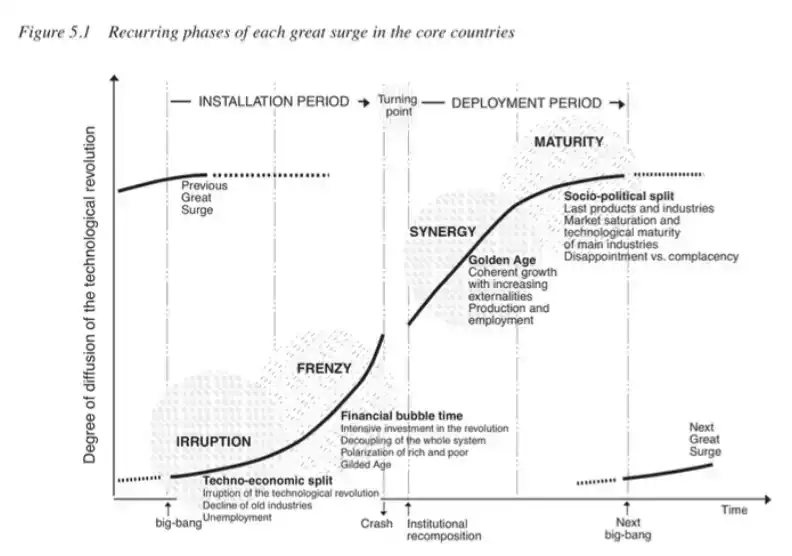
Source: https://stratechery.com/2021/the-death-and-birth-of-technological-revolutions/

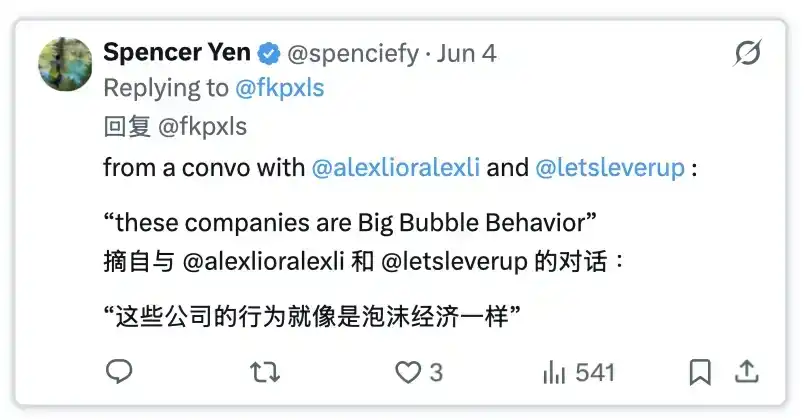
A friend of mine coined a term: "Big Bubble Behavior." It's a beautiful phrase, and I've been using it the past two weeks to label everything characteristic of the frenzy phase. Market euphoria sometimes makes people do irrational things. Trembling is Big Bubble Behavior. I've seen trays of lobster tails twice in my life: first at a crypto party on a Venetian Island mansion in Miami in 2021, and second at ClawCon in 2026.
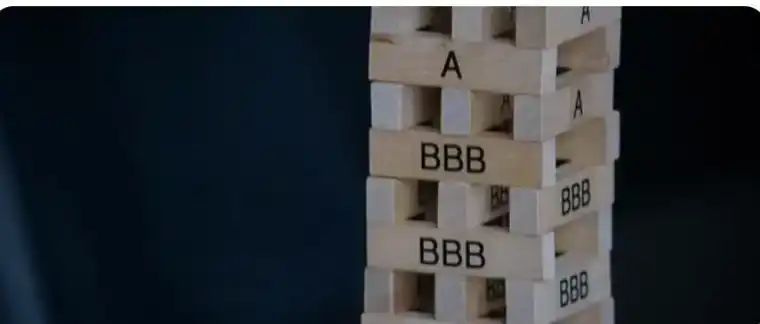
Big Bubble Behavior
There's only one status game in San Francisco
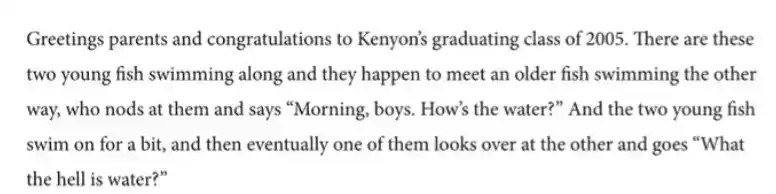
David Foster Wallace, *This is Water*: https://fs.blog/david-foster-wallace-this-is-water/

In San Francisco, this water is AI. Outdoor ads are everywhere—billboards, buses, bus stops, shared bikes, even the blue sky seems occupied by them.

My issue with San Francisco is this: there's only one dominant status game—tech. You go to dinner, or hang out in a park, and hear the same vocabulary. You also see all sorts of 'alpha farming' (hunting for informational edge) because those gossip networks really do exist. And I can't even get mad because I'm that person too. Don't hate the player, hate the game.

The problem is, when a city has only one dominant status game, it becomes far too easy to compare yourself to others.

We increasingly measure and compare each other by vanity metrics, like how much funding someone raised, or what letter in the alphabet your company's round is at. I truly hope someone raises a Series Z, because that would directly prove how absurd the private markets have become. You hear the gossip: which hot startup is getting chased by finance players, what crazy valuation level they're at. Then you can't help but start doing those disgusting, Blind-style back-of-the-envelope calculations: how much is so-and-so's equity package worth now.

I told a friend, if you saw the kind of reverse salary math, offer-optimizing math on Blind, you'd cringe so hard. Blind is that anonymous big-tech social network, famous for memes like: "Having a life crisis, my wife might leave me, but should I take Meta L6 or Google L9? TC: $969k." So why are we doing the same thing here now? Go touch grass. Or maybe that's just my cope.

In New York, there are at least 7 status games simultaneously. Finance, big law, music, fashion, celebrity circles, old-money family offices, media/news, sports, entertainment. Because the scope is so broad, some games are so distant they're almost inaccessible, making them interesting to talk about and learn. It scatters the attention of all ambitious people.

I enjoy asking law school friends which top firms are most prestigious and the subtle differences between them; I enjoy learning about the fashion and luxury world and what it takes to survive there; I enjoy understanding the cushy lives of quant elites and their garden leave arrangements.

San Francisco is creating unprecedented wealth, which brings a weird energy. A research friend mentioned people around them are already looking into buying land and diversifying into scarce resources. There's a feeling: you're either someone with lab equity, or you're not. There's also the joke that San Franciscans don't know how to spend money; this weird energy comes from massive new wealth being created, but people don't know what to do with it. First-time rich? Let the experienced rich kids teach you how to enjoy life.
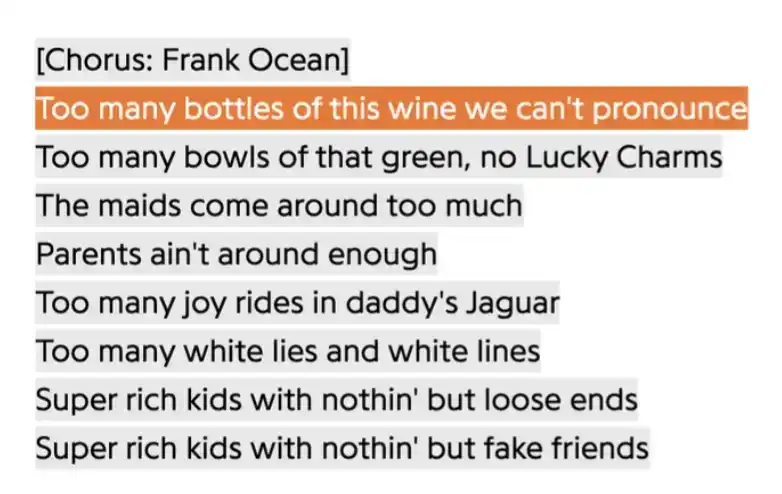
*Super Rich Kids* — Frank Ocean: https://www.youtube.com/watch?v=0XCQNpjWmRE

A city that's always crying wolf

My first impression of San Francisco was this doomer sentiment. Maybe the researchers in the labs truly see some 'second coming'; if so, their calls for slowdowns and safety emphasis make sense. But I have no real way of knowing. All I know is how doomerism makes *me* personally feel—not great!

I've already had several nihilistic conversations, roughly along the lines of: "If Mythos could wipe all this out in one go, or crack everything, then what are we even doing here building software?" And "Will AI ruin our lives?" And "AI will create massive inequality and cause society a lot of pain."

My one-sentence take is: humans will always find something else to do, work will migrate to higher levels of abstraction, and new things will become valuable.

We're terrible at predicting what future society will look like. I think those anti-capitalists I read in college were angry at the wrong things—imagine their reaction seeing humans derive joy from AI-generated fruit trash videos or 'Tung Tung Tung Sahur' in Italian brainrot.

"The problem isn't that AI makes content dumb, [sniff], it's that we enjoy this dumbness as a kind of sacred junk, a digital fetish object, [sniff], isn't it?"

From my friend Samir. His resume: not a researcher, but he has a 'fish guy.'
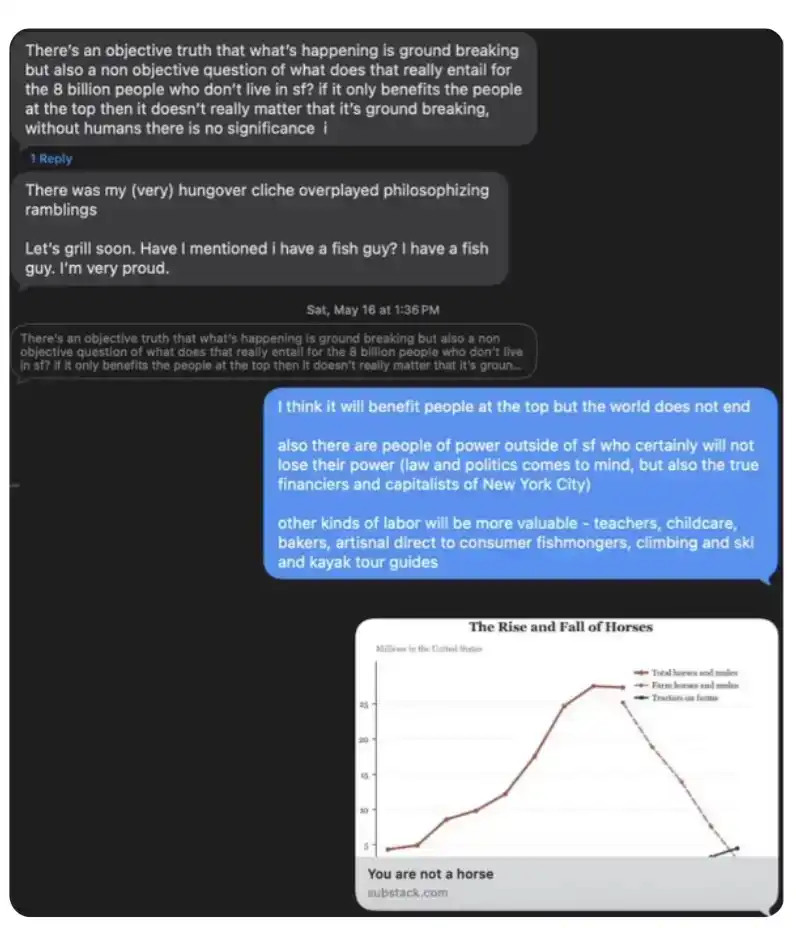
Anyone else have their own 'someone guy'? Please tell me.

A friend working at a lab pointed out that GTM (go-to-market/sales/growth) teams and research teams within the same company are having completely different lived experiences right now. That doomerism gets balanced out by: "Come hang with the GTM team, have a beer, touch grass." There's something interesting about the pessimism of the model creators versus the optimism of the people closest to deploying the technology. Time to get Forward Deployed!

Reality has a surprising amount of detail: https://johnsalvatier.org/blog/2017/reality-has-a-surprising-amount-of-detail

Six years ago, in college, I wrote about how AI reshapes social structures, titled *Polanyi and the Second Great Transformation* (No Pangram AI detection needed, pre-2023 Medium was like an organic pasture for human writing).

Let me explain the reference: Karl Polanyi was an Austro-Hungarian-born economic sociologist whose magnum opus is *The Great Transformation*. Written in 1944, it critiqued the rise of modern market capitalism in 19th-century Britain. So, the 'First Great Transformation' was the shift to capitalism, and my 21-year-old smart-aleck self called AI the 'Second' Great Transformation... you get it.

Polanyi's most famous concept is 'The Double Movement,' describing a historical push-and-pull phenomenon: on one hand, the free market's relentless expansion; on the other, society generates a counterforce trying to protect itself through regulation. The first movement is capitalist elites trying to expand free markets and commodify society; today, that's commodifying intelligence. The second, opposing movement is people reacting to market-driven destruction and trying to protect society; today, that's anti-AI, anti-data center rhetoric.

Here's my naive college-aged writing from 21:

Polanyi explains that the development of machinery for production led to the 'fictitious commodification' of labor (people) and land (nature). While the Fourth Industrial Revolution has already occurred within a market system, the advent of the mechanical mind presents a different threat: taking over jobs. As computers can perform more 'human' cognitive tasks with greater efficiency, many ordinary people may lose their jobs.

Polanyi wrote: "Nothing saved the common people of England from the impact of the Industrial Revolution. A blind faith in spontaneous progress had taken hold of the minds of men..."
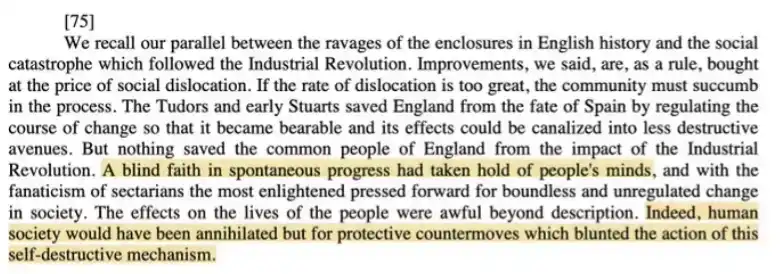
https://medium.com/@spenceryen/polanyi-and-the-second-great-transformation-6d6364b5d3c6

So on second thought, maybe the people constantly crying 'wolf' have a point. Blind faith in spontaneous progress might not end well. Polanyi's critique of market capitalism is that for most of human history, economic activity was subordinate to social, cultural, and religious institutions. But later, market capitalism inverted this relationship, subordinating society to the economy.

How do we ensure society isn't subordinated to a nation of geniuses in data centers? As Ben Thompson accurately pointed out in his article about Anthropic's Mythos, the punchline of *The Boy Who Cried Wolf* is that the wolf eventually does come.

But what would the capitalist in me say? Then invest in social, cultural, and religious institutions! If you have any good trade ideas, feel free to DM me your pitch deck.
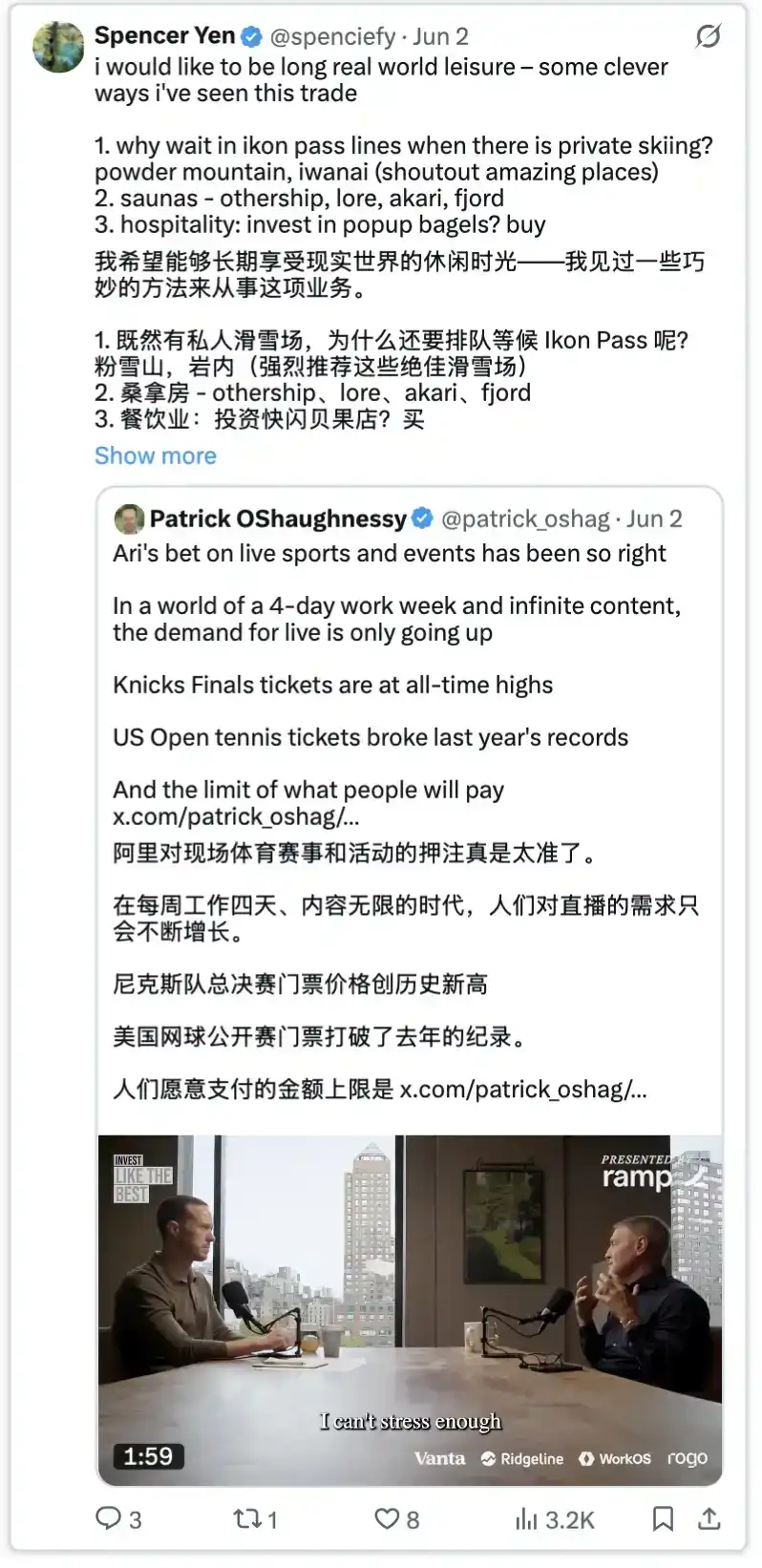
Obsession with math prodigies

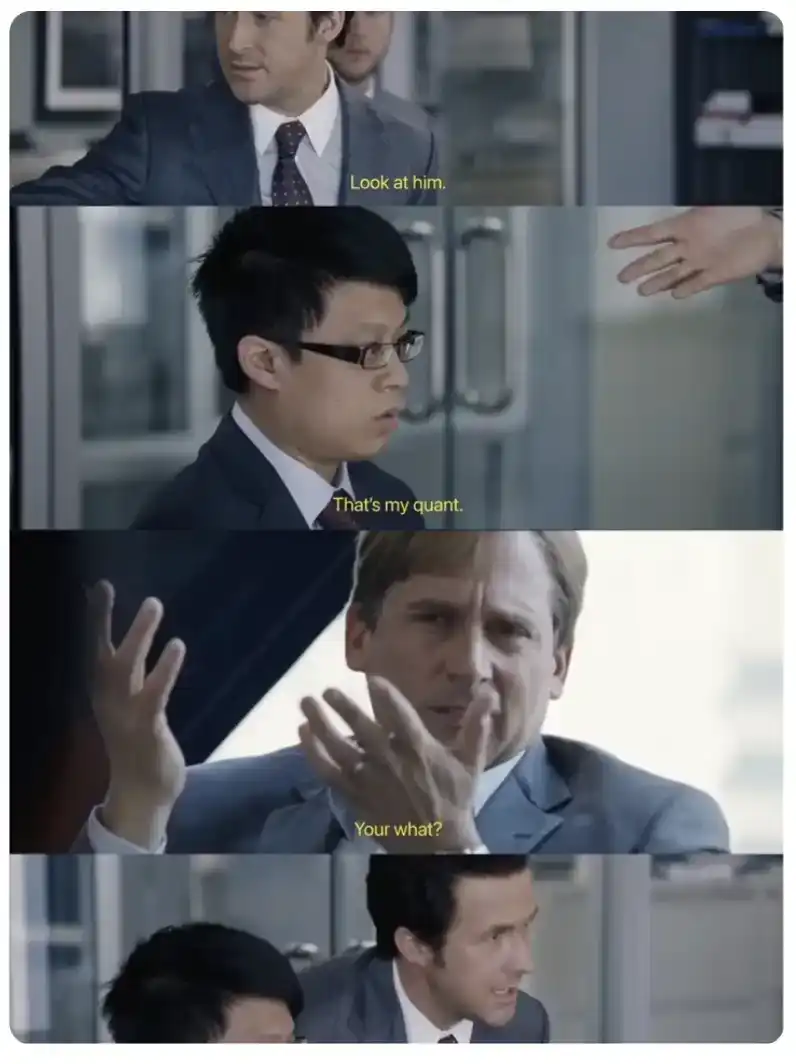
Another favorite gag from that *Big Short* Jenga scene is when Ryan Gosling points to the Chinese guy beside him and says, "That's my quant." The vibe weirdly parallels a recent batch of hot founders being chased by investors—they're often prodigy kids who dominated math competitions from a young age.

Again, Ryan Gosling, responding to Steve Carell's skepticism:

"So you're saying if the default rate hits 8%, these bonds blow up, and we're at 4% now? If they go to 8%, that's the end of the world?" "Yeah, that's correct." "Why is nobody talking about this? You're absolutely certain of this math model?" "Look at him. That's my quant." "Your what?" "My quan-ti-ta-tive, my math specialist. Look at him. Don't you notice anything different about him? Look at his face." "That seems a little racist." "Look at his eyes. I'll give you a hint, his name is Yang! He's a national math champion in China, doesn't even speak English! So yes, I'm very certain of this math model."
To some investors, the key predictive indicator for a fund's DPI (Distributed to Paid-In Capital, a measure of actual returns) seems to come from the founder's childhood—either they were a math competition prodigy as a kid, or they have some childhood trauma. Growing up in the Bay Area, my perception of my own math abilities was shattered early because my genius peers were all in the math competition circles. Now, they've mostly become quant traders or researchers at big model labs.

I distinctly remember a moment from seventh grade: my dad and I were flipping through sports channels on TV at home, and I saw my middle school classmate on ESPN2... he was competing in the Mathcounts competition. In that moment, I knew my path was over. I often joke that when I started playing the 'grind for college apps' game in ninth grade, I knew I couldn't compete with those Intel STS, RSI, AIME, USACO kids, so I had to find my own game.

I deeply admire many of these standout CEOs, founders, and researchers, and I have personally made a financial bet on one of them. But what I find funny is that an entire asset class and investor narrative has now formed around 'cultivating the smartest math competition kids and treating them as tickets to alpha.' When you think about it, it's not fundamentally different from scouts looking for the next Wemby (Victor Wembanyama). Though, I also want to believe in the Jalen Brunson story—hard work, persistence, and heart can win too.

Hyperliquid.

Party like it's 1999

https://x.com/elonmusk/status/1656326406618619910

A very wise investor once gave me two pieces of advice:

First, you will live through three bubbles in your lifetime.

The first bubble you experience, you'll be completely immersed in the euphoria. You have no experience, you attend the party, get swept up in the fervor.

The second bubble you experience, you remember what happened the first time, so you can exit with some wins, but you'll still get drawn in a bit.

The third bubble is your chance to create generational wealth—you've accumulated enough experience from the first two to know how to manage risk, emotions, and exit timing.
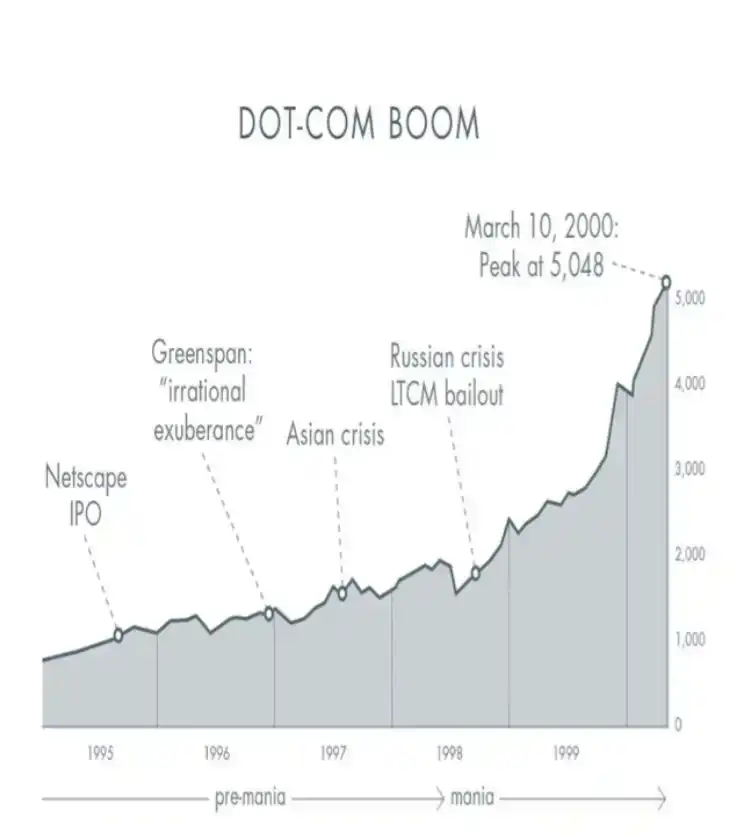
The second piece of advice is: When the music is playing, you dance, but don't get drunk.

Right now the music is deafening, maybe even about to blow the speakers. But bigger backup speakers are being manufactured, and this party clearly isn't over.

This is a reminder to myself, and to anyone who needs to hear it: remember to touch grass, cook your own meals, don't let Big Bubble Behavior warp your judgment. Borrowing wisdom from my friend Samir: Let's barbecue soon. Do you know a fish guy?
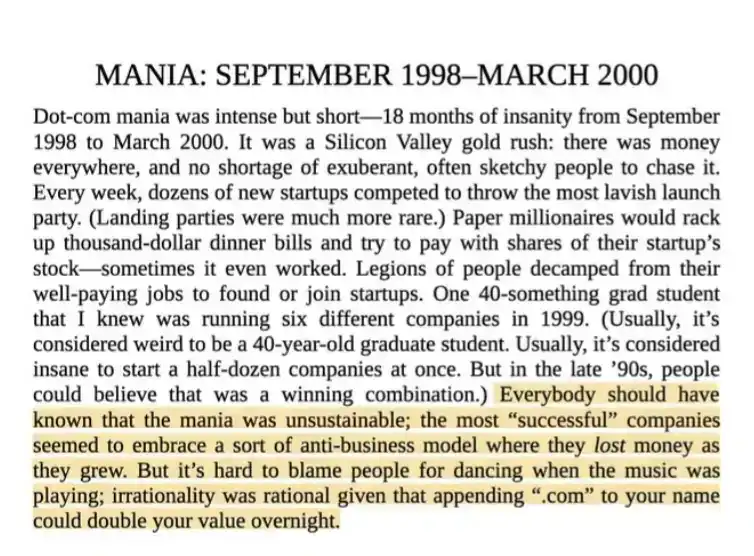
From Peter Thiel's *Zero to One*

Original link

İlgili Sorular

QWhat are some key characteristics of the 'Big Bubble Behavior' the author observes in San Francisco's current tech scene?

AThe author describes 'Big Bubble Behavior' as actions and energies characteristic of the 'Frenzy Phase' of a financial bubble. Key observations include: a jittery, manic energy among people (literally 'shaking'), a single dominant status game centered around tech and AI, rampant comparison through vanity metrics like funding rounds and equity packages, and conspicuous consumption (e.g., lobster tails at parties). It represents a period where market psychology abandons fundamentals for capital gains.

QAccording to the author, what is the main difference between the social 'status games' in San Francisco compared to New York?

AThe author states that in San Francisco, there is essentially only one dominant status game: technology/AI. This leads to intense, direct comparison among individuals based on tech-specific metrics like funding and valuation. In contrast, New York has at least seven different status games (e.g., finance, law, fashion, media, old money), which are diverse and distant enough from each other that they spread ambition and make social dynamics more varied and interesting to learn about.

QHow does the author interpret the prevalent 'doomerism' or apocalyptic anxiety about AI in San Francisco?

AThe author acknowledges the doomerism but offers a skeptical and somewhat optimistic personal view. While admitting lab researchers might have valid safety concerns, the author feels this outlook is personally unhelpful. The core belief is that humans will adapt, work will shift to higher levels of abstraction, and new things will become valuable. The author also references Karl Polanyi's theory of the 'Double Movement,' suggesting society might push back against market-driven AI commodification, and humorously suggests investing in 'society, culture, and religious institutions' as a counter-trade.

QWhat parallel does the author draw between the AI investment landscape and the film 'The Big Short'?

AThe author draws a parallel between the reverence for quantitative experts in 'The Big Short' and the current fascination with 'math prodigies' in AI investing. In the film, a math champion is presented as the ultimate authority for a financial model. Similarly, in today's AI scene, many sought-after founders are former math competition champions from childhood. The author notes that an entire 'asset class' has formed around identifying and betting on these 'math genius kids' as the next generation's ticket to outsized returns, akin to sports scouting.

QWhat two pieces of advice about navigating financial bubbles does the author share from a seasoned investor?

AThe two pieces of advice are: 1) You will experience three bubbles in your lifetime. The first, you naively ride in euphoria. The second, you participate with some experience. The third is your chance to build generational wealth, as you've learned to manage risk, emotion, and exits. 2) When the music is playing, you must dance. But don't get drunk. The author applies this to the current AI frenzy, noting the music is loud but cautioning against letting 'Big Bubble Behavior' distort judgment.

İlgili Okumalar

When AI Begins to Audit the World: From Claude Discovering the ZEC Vulnerability, Watching the Encryption Industry Enter the 'Recursive Security Era'

**When AI Audits the World: From Claude's Discovery of a ZEC Vulnerability, Viewing the Crypto Industry Entering a "Recursive Security Era"** This article examines a pivotal shift in the blockchain security landscape, triggered by the convergence of two events: Anthropic's research on AI's "Recursive Self-Improvement" and Claude Opus 4.8's discovery of a critical vulnerability in Zcash's code. Traditionally, crypto security has relied on human experts and automated tools for periodic audits. However, the article argues AI is transitioning from a mere tool to an active participant in understanding and analyzing complex systems. Claude's ability to identify a subtle flaw in Zcash's zero-knowledge proof system demonstrates AI's potential to dramatically lower the cost and time required for risk discovery. This goes beyond finding a single bug; it signals a change in the very mechanism of how vulnerabilities are found. The core thesis introduces the concept of "Recursive Security," drawing a parallel to Anthropic's "Recursive Self-Improvement." Just as AI can accelerate its own development through feedback loops, security systems are evolving towards a continuous cycle of analysis, risk identification, remediation, and re-analysis. Security is becoming a persistent, evolving capability integrated into a system's lifecycle, rather than a one-time pre-launch audit. This shift is particularly urgent for the crypto industry, where system complexity from Layer-2 networks, modular architectures, and ZK-proofs is growing faster than human analysis capacity. AI excels at the pattern recognition and contextual understanding needed to navigate this complexity. Importantly, the article cautions that AI augments both defenders and potential attackers, accelerating the entire threat landscape. The future competitive advantage may not lie in having zero vulnerabilities, but in having the fastest risk discovery, validation, and response capabilities. The Claude-Zcash incident is thus an early signal of an era where AI-driven, recursive security systems become essential for managing risk in an increasingly complex digital world.

marsbit57 dk önce

When AI Begins to Audit the World: From Claude Discovering the ZEC Vulnerability, Watching the Encryption Industry Enter the 'Recursive Security Era'

marsbit57 dk önce

From MSTR to STRC+: Where Is the Limit of the Strategy Universe?

From MSTR to STRC+: The Evolution and Limits of the Strategy Universe This article examines the transformation of Strategy (formerly MicroStrategy) from a simple "Bitcoin treasury" company into a complex financial engineering firm building a BTC-backed credit system. **Core Thesis:** Strategy's true significance lies not just in its massive BTC holdings (~844k BTC), but in its attempt to transform this static reserve into a multi-layered credit curve within traditional capital markets and, subsequently, into on-chain yield infrastructure. **The MSTR Flywheel:** The initial model was a reflexive loop: BTC price rises → MSTR stock rises → company raises capital (debt/equity) at a premium → buys more BTC → increases per-share BTC exposure → MSTR premium grows. This "amplified Bitcoin" equity (MSTR) thrives on bullish momentum but is vulnerable to tightening premiums and rising funding costs. **Building the Credit Curve:** Strategy's innovation is slicing its single BTC balance sheet into different risk/return profiles via specialized securities: * **MSTR:** High-volatility equity layer absorbing full BTC upside/downside. * **STRC:** Key product. A perpetual preferred stock designed as "short duration high yield credit," offering ~11.5% floating monthly dividends. It attracts fixed-income investors seeking yield without direct BTC exposure, funding Strategy's operations. * **STRD/STRK/STRF:** Other preferred/share classes with varying durations, conversion rights, and fixed dividends. **Risks of the STRC Model:** STRC's high yield is not risk-free. Its stability depends on: 1) Sufficient BTC asset coverage, 2) Strategy's continued ability to pay dividends, and 3) Market faith in the MSTR/STRC funding flywheel. Stress points include deep BTC price declines eroding the asset buffer, rising dividend costs if STRC trades below par, and a broken flywheel if MSTR's premium (mNAV) falls persistently. **On-Chain Expansion: STRC+:** Projects like **Saturn** and **Apyx** aim to package STRC's (and other DAT preferred stock) cash flows into on-chain stablecoin yield (e.g., sUSDat, apyUSD). They offer DeFi a new yield source distinct from trading fees or incentives—cash dividends from traditional securities. However, this introduces compounded risks: off-chain custody, issuer credit risk, BTC volatility, and protocol execution risk. **Conclusion: The Ultimate Boundary** Strategy's endgame is not infinite BTC accumulation. It is the market's long-term acceptance of a new credit system where BTC serves as collateral for tradable securities whose cash flows can power on-chain financial applications. Its "universe" expands if this BTC-native credit curve gains legitimacy, but contracts if these instruments are repriced purely as high-risk, yield-bearing credit assets without stablecoin mythology.

marsbit1 saat önce

From MSTR to STRC+: Where Is the Limit of the Strategy Universe?

marsbit1 saat önce

İşlemler

Spot
Futures

Popüler Makaleler

GROK AI Nedir

Grok AI: Web3 Döneminde Konuşma Teknolojisini Devrim Niteliğinde Yenilik Giriş Hızla gelişen yapay zeka alanında, Grok AI, ileri teknoloji ve kullanıcı etkileşimi alanlarını birleştiren dikkate değer bir proje olarak öne çıkıyor. Ünlü girişimci Elon Musk'ın liderliğindeki xAI tarafından geliştirilen Grok AI, yapay zeka ile etkileşim şeklimizi yeniden tanımlamayı hedefliyor. Web3 hareketi devam ederken, Grok AI, karmaşık sorgulara yanıt vermek için konuşma yapay zekasının gücünden yararlanmayı amaçlıyor ve kullanıcılara sadece bilgilendirici değil, aynı zamanda eğlenceli bir deneyim sunuyor. Grok AI Nedir? Grok AI, kullanıcılarla dinamik bir şekilde etkileşimde bulunmak üzere tasarlanmış sofistike bir konuşma yapay zeka sohbet botudur. Birçok geleneksel yapay zeka sisteminin aksine, Grok AI, genellikle uygunsuz veya standart yanıtların dışında kabul edilen daha geniş bir sorgu yelpazesini benimsemektedir. Projenin temel hedefleri şunlardır: Güvenilir Akıl Yürütme: Grok AI, bağlamsal anlayışa dayalı mantıklı yanıtlar sağlamak için sağduyu akıl yürütmeyi vurgular. Ölçeklenebilir Denetim: Araç yardımı entegrasyonu, kullanıcı etkileşimlerinin hem izlenmesini hem de kalite için optimize edilmesini sağlar. Resmi Doğrulama: Güvenlik en önemli önceliktir; Grok AI, çıktılarının güvenilirliğini artırmak için resmi doğrulama yöntemlerini entegre eder. Uzun Bağlam Anlayışı: AI modeli, kapsamlı konuşma geçmişini saklama ve hatırlama konusunda mükemmel bir performans sergileyerek anlamlı ve bağlamsal olarak farkında tartışmaların yapılmasını kolaylaştırır. Saldırgan Dayanıklılık: Manipüle edilmiş veya kötü niyetli girdilere karşı savunmalarını geliştirmeye odaklanarak, Grok AI kullanıcı etkileşimlerinin bütünlüğünü korumayı hedefler. Özünde, Grok AI sadece bir bilgi alma cihazı değil; dinamik diyalogu teşvik eden, etkileyici bir konuşma partneridir. Grok AI'nın Yaratıcısı Grok AI'nın arkasındaki beyin, otomotiv, uzay yolculuğu ve teknoloji gibi çeşitli alanlarda yenilikle özdeşleşen Elon Musk'tır. Yapay zeka teknolojisini faydalı yollarla geliştirmeye odaklanan xAI çatısı altında, Musk'ın vizyonu, yapay zeka etkileşimlerinin anlaşılmasını yeniden şekillendirmeyi amaçlıyor. Liderlik ve temel etik, Musk'ın teknolojik sınırları zorlamaya olan bağlılığı tarafından derinden etkilenmektedir. Grok AI'nın Yatırımcıları Grok AI'yi destekleyen yatırımcılarla ilgili spesifik detaylar sınırlı kalmakla birlikte, projenin kuluçka merkezi olan xAI'nin, esasen Elon Musk tarafından kurulduğu ve desteklendiği kamuya açık bir şekilde kabul edilmektedir. Musk'ın önceki girişimleri ve mülkleri, Grok AI'nın güvenilirliğini ve büyüme potansiyelini daha da artıran sağlam bir destek sağlar. Ancak, şu anda Grok AI'yı destekleyen ek yatırım fonları veya kuruluşlarıyla ilgili bilgiye kolayca erişim sağlanamamaktadır; bu da potansiyel gelecekteki keşif alanını işaret etmektedir. Grok AI Nasıl Çalışır? Grok AI'nın operasyonel mekanikleri, kavramsal çerçevesi kadar yenilikçidir. Proje, benzersiz işlevselliklerini kolaylaştıran birkaç son teknoloji ürünü teknolojiyi entegre eder: Sağlam Altyapı: Grok AI, konteyner orkestrasyonu için Kubernetes, performans ve güvenlik için Rust ve yüksek performanslı sayısal hesaplama için JAX kullanılarak inşa edilmiştir. Bu üçlü, sohbet botunun verimli çalışmasını, etkili bir şekilde ölçeklenmesini ve kullanıcılara zamanında hizmet vermesini sağlar. Gerçek Zamanlı Bilgi Erişimi: Grok AI'nın ayırt edici özelliklerinden biri, X platformu (önceden Twitter olarak biliniyordu) aracılığıyla gerçek zamanlı verilere erişim yeteneğidir. Bu yetenek, yapay zekaya en son bilgilere erişim sağlar ve diğer yapay zeka modellerinin gözden kaçırabileceği zamanında yanıtlar ve öneriler sunmasına olanak tanır. İki Etkileşim Modu: Grok AI, kullanıcılara “Eğlenceli Mod” ve “Normal Mod” arasında seçim yapma imkanı sunar. Eğlenceli Mod, daha eğlenceli ve mizahi bir etkileşim tarzı sağlarken, Normal Mod, kesin ve doğru yanıtlar vermeye odaklanır. Bu çok yönlülük, çeşitli kullanıcı tercihlerine hitap eden özelleştirilmiş bir deneyim sağlar. Özünde, Grok AI performansı etkileşimle birleştirerek, hem zenginleştirici hem de eğlenceli bir deneyim yaratmaktadır. Grok AI'nın Zaman Çizelgesi Grok AI'nın yolculuğu, gelişim ve dağıtım aşamalarını yansıtan önemli dönüm noktalarıyla işaretlenmiştir: İlk Geliştirme: Grok AI'nın temel aşaması, modelin ilk eğitim ve ince ayarının yapıldığı yaklaşık iki ay boyunca gerçekleşmiştir. Grok-2 Beta Yayını: Önemli bir ilerleme olarak, Grok-2 beta duyurulmuştur. Bu sürüm, sohbet etme, kodlama ve akıl yürütme yetenekleriyle donatılmış iki versiyon—Grok-2 ve Grok-2 mini—sunmuştur. Halka Açık Erişim: Beta geliştirmesinin ardından, Grok AI X platformu kullanıcılarına sunulmuştur. Telefon numarasıyla doğrulanan ve en az yedi gün aktif olan hesap sahipleri, sınırlı bir versiyona erişim sağlayarak teknolojiyi daha geniş bir kitleye ulaştırmaktadır. Bu zaman çizelgesi, Grok AI'nın kuruluşundan kamu etkileşimine kadar sistematik büyümesini kapsar ve sürekli iyileştirme ve kullanıcı etkileşimine olan bağlılığını vurgular. Grok AI'nın Ana Özellikleri Grok AI, yenilikçi kimliğine katkıda bulunan birkaç ana özelliği kapsamaktadır: Gerçek Zamanlı Bilgi Entegrasyonu: Güncel ve ilgili bilgilere erişim, Grok AI'yı birçok statik modelden ayırarak, etkileyici ve doğru bir kullanıcı deneyimi sağlar. Çeşitli Etkileşim Tarzları: Farklı etkileşim modları sunarak, Grok AI çeşitli kullanıcı tercihlerine hitap eder ve yapay zeka ile konuşurken yaratıcılığı ve kişiselleştirmeyi teşvik eder. Gelişmiş Teknolojik Altyapı: Kubernetes, Rust ve JAX kullanımı, projeye güvenilirlik ve optimal performans sağlamak için sağlam bir çerçeve sunar. Etik Tartışma Dikkati: Görüntü üreten bir işlevin dahil edilmesi, projenin yenilikçi ruhunu sergiler. Ancak, aynı zamanda tanınabilir figürlerin saygılı bir şekilde tasvir edilmesi ve telif hakkı ile ilgili etik konuları da gündeme getirir—bu, yapay zeka topluluğunda süregelen bir tartışmadır. Sonuç Konuşma yapay zekası alanında öncü bir varlık olarak Grok AI, dijital çağda dönüştürücü kullanıcı deneyimlerinin potansiyelini kapsar. xAI tarafından geliştirilen ve Elon Musk'ın vizyoner yaklaşımıyla yönlendirilen Grok AI, gerçek zamanlı bilgiyi gelişmiş etkileşim yetenekleriyle birleştirir. Yapay zekanın neler başarabileceği konusunda sınırları zorlamayı hedeflerken, etik konulara ve kullanıcı güvenliğine odaklanmayı sürdürmektedir. Grok AI, sadece teknolojik ilerlemeyi değil, aynı zamanda Web3 manzarasında yeni bir konuşma paradigmasını da temsil eder ve kullanıcılara hem yetkin bilgi hem de eğlenceli etkileşim sunma vaadinde bulunur. Proje gelişmeye devam ederken, teknolojinin, yaratıcılığın ve insan benzeri etkileşimin kesişim noktasında nelerin başarılabileceğinin bir kanıtı olarak durmaktadır.

379 Toplam GörüntülenmeYayınlanma 2024.12.26Güncellenme 2024.12.26

GROK AI Nedir

ERC AI Nedir

Euruka Tech: $erc ai ve Web3'teki Hedefleri Üzerine Bir Genel Bakış Giriş Blockchain teknolojisi ve merkeziyetsiz uygulamaların hızla gelişen manzarasında, her biri benzersiz hedefler ve metodolojilerle yeni projeler sıkça ortaya çıkmaktadır. Bu projelerden biri, kripto para ve Web3 alanında faaliyet gösteren Euruka Tech'tir. Euruka Tech'in, özellikle $erc ai token'ının ana odak noktası, merkeziyetsiz teknolojinin büyüyen yeteneklerinden yararlanmak için tasarlanmış yenilikçi çözümler sunmaktır. Bu makale, Euruka Tech'in kapsamlı bir genel görünümünü, hedeflerini, işlevselliğini, yaratıcısının kimliğini, potansiyel yatırımcılarını ve Web3'teki daha geniş bağlam içindeki önemini keşfetmeyi amaçlamaktadır. Euruka Tech, $erc ai Nedir? Euruka Tech, Web3 ortamının sunduğu araçlar ve işlevsellikleri kullanan bir proje olarak tanımlanmaktadır ve operasyonlarında yapay zekayı entegre etmeye odaklanmaktadır. Projenin çerçevesine dair spesifik detaylar biraz belirsiz olsa da, kullanıcı etkileşimini artırmayı ve kripto alanındaki süreçleri otomatikleştirmeyi amaçlamaktadır. Proje, yalnızca işlemleri kolaylaştırmakla kalmayıp, aynı zamanda yapay zeka aracılığıyla öngörücü işlevsellikleri de entegre eden merkeziyetsiz bir ekosistem yaratmayı hedeflemektedir; bu nedenle token'ının adı $erc ai'dir. Amaç, büyüyen Web3 alanında daha akıllı etkileşimleri ve verimli işlem işleme süreçlerini kolaylaştıran sezgisel bir platform sunmaktır. Euruka Tech'in Yaratıcısı Kimdir, $erc ai? Şu anda, Euruka Tech'in arkasındaki yaratıcı veya kurucu ekip hakkında bilgi verilmemiştir ve bu durum biraz belirsizdir. Bu veri eksikliği, ekibin geçmişi hakkında bilgi sahibi olmanın genellikle blockchain sektöründe güvenilirlik oluşturmak için gerekli olduğu endişelerini doğurmaktadır. Bu nedenle, somut detaylar kamuya sunulana kadar bu bilgiyi bilinmeyen olarak sınıflandırdık. Euruka Tech'in Yatırımcıları Kimlerdir, $erc ai? Benzer şekilde, Euruka Tech projesinin yatırımcıları veya destekleyen organizasyonları hakkında mevcut araştırmalarla kolayca sağlanan bir bilgi yoktur. Euruka Tech ile etkileşimde bulunmayı düşünen potansiyel paydaşlar veya kullanıcılar için kritik bir unsur, kurumsal finansal ortaklıklar veya saygın yatırım firmalarından gelen destekle sağlanan güvencedir. Yatırım ilişkileri hakkında açıklamalar olmadan, projenin finansal güvenliği veya sürdürülebilirliği hakkında kapsamlı sonuçlar çıkarmak zordur. Bulunan bilgilere paralel olarak, bu bölüm de bilinmeyen durumundadır. Euruka Tech, $erc ai Nasıl Çalışır? Euruka Tech için detaylı teknik spesifikasyonların eksik olmasına rağmen, yenilikçi hedeflerini göz önünde bulundurmak önemlidir. Proje, yapay zekanın hesaplama gücünden yararlanarak kripto para ortamında kullanıcı deneyimini otomatikleştirmeyi ve geliştirmeyi hedeflemektedir. AI'yi blockchain teknolojisiyle entegre ederek, Euruka Tech otomatik ticaret, risk değerlendirmeleri ve kişiselleştirilmiş kullanıcı arayüzleri gibi özellikler sunmayı amaçlamaktadır. Euruka Tech'in yenilikçi özü, kullanıcılar ile merkeziyetsiz ağların sunduğu geniş olanaklar arasında kesintisiz bir bağlantı yaratma hedefinde yatmaktadır. Makine öğrenimi algoritmaları ve AI kullanarak, ilk kez kullanıcı zorluklarını en aza indirmeyi ve Web3 çerçevesindeki işlem deneyimlerini düzene sokmayı amaçlamaktadır. AI ve blockchain arasındaki bu simbiyoz, $erc ai token'ının önemini vurgulamakta ve geleneksel kullanıcı arayüzleri ile merkeziyetsiz teknolojilerin gelişmiş yetenekleri arasında bir köprü işlevi görmektedir. Euruka Tech, $erc ai Zaman Çizelgesi Maalesef, Euruka Tech hakkında mevcut olan sınırlı bilgiler nedeniyle, projenin yolculuğundaki önemli gelişmeler veya kilometre taşları hakkında detaylı bir zaman çizelgesi sunamıyoruz. Genellikle bir projenin evrimini haritalamak ve büyüme eğrisini anlamak için değerli olan bu zaman çizelgesi şu anda mevcut değildir. Önemli olaylar, ortaklıklar veya işlevsel eklemeler hakkında bilgiler belirgin hale geldikçe, güncellemeler kesinlikle Euruka Tech'in kripto alanındaki görünürlüğünü artıracaktır. Diğer “Eureka” Projeleri Üzerine Açıklama Birden fazla projenin ve şirketin “Eureka” benzeri bir isimlendirmeye sahip olduğunu belirtmek önemlidir. Araştırmalar, robotlara karmaşık görevler öğretmeye odaklanan NVIDIA Research'ten bir AI ajanı gibi girişimleri, ayrıca eğitim ve müşteri hizmetleri analitiğinde kullanıcı deneyimini geliştiren Eureka Labs ve Eureka AI'yi tanımlamıştır. Ancak, bu projeler Euruka Tech'ten farklıdır ve hedefleri veya işlevleri ile karıştırılmamalıdır. Sonuç Euruka Tech, $erc ai token'ı ile birlikte, Web3 manzarasında umut verici ancak şu anda belirsiz bir oyuncuyu temsil etmektedir. Yaratıcısı ve yatırımcıları hakkında detaylar açıklanmamış olsa da, yapay zekayı blockchain teknolojisiyle birleştirme konusundaki temel hedefi ilgi odağı olmaktadır. Projenin, gelişmiş otomasyon aracılığıyla kullanıcı etkileşimini teşvik etme konusundaki benzersiz yaklaşımları, Web3 ekosistemi ilerledikçe onu farklı kılabilir. Kripto piyasası gelişmeye devam ederken, paydaşların Euruka Tech etrafındaki gelişmelere dikkat etmeleri önemlidir; belgelenmiş yeniliklerin, ortaklıkların veya tanımlanmış bir yol haritasının gelişimi, önümüzdeki dönemde önemli fırsatlar sunabilir. Şu an itibarıyla, Euruka Tech'in potansiyelini ve rekabetçi kripto manzarasındaki konumunu açığa çıkarabilecek daha somut içgörüler beklemekteyiz.

353 Toplam GörüntülenmeYayınlanma 2025.01.02Güncellenme 2025.01.02

ERC AI Nedir

DUOLINGO AI Nedir

DUOLINGO AI: Dil Öğrenimini Web3 ve AI İnovasyonu ile Entegre Etmek Teknolojinin eğitimi yeniden şekillendirdiği bir çağda, yapay zeka (AI) ve blok zinciri ağlarının entegrasyonu dil öğrenimi için yeni bir ufuk açmaktadır. DUOLINGO AI ve ona bağlı kripto para birimi $DUOLINGO AI ile tanışın. Bu proje, önde gelen dil öğrenme platformlarının eğitimsel yeteneklerini merkeziyetsiz Web3 teknolojisinin faydalarıyla birleştirmeyi hedefliyor. Bu makale, DUOLINGO AI'nın temel yönlerini, hedeflerini, teknolojik çerçevesini, tarihsel gelişimini ve gelecekteki potansiyelini incelerken, orijinal eğitim kaynağı ile bu bağımsız kripto para girişimi arasındaki netliği korumaktadır. DUOLINGO AI Genel Görünümü DUOLINGO AI'nın temelinde, öğrenicilerin dil yeterliliğinde eğitimsel kilometre taşlarına ulaşmaları için kriptografik ödüller kazanabilecekleri merkeziyetsiz bir ortam oluşturma hedefi yatmaktadır. Akıllı sözleşmeler uygulayarak, proje beceri doğrulama süreçlerini ve token tahsislerini otomatikleştirmeyi amaçlamakta, şeffaflık ve kullanıcı sahipliğini vurgulayan Web3 ilkelerine uymaktadır. Model, dil edinimindeki geleneksel yaklaşımlardan ayrılarak, token sahiplerinin kurs içeriği ve ödül dağıtımları üzerinde iyileştirmeler önermesine olanak tanıyan topluluk odaklı bir yönetişim yapısına dayanmaktadır. DUOLINGO AI'nın bazı dikkat çekici hedefleri şunlardır: Oyunlaştırılmış Öğrenme: Proje, dil yeterlilik seviyelerini temsil etmek için blok zinciri başarıları ve değiştirilemez tokenleri (NFT'ler) entegre ederek, katılımcıları motive eden dijital ödüller sunmaktadır. Merkeziyetsiz İçerik Üretimi: Eğitmenler ve dil meraklılarının kendi kurslarını katkıda bulunmalarına olanak tanıyarak, tüm katkıda bulunanların fayda sağladığı bir gelir paylaşım modeli oluşturmaktadır. AI Destekli Kişiselleştirme: Gelişmiş makine öğrenimi modellerini kullanarak, DUOLINGO AI dersleri bireysel öğrenme ilerlemesine uyacak şekilde kişiselleştirmekte, köklü platformlarda bulunan uyarlamalı özelliklere benzer bir deneyim sunmaktadır. Proje Yaratıcıları ve Yönetişim Nisan 2025 itibarıyla, $DUOLINGO AI'nın arkasındaki ekip takma isimler kullanmaktadır; bu, merkeziyetsiz kripto para alanında sıkça görülen bir uygulamadır. Bu anonimlik, bireysel geliştiricilere odaklanmak yerine kolektif büyümeyi ve paydaş katılımını teşvik etmek amacıyla tasarlanmıştır. Solana blok zincirinde dağıtılan akıllı sözleşme, geliştiricinin cüzdan adresini not etmekte, bu da yaratıcıların kimliğinin bilinmemesine rağmen işlemlerle ilgili şeffaflık taahhüdünü simgelemektedir. Yol haritasına göre, DUOLINGO AI, Merkeziyetsiz Otonom Organizasyon (DAO) haline gelmeyi hedeflemektedir. Bu yönetişim yapısı, token sahiplerinin özellik uygulamaları ve hazine tahsisleri gibi kritik konularda oy kullanmalarına olanak tanımaktadır. Bu model, çeşitli merkeziyetsiz uygulamalarda bulunan topluluk güçlendirme ethosu ile uyumlu olup, kolektif karar verme sürecinin önemini vurgulamaktadır. Yatırımcılar ve Stratejik Ortaklıklar Şu anda, $DUOLINGO AI ile bağlantılı olarak kamuya açık tanımlanabilir kurumsal yatırımcılar veya risk sermayedarları bulunmamaktadır. Bunun yerine, projenin likiditesi esas olarak merkeziyetsiz borsa (DEX) kaynaklıdır ve bu, geleneksel eğitim teknolojisi şirketlerinin finansman stratejileriyle keskin bir zıtlık oluşturmaktadır. Bu tabandan gelen model, merkeziyetsizliğe olan bağlılığını yansıtan topluluk odaklı bir yaklaşımı işaret etmektedir. DUOLINGO AI, beyaz kitabında, kurs tekliflerini zenginleştirmeyi amaçlayan belirsiz “blok zinciri eğitim platformları” ile işbirlikleri kurmayı planladığını belirtmektedir. Belirli ortaklıklar henüz açıklanmamış olsa da, bu işbirlikçi çabalar, blok zinciri yeniliğini eğitim girişimleri ile birleştirmeyi amaçlayan bir stratejiyi ima etmektedir ve çeşitli öğrenme yollarında erişimi ve kullanıcı katılımını genişletmektedir. Teknolojik Mimari AI Entegrasyonu DUOLINGO AI, eğitimsel tekliflerini geliştirmek için iki ana AI destekli bileşen içermektedir: Uyarlanabilir Öğrenme Motoru: Bu sofistike motor, kullanıcı etkileşimlerinden öğrenmekte olup, büyük eğitim platformlarından gelen özel modellere benzer. Belirli öğrenici zorluklarını ele almak için ders zorluğunu dinamik olarak ayarlamakta ve zayıf alanları hedeflenmiş alıştırmalarla pekiştirmektedir. Konuşma Ajanları: GPT-4 destekli sohbet botlarını kullanarak, DUOLINGO AI kullanıcıların simüle edilmiş konuşmalara katılmalarına olanak tanıyarak, daha etkileşimli ve pratik bir dil öğrenme deneyimi sunmaktadır. Blok Zinciri Altyapısı $DUOLINGO AI, Solana blok zincirinde inşa edilmiş kapsamlı bir teknolojik çerçeve kullanmaktadır: Beceri Doğrulama Akıllı Sözleşmeleri: Bu özellik, yeterlilik testlerini başarıyla geçen kullanıcılara otomatik olarak token ödülleri vermekte, gerçek öğrenim sonuçları için teşvik yapısını güçlendirmektedir. NFT Rozetleri: Bu dijital tokenler, öğrenicilerin kurslarının bir bölümünü tamamlamak veya belirli becerileri ustalaşmak gibi ulaştıkları çeşitli kilometre taşlarını simgelemekte ve bunları dijital olarak takas etmelerine veya sergilemelerine olanak tanımaktadır. DAO Yönetişimi: Token sahibi topluluk üyeleri, anahtar öneriler üzerinde oy kullanarak yönetişime katılabilir, bu da kurs teklifleri ve platform özelliklerinde yeniliği teşvik eden katılımcı bir kültürü kolaylaştırmaktadır. Tarihsel Zaman Çizelgesi 2022–2023: Kavramsallaştırma DUOLINGO AI için temel, dil öğrenimindeki AI ilerlemeleri ile blok zinciri teknolojisinin merkeziyetsiz potansiyeli arasındaki sinerjiyi vurgulayan bir beyaz kağıdın oluşturulmasıyla başlar. 2024: Beta Lansmanı Sınırlı bir beta sürümü, popüler dillerdeki teklifleri tanıtarak, erken kullanıcıları token teşvikleri ile ödüllendirir ve projenin topluluk katılım stratejisinin bir parçası olarak sunulmaktadır. 2025: DAO Geçişi Nisan ayında, tokenlerin dolaşıma girmesiyle tam bir ana ağ lansmanı gerçekleşir ve topluluk, Asya dillerine ve diğer kurs gelişmelerine olası genişlemeler hakkında tartışmalara başlar. Zorluklar ve Gelecek Yönelimleri Teknik Engeller Hırslı hedeflerine rağmen, DUOLINGO AI önemli zorluklarla karşı karşıyadır. Ölçeklenebilirlik, AI işleme ile merkeziyetsiz bir ağı sürdürme maliyetleri arasında denge kurma konusunda sürekli bir endişe kaynağıdır. Ayrıca, merkeziyetsiz bir teklif arasında kaliteli içerik üretimi ve moderasyonu sağlamak, eğitim standartlarını koruma konusunda karmaşıklıklar yaratmaktadır. Stratejik Fırsatlar İleriye dönük olarak, DUOLINGO AI, akademik kurumlarla mikro yeterlilik ortaklıkları kurma potansiyeline sahiptir ve dil becerilerinin blok zinciri ile doğrulanmış onaylarını sağlamaktadır. Ayrıca, çapraz zincir genişlemesi, projenin daha geniş kullanıcı tabanlarına ve ek blok zinciri ekosistemlerine erişim sağlamasına olanak tanıyabilir, böylece birlikte çalışabilirliğini ve erişimini artırabilir. Sonuç DUOLINGO AI, yapay zeka ve blok zinciri teknolojisinin yenilikçi bir birleşimini temsil etmekte olup, geleneksel dil öğrenim sistemlerine topluluk odaklı bir alternatif sunmaktadır. Takma isimli geliştirme süreci ve ortaya çıkan ekonomik modeli bazı riskler taşısa da, projenin oyunlaştırılmış öğrenme, kişiselleştirilmiş eğitim ve merkeziyetsiz yönetişim konusundaki taahhüdü, Web3 alanında eğitim teknolojisi için bir yol haritası aydınlatmaktadır. AI gelişmeye devam ederken ve blok zinciri ekosistemi evrim geçirirken, DUOLINGO AI gibi girişimler, kullanıcıların dil eğitimi ile etkileşim biçimlerini yeniden tanımlayabilir, toplulukları güçlendirebilir ve yenilikçi öğrenme mekanizmaları aracılığıyla katılımı ödüllendirebilir.

400 Toplam GörüntülenmeYayınlanma 2025.04.11Güncellenme 2025.04.11

DUOLINGO AI Nedir

Tartışmalar

HTX Topluluğuna hoş geldiniz. Burada, en son platform gelişmeleri hakkında bilgi sahibi olabilir ve profesyonel piyasa görüşlerine erişebilirsiniz. Kullanıcıların AI (AI) fiyatı hakkındaki görüşleri aşağıda sunulmaktadır.

活动图片