Author:Noir
Compiled by: Deep Tide TechFlow
Original title: Today in Web3 Narratives, Everyone Loves the Sense of Contrast
Most Web3 content creators think they are not good at storytelling because they feel they "lack creativity."
But friend, that is usually not the real issue.
In fact, the real problem is:
—Your content lacks contrast.
Hey, either the content:
sounds the same,
feels flat,
or has no variation.
And when nothing changes, there is no story to tell.
What is Contrast?
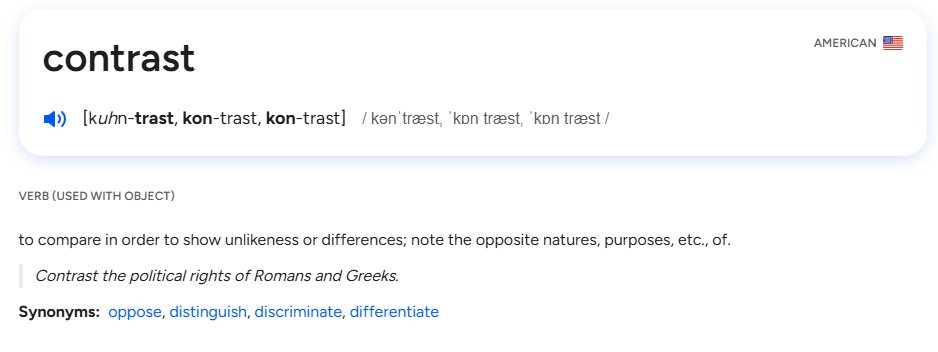
Contrast actually refers to something being different from what came before.
Yes, it's that simple.
It doesn't require:
flowery language,
surprising plot twists,
or background music.
Essentially, contrast is a transformation, such as:
from "before" to "after"
from "expectation" to "reality"
from "belief" to "realization"
Without this transformation, your content is just information.
Yes, maybe it's useful, but memorable? Hmm... unlikely.
Why does a lack of contrast make content weak?
The Web3 world is full of:
features, data, promises, roadmaps......
But most content is presented too straightforwardly:
"This is what it does."
"These are its benefits."
"This is why you should care about it."
However, the brain isn't interested in this linear information.
It wakes up when something unexpected happens.
Why Content Loses Appeal Without Contrast
The Web3 world is flooded with:
features, data, promises, roadmaps......
But most content is presented too directly:
"This is its function."
"Why it's good."
"Why you need to care about it."
However, the brain isn't activated by this straight-line information.
It only wakes up when something unexpected occurs.
A Simple Example of "Contrast"
(You must have seen it countless times)
Expression without contrast:
Solana's transactions are fast and cheap.
Your brain responds: Okay... so what?
Expression with contrast:
I clicked send, switched pages, and then realized the transaction was already completed.
The same idea, but with a completely different impact.
The second expression creates a "moment." Got it?
Why Does "Contrast" Feel Uncomfortable?
(And why this matters)
Contrast often requires you to admit:
You were wrong, you were confused, you underestimated something.
That's why most people avoid it.
But this discomfort is precisely what makes content feel authentic.
People don't like flawless things.
They connect more easily with resonance and vulnerability.
When someone thinks: "Wait... I've felt that way too."
Congratulations, you've succeeded.
How to Add "Contrast" to Your Content?
Before publishing, ask yourself one question:
"What changed here?"
If you can't answer, try adding:
-
A mistaken assumption you once had
-
A moment of hesitation
-
An unexpected result
-
A "small decision" you almost didn't make
It really doesn't require a dramatic plot.
You just need a little relatable change.
Weirdo's Summary
Don't get me wrong, creativity does play an important role in storytelling.
But not everyone is naturally creative. This article is specifically for those who truly want to learn storytelling techniques.
Its core lies in: being sincere enough to show "transformation."
In the complex and noisy world of Web3,
"Contrast" is the way to stand out without having to shout.

Remember to follow me, or else you'll...
Twitter:https://twitter.com/BitpushNewsCN
BitPush TG Group:https://t.me/BitPushCommunity
BitPush TG Subscription: https://t.me/bitpush