SOL Briefly Breaks Through $100: Fueled by Bitcoin Short Squeeze, ETF Inflows, and Supply Reform

2026-08-26 tarihinde yayınlandı2026-08-26 tarihinde güncellendi

Özet

SOL's recent surge is driven by risk appetite boosted by the Bitcoin short squeeze, record inflows into the SOL spot ETF, and supply tightening expectations from governance proposals. The pullback over the past 11 hours resembles digestion after a breakout rather than a new negative shock.

The roughly 3% fluctuation in SOL over the past 11 hours appears more as a digestion of the prior risk appetite surge driven by Bitcoin's rise, record SOL ETF inflows, and supply reform expectations, rather than being caused by any single new catalyst.

Bitcoin Short Squeeze and Altcoin Rotation

Over the past day, the total cryptocurrency market capitalization rose only about 0.6%, but trading volume increased over 30%, with derivatives open interest remaining high, indicating a high-energy, leverage-driven market state.

Bitcoin broke through $80,000 and $81,000 on August 25, liquidating approximately $260 million in short positions within four hours and about $650 million for the day. SOL rose over 7.5% during the same period, breaking above $100 for the first time in months.

SOL climbed from around $95.52 on August 24 to approximately $101.75 in the early hours of August 25, before retracing to $98.63. The so-called change over the past 11 hours is mainly a pullback from the breakout high, not a new upward surge.

ETF Flows and Derivatives Activity Hit Highs

SOL spot ETFs recorded their strongest single-day inflow since late 2025, at approximately $33.5 million; single-day ETF trading volume approached $1.6-1.7 billion. Cumulative net inflows into U.S. SOL ETFs have now surpassed $1.1 billion.

This data set coincided with SOL's breakthrough of key resistance levels. Related reports indicate SOL is up about 25% for the week, having regained the $85-$90 zone and broken through the $100-$105 region. Futures trading volume increased about 78% in 24 hours to $15.3 billion, open interest rose over 12%, and options activity also notably strengthened.

ETF inflows demonstrate that demand is not only coming from retail or DEXs but is also entering the market through regulated products. The past 11 hours seem more like the market digesting the ETF-driven breakout rather than negating the trend entirely.

Governance, Burns, and On-Chain Usage

Validators are voting on three governance proposals, including doubling the reduction speed of SOL inflation and restructuring fees to burn more resource fees. An estimated ~18.9 million fewer SOL may be issued over the next six years, with daily burn potentially increasing from ~650 SOL to between 7,500 and 9,000 SOL.

Solana DEX spot trading volume has surpassed that of Bybit, Coinbase, and Kraken for nine consecutive weeks, second only to Binance. Recent 24-hour DEX trading volume nears $3 billion, exceeding Ethereum and approaching the sum of Base and BSC.

Agave 4.2 has launched on mainnet, with Solana advancing towards shorter slot times and higher throughput; Alpenglow aims for finality in about 150 milliseconds. The Solana RWA ecosystem is reportedly now valued at over $4 billion.

ETFs, supply reforms, on-chain trading, and performance upgrades collectively form supportive factors for SOL, but the high-leverage environment also means pullbacks can occur more swiftly.
İlgili Okumalar

a16z Deep Dive: Stop Chasing the 'AI Smell', Here's a Practical Guide to Writing with AI

"Don't Obsess Over AI Detection: A Practical Guide to Writing Alongside AI" by Steph Zinn (a16z Crypto) This guide moves beyond the flawed premise that AI-generated text can be easily spotted by a set of "tells" and that these features automatically mean poor quality. Instead, it focuses on how writers and founders can use LLMs effectively by understanding, controlling, and editing the common stylistic tendencies of AI-assisted prose. The article breaks down AI writing "tells" into four key dimensions: **1. Rhetorical Features (Insight-Shaped Writing):** AI often produces semantically empty, "corporate-sounding" filler language—vague profundities, hedging phrases, excessive parallelism, and summary statements. The advice is to ruthlessly edit these out, using prompts to make language more specific and direct. **2. Voice Features (The Alexa Voice):** Default AI writing relies on a narrow, fungible vocabulary of low-friction, abstract words and cliché phrases that lack personality. While this generic voice is acceptable for support docs or mass communications, founders should preserve their unique voice for impactful writing. Use LLMs to identify and replace jargon, aiming for concrete, distinctive word choices. **3. Structural Features (Form Without Function):** AI tends towards over-structured text with excessive subheadings, lists, roadmaps, and the rigid "three-point" framework. While clear structure is good for readability and SEO, it shouldn't force ideas into unnatural containers. Choose a structure that serves the format and purpose, borrowing from effective examples. **4. Punctuation Features (Dash Panic):** The overuse of em dashes and colons has become a hallmark, but writers shouldn't avoid useful punctuation just to seem "human." The key is avoiding repetitive, distracting patterns. Use punctuation that is grammatically correct and supports the flow of your argument. The core argument is that many so-called AI flaws are just amplified versions of existing bad writing habits. The goal isn't to eliminate AI's role but to use it as a tool while maintaining editorial control. The final question shouldn't be "Can this be detected as AI?" but "Does this writing effectively do its job?"

marsbit1 saat önce

a16z Deep Dive: Stop Chasing the 'AI Smell', Here's a Practical Guide to Writing with AI

marsbit1 saat önce

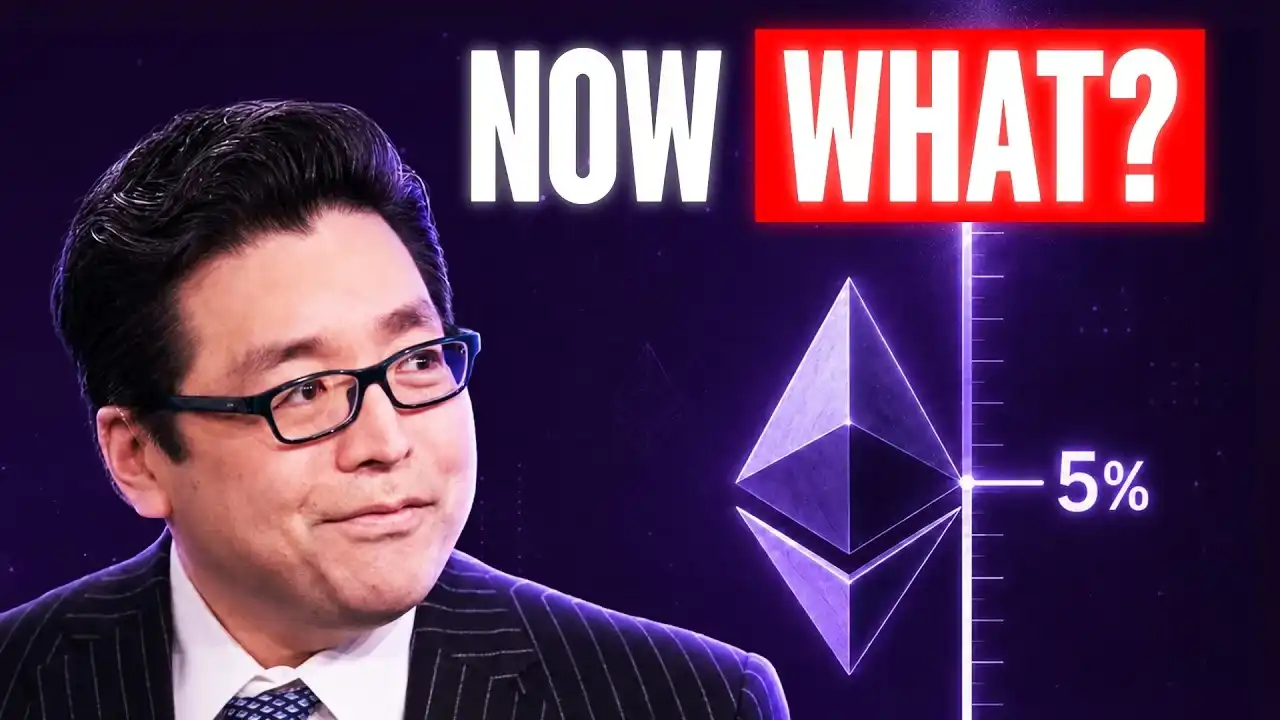
Podcast Notes | Conversation with Tom Lee: Bitmine Acquiring Nearly 5% of Total ETH Supply Is Not the End Goal, ETH Price Target Set at $10,000

In a podcast interview, Tom Lee, Chairman of BitMine Immersion Technologies, discusses the company's strategy to accumulate nearly 5% of the total Ethereum supply within 14 months, using equity financing and avoiding debt. BitMine has consistently purchased ETH for over 60 consecutive weeks, with recent weeks combining buybacks with purchases. The company's substantial ETH holdings generate approximately $300 million in annual staking rewards, covering operational costs like the dividends for its 9.5% perpetual preferred stock (BMNP). Lee positions ETH as a store-of-value asset, likening it to stocks or land, rather than a pure cash-flow instrument. Looking ahead, Lee suggests BitMine may continue buying beyond the 5% target if institutional adoption grows. He outlines a bullish price target for ETH: surpassing $5,000 in a new crypto bull cycle and potentially exceeding $10,000 within 1-2 years, driven by Wall Street tokenization and AI-related demand. The discussion also covers BitMine's evolution into an ecosystem player, funding Ethereum Foundation spin-offs and developing its Maven staking platform. Lee acknowledges his significant financial interests are tied to ETH's price and BitMine's performance. The interview provides a framework for evaluating ETH as a long-term asset, emphasizing staking yield sustainability and future institutional demand, while noting the uncertainties surrounding macro cycles and real-world adoption.

marsbit1 saat önce

Podcast Notes | Conversation with Tom Lee: Bitmine Acquiring Nearly 5% of Total ETH Supply Is Not the End Goal, ETH Price Target Set at $10,000

marsbit1 saat önce

İşlemler

Spot
活动图片