Written by: Bankless
Compiled by: Plain Language Blockchain
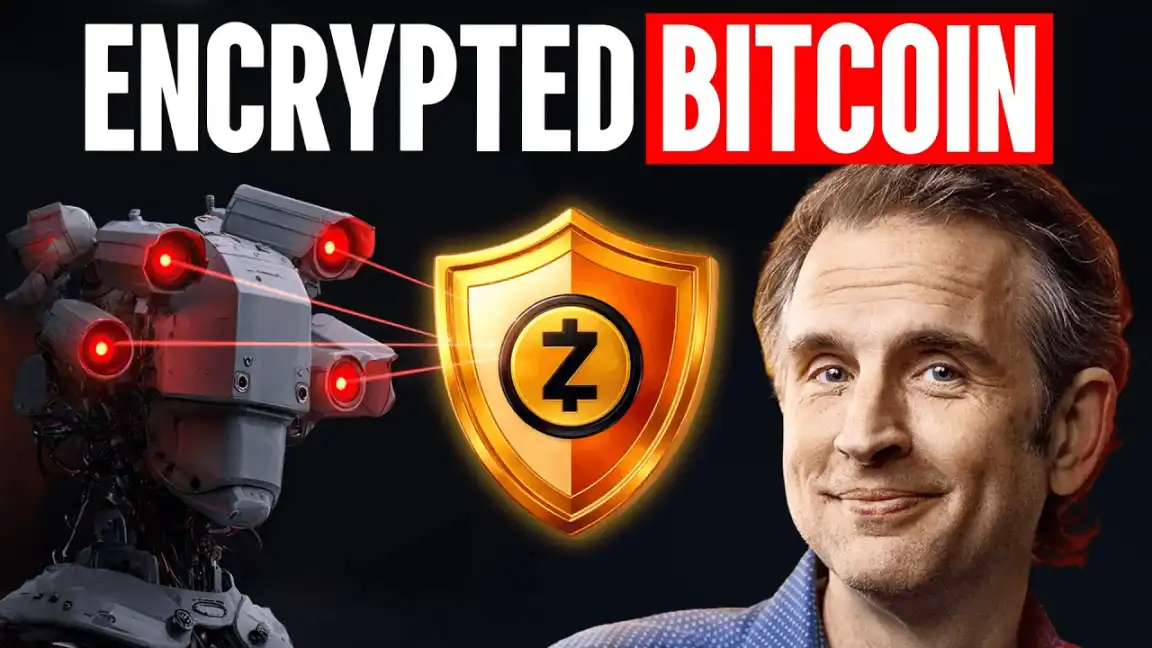
More than a decade after the birth of cryptocurrency, we are standing at a subtle crossroads: on one hand, there is the full involvement of Wall Street capital and the rapid evolution of the underlying technology; on the other hand, the original Cypherpunk ideals are struggling under complex user experience and regulatory pressure.
In this interview, Zcash founder and pioneer in the field of cryptographic privacy, Zuko, shares his profound insights into the industry's current state. He not only reflects on whether the crypto movement is repeating the mistakes of Linux but also delves into how, in an era of rampant AI computing power, privacy is evolving from a 'technical feature' to a 'survival option.'
By deconstructing Moxie's user experience logic and analyzing the Zcash governance experiment, Zuko paints a future picture that goes beyond mere financial speculation and returns to digital sovereignty. This is not just a conversation about technology but also a metaphysical discussion about how human civilization can maintain free will in a high-pressure surveillance environment.
I. Reflection on the Current State of the Crypto Movement: Are We Repeating Linux's Mistakes?
Host: Zuko, welcome back to Bankless. You have been deeply involved in the crypto industry for over a decade, building Zcash for 13 years. Looking back from the vantage point of 2026, do you think our crypto movement has achieved its original goals? Have we succeeded?
Zuko: To be honest, that's a leading question, and you probably weren't expecting a positive answer. Hearing you ask that actually makes me feel a bit frustrated and pessimistic. It reminds me of the history of Linux. Back then, Linux was a great movement aimed at empowering ordinary people and liberating technological barriers. But looking at the current landscape, it has largely become the underlying software that Google uses to run its servers.
Host: It sounds like the idealism of the Linux movement has faded.
Zuko: Because it didn't truly help ordinary users, nor did it scale to a level that could benefit the masses. While software engineers are still passionate about using it, for non-professionals, Linux today has not substantially improved their digital lives. If we let this trend continue, cryptocurrency in 15 years might be the same: only a few giant financial institutions use blockchain to optimize costs, while 99.9% of ordinary people do not gain real power or benefit from this technology. That would be a terrible outcome.
Host: So what do you think is the real progress we've made in the past decade?
Zuko: I am a technologist. What I am most pleased about is that cryptocurrency has funded a large number of top-tier cryptographic technologies. For example, the zero-knowledge proof (ZKP) pioneered by Zcash was later pushed into deeper realms by the Ethereum ecosystem. Without the funding and organizational forms provided by cryptocurrency, DARPA, universities, or giant corporations would never have developed these achievements in the past decade.
Host: So in your view, the advancement of cryptography is the biggest victory, not the current market size?
Zuko: Yes. But this is actually 'faint praise.' It's like we improved the Linux kernel but didn't really make the world a better place.
Host: Some would argue that price charts and Wall Street's entry are victories. For example, Bitcoin has become digital gold not controlled by governments, or the ETFs and RWA (Real World Asset Tokenization) promoted by Larry Fink.
Zuko: I see these as ways to improve Wall Street. If it improves the lives of ordinary people in a way I care about, that's good, but such signs are not obvious yet.
II. The Bottleneck of User Experience (UX): Why Does Moxie's Critique Still Ring Loud?
Host: What important parts of the crypto space do you think we have neglected?
Zuko: Absolutely the user experience part of the Cypherpunk vision. I often cite the views of Moxie Marlinspike (founder of Signal). He pointed out that the Cypherpunk dream is stuck because there is a fatal flaw in their logic. Their method is: Step one, make tools that work well for themselves; Step two, teach the rest of the world to become like them.
Host: This 'elitist' path is indeed difficult to popularize.
Zuko: Moxie said this will never succeed. You must provide people with tools that suit their current situation without forcing them to change. If you cover less than a hundred million users, you are wasting your time because you are not influencing the world. The current crypto industry is repeating this mistake: we build complex systems that protect freedom, privacy, and autonomous choice, and then expect ordinary people to learn how to use them.
Host: So cognitive load becomes the biggest obstacle.
Zuko: Exactly. If the cognitive load is close to zero, that is good user experience. I remember Brian Armstrong once told me his strategy for dealing with regulation: have at least a hundred million users. This is exactly the same logic as Moxie's.
Host: From a long-term perspective, Ethereum is trying to expand beyond decentralized finance into areas like decentralized identity, computing, and AI. How far do you think this Cypherpunk vision can go?
Zuko: I hope it goes all the way because it concerns whether our descendants can grow up in a more stable, civilized society. Signal's success inspired me. Signal's philosophy is that the user interface (UX) should reflect the underlying reality. If you are chatting with software that is not encrypted, an honest UI should display the avatars of you, your friend, the company CEO, and the system administrator in the chat box.
Host: That sounds very intuitive and startling.
Zuko: If the CIA is listening, their avatar should also appear. Signal just corrects this 'honesty.' Current social platforms, like Twitter or Telegram, are actually 'honeypots.' If you are chatting with five friends in a Telegram group, since it is not end-to-end encrypted by default, Pavel Durov's face should actually appear in the chat box. People need privacy, and it is technically possible; the key is whether we can provide an interactive experience that is not inferior to that of Silicon Valley giants.
III. The Privacy Paradox in the AI Era: When Algorithms Can Read Your Financial Intent
Host: Are you optimistic about the future? Especially now that AI is changing everything.
Zuko: I am optimistic. Although AI might make installing and configuring Linux simple and solve the UX problem, AI also brings new risks.
Host: You mean AI's manipulation of information?
Zuko: There was a case a few days ago where a user asked ChatGPT to proofread a tutorial. The tutorial involved how to use a burner phone service to protect personal information. ChatGPT, besides proofreading, proactively deleted all content about burner phones and cryptocurrency, reasoning that these tools 'could be used for abuse and scams.'
Host: That is indeed very dystopian.
Zuko: This is the nightmare scenario where AI does not provide what you want. Most current AIs follow the Web2 business model: relying on advertising and user lock-in. When AI deeply integrates your email, calendar, and financial data, it can not only predict your behavior but also guide your intent.
Host: So what different solution can cryptocurrency provide?
Zuko: Cryptocurrency provides a new funding model. Although it is still experimental, it tries to break away from the extractive logic of Web2. We need to establish a positive cycle of 'pay-to-use + open competition + no capture.'
Host: Zcash's recent price performance has been very impressive. Does this also indicate a shift in market sentiment?
Zuko: Yes. This kind of large-scale price signal is hard to fake; it proves that people truly care about privacy. As AI tools can easily correlate on-chain addresses, the originally transparent ledger becomes extremely dangerous. People are beginning to realize that privacy is not an 'optional feature' but a survival necessity.
IV. The Metaphysics of Value Storage: Privacy Options and the Mystery of 'Value at Rest'
Host: There are many misconceptions about privacy protection. People often understand privacy as 'cutting the link during the transfer process,' similar to the concept of a mixer.
Zuko: This is exactly what I want to correct. Many people try to transfer from Ethereum to a new address, thinking they are safe after some operations in between. But in the AI era, this kind of 'value in flight' can hardly achieve true privacy. AI can easily see through your disguise by correlating your intent and signals at both ends.
Host: So what should the correct logic be?
Zuko: You can only get privacy from 'value at rest.' I have a somewhat metaphysical view: if you hold ETH and plan to transfer it, your intent is clear, and AI can read it. But if you choose to convert some assets into ZEC for long-term holding without a clear next step, AI is blinded.
Host: Because the act of holding itself severs the continuity of intent.
Zuko: Exactly. This is the 'privacy option.' You don't need to hold it forever, but you need to hold it without the intent of future use. Just like your checking account, you don't spend it all the time; you maintain a certain balance. From an adversarial information theory perspective, it is reasonable to keep 1-2 months of living expenses in a privacy pool.
Host: The example you mentioned earlier about the Zashi wallet and Near Intents integration seems to demonstrate the practicality of this 'static privacy.'
Zuko: That example really struck me. When I needed to pay for Proton Mail anonymously, I didn't need to ask the other party to accept Zcash. I just scanned the code in the Zashi wallet and completed the payment through Near Intents. To the outside world, it was just an ordinary transfer, while the source of my assets and personal information remained in the privacy pool. This is the power of UX-first design.
V. Zcash's Governance Experiment: Dev Fund, Cross-link, and the 'Encrypted Bitcoin' Debate
Host: Let's talk about Zcash's governance. Zcash has a famous 'Dev Fund' mechanism, which is considered blasphemy in the Bitcoin community.
Zuko: Zcash imitates Bitcoin's 21 million total supply and halving mechanism, but the difference is that we allocate 20% of the new coin output to the development fund. As the price of ZEC rises, the size of this fund increases significantly, providing ample fuel for the continuous development of the protocol and avoiding the 'death spiral' many projects fall into during bear markets.
Host: But this mechanism has also caused a lot of controversy, especially regarding power distribution.
Zuko: Indeed. Zcash's social contract undergoes major discussions every four years. We have evolved from funding the founding team to funding non-profit organizations, and now to being controlled by committees and token voting. As an experiment, I am happy to see it trying different models.
Host: There has been a lot of discussion recently about the meme 'Encrypted Bitcoin.' What do you think of this label?
Zuko: I really like this meme. The fewer words, the more powerful.
Host: But some are concerned that the Cross-link mechanism you are advancing (adding Staking on top of mining) will破坏 the pure PoW image of Bitcoin.
Zuko: I am trying a 'jiu-jitsu' style response. Cross-link is not about becoming PoS but about strengthening the sustainability and credibility of the 21 million cap. Whether Bitcoin's 21 million cap can be maintained in the long run is actually opaque because when the block reward approaches zero, it remains unknown whether security can be sustained by fees alone.
Host: And Zcash is trying to solve the dual problems of privacy and long-term security at the protocol level.
Zuko: Yes. Because of Ethereum's underlying design issues, it is difficult to add a privacy layer without leaking information; it's like putting a band-aid on a leaking boat bottom. Zcash was born to make privacy a native property of the blockchain.
Host: Zuko, thank you for sharing today. Your adherence to Cypherpunk values is admirable.
Zuko: Thank you. Finally, I want to say to the listeners: go convert the value equivalent to your checking account amount into ZEC and deposit it into your privacy wallet. You are not only protecting yourself but also contributing to building a better future. Let's 'Zodle' together (Zcash community slang for holding).
Host: Go Zodle, folks. Of course, this is not financial advice; the crypto market carries huge risks, so proceed with caution.
Through this in-depth conversation with Zuko, it is not difficult to see that the true value of cryptocurrency does not lie in how much settlement cost it can save for Wall Street, but in whether it can build an indestructible firewall for individuals in the digital age. In today's world where AI algorithms are increasingly sophisticated and can easily 'read minds' and correlate transaction intent, privacy is no longer a paranoia of a few geeks but a basic tool for protecting personal choice.
The logic of 'value at rest privacy' represented by Zcash challenges the outdated notion of privacy as an intermediate process in transfers, elevating it to a 'privacy option.' Although there are still many challenges in user experience and governance paths, as Zuko emphasizes, the Cypherpunk vision will only truly be realized when the cognitive load of privacy tools is reduced to zero and they can serve hundreds of millions of ordinary users.
In this new frontier built by code, 'Zodling' is not just a way to store wealth but also a silent vote for digital sovereignty.