Abstract:
There are three different assessments regarding the impact of AI on economic growth and productivity.
Optimists believe that AI can significantly boost economic growth rates through the automation of R&D, potentially even triggering "singularity"-style explosive growth. The mainstream moderate school acknowledges that AI will bring productivity improvements but also emphasizes that AI's contribution to productivity is constrained by various practical bottlenecks (such as limited cost savings, limited AI exposure, the weak-link effect, physical and energy constraints, regulatory and ethical frictions, etc.). These bottlenecks, compounded, may make the AI dividend far lower than optimists estimate. Pessimists, on the other hand, hold extremely conservative views regarding task-level AI exposure, the magnitude of productivity improvement, and the diffusion speed of AI technology. Alternatively, they worry that AI is primarily used to "replace" rather than "augment" the workforce, warning that excessive automation may lead to a decline in labor's share of income, thereby suppressing consumption and aggregate demand and dragging down economic growth.
We believe that in the short term (1-2 years), AI will provide strong support for economic growth, but this will primarily come from investment-driven stimulus rather than productivity dividends. In the long run, AI also has the potential to bring about a major productivity revolution and economic prosperity. However, the path to long-term prosperity may not be smooth.
Depending on the prospects for AI demand and the bottleneck constraints it may encounter during promotion and application, we could potentially face three mid-term (next 3-5 years) paths: "Optimistic" (AI demand meets or exceeds expectations, with no significant bottleneck constraints), "Moderate" (AI demand meets or exceeds expectations, but faces many developmental bottlenecks that need to be gradually overcome), and "Pessimistic" (AI demand falls short of expectations, or faces severe bottleneck constraints). We believe the probability of the "Moderate Path" occurring is the highest, but regardless of the path, none is a smooth, broad avenue. The so-called "Optimistic Path" is optimistic from a technological perspective, but if income redistribution system reforms fail to keep pace, it may widen the wealth gap, even triggering social conflict, leading to socially pessimistic outcomes. Conversely, the technologically "Pessimistic Path" might maintain longer-lasting social stability and be more favorable for the broader workforce. The "Moderate Path" is a compromise, but it will also bring localized unemployment, K-shaped divergence and structural imbalances in the economy and financial markets, which may not be so moderate for some worker groups and investors. Decision-makers need to consider this comprehensively, balance the interests of all parties, closely monitor developments, prepare in advance, and take early action to ensure sustainable economic and social development.
With the rapid development of generative AI technology, the market widely expects AI to bring an unprecedented productivity revolution. Goldman Sachs1 estimates that generative AI could boost global productivity by 1.5 percentage points, pushing global GDP growth up by 7% over the next decade. In Silicon Valley's optimistic narrative, AI might even bring about a "singularity," where AI drives sustained acceleration in economic growth rates through "recursive self-improvement." This optimistic narrative has fueled an AI investment boom. The market expects that capital expenditures by the top five US hyperscalers will exceed $750 billion in 2026, nearly five times the 2022 level. Goldman Sachs projects that cumulative capital expenditures by hyperscalers will surpass $5 trillion by 20302. However, there are also pessimistic voices in academia and industry, arguing that AI's boost to economic growth and productivity is exaggerated, or worrying that excessive automation could lead to large-scale unemployment, widening income inequality, and even trigger economic recession and social unrest3.
Faced with such divergent views, how should we judge? Given that the actual impact of AI on economic growth and productivity is not only related to the sustainability of the AI investment boom but will also have broad effects on income distribution and social stability, we conduct a systematic analysis of this issue, drawing on the latest research from the past 2-3 years, striving to make a comprehensive and objective forecast.
Three Perspectives on AI's Impact on Economic Growth and Productivity
Optimists
The core view of optimists is that AI, unlike previous General Purpose Technologies (GPTs), can not only automate production but also automate R&D activities through methods like "recursive self-improvement," replacing scientists in research and engineers in design, driving sustained acceleration in economic growth rates, even tending towards infinity within a finite time (i.e., the "singularity"). Dario Amodei, CEO of Anthropic, depicts the scenario after the advent of powerful AI4: AI could compress biomedical advances that would normally take 100 years into 10 years; GDP growth rates in developing countries could rise to 20%. Epoch AI's GATE model5 predicts that once AI can automate all tasks, global GDP growth rates would conservatively reach 30% (Table 1).
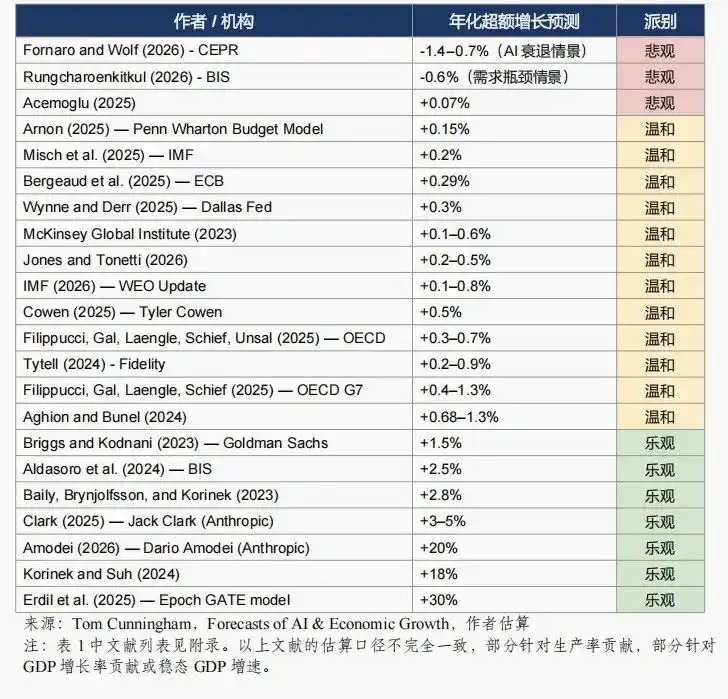
Table 1. Overview of Academic/Industry Predictions on AI's Contribution to Productivity
Taking the research of Anton Korinek, an economics professor at the University of Virginia and a representative figure of "singularity theory," as an example, in the "Innovation Network" model he built with co-authors6, the economy is divided into four mutually reinforcing sectors: software (S), hardware (H), general research (A), and output (Y), and quantitative thresholds for triggering an economic "singularity" are provided. Based on the calibrated parameters in their paper, Figure 1 lists four scenarios for reaching the singularity:
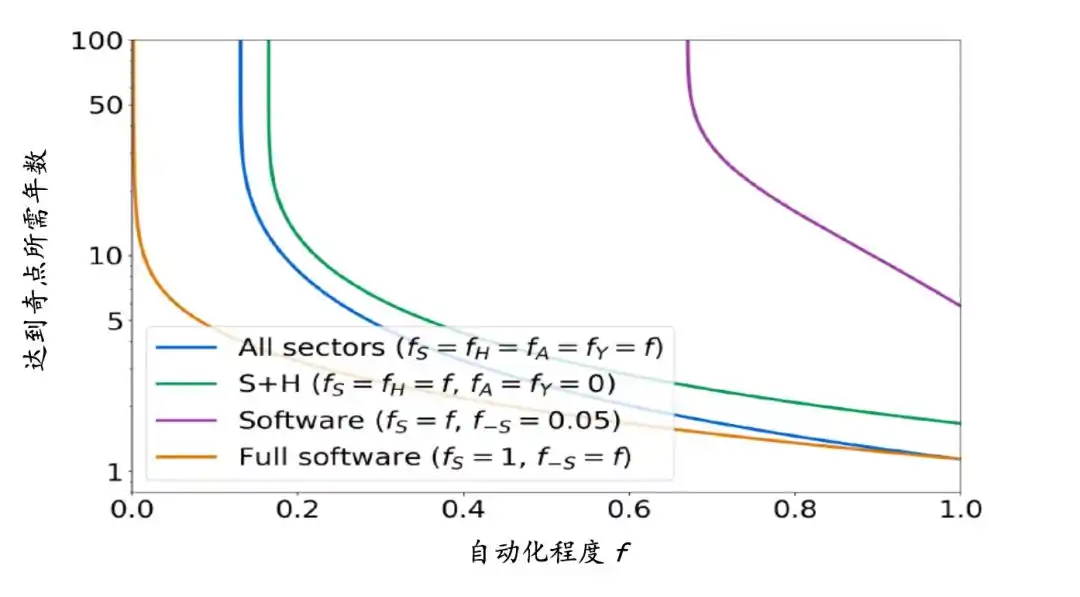
Figure 1. Four Pathways for AI to Bring Explosive Economic Growth Source: Davidson, Halperin, Houlden & Korinek. ‘When Does Automating AI Research Produce Explosive Growth? Feedback Loops in Innovation Networks’. NBER Working Paper 35155 (2026)
1) If AI drives uniform automation across all four sectors (blue line), only a 13% automation penetration rate is needed to trigger the singularity;
2) If only the software and hardware sectors are automated (green line), the automation penetration threshold for these two sectors rises to 17%;
3) If only the software sector is automated, while the other sectors achieve only 5% automation (purple line), the automation penetration threshold for the former rises to 66%; after the software sector is fully automated, the singularity can be reached in just 6 years;
4) If the software sector achieves 100% automation (orange line), the automation penetration threshold for the other sectors drops to 0%, and the singularity is certain to arrive.
Of course, the above conclusions are purely based on model parameter assumptions and are not predictions of future real scenarios. However, they illustrate that the automation of AI R&D could be a key link in triggering explosive economic growth and also provide an economic theoretical framework for the "recursive self-improvement" being pursued in the tech world.
Moderates
Mainstream academic estimates of AI's contribution to productivity are relatively moderate, mostly ranging from 0.1 to 1.3 percentage points per year (Table 1). They acknowledge that AI will bring productivity gains but also emphasize that real-world bottlenecks may cause the achievable AI dividend to be far lower than optimists estimate. Most of these scholars follow the analytical framework of Hulten's theorem7, arguing that AI's impact on overall societal productivity is jointly determined by three factors: productivity gains (or cost savings) at the micro task level, AI exposure of tasks across industries, and the speed of AI adoption:
AI's contribution to productivity = Single-task productivity gain × Task exposure × Adoption speed
Breaking it down from these three levels, AI's contribution may face the following constraints on the production side:
First, productivity improvement or cost savings for single tasks are limited.
Micro studies show that AI can improve efficiency by 14%-50% in tasks like programming, customer service, and ad creative generation, but efficiency gains are not significant in complex tasks requiring deep reasoning and comprehensive decision-making, and may even reduce the efficiency of experienced workers8. Additionally, research by the Bank for International Settlements9 shows that even if AI achieves cost savings at the single-task level, to realize the productivity dividend, enterprises must invest in complementary inputs like software modification, data governance, employee training, and process restructuring. If these complementary investments are insufficient or costly, the actual net overall benefit to the enterprise may be far lower than the theoretical gains at the task level.
Second, there are structural ceilings for AI exposure at the micro task level.
OECD research10 shows that knowledge-intensive service industries like finance, information technology, publishing/media, and professional services have higher AI exposure and more noticeable productivity gains; whereas industries and occupations involving physical operations and interpersonal interactions, like agriculture, mining, construction, and food services, have lower AI exposure and thus benefit less from AI technological progress. OpenAI11 estimates that considering only large language models, about 19% of US workers have more than half of their work tasks affected by AI; considering supporting software development (like AI agents, office software integration, etc.), this proportion could rise to about 46%, but still less than half. As AI technology advances (especially the development of embodied intelligence and physical AI), this proportion is expected to continue rising. However, tasks and industries affected by AI will still face structural ceilings for a considerable period, which will limit AI technology's boost to overall productivity.
Third, physical and energy bottlenecks, regulatory and ethical frictions will slow the adoption speed of AI technology.
The diffusion of AI technology highly depends on infrastructure like computing power, electricity, and data centers. However, the expansion of computing chip production capacity, power generation facilities and grid expansion, and the approval and construction of data centers all have multi-year (or even longer) cycles. Therefore, even if AI's technological capabilities advance rapidly, physical and energy bottlenecks in its upstream and downstream industrial chains may restrict its adoption speed.
Additionally, as AI data centers and other infrastructure consume large amounts of energy, water resources, and land, they could lead to local power or water shortages, or cause sharp increases in electricity or water prices, triggering social conflicts. This may force regulatory agencies to restrict related investments, thereby delaying the deployment and promotion of AI. For example, on July 14th of this year, New York State announced a moratorium on issuing environmental permits for new large-scale data centers (with power consumption reaching or exceeding 50 megawatts), becoming the first state in the US to implement a suspension order on new hyperscale data centers, in response to concerns about the environmental impact of data centers and their effect on pushing up utility costs.
Beyond physical bottlenecks, in high-risk, low-error-tolerance industries like healthcare, finance, law, and autonomous driving, the commercialization of AI may face prolonged obstacles like regulatory approval, liability definition, and insurance mechanism establishment. These are precisely the service industry areas with higher AI exposure. This means the potential productivity dividend from AI may not be fully realized due to regulatory and ethical frictions.
Fourth, the weak-link effect and the Baumol cost effect constrain the productivity dividend.
Stanford University economist Charles Jones proposed the "weak-link" theory12, meaning when a production process relies on multiple complementary links, total output will be constrained by the weakest link. Therefore, the ultimate pull of AI on economic growth will be constrained by those tasks most difficult to automate (e.g., physical operations, interpersonal care, real-world experiences, etc.). Regarding AI technology, even if AI can automate 90% of tasks, the remaining 10% of unautomated tasks will still limit economic growth potential. Only after these bottlenecks are also automated can the productivity dividend from AI be fully realized.
According to Jones's model, assuming the elasticity of substitution between tasks = 0.2 (i.e., tasks are highly complementary, with low substitutability), the economic gain from infinite automation of a specific task is determined by that task's share s in the economy: [1/(1-s)]1/4. Taking software as an example, current software expenditure accounts for about 2% of US GDP. Even if AI fully automates software production, it could only boost GDP growth by about 1 percentage point; if AI automates 50% of the economy's tasks, GDP could only increase by an additional 19% (Figure 2). This implies that the economic dividend from AI may be significantly delayed.
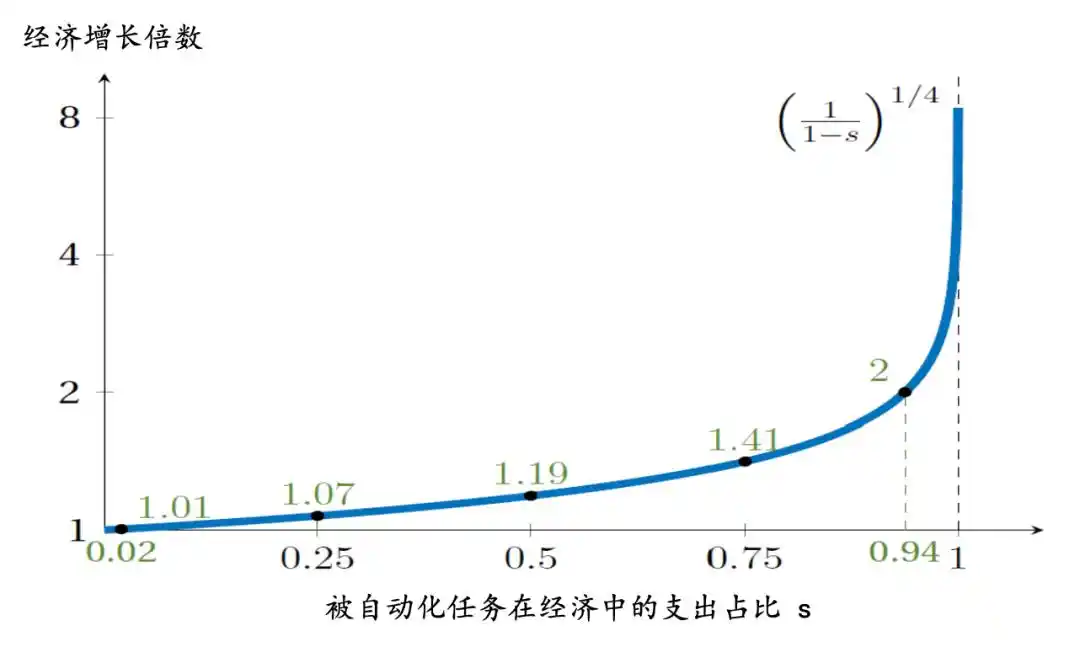
Figure 2. Degree of Automation and Economic Growth Multiplier Source: Charles I. Jones. ‘A.I. and Our Economic Future’. NBER Working Paper 34779, 2026.
Furthermore, Nobel laureate in economics Philippe Aghion13 also pointed out that even if AI brings huge productivity gains in some sectors, the Baumol cost effect14 will cause the relative prices of sectors difficult to automate to rise, thereby suppressing overall productivity growth. All these factors limit AI's contribution to productivity and economic growth, making its actual dividend far lower than the theoretical one.
Pessimists
The views of pessimists stem from two different lines of logic. One aligns with the logic of moderates but assumes more radical real-world bottlenecks. A representative of this view is Nobel laureate in economics Daron Acemoglu. In a series of studies15, he estimates that AI's cumulative contribution to US productivity over the next decade will be less than 1% (i.e., less than 0.1% per year). This is mainly because he assumes that only 4.6% of tasks will be affected by AI in the next decade (i.e., extremely low exposure), and using AI in these tasks on average saves only 14% in costs (i.e., low single-task productivity gain)16. Such conservative assumptions naturally lead to pessimistic conclusions.
The other line of logic incorporates the endogeneity of demand into the analysis. These researchers argue that AI's impact on economic growth depends not only on the supply side (impact on productivity) but also on the demand side (impact on consumer purchasing power). If AI leads to significant productivity gains and a large number of jobs are automated by AI, the income that originally flowed to workers will shift to capital investment related to AI, causing labor's share of income to decline. Therefore, while production capacity continues to expand, if corresponding income redistribution policies are not implemented, rising unemployment and declining worker income will continuously erode consumer purchasing power. Enterprises' revenue and profit growth expectations will also be difficult to sustain due to shrinking consumer demand, leading to stagnation in the willingness to invest in innovation and automation, ultimately causing economic growth to slow or even stagnate under demand constraints.
For example, the Bank for International Settlements (BIS), in a study, constructed a "demand bottleneck" scenario17, where each replaced worker is also a disappearing consumer. Under this scenario, although total output rises in the short term, from a medium-to-long-term perspective, total output growth may slow down or even fall below historical trends due to the decline in labor's income share and shrinking consumer demand. Acemoglu also warns in his aforementioned paper that current AI is primarily designed to replace labor rather than augment it. This development model creates an "excessive automation trap," leading to a decline in labor's income share18.
Research from the European think tank Centre for Economic Policy Research (CEPR)19 shows that without timely and effective monetary and fiscal policy intervention, AI technology could lead to high productivity, high unemployment, and worsening income inequality, ultimately forming a demand trap that constrains sustainable economic growth. This mechanism is essentially caused by the "externality" of aggregate demand. In other words, it is rational for an individual firm to adopt AI to reduce costs and improve efficiency, but if all firms adopt AI, it could potentially harm aggregate demand due to rising unemployment, dragging down the revenue and profits of all industries, which in turn suppresses investment demand. In this case, the actual economic growth rate may be significantly lower than the potential growth rate, or even lead to recession.
That paper, calibrated based on US data, assumes labor's income share drops from 60% to 57% and AI boosts potential output by 10%. Its numerical simulation results show that under the "no policy response" scenario, GDP and total consumption levels would drop by about 7% compared to the baseline, and investment would also stagnate due to weak demand (Figure 3). However, if accompanied by accommodative monetary policy and fiscal tools like employment subsidies, corporate labor costs could be reduced, and worker income increased, achieving an "AI boom." The paper indicates that without proactive macroeconomic policy intervention like income redistribution, the continuous decline in worker income will lead to shrinking aggregate demand, forming an important endogenous constraint on AI's contribution to economic growth from the demand side.
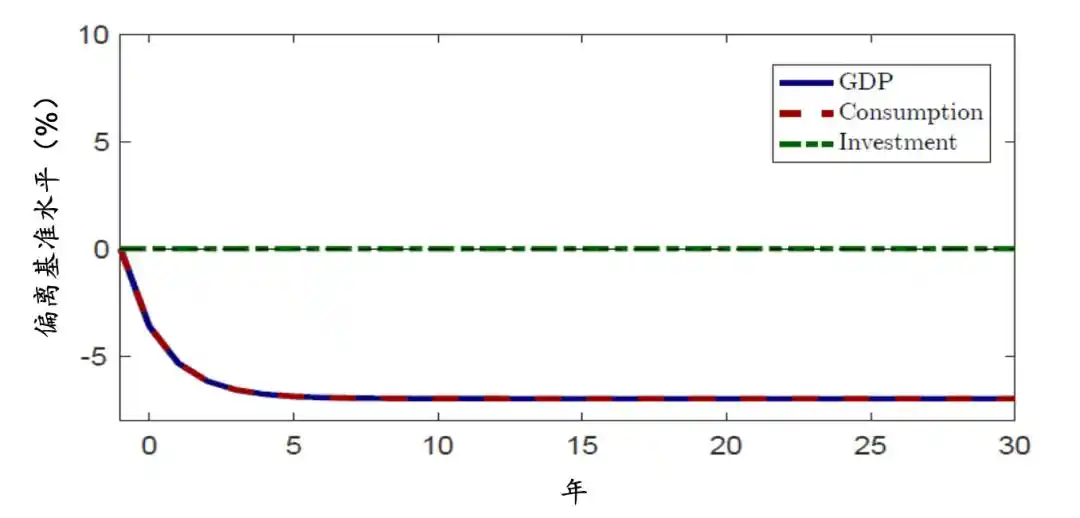
Figure 3. Constraint of Demand Externality on Economic Growth Source: Fornaro and Wolf, “Macroeconomic Policies for AI”, CEPR Discussion Paper No. 21412. 2026.
Our Assessment
The reason for the starkly different conclusions among the various schools of research primarily stems from their differing assumptions about factors affecting AI: the pace of technological progress, the depth and breadth of application, the speed of diffusion, real-world bottlenecks, and policy responses. We believe that in the short term (next 1-2 years), AI will promote economic growth, but the main contribution will likely come from "investment stimulus" rather than a "productivity dividend." In the long term, AI does have the potential to bring about significant productivity gains and economic prosperity. However, in the medium term (3-5 years), the journey towards long-term prosperity will likely not be smooth sailing.
Short-Term Impact
In the short term, AI will indeed promote economic growth, but the main contribution will likely come from "investment stimulus" rather than a "productivity dividend." Looking at actual data from the past 2-3 years, AI capital expenditures have become an important driver of US GDP growth. In 2025, US AI-related investment (information processing equipment and software investment) contributed 0.8 percentage points to GDP, an increase of 0.7 percentage points compared to 2023 (Figure 4). This trend is expected to continue in the short term, driven by the AI investment boom.
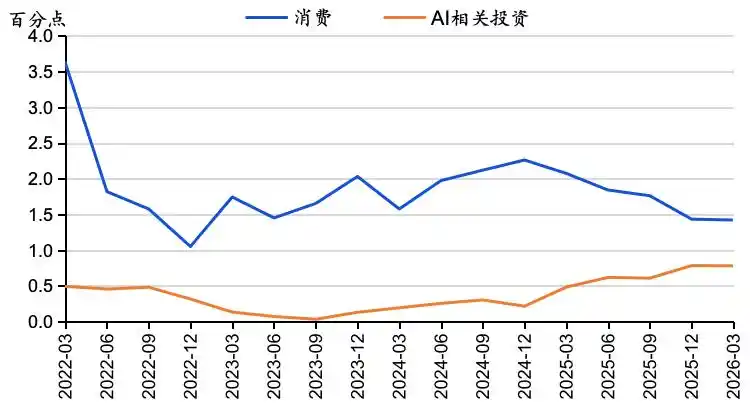
Figure 4. Contribution of US AI-Related Investment to GDP Source: US Bureau of Economic Analysis Note: AI-related investment includes information processing equipment and software investment. Data is four-quarter average contribution.
Over the past three years, US labor productivity has also rebounded significantly, but it's difficult to attribute this entirely to AI. Since Q1 2023, the annualized growth rate of US nonfarm labor productivity has been 2.7%, significantly higher than the approximately 1.5% average for 2007-22 and the long-term average of 2.1% since 1948 (Figure 5). However, reasons for the productivity rebound may partially stem from structural changes in the post-pandemic labor market and economies of scale driven by strong aggregate demand growth, making it difficult to clearly attribute it to the impact of generative AI.
Micro-level enterprise survey data also show that, at least so far, AI's boost to productivity has been relatively limited. A joint survey by the Bank of England, the Atlanta Fed, and other institutions of nearly 6000 senior executives from the US, UK, Germany, and Australia showed20 that nearly 90% of executives believe AI had no material impact on their company's productivity over the past three years. A BIS survey study of 12,000 European firms from 2019-2421 found that firms adopting AI had labor productivity about 4% higher than non-adopting firms. Converting this with a 10% technology diffusion speed, the annualized productivity contribution is about 0.4 percentage points, broadly consistent with moderate estimates.
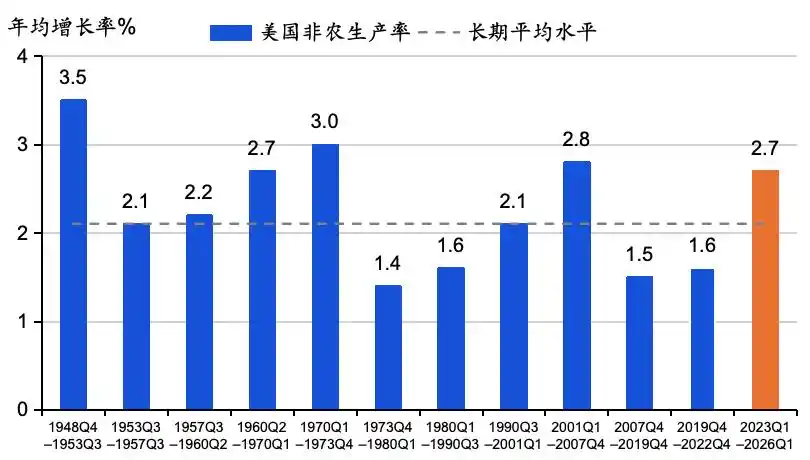
Figure 5. US Nonfarm Labor Productivity Source: US Bureau of Labor Statistics
The above findings are not surprising; they align with the historical pattern that General Purpose Technologies often experience long diffusion periods. Stanford University economist Erik Brynjolfsson summarizes this phenomenon as the "Productivity J-Curve"22, meaning new General Purpose Technologies often go through an initial phase of declining productivity followed by a sharp rise. In other words, the economic dividend from AI may be significantly delayed. Although, in the long run, AI technology will bring significant productivity gains, at least in the next 1-2 years (or even 3-5 years), its impact should be relatively limited.
Nevertheless, given that demand for large model applications is still in an exponential growth phase (taking the OpenRouter platform as an example, weekly token usage on its platform has increased over 23-fold in the past year and a half), it is certain that, at least for the next 1-2 years, investment demand in the AI-related industrial chain and infrastructure sectors will continue to increase. Therefore, in the short term, the judgment of high growth in AI investment will be difficult to disprove, concerns about an AI investment bubble will be difficult to confirm, AI's impact on employment will be relatively limited, and AI will be an important driver of economic and financial market prosperity.
Medium-Term Impact
In the medium term, over the next 3-5 years, with the rapid advancement and widespread adoption of AI technology, AI will continue to enhance productivity and push economic growth rates higher. However, as the moderate and pessimistic schools argue, given that the promotion and diffusion of AI technology may face bottleneck constraints on both the supply and demand sides, its future development may face three different paths. Superficially, these three paths correspond to the three schools of thought mentioned earlier, but the underlying evolutionary logic is not entirely the same (Figure 6).
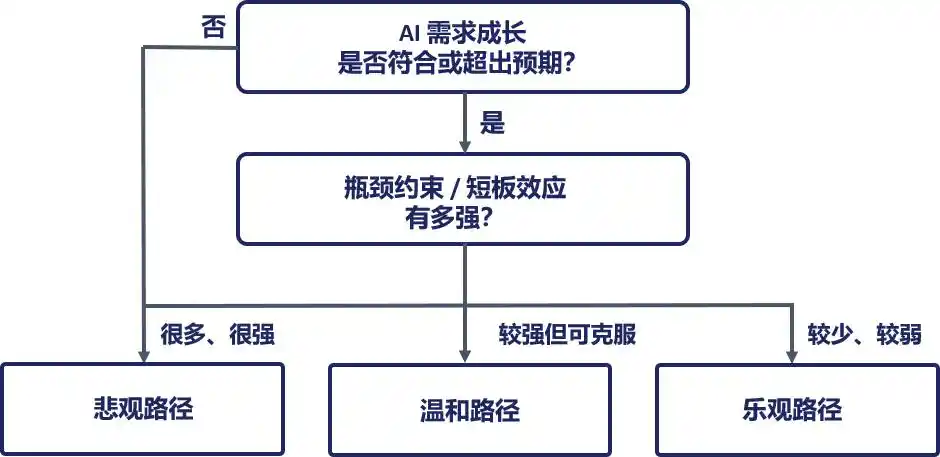
Figure 6. Three Paths of AI's Impact on Economic Growth and Productivity
The starting point of the analysis is the judgment on the prospects for AI demand growth (or the future breadth and depth of AI applications). If AI demand growth falls significantly short of expectations, AI's boost to economic growth and productivity will also be far lower than expected. This path corresponds to the aforementioned pessimistic view. If future AI demand meets or exceeds expectations, AI's impact on economic growth will depend on the strength of various bottleneck constraints or "weak-link effects." If bottleneck constraints are many, strong, and difficult to overcome, AI's boost to economic growth and productivity will be greatly suppressed. This scenario also corresponds to the pessimistic view (e.g., Acemoglu). If bottleneck constraints are numerous and strong but not insurmountable, AI's boost to economic growth and productivity will be somewhat suppressed but relatively moderate. This path corresponds to the mainstream moderate view. If bottleneck constraints are few and weak, AI's boost to economic growth and productivity will be very significant. This path corresponds to the aforementioned optimistic view.
It should be noted that we used terms like optimistic, moderate, and pessimistic in our classification mainly for technical considerations regarding AI's boost to productivity. In reality, the economic, financial, and social feedback corresponding to these three paths is quite complex, so from a social welfare perspective, this classification may not be entirely appropriate.
"Optimistic Path": Rapid Promotion and Widespread Adoption of AI
In this path, over the next 3-5 years, the breadth and depth of AI applications meet or exceed market expectations. There are no significant technological, physical, or institutional bottlenecks in AI technology R&D, deployment, or the upstream/downstream industrial chain. AI development proceeds almost unimpeded. AI's boost to economic growth and productivity reaches or even exceeds the predictions of optimists (Table 1). Massive AI investments will achieve considerable financial returns, financial markets flourish, and the economy moves towards super abundance.
Under this path, if AI's job creation effect is greater than its displacement effect, the feared large-scale job displacement will not occur. Workers might instead gain more employment opportunities, achieving shared economic and social prosperity. However, we believe that in the medium term, it is more likely that AI's displacement effect will be greater than its creation effect. If AI technology is promoted and applied unimpeded, automation will quickly spread across industries. Some industries might face AI's "dimensional reduction attack" and be completely wiped out, leading to massive bankruptcies and layoffs. Even in industries not subject to such an attack, the speed of AI replacing workers is likely to outpace the speed of creating new jobs, causing unemployment to rise. Without timely implementation of corresponding income redistribution policies, the continuous erosion of worker income will lead to shrinking aggregate demand (i.e., the "demand bottleneck" scenario constructed by BIS23 or the "demand trap" scenario CEPR worries about24). This could not only become an endogenous constraint in the above logical deduction at some point but might even trigger broader social conflict. In fact, even Korinek, a representative of "singularity theory," lists this risk as one of the major challenges after achieving AGI26. Therefore, in social terms, it's difficult to call this an "optimistic" path.
"Moderate Path": AI Technology Development and Promotion Encounter Overcomable Bottlenecks
In this path, over the next 3-5 years, the breadth and depth of AI applications broadly meet or exceed expectations, but there are numerous technological, physical, and institutional bottlenecks in AI technology R&D, deployment, and the upstream/downstream industrial chain. The good news is that these bottlenecks are not insurmountable; they just require time and increased investment to overcome gradually. In this process, AI investment continues to provide strong support for economic growth, while the AI industry moves forward in a winding path, constantly overcoming old bottlenecks and encountering new ones.
Under this path, AI's boost to economic growth and productivity is relatively moderate, but its impact across different industries varies significantly. In industries where supply bottlenecks emerge or exist (like current GPUs, CPUs, memory chips, etc.), related companies enjoy strong pricing power. Their product prices surge due to supply shortages, driving substantial profit growth and strong stock performance. In industries where, after years of investment, supply bottlenecks are gradually being eliminated, related product prices will gradually decline. Enterprises' excess profits will gradually shrink until they disappear, or even lead to losses. Related stock prices will also adjust accordingly, and some overvalued stocks will inevitably experience sharp declines. Although financial market turbulence is unavoidable, investors, in their continuous pursuit of new bottleneck industries, will separate the wheat from the chaff and foster innovation. Financial markets will show obvious K-shaped divergence characteristics, and investor returns will also show huge disparities.
In this path, although there won't be comprehensive, rapid, and large-scale job displacement, job displacement in certain industries could still have a significant impact on the economy and financial markets. Even if only 10% of jobs are replaced by AI, it could still increase the unemployment rate by approximately 10 percentage points. Historical experience shows that with unemployment rates exceeding 10%, even without major social conflict, it's hard to imagine the macroeconomy and financial markets operating smoothly.
Additionally, as old bottlenecks are resolved and new ones emerge, some bottlenecks might trigger social conflicts. For example, if the huge demand for electricity or water resources by large data centers leads to regional power or water shortages, or causes sharp increases in electricity or water prices, it could trigger regional social conflicts and disputes.
Therefore, in terms of financial and social stability, the "moderate" path is not necessarily so moderate.
"Pessimistic Path": AI Demand Falls Short of Expectations or Encounters Hard Bottlenecks
In this path, over the next 3-5 years, the breadth and depth of AI applications fall short of expectations, or even if they meet or exceed expectations, they face numerous, strong bottleneck constraints that severely hinder the promotion and diffusion of AI technology, greatly limiting its boost to economic growth and productivity.
For financial markets, given that the current AI investment boom already implies fairly optimistic demand growth expectations, if expectations are disappointed, financial market volatility will be inevitable. For example, the combined valuations of two leading AI large model companies, OpenAI and Anthropic, are about $1.8 trillion, while their latest annualized revenues for 2026 are only $25 billion27 and $47 billion27, respectively. If reality ultimately moves closer to the "pessimistic path" described above, the commercialization of AI technology will fall short of expectations. High return expectations for AI investment will likely fail to materialize, inevitably triggering valuation adjustments and investment pullbacks. Companies relying on high leverage will face risks of debt default and bankruptcy, potentially transmitting risks through financing chains to broader financial sectors like banks, insurance companies, and private credit funds, causing economic recession or even financial turmoil. The Bank for International Settlements (BIS), in its "2026 Annual Economic Report," points out that the scale, speed, and optimistic expectations for a productivity dividend in the current AI investment boom are highly similar to historical canal manias, railway manias, electrification booms, and the internet bubble, all of which eventually ended with investment reversals and economic recessions.
Although adjustments in financial markets are concerning, under this "pessimistic path," since the diffusion rate of AI technology falls short of expectations, AI's displacement effect on labor will also be relatively limited. This means AI technology will not cause large-scale unemployment, labor's share of income will not decline substantially, and society and government will have more time to adapt to AI's impact. Therefore, measured in terms of social welfare, this "pessimistic path" is actually somewhat comforting.
Conclusion
All three paths above are possible, but we believe the probability of the "Moderate Path" occurring is the highest. Regardless of the path, none is a smooth, broad avenue. The so-called "Optimistic Path" is optimistic from a technological perspective, but if income redistribution system reforms fail to keep pace, it may widen the wealth gap, even trigger social conflict, leading to socially pessimistic outcomes. Conversely, the technologically "Pessimistic Path" might maintain longer-lasting social stability and be more friendly to the broader workforce, also providing a buffer period for societal adaptation. The "Moderate Path" is a compromise, but it will also bring localized unemployment, K-shaped divergence and structural imbalances in the economy and financial markets, which may not be so moderate for some worker groups and investors. Regarding this, decision-makers need to consider comprehensively, balance the interests of all parties, closely monitor developments, prepare in advance, and respond early to ensure sustainable economic and social development.
This article is from the WeChat public account "Tencent Research Institute" (ID: cyberlawrc), authors: Li Jialun, Sun Mingchun