The AI Stock Genius Who Made 60x Bets $7.7 Billion on Nvidia Topping Out

链捕手2026-05-20 tarihinde yayınlandı2026-05-20 tarihinde güncellendi

Özet

An AI-focused hedge fund named Situational Awareness LP, known for its 60x returns, has taken a significant bearish stance on semiconductor stocks in Q1 2026. Its 13F filing reveals a massive 148% quarterly increase in nominal exposure to $13.677 billion, with over 60% of the new exposure directed towards put options on major chip players. Key bearish bets include $2.04 billion in puts on the VanEck Semiconductor ETF (SMH) and $1.56 billion on NVIDIA, alongside positions against Broadcom, Oracle, AMD, and others. The fund simultaneously increased its long equity holdings in AI infrastructure and compute providers like CoreWeave and Bitcoin mining companies repurposing for compute. The core thesis behind this positioning is a shift in the primary constraint for AI expansion. The fund argues that while GPU supply was the critical bottleneck in previous years, the new limiting factors for large-scale AI cluster deployment are physical infrastructure: electrical grid access (with multi-year backlogs in the US), power availability, land, and data center construction timelines. The fund is not betting against AI's success but rather hedging against potential valuation corrections in semiconductor stocks whose prices may have run ahead, while directly investing in the downstream physical bottlenecks—power and data center capacity—it believes will capture value next. This move translates a previously theoretical narrative about infrastructure constraints into a concrete, high-convic...

Author: BiBi News

On May 18, 2026, Situational Awareness LP submitted its 13F filing for the first quarter of 2026.

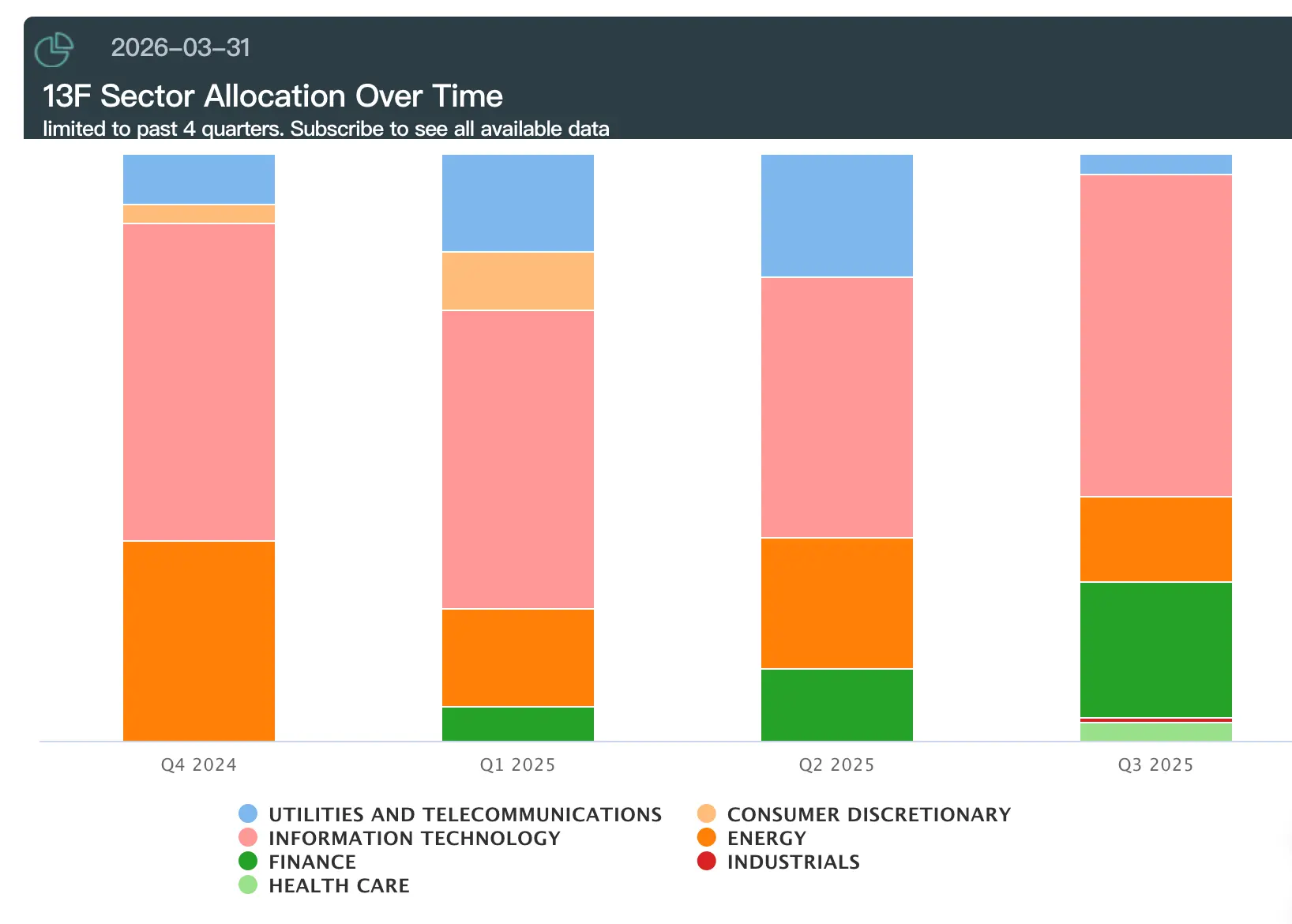
The fund's nominal exposure to U.S. stocks and options expanded from $5.52 billion at the end of 2025 to $13.677 billion, a single-quarter growth of 148%.

However, what caught market attention was not the size, but the structure: over 60% of the new nominal exposure was entirely placed in put options on the semiconductor sector.
What Q1 Did

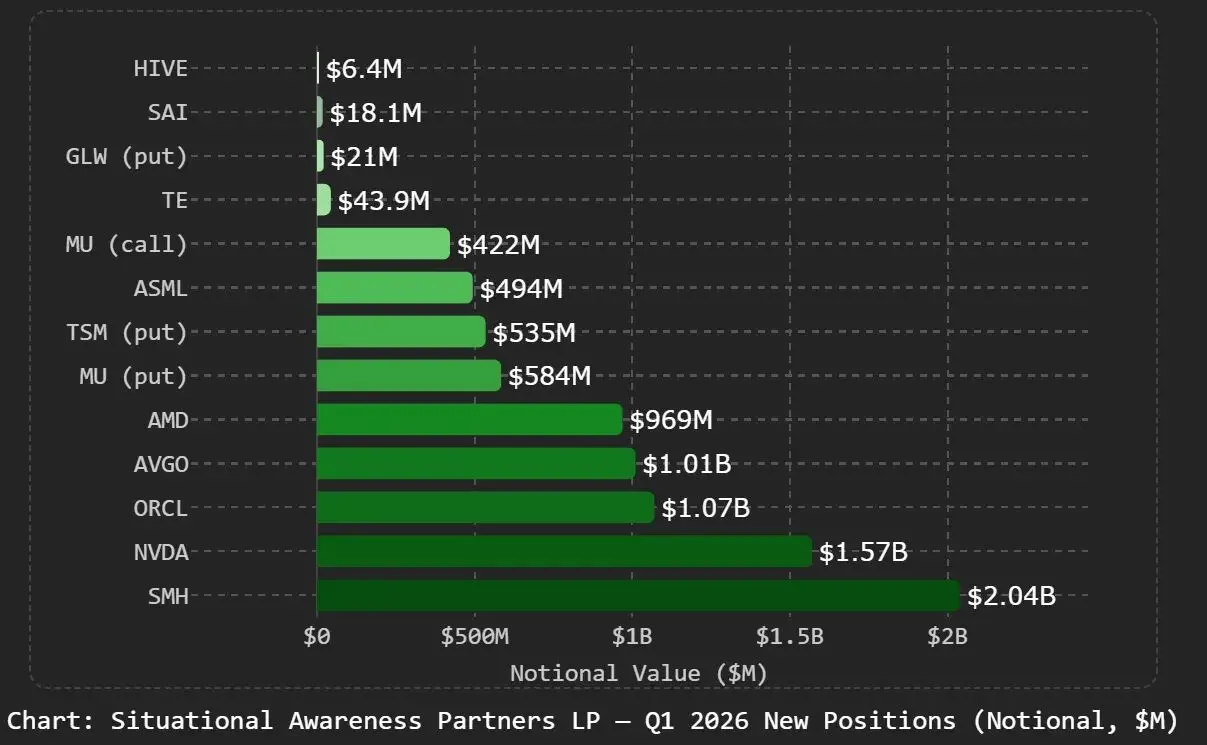
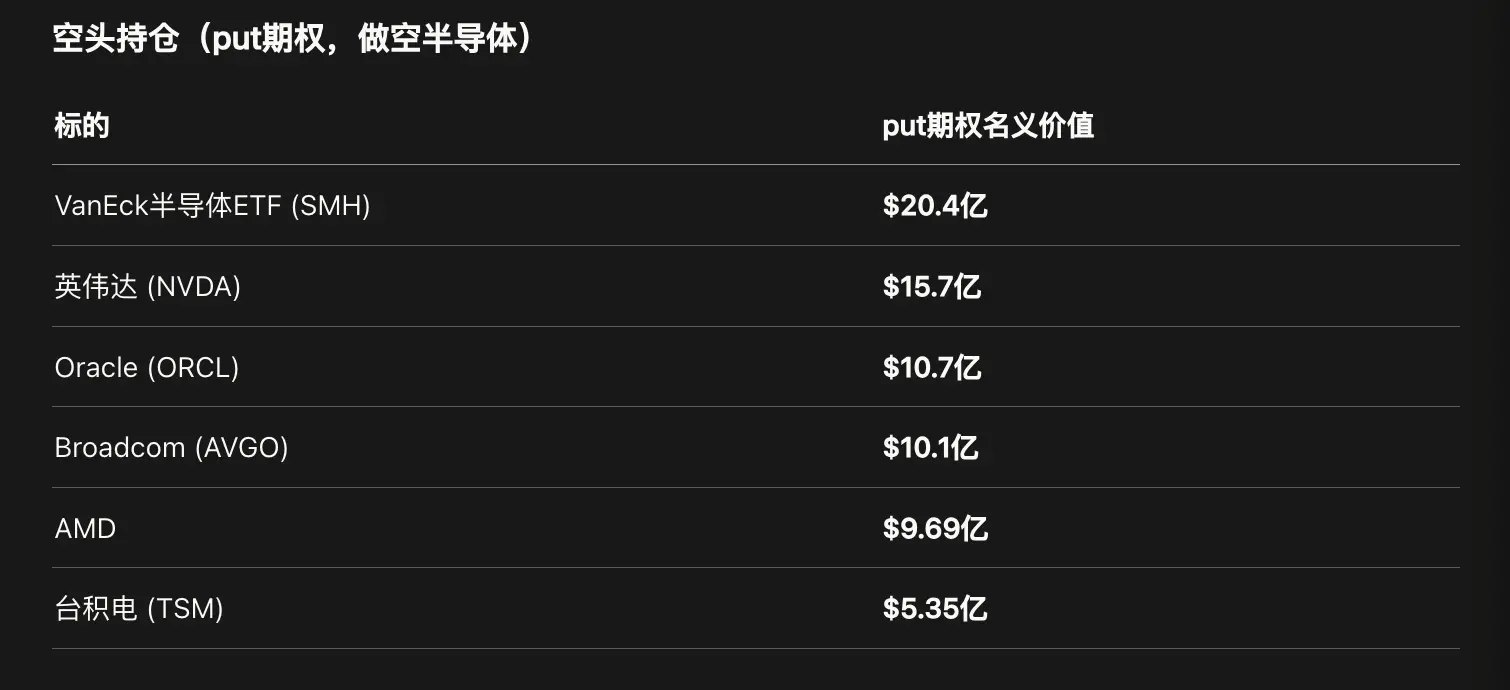
The put options cover nine targets: VanEck Semiconductor ETF (SMH), NVIDIA, Broadcom, Oracle, AMD, Micron, TSMC, ASML, Intel.

Among them, SMH has the largest put nominal size at $2.04 billion, followed by NVIDIA at $1.56 billion. Micron and TSMC hold both call and put options, indicating a bet on volatility rather than a one-sided short.

It should be noted that the 13F filing only discloses the nominal value of options, making it impossible to directly determine the net short size. These put positions could be active shorting or could be hedging protection purchased while holding long positions.

The full intent cannot be reconstructed from the filing alone.
In the stock direction, the fund continued to bet on computing infrastructure.

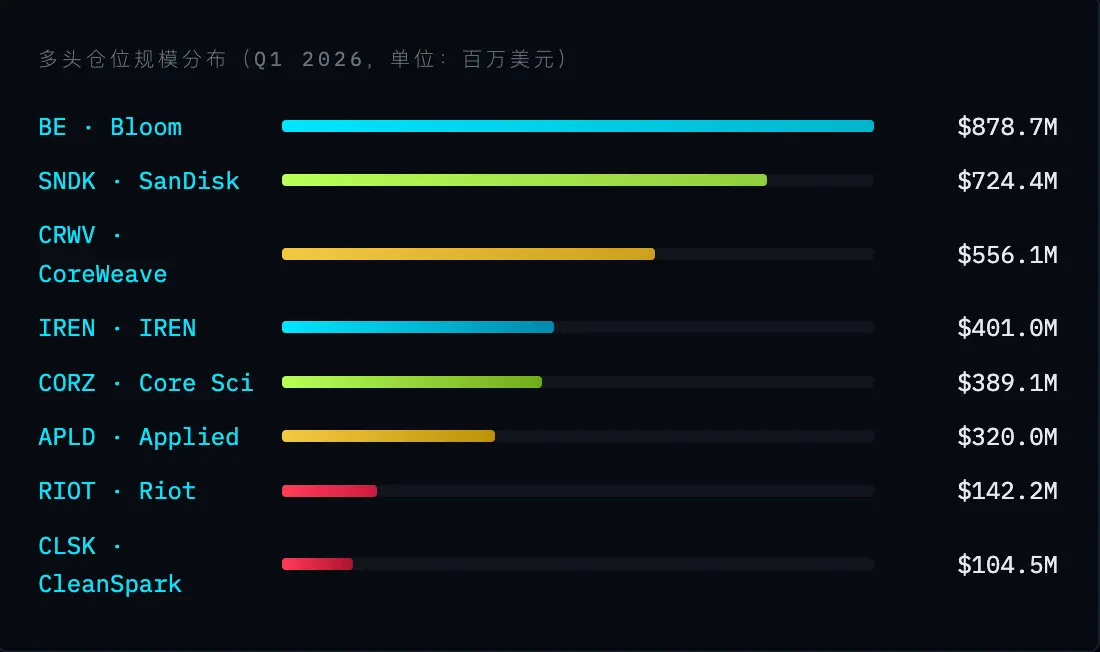
CoreWeave holdings increased from 6.1 million shares to 7.18 million shares; IREN and Applied Digital were similarly increased;

The expansion was most pronounced in the miner direction: Bitfarms (now renamed Keel Infrastructure) increased from 6.9 million shares to 19.88 million shares, CleanSpark increased from 1.64 million shares to 12.28 million shares, Riot Platforms increased from 6.17 million shares to 11.5 million shares.

Bloom Energy reduced holdings by 3.59 million shares but still holds about $879 million in market value, while retaining 408.5 thousand call options. This is profit-taking, not a change in direction.

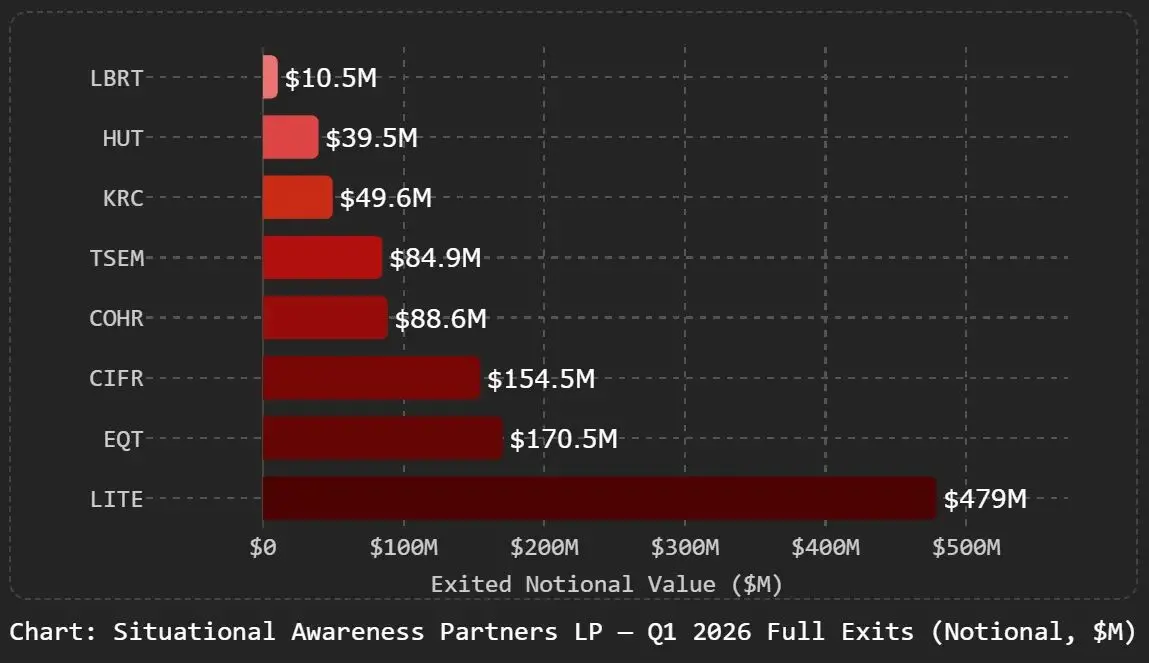
Exits were concentrated in the optical communication direction.

Lumentum and Coherent were completely liquidated; last quarter, Lumentum's position accounted for as much as 8.68%, this quarter it is zero.

Intel's operation deserves separate attention: last quarter held about 20 million call options, all liquidated this quarter, while establishing new put option positions.

Not a flat position, but a complete reversal in direction, from bullish to bearish.
Where the Bottleneck Is, the Money Is

The logic behind this 13F is a specific judgment on supply and demand: the constraints on AI expansion are shifting.

Over the past two years, the core constraint limiting AI scale was GPU shortage, so the market persistently traded NVIDIA, HBM memory, advanced manufacturing, and optical communication. During this phase, the semiconductor sector as a whole received a significant premium.

However, as computing clusters scale towards hundreds of thousands or even millions of GPUs, new constraints are emerging.

Grid connection applications in the US currently have a backlog exceeding 2TW, with an average wait time of over five years; transformer capacity is limited, and new data center construction cycles are measured in years; chips can continue to expand production, but the electricity, land, and construction capabilities needed to support their operation cannot keep pace.
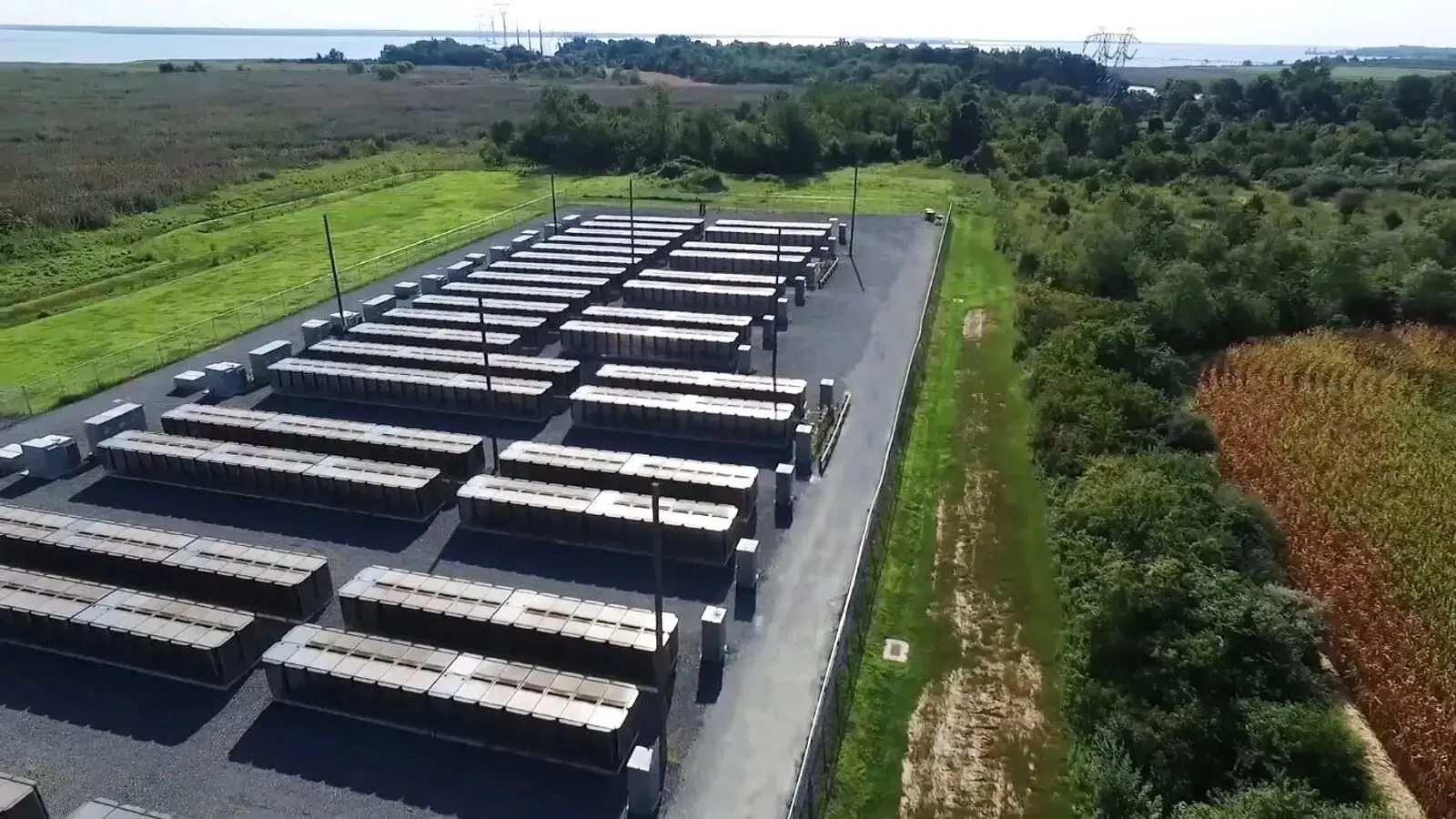
Under this judgment, the logic of shorting the semiconductor sector is not the belief that AI will fail, but that valuations in the chip sector have already priced in expectations, and value is migrating to downstream physical infrastructure.

Buying puts on SMH and NVIDIA hedges against potential valuation corrections in the chip sector; continuing to hold CoreWeave, transformed miner companies, Bloom Energy, is betting on the real bottlenecks: electricity and data center capacity.

CoreWeave's operation also confirms this thinking: call options were slashed from 10.81 million to 1.81 million, while common shares increased from 6.1 million to 7.18 million shares.

The direction hasn't changed, only the high-leverage option positions were swapped for common stock to reduce portfolio volatility impact.
From $225 Million to $13.677 Billion

This fund was founded in September 2024; its first 13F disclosed U.S. stock exposure of about $225 million. By the end of 2025, this number had grown to $5.52 billion; as of March 31, 2026, the nominal exposure reached $13.677 billion.

In the first half of 2025, the fund achieved a return of about 47%, while the S&P 500 rose only about 6%; for the full year, it outperformed the S&P 500 by about 12.5 percentage points.
Before founding the fund, this 24-year-old German published a 165-page paper titled "Situational Awareness: The Decade Ahead," outlining judgments on the AGI timeline and that power and computing infrastructure would become the biggest bottlenecks. The fund's early capital came from Nat Friedman, Daniel Gross, and Stripe co-founders Patrick and John Collison.

The significance of this quarterly report is that it translates a judgment that was previously more narrative into concrete portfolio structure.

Chips are merely the entry point for expansion; what truly determines the speed of AI expansion is whether, in the real world, power can be connected, data centers can be built, and grid connection approvals can be obtained within five years.

If this judgment holds, the keywords for AI investment over the past two years were GPU and models; in the coming years, they may be electricity, land, and construction time.

İlgili Sorular

QWhat was the most significant action taken by Situational Awareness LP in Q1 2026, as revealed by its 13F filing?

AOver 60% of the fund's new nominal exposure was placed in put options on the semiconductor sector, signaling a major directional bet against or a hedge for the chip industry. This includes significant put positions on VanEck Semiconductor ETF (SMH) and NVIDIA.

QWhich physical infrastructure sectors did Situational Awareness LP increase its long positions in, and why?

AThe fund increased long positions in power and data center infrastructure companies like CoreWeave, IREN, Applied Digital, and bitcoin miners transitioning to data centers (e.g., Bitfarms, CleanSpark, Riot Platforms). This was based on the belief that constraints for AI expansion are shifting from GPU shortages to bottlenecks in electricity, land, and construction capacity.

QWhat was Situational Awareness LP's specific action regarding Intel in Q1 2026, and what does it indicate?

AThe fund completely closed its approximately 20 million call option positions on Intel from the previous quarter and simultaneously established new put option positions. This indicates a complete reversal in view, from bullish to bearish on the company.

QAccording to the article's analysis, what is the core logic behind the fund's seemingly contradictory moves of holding puts on chips while being long on infrastructure?

AThe core logic is that the valuation for chip companies has already priced in high expectations, while the real constraint for future AI growth is the availability of physical infrastructure like power grids and data centers. Therefore, the fund is hedging potential chip valuation pullbacks while betting on the rising value of the downstream infrastructure bottlenecks.

QHow has Situational Awareness LP's performance been since its inception, and who were its notable early backers?

ASince its founding in September 2024, the fund's nominal exposure grew from $225 million to $13.677 billion by Q1 2026. It significantly outperformed the S&P 500, delivering ~47% returns in H1 2025 versus the index's ~6%. Early backers included prominent figures like Nat Friedman, Daniel Gross, and Stripe co-founders Patrick and John Collison.

İlgili Okumalar

USDC Begins Nested Issuance, Coinbase Launches Custom Stablecoin Branding Service

Coinbase has launched its "Custom Stablecoins" platform, enabling businesses to offer branded stablecoins. The first client is Flipcash, a social payments app, which has introduced USDF. USDF is a Solana-based stablecoin, pegged 1:1 to USDC, and is designed to serve as a stable pricing and settlement unit for Flipcash's user-created community currencies. This move shifts the focus of stablecoins from being standalone assets or investment products to becoming embedded payment and settlement components within broader applications. For businesses like Flipcash, the core need is not to become a stablecoin issuer, but to integrate stable, reliable digital cash functionality—handling pricing, payments, and settlements—without managing the complex underlying infrastructure of issuance, reserves, on-chain contracts, fiat on-ramps, and compliance. Coinbase's platform provides this infrastructure as a service, positioning the exchange as a stablecoin infrastructure provider. While USDC remains the foundational reserve asset, the branded token (e.g., USDF) offers applications a tailored, user-facing financial tool. This development highlights a potential path for stablecoins to become ubiquitous backend utilities in social, gaming, and e-commerce applications, though it also brings significant regulatory and operational complexities associated with handling real user funds.

链捕手1 saat önce

USDC Begins Nested Issuance, Coinbase Launches Custom Stablecoin Branding Service

链捕手1 saat önce

Detained for 37 Days: The First Wave of People Who Got Rich from 'AI Gateways' Are Starting to Go to Jail

A prominent AI proxy service operator was reportedly detained for 37 days and is now on bail pending trial, highlighting the legal risks in China's booming but unregulated AI intermediary market. These services act as "AI scalpers," providing domestic users with access to restricted overseas models (like OpenAI, Claude) by bundling APIs, handling payments, and bypassing network blocks, all for a fee. Their controversial profitability stems from practices like bulk-registering accounts to resell free credits, exploiting refund policies, overcharging for tokens, substituting cheaper models, and illegally selling user conversation data. Major figures, including cryptocurrency entrepreneurs, are now entering this space. Legally, these operations face severe risks. Their core model often involves unauthorized API access and operating without required telecom licenses, potentially constituting illegal business operations. They fail to meet data security obligations for the vast amounts of user data they process, risking charges for failing to fulfill network security duties. Crucially, the unauthorized collection and sale of user data, which can include personal and commercial secrets, easily meets the threshold for the crime of infringing on personal information. The case underscores a critical juncture for the AI industry. While proxies lower access barriers, they expose user data to unsecured middlemen and undermine the business models of AI developers, forcing them to divert resources to security and distorting market value perceptions. The article argues that the industry's sustainable future depends on building trust, protecting data, and fostering compliant competition, moving away from its current "wild growth" phase.

marsbit2 saat önce

Detained for 37 Days: The First Wave of People Who Got Rich from 'AI Gateways' Are Starting to Go to Jail

marsbit2 saat önce

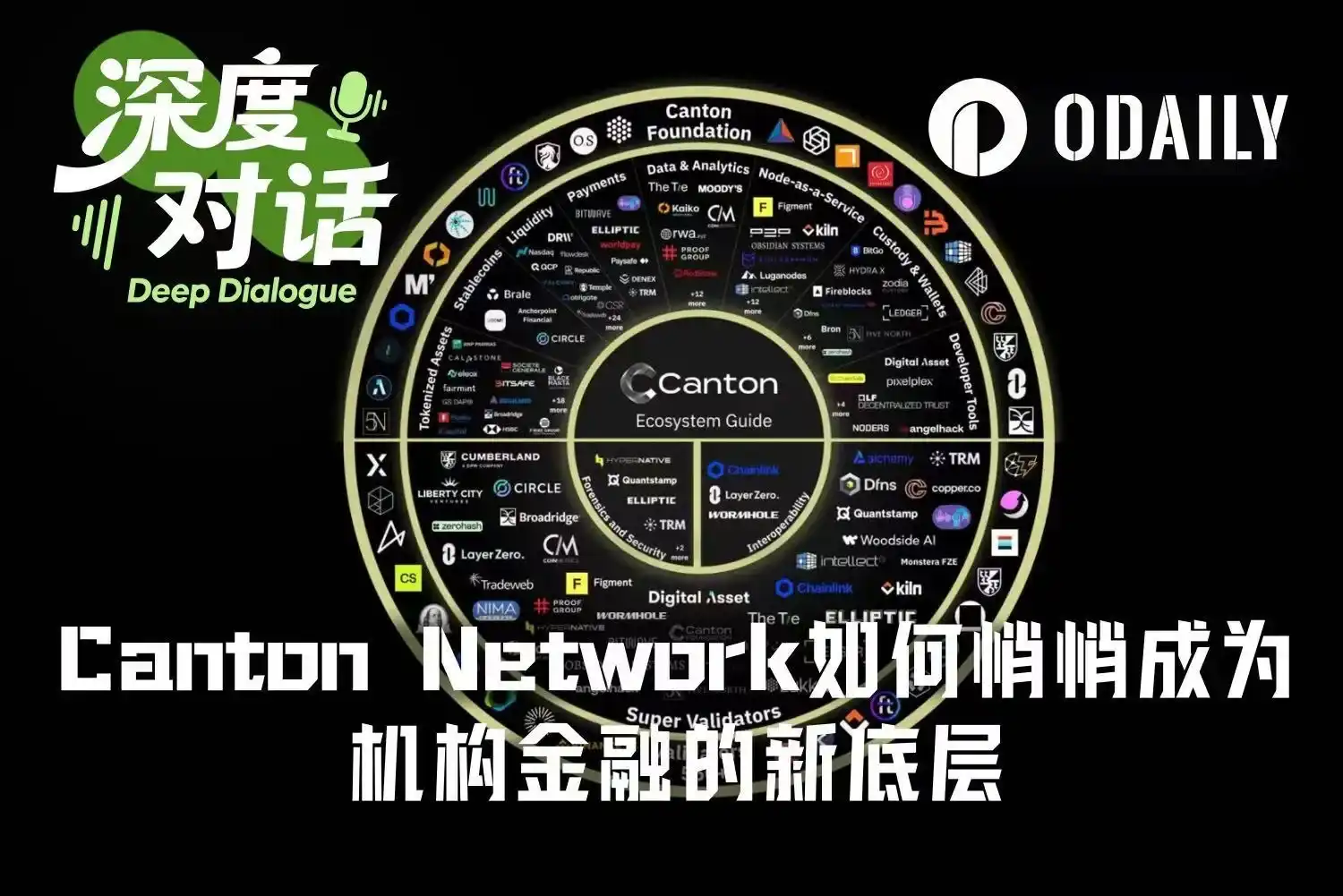
Putting Markets On-Chain: Canton Network Quietly Becomes the New Backbone of Institutional Finance

**Title: Letting the Market Itself Go On-Chain: Canton Network Quietly Becomes the New Backbone for Institutional Finance** **Summary:** The Canton Network, a blockchain platform designed for institutional finance, is gaining significant traction. A key sign of its maturity was Visa's recent entry as a super-validator, a proposal approved in just three days—highlighting prior, extensive collaboration between traditional finance and crypto. Unlike public chains like Ethereum that prioritize transparency and asset onboarding, Canton focuses on enabling confidential, compliant business operations for regulated institutions. Its core design features built-in **data visibility control**, meaning transaction details are only shared between direct counterparties. This privacy is fundamental, allowing competing institutions (like banks Goldman Sachs, JPMorgan, and BNP Paribas, all validators) to interact on the same network without exposing sensitive positions or strategies. Developed by Wall Street veterans at Digital Asset, Canton has taken a slow, deliberate approach to onboard real financial activity. It now handles over **$9 trillion monthly** in transaction volume, primarily from real-world institutional use cases like **tokenized repo agreements**, Treasury settlements, and collateral mobility. Major live applications include **JPM Coin** for institutional payments and **DTCC's tokenized U.S. Treasuries** project. Canton's native token, **CC**, is framed as a "network utility asset" with zero pre-mine or VC allocations. Its value is intended to be driven by the volume of real financial activity on the network. Looking ahead, Canton aims to become the invisible foundational layer for global finance—enabling atomic settlement (where payment and asset delivery occur simultaneously), 24/7 capital flows, and the native issuance and settlement of various asset classes, from corporate bonds to potentially equities. The main challenges are no longer technical but involve navigating fragmented global regulations and integrating with legacy financial systems.

marsbit2 saat önce

Putting Markets On-Chain: Canton Network Quietly Becomes the New Backbone of Institutional Finance

marsbit2 saat önce

İşlemler

Spot
Futures

Popüler Makaleler

GENIUS Nasıl Satın Alınır

HTX.com’a hoş geldiniz! Genius (GENIUS) satın alma işlemlerini basit ve kullanışlı bir hâle getirdik. Adım adım açıkladığımız rehberimizi takip ederek kripto yolculuğunuza başlayın. 1. Adım: HTX Hesabınızı OluşturunHTX'te ücretsiz bir hesap açmak için e-posta adresinizi veya telefon numaranızı kullanın. Sorunsuzca kaydolun ve tüm özelliklerin kilidini açın. Hesabımı Aç2. Adım: Kripto Satın Al Bölümüne Gidin ve Ödeme Yönteminizi SeçinKredi/Banka Kartı: Visa veya Mastercard'ınızı kullanarak anında Genius (GENIUS) satın alın.Bakiye: Sorunsuz bir şekilde işlem yapmak için HTX hesap bakiyenizdeki fonları kullanın.Üçüncü Taraflar: Kullanımı kolaylaştırmak için Google Pay ve Apple Pay gibi popüler ödeme yöntemlerini ekledik.P2P: HTX'teki diğer kullanıcılarla doğrudan işlem yapın.Borsa Dışı (OTC): Yatırımcılar için kişiye özel hizmetler ve rekabetçi döviz kurları sunuyoruz.3. Adım: Genius (GENIUS) Varlıklarınızı SaklayınGenius (GENIUS) satın aldıktan sonra HTX hesabınızda saklayın. Alternatif olarak, blok zinciri transferi yoluyla başka bir yere gönderebilir veya diğer kripto para birimlerini takas etmek için kullanabilirsiniz.4. Adım: Genius (GENIUS) Varlıklarınızla İşlem YapınHTX'in spot piyasasında Genius (GENIUS) ile kolayca işlemler yapın.Hesabınıza erişin, işlem çiftinizi seçin, işlemlerinizi gerçekleştirin ve gerçek zamanlı olarak izleyin. Hem yeni başlayanlar hem de deneyimli yatırımcılar için kullanıcı dostu bir deneyim sunuyoruz.

226 Toplam GörüntülenmeYayınlanma 2026.04.29Güncellenme 2026.05.12

GENIUS Nasıl Satın Alınır

Tartışmalar

HTX Topluluğuna hoş geldiniz. Burada, en son platform gelişmeleri hakkında bilgi sahibi olabilir ve profesyonel piyasa görüşlerine erişebilirsiniz. Kullanıcıların GENIUS (GENIUS) fiyatı hakkındaki görüşleri aşağıda sunulmaktadır.

活动图片