Original text by Li Hailun
The largest Initial Public Offering (IPO) in global history is entering its final countdown phase. Elon Musk's (Elon Musk) SpaceX is expected to price its IPO on June 12 and begin trading the next day.
Investors are targeting a valuation of around $2 trillion. At this level, Musk himself would directly ascend to become the world's first trillionaire. But the real drama of this deal is that the wealth won't just flow to Musk alone. With the disclosure of the prospectus, the value of holdings of a group of long-standing loyal lieutenants and early allies who have remained largely hidden behind Musk is coming to light for the first time.
Their "loyalty" and patience are being rewarded with the most generous returns in history.
01 Musk's "Shadow Partner"
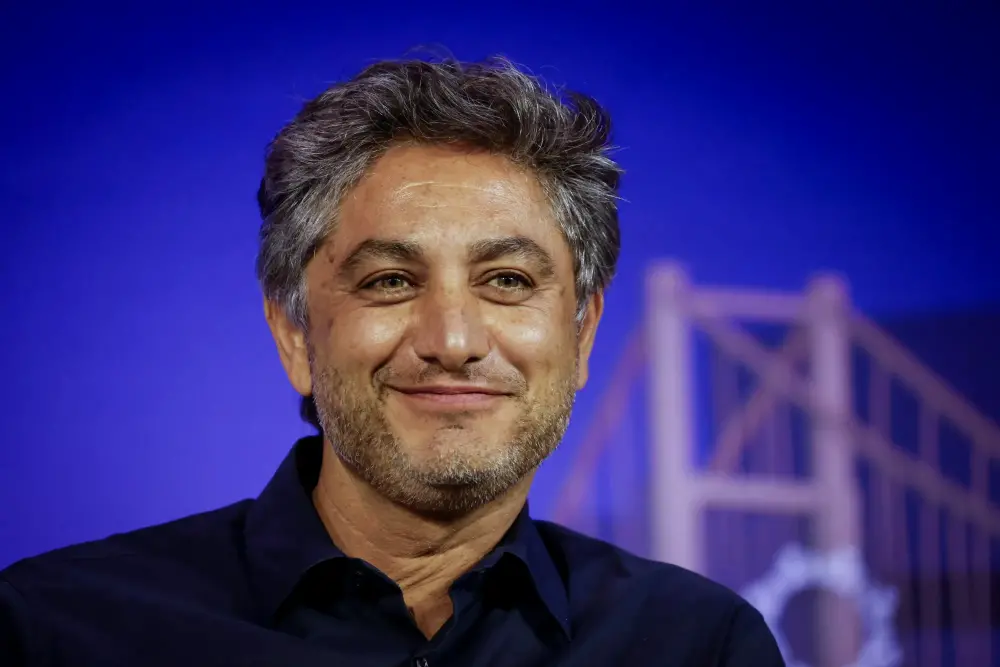
Among all those set to reap immense wealth from the SpaceX IPO, Antonio Gracias's (Antonio Gracias) role is the most unique. He is not a company employee, yet he is more deeply embedded in Musk's business empire than the vast majority of executives.
The 55-year-old Gracias is the founder of Chicago investment firm Valor Equity Partners. The two met in the early 2000s through the Silicon Valley network formed after the PayPal sale. At that time, Musk had just sold the company to eBay, while Gracias was running his own investment firm Valor Equity Partners.
During Tesla's near-bankruptcy period from late 2008 to early 2009, Gracias personally lent Musk $1 million. Since then, he has become one of Musk's closest personal friends. He was the best man at Kimbal Musk's (Kimbal Musk, Musk's brother) wedding, and the two families even vacation and celebrate holidays together.
This two-decade-long friendship is now translating into a staggering fortune. Gracias holds over 500 million SpaceX Class A shares through Valor-related investment entities, accounting for about 7.3% of the company's Class A shares, making him the second-largest individual shareholder after Musk.
Based on a conservative valuation of $1.5 trillion, these shares are worth about $91.6 billion. If calculated at $2 trillion, it would exceed $140 billion. Regardless of where the final pricing lands, he will rank among the world's 50 wealthiest individuals.
Gracias appears on the boards of nearly all Musk's companies. He served as Tesla's lead independent director for eight years and held board seats at SolarCity, Neuralink, and The Boring Company. He even agreed in early 2025 to provide financing for Musk's failed plan to acquire OpenAI in a $97 billion hostile takeover.
Gracias's financial relationship with SpaceX extends beyond equity. The prospectus discloses an extraordinary arrangement. In October 2025, a subsidiary named CTC under xAI signed an AI infrastructure hardware equipment lease agreement with Valor. In January and April 2026, a second and third lease were signed respectively. The three agreements require CTC to pay nearly $20 billion to Valor over the lease terms, with SpaceX itself providing full guarantees for these payments.
This means if xAI's subsidiary is unable to pay, SpaceX has a legal obligation to pay on its behalf. This type of guarantee itself signals that xAI likely cannot secure financing of this magnitude on its own credit, requiring parental intervention. Indeed, filings show xAI is heavily indebted, including secured senior notes with an interest rate as high as 12.5%. This is typically pricing for financially distressed borrowers, indicating the company struggles to obtain typical financing.
The structure of these transactions has raised auditors' concerns. SpaceX's auditor, PwC, refused to treat these agreements as ordinary leases, instead characterizing them as "failed sale-leasebacks."
In a typical sale-leaseback, one party sells an asset to another and leases it back for use, with the buyer needing to actually obtain control of the asset. But PwC believes the contract terms mean CTC retains actual control over the GPUs, implying Valor's role is closer to that of a lender using GPUs as collateral. The auditors forced SpaceX to retain this $9 billion debt on its balance sheet, listed as related-party debt payable to an entity where a company director serves.
02 SpaceX President & COO
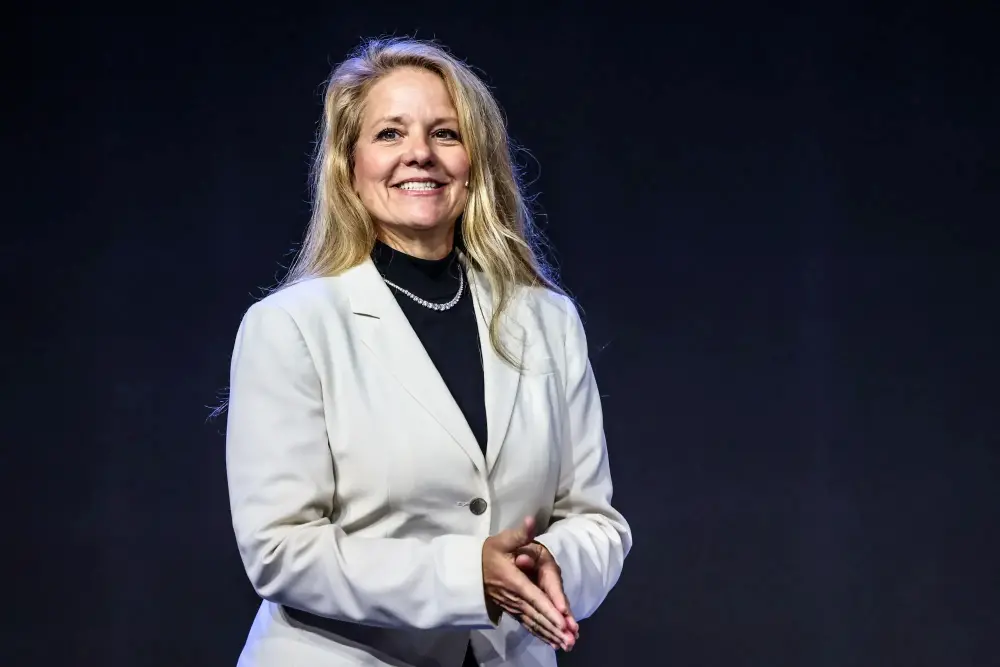
Among all the newly minted billionaires-to-be, Gwynne Shotwell's (Gwynne Shotwell) story is the most representative. The 62-year-old joined the company in 2002 as employee number 11.
Shotwell's initial task was to secure sales orders for the then-obscure Falcon 1 rocket. More than two decades later, she is the company's President and Chief Operating Officer. While Musk's attention is divided among his other companies, she frequently attends various industry events, becoming SpaceX's de facto public face.
According to the prospectus, Shotwell directly or through a trust holds 12.4 million SpaceX shares and holds 4.7 million stock options. If the company prices at a $2 trillion valuation, just her shareholdings will be worth about $2 billion. Shotwell's total compensation in 2025 was $85.8 million, primarily from large restricted stock awards.
Born in Illinois, Shotwell studied mechanical engineering and applied mathematics at Northwestern University. She began her career at an aerospace firm, working on thermal analysis and small spacecraft design.
After meeting Musk in 2002, she quickly joined SpaceX and was promoted to President in 2008. For this engineer who bet her entire career on a company once ridiculed as a "crazy dream," this fortune represents a kind of belated acknowledgment.
03 SpaceX CFO
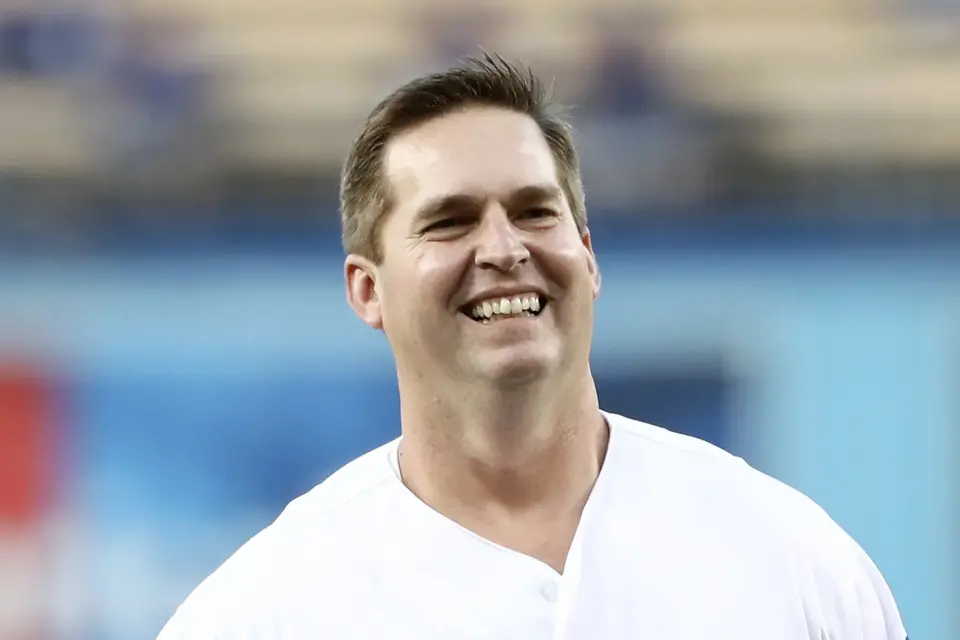
Compared to Shotwell's frequent public appearances, Johnsen is more like SpaceX's internal financial steward, responsible for sustaining the capital lifeline of this cash-burning company.
He joined SpaceX in 2011, after nearly a decade-long financial career at Broadcom and semiconductor company Mindspeed. During the long years when SpaceX kept its operations and financial performance largely secret, Johnsen was the primary contact for answering all tough questions and coordinating stock transactions.
In December 2025, it was Johnsen who sent employees a memo outlining the rationale for the company's public listing. In it, he wrote: "The thinking is that, if we execute extremely well and the markets cooperate, a public offering can raise a huge amount of capital."
Johnsen holds about 9.6 million SpaceX shares. At a $2 trillion valuation, these shares are worth about $1.4 billion. His total compensation in 2025 was $9.8 million.
04 "PayPal Mafia"
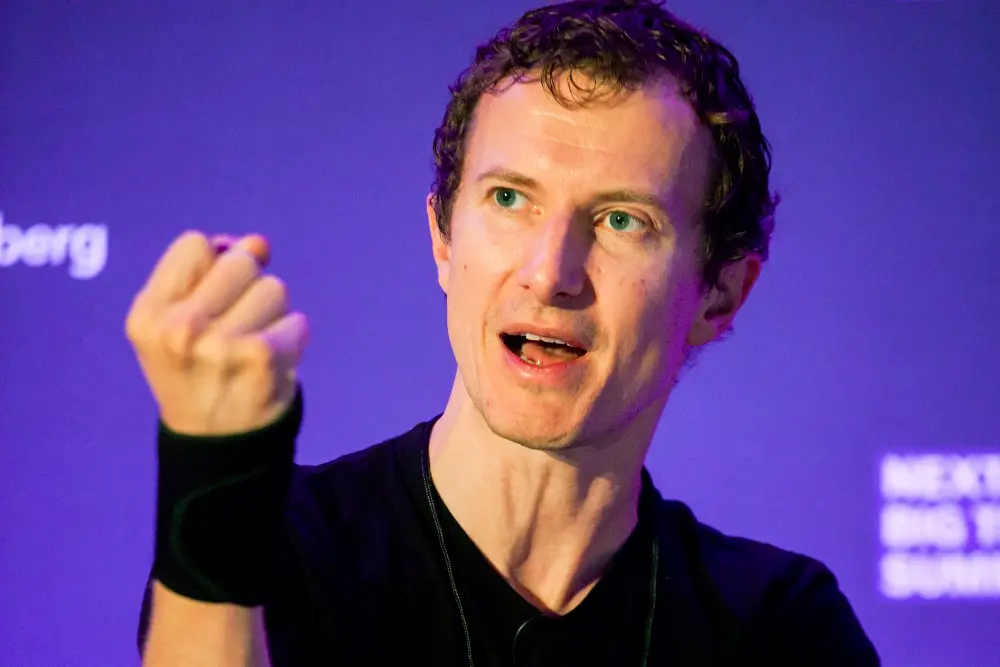
Luke Nosek's (Luke Nosek) connection to Musk dates back to the PayPal era. He was a co-founder and Vice President of Marketing & Strategy at PayPal, and a core member of the so-called "PayPal Mafia."
In 2002, when eBay announced and completed its acquisition of PayPal, Nosek co-founded Founders Fund with Peter Thiel (Peter Thiel) and others, and in 2008, he led Founders Fund's first investment in SpaceX. He subsequently gained a board seat, which he has held ever since.
Later, Nosek left Founders Fund, founded his own venture capital firm Gigafund, and poured over $1 billion into SpaceX, while also supporting Neuralink and The Boring Company.
Nosek directly holds nearly 25 million SpaceX Class A shares and holds another approximately 8 million through Nosek Capital. At a $2 trillion valuation, his total holdings would be worth about $5.3 billion. Similar to Musk, Nosek has pledged nearly 2.4 million SpaceX shares as loan collateral.
05 Institutional Players & University Endowments
Beyond the wealth stories of individual shareholders, the roster of SpaceX also prominently features some institutional players.
Donald Harrison (Donald Harrison), as a Google executive, joined the SpaceX board representing the early institutional investor. Founders Fund co-founder Steve Jurvetson (Steve Jurvetson) is a long-time ally of Musk, serving as a director since 2009.
Venture capitalist Ira Ehrenpreis (Ira Ehrenpreis) joined the board in February 2026 and is expected to chair the Compensation and Nomination Committee. DFJ Growth co-founder Randy Glein (Randy Glein) became a director in 2026 after a long tenure as a board observer and will chair the Audit Committee. Ehrenpreis holds about 1.37 million SpaceX shares, worth about $250 million at a conservative valuation; Glein holds about 278,000 shares, worth about $50 million.
A more dramatic story involves higher education institutions. Scott Wilson (Scott Wilson), Chief Investment Officer of the University of Washington, invested about $50 million of the school's money into SpaceX roughly a decade ago. That bet has now soared to represent over 10% of its $17 billion endowment assets, obtained primarily through co-investments and later-stage rounds via external private equity and venture capital managers.
Anders Hall (Anders Hall), investment chief at Vanderbilt University, said the school's position in SpaceX is estimated at $171 million, with some investments made over a decade ago through relationships with general partners. The school's endowment totaled $10.9 billion as of June 2025.
However, the massive IPO payout is a double-edged sword for endowments. They receive significant cash inflows, but the wealthiest few private schools will face a higher tax on net investment income. Congress has increased the rate from 1.4% to 4% or 8%, depending on the school's size.
06 AI Burning Through Cash
What this SpaceX IPO reveals is not just the opportunity for a few to amass great wealth, but also the company's own awkward financial reality.
The rocket and artificial intelligence company is not yet profitable, and it is spending money far faster than it earns it. For the full year 2025, the company lost $4.9 billion. And in just the first three months of 2026, it lost $4.3 billion on $4.7 billion in revenue.
Annual revenue grows at about 33%, but capital expenditures double each year. In 2025, SpaceX spent $20.7 billion, with about 60% invested in artificial intelligence. In the first three months of 2026, the company had already spent $10.1 billion, with $7.7 billion flowing to AI.
Once public, all these debt and spending pressures will be transferred to public shareholders. They will also inherit the billions of dollars in debt obligations generated by a series of transactions SpaceX entered into during its private period, including the leases with Valor.
One clause in the prospectus is particularly jaw-dropping: once 1 million people are living on Mars, Musk will receive up to one billion additional shares, and these shares are already added to his massive voting pool, which is sufficient to control the company.
For a company losing money year after year, investors will have to make their own judgment between aggressive spending, massive losses, and a governance structure wholly controlled by insiders.