Behind Musk and Huang Jen-hsun's 'AI Factories', an Unseen Battle for Freshwater Has Begun

marsbit2026-06-11 tarihinde yayınlandı2026-06-11 tarihinde güncellendi

Özet

Behind the "AI factories" of Elon Musk and Jensen Huang lies a hidden battle for a critical resource: fresh water. As AI models like ChatGPT and Claude process billions of prompts daily, they consume vast amounts of water for cooling. By 2030, global AI infrastructure is projected to use 9.3 trillion liters annually—enough to meet the basic needs of 1.3 billion people. This "water grab" stems from the massive heat generated by high-powered GPUs. Over 70% of data centers use evaporative cooling systems, where water absorbs heat and evaporates into the atmosphere, depleting local groundwater. Training models like GPT-4 can consume over 600 million liters of water. Tech giants like Google and Microsoft report skyrocketing water usage, sparking conflicts with local communities over resources. A flashpoint occurred in Memphis, Tennessee, where Musk's xAI built the Colossus supercomputer. It draws nearly 3.8 million liters of drinking water daily from local aquifers, leading to public outrage and legal action. In response, xAI is building an $80 million water recycling plant to use treated wastewater instead. Facing pressure, companies like Microsoft promote "waterless" closed-loop cooling systems. However, these systems increase electricity consumption by 20-30%, shifting the water burden to power plants, which require immense cooling water themselves—a case of indirect water footprint transfer. For China's AI industry, this crisis offers a strategic warning and opportunity. I...

You may not be able to imagine that every time you ask ChatGPT to write a 100-word weekly report, or have Claude modify a few lines of code, somewhere on Earth, in a cooling water pipe, about 500 milliliters (equivalent to a bottle of Nongfu Spring) of pure fresh water turns into white steam and evaporates into thin air.
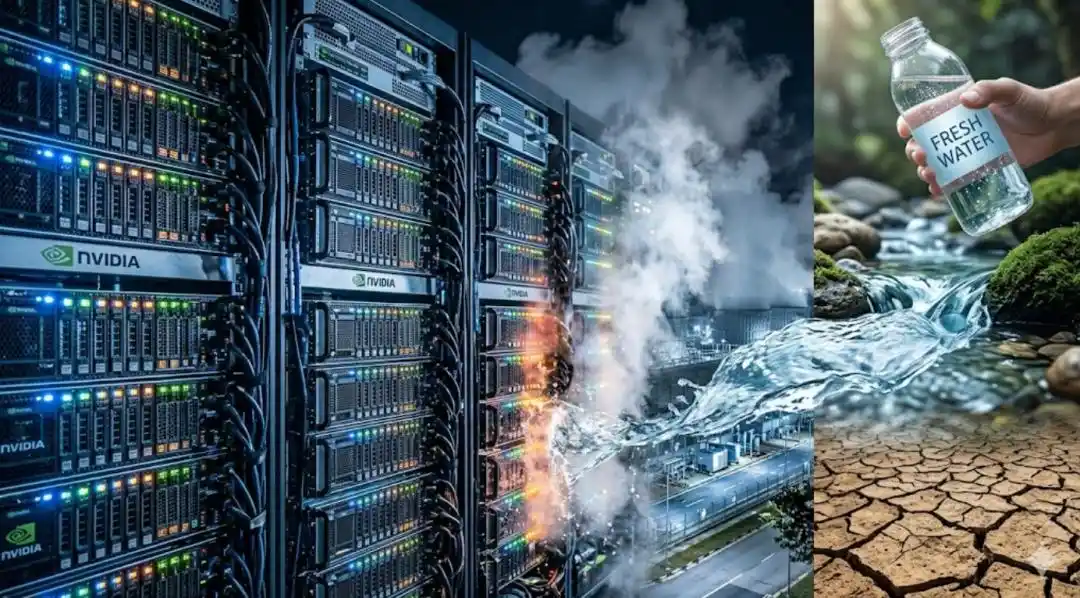
Over the past two years, the grand narrative of the AI arms race has been firmly locked into the logical loop of "chips, computing power, and nuclear power."

Huang Jen-hsun loudly proclaimed the terrifying computing power of clusters with tens of thousands of cards at the Taipei Computer Show; Musk raced day and night in Silicon Valley, acquiring land and building, stacking up the world's largest supercomputer, Colossus (with a throughput of 230,000 NVIDIA GPUs) in 122 days.

The capital market is betting frantically on these "silicon-based myths." However, everyone seems to have selectively forgotten the most fundamental,冷酷 physical limitation—these blazing hot silicon-based brains need to drink water, and it's the fresh water upon which human survival depends.

The latest global AI environmental cost research report from the United Nations University (UNU) tore off the veil of AI's virtual, low-carbon warmth with a set of cold data: the number of Prompts processed daily by global AI has soared to 2.5 billion.

It is estimated that by 2030, the annual water consumption of global AI infrastructure will reach a staggering 9.3 trillion liters (9.3 megaliters).

This figure is exactly enough to meet the basic annual living water needs of 1.3 billion people on Earth.

From the super server rooms on the banks of the Mississippi River in Memphis, USA, to the severely drought-stricken arid regions of Europe, a "freshwater plundering war" triggered by Physical AI and large model computing power demands has officially begun in the summer of 2026.

I. Silicon Devours Carbon: The "Binge Drinking" of Supercomputing Factories

Why has the AI large model become an insatiable "freshwater devouring monster"? The answer lies hidden in the heat dissipation architecture of data centers.

Currently, high-end GPUs like NVIDIA's latest Blackwell and even the next-generation Vera Rubin architecture have a power consumption as high as 700 to 1200 watts per chip when operating at full load.

When thousands of such chips are densely packed into a single server room, the entire data center is essentially a huge "high-heat boiler." If the heat cannot be removed within milliseconds, chips worth hundreds of millions of dollars can instantly burn out due to overheating.

In pursuit of the optimal cost solution, over 70% of data centers worldwide use "Evaporative Cooling Systems."
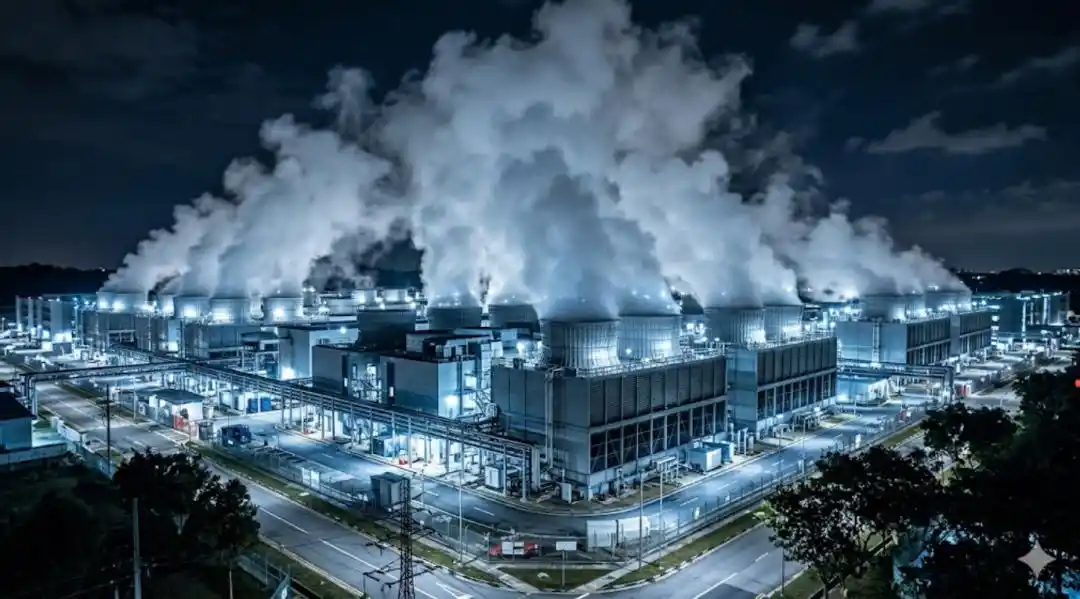
The principle of this system is extremely原始且野蛮: pumping large amounts of cold fresh water into the server room to absorb the heat emitted by the chips, then turning about 80% of that water into water vapor, which is directly discharged into the atmosphere.

This means that most of this consumed water cannot be recycled locally but simply "vanishes into thin air" from local groundwater and public water supply systems.

Let's look at a set of real figures that cannot be hidden in the sustainability reports of major companies:

OpenAI (GPT Series): According to independent scholars and investment bank tracking, just "training" GPT-4 once in the virtual world consumed approximately 600 million liters of pure water, enough to fill 237 Olympic-standard swimming pools; and the next-generation flagship large model currently being trained behind closed doors, due to an exponential explosion in computing power scale, will directly exceed a 1 billion liter water footprint for a single training run.

Google and Microsoft: In the latest environmental data disclosures, Google's annual water consumption has broken through 8.1 billion gallons (approximately 30 billion liters), a sharp year-on-year increase; while Microsoft, in its major model training hubs like West Des Moines, Iowa, has nearly doubled its water consumption in the past three years. Local residents in Iowa have already begun protesting because Microsoft's five data center campuses are fiercely competing for groundwater with local farmlands at a rate of millions of gallons per day.

The bottomless pit of large models is evolving into the physical exploitation of the Earth's real resources.

II. Memphis's "Watergate": Musk, Huang Jen-hsun, and the Angry Residents

The most intense正面冲突 of this "freshwater plundering war" occurred this year in Memphis, Tennessee, USA.
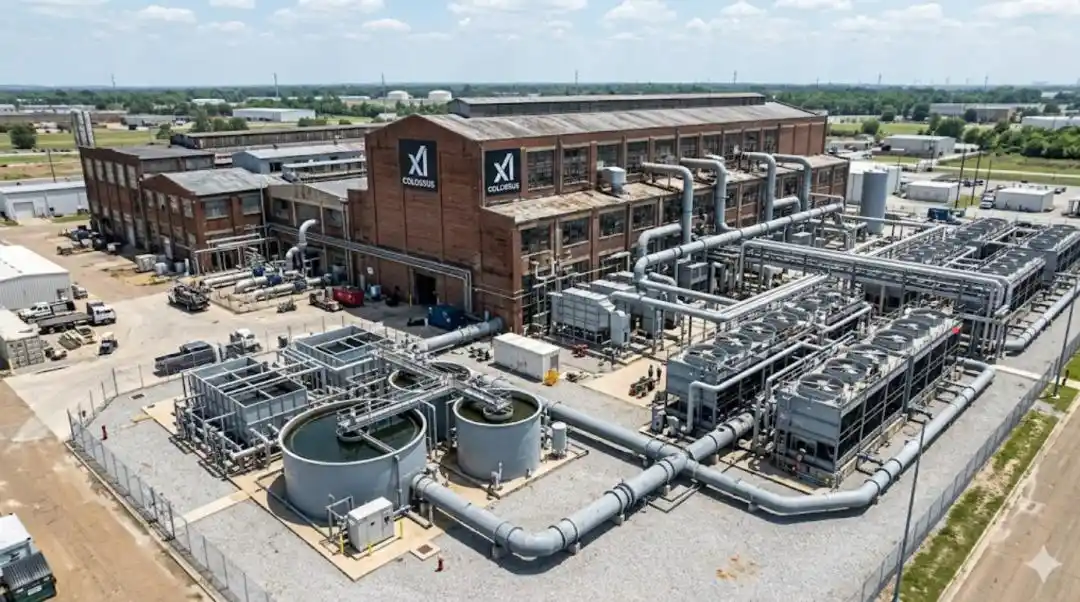
In 2024, Musk's xAI team, in order to train the Grok large model, forcibly built the Colossus supercomputer cluster in Memphis at breakneck Silicon Valley speed in 122 days. To keep this beast with 230,000 chips running, Colossus needs to extract up to 1 million gallons (approximately 3.8 million liters) of residential drinking water daily from Memphis's local underground aquifer.

Since Musk adopted the radical strategy of "acting first and reporting later, bypassing environmental hearings" during construction, when Memphis residents suddenly saw their water bills soar and abnormally low summer groundwater levels at the end of 2025, public resentment彻底引爆. Environmental groups and local communities sued xAI and local governments, accusing the tech giant of "stealing the next mouthful of clean water from children's lips."

Facing huge legal and public relations crises, Musk and Huang Jen-hsun were forced to make an extremely rare compromise in the spring of 2026: xAI urgently announced an $80 million investment to hastily construct a "Recycled Water Treatment Plant" (Colossus Water Recycling Plant) next to the data center.

Musk's solution is: 既然居民饮用水不给喝,那我的 AI 只能去“喝废水”. The plant plans to perform secondary filtration on the industrial wastewater and sewage discharged from Memphis's wastewater treatment plant to feed Colossus's cooling towers instead of pure fresh water.

Memphis's "Watergate" is a landmark turning point in the history of global Physical AI development. It proves to all狂热科技投资人: Starting in 2026, the ultimate bottleneck restricting AI expansion speed is no longer TSMC's production capacity, nor the dollars in Sam Altman's hands, but the "water access rights" approved by local governments.

III. Wall Street's "New Anxiety" and Tech Giants' "Zero-Water Lies"

Facing increasingly strong民间 protests and the severe旱灾 sweeping nearly 63% of North American land in 2026, tech giants' CEOs have started desperately "telling new stories" in earnings reports and tech summits to安抚华尔街.

At the just-concluded Microsoft Build 2026 conference at the end of May, CEO Satya Nadella dedicated a full ten-minute segment to explaining Microsoft's "Zero-Water Revolution."

Nadella proclaimed in his speech: "Microsoft's latest超大型数据中心 have completely abandoned evaporative cooling, adopting a new '全闭环无水循环冷链 (Closed-loop cooling).' We fill the cooling pipes with water once during construction, and then it circulates infinitely between the servers and condensers like a home refrigerator, with an average annual daily water consumption 'equivalent only to that of an ordinary restaurant.'"

But is this really the cure? In the eyes of自媒体 and academia, this seems more like a game of pass-the-parcel "power consumption sleight of hand."

The Cost of Closed-loop Systems: Closed-loop systems indeed do not evaporate water, but their cooling efficiency is far lower than that of open water evaporation. To achieve the same cooling effect, the server room must be connected to terrifyingly powerful giant fans and chillers, which causes the data center's power consumption to surge by 20% to 30%.

Transfer of Indirect Water Footprint: The暴增 in electricity demand means power plants must operate at full capacity. And globally, whether it's coal, gas, or nuclear power plants, their turbine generators also require astronomical amounts of cooling water. According to calculations by Lawrence Berkeley National Laboratory, if the water directly evaporated by data centers is 17.4 billion gallons, then the indirect water footprint generated due to their electricity consumption reaches 211 billion gallons!

Microsoft saves water inside the data center but causes power plants in another state to evaporate even more water. This "treating a headache by operating on the foot" green lie根本掩盖不了 the fact that AI is becoming an ecological disaster.

IV. Conclusion: The Key for Chinese AI, Smart Homes, and Embodied Intelligence to Break Through

When Western super data centers are being chased, surrounded, and forcibly踩下刹车 by environmental groups and laws due to water resources and carbon emission quotas, this brutal physical reality about "freshwater" sounds the alarm for China's rapidly advancing AI industry, but it also provides an极其清晰的roadmap for counter-attack.

China's AI industry absolutely must not blindly复制硅谷's "heavy industry monster model" of疯狂堆砌几十万卡 in the cloud, consuming millions of gallons of freshwater daily. At the 2026 juncture, the solution we see should be more pragmatic and精巧:

First, there's the natural geographical hedging of computing power layout. China naturally possesses the foresight of the "East Data West Computing" national strategy. Anchor the large training data centers requiring vast amounts of cold water firmly in regions like Guizhou and Inner Mongolia, which naturally have karst underground rivers, or extremely low average annual temperatures allowing for natural air cooling, using geographical红利 to hedge against water resource anxiety.

Second, and also the core technical breakthrough point, lies in the hybrid computing power重构 we mentioned repeatedly earlier: "small brain at the edge, big brain in the cloud."

Represented by Haier's Casarte in smart homes, as well as Chinese embodied intelligence robot manufacturers like Agibot and Unitree, they are全面推进 the research and development of lightweight chips for edge devices.

If our cleaning robots, our vehicle smart cockpits, and our industrial screw-tightening robots can solve 90% of physical interaction problems locally using a dozen-watt edge chip,配合 light "spatial world models," without needing to send a high-energy multimodal Prompt to a cloud thousands of kilometers away every time they move a finger, then we will have fundamentally掐断了九成 of AI's water and electricity consumption.

Leave the soul of AI to the algorithms, and keep the burden of AI at the edge.

This "freshwater plundering war" that Musk and Huang Jen-hsun have already run headlong into is forcing global AI to shed its浮躁外衣.

Is AI the ladder for human civilization to reach higher dimensions, or a silicon-based monster that will ultimately compete with humans for the Earth's last drops of pure water? In the summer of 2026, the answer is becoming increasingly clear with that evaporating steam.

This article is from the WeChat public account "新芒xAI", author: 格林 董义振

İlgili Sorular

QAccording to the article, how much fresh water does processing a typical ChatGPT prompt consume, and what is this volume compared to?

AProcessing a typical ChatGPT prompt consumes about 500 milliliters of fresh water, which is roughly equivalent to a standard bottle of bottled water.

QWhat major environmental concern related to AI development does the United Nations University report highlight, particularly looking ahead to 2030?

AThe United Nations University report highlights that global AI infrastructure is projected to consume a staggering 9.3 trillion liters (9.3 gigaliters) of water annually by 2030, an amount sufficient to meet the basic annual water needs of 1.3 billion people.

QWhy are large-scale AI data centers described as 'water-guzzling beasts'? Explain the primary technical reason based on the dominant cooling method.

ALarge-scale AI data centers are 'water-guzzling beasts' primarily because over 70% of them use 'evaporative cooling systems.' In this method, cold freshwater absorbs heat from the chips, and approximately 80% of that water is then evaporated into the atmosphere as steam, permanently removing it from the local water supply without recirculation.

QDescribe the 'Memphis water incident' involving Elon Musk's xAI. What was the conflict, and what was the proposed technological solution to it?

AThe 'Memphis water incident' involved Elon Musk's xAI building the Colossus supercomputer cluster, which daily extracted about 1 million gallons of drinking water from local aquifers. This caused public outrage over rising water costs and falling water tables. Facing legal action, xAI proposed building an $80 million water recycling plant to treat industrial and municipal wastewater for use in the cooling systems instead of fresh water.

QWhat critique does the article level against Microsoft's proposed 'zero-water' closed-loop cooling solution for data centers?

AThe article critiques Microsoft's 'zero-water' closed-loop cooling as a form of 'greenwashing' or a 'power consumption sleight of hand.' While it saves water directly in the data center, the system requires massive fans and chillers, increasing electricity consumption by 20-30%. This higher power demand shifts the water footprint to power plants, which use enormous amounts of water for cooling, potentially causing a net increase in overall water consumption.

İlgili Okumalar

The 'Middle Eastern Prince' Swindles a Wealthy Woman: Renting Planes and Rolls-Royces, Scamming 120 Million Over Three Years

Two brothers who posed as "Middle Eastern princes" have been sentenced in the United States to 24 and 23 years in prison, respectively, and ordered to pay over $21.2 million in restitution and back taxes. Over three years, they fraudulently obtained approximately $21 million, primarily by promoting fictitious investment projects, including a non-existent cryptocurrency mining operation in a former General Electric industrial park in East Cleveland. The brothers, aged 42 and 33, created elaborate personas: one claimed to be a wealthy royal family heir and the city's "International Economic Advisor," while the other posed as a hedge fund manager with expertise from watching the TV show *Billions*. They bolstered their image by renting luxury cars and private jets and cultivating a relationship with a local mayor's chief of staff, who provided official-looking documents and government event access. A significant portion of the victims' funds, about $18 million, came from a single Chinese investor, a woman from Sichuan with experience in Bitcoin mining. The brothers also defrauded several women, including one former girlfriend. Their scheme unraveled when the primary investor discovered her $6 million worth of mining equipment had been sold off. The case highlights a trend of impostors using fabricated "Middle Eastern royal" identities to target wealthy individuals. Similar incidents include a "Dubai prince" who recently promoted a $500 million family office in Hong Kong and a Colombian man who impersonated a Saudi prince for decades in the US before being caught and sentenced in 2019.

marsbit3 dk önce

The 'Middle Eastern Prince' Swindles a Wealthy Woman: Renting Planes and Rolls-Royces, Scamming 120 Million Over Three Years

marsbit3 dk önce

a16z Partner: Being in the Flow of Capital Is the True Moat

A16z Partner: Standing in the Cash Flow is the True Moat Historically, many of the strongest companies built their moats by positioning themselves within "cash flows"—facilitating value creation and transfer in a network and taking a cut. The more value flows, the larger they grow. Crypto is the first modern technology natively built for this. With open ledgers, programmable settlement, and stablecoins enabling internet-speed global value transfer, it allows startups to inherit network effects from day one. Well-designed tokens align users, developers, and the protocol towards network growth, distributing value to contributors. This model isn't new (e.g., railroads, Visa, Google, AWS) but Crypto democratizes it. It lets entrepreneurs target areas with high inefficiency and profit extraction—like traditional finance's payments, custody, FX, and settlement—to compress costs, increase speed, and redistribute value by standing in the new flow. The opportunity extends beyond finance to emerging markets like GPU/compute, AI training data, energy, and space, where new, programmable infrastructure can be built without legacy constraints. Key questions for founders: Are you already in the cash flow? Does your revenue scale 10x with network activity? Where is profit extraction highest relative to value created in your market? The strategy is clear: compress the old cost structure, position yourself in the new value stream, and let the network compound.

marsbit31 dk önce

a16z Partner: Being in the Flow of Capital Is the True Moat

marsbit31 dk önce

Capturing 15 Top-Tier Zero-Day Vulnerabilities: A Consensus Protocol Debug Agent Framework Built by 0G Lab in Collaboration with Teams from NUS, PKU, and BUPT

"Agents Capture 15 Critical Zero-Day Bugs: 0G Lab's Multi-Agent Framework Automates Debugging in Consensus Protocols" Distributed consensus protocols are notoriously difficult to debug due to complex, intertwined states. A novel framework, Agora, developed by 0G Labs with researchers from NUS, Peking University, and Beijing University of Posts and Telecommunications, tackles this by fusing deep domain expertise with a collaborative multi-agent LLM architecture. Agora moves beyond the limitations of single LLMs and traditional testing like fuzzing. It employs three specialized agents: an Orchestrator for global state, a Strategy agent for generating attack scenarios using distributed systems knowledge, and a TestGen agent that creates executable tests. A core innovation is its efficient "Succinct Memory & Communication" mechanism and a dynamic test harness. This allows the system to translate abstract hypotheses into concrete tests across languages like Go and Rust, run them, capture failures, and refine the approach in a closed loop—all with minimal token overhead. In rigorous evaluations on production-level protocols including Raft, EPaxos, and components from etcd and Sui, Agora discovered 15 previously unknown deep logic bugs (e.g., execution divergence, liveness violations). In stark contrast, powerful standalone LLMs like GPT-5.2 and Claude 4.5 found zero such bugs. Agora achieved this with a high precision of 73.9% and at an average cost of only about $40 per bug found. The framework demonstrates high generalizability. Its decoupled design allows the "Multi-Agent + Hypothesis-Driven Testing" paradigm to be applied to other complex domains like database concurrency control, OS kernels, and Web3 smart contract auditing. By enabling efficient, automated detection of deep logic flaws, Agora points the way for AI-powered security in critical infrastructure, aligning with the growing trends of agentic systems and automated quality control.

marsbit34 dk önce

Capturing 15 Top-Tier Zero-Day Vulnerabilities: A Consensus Protocol Debug Agent Framework Built by 0G Lab in Collaboration with Teams from NUS, PKU, and BUPT

marsbit34 dk önce

a16z crypto Partner: Cash Flow Is the True Moat

Title: a16z Crypto Partner: Capital Flow is the True Moat In business history, enduringly successful enterprises often share a core logic: capturing value by facilitating its creation and transfer within an ecosystem, taking a share of the proceeds. The scale of value flowing through the ecosystem directly correlates with the company's growth. Cryptography is the first modern technology natively suited to this commercial logic. Startups that don't leverage this framework in product design and business model construction miss significant opportunities. Stablecoins enable internet-speed, 24/7 global settlement of value with end-to-end programmability. With open underlying channels for capital flow and transparent unit economics, every circulating dollar globally represents potential flow in this arena. Blockchain is inherently a network business model. All transactions are recorded on a shared ledger, and each new participant strengthens this foundational system for future developers. More users and applications increase the network's value for all. Crypto entrepreneurs start with built-in network effects, unlike traditional businesses that spend years building them on legacy infrastructure. Network tokens amplify this advantage. A well-designed token system aligns users, developers, service providers, and validators around a common goal—network growth—while distributing rewards based on contribution. All proceeds flow back to ecosystem participants, creating a virtuous cycle of value circulation. This is not a new logic; the crypto industry simply makes it easier for startups to implement and scale. Historic giants like railroads, Standard Oil, AT&T, and modern leaders like Google and AWS succeeded by positioning themselves at critical junctures of value flow. In finance, Visa processed $15.7 trillion in payments (net revenue: $35.9B), and top market makers like Jane Street thrive by being in the path of order flow, benefiting from volume. Combining capital flow with network effects creates one of business's most robust models. As Jeff Bezos noted, "Your margin is my opportunity." This is acutely true in traditional finance, where sectors like payments, custody, and settlements extract significant fees (e.g., 2-3% for card networks, 6-9% for cross-border transfers). These profits represent opportunities for disruption by reducing costs and increasing efficiency, as proven by Stripe and Square in payments. Crypto founders can build the next-generation infrastructure: programmable, instant, global, and inherently embedded in capital flow paths. Opportunities extend beyond finance to markets like compute/GPU trading, AI training data, energy, robotics, and critical minerals—areas poised for massive global value movement that existing channels cannot handle. These are blue oceans for new, programmable infrastructure centered on capital flow, free from entrenched platforms and intermediaries. Founders should ask: Is your business at the heart of a value flow? Does your revenue scale 10x with ecosystem transaction growth? Where are the highest margins relative to value created in your target market? The answers point to the opportunity: cut existing costs, enter new value flow arenas, and grow through network effects.

Foresight News35 dk önce

a16z crypto Partner: Cash Flow Is the True Moat

Foresight News35 dk önce

Unveiling the 'White-haired Stock God' Serenity: A Spiritual Remedy for Anxious Retail Investors

The article details the rise of Serenity, dubbed the "White-Haired Stock God," whose social media posts have recently caused significant volatility in China's A-share market. Previously gaining fame in international retail investor communities, Serenity is known for his "Chokepoint Investment" strategy targeting small monopolies in the AI supply chain, reportedly achieving returns over 3612% this year. His influence stems from his background as a former AI research scientist, detailed analysis, and a massive following on X, where his subscriber count has surpassed Elon Musk's. In early June, Serenity's Chinese-language posts mentioning A-shares like LeaderDrive (Lide Xiebo), Easun, and Innolight triggered immediate 20% surges in their stock prices. He later clarified that some recommendations were crowdsourced from followers and claimed he did not hold positions in these stocks, stating his actions were "just for fun" to offer a foreign perspective on Chinese markets. This activity drew scrutiny from Chinese financial media, which warned of potential "pump-and-dump" schemes and legal risks. While anonymous, clues suggest Serenity is likely a Chinese-speaking individual living in Japan. He maintains his anonymity due to past harassment but enjoys substantial monthly income from his paid subscriptions. The article posits that Serenity embodies the market's current appetite for a charismatic, successful figure during the AI bull run, serving as an "outward projection" of bullish sentiment. It concludes by noting the cyclical nature of such market icons, warning that the same crowds that elevate them often seek scapegoats when trends reverse.

Odaily星球日报40 dk önce

Unveiling the 'White-haired Stock God' Serenity: A Spiritual Remedy for Anxious Retail Investors

Odaily星球日报40 dk önce

İşlemler

Spot
Futures

Popüler Makaleler

$S$ Nedir

SPERO'yu Anlamak: Kapsamlı Bir Genel Bakış SPERO'ya Giriş İnovasyonun manzarası gelişmeye devam ederken, web3 teknolojilerinin ve kripto para projelerinin ortaya çıkışı dijital geleceği şekillendirmede önemli bir rol oynamaktadır. Bu dinamik alanda dikkat çeken projelerden biri SPERO, $$s$$ olarak adlandırılmaktadır. Bu makale, SPERO hakkında ayrıntılı bilgi toplamak ve sunmak amacıyla, meraklılar ve yatırımcıların web3 ve kripto alanlarındaki temellerini, hedeflerini ve yeniliklerini anlamalarına yardımcı olmayı amaçlamaktadır. SPERO,$$s$$ Nedir? SPERO,$$s$$, kripto alanında merkeziyetsizlik ve blok zinciri teknolojisi ilkelerini kullanarak etkileşimi, faydayı ve finansal kapsayıcılığı teşvik eden bir ekosistem yaratmayı amaçlayan benzersiz bir projedir. Proje, kullanıcıların yenilikçi finansal çözümler ve hizmetler sunarak eşler arası etkileşimleri yeni yollarla kolaylaştırmayı hedeflemektedir. SPERO,$$s$$'nin temel amacı, bireyleri güçlendirmek ve kripto para alanındaki kullanıcı deneyimini artıran araçlar ve platformlar sağlamaktır. Bu, daha esnek işlem yöntemlerini mümkün kılmayı, topluluk odaklı girişimleri teşvik etmeyi ve merkeziyetsiz uygulamalar (dApp'ler) aracılığıyla finansal fırsatlar yaratmayı içermektedir. SPERO,$$s$$'nin temel vizyonu kapsayıcılık etrafında dönmekte olup, geleneksel finansal sistemlerdeki boşlukları kapatmayı ve blok zinciri teknolojisinin faydalarından yararlanmayı hedeflemektedir. SPERO,$$s$$'nin Yaratıcısı Kimdir? SPERO,$$s$$'nin yaratıcısının kimliği bir miktar belirsizdir, çünkü kurucusu(ları) hakkında ayrıntılı arka plan bilgisi sağlayan sınırlı kamuya açık kaynaklar bulunmaktadır. Bu şeffaflık eksikliği, projenin merkeziyetsizlik taahhüdünden kaynaklanabilir—birçok web3 projesinin paylaştığı bir etik anlayışı, bireysel tanınmanın yerine kolektif katkıları önceliklendirmektedir. Topluluk ve onun kolektif hedefleri etrafında tartışmaları merkezileştirerek, SPERO,$$s$$, belirli bireyleri öne çıkarmadan güçlendirme özünü taşımaktadır. Bu nedenle, SPERO'nun etik anlayışını ve misyonunu anlamak, tek bir yaratıcının kimliğini belirlemekten daha önemlidir. SPERO,$$s$$'nin Yatırımcıları Kimlerdir? SPERO,$$s$$, kripto sektöründe yeniliği teşvik etmeye adanmış girişim sermayedarlarından melek yatırımcılara kadar çeşitli yatırımcılar tarafından desteklenmektedir. Bu yatırımcıların odak noktası genellikle SPERO'nun misyonuyla uyumlu olup, toplumsal teknolojik ilerlemeyi, finansal kapsayıcılığı ve merkeziyetsiz yönetimi vaat eden projeleri önceliklendirmektedir. Bu yatırımcı temelleri, yalnızca yenilikçi ürünler sunan projelere değil, aynı zamanda blok zinciri topluluğuna ve ekosistemlerine olumlu katkılarda bulunan projelere de ilgi duymaktadır. Bu yatırımcıların desteği, SPERO,$$s$$'yi hızla gelişen kripto projeleri alanında dikkate değer bir rakip haline getirmektedir. SPERO,$$s$$ Nasıl Çalışır? SPERO,$$s$$, onu geleneksel kripto para projelerinden ayıran çok yönlü bir çerçeve kullanmaktadır. İşte benzersizliğini ve yeniliğini vurgulayan bazı temel özellikler: Merkeziyetsiz Yönetim: SPERO,$$s$$, kullanıcıların projenin geleceğiyle ilgili karar alma süreçlerine aktif olarak katılmalarını sağlayan merkeziyetsiz yönetim modellerini entegre etmektedir. Bu yaklaşım, topluluk üyeleri arasında sahiplik ve hesap verebilirlik duygusunu teşvik etmektedir. Token Kullanımı: SPERO,$$s$$, ekosistem içinde çeşitli işlevler sunmak üzere tasarlanmış kendi kripto para token'ını kullanmaktadır. Bu token'lar, işlemleri, ödülleri ve platformda sunulan hizmetlerin kolaylaştırılmasını sağlayarak genel etkileşimi ve faydayı artırmaktadır. Katmanlı Mimari: SPERO,$$s$$'nin teknik mimarisi, modülerlik ve ölçeklenebilirliği destekleyerek projenin evrimi sırasında ek özelliklerin ve uygulamaların sorunsuz bir şekilde entegrasyonuna olanak tanımaktadır. Bu uyum sağlama yeteneği, sürekli değişen kripto manzarasında geçerliliği sürdürmek için hayati öneme sahiptir. Topluluk Katılımı: Proje, işbirliği ve geri bildirim teşvik eden mekanizmalar kullanarak topluluk odaklı girişimlere vurgu yapmaktadır. Güçlü bir topluluk oluşturarak, SPERO,$$s$$, kullanıcı ihtiyaçlarını daha iyi karşılayabilir ve piyasa trendlerine uyum sağlayabilir. Kapsayıcılığa Odaklanma: Düşük işlem ücretleri ve kullanıcı dostu arayüzler sunarak, SPERO,$$s$$, daha önce kripto alanında yer almamış bireyler de dahil olmak üzere çeşitli bir kullanıcı tabanını çekmeyi hedeflemektedir. Bu kapsayıcılık taahhüdü, erişilebilirlik yoluyla güçlendirme misyonuyla uyumludur. SPERO,$$s$$ Zaman Çizelgesi Bir projenin tarihini anlamak, gelişim yolculuğu ve kilometre taşları hakkında kritik bilgiler sağlar. Aşağıda, SPERO,$$s$$'nin evriminde önemli olayları haritalayan önerilen bir zaman çizelgesi bulunmaktadır: Kavram Geliştirme ve Fikir Aşaması: SPERO,$$s$$'nin temelini oluşturan ilk fikirler, blok zinciri endüstrisindeki merkeziyetsizlik ve topluluk odaklılık ilkeleriyle yakından uyumlu olarak geliştirildi. Proje Beyaz Kağıdının Yayınlanması: Kavramsal aşamayı takiben, SPERO,$$s$$'nin vizyonunu, hedeflerini ve teknolojik altyapısını ayrıntılı bir şekilde açıklayan kapsamlı bir beyaz kağıt yayımlandı ve topluluk ilgisini ve geri bildirimini toplamak amacıyla sunuldu. Topluluk Oluşturma ve Erken Katılımlar: Projenin hedefleri etrafında tartışmalar yürüterek destek toplamak ve erken benimseyenler ile potansiyel yatırımcılar için bir topluluk oluşturmak amacıyla aktif iletişim çabaları gerçekleştirildi. Token Üretim Etkinliği: SPERO,$$s$$, yerel token'larını erken destekçilere dağıtmak ve ekosistem içinde başlangıç likiditesini sağlamak amacıyla bir token üretim etkinliği (TGE) gerçekleştirdi. İlk dApp'in Yayınlanması: SPERO,$$s$$ ile ilişkili ilk merkeziyetsiz uygulama (dApp) faaliyete geçti ve kullanıcıların platformun temel işlevleriyle etkileşimde bulunmalarını sağladı. Sürekli Gelişim ve Ortaklıklar: Projenin tekliflerine sürekli güncellemeler ve iyileştirmeler yapılmakta olup, blok zinciri alanındaki diğer oyuncularla stratejik ortaklıklar, SPERO,$$s$$'yi rekabetçi ve gelişen bir oyuncu haline getirmiştir. Sonuç SPERO,$$s$$, web3 ve kripto paranın finansal sistemleri devrim niteliğinde dönüştürme ve bireyleri güçlendirme potansiyelinin bir kanıtıdır. Merkeziyetsiz yönetime, topluluk katılımına ve yenilikçi tasarlanmış işlevselliğe olan bağlılığıyla, daha kapsayıcı bir finansal manzaraya doğru bir yol açmaktadır. Hızla gelişen kripto alanındaki herhangi bir yatırımda olduğu gibi, potansiyel yatırımcılar ve kullanıcılar, SPERO,$$s$$ içindeki devam eden gelişmelerle ilgili olarak kapsamlı bir araştırma yapmaları ve düşünceli bir şekilde katılmaları teşvik edilmektedir. Proje, kripto endüstrisinin yenilikçi ruhunu sergileyerek, sayısız olasılığını keşfetmeye davet etmektedir. SPERO,$$s$$'nin yolculuğu hala devam ederken, temel ilkeleri, teknoloji, finans ve birbirimizle etkileşim biçimimizi etkileyebilir.

89 Toplam GörüntülenmeYayınlanma 2024.12.17Güncellenme 2024.12.17

$S$ Nedir

AGENT S Nedir

Agent S: Web3'te Otonom Etkileşimin Geleceği Giriş Web3 ve kripto para dünyasında sürekli gelişen manzarada, yenilikler bireylerin dijital platformlarla etkileşim biçimlerini sürekli olarak yeniden tanımlıyor. Bu tür öncü projelerden biri olan Agent S, açık ajans çerçevesi aracılığıyla insan-bilgisayar etkileşimini devrim niteliğinde değiştirmeyi vaat ediyor. Otonom etkileşimlerin yolunu açarak, Agent S karmaşık görevleri basitleştirmeyi ve yapay zeka (AI) alanında dönüştürücü uygulamalar sunmayı hedefliyor. Bu detaylı inceleme, projenin karmaşıklıklarına, benzersiz özelliklerine ve kripto para alanındaki etkilerine dalacaktır. Agent S Nedir? Agent S, bilgisayar görevlerinin otomasyonunda üç temel zorluğu ele almak üzere özel olarak tasarlanmış çığır açıcı bir açık ajans çerçevesidir: Alan Spesifik Bilgi Edinimi: Çerçeve, çeşitli dış bilgi kaynaklarından ve iç deneyimlerden akıllıca öğrenir. Bu çift yönlü yaklaşım, alan spesifik bilgi açısından zengin bir veri havuzu oluşturmasını sağlar ve görev yürütmedeki performansını artırır. Uzun Görev Ufukları Üzerinde Planlama: Agent S, karmaşık görevlerin verimli bir şekilde parçalanmasını ve yürütülmesini kolaylaştıran deneyim artırımlı hiyerarşik planlama kullanır. Bu özellik, çoklu alt görevleri etkili ve verimli bir şekilde yönetme yeteneğini önemli ölçüde artırır. Dinamik, Homojen Olmayan Arayüzlerle Başlama: Proje, ajanlar ve kullanıcılar arasındaki etkileşimi geliştiren yenilikçi bir çözüm olan Ajan-Bilgisayar Arayüzü'ni (ACI) tanıtmaktadır. Çok Modlu Büyük Dil Modellerini (MLLM'ler) kullanarak, Agent S çeşitli grafik kullanıcı arayüzlerini sorunsuz bir şekilde gezinebilir ve manipüle edebilir. Bu öncü özellikler aracılığıyla, Agent S, makinelerle insan etkileşimini otomatikleştirmede karşılaşılan karmaşıklıkları ele alan sağlam bir çerçeve sunarak, AI ve ötesinde birçok uygulama için zemin hazırlıyor. Agent S'nin Yaratıcısı Kimdir? Agent S'nin kavramı temelde yenilikçi olsa da, yaratıcısı hakkında spesifik bilgiler belirsizliğini koruyor. Yaratıcı şu anda bilinmiyor, bu da projenin yeni aşamasını veya kurucu üyeleri gizli tutma stratejik tercihini vurguluyor. Anonimlikten bağımsız olarak, odak çerçevenin yetenekleri ve potansiyeli üzerinde kalıyor. Agent S'nin Yatırımcıları Kimlerdir? Agent S, kriptografik ekosistemde oldukça yeni olduğundan, yatırımcıları ve finansal destekçileri hakkında ayrıntılı bilgiler açıkça belgelenmemiştir. Projeyi destekleyen yatırım temelleri veya organizasyonları hakkında kamuya açık bilgilerdeki eksiklik, finansman yapısı ve gelişim yol haritası hakkında sorular doğuruyor. Destekleyicilerin anlaşılması, projenin sürdürülebilirliğini ve potansiyel pazar etkisini değerlendirmek için kritik öneme sahiptir. Agent S Nasıl Çalışır? Agent S'nin temelinde, çeşitli ortamlarda etkili bir şekilde çalışmasını sağlayan son teknoloji bir sistem yatmaktadır. İşleyiş modeli birkaç ana özellik etrafında inşa edilmiştir: İnsan Benzeri Bilgisayar Etkileşimi: Çerçeve, bilgisayarlarla etkileşimleri daha sezgisel hale getirmeyi amaçlayan gelişmiş AI planlaması sunar. Görev yürütmedeki insan davranışını taklit ederek, kullanıcı deneyimlerini yükseltmeyi vaat eder. Anlatı Belleği: Yüksek düzeyde deneyimlerden yararlanmak için kullanılan Agent S, görev geçmişlerini takip etmek amacıyla anlatı belleğini kullanarak karar verme süreçlerini geliştirir. Episodik Bellek: Bu özellik, kullanıcılara adım adım rehberlik sağlayarak, çerçevenin görevler gelişirken bağlamsal destek sunmasına olanak tanır. OpenACI Desteği: Yerel olarak çalışabilme yeteneği ile Agent S, kullanıcıların etkileşimleri ve iş akışları üzerinde kontrol sağlamasına olanak tanır ve Web3'ün merkeziyetsiz felsefesiyle uyumlu hale gelir. Dış API'lerle Kolay Entegrasyon: Çeşitli AI platformlarıyla uyumluluğu ve çok yönlülüğü, Agent S'nin mevcut teknolojik ekosistemlere sorunsuz bir şekilde entegre olmasını sağlar ve geliştiriciler ile organizasyonlar için cazip bir seçenek haline getirir. Bu işlevsellikler, Agent S'nin kripto alanındaki benzersiz konumuna katkıda bulunarak, karmaşık, çok aşamalı görevleri minimum insan müdahalesi ile otomatikleştirir. Proje geliştikçe, Web3'teki potansiyel uygulamaları dijital etkileşimlerin nasıl gelişeceğini yeniden tanımlayabilir. Agent S'nin Zaman Çizelgesi Agent S'nin gelişimi ve kilometre taşları, önemli olaylarını vurgulayan bir zaman çizelgesinde özetlenebilir: 27 Eylül 2024: Agent S'nin kavramı, “Bilgisayarları İnsan Gibi Kullanan Açık Bir Ajans Çerçevesi” başlıklı kapsamlı bir araştırma makalesi ile tanıtıldı ve projenin temelini sergiledi. 10 Ekim 2024: Araştırma makalesi arXiv'de kamuya açık olarak yayınlandı ve çerçevenin derinlemesine bir incelemesini ve OSWorld benchmark'ına dayalı performans değerlendirmesini sundu. 12 Ekim 2024: Agent S'nin yetenekleri ve özellikleri hakkında görsel bir içgörü sağlayan bir video sunumu yayımlandı ve potansiyel kullanıcılar ve yatırımcılarla daha fazla etkileşim sağlandı. Bu zaman çizelgesindeki işaretler, sadece Agent S'nin ilerlemesini değil, aynı zamanda şeffaflık ve topluluk katılımına olan bağlılığını da göstermektedir. Agent S Hakkında Ana Noktalar Agent S çerçevesi gelişmeye devam ederken, birkaç ana özellik öne çıkmakta ve yenilikçi doğasını ve potansiyelini vurgulamaktadır: Yenilikçi Çerçeve: İnsan etkileşimine benzer bir bilgisayar kullanımı sağlamak üzere tasarlanan Agent S, görev otomasyonuna yeni bir yaklaşım getiriyor. Otonom Etkileşim: GUI aracılığıyla bilgisayarlarla otonom olarak etkileşim kurabilme yeteneği, daha akıllı ve verimli hesaplama çözümlerine doğru bir sıçrama anlamına geliyor. Karmaşık Görev Otomasyonu: Sağlam metodolojisi ile karmaşık, çok aşamalı görevleri otomatikleştirerek süreçleri daha hızlı ve daha az hata payı ile gerçekleştirebilir. Sürekli İyileştirme: Öğrenme mekanizmaları, Agent S'nin geçmiş deneyimlerden öğrenmesini sağlar ve sürekli olarak performansını ve etkinliğini artırır. Çok Yönlülük: OSWorld ve WindowsAgentArena gibi farklı işletim ortamlarında uyumlu olması, geniş bir uygulama yelpazesine hizmet edebilmesini sağlar. Agent S, Web3 ve kripto alanında kendini konumlandırırken, etkileşim yeteneklerini artırma ve süreçleri otomatikleştirme potansiyeli, AI teknolojilerinde önemli bir ilerlemeyi temsil etmektedir. Yenilikçi çerçevesi aracılığıyla, Agent S dijital etkileşimlerin geleceğini örneklemekte ve çeşitli sektörlerde kullanıcılar için daha sorunsuz ve verimli bir deneyim vaat etmektedir. Sonuç Agent S, AI ve Web3'ün birleşiminde cesur bir sıçramayı temsil ediyor ve teknoloji ile etkileşim biçimimizi yeniden tanımlama kapasitesine sahip. Henüz erken aşamalarında olmasına rağmen, uygulama olanakları geniş ve çekici. Kritik zorlukları ele alan kapsamlı çerçevesi ile Agent S, otonom etkileşimleri dijital deneyimin ön plana çıkmasına taşımayı hedefliyor. Kripto para ve merkeziyetsizlik alanlarına daha derinlemesine girdikçe, Agent S gibi projelerin teknoloji ve insan-bilgisayar işbirliğinin geleceğini şekillendirmede önemli bir rol oynayacağı kesin.

576 Toplam GörüntülenmeYayınlanma 2025.01.14Güncellenme 2025.01.14

AGENT S Nedir

S Nasıl Satın Alınır

HTX.com’a hoş geldiniz! Sonic (S) satın alma işlemlerini basit ve kullanışlı bir hâle getirdik. Adım adım açıkladığımız rehberimizi takip ederek kripto yolculuğunuza başlayın. 1. Adım: HTX Hesabınızı OluşturunHTX'te ücretsiz bir hesap açmak için e-posta adresinizi veya telefon numaranızı kullanın. Sorunsuzca kaydolun ve tüm özelliklerin kilidini açın. Hesabımı Aç2. Adım: Kripto Satın Al Bölümüne Gidin ve Ödeme Yönteminizi SeçinKredi/Banka Kartı: Visa veya Mastercard'ınızı kullanarak anında Sonic (S) satın alın.Bakiye: Sorunsuz bir şekilde işlem yapmak için HTX hesap bakiyenizdeki fonları kullanın.Üçüncü Taraflar: Kullanımı kolaylaştırmak için Google Pay ve Apple Pay gibi popüler ödeme yöntemlerini ekledik.P2P: HTX'teki diğer kullanıcılarla doğrudan işlem yapın.Borsa Dışı (OTC): Yatırımcılar için kişiye özel hizmetler ve rekabetçi döviz kurları sunuyoruz.3. Adım: Sonic (S) Varlıklarınızı SaklayınSonic (S) satın aldıktan sonra HTX hesabınızda saklayın. Alternatif olarak, blok zinciri transferi yoluyla başka bir yere gönderebilir veya diğer kripto para birimlerini takas etmek için kullanabilirsiniz.4. Adım: Sonic (S) Varlıklarınızla İşlem YapınHTX'in spot piyasasında Sonic (S) ile kolayca işlemler yapın.Hesabınıza erişin, işlem çiftinizi seçin, işlemlerinizi gerçekleştirin ve gerçek zamanlı olarak izleyin. Hem yeni başlayanlar hem de deneyimli yatırımcılar için kullanıcı dostu bir deneyim sunuyoruz.

1.6k Toplam GörüntülenmeYayınlanma 2025.01.15Güncellenme 2026.06.02

S Nasıl Satın Alınır

Tartışmalar

HTX Topluluğuna hoş geldiniz. Burada, en son platform gelişmeleri hakkında bilgi sahibi olabilir ve profesyonel piyasa görüşlerine erişebilirsiniz. Kullanıcıların S (S) fiyatı hakkındaki görüşleri aşağıda sunulmaktadır.

活动图片