AI Agents Move 3.3M USDC Through Solana x402 Payments

bitcoinist2026-08-25 tarihinde yayınlandı2026-08-25 tarihinde güncellendi

Özet

In a single week, AI agents initiated 3.3 million USDC in payments over the x402 protocol on the Solana blockchain. This highlights a growing use case for stablecoins in machine-to-machine (M2M) micropayments for digital resources like APIs and data. The x402 protocol utilizes the HTTP 402 "Payment Required" status code to enable automated, internet-native payment flows. Over 99.99% of this agentic transaction volume is denominated in USDC, underscoring the need for a stable unit of account rather than a volatile cryptocurrency for routine automated payments. Solana provides the low-fee, high-speed settlement layer, while USDC serves as the payment asset. This activity represents a specific, early-stage adoption signal focused on autonomous software paying for services, not broad retail consumer usage. It points to a practical intersection of AI and crypto for agentic commerce. The future significance depends on whether x402 adoption grows beyond current experiments, potentially establishing Solana as a key settlement layer for M2M payments.

AI agents initiated 3.3 million USDC in payments over x402 on Solana within a single week, highlighting a growing machine-to-machine payment use case for stablecoins.

The x402 protocol uses the HTTP 402 “Payment Required” status code to enable internet-native payments for APIs, data, and digital resources. According to protocol analytics, more than 99.99% of agentic transaction volume on x402 is denominated in USDC.

That makes this a very specific kind of adoption.

It is not mainstream retail usage. It is not proof that ordinary consumers are paying with Solana stablecoins at scale. It is a machine-to-machine micropayment story involving AI agents, APIs, and USDC settlement.

That may be even more interesting.

TL;DR

  • AI agents initiated 3.3 million USDC in x402 payments on Solana in one week.
  • x402 uses HTTP 402 to support internet-native payment flows.
  • The activity represents machine-to-machine payments, not broad retail adoption.

Why AI Payments Need Stablecoins

AI agents need ways to pay for resources.

If autonomous software requests data, uses APIs, accesses compute, or performs tasks across services, it may need to send small payments quickly. Traditional payment systems are not built for high-volume, low-value machine transactions.

Stablecoins fit naturally into that gap.

They can settle quickly, support programmable flows, and move across internet infrastructure without relying on card networks for every microtransaction.

Solana adds low fees and fast execution, which helps when payments are small and frequent.

What x402 Is Trying To Solve

HTTP 402 has existed for years as a “Payment Required” status code, but it was never widely used in mainstream web payments.

x402 attempts to make that idea practical for crypto-native payments.

A service can request payment, an agent can pay, and the transaction can unlock access to the requested resource. That creates a cleaner flow for machine-to-machine commerce.

If this works, agents could pay for data, APIs, storage, inference, and other digital services without human intervention for every transaction.

That is the broader idea behind agentic payments.

USDC Dominance Is Important

The fact that more than 99.99% of agentic x402 volume is denominated in USDC says a lot.

AI agents do not need volatile exposure for routine payments. They need a stable unit of account. USDC gives the system dollar-denominated settlement while still using blockchain rails.

That makes stablecoins more practical than SOL itself for many payment flows.

SOL provides the network environment. USDC provides the payment asset.

That separation is important for understanding Solana’s role.

Do Not Overstate The Adoption Signal

The 3.3 million USDC figure is meaningful, but it should be framed properly.

This does not mean millions of consumers are using x402. It does not mean AI agents have become mainstream economic actors. It shows measurable activity in a specific protocol category.

The activity is still early.

But it points toward one of the more credible intersections between AI and crypto: autonomous software paying for digital resources.

That use case is more practical than many vague AI-token narratives.

What Comes Next

The next thing to watch is whether x402 activity keeps growing.

If more services support the payment flow and more agents use it, Solana could become a meaningful settlement layer for machine payments. If activity remains concentrated in a small set of experiments, the story may stay niche.

For now, the signal is clear.

AI agents are already moving USDC over Solana through x402, and the payments are tied to actual internet resource access rather than pure speculation.

That gives Solana a useful role in the emerging agentic payment stack.

This article is based on x402 protocol analytics and public Solana payment data.

This article was written by the News Desk and edited by Samuel Rae.

This report is based on information released in disclosures at primary source documentation.

İlgili Sorular

QWhat is the total amount of USDC that AI agents moved through the x402 protocol on Solana in one week, and what does this activity represent?

AAI agents initiated 3.3 million USDC in payments through the x402 protocol on Solana within a single week. This activity represents a growing use case for machine-to-machine micropayments, specifically for AI agents to pay for digital resources like APIs and data, rather than indicating broad retail consumer adoption of Solana stablecoins.

QHow does the x402 protocol utilize the HTTP 402 status code, and what problem is it designed to solve?

AThe x402 protocol uses the HTTP 402 "Payment Required" status code to enable internet-native payment flows. It is designed to solve the problem of facilitating automated, high-volume, low-value machine-to-machine transactions. It allows a service to request payment, an AI agent to pay, and the transaction to unlock access to a digital resource, creating a cleaner flow for autonomous commerce without human intervention for each transaction.

QWhy is USDC's dominance in x402 agentic transaction volume significant for understanding this payment use case?

AThe fact that over 99.99% of agentic transaction volume on x402 is denominated in USDC is significant because it shows that AI agents need a stable unit of account for routine payments, not exposure to asset volatility. USDC provides dollar-denominated settlement on blockchain rails, making it more practical than a volatile native asset like SOL for these automated payment flows. SOL provides the network environment, while USDC acts as the payment asset.

QAccording to the article, what are the key advantages of using stablecoins and Solana for AI agent payments?

AStablecoins like USDC are advantageous for AI agent payments because they settle quickly, support programmable flows, and can move across internet infrastructure without relying on traditional card networks for microtransactions. Solana adds the benefits of low fees and fast execution, which is crucial when payments are small and frequent, fitting the needs of high-volume, low-value machine-to-machine transactions.

QWhat should readers avoid overstating based on the 3.3 million USDC figure, and what is the practical significance of this activity?

AReaders should avoid overstating this as evidence of mainstream consumer adoption or that AI agents have become mainstream economic actors. The 3.3 million USDC figure shows measurable, early-stage activity in a specific protocol category. Its practical significance is that it points to a credible intersection between AI and crypto: autonomous software paying for actual digital resources like data and APIs, which is a more concrete use case than many speculative AI-token narratives. It gives Solana a potential role as a settlement layer for emerging agentic payments.

İlgili Okumalar

“Economic Outcast”: US Treasury Takes Aim at Iran's Cryptocurrency, Technology, and Gold

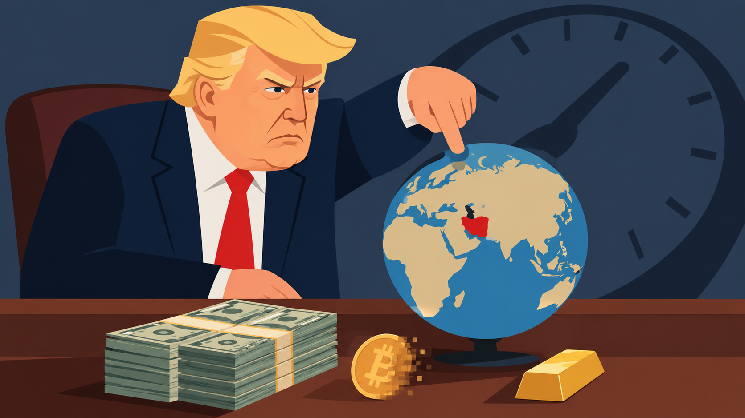
On August 24, 2026, the U.S. Treasury Department, under Secretary Scott Bessent, launched "Operation Economic Outcast," a major campaign targeting the financial networks of the Islamic Republic of Iran and its affiliates. The primary goal is to cut off revenue streams supporting the Iranian regime, with a specific focus on denying funding to the Islamic Revolutionary Guard Corps (IRGC). The Office of Foreign Assets Control (OFAC) activated authorities to sanction any entities, regardless of location, operating in or servicing five key Iranian economic sectors: digital assets (cryptocurrency), technology, gold, aviation, and shipping. OFAC noted Iran's increasing use of cryptocurrency to evade sanctions, including for operations linked to the IRGC and government officials. Initial measures targeted nearly 60 organizations, individuals, and vessels across multiple jurisdictions involved in procuring nuclear/missile technology, conducting cyber operations, and facilitating illicit oil sales. The U.S. State Department joined the campaign, announcing additional sanctions against Iranian military officials, intelligence entities targeting U.S. forces, and networks moving Iranian oil. Treasury warned foreign partners that they have a specific deadline to halt identified Iran-related activities, or face unilateral U.S. action. Entities facilitating sanctions evasion risk being cut off from the U.S. financial system and the dollar economy. The operation consolidates sanctions against Iran's crypto, tech, and commodity financing into a unified campaign with clear deadlines. It expands OFAC's reach to crypto brokers and payment networks handling Iranian oil. Analysis suggests crypto tools are already embedded in Iran's trade practices, as seen with capital flight from the Nobitex exchange and discussions of Bitcoin payments for Strait of Hormuz transit, indicating new OFAC powers target existing, not hypothetical, evasion channels.

cryptonews.ru14 dk önce

“Economic Outcast”: US Treasury Takes Aim at Iran's Cryptocurrency, Technology, and Gold

cryptonews.ru14 dk önce

Upbit Accelerates Token Listings: Total Trading Volume Halved, New Tokens Support Nearly 30% Share

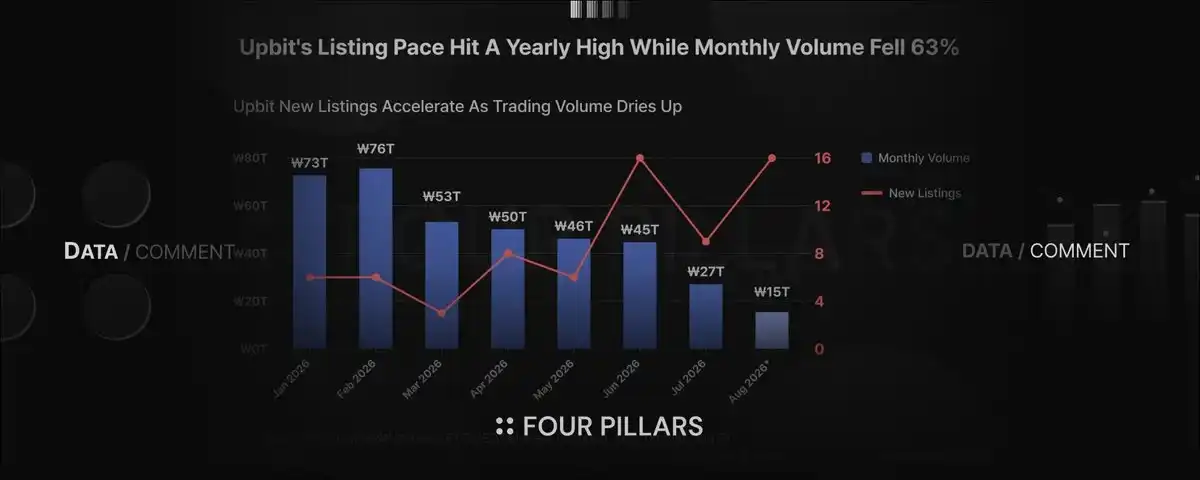
In the second half of 2026, Upbit significantly accelerated its pace of listing new cryptocurrencies, even as the overall Korean won-denominated trading market cooled rapidly. Monthly trading volume on Upbit plunged 63%, from KRW 72.7 trillion in January to KRW 27.1 trillion in July, with Bitcoin prices also falling. Contrary to the conventional logic of listing more during bull markets, Upbit intensified new listings during this downturn. New listings have become a crucial lever for Upbit to sustain trading activity in a bear market. By August, 61 new tokens listed in 2026 were collectively contributing nearly 30% of Upbit's total won trading volume, up from just 5% in January. This means roughly a quarter of the platform's fee revenue now comes from these newly listed assets. Standout performers like CHIP, RE, SLX, and CAP achieved significant individual market share shortly after listing, while new stablecoin listings contributed negligible volume. This strategy highlights a shift: the "Upbit listing premium," once a sought-after event to attract new capital, is increasingly used as a defensive tool to stabilize fee income amid shrinking overall volume. While the premium effect persists, indicating remaining genuine demand, its frequent use risks diluting the long-term strategic value and scarcity of Korean won liquidity access. Upbit's approach reflects a broader challenge for Asian centralized exchanges: relying on short-term listing tools to maintain operations during macro weakness, potentially at the cost of eroding long-term competitive foundations.

marsbit34 dk önce

Upbit Accelerates Token Listings: Total Trading Volume Halved, New Tokens Support Nearly 30% Share

marsbit34 dk önce

İşlemler

Spot
活动图片