Arthur Hayes takes CEO role at Flop Labs ahead of Q4 airdrop

cointelegraph2026-08-19 tarihinde yayınlandı2026-08-19 tarihinde güncellendi

Özet

Arthur Hayes, co-founder of BitMEX, has come out of retirement to become the CEO of Flop Labs. The company is developing a network where AI agents will use its native FLOP token to pay for computing and inference services. Hayes announced plans for a "massive airdrop" of the FLOP token in Q4 2026, ahead of the network's genesis block launch in early 2027. He stepped down as BitMEX CEO in 2020, and the exchange recently announced it will shut down in September 2026.

BitMEX co-founder Arthur Hayes said he would lead Flop Labs and updated his X profile to identify himself as the company’s CEO. Flop Labs is developing a proposed network through which AI agents would pay for computing and other services.

“I’m coming out of retirement to lead @flop_labs,” Hayes said in a Tuesday X post.

Cointelegraph has approached Hayes for comment and asked whether this position would affect his existing role as chief investment officer of Maelstrom Fund.

Hayes said Flop plans a “massive airdrop” in the fourth quarter of 2026, before the network’s genesis block launches in early 2027. Further details will be announced later.

Flop brands itself as a “proof-of-useful-inference protocol founded by Arthur Hayes,” in which AI agents spend the protocol’s native Flop (FLOP) token for inference and decentralized memory services.

Hayes co-founded cryptocurrency exchange BitMEX in 2014 but stepped down from his role as CEO in October 2020. In July 2026, BitMEX announced that it would shut down its exchange on Sept. 23.

Magazine: Why Bitcoin has recently reacted more to liquidity conditions than to rate cuts

İlgili Sorular

QWho has taken on the CEO role at Flop Labs according to the article?

AArthur Hayes, the co-founder of BitMEX, has taken on the CEO role at Flop Labs.

QWhat is the proposed purpose of the network Flop Labs is developing?

AFlop Labs is developing a network through which AI agents would pay for computing and decentralized memory services using its native FLOP token.

QWhen does Flop Labs plan to conduct a 'massive airdrop' and when is its network genesis block scheduled?

AFlop Labs plans a massive airdrop in the fourth quarter of 2026, with its network genesis block launching in early 2027.

QWhat position did Arthur Hayes hold at Maelstrom Fund, and was there a question about its continuity?

AArthur Hayes holds the position of chief investment officer at Maelstrom Fund. The article mentions that Cointelegraph asked him whether his new CEO role at Flop Labs would affect this existing position, but his response is not provided.

QWhat happened to BitMEX, the exchange co-founded by Arthur Hayes, in July 2026 according to the article?

AIn July 2026, BitMEX announced that it would shut down its exchange on September 23 of that year.

İlgili Okumalar

BONK Crypto Treasury Company Has Only $2.14 Million Cash Left, 70% of Revenue Comes from Founder's Own Platform

BONK Inc. (BNKK), the NASDAQ-listed company associated with the Solana meme coin BONK, reported stark financials for the first half of the year. While revenue skyrocketed 6,218% year-over-year to $5.5 million, the company posted a net loss of $7.88 million and its cash reserves plummeted to just $214,000. Its auditors issued a "going concern" warning, citing cumulative losses of $191.4 million, negative operating cash flow, and critically low liquidity. A critical detail is that $3.92 million, or 71%, of its revenue came from an "affiliate revenue share" with LetsBonk.fun, a meme coin launchpad. This platform is linked to founder Mitchell Rudy, whose entity, Lucky Dog Holdings, beneficially owns approximately 40.2% of common stock and all C Series preferred shares. These preferred shares grant the holder the right to elect half of the company's board. The company's financial structure is further intertwined with Rudy; it sold $50 million worth of stock to his entities, accepting payment in BONK tokens. Fluctuations in the value of these and other held digital assets led to an $8.17 million unrealized loss, the primary driver of the net loss. With operating cash outflows of $4.17 million for the half-year, the remaining cash covers roughly nine days of operations at the current burn rate, highlighting severe financial strain despite top-line growth.

marsbit28 dk önce

BONK Crypto Treasury Company Has Only $2.14 Million Cash Left, 70% of Revenue Comes from Founder's Own Platform

marsbit28 dk önce

CryptoQuant Noted a Signal of a Bitcoin Reversal

CryptoQuant has highlighted a potential reversal signal for Bitcoin, suggesting the bearish phase might be nearing its end as on-chain metrics show initial signs of spot demand recovery. Their analysis indicates that the 30-day spot demand metric has recovered from -206,000 BTC in late July to approximately -5,000, close to turning positive for the first time since February 2026. Historically, such a reversal has been followed by a median 60-day price gain of 18.1%, with a win rate of 78% (increasing to 87% when valuations are depressed). However, they caution that this is a favorable sign, not a guarantee. Analysts from Bitfinex Alpha note that two of three conditions for a sustainable Bitcoin recovery are already met: improved Federal Reserve rate expectations and relatively accommodative financial conditions, thanks to easing inflation and reduced odds of a near-term rate hike. The missing third catalyst is a capital rotation from traditional markets (like stocks and AI infrastructure) into cryptocurrencies. If this occurs, Bitcoin could reclaim $70,000. Conversely, continued negative flows might see support tested around $57,000. Current headwinds include significant weekly outflows from US spot Bitcoin ETFs (roughly $385 million) and reduced stablecoin supply. Wintermute offers a more cautious outlook, pointing to the same large ETF outflows and ongoing miner selling pressure. They note that Bitcoin has failed to rally despite the improved Fed outlook, which is typically bullish for risk assets. As an example, they cite miner Riot Platforms, which sold a substantial portion of its Bitcoin reserves in Q2 as its mining cost (~$91,000 per BTC) remains far above the current market price, forcing sales for liquidity. This combination of ETF outflows and miner selling is suppressing new demand.

cryptonews.ru30 dk önce

CryptoQuant Noted a Signal of a Bitcoin Reversal

cryptonews.ru30 dk önce

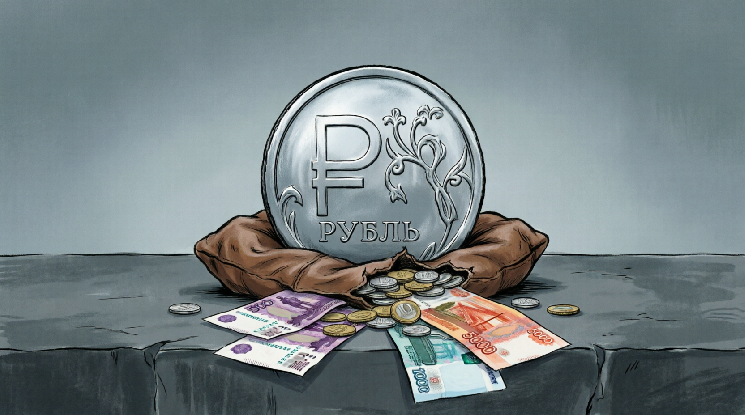
Is a Strong Ruble Good? Not for the Budget: Treasury Already Short 1.5 Trillion

The Russian budget has lost about 1.5 trillion rubles in revenue since the start of 2026 due to the ruble being stronger than the government's planned exchange rate. The budget was based on an average annual rate of 92.2 rubles per US dollar, but the actual average for the first seven and a half months was just 76.9 rubles. This discrepancy creates a significant shortfall, as every ruble of appreciation against the dollar reduces annual budget revenues by 140–160 billion rubles. When accounting for oil and gas revenues, the sensitivity is even higher, with potential annual losses reaching up to 2.5 trillion rubles. So far this year, the budget has already missed out on roughly 1.7 trillion rubles. The ruble's exchange rate has shown considerable volatility in 2026, ranging from a low near 71 rubles per dollar in May to over 85 rubles by mid-August. Despite this recent weakening, the year's average remains well below the budget target, creating a structural deficit in oil and gas revenues. Forecasts suggest the final average rate for 2026 will be around 80–82 rubles, which would result in a budget shortfall of about 1.6 trillion rubles. A strong ruble reduces import costs and inflation but also cuts the ruble earnings of exporters and threatens the funding of social obligations. The gap between the planned and actual rate is attributed not only to oil price dynamics but also to the fiscal rule mechanism, which can influence the currency's direction. The Ministry of Finance recently halted foreign currency sales under this rule, removing dollar supply from the market and contributing to pressure on the exchange rate. The budget policy is now forced to adapt to a stronger ruble than originally planned.

cryptonews.ru31 dk önce

Is a Strong Ruble Good? Not for the Budget: Treasury Already Short 1.5 Trillion

cryptonews.ru31 dk önce

İşlemler

Spot
活动图片