As expectations grow around the possible approval of the CLARITY Act, the White House held its third round of talks this week, where a so-called “compromise” began to take shape.
During the event held at ETHDenver, Patrick Witt from the White House Crypto Council said that the gap between both sides has “shrunk considerably” after a long private meeting last week.
On one side were major crypto players, including Coinbase, Ripple, and Andreessen Horowitz, advocating for the preservation of stablecoins’ unique features, such as programmability and rewards.
The other side included major banking groups, such as the American Bankers Association and the Bank Policy Institute, which focused on safeguarding the traditional banking system.
What is the main point of disagreement?
That being said, the main disagreement comes from fear of the unknown. Banks worry that if crypto companies are allowed to offer high rewards on stablecoins, people may pull their money out of banks. This could weaken banks and harm the economy.
However, crypto supporters see this differently. They believe banks are trying to block competition. In their view, banning yield gives banks unfair control over people’s savings and slows down innovation.
Now that the White House is taking direct control of the draft law, the crypto industry knows regulation is coming.
The White House has set a firm March 1 deadline, warning that if negotiators fail to finalize the bill by then, it could stall or collapse.
The latest draft includes strict rules to prevent loopholes. If companies try to disguise interest as “rewards,” they could face action from the SEC, Treasury, and CFTC, with fines of up to $500,000 per day.
This shows the administration is focused on tight control, not a soft compromise, keeping stablecoins close to the traditional banking system.
Roadblocks remain
However, the bill’s future still depends on Senator Tim Scott, who has yet to reschedule a key meeting. If talks succeed, the long delay may finally end. If not, the CLARITY Act could remain stuck in political deadlock.
Remarking on the same, Witt said,
“I believe if we solve this, it’s going to start a domino effect here, and I think things could move pretty fast once it’s resolved.”
Weighing in on the sentiment, Dan Gambardello added,
“Seems like they’re just playing games...”
Source: Dan Gambardello/X
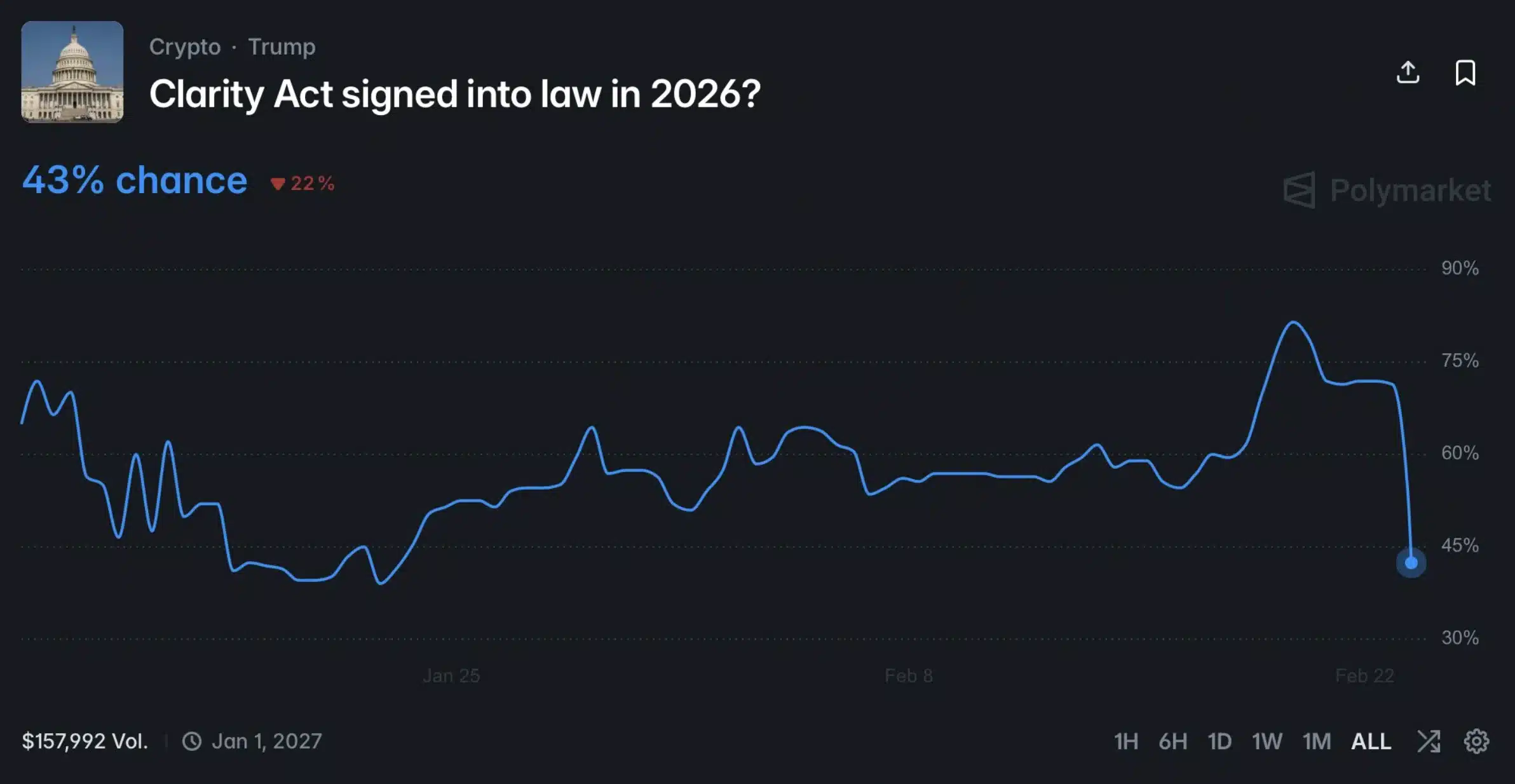
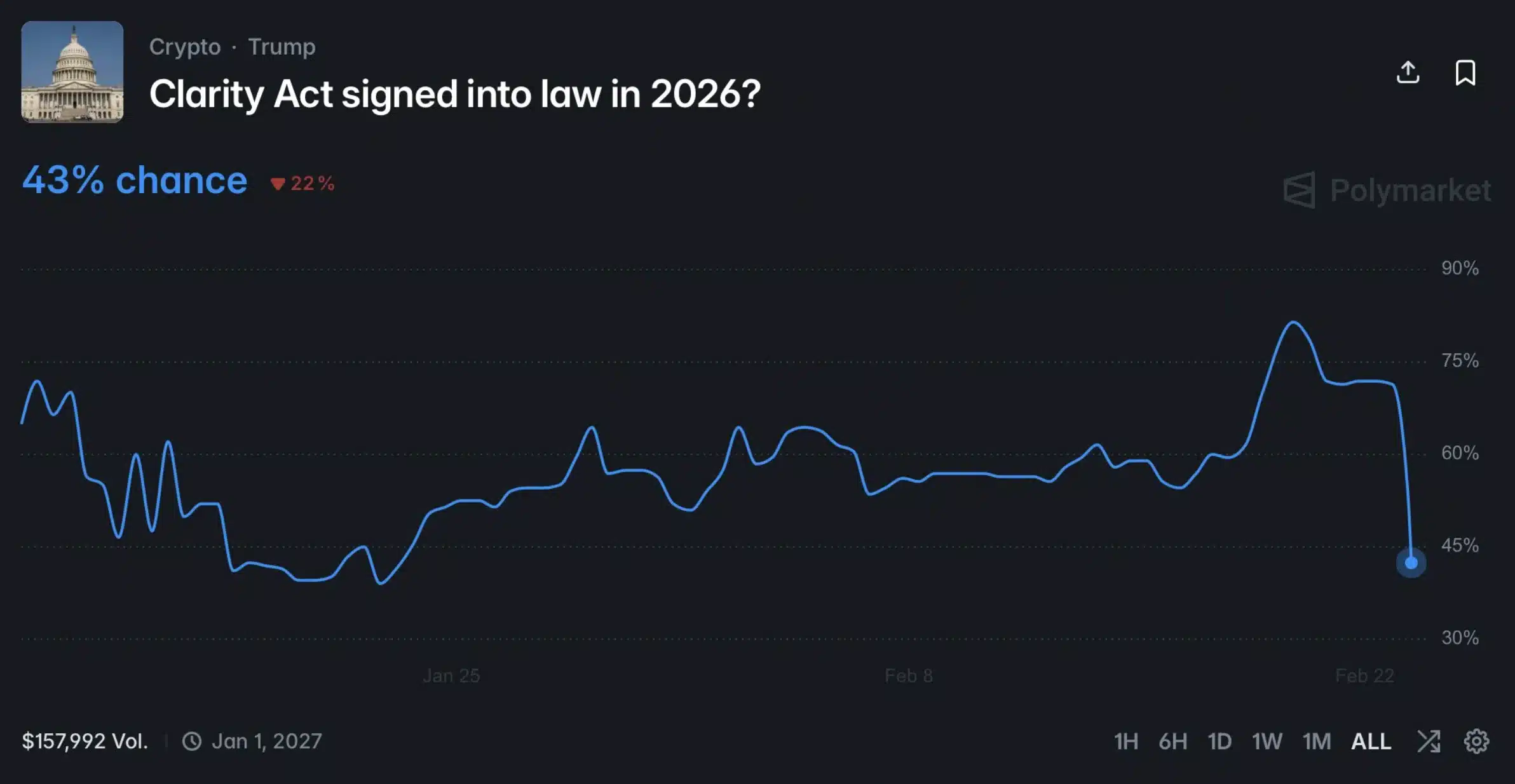
Even though Patrick Witt says talks are improving and both sides are working honestly, many people in the market think the deal may still fail.
CLARITY Act odds are decreasing
In just one day, the odds on Polymarket for the CLARITY Act passing dropped sharply, from 72% to 42%. This shows that traders and investors are losing confidence.
Data from Santiment also suggests that people are starting to expect the bill to stall or collapse.
But some people are still optimistic,
Additionally, many leaders in the crypto industry are still hopeful about the CLARITY Act.
On the 20th of February, Ripple CEO Brad Garlinghouse also said that he believes the bill could pass as early as April.
For now, the crypto community and investors are waiting nervously. They want to see if Washington can finally deliver the clear rules it has been promising for years.
Final Summary
- The CLARITY Act is entering its most critical phase, with the 1st of March deadline leaving little room for further delays.
- Talks between crypto firms and banks have narrowed differences, but key disagreements over stablecoin rewards remain unresolved.