Hong Kong Aims to Act as Global Connector Between Crypto and Traditional Finance

TheNewsCrypto2026-02-02 tarihinde yayınlandı2026-02-02 tarihinde güncellendi

Özet

Hong Kong lawmaker Johnny Ng emphasizes that the city is positioning itself as a global connector between cryptocurrency and traditional finance, rather than competing directly with other nations. He argues that crypto is not a zero-sum game and should function as an interconnected global system. Hong Kong’s advantages include its common law system, English-language courts, and free capital flow, which help build a regulated and trusted crypto environment. The city also leverages the Greater Bay Area, collaborating with hubs like Shenzhen and Macau to combine fundraising and regulatory expertise with technological innovation. Recent efforts include inviting global crypto firms, such as Coinbase, to establish operations in Hong Kong and introducing clearer custody and OTC trading rules to better integrate crypto with institutional and corporate finance.

Johnny Ng, a Hong Kong lawmaker and a strong supporter of Web3 and digital assets, says that Hong Kong is not trying to “Beat” other countries in crypto; instead, it can act as a global connector between crypto markets and traditional finance across the U.S., Europe, and China.

Ng says that crypto should not be treated as the Zero sum game, meaning Crypto doesn’t belong to one country and is global, which works best when it is connected. He also stated that Hong Kong’s goal is to link East and West, Crypto startups and traditional banks, and innovation and regulations.

Why Hong Kong has a strong advantage

According to him, Hong Kong already has the strong advantages of a common law system that the global investors could understand and the English language court, trusted by the international businesses, with a free movement of money in and out of the city. This helps Hong Kong to build a crypto market that is regulated, safer, and accepted by the global financial institutions.

A key part of Hong Kong’s strategy involves the Greater Bay Area, which connects cities and Chinese hubs such as Shenzhen and Macau. Ng explained that Hong Kong helps to raise money and handle rules, whereas these main cities turn ideas into real products, which makes the region powerful.

Inviting the global crypto firms
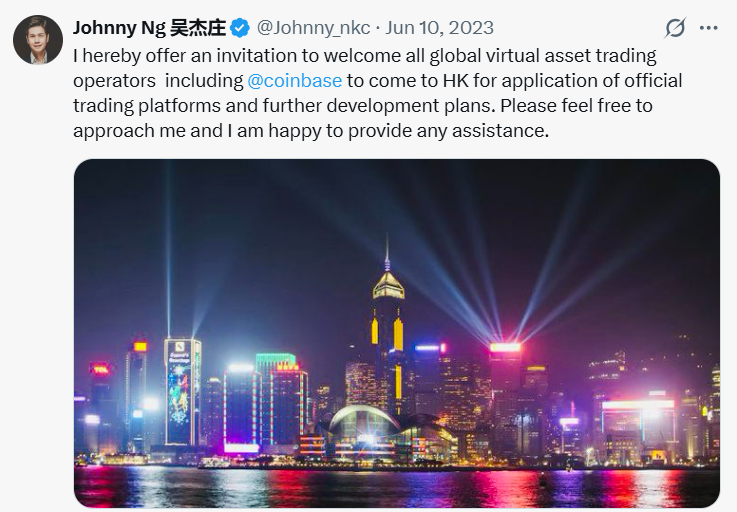
Ng pointed out that Vitalik Buterin spent a lot of time in Hong Kong during Ethereum’s early stages, which shows that the region has long supported blockchain innovations. In 2023, during the period of strict enforcement by the U.S. regulations, he invited the major crypto companies like Coinbase to operate in Hong Kong.

In 2026, Hong Kong plans to introduce clearer custody rules and regulate OTC crypto trading with larger trading limits for professional investors. Ng says that the next phase is about the infrastructure, and these steps aim to make crypto work smoothly with real businesses and large investors.

Highlighted Crypto News:

XRP Slides Below $1.60 Amid Broader Crypto Market Pullback

TagsBlockchainCryptoHongKong

İlgili Sorular

QWhat role does Hong Kong aim to play in the global crypto market according to Johnny Ng?

AHong Kong aims to act as a global connector between crypto markets and traditional finance, linking East and West, crypto startups and traditional banks, and innovation and regulations.

QWhat advantages does Hong Kong have in building a regulated crypto market?

AHong Kong has a common law system, English language courts trusted by international businesses, and free movement of money, which help build a regulated, safer crypto market accepted by global financial institutions.

QHow does the Greater Bay Area contribute to Hong Kong's crypto strategy?

AThe Greater Bay Area connects cities like Shenzhen and Macau, where Hong Kong handles fundraising and regulations while these cities turn ideas into real products, making the region powerful.

QWhat did Johnny Ng do in 2023 regarding global crypto companies?

AIn 2023, during strict U.S. regulations, Johnny Ng invited major crypto companies like Coinbase to operate in Hong Kong.

QWhat regulatory steps is Hong Kong planning for 2026 to support crypto integration?

AIn 2026, Hong Kong plans to introduce clearer custody rules and regulate OTC crypto trading with larger limits for professional investors to make crypto work smoothly with real businesses and large investors.

İlgili Okumalar

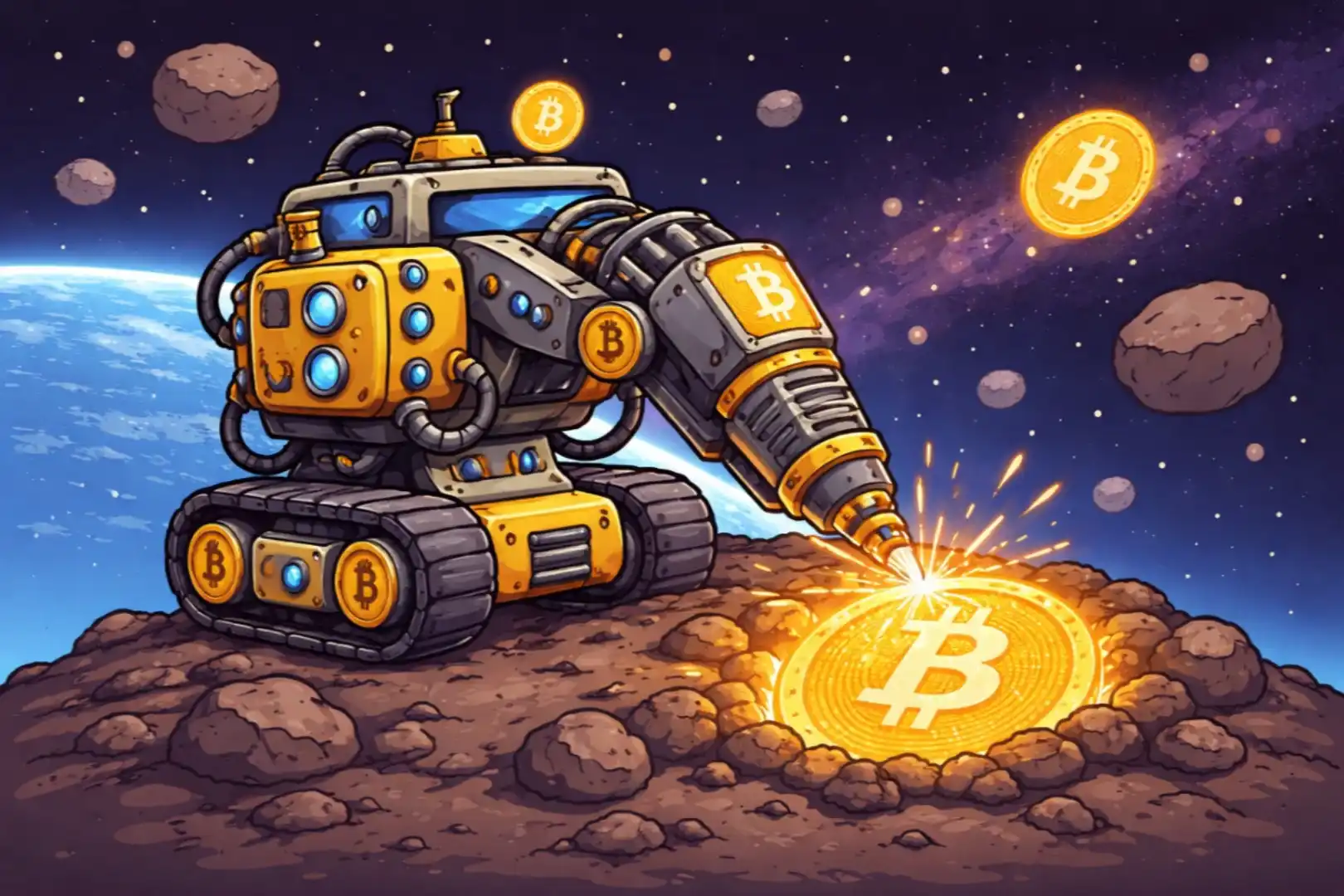
When Bitcoin Miners Take to Space

SpaceX is reportedly preparing for a historic IPO with a target of $1.75 trillion, while simultaneously advancing plans to deploy AI data centers in orbit, leveraging space’s vacuum for cooling and solar energy for power. This has sparked interest in whether Bitcoin mining—also energy-intensive and dependent on computing hardware—could also move to space. The core idea involves placing mining ASICs on the back of solar panels in orbit, using abundant solar energy to power mining operations. Heat dissipation in vacuum, a key challenge, is manageable through thermal radiation, and communication with mining pools is feasible with low latency via low Earth orbit satellites. However, the economics remain prohibitive. Launch costs, currently around $2,720 per kilogram via Falcon 9, make mining payloads financially unviable. Estimates suggest that with current technology, the payback period would exceed 100 years. SpaceX’s Starship may eventually reduce launch costs below $200/kg, making space mining more feasible. Companies like Starcloud—backed by NVIDIA and top VCs—are already testing orbit-based computing, including AI and planned Bitcoin mining experiments. Others, like SpaceChain and Cryptosat, focus on secure blockchain nodes and cryptographic services in space rather than mining. While orbital mining is not yet economically competitive with terrestrial operations, it represents a long-term vision for radically reducing energy costs and expanding the infrastructure of decentralized networks beyond Earth.

marsbit2 dk önce

When Bitcoin Miners Take to Space

marsbit2 dk önce

BitMart VIP Insights: March Crypto Market Review and Hotspot Analysis

BitMart VIP Insights: March 2026 Crypto Market Review and Analysis March saw a mixed macro environment with a hawkish Fed holding rates steady amid persistent inflation, rising oil prices, and weakening employment, raising stagflation concerns. Equities and risk assets weakened. Crypto trading volume showed volatile spikes but lacked sustainability, with total market cap stabilizing around $2.45–2.50T after a mid-month peak. BTC and ETH spot ETFs reversed from outflows to net inflows, with ETH showing stronger capital return and price elasticity. Stablecoin supply expanded modestly but concentrated in major tokens, indicating cautious liquidity return rather than broad risk-on sentiment. BTC traded between $62K–$74K, currently around $69K–$71K, while ETH was weaker in the $1.9K–$2.2K range. SOL was relatively resilient between $82–$97. Key developments included a landmark SEC/CFTC joint framework classifying 16 major assets (including BTC and ETH) as digital commodities, significantly improving regulatory clarity. BlackRock launched the first staking-enabled ETH ETF (ETHB), shifting crypto ETFs from pure price-trackers to yield-generating assets. However, security incidents like the Resolv Labs private key attack highlighted growing off-chain risks. April will be critical for crypto regulation, with the CLARITY法案 potentially advancing. The Ethereum Glamsterdam upgrade enters key testing, and Fed Chair Powell’s term end adds policy uncertainty. Macro data, geopolitics, and ETF flows will remain key market drivers.

marsbit19 dk önce

BitMart VIP Insights: March Crypto Market Review and Hotspot Analysis

marsbit19 dk önce

İşlemler

Spot
Futures
活动图片