From a $41 Million Fine to Assisting Governments in Freezing Assets: How Has Tether Completed Its Role Transformation?

比推2026-02-09 tarihinde yayınlandı2026-02-09 tarihinde güncellendi

Özet

Tether, the issuer of the $185 billion stablecoin USDT, has shifted from regulatory penalties to active collaboration with global law enforcement. Recently, it assisted Turkish authorities in freezing over $500 million in assets linked to an illegal gambling and money laundering operation led by Veysel Sahin. This action is part of a broader crackdown in which Turkey has frozen over $1 billion in illicit assets. Tether CEO Paolo Ardoino emphasized the company follows legal procedures when cooperating with agencies like the U.S. Department of Justice and FBI. According to Elliptic, Tether and competitor Circle have blacklisted around 5,700 wallets holding approximately $2.5 billion, with three-quarters containing USDT. Tether claims to have assisted in over 1,800 cases across 62 countries, freezing $3.4 billion tied to illegal activities. This marks a significant change from 2021, when Tether paid a $41 million fine to settle allegations of misrepresenting its reserves. The company has since re-entered the U.S. market with a compliant stablecoin, USAT, and has gained recognition for its proactive stance against crypto-related crimes, despite ongoing scrutiny over USDT’s use in illicit finance.

Author: Ryan Weeks, Todd Gillespie, Taylan Bilgic

Compilation: Luffy, Foresight News

Original Title: Assisting Turkey in Freezing $1 Billion in Assets, Tether's Compliance Approach Has Changed


On January 30, Turkish authorities announced the freezing of assets worth over $500 million under the name of Veysel Sahin, who is accused of operating an illegal gambling platform and涉嫌洗钱. The Chief Prosecutor of Istanbul revealed that an unnamed cryptocurrency company carried out the freezing operation at the request of the Turkish government.

This company is Tether Holdings SA, the issuer of the stablecoin USDT with a market capitalization of $185 billion. Recently, the company has actively assisted governments around the world in combating various cryptocurrency-related criminal activities, including money laundering, drug trafficking, and sanctions evasion.

Tether CEO Paolo Ardoino stated in a recent interview with Bloomberg News: "Law enforcement agencies approach us, provide relevant information, we verify the information, and then take action in accordance with the laws of the country in question. We follow this process when cooperating with the U.S. Department of Justice, the FBI, and other agencies."
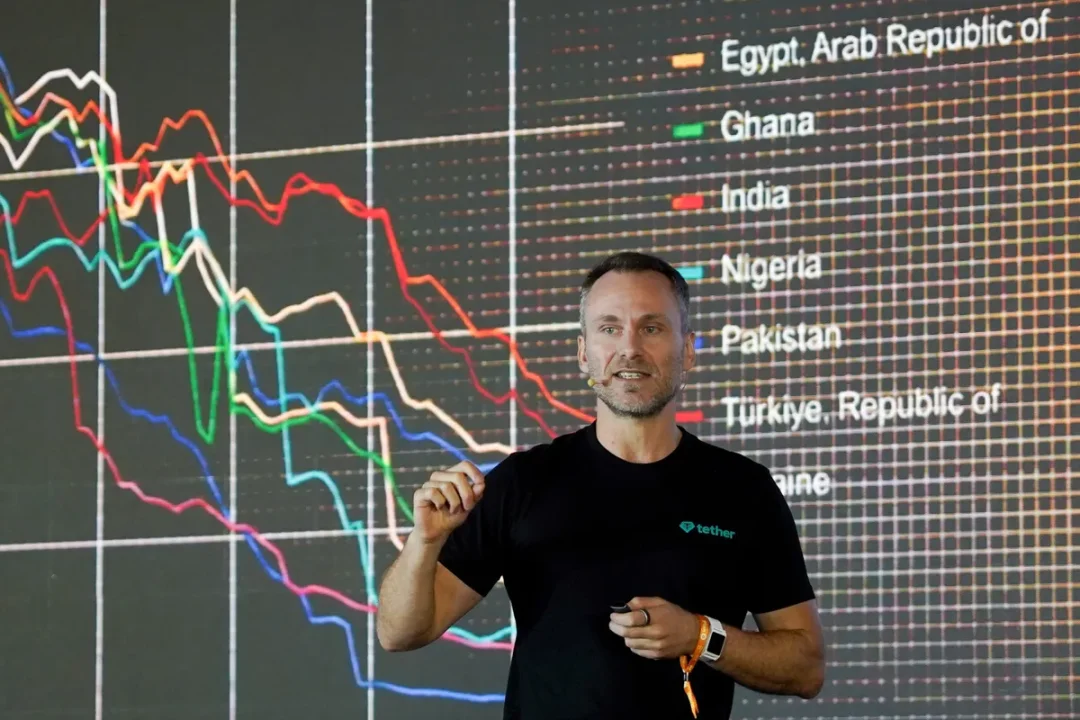
Tether did not comment further on this case. Bloomberg was unable to reach Sahin. A Turkish official also declined to disclose the name of the company mentioned in the prosecutor's statement.

The frozen assets, amounting to 460 million euros (approximately $544 million), are part of a large-scale law enforcement operation in Turkey, where the total value of frozen涉案资产 has exceeded $1 billion. According to Turkish television NTV, a few days after the announcement of the freezing of Sahin's assets, another individual was investigated for涉嫌洗钱 and illegal gambling, and加密资产 worth $500 million under their name were also frozen. However, it is currently unclear whether this asset freeze involved tokens issued by Tether.

A Turkish official, who spoke anonymously on sensitive legal matters to Bloomberg, revealed that authorities discovered the "financial traces" of these涉嫌非法收入 by tracking fund flows and analyzing加密资产. The official also stated that similar asset freezing actions will be taken in the future against individuals involved in illegal gambling and payment systems.

For Tether, this freezing operation is just one of its increasingly frequent fund freezes, highlighting the growing efforts of this cryptocurrency giant to cooperate with global law enforcement agencies.

A report released in January by analytics firm Elliptic showed that by the end of 2025, Tether and its competitor Circle Internet Group Inc. had blacklisted approximately 5,700 wallets, involving assets of about $2.5 billion, a number that was negligible two years ago. At the time of freezing, three-quarters of these wallets held USDT.

Arda Akartuna, Head of Crypto Threat Intelligence for Asia-Pacific at Elliptic, said: "As the legitimate application of cryptocurrencies and the integration of global payments accelerate, illegal usage has also increased, prompting stablecoin issuers to intervene more actively."

Tether often publicizes its efforts to combat criminal activities, including in communications aimed at potential investors. The company is seeking financing at a valuation of up to $500 billion. According to its website, Tether has assisted law enforcement agencies in 62 countries with over 1,800 cases, freezing $3.4 billion worth of USDT related to涉嫌非法活动.

Nathan McCauley, Co-founder and CEO of Tether partner Anchorage Digital Bank, said in an interview: "They (Tether) are extremely proactive in their cooperation. Among stablecoin issuers, the company has the 'recognized best reputation' among law enforcement agencies."

Anchorage is the issuer of Tether's compliant dollar stablecoin USAT, which was launched in late January, marking Tether's return to the U.S. market.

This represents a significant shift from the tense situation between Tether and U.S. regulators a few years ago. After clashing with regulators in 2018, Tether largely withdrew from the U.S. market and paid a $41 million fine in 2021 to settle charges of misrepresenting its reserves.

However, the second Trump administration has welcomed the cryptocurrency industry. Last year, Ardoino attended, along with several other executives, the ceremony where President Trump signed the stablecoin regulatory bill.
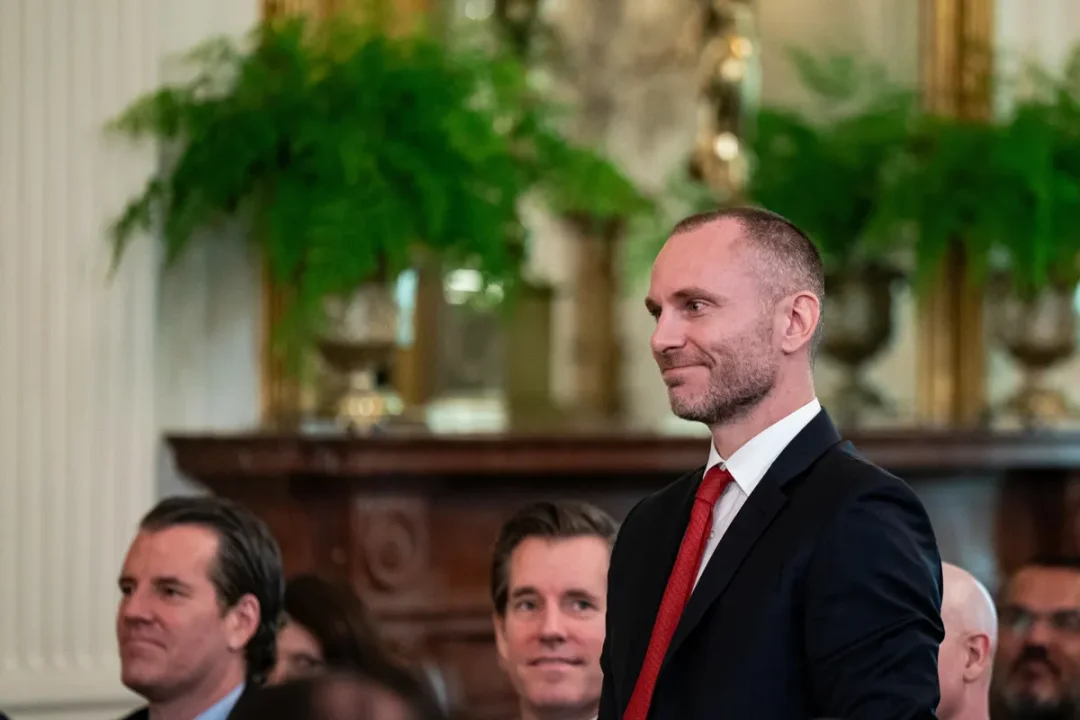
Even so, Tether's USDT continues to face scrutiny from regulators due to its widespread use by criminals.

On January 9, the U.S. Attorney's Office for the Eastern District of Virginia announced charges against a Venezuelan citizen for using USDT to launder $1 billion. A recent report from Elliptic showed that the Central Bank of Iran purchased over $500 million worth of USDT to alleviate its currency crisis and evade U.S. sanctions.

Turkish fugitive Sahin is accused of leading an organization that laundered money for illegal online gambling platforms. According to local media reports, Sahin was sentenced to 10 years in prison in 2017, released in 2023, and sentenced to another 21 years in prison one month later. His current whereabouts are unknown, but the Turkish official news agency Anadolu Agency reported on January 30 that "the relevant authorities are advancing the legal process for his extradition back to Turkey."


Twitter:https://twitter.com/BitpushNewsCN

Bitpush TG Discussion Group:https://t.me/BitPushCommunity

Bitpush TG Subscription: https://t.me/bitpush

Original link:https://www.bitpush.news/articles/7610331

İlgili Sorular

QWhat was the cryptocurrency company Tether's role in the Turkish government's asset freeze operation?

ATether Holdings SA, the issuer of the USDT, assisted the Turkish government by freezing over 500 million dollars in assets belonging to Veysel Sahin, who was accused of operating an illegal gambling platform and money laundering.

QHow has Tether's relationship with U.S. regulators changed in recent years according to the article?

ATether's relationship with U.S. regulators has significantly improved. After a $41 million settlement in 2021 over allegations of misrepresenting reserves, the company has since increased cooperation with law enforcement and attended the signing ceremony of a stablecoin regulation bill under the Trump administration.

QWhat does the increase in the number of blacklisted wallets by Tether and Circle indicate?

AThe increase to about 5,700 blacklisted wallets, holding approximately $2.5 billion in assets, indicates that stablecoin issuers are becoming more proactive in intervening against the illegal use of cryptocurrencies, such as money laundering and sanctions evasion.

QWhat specific illegal activities is Tether's cooperation with global law enforcement agencies targeting?

ATether's cooperation targets a range of cryptocurrency-related crimes, including money laundering, drug trafficking, and evasion of sanctions.

QWhat new product did Tether launch in its effort to re-enter the U.S. market, and who is the issuer?

ATether launched a compliant U.S. dollar stablecoin called USAT in late January, which is issued by its partner Anchorage Digital Bank.

İlgili Okumalar

From Utopian Narratives to Financial Infrastructure: The 'Disenchantment' and Pivot of Crypto VC

From Utopian Narratives to Financial Infrastructure: The Disenchantment and Pivot of Crypto VC The crypto industry, once championing "blockchain, not Bitcoin" and a broad Web3 vision, is now seeing venture capital flow overwhelmingly into pragmatic financial applications, particularly stablecoin payments. Following the decline of the Web3 and NFT boom in the early 2020s, investment has cooled for many sectors but surged for payment infrastructure. Key signals include Stripe's $1.1 billion acquisition of Bridge and Mastercard's $1.8 billion purchase of BVNK. Data from Architect Partners shows funding for crypto payment companies skyrocketed to $2.6 billion in 2025, exceeding the total of the previous three years combined. In contrast, funding for decentralized applications (DApps) and blockchain gaming has collapsed. The total private crypto funding reached $20.4 billion in 2025, still below the 2022 peak of $27.6 billion. Stablecoins, like USDT and USDC, are now seen as a breakthrough application, with their annual transaction volume soaring 72% to $33 trillion in 2025. Their core appeal is enabling efficient, real-time global value transfer, solving long-standing issues of cost and speed in cross-border payments. However, the industry faces significant challenges from established "gatekeepers" like Visa and Mastercard, which control terminal access. The piece also notes the declining market share of Binance and the emergence of new products like Franklin Templeton's tokenized ETF with Ondo Finance, which allows for 24/7 trading. A commentator starkly observes that the line between investing and gambling has been completely erased, with a significant portion of new ETFs being leveraged or crypto-related funds. The narrative has shifted from utopian rebuilding to building financial infrastructure.

marsbit22 dk önce

From Utopian Narratives to Financial Infrastructure: The 'Disenchantment' and Pivot of Crypto VC

marsbit22 dk önce

Siri's "Androidization" Turning Point? iOS 27 to Launch AI App Store, Supporting Free Installation of Third-Party Bots

Apple is reportedly planning a major strategic shift for Siri and its AI ecosystem with iOS 27, moving towards a more open platform. According to Mark Gurman, the core of this strategy involves a "two-pronged" approach: deeply integrating its own Apple Intelligence while also opening Siri's underlying interfaces to third-party services. A key feature will be the introduction of a dedicated "AI App Store" section. This will allow users to freely install and use various third-party AI chatbots, not just ChatGPT, directly within Siri, functioning like an AI plugin marketplace. To bolster its capabilities, Apple is also considering deeply integrating Google's Gemini technology to enhance Siri and other system-level AI functions. This complementary strategy allows Apple to avoid direct competition with leading model developers and instead leverage external products to address its own weaknesses. The business logic behind this move is to defend its hardware dominance by offering a highly customizable AI experience to prevent users from switching to Android. Furthermore, Apple stands to generate significant revenue by applying its standard App Store commission model to subscriptions for these third-party AI services. This new AI vision is expected to be unveiled at WWDC26. This potential shift from a "walled garden" to an open "AI port" represents a significant change in Apple's philosophy, aiming to redefine smartphone interaction by making Siri a super-container for the world's best AI models.

marsbit48 dk önce

Siri's "Androidization" Turning Point? iOS 27 to Launch AI App Store, Supporting Free Installation of Third-Party Bots

marsbit48 dk önce

İşlemler

Spot
Futures
活动图片