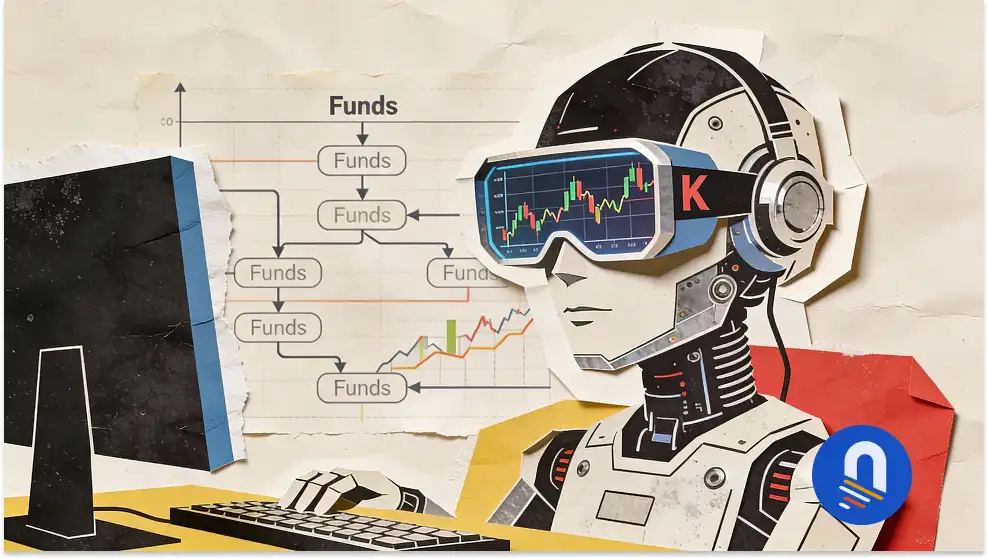
$7 Billion Iran Bet Forces U.S. to Tighten Rules on Prediction Markets

marsbit2026-03-16 tarihinde yayınlandı2026-03-16 tarihinde güncellendi

Özet

Polymarket and Kalshi, two prediction market platforms, are reportedly seeking funding at valuations of around $20 billion each. This coincides with increased regulatory scrutiny from U.S. lawmakers and the CFTC, driven by controversial contracts related to Iran. Approximately $529 million was wagered on contracts predicting the timing of an Iranian attack, and $150 million on contracts related to the potential ouster of Supreme Leader Khamenei. Six accounts allegedly profited around $1.2 million from well-timed trades just hours before an attack on Iranian officials. These events have intensified concerns about insider trading, market manipulation, and the use of sensitive or classified information. In response, U.S. legislators are drafting bills to restrict certain event contracts, while the CFTC is advancing new regulatory frameworks. Despite the controversy, prediction markets are gaining traction as information products. Major media outlets like CNBC and Dow Jones have partnered with these platforms to integrate predictive data into their reporting. However, the integration of such data into mainstream media raises questions about fairness, trust, and the potential influence on public perception. The core challenge lies in balancing innovation and growth with regulatory oversight, especially when contracts involve geopolitical events, assassinations, or military actions. The U.S. must decide whether to heavily regulate these markets or outright ban certain contract...

Written by: Andjela Radmilac

Compiled by: Saoirse, Foresight News

Polymarket and Kalshi are seeking funding at valuations that would place them among the top consumer fintech companies, while U.S. regulators are simultaneously accelerating the development of new rules for such products. It is reported that both companies are in early-stage funding negotiations, with valuations expected to reach approximately $20 billion each.

This funding boom coincides with a political storm.

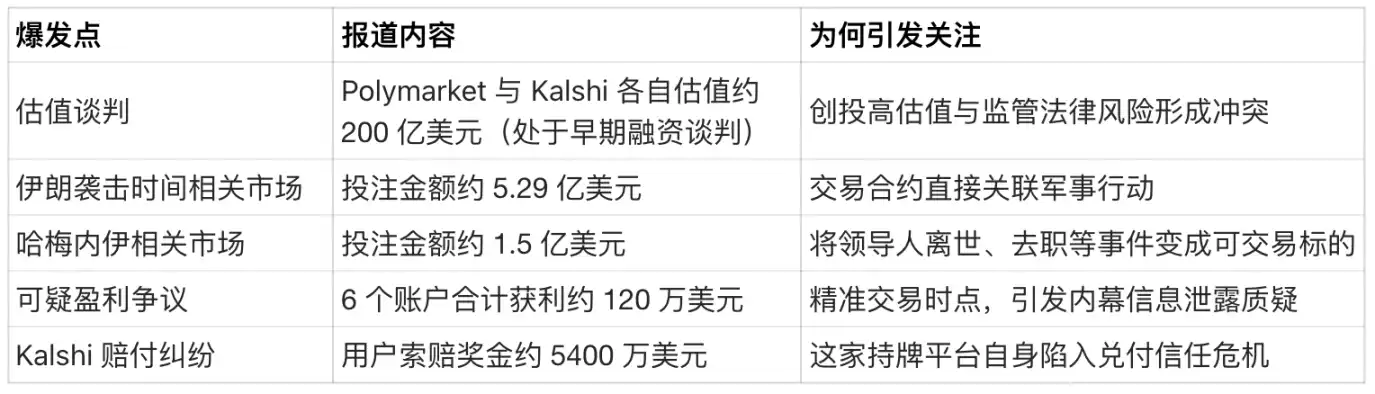
Iran-related contracts have turned prediction markets from a niche forecasting tool into a controversial focal point involving insider information and war speculation. A Reuters investigation into the markets on Polymarket related to the timing of the attack and Khamenei's ouster found that approximately $529 million was wagered on contracts related to the timing of the attack, and about $150 million was bet on contracts related to Khamenei; meanwhile, sources indicate that six accounts, through precisely timed trades, collectively profited about $1.2 million.

Now, U.S. lawmakers are drafting relevant bills, and the U.S. Commodity Futures Trading Commission (CFTC) has also stated it will advance new regulatory rules.

Wall Street believes that event probability prediction will become part of the information system; but Washington is blocking it because it fears this system could benefit the wrong people at the worst possible time.

Why Wall Street is Bullish on Prediction Markets

Prediction markets can convert attention into trades, earn fees from those trades, and simultaneously generate real-time probability data, packaged as information products.

It is this data product that moves prediction markets out of the "gambling" category and classifies them as information tools similar to market data, polls, and financial terminals—because their output format is highly similar to market quotes.

Mainstream media have begun partnering with these platforms:

  • CNBC has signed a multi-year agreement with Kalshi to integrate its probability data into television and digital content starting in 2026.
  • Dow Jones has reached an exclusive deal with Polymarket to introduce prediction data into platforms like The Wall Street Journal and Barron's, treating contract prices as news infrastructure on par with earnings reports, interest rates, and election coverage.

These partnerships also amplify the impact of scandals: once probability data is embedded in mainstream media, it influences public perception of an event's likelihood and urgency. This is also why regulators believe platforms must adhere to higher standards in fairness, monitoring, and settlement.

This explains why, even as Iran-related trades spark political controversy, the valuations of both companies are rising.

Iran Incident Makes Prediction Markets a Washington Headache

The biggest advantage of prediction markets is early access to information. And the Iran-related contracts clearly show that these platforms are touching on sensitive information that the government tries to control.

On March 2, bets on the attack timing-related contracts reached $529 million, and contracts related to Khamenei's death and ouster reached about $150 million. Just hours before the attack on Iranian officials, six accounts suddenly injected funds and profited $1.2 million through these contracts.

As the conflict escalated, multiple reports pointed out that a large number of newly registered accounts made precise bets on Iran-related events. Such reports have thrust Polymarket from a crypto-niche platform directly into the sights of government regulation and law enforcement.

The core issues these platforms now face are: trust and fairness.

For prediction markets to function, users must believe the rules are stable, outcomes are determined consistently, and there is no insider advantage. Once the subject of trading is military action, the trust issue escalates into a political problem—because the motive for trading early could become a motive for leaking sensitive or even classified information.

This is also why the policy response has rapidly escalated.

Representative Mike Levin and Senator Chris Murphy are already drafting legislation aimed at restricting prediction markets. Congress will directly define which event contracts can be legally traded.

Additionally, CFTC Chairman Michael Selig stated that the agency has submitted an advance notice of proposed rulemaking to the White House Office of Management and Budget and is about to introduce a regulatory framework for prediction markets, which could affect all aspects from contract design to monitoring and enforcement.

The choice facing Washington is clear:

  • Acknowledge prediction markets as legal event contracts, strengthen regulation, clarify restrictions, and allow the industry to expand orderly under rules;
  • Directly prohibit contract categories related to war, assassination, and leader ousters because such trading极易 (is highly prone to) trigger insider trading and foster不良动机 (bad motives).

The data below reveals why this conflict is difficult to resolve:
Kalshi's own dispute also shows that regulation alone cannot fully solve the trust problem.

On March 5, Kalshi faced a class-action lawsuit where users accused the platform of refusing to pay approximately $54 million in winnings—users had bet that Iran's supreme leader would step down before March 1. The plaintiffs claimed the platform only activated a "death-related exception clause" after the Iranian leader was attacked, using it to refuse payment.

But Kalshi stated that its rules regarding trades on leader deaths were already clear, and it had refunded fees and compensated users for losses, meaning users did not lose money.

This is precisely the contradictory dilemma currently facing investors and policymakers.

Investors hope the industry will achieve growth, expand its reach, and justifiably integrate probability prediction data into the mainstream information system.

Users hope that when event outcomes are controversial and emotionally charged, the platform rules will be stable and credible.

Regulators希望杜绝 (hope to eliminate) these markets turning sensitive state actions into tradable products, avoiding situations where "access to confidential intelligence yields optimal trading returns." Because once these trading prices begin to influence the public information environment, the associated risks evolve into a governance challenge.


İlgili Sorular

QWhat is the total amount of money involved in the Iran-related contracts on Polymarket, and how was it distributed between the two main types of contracts?

AApproximately $679 million was involved in Iran-related contracts on Polymarket. This includes about $529 million bet on contracts related to the timing of an attack and approximately $150 million on contracts concerning the ousting or death of Supreme Leader Khamenei.

QWhy are US regulators and lawmakers moving to create new rules for prediction markets, specifically in response to the Iran-related events?

AUS regulators and lawmakers are moving to create new rules because the Iran-related contracts highlighted the risk of prediction markets being used for trading on sensitive or even classified information related to military actions and political assassinations. This raises concerns about insider trading, the potential to incentivize the leaking of state secrets, and the platforms' influence on public perception when their data is integrated into mainstream media.

QHow have mainstream media organizations partnered with prediction market platforms like Kalshi and Polymarket, and what does this signify for the industry?

AMainstream media organizations have formed significant partnerships with these platforms. CNBC has a multi-year deal with Kalshi to integrate its probability data into its TV and digital programming starting in 2026. Dow Jones has an exclusive partnership with Polymarket to bring prediction data to platforms like The Wall Street Journal and Barron's, treating the contract prices as part of their news infrastructure. This signifies the industry's attempt to legitimize itself as a provider of valuable information tools rather than mere gambling platforms.

QWhat specific incident involving six accounts on Polymarket raised suspicions of insider trading related to the Iran events?

AJust hours before a high-level Iranian official was attacked, six accounts suddenly deposited funds and placed bets on the relevant contracts. These accounts collectively profited approximately $1.2 million from their precisely timed trades, raising strong suspicions of insider trading based on non-public information about the impending event.

QWhat is the core dilemma facing investors, users, and regulators regarding the future of prediction markets, as illustrated by the article?

AThe core dilemma is a three-way conflict of interests: Investors want the industry to grow and for its probability data to be widely adopted into the mainstream information ecosystem. Users demand that platform rules remain stable and trustworthy, especially when settling emotionally charged and controversial events. Regulators aim to prevent these markets from turning sensitive state actions into tradable products, fearing it creates incentives for leaking机密情报 (classified intelligence) and poses a significant governance risk when trading prices begin to influence public opinion and the information environment.

İlgili Okumalar

Jensen Huang is Satoshi Nakamoto

Summary: The article draws a compelling parallel between Jensen Huang, CEO of NVIDIA, and Satoshi Nakamoto, the pseudonymous creator of Bitcoin. It argues that both figures, though operating in different eras, fundamentally architected new "token economies" based on a core conversion rule: inputting computational power (electricity) to output a valuable token. Nakamoto's 2008 whitepaper defined a system where Proof-of-Work mining produces scarce cryptographic tokens, creating a decentralized "faith economy" based on speculative value. In 2026, Huang is portrayed as performing a structurally identical act at GTC. Instead of merely selling GPUs, he presented a complete "token economics" framework, segmenting the market into tiers (Free, Medium, High, Premium, Ultra) based on inference speed, model type, and price per million tokens. He defined valuable computation for the AI age. The key distinction lies in the tokens' purpose and resulting scarcity. Crypto tokens derive value from artificial, code-enforced scarcity (e.g., Bitcoin's 21 million cap) and are meant to be held. AI tokens derive value from their immediate consumption for productive tasks (coding, decision-making) and face a natural, physical scarcity governed by the laws of thermodynamics, land, and power grids, which Huang's hardware is designed to maximize. Ultimately, while Nakamoto created a speculative asset, Huang is building an indispensable utility. The AI token economy, powered by NVIDIA ecosystem, is argued to be more resilient and fundamental, as the author concludes, "You don't need to believe the token has value—your credit card bill has already proven it." Huang is presented as the visible, commercial architect of a tangible token future, the successor to Satoshi's anonymous, ideological blueprint.

marsbit15 dk önce

Jensen Huang is Satoshi Nakamoto

marsbit15 dk önce

IBM Loses $40 Billion, Block Lays Off Half Its Workforce Yet Stock Rises: In the AI Era, What Assets Are Worth Tokenizing?

On February 23, 2026, IBM’s stock plummeted 13.2%, erasing $40 billion in market value, after AI startup Anthropic announced its Claude Code tool could modernize IBM’s legacy COBOL systems—a core profit driver for IBM. In contrast, Block’s stock surged 24% three days later despite announcing a 50% workforce reduction, citing AI-driven efficiency gains. These divergent reactions highlight how AI is redefining asset value. The article argues AI acts as a "repricer" of assets, favoring those with "AI immunity." Key traits include non-codability (e.g., IBM’s hardware-software integration, which AI can’t fully replicate), data moats (exclusive, high-quality data), and AI-augmentability (assets enhanced, not replaced, by AI). Assets vulnerable to AI are those reliant on human intermediation or standardized processes. The framework extends to real-world asset (RWA) tokenization. Assets worth tokenizing are those resilient to AI-driven devaluation, such as energy infrastructure, GPU computing power, exclusive data assets, and hybrid physical-digital assets. The piece cautions against tokenizing assets dependent on human intermediaries or lacking data moats. The conclusion urges executives to stress-test their asset portfolios using the "AI immunity" framework, dynamically manage asset allocation, and carefully evaluate RWA strategies based on AI resilience. It emphasizes that in the AI era, sustainable assets are those that leverage human judgment and possess inherent physical or exclusive value.

marsbit21 dk önce

IBM Loses $40 Billion, Block Lays Off Half Its Workforce Yet Stock Rises: In the AI Era, What Assets Are Worth Tokenizing?

marsbit21 dk önce

Disney's Olaf Robot Goes Viral, Trump Postpones Visit to China...

Here is a summary of the key discussions from crypto KOLs on X over the past 24 hours: **Disney's Olaf Robot Steals the Show at GTC:** A highly advanced, animatronic Snowman Olaf from Disney became a major talking point at the conference. Users noted its "humanized interaction" capabilities, powered by the Jetson AGX Thor chip, which allows for real-time multi-modal reasoning and complex motion training. This was seen as a significant milestone for AI scaling laws entering the physical world. Some pointed out that the on-stage dialogue was pre-recorded and that a similar robot has existed for years. **Trump Postpones Visit to China:** Former President Donald Trump's decision to delay a planned trip to China was widely discussed. Commentators characterized the move as typical of his unpredictable, "随心所欲" (whimsical) nature. Some speculated he might be "operating a prediction market," with one user quipping, "The first rule of winning: never go where you lose." **Yi Lihua Announces New Fund:** Crypto investor Yi Lihua announced he is preparing a new fund platform. The community response was mixed and skeptical. Replies ranged from praising his good attitude to accusations of market manipulation, suggesting his public statements are often contrary to his actual actions, such as secretly shorting the market or encouraging others to "lift the sedan chair" for his exit. **KOLs on Passive Income:** Several key opinion leaders shared their views and strategies for generating passive income, though specific details of these discussions were not elaborated in the provided text.

比推1 saat önce

Disney's Olaf Robot Goes Viral, Trump Postpones Visit to China...

比推1 saat önce

İşlemler

Spot
Futures
活动图片