Solana Governance Voting Enters Critical Phase: Can Supply Reform Push SOL Above $105?

2026-08-26 tarihinde yayınlandı2026-08-26 tarihinde güncellendi

Özet

Three Solana governance proposals will determine the governance framework, inflation reduction speed, and the method for burning resource fees. SOL has posted a weekly gain of nearly 32%, with $102.70 to $105 serving as a key resistance zone. If the voting results fall short of expectations, the price could revisit the $88 to $90 range.

Solana's current focus is on three governance proposals that could significantly alter the network's supply structure. Voting will close at the end of epoch 1023, a point in time that has become one of the most important milestones on Solana's 2026 calendar.

The proposals include establishing a "Solana Charter" governance framework, an inflation reform that would reduce the issuance of approximately 18.9 million SOL over the next six years, and a new resource fee mechanism. This mechanism could increase the daily SOL burn from the current roughly 648 tokens to about 9,000 tokens, nearly a 14-fold increase.

Surrounding the vote, a "supply shock" bullish narrative has formed in the market. Traders appear to be betting in advance on the supply tightening post-implementation.

Can SOL Break Through $105

On August 25, SOL's daily candle opened at $98.64, reached a high of $102.14, and closed near $101.22. The weekly gain reached 31.87%, and the 30-day gain is close to 35.6%. This is more than just a short-term spike; it is a relatively sustained trend.

Significant resistance exists in the $100 to $105.18 region, with the 13-week high around $102.70. Support below lies at $88.18, with deeper support concentrated between $82 and $88, an area where the previous 20-day and 50-day Exponential Moving Averages (EMAs) also provided support.

If the price closes above $102.70, it could further test the $105 level, especially if the inflation reform vote passes. The base case scenario is for SOL to consolidate between $95 and $102, awaiting the voting results.

If the price faces rejection again at the resistance zone, SOL could retreat to the $88 to $90 pivot area, potentially breaking the current breakout structure. Any move to break above $102.70 would require volume confirmation; a low-volume breakout should be considered a warning sign.

SOL's 31.87% weekly gain has already delivered significant profits for traders who bought below $80. However, the market has partially priced in the supply tightening. The remaining upside from the current region to $105 is only in the single-digit percentage range, meaning the risk-reward ratio for chasing the rally now differs from the earlier stages of the uptrend.
İlgili Okumalar

a16z Deep Dive: Stop Chasing the 'AI Smell', Here's a Practical Guide to Writing with AI

"Don't Obsess Over AI Detection: A Practical Guide to Writing Alongside AI" by Steph Zinn (a16z Crypto) This guide moves beyond the flawed premise that AI-generated text can be easily spotted by a set of "tells" and that these features automatically mean poor quality. Instead, it focuses on how writers and founders can use LLMs effectively by understanding, controlling, and editing the common stylistic tendencies of AI-assisted prose. The article breaks down AI writing "tells" into four key dimensions: **1. Rhetorical Features (Insight-Shaped Writing):** AI often produces semantically empty, "corporate-sounding" filler language—vague profundities, hedging phrases, excessive parallelism, and summary statements. The advice is to ruthlessly edit these out, using prompts to make language more specific and direct. **2. Voice Features (The Alexa Voice):** Default AI writing relies on a narrow, fungible vocabulary of low-friction, abstract words and cliché phrases that lack personality. While this generic voice is acceptable for support docs or mass communications, founders should preserve their unique voice for impactful writing. Use LLMs to identify and replace jargon, aiming for concrete, distinctive word choices. **3. Structural Features (Form Without Function):** AI tends towards over-structured text with excessive subheadings, lists, roadmaps, and the rigid "three-point" framework. While clear structure is good for readability and SEO, it shouldn't force ideas into unnatural containers. Choose a structure that serves the format and purpose, borrowing from effective examples. **4. Punctuation Features (Dash Panic):** The overuse of em dashes and colons has become a hallmark, but writers shouldn't avoid useful punctuation just to seem "human." The key is avoiding repetitive, distracting patterns. Use punctuation that is grammatically correct and supports the flow of your argument. The core argument is that many so-called AI flaws are just amplified versions of existing bad writing habits. The goal isn't to eliminate AI's role but to use it as a tool while maintaining editorial control. The final question shouldn't be "Can this be detected as AI?" but "Does this writing effectively do its job?"

marsbit1 saat önce

a16z Deep Dive: Stop Chasing the 'AI Smell', Here's a Practical Guide to Writing with AI

marsbit1 saat önce

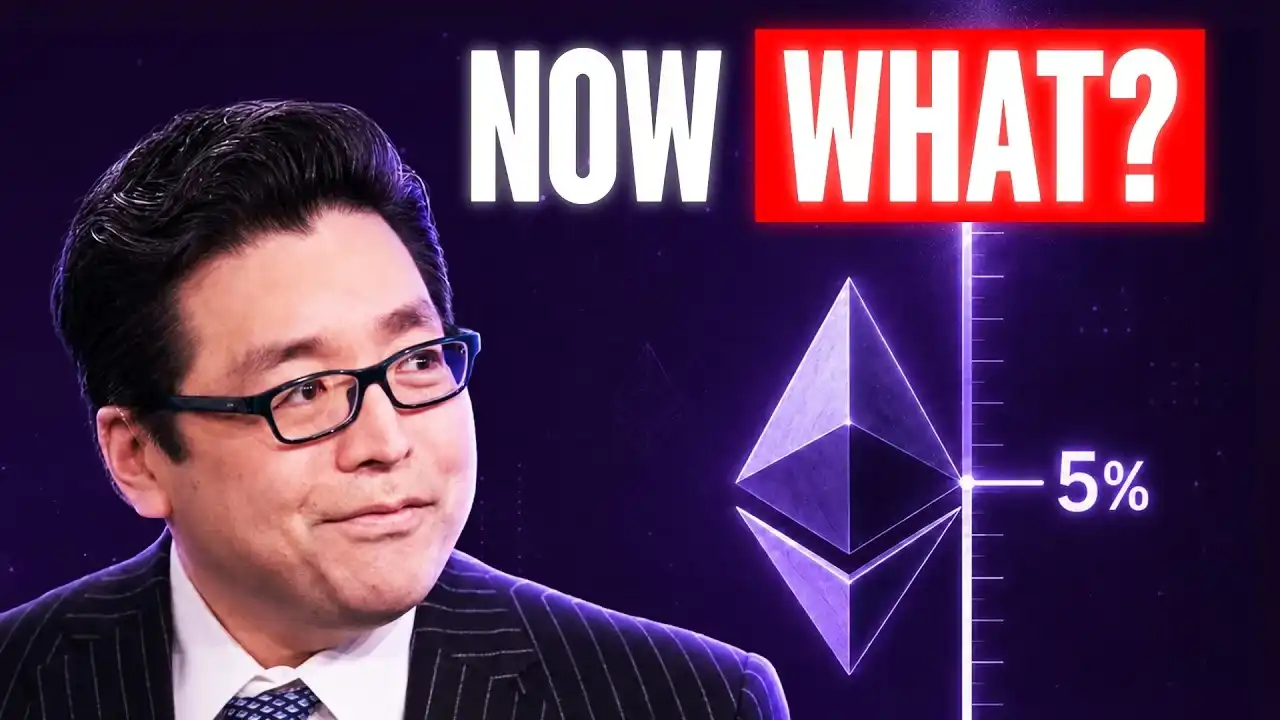
Podcast Notes | Conversation with Tom Lee: Bitmine Acquiring Nearly 5% of Total ETH Supply Is Not the End Goal, ETH Price Target Set at $10,000

In a podcast interview, Tom Lee, Chairman of BitMine Immersion Technologies, discusses the company's strategy to accumulate nearly 5% of the total Ethereum supply within 14 months, using equity financing and avoiding debt. BitMine has consistently purchased ETH for over 60 consecutive weeks, with recent weeks combining buybacks with purchases. The company's substantial ETH holdings generate approximately $300 million in annual staking rewards, covering operational costs like the dividends for its 9.5% perpetual preferred stock (BMNP). Lee positions ETH as a store-of-value asset, likening it to stocks or land, rather than a pure cash-flow instrument. Looking ahead, Lee suggests BitMine may continue buying beyond the 5% target if institutional adoption grows. He outlines a bullish price target for ETH: surpassing $5,000 in a new crypto bull cycle and potentially exceeding $10,000 within 1-2 years, driven by Wall Street tokenization and AI-related demand. The discussion also covers BitMine's evolution into an ecosystem player, funding Ethereum Foundation spin-offs and developing its Maven staking platform. Lee acknowledges his significant financial interests are tied to ETH's price and BitMine's performance. The interview provides a framework for evaluating ETH as a long-term asset, emphasizing staking yield sustainability and future institutional demand, while noting the uncertainties surrounding macro cycles and real-world adoption.

marsbit1 saat önce

Podcast Notes | Conversation with Tom Lee: Bitmine Acquiring Nearly 5% of Total ETH Supply Is Not the End Goal, ETH Price Target Set at $10,000

marsbit1 saat önce

İşlemler

Spot
活动图片