Crypto Victory Ahead? This Senator’s Decision Clears Path For Market Structure Bill Approval

bitcoinist2026-01-28 tarihinde yayınlandı2026-01-28 tarihinde güncellendi

Özet

A key amendment that threatened to delay the crypto market structure bill (CLARITY Act) has been withdrawn, potentially smoothing its path to approval. Senator Roger Marshall agreed not to propose his swipe-fee amendment during the Senate Agriculture Committee markup, a move seen as securing broader industry support. The amendment, which targeted credit card fees and was backed by Senators Durbin and Welch, was viewed as a major obstacle due to opposition from some Republicans and concerns it could derail the legislation. While this hurdle is cleared, other amendments—including ethics rules for officials, CFTC governance, anti-fraud measures, and foreign adversary restrictions—remain under consideration. The bill, which has received positive feedback from the crypto industry for its focus on intermediaries rather than protocols or users, remains divided along party lines despite weeks of negotiations.

A crucial amendment that was expected to delay passage of the CLARITY Act, also known as the crypto market structure bill, could be scrapped ahead of a vital committee vote this week, potentially simplifying the bill’s path forward.

Senate Crypto Bill Clears Key Hurdle

According to a report by Politico, Senator Roger Marshall of Kansas has agreed not to offer a proposed amendment targeting credit card swipe fees during the Senate Agriculture Committee’s markup of the crypto legislation, scheduled for Thursday, January 29.

Three people familiar with the private discussions said the decision was made over the weekend and could help secure broader backing for the bill from the cryptocurrency industry.

Marshall had filed the amendment just last week, seeking to force payment networks to compete on credit card swipe fees. The proposal closely mirrors the long‐running Credit Card Competition Act, which Marshall has championed for years alongside Senator Dick Durbin of Illinois.

However, in private conversations on Saturday, Marshall reportedly agreed not to bring the amendment forward during the markup, according to those with knowledge of the matter.

Marshall’s swipe‐fee amendment, which is also supported by Durbin and Senator Peter Welch of Vermont, was widely seen as a potential obstacle. Some Republicans who are inclined to support the crypto bill oppose the credit card provision, which would place major financial institutions in direct conflict with large retailers.

Durbin is not currently expected to introduce the amendment himself during the markup, according to a person familiar with the situation, although a final decision has not been confirmed.

Amendments Still Loom

The issue has reportedly drawn attention from the White House as well. Several people with insight into internal deliberations said administration officials became involved out of concern that the swipe‐fee amendment could derail the legislation.

One person described the amendment as something that would have “jeopardized” the bill’s passage, at a time when the White House is pushing for the measure to advance out of committee.

While the Marshall amendment may be off the table, other changes could still emerge. Journalist Eleanor Terrett noted on X (previously Twitter) that several amendments remain under consideration.

These include proposed ethics rules for US officials, a requirement that the Commodity Futures Trading Commission (CFTC) maintain at least four sitting commissioners following consultation with the minority party, anti‐fraud measures targeting crypto ATMs, and limits on participation by foreign adversaries in crypto markets.

Despite two additional weeks of bipartisan negotiations—negotiations that already delayed an earlier planned markup from January 15—the bill remains sharply divided along party lines. So far, only Republican members of the Senate Agriculture Committee have publicly expressed support for the legislation.

Nonetheless, the committee’s latest draft, posted on Wednesday, January 21, has received a positive response from the broader crypto industry. Industry participants have praised the text for providing explicit protections for noncustodial software developers and blockchain infrastructure providers.

The bill is seen as narrowly targeting intermediaries, rather than protocols or end users, a distinction many in the sector consider essential for maintaining innovation.

The draft also excludes provisions that would regulate stablecoin yields, a decision viewed as particularly significant following Coinbase’s recent withdrawal of support for the Senate Banking Committee’s version of the legislation.

The daily chart shows the total crypto market cap consolidating just above $2.9 trillion. Source: TOTAL on TradingView.com

Featured image from DALL-E, chart from TradingView.com

İlgili Sorular

QWhat is the name of the crypto market structure bill discussed in the article?

AThe CLARITY Act.

QWhich senator agreed not to offer an amendment targeting credit card swipe fees?

ASenator Roger Marshall of Kansas.

QWhy was the swipe-fee amendment considered a potential obstacle to the bill's passage?

ABecause some Republicans who support the crypto bill oppose the credit card provision, which would put major financial institutions in direct conflict with large retailers.

QWhat are some of the other amendments still under consideration for the bill?

AProposed ethics rules for US officials, a requirement for the CFTC to maintain at least four sitting commissioners, anti-fraud measures for crypto ATMs, and limits on participation by foreign adversaries in crypto markets.

QHow has the broader crypto industry responded to the latest draft of the bill?

AThe industry has responded positively, praising the text for providing explicit protections for noncustodial software developers and blockchain infrastructure providers.

İlgili Okumalar

A Crayfish Ignites the Tech World: Is Humanity Ready to 'Flip the Table'?

The article titled "A Little Lobster Ignites the Tech World: Is Humanity Ready to 'Flip the Table'?" discusses the rapid rise and implications of OpenClaw, an open-source AI agent that has quickly gained popularity in the tech community. Developed by an independent retiree, Peter Steinberger, OpenClaw allows users to run a functional AI assistant on low-end hardware like an old Mac mini or smartphone. It has attracted significant attention for enabling tasks such as scheduling, stock trading, podcast production, and SEO optimization, making the vision of a personal "Jarvis" seemingly attainable. However, the excitement is tempered by practical challenges and risks. Despite its accessibility, installation can be complex and time-consuming, excluding non-technical users. More critically, OpenClaw’s high-level permissions pose security threats, including potential file deletion, unauthorized financial transactions, and vulnerability to malicious attacks. Over 1,000 OpenClaw instances and 8,000 vulnerable plugins have already been exposed, amplifying these risks. Experts note that while OpenClaw isn’t a technological breakthrough, it represents a milestone in AI agents' ability to perform complex, continuous tasks autonomously. Its open-source nature fosters innovation but also heightensates security and privacy concerns. The piece highlights emerging risks, such as AI agents evolving in social environments like Moltbook (an AI-only forum) and the blurred lines of accountability when things go wrong. Recommendations for users include limiting sensitive data, cautiously managing permissions, and recognizing the tool’s experimental stage. For enterprises, professional oversight and secure alternatives are advised. Ultimately, OpenClaw signals rapid progress in AI, pushing the boundaries of what’s possible while urging the development of robust safety measures, including "endogenous security" and the capacity to "flip the table" in crises. The next few years are seen as critical for determining the future of general AI.

marsbit7 dk önce

A Crayfish Ignites the Tech World: Is Humanity Ready to 'Flip the Table'?

marsbit7 dk önce

How Does HashKey Build Institutional-Grade On-Chain Financial Infrastructure?

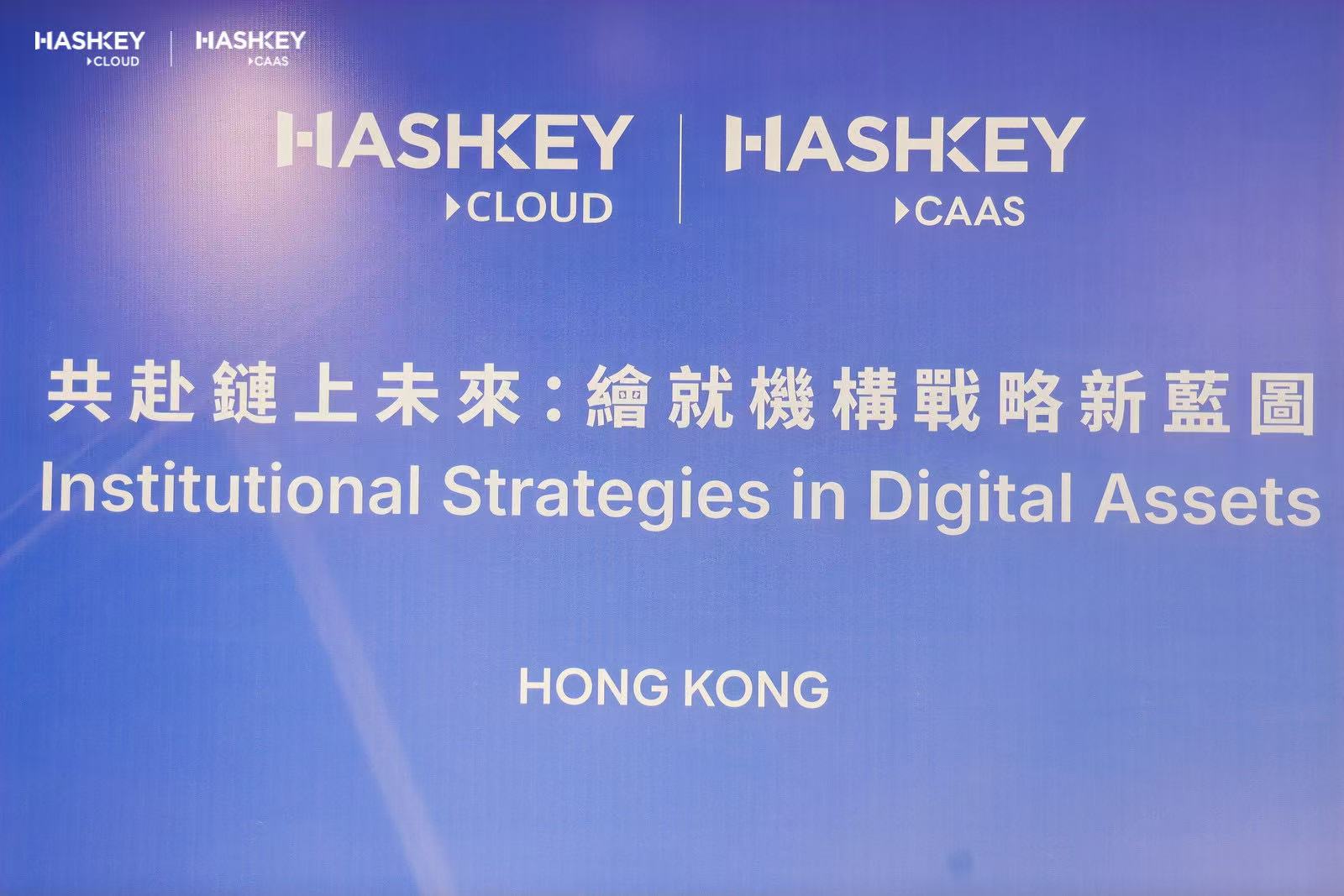
In a recent "Charting a New Institutional Strategy" event held ahead of Consensus, HashKey Cloud and HashKey CaaS introduced a comprehensive on-chain financial infrastructure solution tailored for institutional clients. The event highlighted the growing demand for secure, efficient, and regulatory-compliant services as institutions enter the crypto ecosystem. Leo, CEO of HashKey’s On-Chain Business Group, expressed optimism about the industry’s compliance-driven future, emphasizing Web3’s potential as transparent and secure financial infrastructure, particularly in regions with less developed financial systems. HashKey Cloud, represented by Product Lead Shen Jun, showcased its institutional-grade staking and yield services, operating under a non-custodial model to enable secure asset tokenization and yield generation. The platform supports multi-chain services and offers insurance-backed staking solutions. HashKey CaaS, introduced by Business Development Manager Yu Yi, provides end-to-end services including asset tokenization, staking for ETFs and digital assets, on-chain transactions, and risk management. It aims to bridge traditional finance with crypto through compliant, globally-trusted infrastructure. The event also featured roundtables with participants from firms like Victory Securities, Zodia Custody, WisdomTree, Ether.fi, Lido, and others, discussing the integration of traditional finance with on-chain yields, new earning opportunities with ETH and BTC, and the tokenization of precious metals as part of the expanding RWA (Real-World Asset) ecosystem. HashKey’s strategic shift from a compliant exchange to an institutional on-chain infrastructure provider underscores its commitment to driving the convergence of traditional and digital asset finance in Hong Kong and globally.

marsbit30 dk önce

How Does HashKey Build Institutional-Grade On-Chain Financial Infrastructure?

marsbit30 dk önce

İşlemler

Spot
Futures
活动图片