A7 Discusses Accumulated Experience in Using Stablecoins

cryptonews.ru2026-07-29 tarihinde yayınlandı2026-07-29 tarihinde güncellendi

Özet

The Russian State Duma and Federation Council have passed the "Law on Digital Currencies and Digital Rights," which is set to expand the use of stablecoins in cross-border trade settlements starting September 1, 2026. According to the Bank of Russia, exporters and importers will be able to use cryptocurrency in international payments, both directly and through intermediaries, while domestic crypto payments will remain largely prohibited. Company A7, which facilitates operations with the A7A5 stablecoin—Russia's first ruble-pegged stablecoin classified as a Digital Financial Asset (DFA)—commented on the development. Oleg Ogienko, Director of Government Relations and International Affairs for the A7A5 project, stated that while digital asset settlements are still a new practice for many firms, A7 has already accumulated significant expertise in legal documentation, compliance, currency control, and working with infrastructure participants. He added that A7 will continue to apply this expertise for client operations after the law takes effect and will adapt its business processes as the Central Bank issues further regulations. A7 is a Russian international settlement system established in 2024 with participation from PSB Bank. It facilitates cross-border payments and supports foreign trade operations for Russian businesses. Its key instrument, the A7A5 stablecoin, operates on the Tron and Ethereum networks with a market capitalization exceeding $567 million and is circulated i...

The law "On Digital Currencies and Digital Rights," adopted by the State Duma and approved by the Federation Council, will expand the possibilities for using stablecoins in settlements for foreign economic activities. This opinion was expressed by the company A7, which facilitates operations with A7A5 — the first ruble stablecoin qualified as a DFA.

Most provisions of the law will come into force on September 1, 2026. According to the Bank of Russia's clarification, exporters and importers will be able to use cryptocurrency in cross-border settlements both through intermediaries and directly. Settlements using digital currency within the country will remain prohibited except for a number of cases. The requirements for the operation of the new infrastructure will be specified by the Central Bank's regulations.

"For many companies, settlements with digital assets are still a new practice. A7 specialists have already accumulated significant experience in the legal formalization of such operations, passing compliance, currency control, and interacting with infrastructure participants," noted Oleg Ogienko, Director of Government Relations and International Relations for the A7A5 project.

He emphasized that after the law comes into force, A7 will continue to apply this expertise when conducting client operations. The company also plans to "adapt its business processes as the regulatory acts of the Bank of Russia and other related acts are adopted."

A7 is a Russian international settlement system created in 2024 with the participation of PSB Bank. The company provides cross-border payments for Russian businesses and facilitates foreign trade operations. One of the company's key tools is the stablecoin A7A5, which was the first in Russia to receive the status of a digital financial asset. The stablecoin operates on the Tron and Ethereum networks, and its market capitalization exceeds $567 million. The circulation of A7A5 as a DFA in Russia is organized through the "Tokeon" platform.

end-content

İlgili Sorular

QWhat new possibilities for using stablecoins does the newly passed law in Russia introduce, according to the article?

AThe law "On Digital Currencies and Digital Rights" expands the possibilities for using stablecoins in settlements for foreign economic activity, allowing their use in cross-border payments.

QAccording to the Bank of Russia's clarification, how can exporters and importers use cryptocurrency?

AExporters and importers can use cryptocurrency in cross-border settlements both through intermediaries and directly.

QWhat specific experience does A7 claim to have accumulated regarding digital asset transactions?

AA7 specialists have accumulated serious experience in the legal formalization of such operations, compliance procedures, currency control, and interaction with infrastructure participants.

QWhat is A7A5, as described in the article?

AA7A5 is the first ruble-denominated stablecoin in Russia, qualified as a Digital Financial Asset (DFA). It operates on the Tron and Ethereum networks, with a capitalization exceeding $567 million.

QWhen will most provisions of the new Russian digital currency law come into force, and what remains prohibited domestically?

AMost provisions of the law will come into force on September 1, 2026. Settlements with digital currency within the country will remain prohibited, with the exception of a number of cases.

İlgili Okumalar

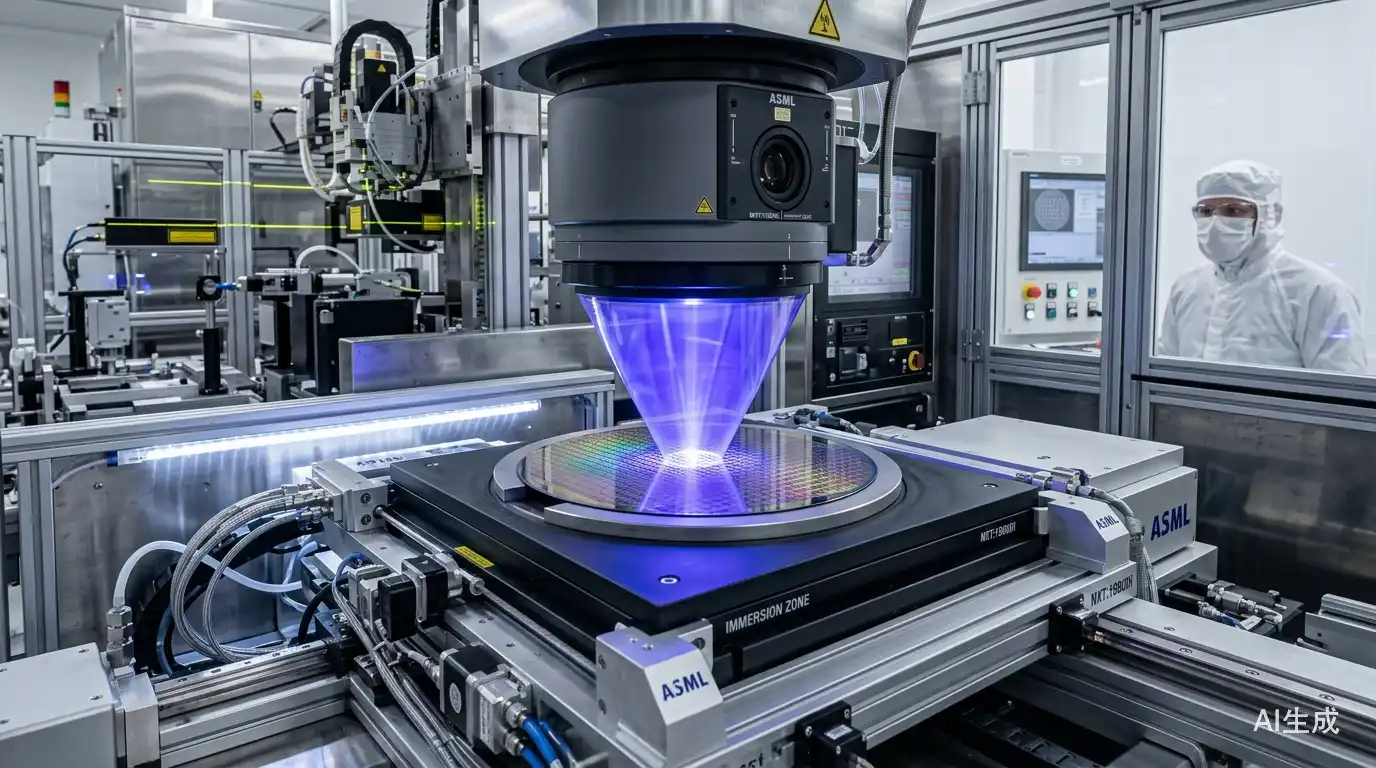
A Brief History of the Lithography Machine: How a Beam of Light Walked Sixty-Nine Years

A Brief History of Lithography: 69 Years of Light In July 2026, reports of a Chinese state-backed company producing five immersion DUV lithography machines sent shockwaves through Wall Street, wiping roughly $44 billion from ASML's market cap in a single day. This event signaled a crack in the long-held assumption of Western monopoly over advanced chipmaking equipment. The journey began in 1957 when Jay Lathrop coined the term "photolithography." Early contact aligners (1960s) gave way to PerkinElmer's revolutionary projection aligners in 1973, boosting yields dramatically. GCA's step-and-repeat system (1978) established the modern stepper blueprint. However, within a decade, Japanese firms like Nikon and Canon, supported by a strong domestic market, captured nearly 90% of the global market from American pioneers, who ultimately exited the business. ASML, founded in a leaky shed in 1984, rose to dominance through key strategic moves: the TWINSCAN dual-stage platform (2001) and the acquisition of SVG, gaining access to Intel. A pivotal moment came in the early 2000s with the industry at a 193nm wavelength impasse. While most invested in the costly 157nm path, TSMC's Burn Lin proposed immersion lithography—using water between the lens and wafer. ASML bet on this simpler idea and, with Zeiss, delivered the first commercial immersion tool in 2004, effectively ending the 157nm roadmap and leaving competitors behind. The subsequent push for Extreme Ultraviolet (EUV) lithography was an even greater marathon. Deemed the least promising option in 1997, EUV's development, led by ASML, required vacuum chambers, reflective optics, and a complex tin-droplet laser plasma source. Critical to its eventual success (first high-volume manufacturing in 2018) was the 2012 "Customer Co-Investment Program," where Intel, TSMC, and Samsung provided upfront funding and equity, sharing the immense risk and cost. Today, ASML holds a near-total monopoly in EUV and immersion DUV. The core lesson of this 69-year history is not merely one of technological invention but of sustained partnership. Successive leaders—PerkinElmer, GCA, Nikon—were not ultimately defeated by superior technology but by losing the vital connection to customers willing to tolerate years of iteration, fund long-term R&D, and integrate early, imperfect tools into their production lines. The "light" that completed the journey was always carried by those patient, invested partners.

marsbit1 saat önce

A Brief History of the Lithography Machine: How a Beam of Light Walked Sixty-Nine Years

marsbit1 saat önce

İşlemler

Spot
活动图片