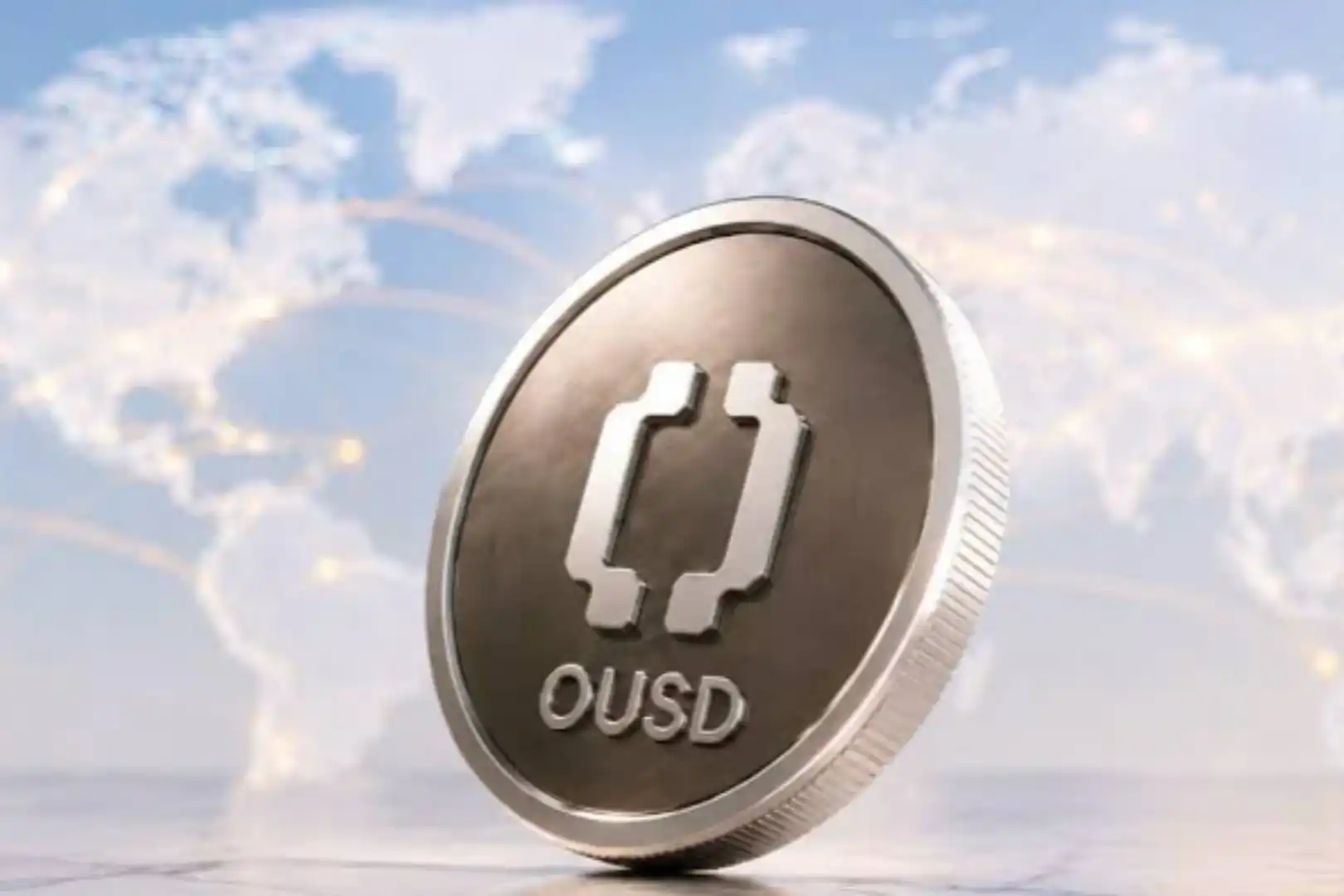
OUSD, Which Caused Circle to Plunge 17% Overnight, Is Mired in Marketing Controversy

Foresight News2026-07-06 tarihinde yayınlandı2026-07-06 tarihinde güncellendi

Özet

On June 30th, Open Standard announced the upcoming launch of Open USD (OUSD), a new stablecoin promising features like free minting/burning, yield sharing, and shared governance by a coalition of over 140 partners, including major names like Western Union, Ripple, and MetaMask. This news caused a 17.55% drop in Circle's stock price. However, the announcement quickly faced controversy. Several listed companies, including Samsung Electronics and Dunamu (Upbit's parent), denied formal agreements, stating they were only approached for initial discussions. Critics accused Open Standard of "legitimacy-borrowing"—inflating its partner list for marketing. Circle CEO Jeremy Allaire publicly questioned OUSD's sustainability, arguing that free transactions and full revenue sharing might underfund critical infrastructure, and that multi-company governance often scales poorly. Despite the backlash, some firms like Stripe and Coinbase confirmed support, with Stripe planning to set OUSD as a default stable币 for businesses. The incident has cast an early shadow of skepticism over OUSD's launch.


Author: Eric, Foresight News


On the evening of June 30th Beijing time, the emergence of a new stablecoin once again stirred up the stablecoin landscape.


A company called Open Standard announced that it would launch the stablecoin Open USD. Features like free minting and redemption, sharing of reserve asset yields, and partner co-governance directly address the pain points in stablecoin distribution and seem very attractive.


What most surprised the market was that Open Standard had already "secured" over 140 partners before the stablecoin's launch.
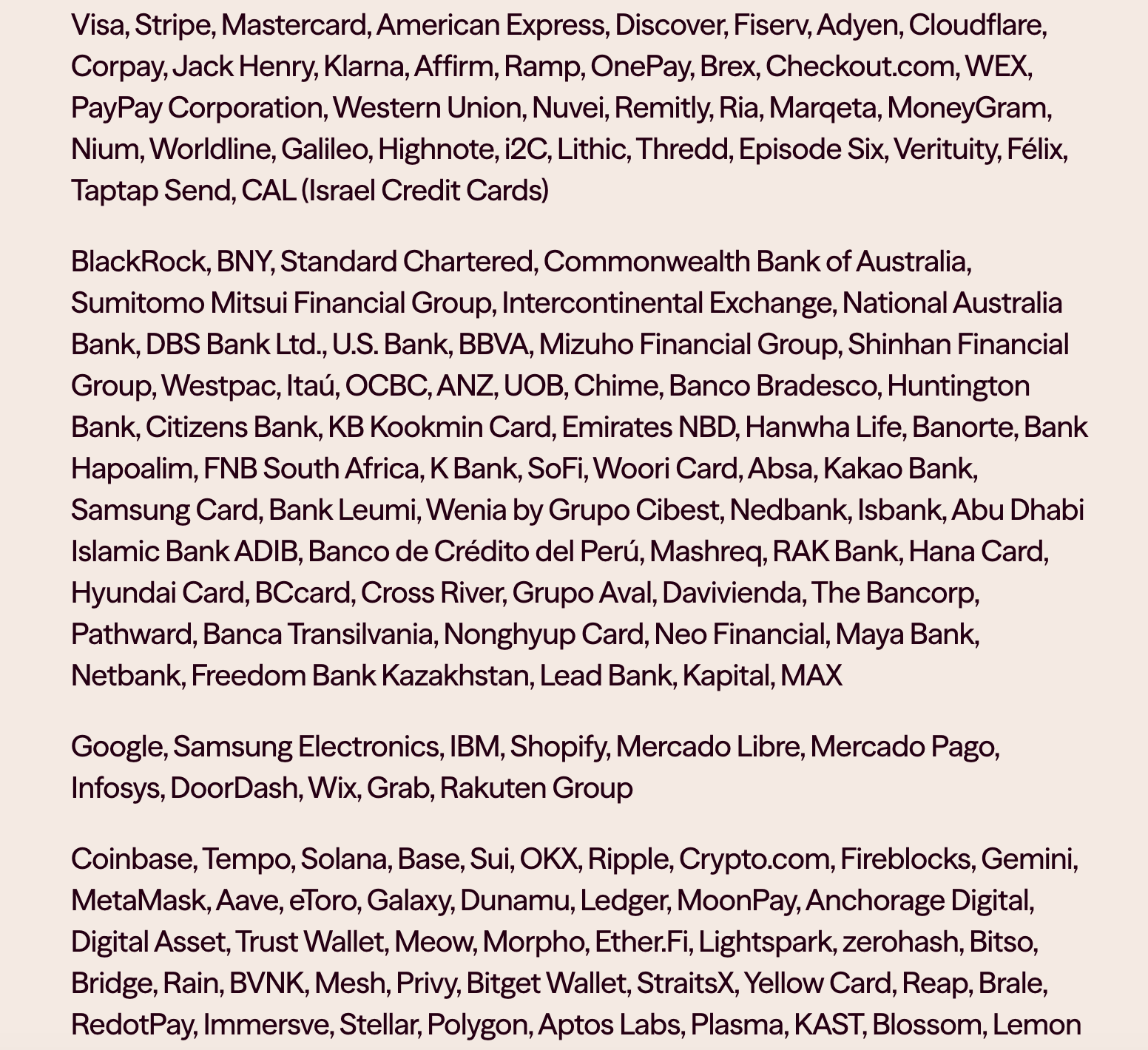


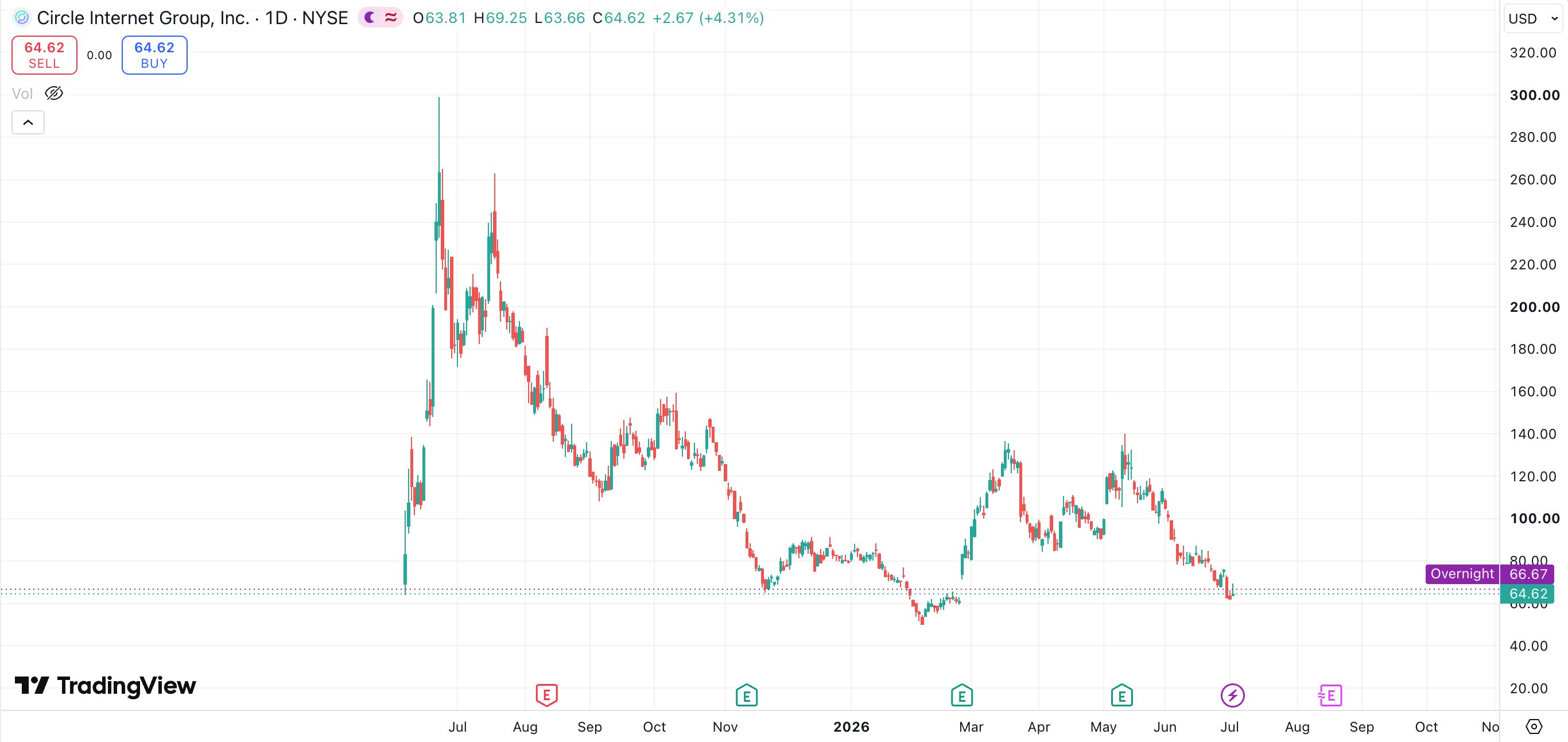
This list includes companies that have already issued stablecoins, such as Western Union, Ripple, MetaMask, and Aave. The fact that it gathered signatures from so many giants in both Web3 and traditional finance before launch surprised the market and filled it with anticipation for Open USD's future development. The most telling reflection of this anticipation was the performance of stablecoin leader Circle's stock, which plummeted 17.55% that day, leaving it less than 20% away from a new low.


However, this explosive announcement was quickly debunked.


On July 3rd, according to a report by *The Chosun Ilbo*, companies including Samsung Electronics, Dunamu (parent company of Upbit), Shinhan Financial Group, and K Bank stated that they had never negotiated matters related to Open USD (OUSD). A Samsung Electronics representative said, "There has been no formal negotiation, and we don't know what role (in the alliance) we are supposed to undertake." Shinhan Financial Holdings, Dunamu, and K Bank also stated that while Open Standard had inquired about their willingness to participate in OUSD, and they had only responded that they "would consider it briefly," their names were listed as alliance members.


Tony Chung, BD Director at the Korean Web3 media outlet Blockmedia, added that a representative from one of the Korean companies said they learned about being on the list from Korean media reports and were very confused, as they had only casually replied at the time, "We'll consider it if feasible."


Gabor Gurbacs, Founder & CEO of OpenAssets, reposted Tony Chung's tweet and noted that not only Korean companies were misled. After contacting some of OpenAssets' clients on the list, Gabor Gurbacs received responses stating: "They said they never signed or agreed to anything. Either the media grossly distorted the facts, or the list of participants is misleading."
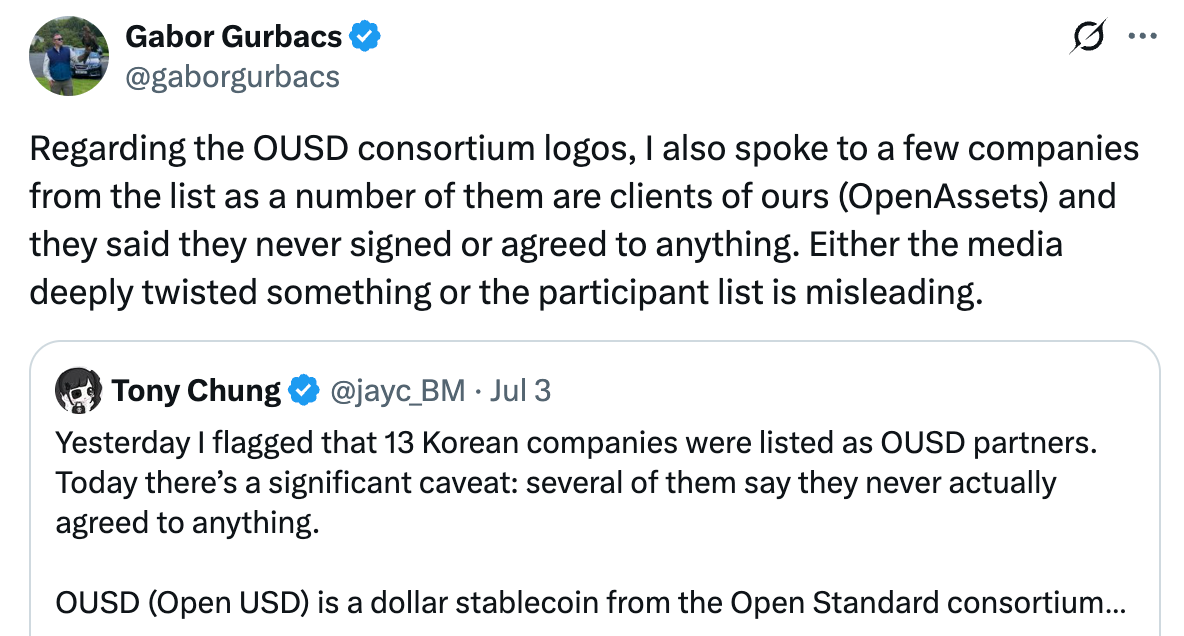


From this perspective, Open Standard's "list of a hundred" likely included some companies they had merely contacted. In the original announcement, Open Standard's wording was: "Businesses across industries have signed up to use Open USD." Perhaps in Open Standard's view, not explicitly refusing meant "agreeing" to use Open USD, but agreeing to use does not necessarily mean "must use."


This is a very typical marketing tactic of trading controversy for attention, which indeed had some effect, albeit with a flavor of rubbing business ethics on the ground.


Faced with such aggressive tactics and an "unruly" opponent, Jeremy Allaire, Co-founder & CEO of Circle, published a long post on X questioning the "three major features" of Open USD:


Free Minting and Burning: Appealing in the short term but potentially unsustainable at scale, leading to insufficient funds for maintaining banking relationships, regulatory licenses, and technical infrastructure. Circle already offers favorable terms to major partners via contracts, not blanket free services.

Sharing Almost All Yields with Partners: Could "starve" the infrastructure, leading to systemic underinvestment and limiting the platform's scale. Circle already shares most of its revenue with distribution partners.

Alliance/Multi-Company Governance: Circle previously co-founded the Centre Consortium with Coinbase, later integrated into Circle for sole issuance. He believes the historical record of multi-company products scaling up is "very poor" (slow coordination, difficult decision-making).


Jeremy still expressed a welcoming attitude toward OUSD joining the "stablecoin family," but between the lines, his post conveyed one point: the stablecoin business is one where winners take all through accumulated time, and simply modifying a few mechanisms is not enough to "sit at the table."


Besides these negative controversies, some companies on the list have explicitly stated they will support Open USD's development. Stripe stated it would set OUSD as the default stablecoin for businesses using stablecoins on Stripe; Coinbase also said it would integrate OUSD into Base and other chains, planning to launch in late 2026 for expanding on-chain transactions, payments, and DeFi scenarios.


Payment network giants like Visa and Mastercard, financial institutions like BlackRock and Bank of New York Mellon, as well as crypto-native projects like Aave, Solana, and Ripple have also expressed support, though no specific cooperation methods have been clarified yet.


According to the announcement, the founding CEO of Open Standard is the CEO of Bridge. This Bridge is the fiat on/off-ramp solution provider that previously partnered with multiple contenders in the Hyperliquid native stablecoin USDH issuance rights dispute but caused controversy when it was acquired by Stripe, which is developing the stablecoin chain Tempo. Stripe was among the first to clarify its partnership after Open Standard's announcement, so there is likely a relatively close connection between the two.
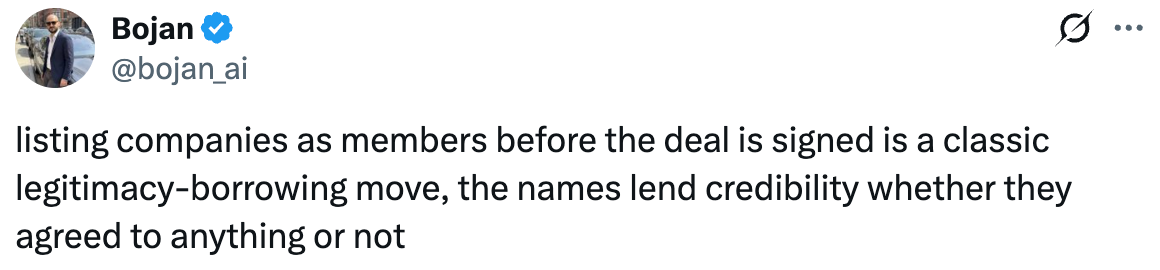


A user named Bojan on X suggested that Open Standard's promotion is a typical case of "legitimacy-borrowing"—borrowing the reputation or endorsement of other well-known, credible entities to quickly boost its own legitimacy and credibility, without having actually obtained deep endorsement or formal authorization from them. For the stablecoin track, where trust is foundational, OUSD seems to have left a somewhat negative first impression even before its debut.


İlgili Sorular

QWhat was the primary market reaction to the announcement of Open USD (OUSD), and how did it affect Circle?

AThe announcement of Open USD (OUSD) caused significant market concern, leading to a 17.55% drop in the stock price of Circle, the company behind the USDC stablecoin, as investors anticipated increased competition.

QWhat major controversy arose regarding Open Standard's list of over 140 launch partners for OUSD?

AA controversy arose when several major companies listed as partners, including Samsung Electronics, Dunamu (Upbit's parent), Shinhan Financial Group, and K Bank, stated they had never formally agreed to join the OUSD alliance. They reported that Open Standard had only inquired about their interest, and some learned they were listed from media reports.

QWhat were the three main features of OUSD that Circle CEO Jeremy Allaire publicly criticized?

AJeremy Allaire publicly questioned OUSD's three key features: 1) Free minting and redemption, which he argued is unsustainable at scale; 2) Sharing nearly all yield with partners, potentially starving infrastructure investment; and 3) Multi-company governance, which he cited as historically having a poor track record for scaling due to slow coordination and decision-making.

QWhich companies have explicitly stated their support or plans to integrate Open USD (OUSD)?

AStripe announced it would set OUSD as the default stablecoin for businesses using its platform. Coinbase stated it would integrate OUSD into Base and other chains, planning to launch support later in 2026. Other entities like Visa, Mastercard, BlackRock, BNY Mellon, Aave, Solana, and Ripple also expressed support, though specific collaboration details were not immediately provided.

QWhat concept did an X user named Bojan use to describe Open Standard's marketing strategy for OUSD?

ABojan described Open Standard's marketing as a form of 'legitimacy-borrowing,' meaning they attempted to quickly gain credibility and trust by associating with well-known, reputable companies, even without obtaining their deep, formal endorsement or authorization.

İlgili Okumalar

AI Folding: Fable 5 and GPT-5.6 Are Becoming the Privilege of a Few

【AI Accessibility Gap Widens: Elite Tools Like Fable 5 and GPT-5.6 Are Becoming Privileged】 We are witnessing a growing "AI divide." A stark reality is emerging: a tiny fraction of elites, primarily in tech, are using powerful next-generation models like Fable 5 or the upcoming GPT-5.6, while the vast majority of the public only has access to "toys" - free, limited models equivalent to ChatGPT's basic versions (8B to 30B parameters). This creates a massive experiential chasm and cognitive dissonance. Industry outsiders see AI as overhyped and ineffective, unable to grasp its transformative potential, while insiders leverage these advanced models for a decisive competitive edge. The gap isn't just about model quality but product functionality. Free users get a simple chatbot. Paying elites get integrated workflow systems—capable of creating specialized agents, processing complex data, and handling real-world tasks like management, coding, and planning. Demos showcasing AI planning weddings or building apps feel disconnected from everyday needs like managing bills, groceries, or health. The cost barrier is immense, with reports of engineers spending $1000 daily on Fable 5 inference. Elite users employ sophisticated multi-model workflows, combining different AIs for ideation, architecture, execution, and review, completing complex projects in minutes instead of weeks. This divide extends to critical areas like healthcare, where free models are dangerously unreliable for medical queries. However, some argue that for 90% of common business tasks, mid-tier models like GPT-5.5 are sufficient; the perceived limitation often stems from poor integration and lack of context, not model intelligence. Ultimately, unequal access to cutting-edge AI is creating a new form of social stratification, where the most powerful tools are becoming the exclusive privilege of a few.

marsbit27 dk önce

AI Folding: Fable 5 and GPT-5.6 Are Becoming the Privilege of a Few

marsbit27 dk önce

Cathie Wood's June $77M Investment: Are Crypto Stocks a True 'Substitute' for Bitcoin?

In June, Cathie Wood's ARK Invest purchased $77 million worth of publicly traded crypto-related stocks, including Coinbase, Circle, and Bullish, during Bitcoin's worst monthly performance in four years. This aligns with the investment thesis that such stocks offer a compliant way to gain exposure to the crypto cycle without directly holding Bitcoin. However, data analysis reveals significant drawbacks. A group of nine U.S.-listed crypto companies showed 30-day annualized realized volatility between 68% and 90%, nearly double Bitcoin's 37.6%. Over 90 days, Circle's volatility reached 103.6% versus Bitcoin's 37.8%. Drawdowns were also more severe for stocks like Circle (-51.4%) and MicroStrategy (-48.6%) compared to Bitcoin's -36.4% from its January high. Correlation analysis shows most stocks share only a moderate link to Bitcoin. For example, Circle, Robinhood, and Bullish have a 90-day correlation coefficient of just 0.55–0.58 with BTC, meaning only about one-third of their price movement is explained by Bitcoin's action. The rest stems from company-specific risks: earnings, competition, fundraising, and equity dilution. MicroStrategy (MSTR) is the notable exception, acting as a leveraged Bitcoin proxy with a beta of 1.59 and 0.85 correlation. Coinbase offers relatively balanced exposure. Circle exemplifies "crypto-wrapped" corporate risk, with its recent crash tied to stablecoin competition, not Bitcoin. Robinhood's diversified business insulates it from crypto downturns but also limits upside. Bitcoin miners like RIOT and MARA have posted significant gains year-to-date, driven primarily by their pivot to AI compute services, not Bitcoin's price. The article highlights that investing in crypto stocks often means accepting amplified volatility or layering on business-specific risks absent from direct Bitcoin ownership. For instance, MicroStrategy's recent challenges—its market value falling below its Bitcoin holdings (mNAV <1) and facing potential Bitcoin sales for liquidity—demonstrate equity-specific hazards like dilution and financing pressures not faced by a direct Bitcoin holder. ARK's buying spree represents a bet on a basket of different business models with varying crypto exposure, not a simple, lower-risk substitute for holding Bitcoin.

marsbit27 dk önce

Cathie Wood's June $77M Investment: Are Crypto Stocks a True 'Substitute' for Bitcoin?

marsbit27 dk önce

Crypto Welcomes the 'July Rebound'? On-Chain Bottom Signals Align, Reversal Still Requires Breakthrough Above $70k

The cryptocurrency market is showing signs of a potential "July rebound," with Bitcoin leading a recovery above $63,000 and total market cap rising. This bounce is attributed to improved macro expectations (weaker US jobs data easing Fed hike fears), a short squeeze in derivatives, and signs of whale accumulation. Key on-chain metrics signal a potential bottom, including the Sharpe Ratio hitting extreme lows, the AHR999 index nearing historic buy zones, and miner pressure reaching significant levels. However, analysts caution this is likely a corrective rebound rather than a confirmed trend reversal. Persistent challenges include weak spot demand, negative Coinbase Premium indicating institutional caution, and ongoing selling pressure in the altcoin market. Market sentiment remains in "extreme fear" territory, and the AVIV ratio suggests the average active Bitcoin investor is still at a loss. For a true bullish reversal, Bitcoin needs to convincingly break above the key $70,000 level (aligned with the Short-Term Holder Realized Price). The path to a new parabolic bull market is seen as dependent on attracting substantially more capital, as capital efficiency has declined. While prices may be approaching a cyclical bottom zone (with estimates between $37k-$60k), the market requires more sustained positive signals for a definitive uptrend.

marsbit57 dk önce

Crypto Welcomes the 'July Rebound'? On-Chain Bottom Signals Align, Reversal Still Requires Breakthrough Above $70k

marsbit57 dk önce

İşlemler

Spot
活动图片