Polymarket Faces Ban In Indonesia Amid Growing Global Crackdown

bitcoinist2026-05-26 tarihinde yayınlandı2026-05-26 tarihinde güncellendi

Özet

Indonesia has blocked access to the prediction market platform Polymarket, joining a growing global regulatory crackdown. The ban was enacted after a widely shared bet on the premature end of President Prabowo Subianto's term drew attention. Authorities declared that platforms facilitating real-money wagers on events, even using crypto or blockchain, constitute illegal gambling. The government is also targeting social media accounts promoting such services and warning the public against participation. This move aligns with actions taken by other jurisdictions. Several countries, including Taiwan, Thailand, China, India, Singapore, Colombia, and Argentina, have previously restricted or blocked Polymarket, often citing its unlicensed gambling operations. In March, Brazil's central bank banned prediction markets like Polymarket over regulatory non-compliance. In the United States, the sector faces scrutiny from lawmakers. A formal investigation was recently launched into Polymarket and Kalshi regarding suspicious trades and compliance measures, coinciding with legal setbacks for the companies in Nevada and Washington.

Amid the global crackdown on online gambling and prediction markets, Indonesia has joined the list of jurisdictions imposing restrictions on Polymarket and similar platforms after a bet on the President’s term drew online attention.

Indonesia Blocks Access To Polymarket

Indonesia recently blocked access to the prediction market platform Polymarket after a widely shared bet on the premature end of Prabowo Subianto’s presidency gained traction on social media last week.

In an official statement, the Ministry of Communication and Digital Affairs announced the ban, affirming that the measure aims to protect the public, particularly the younger generation and users of the digital space.

Director General of Digital Space Supervision Alexander Sabar affirmed that platforms facilitating real-money wagers on event outcomes are considered gambling, even when framed as “prediction markets” and using blockchain technology or crypto assets.

“The government will not tolerate any form of online gambling in Indonesia. Activities like Polymarket involve monetary betting and speculation on events with uncertain outcomes, which violates applicable Indonesian laws,” Alex emphasized.

Therefore, authorities will block access to other prediction market services suspected of “facilitating online gambling practices.” In addition, the government is tracking down social media accounts affiliated with or promoting Polymarket to ensure the ban is enforced across other platforms.

The Ministry also urged the public not to access or engage in digital betting-based speculation activities, including those using crypto, as these activities could violate Indonesian laws and cause financial losses for users.

Global Regulatory Pressure Mounts

Indonesian authorities noted that their decision to restrict access to Polymarket aligns with other global legal frameworks. As the announcement stated, several other jurisdictions have also implemented measures against Polymarket and other prediction market platforms, arguing that they resemble online gambling practices.

Over the past two years, Taiwan, Thailand, China, and India have imposed restrictions on Polymarket under their respective local laws, while Singapore, Colombia, and India have officially blocked the platform.

In March, Argentinian authorities ordered a nationwide blockade of Polymarket after it predicted inflation data. As reported by Bitcoinist, a Buenos Aires court directed internet service providers, Google, and Apple to block access to the platform, arguing that it operated as an unlicensed online gambling platform.

Meanwhile, Brazil’s central bank announced a ban on prediction markets and betting platforms in March, including Polymarket and Kalshi. The authorities affirmed that the platforms failed to comply with local regulations on derivatives trading and raised concerns about investor protections and market integrity.

Prediction markets have also faced scrutiny in the US, with policymakers and State-level authorities putting pressure on the sector. Last week, House of Representatives member James Comer launched a formal investigation into Polymarket and Kalshi following a series of suspicious trades linked to classified US military operations and key geopolitical events.

The lawmaker announced that he had sent a letter to the CEOs of both companies seeking information on how their platforms detect and prevent insider trading. He also asked for details on how they verify user identities and enforce bans on users from restricted jurisdictions. On the same day, the two prediction market giants lost their bids to halt the gambling-related enforcement actions against them in Nevada and Washington.
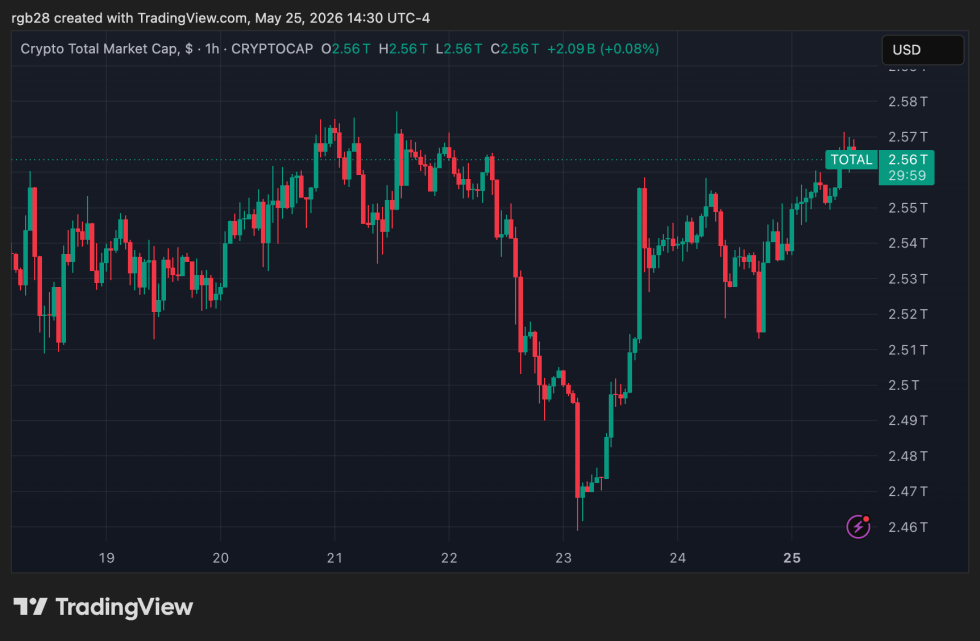
The total crypto market capitalization is at $2.56 trillion in the one-week chart. Source: TOTAL on TradingView

İlgili Sorular

QWhat was the specific event or bet on Polymarket that directly triggered Indonesia's decision to ban the platform?

AThe direct trigger was a widely shared bet on the platform predicting the premature end of Prabowo Subianto's presidency, which gained significant traction on social media.

QAccording to Indonesia's Director General of Digital Space Supervision, Alexander Sabar, why are prediction markets like Polymarket considered gambling under Indonesian law?

AHe stated that any platforms facilitating real-money wagers on event outcomes are considered gambling, regardless of whether they are framed as 'prediction markets' or use blockchain technology or crypto assets, as they involve monetary betting on uncertain outcomes.

QBesides Indonesia, which other countries are mentioned in the article as having officially blocked access to Polymarket?

AThe article mentions Singapore, Colombia, India, and Argentina as countries that have officially blocked access to Polymarket.

QWhat was the reason given by Brazilian authorities for their ban on prediction market platforms like Polymarket and Kalshi in March?

ABrazilian authorities stated that the platforms failed to comply with local regulations on derivatives trading and raised concerns about investor protections and market integrity.

QWhat action did U.S. House Representative James Comer take regarding Polymarket and Kalshi, and what specific information did he request?

AHe launched a formal investigation and sent letters to the CEOs of both companies. He requested information on how their platforms detect and prevent insider trading, verify user identities, and enforce bans on users from restricted jurisdictions.

İlgili Okumalar

From Mining Pool to Mars: Why Is Wang Chun in the SpaceX Cockpit?

Title: From Mining Pool to Mars: Why Wang Chun is in the SpaceX Cockpit? When SpaceX announced that Wang Chun, co-founder of F2Pool, would command the first commercial crewed interplanetary mission, many were shocked. Why would a Bitcoin mining pool founder be on a Mars mission roster? However, understanding Wang Chun's journey over the past decade and the deepening ties between the crypto industry and SpaceX reveals this is not accidental, but an inevitable result of a new era taking shape. Today's Mars plan is no longer just a space engineering project; it is evolving into a civilization-upgrading experiment driven by global tech capital, AI, computing power, energy, and the crypto economy. Wang Chun stands precisely at the intersection of these forces. Part 1: From F2Pool to SpaceX – Wang Chun's Leap F2Pool, founded when Bitcoin was still niche, is one of the earliest large-scale mining pools and once held a significant share of global Bitcoin hash rate. Wang Chun belongs to the first generation of Chinese Bitcoin advocates and infrastructure builders—idealists and engineers who believed in a new value network independent of traditional finance. Miners like him built the hardware, energy, and computing power foundational to decentralized networks. This aligns with the long-term, high-engineering, future-oriented vision required for space civilization. Elon Musk’s space endeavors value such long-term builders over mere capital players, which explains Wang Chun's entry into the SpaceX ecosystem. Part 2: Why Crypto and SpaceX Are Growing Closer The core of global tech competition is shifting from internet applications to next-generation infrastructure. Both crypto and SpaceX are part of this. SpaceX's goal is to drastically reduce space access costs. If successful, it could enable orbital servers, space-based energy, global satellite internet, and Martian bases. These new frontiers will require new payment systems, value networks, and global financial architectures. Cryptocurrencies, inherently global and trustless, are poised to become key to off-planet economies. Moreover, crypto and SpaceX share a high-risk, long-termist ethos—believing in ambitious, world-changing goals despite early skepticism. Part 3: Human Spaceflight Enters the Commercial Era Space exploration, long dominated by state actors, is now being transformed by commercial entities like SpaceX. Wang Chun's involvement signifies that future deep-space participants may include not just career astronauts, but also entrepreneurs, engineers, and AI researchers. This mirrors the Age of Exploration, where commercial capital eventually drove global expansion. Wang Chun has emphasized that Mars colonization must not be delayed for future generations, countering a potential over-focus on nearer-term, commercial lunar projects. His presence symbolizes how new capital, technical communities, and idealists from the crypto world are now entering the interstellar age. In summary, the true significance is not an individual's journey to Mars, but the shift in the driving force of human civilization expansion from state machinery to tech companies, AI systems, and global technology capital. Wang Chun's path—from mining pool to Mars, from the Bitcoin network to starships—may be a preview of technological civilization's evolution in the coming decades.

marsbit4 saat önce

From Mining Pool to Mars: Why Is Wang Chun in the SpaceX Cockpit?

marsbit4 saat önce

İşlemler

Spot
Futures

Popüler Makaleler

BAN Nasıl Satın Alınır

HTX.com’a hoş geldiniz! Comedian (BAN) satın alma işlemlerini basit ve kullanışlı bir hâle getirdik. Adım adım açıkladığımız rehberimizi takip ederek kripto yolculuğunuza başlayın. 1. Adım: HTX Hesabınızı OluşturunHTX'te ücretsiz bir hesap açmak için e-posta adresinizi veya telefon numaranızı kullanın. Sorunsuzca kaydolun ve tüm özelliklerin kilidini açın. Hesabımı Aç2. Adım: Kripto Satın Al Bölümüne Gidin ve Ödeme Yönteminizi SeçinKredi/Banka Kartı: Visa veya Mastercard'ınızı kullanarak anında Comedian (BAN) satın alın.Bakiye: Sorunsuz bir şekilde işlem yapmak için HTX hesap bakiyenizdeki fonları kullanın.Üçüncü Taraflar: Kullanımı kolaylaştırmak için Google Pay ve Apple Pay gibi popüler ödeme yöntemlerini ekledik.P2P: HTX'teki diğer kullanıcılarla doğrudan işlem yapın.Borsa Dışı (OTC): Yatırımcılar için kişiye özel hizmetler ve rekabetçi döviz kurları sunuyoruz.3. Adım: Comedian (BAN) Varlıklarınızı SaklayınComedian (BAN) satın aldıktan sonra HTX hesabınızda saklayın. Alternatif olarak, blok zinciri transferi yoluyla başka bir yere gönderebilir veya diğer kripto para birimlerini takas etmek için kullanabilirsiniz.4. Adım: Comedian (BAN) Varlıklarınızla İşlem YapınHTX'in spot piyasasında Comedian (BAN) ile kolayca işlemler yapın.Hesabınıza erişin, işlem çiftinizi seçin, işlemlerinizi gerçekleştirin ve gerçek zamanlı olarak izleyin. Hem yeni başlayanlar hem de deneyimli yatırımcılar için kullanıcı dostu bir deneyim sunuyoruz.

458 Toplam GörüntülenmeYayınlanma 2024.12.11Güncellenme 2025.03.21

BAN Nasıl Satın Alınır

Tartışmalar

HTX Topluluğuna hoş geldiniz. Burada, en son platform gelişmeleri hakkında bilgi sahibi olabilir ve profesyonel piyasa görüşlerine erişebilirsiniz. Kullanıcıların BAN (BAN) fiyatı hakkındaki görüşleri aşağıda sunulmaktadır.

活动图片