Seed Round Secures $500 Million, It Aims to Be the 'Apple' of Payment Blockchains

比推2025-12-11 tarihinde yayınlandı2025-12-11 tarihinde güncellendi

Özet

Stripe's Tempo blockchain, a fork of Ethereum optimized for fintech applications, is now live on testnet. Backed by a $500 million seed round from Stripe and Paradigm, it aims to become the "Apple" of payment blockchains through vertical integration and a closed-architecture approach. Key innovations include: TIP-20, a stablecoin standard with prioritized transaction lanes; low, predictable gas fees payable in any stablecoin (converted automatically via a built-in AMM); and native smart accounts enabling batch payments, gas sponsorship, scheduled transactions, and passkey authentication. Unlike Ethereum’s open, permissionless validator set, Tempo uses a private, permissioned consensus mechanism (Simplex BFT) and is fully EVM-compatible. Its design prioritizes user experience, security, and commercial adoption over decentralization, targeting the payments industry as its primary market. The code is open-sourced under Apache/MIT licenses.

Author: Lex Sokolin

Original Title: Analysis: Stripe's Tempo is building the Apple of payment blockchains

Compiled and Edited by: BitpushNews


So fast!

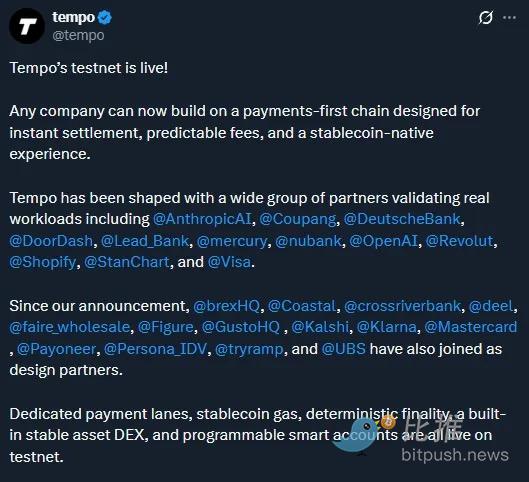
Stripe's controversial payment chain—forked from Ethereum and modified with key adaptations for fintech applications—is now live on the testnet.

It's worth noting that the project has completed a seed funding round of $500 million, co-supported by Stripe and Paradigm, targeting the payment industry as its initial market entry point.
(Source Chart: Technical Architecture Comparison Diagram)

Interested parties can check out the code repository here.

The first thing we noticed is that the technology is released under the Apache or MIT open-source licenses. This is good news.

The Apache 2.0 license is a popular permissive open-source license from the Apache Software Foundation, allowing broad commercial use, modification, and distribution, requiring only the retention of copyright notices, provision of the license text, and notation of significant modifications, while also including an explicit patent grant from contributors to users.

Therefore, the open-source community is free to adopt any of Tempo's technological achievements. This means that although Ethereum may not gain the commercial landing advantages that Tempo brings to Stripe, it can still absorb its protocol-level technological innovations.

So what are the key differences? We quote the core design notes:

Payment Channels Reserved for TIP‐20 Transfers
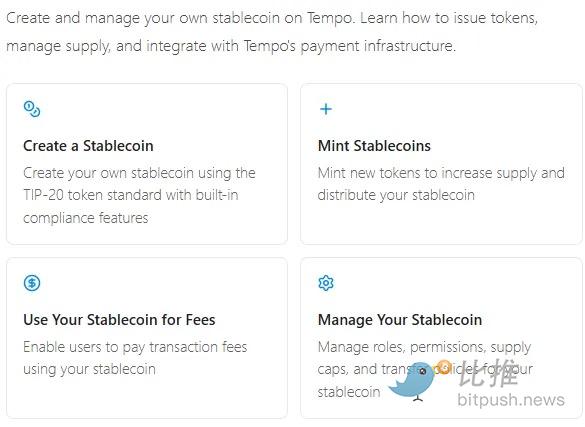
TIP‐20 is a stablecoin issuance standard created with specific functions. Its core effect is to bundle stablecoin issuance with prioritized transfers on-chain.

On Ethereum, different stablecoin issuers compete with each other, and these issuers are not fundamentally different from other token issuers.

On Tempo, the stablecoin issuance contract is solidified in the TIP20Factory, creating the potential for future on-chain revenue. Establishing a fast lane for such tokens gives them a permanent advantage. However, anyone can use this factory contract, meaning competition still exists at the distribution level, but manufacturing tends to be centralized.

Low, Predictable Fees Paid in Stablecoins
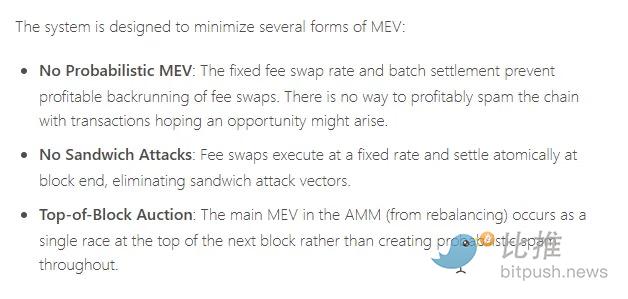
Users can pay Gas fees directly with USD stablecoins upon initiation. A fee automated market maker (AMM) will convert them into the validator's preferred stablecoin. The target cost for TIP‐20 transfers is less than one-thousandth of a dollar (<$0.001). Liquidity providers in the AMM can earn a 0.3% fee from each swap. This design also avoids Miner Extractable Value (MEV) and arbitrage attacks against transactions—which have cost users over $1 billion on Ethereum.

Generalizing the way users pay for transactions is a commendable design direction, and Tempo achieves multi-directional payment options.

Here, any asset can be converted into stablecoins to pay for Gas; on Ethereum, while any asset (including stablecoins) can also be converted to ETH to pay Gas, this process is not automated and requires support from smart accounts.

More importantly, Ethereum has execution competition between different AMMs, rather than solidifying a specific AMM within the chain mechanism. This competition is crucial when trying to spur innovation for new financial primitives; but for Tempo, which aims to industrialize financial primitives, its importance is relatively lower.

Native Smart Account Integration
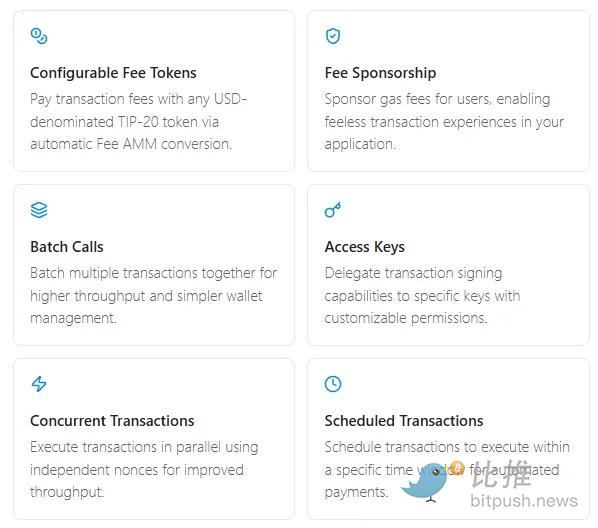
Tempo integrates the excellent concept of smart accounts into transactions: (1) supports batch processing of multiple operations (payroll, settlement, refunds); (2) a fee sponsorship mechanism, allowing applications to pay Gas on behalf of users; (3) scheduled payment functionality, supporting recurring and timed payments within protocol-level time windows; (4) modern authentication methods using passkeys (e.g., biometric login).
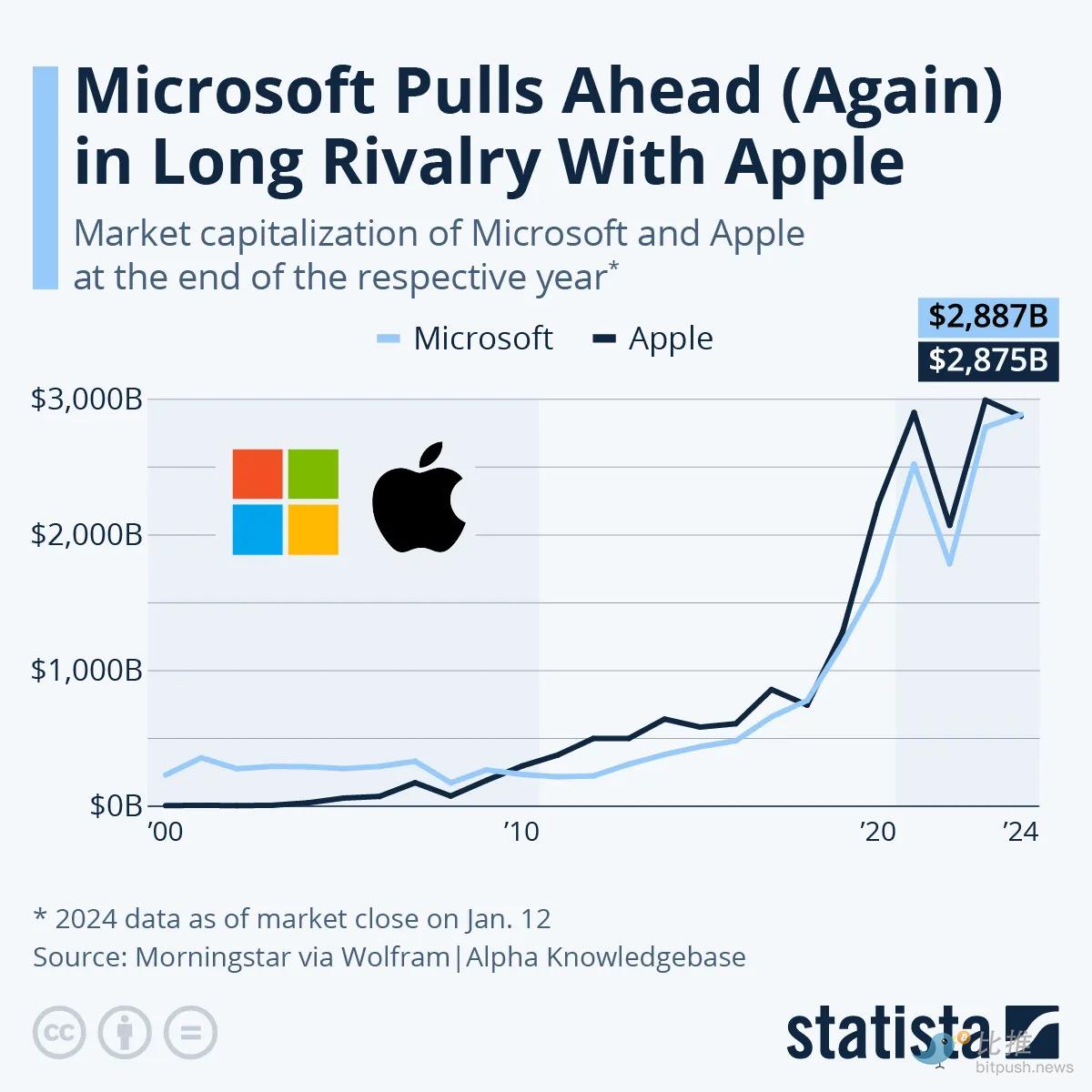
(Attached Figure: Statista chart of long-term competitive trends between Microsoft and Apple)

Just as Stripe itself integrates various fintech services into a single platform, Tempo is absorbing the most demanded payment features as native parts of the chain, rather than leaving them to third-party development and competing for user awareness. This is the Apple-style software development philosophy—all experiences are meticulously designed, proprietary, and vertically integrated—rather than the Windows-style model of gathering developers to create third-party applications (which may create functional breadth but often lack security and a unified user experience). More broadly, this reflects the fundamental difference between closed and open architecture systems.

Performance and Finality
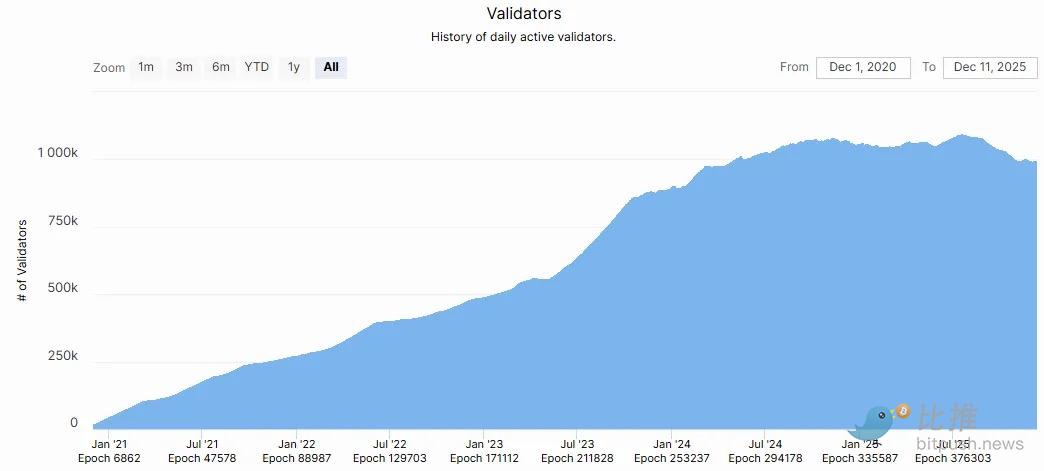
(Source: Ethereum Validator Distribution Chart)

Tempo is fully compatible with the Ethereum Virtual Machine (EVM). Developers can use the same tools, languages, and frameworks (e.g., Solidity, Foundry, Hardhat) as on Ethereum to deploy and interact with smart contracts. Its consensus algorithm uses Simplex BFT consensus (originating from Commonware, to which Tempo has invested $25 million). The validator set is currently private and permissioned, an expected design for the initial stage of a private company.

In contrast, Ethereum is antifragile and anti-censorship, meaning anyone can freely join or leave the validator set. There are currently about 1 million daily active validators on the chain.

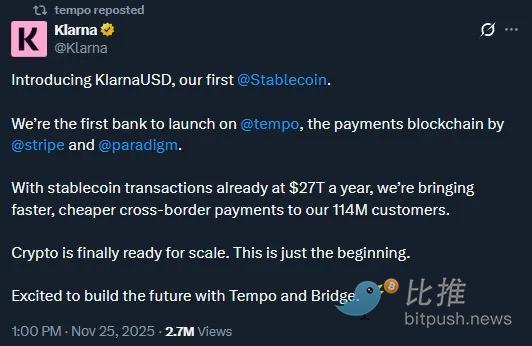
Overall, the core impression of Stripe/Tempo is: it is advancing rapidly with a vertically integrated product approach, aiming to capture the fintech market. Its partnerships with AI companies, Web2 enterprises, and traditional banks fully demonstrate its strength in driving blockchain commercialization.

Original link:https://www.bitpush.news/articles/7595070

İlgili Sorular

QWhat is the core innovation of Tempo's TIP-20 standard compared to Ethereum's stablecoin issuance?

AThe TIP-20 standard binds stablecoin issuance with prioritized on-chain transfers by creating a dedicated payment channel for TIP-20 transfers. Unlike Ethereum where stablecoin issuers compete freely, Tempo centralizes the issuance mechanism through the TIP20Factory contract, creating potential for on-chain revenue while allowing distribution-level competition.

QHow does Tempo handle gas fee payments differently from Ethereum?

ATempo allows users to pay gas fees directly in dollar stablecoins through an automated market maker (AMM) that converts them to the validator's preferred stablecoin, with costs targeted below $0.001 per TIP-20 transfer. This differs from Ethereum where assets must be converted to ETH for gas payments, a process that isn't automated and requires smart account support.

QWhat are the key features of Tempo's native smart account integration?

ATempo's smart account integration includes: (1) batch processing for multiple operations like payroll and settlements, (2) fee sponsorship allowing applications to pay gas for users, (3) scheduled payments with protocol-level timing capabilities, and (4) modern authentication using passkeys like biometric login.

QWhat is the fundamental architectural difference between Tempo's approach and Ethereum's approach as described in the article?

ATempo follows an Apple-like closed architecture with vertical integration where payment features are natively incorporated into the chain with proprietary, carefully designed experiences. Ethereum follows a Windows-like open architecture that relies on third-party developers to create applications, resulting in broader functionality but potentially less security and unified user experience.

QHow does Tempo's consensus mechanism and validator system differ from Ethereum's?

ATempo uses Simplex BFT consensus with a private, permissioned validator set, which is expected for a private company's initial phase. Ethereum features an anti-fragile and anti-censorship design where anyone can freely join or leave the validator set, with approximately 1 million active validators daily.

İlgili Okumalar

When the Fed is Politically Captured, Is Bitcoin's Historic Opportunity Here?

When the Federal Reserve announced a 25 basis point interest rate cut and a plan to purchase $40 billion in Treasury bills over 30 days on December 10, 2025, the reaction was unexpectedly pessimistic. Instead of falling, long-term bond yields rose—a sign that markets are pricing in a deeper structural risk: the potential loss of Fed independence. Political pressure is at the heart of this shift. Before the decision, a key Trump economic advisor accurately “predicted” the cut, raising suspicions that the move was politically influenced rather than data-driven. This erosion of trust threatens the foundation of U.S. monetary credibility and, by extension, global confidence in the dollar. In this environment, Bitcoin and crypto assets gain relevance. Bitcoin’s fixed supply of 21 million positions it as a hedge against potential uncontrolled money printing if the Fed succumbs to political pressure. Its decentralized nature also makes it immune to government interference—a key advantage as institutional trust declines. Ethereum and DeFi present an alternative financial infrastructure where transactions are governed by code, not central authority. While stablecoins like USDT and USDC remain dollar-pegged and exposed to dollar risk, decentralized alternatives like DAI could benefit from declining faith in traditional systems. Crypto remains highly risky and volatile, but as traditional systems face credibility crises, its role may shift from speculative asset to a legitimate hedge against sovereign risk.

深潮9 dk önce

When the Fed is Politically Captured, Is Bitcoin's Historic Opportunity Here?

深潮9 dk önce

Decade-Long Tug-of-War Concludes: "Crypto Market Structure Bill" Races Toward Senate

After a decade of regulatory uncertainty, the U.S. is advancing the "Cryptocurrency Market Structure Act" (CLARITY Act), which is expected to move into the Senate for revision and voting next week. The bill, which passed the House with overwhelming support in July, aims to end the long-standing debate over whether digital assets are securities or commodities by introducing a clear classification framework. The core of the legislation distinguishes between "digital commodities" and "digital securities." Most tokens issued on decentralized blockchains will be classified as digital commodities under CFTC jurisdiction, while only those meeting the Howey test will remain regulated as securities by the SEC. The bill also establishes a "mature blockchain" exemption, allowing highly decentralized networks like Bitcoin and Ethereum to avoid SEC registration. Additionally, digital commodity trading platforms must register with the CFTC, with a 360-day interim registration period to ensure a smooth transition. The act mandates coordination between the CFTC and SEC through a joint advisory committee to prevent regulatory gaps. It also protects decentralized finance (DeFi) participants by exempting non-custodial, non-profit roles from broker-dealer regulations. This legislative push aligns with broader regulatory shifts under the Trump administration, which has appointed crypto-friendly leaders to key agencies like the SEC, CFTC, and FDIC. These changes, along with recent CFTC initiatives to allow spot crypto trading on regulated platforms, signal a structural shift toward embracing digital assets. The bill is poised to complement earlier stablecoin legislation, positioning the U.S. as a potential global leader in crypto regulation and attracting institutional investment, though challenges in DeFi oversight and international coordination remain.

marsbit12 dk önce

Decade-Long Tug-of-War Concludes: "Crypto Market Structure Bill" Races Toward Senate

marsbit12 dk önce

İşlemler

Spot
Futures
活动图片