Sui Launches Gasless Stablecoin Transfers With Support From Fireblocks

TheNewsCrypto2026-05-20 tarihinde yayınlandı2026-05-20 tarihinde güncellendi

Özet

Sui has launched a protocol-level feature enabling gasless stablecoin transfers on its network. This allows users and businesses to send supported stablecoins like USDsui, suiUSDe, and USDC without paying gas fees or needing to hold SUI tokens, effectively reducing transfer fees to $0.00. Supported by Fireblocks, this initiative aims to remove a major friction point for mass stablecoin adoption by simplifying payment workflows. Sui leadership highlights this as a step toward making the network a global payments rail for businesses, consumers, and AI agents. The feature is a permanent structural change, not a temporary promotion, and builds on Sui's rapidly growing stablecoin ecosystem, which has surpassed $1 trillion in transfer volume.

Grand Cayman, Cayman Islands, May 20th, 2026, Chainwire

A new protocol-level feature enables peer-to-peer stablecoin transfers on Sui without requiring users to hold SUI, dropping current stablecoin transfer fees to $0.00.

Sui, where money moves as freely as messages, today announced the launch of gasless stablecoin transfers, a new protocol-level feature that enables users and businesses to send supported stablecoins on Sui without paying gas fees or managing a separate SUI token balance. With the feature now rolling out to validators, stablecoin transfer fees are $0.00 on the Sui network.

With support live from major stablecoins, including USDsui, suiUSDe, AUSD, FDUSD, USDB, USDC, and USDY, the feature is designed to simplify payment workflows and remove one of the largest friction points in stablecoin mass adoption: the requirement to hold a separate token to complete transactions.

Fireblocks, the enterprise platform securing more than $14 trillion in digital asset transactions, has integrated the new solution prior to the rollout as part of Sui’s broader payments ecosystem expansion. In addition, many institutional custodians and retail-facing wallets will support gasless transactions at launch, enabling users to send select stablecoins without holding or spending SUI on transaction fees.

“Stablecoins are becoming a core part of global finance, but the infrastructure around them still creates unnecessary complexity,” said Adeniyi Abiodun, Co-Founder and CPO of Mysten Labs, the original contributor to Sui. “From the start, we’ve said it should not cost individuals fees to move their own money. With gasless stablecoin transfers, we are one step closer in making Sui the global rail for payments, whether they are for businesses, AI agents, and consumers.”

Fireblocks’ support further strengthens the institutional accessibility of Sui’s payments infrastructure by enabling enterprises and financial service providers to securely access and manage stablecoin activity on the network through trusted digital asset infrastructure.

“The future of payments will run on stablecoin rails, but the experience for institutions still needs to catch up,” said Ran Goldi, SVP Payments & Network at Fireblocks. “Sui is making all the right moves, with gasless stablecoin transfers that removes a major point of friction for enterprises building onchain payment flows and customer experiences.”

Gasless stablecoin transfers represent a structural change to how single and batched peer-to-peer transfers of supported stablecoins operate on Sui Mainnet and are not a subsidy, sponsorship program, or temporary promotional initiative. In a competitive market where margins are everything, the launch positions Sui as the default stablecoin infrastructure for businesses looking to cut complexity and overhead costs, traders who are tired of failed transactions or the friction of fees, and AI agents, who will objectively choose the cheapest path of least resistance to execute autonomous payments.

Since August 2025, Sui has surpassed $1 trillion in stablecoin transfer volume, while its stablecoin ecosystem has continued to expand rapidly across institutional, retail, and developer use cases. Sui’s horizontally scalable architecture and object-centric design allow the network to support high-frequency payment activity with predictable performance and low operational overhead, making it well-suited for emerging payment applications, agentic commerce, and enterprise-grade financial systems.

These new protocol mechanisms work by dramatically cutting processing costs, and gasless stablecoin transfers build on that foundation to eliminate gas pre-funding and volatile treasury management entirely. The result is simpler infrastructure for institutions, and an operational and cost model that makes agentic commerce and autonomous systems work. Free transfers mean gas fees never rival or exceed the value of the payment itself, making micropayments viable at any scale.

Recent momentum across the Sui ecosystem underscores rising demand for scalable financial infrastructure and stablecoin-based payments. In 2026 alone, four SUI exchange-traded products from 21Shares, Grayscale, and Canary Capital launched globally, expanding institutional access to the Sui ecosystem. At the same time, marquee stablecoin initiatives, including Bridge-issued Sui Dollar (USDSui) and Ethena-issued eSui Dollar (SuiUSDe), have continued to expand Sui’s growing digital dollar ecosystem and strengthen its position as infrastructure for internet-scale finance.

Gasless stablecoin transfers are now rolling out on Sui Mainnet. To learn more about payments on Sui, visit https://www.sui.io/payments.

Contact: [email protected]

About Sui

Sui, where money moves as freely as messages, is a next-generation Layer 1 blockchain built for scalable finance and global payments. Founded by the core team behind Meta’s stablecoin initiative and powered by an object-centric model, Sui makes assets, permissions, and user data programmable and ownable. Sui’s primitives offer builders everything they need to create high-performance payments and financial applications, including instant agentic payments. Users can learn more at sui.io.

About Fireblocks

Fireblocks is the world’s most trusted digital asset infrastructure company, empowering organizations of all sizes to build, manage and grow their business on the blockchain. With the industry’s most scalable and secure platform, we streamline stablecoin payments, settlement, custody, tokenization, trading, accounting operations, and compliance reporting — enabling everything from institutional finance to consumer-facing digital experiences across the largest ecosystem of banks, payment providers, stablecoin issuers, exchanges and custodians. Thousands of organizations — including Worldpay, BNY, Galaxy, and Revolut — trust Fireblocks to secure more than $14 trillion in digital asset transactions across 150+ blockchains. Users can learn more at fireblocks.com.

Contact

Sui Foundation
[email protected]

İlgili Sorular

QWhat is the main feature announced by Sui and what problem does it solve?

ASui announced the launch of gasless stablecoin transfers, a protocol-level feature that enables users to send supported stablecoins on the Sui network without paying gas fees or needing to hold SUI tokens. It solves the friction point in stablecoin mass adoption of requiring a separate native token to complete transactions, effectively dropping stablecoin transfer fees to $0.00.

QWhich major company supported the integration of this new Sui feature prior to its rollout?

AFireblocks, the enterprise platform securing over $14 trillion in digital asset transactions, integrated the gasless stablecoin transfer solution prior to its rollout as part of Sui's payments ecosystem expansion.

QAccording to Adeniyi Abiodun of Mysten Labs, what is the broader goal for Sui with features like gasless stablecoin transfers?

AAdeniyi Abiodun stated that the goal is to make Sui the global rail for payments for businesses, AI agents, and consumers, moving closer to the vision that it should not cost individuals fees to move their own money.

QHow do gasless stablecoin transfers on Sui benefit emerging applications like agentic commerce and autonomous systems?

ABy eliminating gas pre-funding and volatile treasury management, gasless transfers create a simpler operational and cost model. Free transfers ensure gas fees never rival or exceed the payment value, making micropayments viable at any scale, which is essential for agentic commerce and autonomous systems to function objectively and efficiently.

QWhat recent developments in 2026 are mentioned as contributing to Sui's institutional accessibility and stablecoin ecosystem growth?

AIn 2026, four SUI exchange-traded products (ETPs) from 21Shares, Grayscale, and Canary Capital launched globally, expanding institutional access. Additionally, marquee stablecoin initiatives like Bridge-issued Sui Dollar (USDSui) and Ethena-issued eSui Dollar (SuiUSDe) have continued to expand Sui's digital dollar ecosystem.

İlgili Okumalar

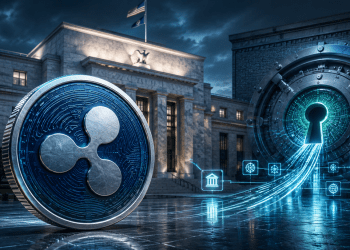
Ripple’s Fed Master Account Bid Gains Momentum After Trump Order

President Donald Trump has signed an executive order directing financial regulators and the Federal Reserve to review expanding fintech and crypto firms' access to core payment infrastructure. This order significantly advances the industry's push for direct Fed connectivity, a central issue for Ripple. The company has been seeking a Federal Reserve master account as part of its strategy for its RLUSD stablecoin, which would allow it to hold reserves directly with the central bank and access its payment rails. The order, titled "Integrating Financial Technology Innovation into Regulatory Frameworks," mandates a Fed review within 120 days on allowing access for entities like uninsured depository institutions and non-bank financial companies, including those in digital assets. This creates a formal policy timeline for resolving whether crypto payment firms must rely on traditional bank intermediaries. Ripple's application for a national bank charter and a master account is part of this broader landscape. The issue gained precedent when Kraken Financial received a limited-purpose master account, while Custodia Bank's application was denied after a legal battle. The Fed has also proposed a more restricted "payment account" option. Trump's order does not guarantee approval for Ripple but forces a high-level examination of the regulatory barriers, bringing the company's long-running effort to the forefront of Washington's financial policy agenda.

bitcoinist5 dk önce

Ripple’s Fed Master Account Bid Gains Momentum After Trump Order

bitcoinist5 dk önce

Google's 2026 Roadmap is Hidden in This Keynote Speech

Google I/O 2026 was not merely a product launch, but a strategic unveiling of the company's decade-long roadmap. The core signal is that Google is evolving its AI, Gemini, from a feature within products into a foundational operating layer that integrates and reshapes its entire ecosystem—Search, Android, Chrome, YouTube, Workspace, XR, and developer tools. The traditional paradigms of digital interaction are being redefined. Search is shifting from finding links to understanding intent and completing tasks. Android is transforming from an app-centric OS into an AI-native platform that orchestrates workflows across services. Chrome is becoming an AI reasoning layer over the web, while YouTube is evolving into a conversational knowledge engine. Google is heavily investing in Agentic AI, aiming for AI to act as a digital operator that executes tasks autonomously. Underlying this vision is the integration of Gemini across all products, making it the central nervous system. Key developments include Gemini Omni for multimodal generation, deeper product integrations, and a push into XR glasses for contextual, ambient computing. Google is positioning AI not as an optional feature but as essential infrastructure, akin to electricity. The broader implication is a competition for the next computing interface. Google's goal is not just to win in chatbots or models, but to become the operating system for the AI era by controlling the primary entry points—search, assistant, OS, and browser—and weaving them into a unified, intelligent layer. This represents a fundamental shift in computing paradigms that will impact creators, developers, businesses, and how all users interact with technology.

marsbit45 dk önce

Google's 2026 Roadmap is Hidden in This Keynote Speech

marsbit45 dk önce

‘Withdraw Insurance to Buy Stocks’: South Koreans Over 60 Are Borrowing to Bet on Samsung

South Korea's stock market has seen a frenzy, with the KOSPI nearly doubling in six months. This boom is fueled by a surge in retail investors borrowing to buy stocks, with outstanding margin loans hitting a record high. A significant portion of this debt is held by people over 50, with the 60+ age group seeing the fastest growth. Many are reportedly cashing out savings-type life insurance policies—even at a loss—to fund their stock investments. They are heavily concentrated in major semiconductor stocks like Samsung Electronics and SK Hynix, which have driven most of the market's gains. This trend is particularly risky for older investors, who are leveraging their limited retirement savings. While a market correction in March caused significant losses for leveraged accounts, the swift recovery and continued rally have reinforced risky behavior. Stories of quick profits on platforms like Blind further fuel the speculative rush. The phenomenon is partly driven by economic anxiety. With South Korea having a high elderly poverty rate and a low public pension replacement rate, some seniors see the booming market as a last chance to improve their finances. This "FOMO" (fear of missing out) sentiment is palpable, even in public parks where retirees gather and now discuss stock tips alongside their usual activities. Despite regulatory warnings and the inherent risks of leverage—especially for those with little time to recover from losses—the borrowing binge continues. The market's heavy reliance on a few tech stocks and its cyclical nature pose a substantial threat to these elderly investors, for whom a downturn could be catastrophic.

marsbit50 dk önce

‘Withdraw Insurance to Buy Stocks’: South Koreans Over 60 Are Borrowing to Bet on Samsung

marsbit50 dk önce

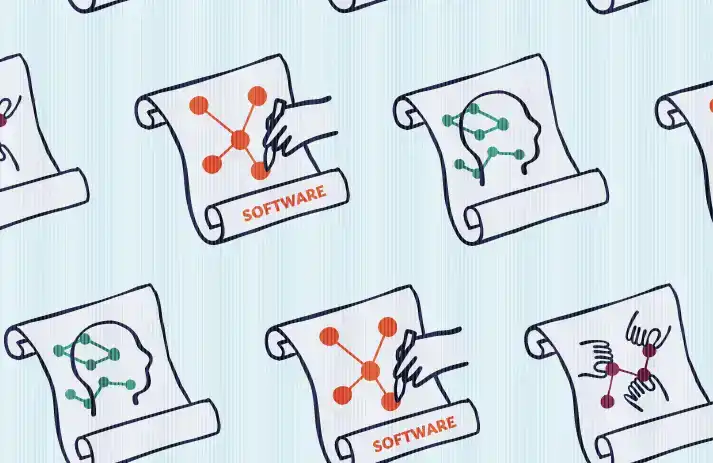
Deconstructing Anthropic: The Best AI Company Might Also Be an 'Organizational Invention'

Anthropic has emerged as one of the most compelling and fastest-growing AI companies. Its core strengths lie in strategic focus and unique organizational culture. Strategically, Anthropic concentrated early on coding as the critical path to AGI and commercial success, a focus driven by resource constraints and validated by market results. This contrasts with OpenAI's more expansive, multi-pronged approach. Co-founder Dario Amodei's technical conviction and low FOMO personality fostered this decisive focus. Organizationally, Anthropic has cultivated a distinctive culture characterized by: 1. **Deep Mission-Orientation:** A genuine, almost religious commitment to AI safety as the primary goal, even above corporate success. 2. **High Trust, Low Ego:** An environment where brilliant researchers collaborate effectively without internal politics or status battles. 3. **Strong Humanistic Values:** A bookish, idealistic ethos reflected in its hiring and model naming. This culture is maintained through rigorous cultural screening in hiring, extreme transparency and context-sharing from leadership (like Dario's frequent all-hands), a unique seven-cofounder equal-equity structure that disperses cultural influence, and a "one team" philosophy that minimizes silos. The culture stems partly from business necessity—excelling at the "dirty work" of data engineering for coding/agentic AI—and partly from Dario's negative experiences with political infighting at previous companies, motivating him to build Anthropic as an antithesis. While OpenAI remains a formidable competitor with greater resources and exploratory zeal, Anthropic demonstrates that success in the AI era can also come from focused bets, cohesive culture, and a steadfast mission, offering a distinct model of organizational invention.

marsbit1 saat önce

Deconstructing Anthropic: The Best AI Company Might Also Be an 'Organizational Invention'

marsbit1 saat önce

İşlemler

Spot
Futures

Popüler Makaleler

SUI Nasıl Satın Alınır

HTX.com’a hoş geldiniz! SUI Network (SUI) satın alma işlemlerini basit ve kullanışlı bir hâle getirdik. Adım adım açıkladığımız rehberimizi takip ederek kripto yolculuğunuza başlayın. 1. Adım: HTX Hesabınızı OluşturunHTX'te ücretsiz bir hesap açmak için e-posta adresinizi veya telefon numaranızı kullanın. Sorunsuzca kaydolun ve tüm özelliklerin kilidini açın. Hesabımı Aç2. Adım: Kripto Satın Al Bölümüne Gidin ve Ödeme Yönteminizi SeçinKredi/Banka Kartı: Visa veya Mastercard'ınızı kullanarak anında SUI Network (SUI) satın alın.Bakiye: Sorunsuz bir şekilde işlem yapmak için HTX hesap bakiyenizdeki fonları kullanın.Üçüncü Taraflar: Kullanımı kolaylaştırmak için Google Pay ve Apple Pay gibi popüler ödeme yöntemlerini ekledik.P2P: HTX'teki diğer kullanıcılarla doğrudan işlem yapın.Borsa Dışı (OTC): Yatırımcılar için kişiye özel hizmetler ve rekabetçi döviz kurları sunuyoruz.3. Adım: SUI Network (SUI) Varlıklarınızı SaklayınSUI Network (SUI) satın aldıktan sonra HTX hesabınızda saklayın. Alternatif olarak, blok zinciri transferi yoluyla başka bir yere gönderebilir veya diğer kripto para birimlerini takas etmek için kullanabilirsiniz.4. Adım: SUI Network (SUI) Varlıklarınızla İşlem YapınHTX'in spot piyasasında SUI Network (SUI) ile kolayca işlemler yapın.Hesabınıza erişin, işlem çiftinizi seçin, işlemlerinizi gerçekleştirin ve gerçek zamanlı olarak izleyin. Hem yeni başlayanlar hem de deneyimli yatırımcılar için kullanıcı dostu bir deneyim sunuyoruz.

629 Toplam GörüntülenmeYayınlanma 2024.12.12Güncellenme 2025.03.21

SUI Nasıl Satın Alınır

Tartışmalar

HTX Topluluğuna hoş geldiniz. Burada, en son platform gelişmeleri hakkında bilgi sahibi olabilir ve profesyonel piyasa görüşlerine erişebilirsiniz. Kullanıcıların SUI (SUI) fiyatı hakkındaki görüşleri aşağıda sunulmaktadır.

活动图片