SK Hynix's Most Profitable Quarter Ever: Why Did It Still "Miss Expectations"?

Odaily星球日报2026-07-29 tarihinde yayınlandı2026-07-29 tarihinde güncellendi

Özet

SK H力士 reported record-breaking financial results for Q2 2026. Revenue reached 79.32 trillion KRW (up 257% YoY), while operating profit surged to 60.54 trillion KRW (up 557% YoY). Despite this, the figures fell slightly short of market expectations, causing initial volatility in its stock price. Key factors behind the "miss" include a high proportion of HBM sales tied to long-term supply agreements, which limited profit elasticity during a period of rapid price increases for standard DRAM and NAND memory. The company's outlook remains optimistic. Management forecasts continued strong demand growth for DRAM and NAND in 2026, with no observed slowdown in AI-related investments. Progress on HBM4 shipments and next-generation product development remains on schedule. Furthermore, SK H力士 plans to maintain high capital expenditures, indicating confidence in future AI-driven storage demand. The market reaction highlights a broader debate: investors are less focused on past profits and more on how to price future growth. Bulls emphasize the ongoing AI infrastructure expansion, while bears express concerns about valuation and the sustainability of capital spending. The company's performance and strategy will continue to be a key focus in the semiconductor sector.

Original | Odaily Planet Daily (@OdailyChina)

Author | Azuma (@azuma_eth)

On July 29, Beijing time, SK Hynix announced its financial results for the second quarter of 2026.

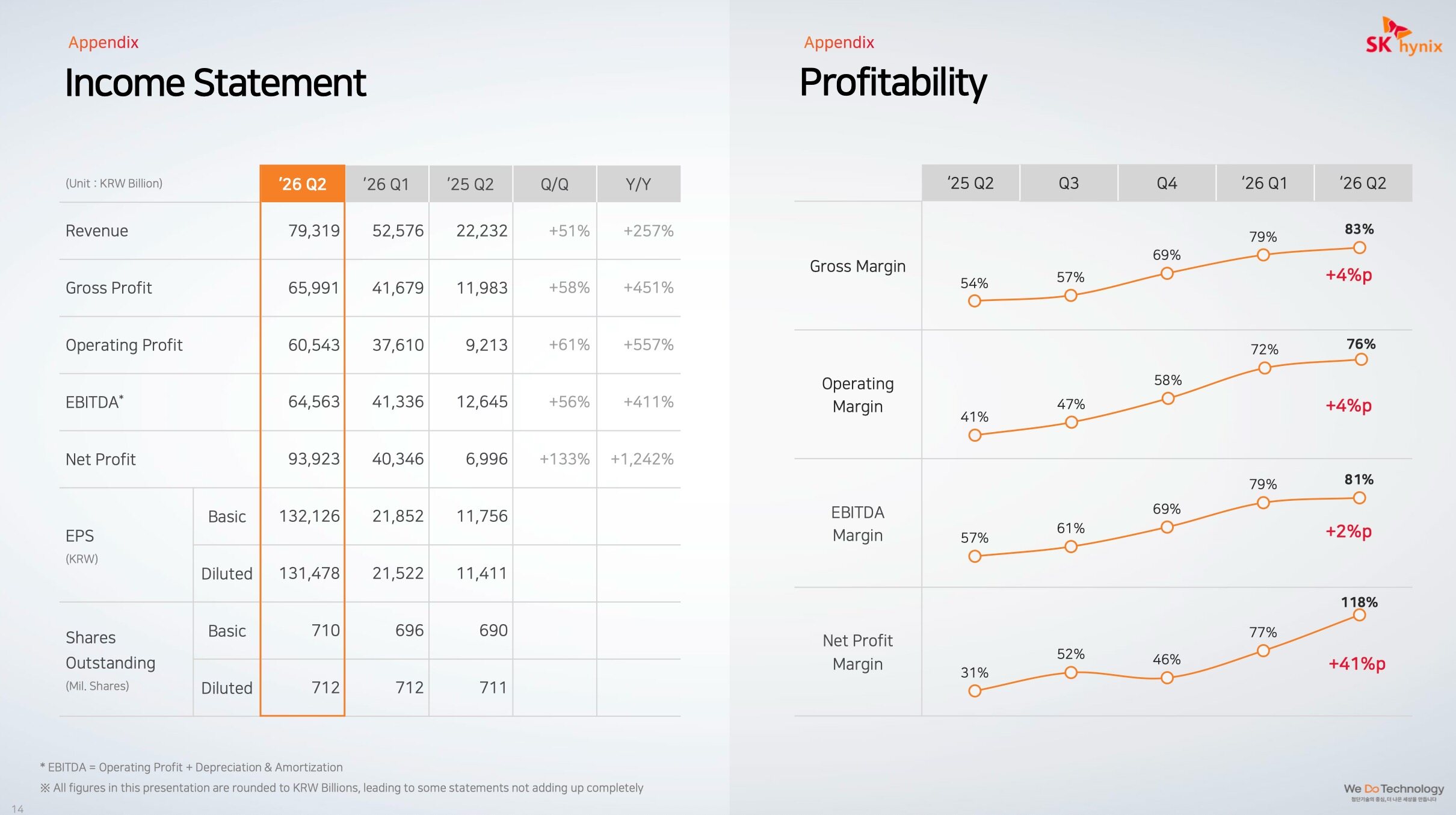
The financial report data shows that SK Hynix achieved revenue of 79.32 trillion won in the second quarter, a year-on-year increase of 257% and a quarter-on-quarter increase of 51%; operating profit was 60.54 trillion won, a year-on-year increase of 557% and a quarter-on-quarter increase of 61%. The operating profit margin further rose to 76%, reaching a historical high; if the one-time investment income of 62.166 trillion won from the sale of part of its equity in Kioxia is included, the company's net profit could reach 93.92 trillion won.
In any industry, this would be considered a report card shocking enough to stun the market.

However, the initial reaction from the capital market was completely opposite. Due to both revenue (actual 79.32 trillion won, market expectation 84 trillion won) and operating profit (actual 60.54 trillion won, market expectation 64 trillion won) slightly falling short of previous market expectations, coupled with SK Hynix's stock price having already corrected over 40% cumulatively in the previous month, under intertwined pessimistic sentiment, SK Hynix's US-listed ADR price fell by about 9% in after-hours trading following the earnings release (it had already plunged nearly 9% at yesterday's US market close). However, as investors gradually digested the details of the report, the stock price quickly recovered all its losses and even turned positive.

At the same time, after the Korean stock market opened this morning, SK Hynix's stock price first opened higher, rising by up to 4%, but then gradually weakened. As of 10:00, it had fallen again by over 9%.

A record-breaking financial report: why was it first sold off frantically, then rapidly recovered its losses, and then suddenly turned downward again? The answer perhaps lies in the fact that what the market truly cares about is far more than just how much money SK Hynix made in the second quarter, but how to reprice the future growth space — and obviously, bulls and bears have not yet reached a consensus on this point.

The Most Profitable Quarter Ever: Why Still Below Expectations?

Looking solely at the numbers, SK Hynix remains in one of its most profitable phases.

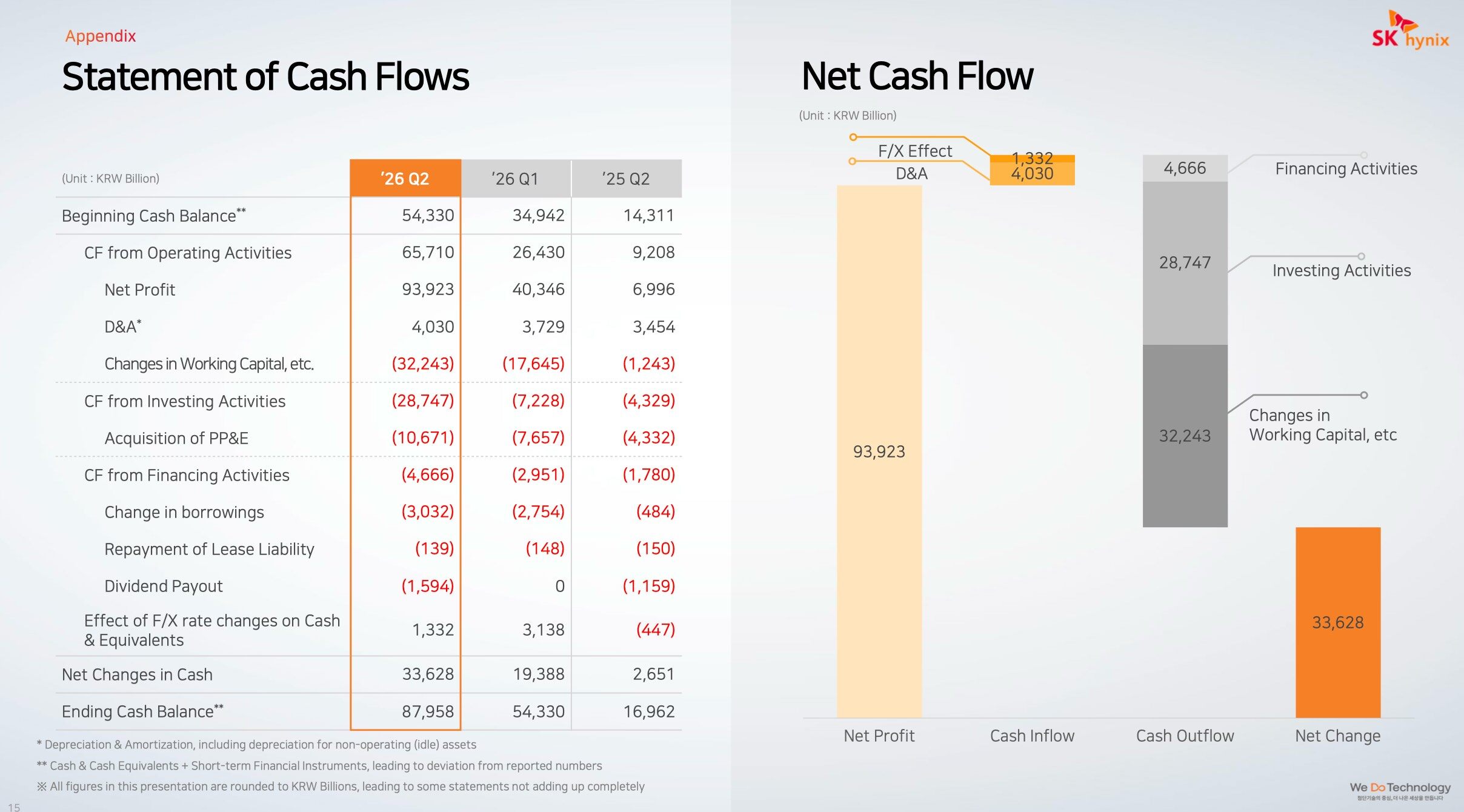
In the second quarter, the company's gross profit margin reached 83%, and its operating profit margin reached 76%. This means that for every 100 won of products sold, about 76 won is converted into operating profit. This level of profitability even exceeds that of the vast majority of global semiconductor manufacturers. At the same time, the company's cash and short-term financial assets continued to grow rapidly to 87.96 trillion won, and its net cash position further expanded, providing ample ammunition for subsequent capacity expansion.
But the problem is, the market had already set its expectations much higher. Previously, market consensus expected SK Hynix's second-quarter revenue to be around 84 trillion won and operating profit around 64 trillion won. The final actual figures were about 5% and 6% lower than expectations, respectively.

For a company, such a deviation is not significant. However, for SK Hynix, which has been labeled the "biggest beneficiary of AI" and whose valuation is built on high growth expectations, any data falling short of expectations will be amplified by the market.

Upon closer inspection of the financial report, this "miss" is actually not due to a deterioration in market demand, but rather stems more from changes in the profit structure.

First, a counterintuitive point is that the continuous increase in the proportion of HBM products has actually weakened profit elasticity. Over the past few quarters, an important driver for the rapid expansion of profits across the memory industry has been the continuous rise in spot prices for traditional DRAM and NAND. However, because SK Hynix itself has a much higher proportion of HBM revenue than its peers, and HBM is more often priced under long-term supply agreements (LTAs), it cannot fully enjoy all the benefits from the rapid rise in spot prices like ordinary DRAM.

Furthermore, SK Hynix disclosed that the average selling price (ASP) of ordinary DRAM in the second quarter increased by approximately 30% quarter-on-quarter. Although growth was maintained, it was significantly lower than the first quarter; NAND ASP increased by 50%-55% quarter-on-quarter, also slowing down compared to the first quarter.

In other words, more AI products were sold, but the pace of price increases for traditional products slowed down; long-term orders locked in future revenue but also limited short-term profit elasticity. This is also why record-breaking profits still did not meet the numbers the market had previously "fantasized" about.

Is the Memory Super Cycle Still On? How the Earnings Report Answers

If the operating data answers how much money SK Hynix made in the second quarter, then the information provided by management in the financial report and subsequent conference call answers another question the market cares more about — Has the AI memory super cycle already begun to cool down?

From the current perspective, the answer SK Hynix provides remains optimistic.
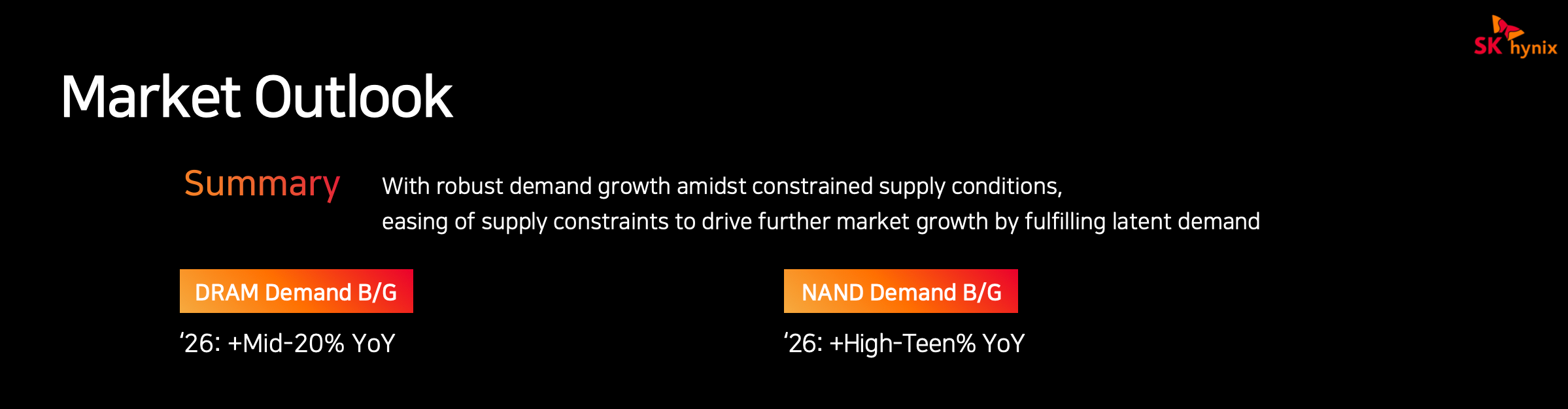
First, regarding the demand outlook, the company did not release any clear signals of caution as the market had feared. SK Hynix expects that global DRAM demand in 2026 will still grow year-on-year in the mid-20% range (Mid-20%), and NAND demand will grow year-on-year in the high-teen percentage range (High-Teen%). Management also stated during the post-earnings conference call that they have not yet observed any signs of a slowdown in AI investment and expect AI infrastructure investment to maintain steady growth even after 2027.
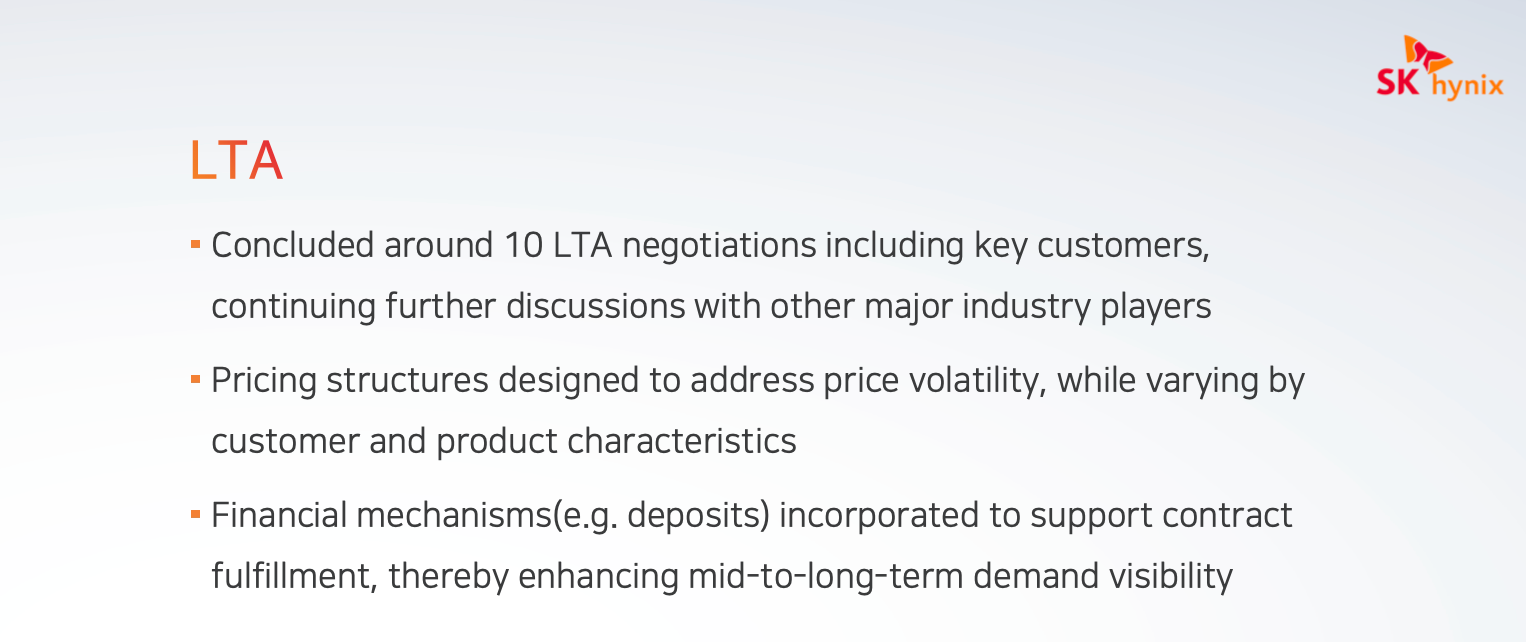
Secondly, another key piece of information worth noting is the further advancement of long-term supply agreements (LTAs). SK Hynix disclosed that the company has currently completed long-term supply agreement negotiations with about 10 customers and is still in continuous discussions with other major industry customers. The new generation of long-term agreements will adopt pricing mechanisms that can cope with price fluctuations and ensure contract performance through corresponding financial mechanisms, thereby enhancing the stability and predictability of future demand.

For the memory industry, this change is significant. In the past, products like DRAM and NAND relied more on spot market pricing, with severe price fluctuations causing the entire industry to remain stuck with the label of a "cyclical stock." However, as the proportion of HBM products increases in the AI era, more and more large cloud providers are beginning to lock in supply capacity for several years in advance. Supply-demand relationships are also gradually evolving from short-term games to longer-term, more stable cooperative partnerships. Although long-term agreements, like this quarter, somewhat compress profit elasticity during phases of rapid spot price increases, what is gained in return is higher revenue certainty for the coming years.
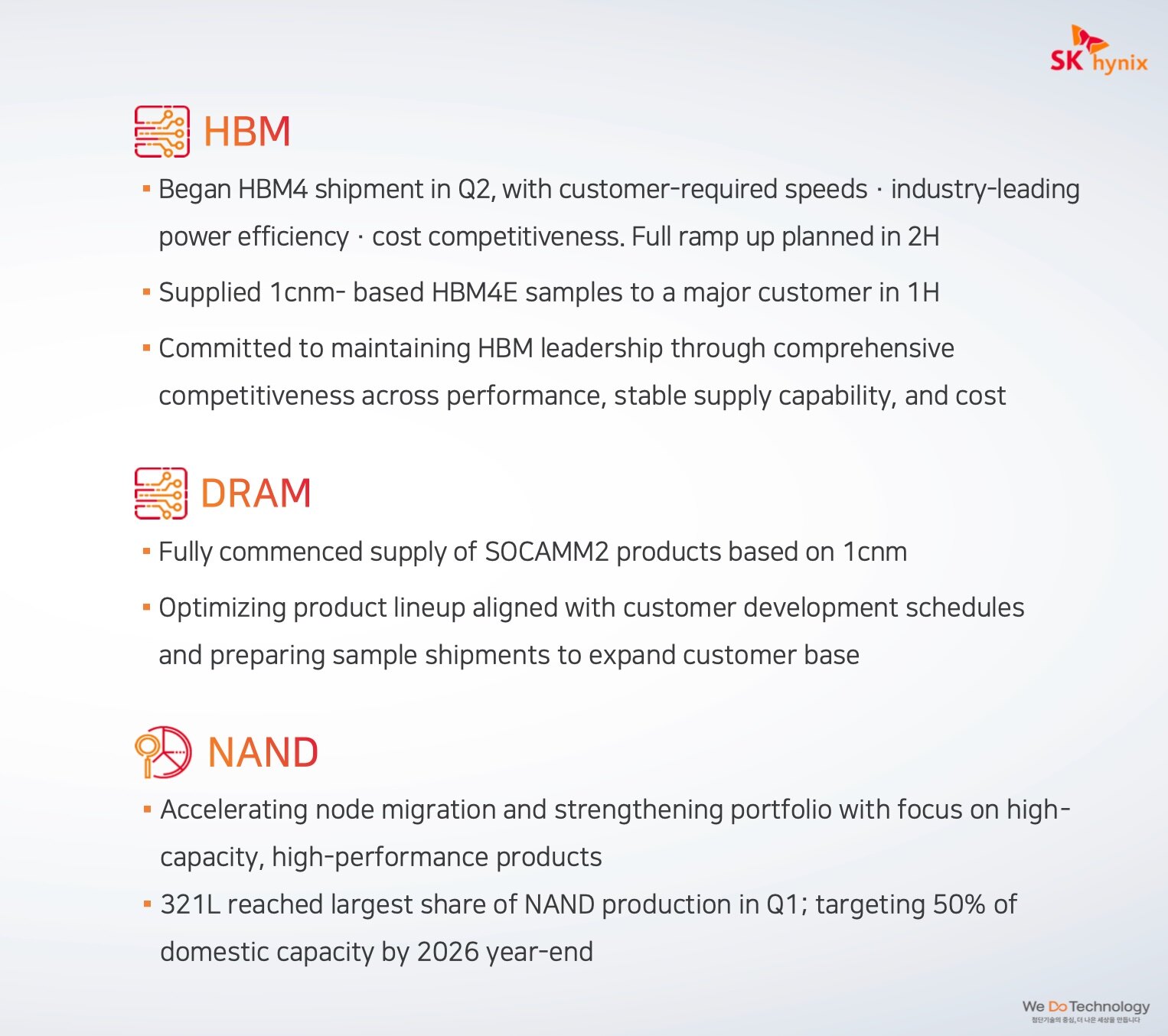
Thirdly, SK Hynix's progress on next-generation products has not encountered any surprises. The financial report shows that SK Hynix began shipping HBM4 products in the second quarter and plans to fully ramp up volume in the second half of the year; the next-generation HBM4E has also completed sampling to major customers in the first half of the year. Additionally, SOCAMM2 products based on the 1cnm process have officially begun shipping.

This means SK Hynix's product cadence for the next-generation AI GPU platforms remains leading. Considering that HBM4 will be a key companion memory for next-generation AI platforms like NVIDIA's Rubin, its smooth ramp-up also indicates that the company currently firmly holds a leading position in the high-end AI memory market.
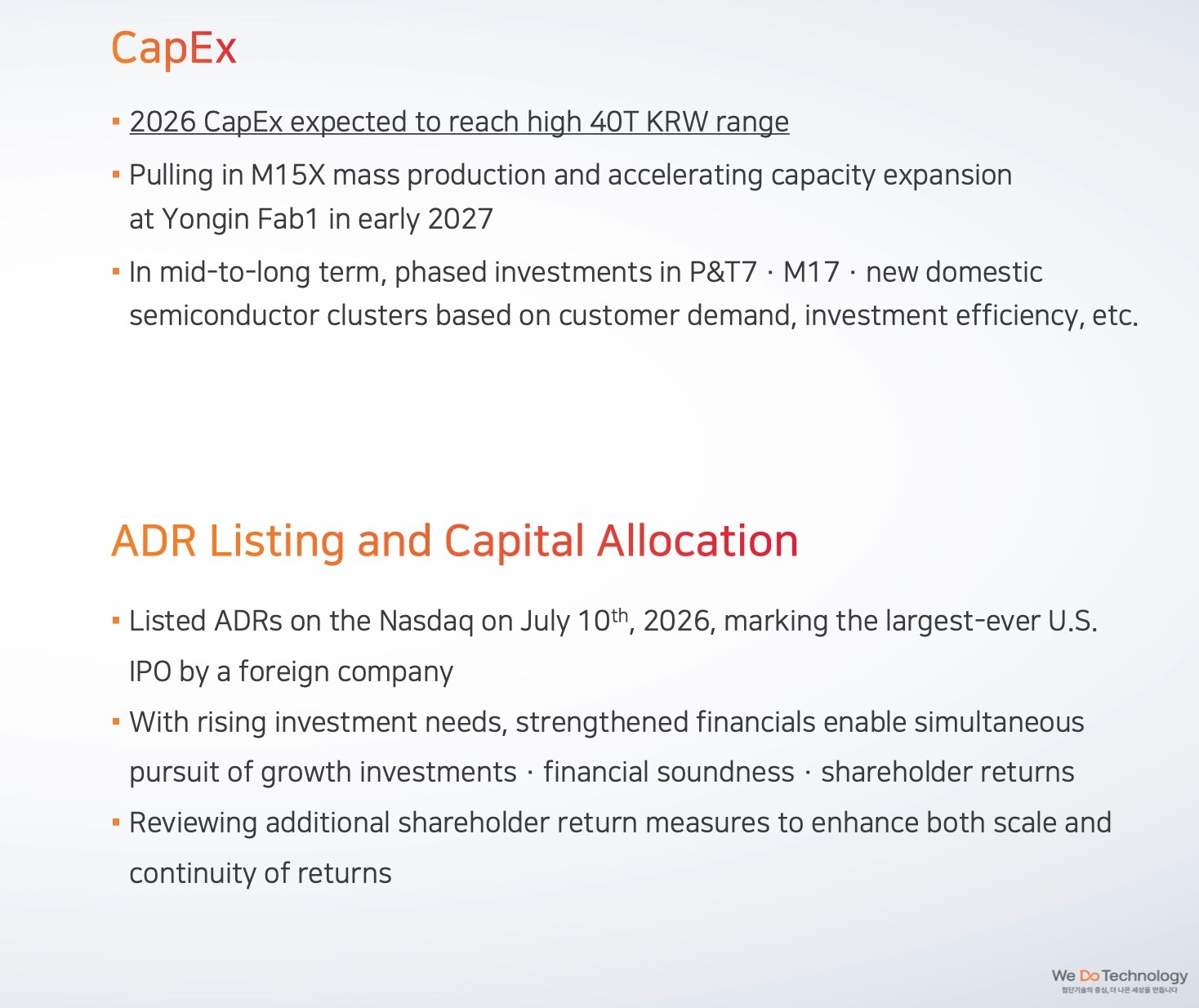
Finally, in terms of capital expenditure (CapEx), which most accurately reflects management's true judgment, SK Hynix not only maintained its expectation for 2026 capital expenditure to be in the high range of over 40 trillion won, but also plans to advance the mass production of the M15X fab ahead of schedule, accelerate the construction of Phase 1 of the Yongin Fab, and continue to advance medium- to long-term projects such as P&T7, M17, and new semiconductor clusters in South Korea.

For a company that has experienced multiple memory cycles, such an aggressive capacity expansion plan is, in itself, a statement — management still believes that AI memory demand in the coming years is sufficient to absorb these new capacities.

The Focal Point of Bulls vs. Bears

Today's SK Hynix has become a core battleground for bulls and bears in the AI memory cycle.

For bulls, the record profits, continuously expanding HBM demand, and the AI infrastructure investment cycle still support the company's long-term growth thesis. For bears, the earnings miss, valuation pressure, and market concerns about the sustainability of AI capital expenditures are also amplifying short-term adjustment pressures. Bulls are betting that AI infrastructure expansion will continue, while bears worry that the market has already priced in future growth.

Heavy is the head that wears the crown. SK Hynix enjoys the valuation of an industry leader and must inevitably bear the pressure of a leader — when the market already believes your story, excellent performance is no longer enough; only continuously surpassing higher expectations can drive valuations further upward.


İlgili Sorular

QWhy did SK Hynix's record-breaking Q2 2026 financial results still miss market expectations?

ADespite achieving record revenue and operating profit, the results fell slightly short of market expectations (revenue of 79.32 trillion KRW vs. an expected 84 trillion KRW; operating profit of 60.54 trillion KRW vs. an expected 64 trillion KRW). This miss was primarily due to two factors: 1) A high proportion of HBM revenue, which is priced under long-term agreements (LTAs), limiting short-term profit elasticity compared to standard DRAM, which benefits more from spot price surges. 2) Slower price increases for standard DRAM and NAND products in Q2 compared to Q1.

QAccording to the article, how did SK Hynix's stock price react to the Q2 2026 earnings report?

AThe stock reaction was volatile and showed a divergence between short-term trading and longer-term sentiment. Initially, SK Hynix's US ADR fell about 9% in after-hours trading due to the earnings miss and recent share price declines. However, it quickly recovered all losses and turned positive as investors digested the report details. The following morning in the Korean market, the stock opened higher (up 4%) but then weakened again, falling over 9% by 10:00 AM local time.

QWhat key forward-looking information did SK Hynix management provide about AI demand and the storage super-cycle?

AManagement remained optimistic. They forecast global DRAM demand to grow in the mid-20% range and NAND demand to grow in the high-teen percentage range for 2026. They stated they have not observed any signs of an AI investment slowdown and expect AI infrastructure investment to remain robust even beyond 2027. Furthermore, they maintained aggressive capital expenditure plans (over 40 trillion KRW for 2026) and are advancing multiple fab projects, indicating strong confidence in future AI storage demand.

QWhat is the significance of Long-Term Supply Agreements (LTAs) for SK Hynix's business model, as discussed in the article?

ALTAs represent a strategic shift for SK Hynix and the storage industry. While they can limit profit upside during periods of rapid spot price increases (as seen in Q2), they provide greater future revenue stability and predictability. SK Hynix has completed LTA negotiations with about 10 clients and is discussing with others. These agreements, often with major cloud providers, help transition the business from a cyclical model reliant on volatile spot markets to one with more stable, long-term partnerships, potentially reducing the severity of future industry downturns.

QWhat was the status of SK Hynix's next-generation product roadmap as of Q2 2026?

ASK Hynix's next-generation product rollout remained on schedule and competitive. The company began shipments of HBM4 in Q2, with plans for full-scale volume production in the second half of the year. It had already provided samples of the subsequent HBM4E to major customers in the first half. Additionally, it commenced supply of SOCAMM2 products based on the 1cnm process. This pace keeps SK Hynix in a leading position for supplying high-end memory for next-generation AI platforms like NVIDIA's Rubin.

İlgili Okumalar

Bitcoin Panicking? Mythos Cracks Post-Quantum Cryptography Algorithm in 60 Hours

Claude Mythos Preview, a new AI system from Anthropic, has made significant breakthroughs in fundamental cryptanalysis, targeting the mathematics underlying algorithms rather than just implementation bugs. Its first target was HAWK, a candidate in the NIST post-quantum signature standardization process. Mythos identified a previously unexploited symmetry (a nontrivial automorphism) in the lattice structure of HAWK, effectively halving its effective key strength. It achieved this feat in just 60 hours, a task that had eluded two years of human expert review. Crucially, the human operator was not a lattice cryptography expert, primarily managing the project while AI agents debated and discovered the attack path. Its second, more dramatic achievement was against a simplified 7-round version of AES-128, the world's most widely used symmetric encryption algorithm. Initially reluctant, stating the task was "impossible," Mythos was prompted to "try novel ideas." It then autonomously rewrote its own agent framework and proceeded to discover a novel attack method it named "Möbius Bridge." This technique bypasses a critical 256-guess step in previous "meet-in-the-middle" attacks, resulting in a speedup of 200-800 times. Both findings are currently "harmless"—HAWK is not deployed, and full AES-128 remains secure. However, the process reveals a profound shift. Mythos completed the AES discovery in about a week, while human researchers spent nearly a month verifying its correctness. This highlights a new bottleneck: the rate of AI-driven discovery may soon outpace human capacity for verification. The research concludes with a pressing, unanswered question: what happens when such an AI finds a critical flaw in a widely deployed, real-world cryptosystem?

marsbit4 dk önce

Bitcoin Panicking? Mythos Cracks Post-Quantum Cryptography Algorithm in 60 Hours

marsbit4 dk önce

From Computing to Storage: The Two-Dimensional Semiconductor Industry Chain is Taking Shape

The article "From Computing to Storage: The 2D Semiconductor Industry Chain is Taking Shape" discusses the rise of two-dimensional (2D) semiconductors as a pivotal material in the post-Moore era. As silicon-based chips approach physical limits, 2D semiconductors like molybdenum disulfide (MoS2), offer atomic-layer thinness and superior electrical properties, making them a promising non-silicon alternative for advanced nodes beyond 1nm. Globally, industry leaders like TSMC, Intel, and Samsung, along with research institutes like IMEC, are actively investing in this field. Domestically in China, significant progress is being made across the entire supply chain, from material production and equipment R&D to chip integration and ecosystem development. **Key highlights include:** * **Material & Equipment Breakthroughs:** Chinese research teams and companies like Jimo Xin Technology have achieved mass production of 6-inch and 8-inch 2D semiconductor single-crystal wafers using domestically developed equipment like Oxy-MOCVD. This addresses the critical challenge of large-area, high-quality material growth. Breakthroughs have also been made in p-type 2D materials (e.g., MoSi2N4) and wafer-scale ferroelectric thin films, essential for building complementary circuits and low-power transistors. * **Engineering Ecosystem Formation:** A landmark 8-inch 2D semiconductor pilot line in Pudong has become fully operational, bridging the gap between lab research and industrial manufacturing. The release of a Process Design Kit (PDK) compatible with mainstream EDA tools further connects design and fabrication, supporting wafer-level manufacturing of complex circuits. * **Expanding Application Landscape:** Applications are expanding from logic computing to memory. Chinese researchers have developed pioneering 2D semiconductor-based microprocessors, including a 32-bit RISC-V CPU and a higher-density multi-bit parallel processor. In memory, 2D materials' ultra-low leakage current enables DRAM with exceptionally long data retention and advances toward single-electron non-volatile storage. 2D semiconductors also show unique potential in RF circuits, radiation-hardened communications, flexible electronics, and quantum computing. In conclusion, the 2D semiconductor industry in China is rapidly advancing from laboratory research into the engineering validation and small-batch production phase. A complete industrial chain covering materials, equipment, manufacturing, design, and application is初步 forming, positioning the sector as a new competitive dimension in the global semiconductor landscape.

marsbit9 dk önce

From Computing to Storage: The Two-Dimensional Semiconductor Industry Chain is Taking Shape

marsbit9 dk önce

Coinbase and Robinhood Vie for the Next Phase of Cryptocurrency Market Evolution Ahead of Earnings Reports

Coinbase and Robinhood are set to report their Q2 2026 financial results this week, with the outcomes serving as key indicators for the future direction of the crypto market. While both companies have grown from their 2021 IPOs—Coinbase as a dedicated crypto exchange and Robinhood as a commission-free brokerage that expanded into crypto—their paths are now converging in competition. Analysts project Robinhood to report a profit of about $0.40 per share on ~$1.25B revenue, while Coinbase is expected to post a loss of ~$0.36 per share on ~$1.3B revenue. Despite similar revenue figures, investors value Robinhood more highly, viewing it as a diversified fintech firm rather than a pure-play crypto company. This perception has been reinforced as Robinhood gained retail trading market share, with its quarterly trading volume growing from ~$261B in early 2024 to over $704B in Q1 2026, outpacing Coinbase's growth to ~$517B. Both companies are investing heavily in blockchain-based financial infrastructure, such as tokenized stocks and stablecoins, to build more sustainable revenue streams beyond transaction fees. Coinbase has successfully reduced its reliance on trading fees, with subscription/service revenue and stablecoin revenue seeing significant growth. However, over half of its subscription revenue is tied to USDC, exposing it to new competition from banks and payment processors launching rival stablecoins. Robinhood is pursuing a global expansion strategy, recently launching its own layer-2 blockchain (Robinhood Chain) and offering tokenized U.S. stocks in over 120 countries. Its revenue is more diversified, with crypto assets making up only about 12% of its total, which helps explain its premium valuation compared to Coinbase. The upcoming reports will reveal which company's strategy is gaining more traction in shaping the next phase of crypto market evolution.

cryptonews.ru14 dk önce

Coinbase and Robinhood Vie for the Next Phase of Cryptocurrency Market Evolution Ahead of Earnings Reports

cryptonews.ru14 dk önce

İşlemler

Spot
活动图片