Author: Dr. Awesome Doge
Compiled by: WuBlockchain
Although the TON Foundation is a more well-known name, few people know the story of its early contributors—the NEWTON team (TON Core Team).
Through voluntary technical contributions, the NEWTON team gained recognition from the @Telegram official team in 2021, ultimately achieving a technical handover, marking the most significant "community takeover" in blockchain history.
As one of the early members of NEWTON, let me share this story. — @drawesomedoge
Introduction: Joining the NEWTON Team and Its Mission
When I joined the NEWTON team, our main mission was clear: to maintain the stability of the TON testnet2 code while enhancing developer tools.
Since we couldn't directly control the ton-blockchain GitHub repository but needed to continuously optimize the code, we established a new organization called NEWTON. To ensure smooth network updates, we encouraged the community to use the validator developed by NEWTON as the standard version.
From our establishment to June 2021, the NEWTON team completed several groundbreaking development and infrastructure projects. Let's delve into the 10 key contributions that shaped the early days of TON.
1. mytonctrl: Automated Node Management Tool
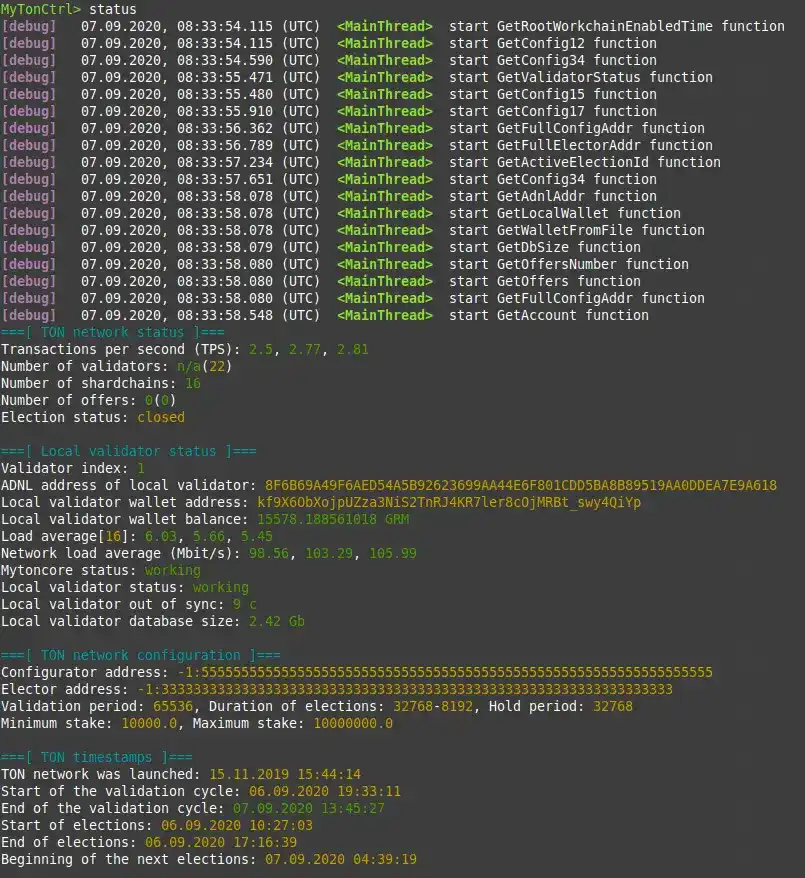
Our first major contribution was mytonctrl, a powerful automation tool for node installation and validator setup.
It provided essential functions including wallet creation, contract deployment, transaction history retrieval, and even a DNS registration system—interestingly, the DNS at that time was not the same as the modern NFT-wrapped DNS we see today.
mytonctrl could also configure validators, lite servers, and lite clients, making it easy to access and parse node data. In 2021, we added CPU-based mining scripts and automated performance tests to simplify the $TON mining process.
2. tonmon: Blockchain Health Visualization Tool
Having nodes and accessing data wasn't enough; we needed more visualization tools to monitor the blockchain's health.
To better monitor the blockchain's health status, we developed tonmon. This tool could track key metrics: block generation time, shard status, dPoS election schedule, number and weight of validators, and mining contract status. Through it, we could quickly respond to any network anomalies.
In those early days, the network scale was quite small, with only about 80 validators globally.

3. tonmine: Monitoring Giver Contracts
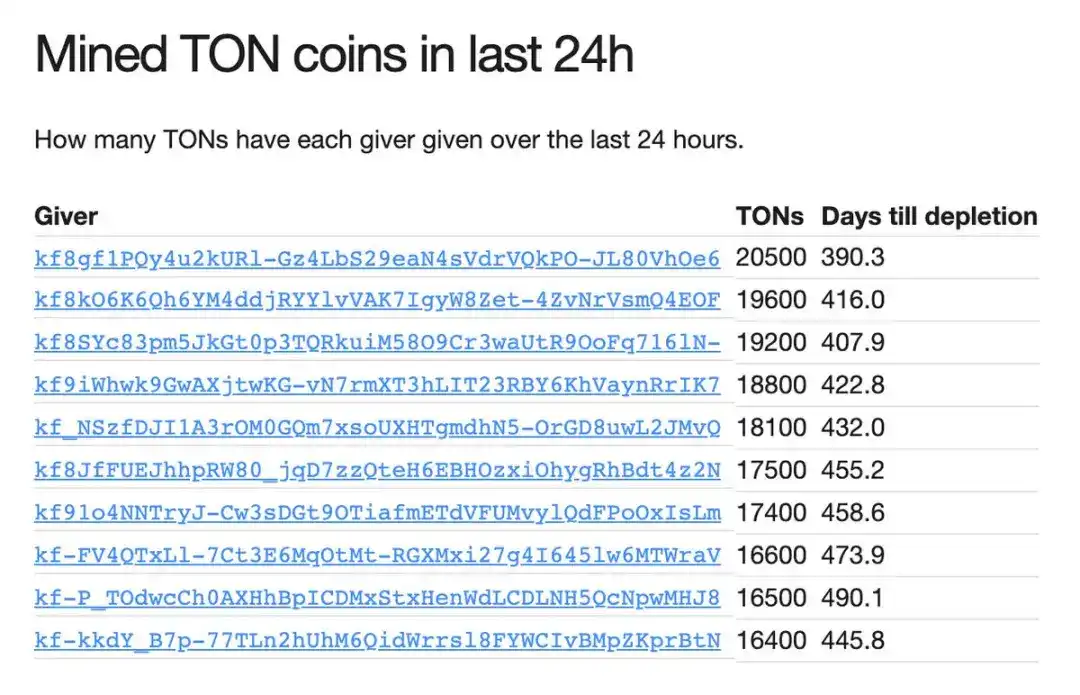
We developed tonmine to track TON's mining activities. Although the TON blockchain initially had many large and small Givers, by 2021 only ten small Givers remained.
tonmine showed the daily mining statistics for each contract, with a single contract producing an average of 20,000 $TON per day, totaling about 200,000 $TON per day across all contracts.
The mining difficulty varied significantly between different Givers, depending on the number of miners—some Givers had lower difficulty due to fewer miners, while others had extremely high difficulty due to a large number of miners.
4. Cross-Chain Bridge
Before TON had jetton or NFT standards, we recognized the importance of cross-chain compatibility. The NEWTON team developed a native $TON cross-chain bridge for ERC-20 tokens on EVM-compatible chains, which was successfully tested on bridge.ton.org. This enabled seamless transfers between TON, Ethereum, and BSC.
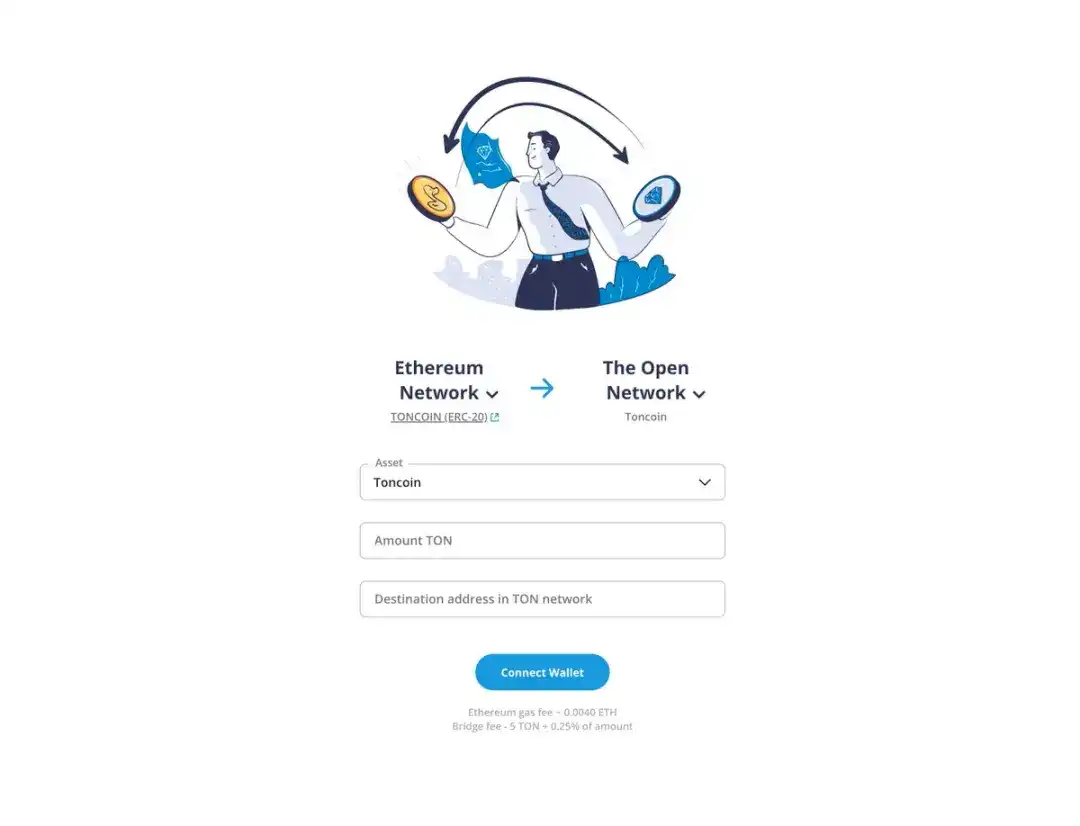
5. cryptobot: Telegram Bot Wallet
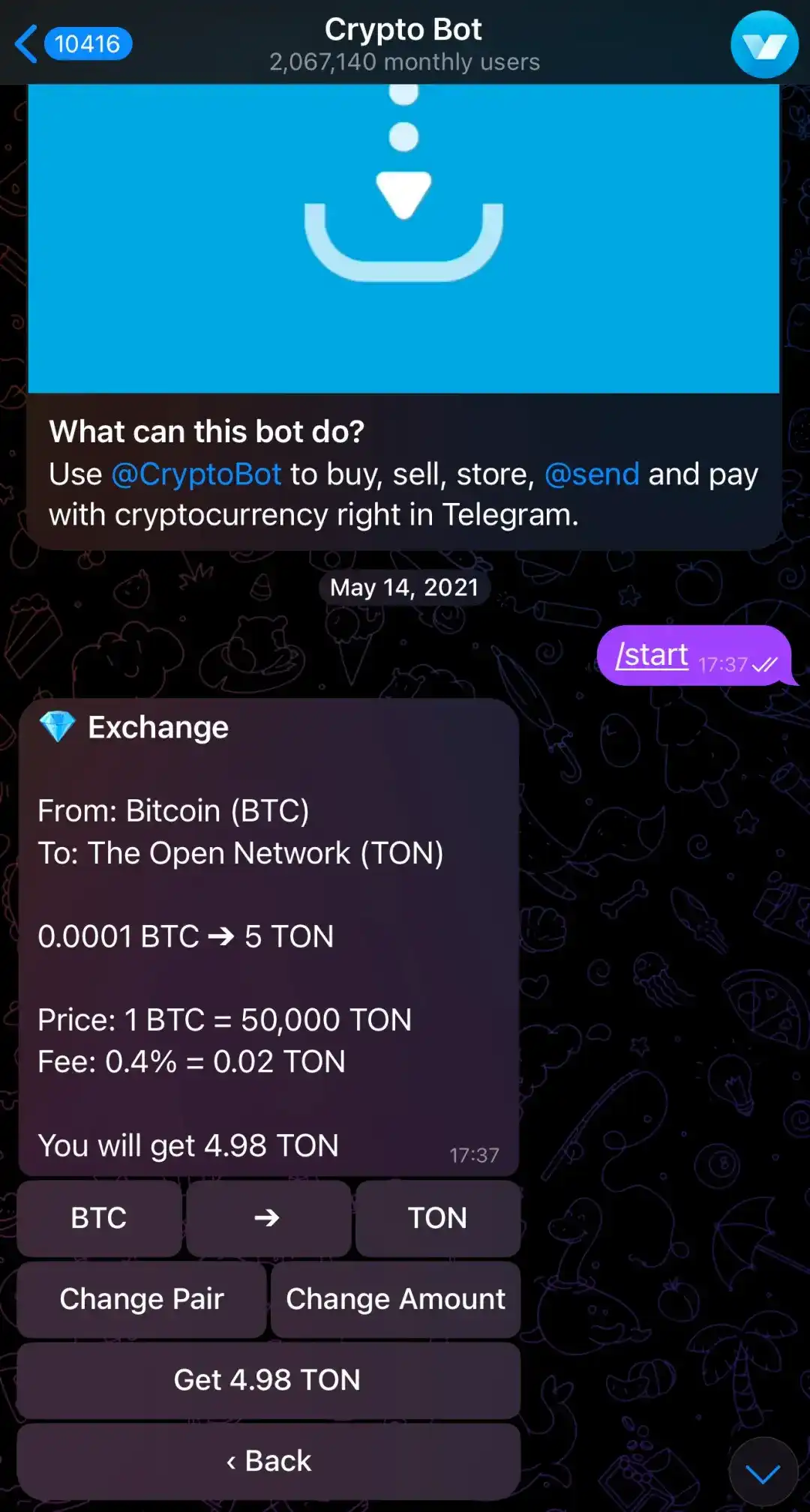
Before Telegram mini apps existed in 2021, team members developed cryptobot, a Telegram wallet. It initially supported $BTC, $TON, $BNB, and $USDT. Later, with the launch of Telegram mini apps, the wallet underwent a comprehensive overhaul.
6. toncenter: Simplifying Blockchain Data Access
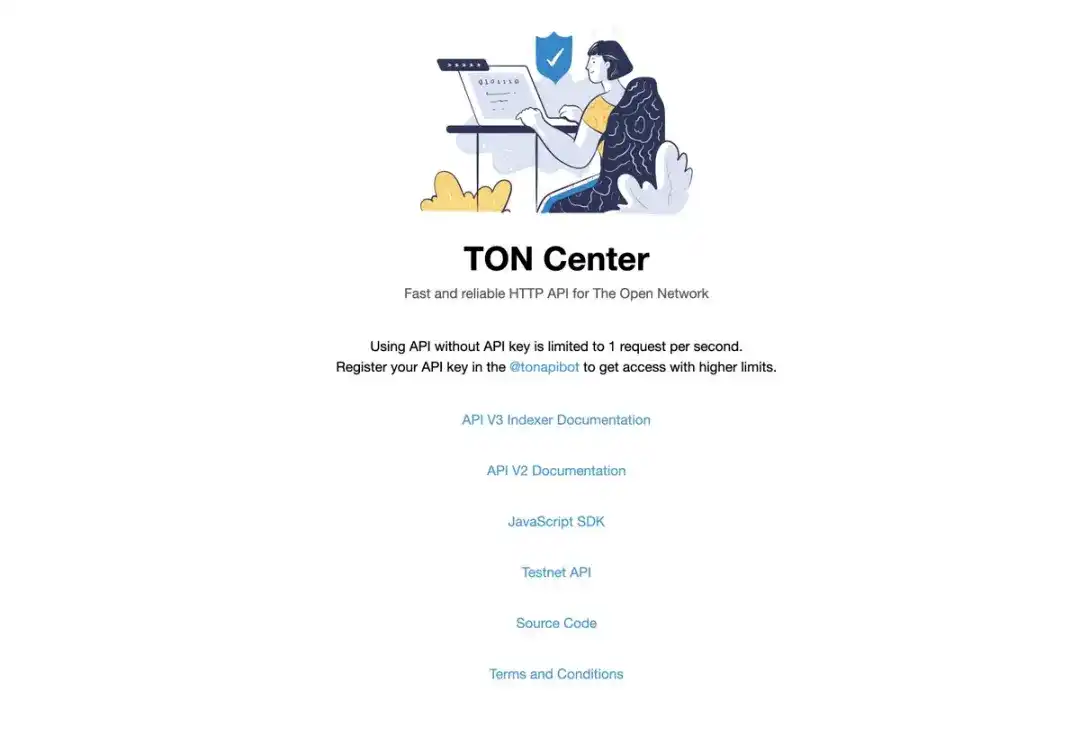
With toncenter, developers no longer needed to set up full nodes, research liteclient or liteserver, or worry about serialized data formats.
toncenter provided a public API, greatly simplifying the process for various wallets and blockchain explorers to access on-chain data.
Although TON's infrastructure has evolved with the emergence of more API providers like tonxapi.com, toncenter continues to serve developers, its robust design becoming a classic.
7. explorer.toncoin.org: TON's First Blockchain Explorer
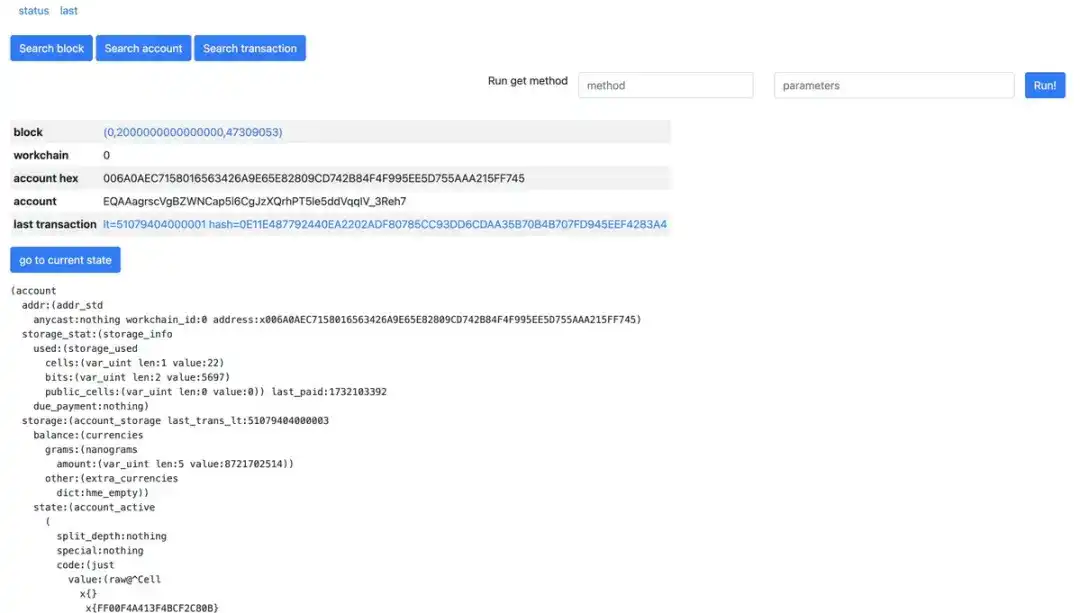
The first TON blockchain explorer was built into the core codebase and located at explorer.toncoin.org. Although it was extremely fast, the data presentation was too technical for most users.
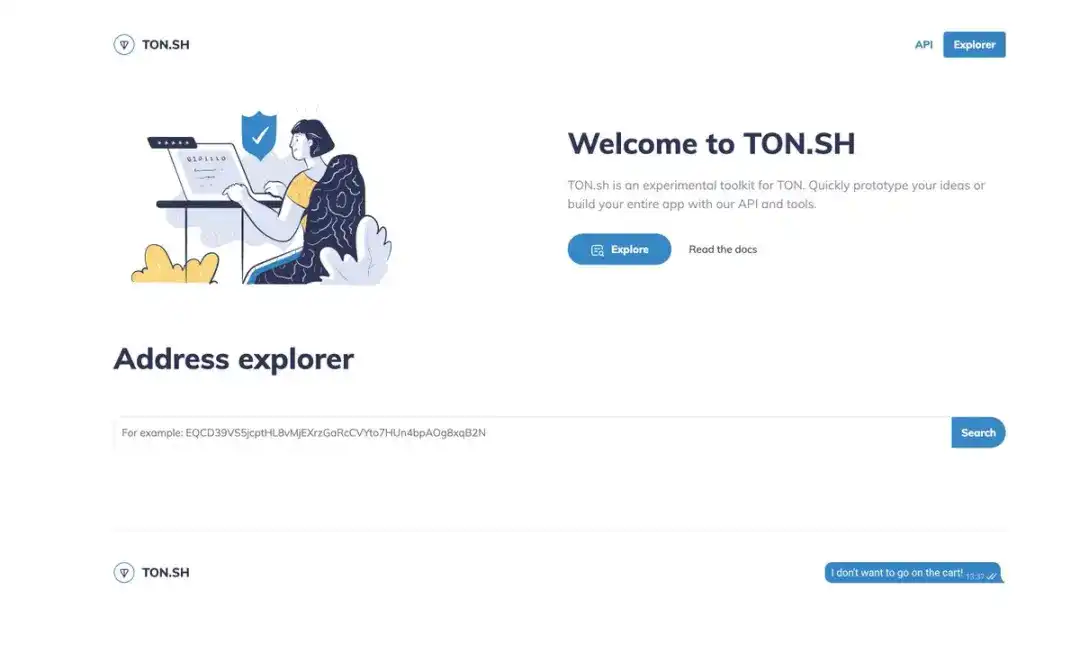
8. ton.sh: The New Generation Blockchain Explorer
To address the complexity of explorer.toncoin.org, we created ton.sh. After solving the challenge of deserializing blockchain data, we launched a public API for ton.sh.
ton.sh focused on core functions: wallet balances, transaction records, and particularly memos. For early TON users, memos were crucial, serving as carriers for command operations before TON Connect or complex DeFi contracts existed, especially in exchange deposit operations.
Although more advanced explorers like TONScan and TONViewer exist today, ton.sh remains a historical milestone in TON's development.
9. TonWeb: Important JavaScript SDK
Since TON smart contracts use Fift and Func, two relatively complex languages, the NEWTON team developed TonWeb—a JavaScript SDK that simplified wallet creation, deployment, and transaction operations.
10. ton wallet: My First TON Wallet
This TON wallet dates back to the Telegram era—it was my first wallet, and surprisingly, it still works perfectly today.

Historic Recognition: NEWTON Team's Open Letter to the @Telegram Official Team
By June 2021, the NEWTON team had made significant contributions, including running public lite servers, DHT servers, and archive nodes to maintain network stability. At this point, tolya-yanot wrote an open letter (link) documenting our year's work to the TON blockchain team and requesting GitHub organization permissions.
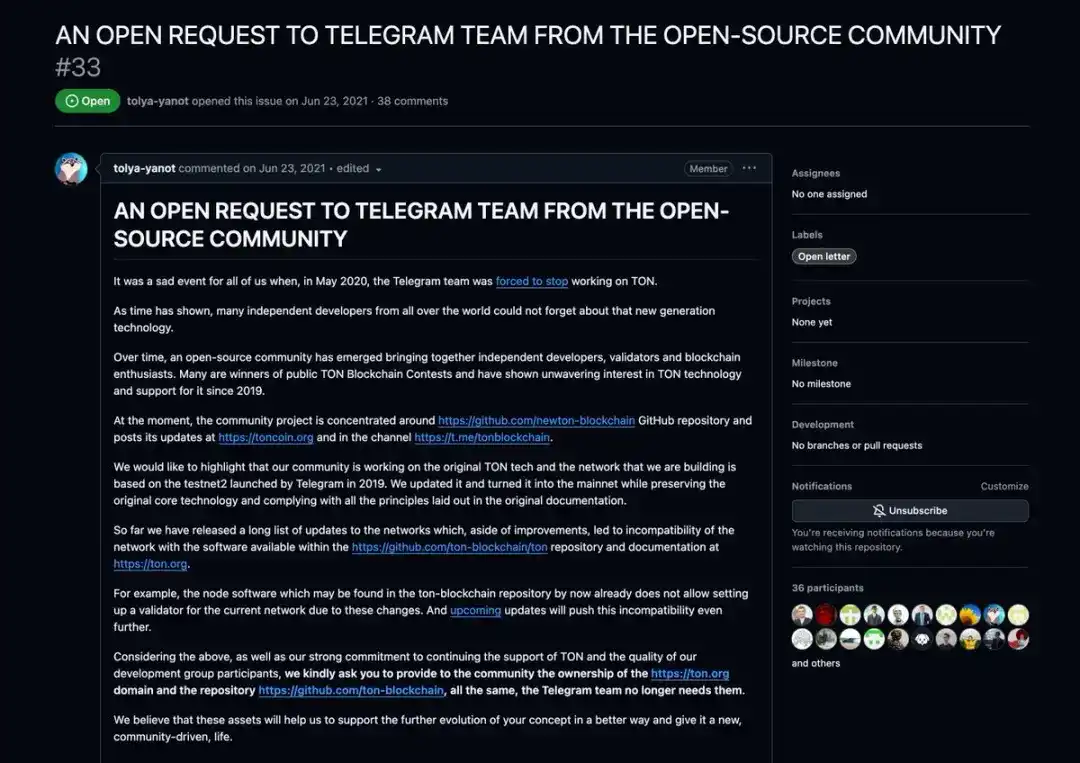
The letter listed the two leaders of NEWTON and key team members.
That's right, me—Dr. Awesome Doge, was also on the list.
At the time, I thought it was just an open letter—a good attempt to showcase our contributions to the network, and I didn't expect any response.
To our surprise, the @Telegram official team responded on June 30, 2021.
This marked the beginning of a new chapter in TON blockchain history.
Retrospect and Outlook: A Builder's Reflection
Looking back on this extraordinary journey, the early contributions of the NEWTON team were far more than just code. Every line of code, every tool we built, every sleepless night spent maintaining the network—these efforts laid the foundation for TON's development today.
Seeing TON's explosive growth in 2024, with thousands of developers joining the ecosystem, validates what we believed in during those challenging early days—TON's potential was worth fighting for.