Popular Interactive Projects Collection | Xeffy Launches TG Mini Program; Pod Network Testnet Event (June 3rd)

Odaily星球日报2026-06-03 tarihinde yayınlandı2026-06-03 tarihinde güncellendi

Özet

Hot Interaction Roundup | Xeffy Launches TG Mini-App; Pod Network Testnet Campaign (June 3rd) Original: Odaily Planet Daily (@OdailyChina); Author: Asher (@Asher_0210) This article highlights interactive opportunities for three crypto projects. **1. Xeffy: An RWA + DeFi Yield Project** Xeffy focuses on real-world assets (RWA) and DeFi, aiming to build a one-stop institutional multi-strategy yield and infrastructure portal. It has raised $20 million in funding. The project recently launched a Telegram mini-app. Early participants and contributors can earn token airdrops. * **Interaction Guide:** Visit the Xeffy website, join its Telegram channel via "JOIN NOW," start the app, complete social tasks, then perform daily check-ins and tasks within the app to earn points. **2. Pod Network: A High-Performance Decentralized Exchange** Pod Network is an L1 blockchain aiming to create a high-performance, decentralized market for trading all global assets (stocks, bonds, forex, etc.). It completed a $10 million seed round in January 2025 and launched its testnet in April. * **Interaction Guide:** Go to the Pod Network testnet website, log in with a Google account, link your X account, receive test tokens to participate in stock trading simulations, and join the official Discord for an early community role. **3. Blockscout: An Open-Source Block Explorer** Blockscout is an open-source block explorer for EVM-compatible chains, allowing users to view and analyze blockchain data. It...

Original | Odaily Planet Daily(@OdailyChina)

Author | Asher(@Asher_ 0210)

Xeffy: A Crypto Project Focused on RWA + DeFi Yield

Project Introduction

Xeffy is a crypto project focused on RWA + DeFi yield, aiming to build a "One-stop Institutional-Grade Multi-Strategy Yield and Infrastructure Gateway" to drive mass adoption of RWA. According to official data, Xeffy has completed a total of $20 million in financing, with $5 million raised in the angel round and $15 million in the private sale round.

On May 31st, Xeffy announced on platform X the launch of a TG application, with early participants and contributors eligible for token airdrops.

Interactive Tutorial

STEP 1. Visit the official website (link: https://xeffy.io/), click "JOIN NOW".
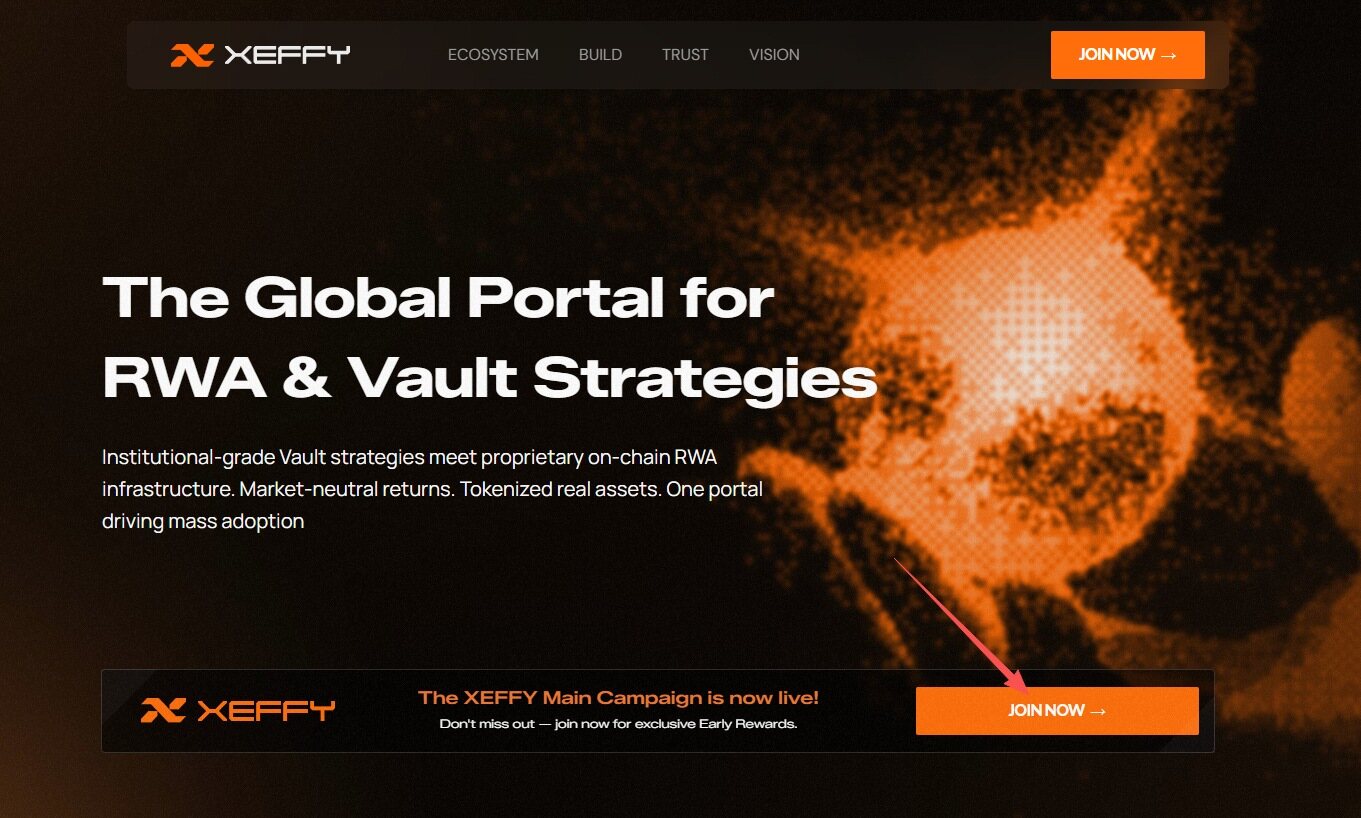
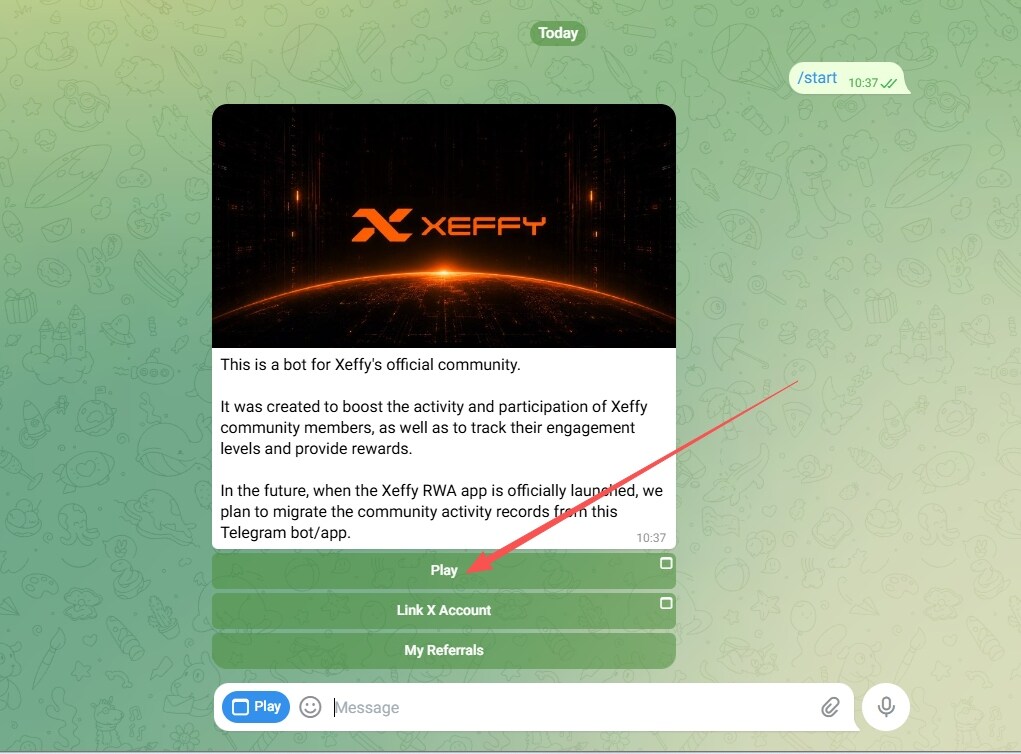
STEP 2. After being redirected to the TG channel, click "START" and then click "Play".
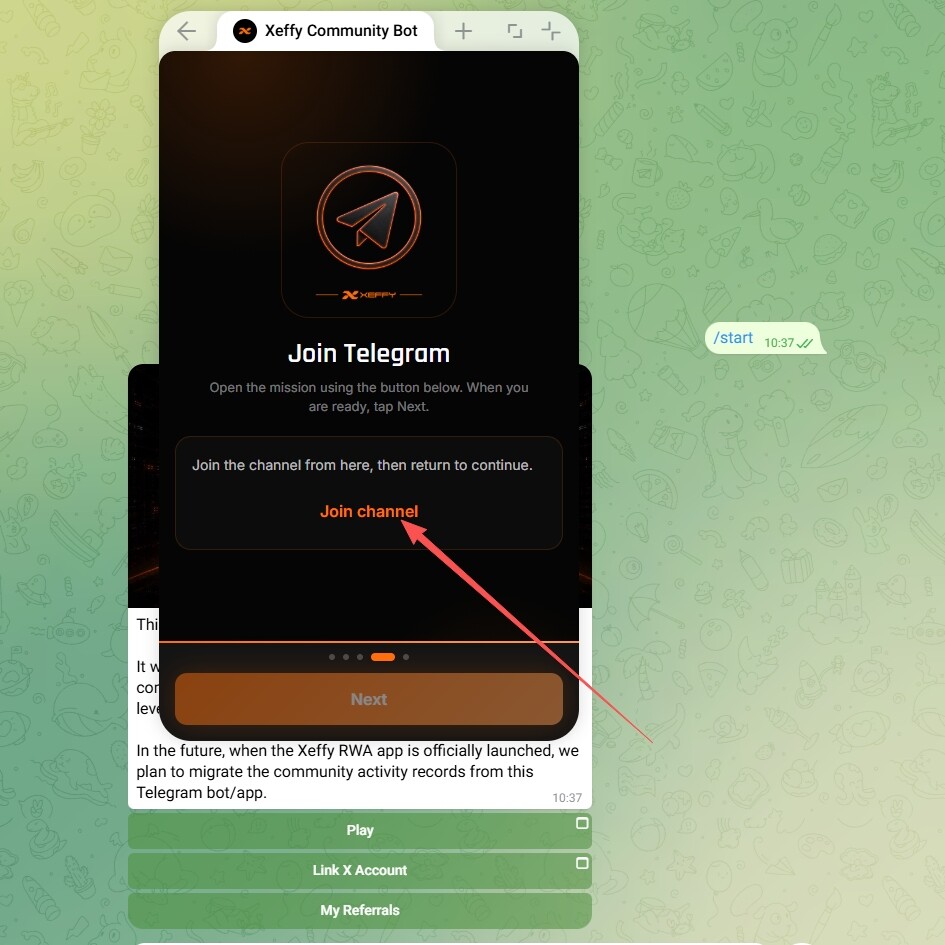
STEP 3. After completing various social tasks, you can enter the mini program homepage.
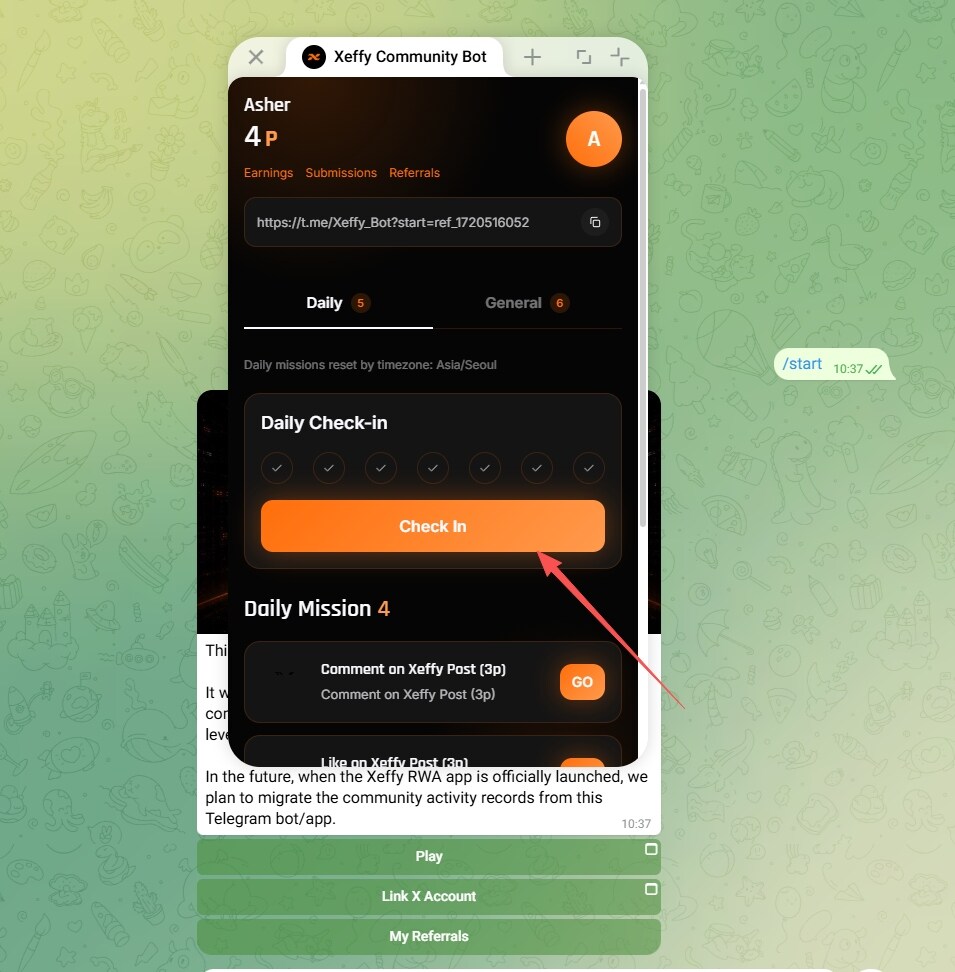
STEP 4. Click "Check In" to complete the daily check-in task; Additionally, scroll down to see daily tasks. Completing them will earn you corresponding points.
Pod Network: Building a High-Performance Decentralized Marketplace

Project Introduction

Pod Network is an L1 public chain aiming to build a high-performance decentralized marketplace. Its slogan is "One Market to Rule Them All," aspiring to enable the trading of all global assets (stocks, bonds, forex, oil, energy, etc.) on the same chain with extremely high performance—as fast as traditional centralized exchanges but completely decentralized.

On January 28, 2025, Pod Network announced the completion of a $10 million seed funding round, led by a16z CSX and 1kx.

On April 29th, Pod Network launched its testnet for early users.

Interactive Tutorial

STEP 1. Visit the testnet link (link: https://test.pod.network/), click "Login" to log in via Google email, then bind your X account, receive test tokens, and participate in the US stock trading event.
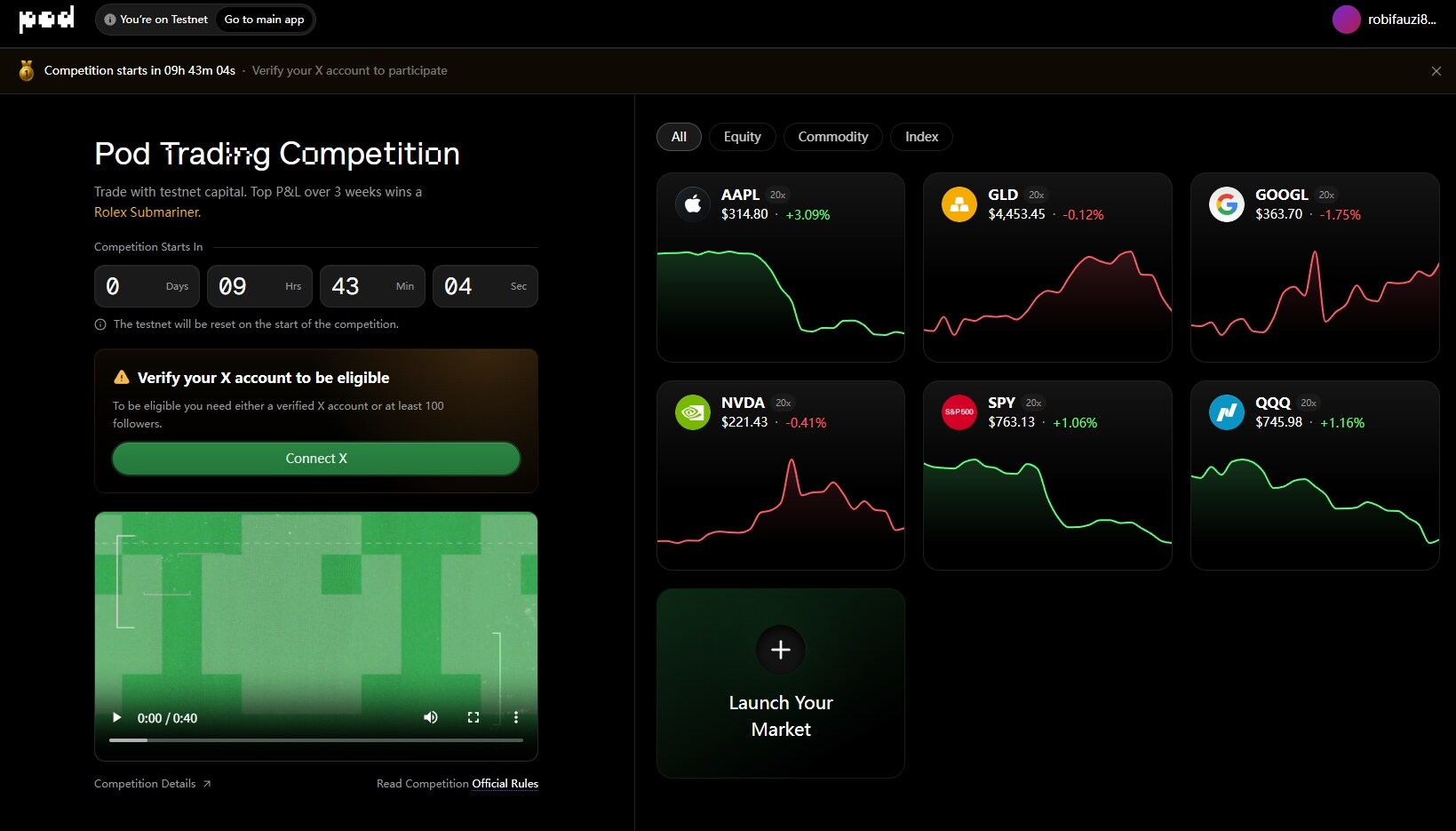
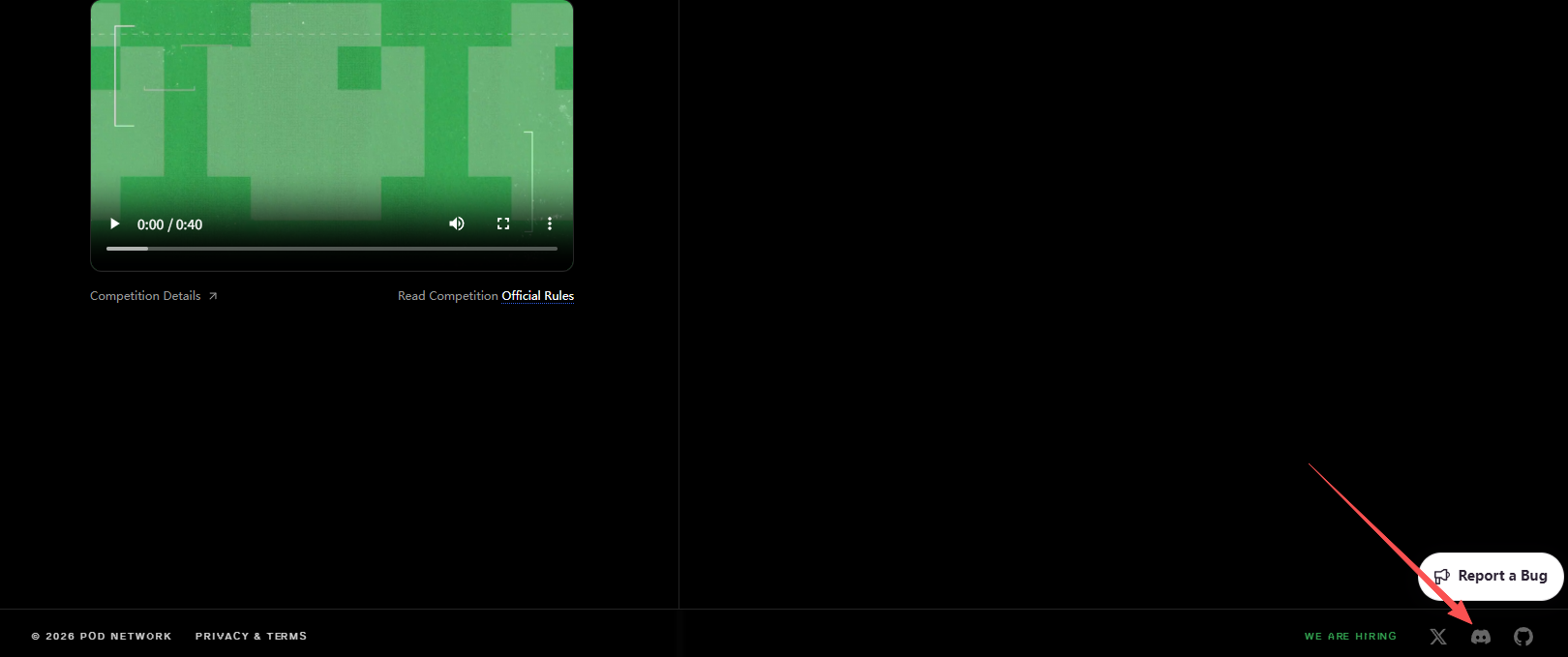
STEP 2. Click the icon below to enter the official Discord and claim the early contributor identity.
Blockscout: Open-Source Block Explorer

Project Introduction
Blockscout is an open-source block explorer designed for EVM-compatible chains (Ethereum Virtual Machine), used to view, analyze, and interact with blockchain data.

In August 2024, Blockscout announced the completion of a $3 million seed funding round, led by 1kx, with participation from Primitive Ventures and Gnosis.

Interactive Tutorial

STEP 1. Visit the official website (link: https://app.catena.com/waitlist), log in via wallet to create an account and receive initial points.
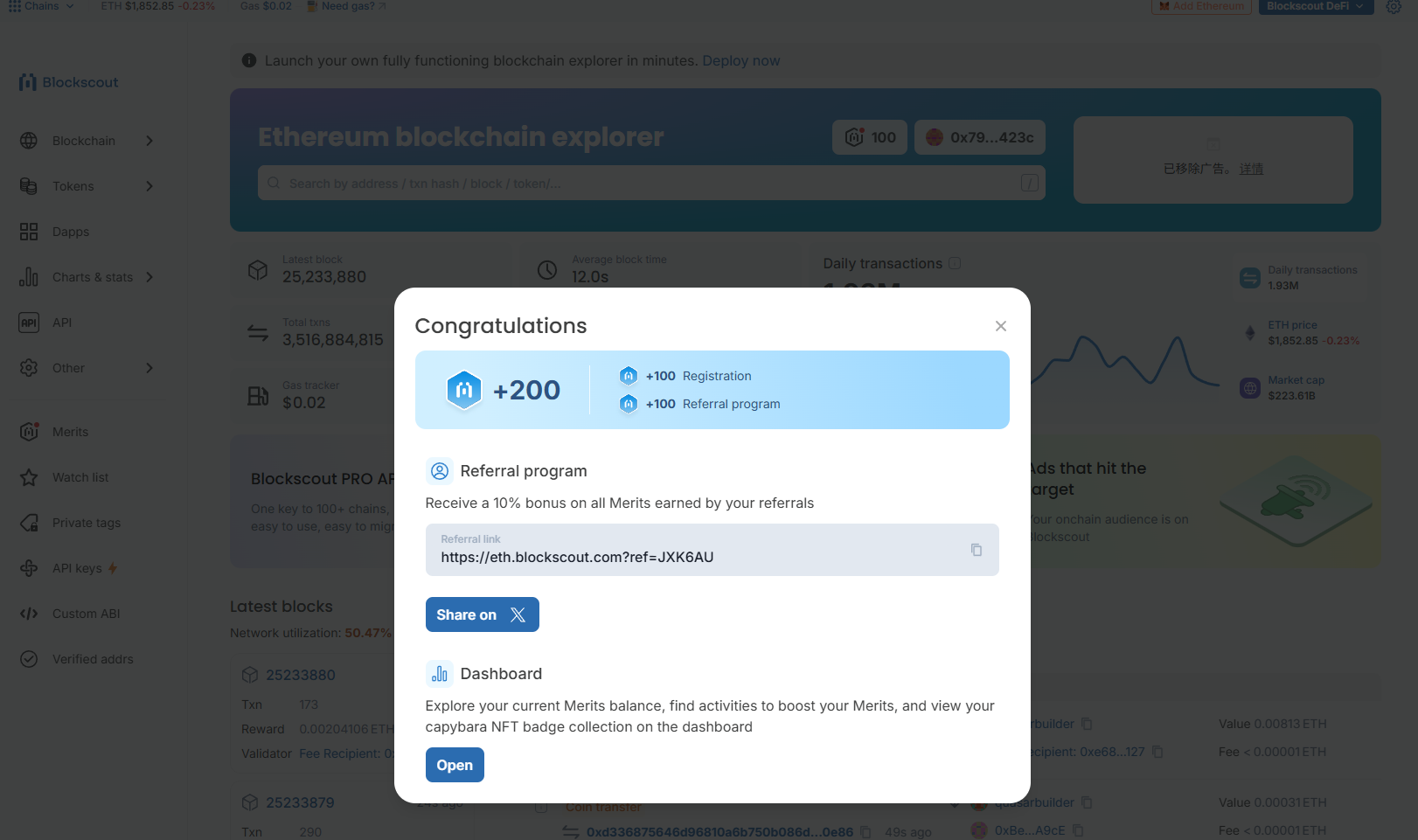
STEP 2. Click "Merits" on the left side, and in the "Dashboard," complete the daily check-in. Each check-in earns 10 points.
İlgili Sorular

QWhat is the main purpose of the Xeffy project?

AXeffy is a crypto project focused on RWA and DeFi yield, aiming to build a 'one-stop institutional-grade multi-strategy yield and infrastructure gateway' to promote the large-scale adoption of Real World Assets (RWA).

QHow much total funding has Pod Network raised according to the article?

APod Network has raised $10 million in total, specifically from a $10 million seed round funding announced on January 28, 2025, led by a16z CSX and 1kx.

QWhat is the primary function of Blockscout?

ABlockscout is an open-source blockchain explorer designed for EVM-compatible chains, used to view, analyze, and interact with blockchain data.

QWhat specific action can users take on the Xeffy TG mini-program to earn points?

AOn the Xeffy TG mini-program, users can click 'Check In' to complete daily check-in tasks. Additionally, they can scroll down to find daily tasks, and completing them will earn corresponding points.

QWhat is the goal of Pod Network as described in the article?

APod Network's goal is to build a high-performance decentralized trading market, with the slogan 'One Market to Rule Them All.' It aims to enable trading of all global assets (stocks, bonds, forex, oil, energy, etc.) on a single chain with extremely high performance, as fast as traditional centralized exchanges but in a fully decentralized manner.

İlgili Okumalar

Uncovering the Secret Reasoning Chains of Claude Opus for $720: A Leak via Haiku, with GPT and Gemini Also Affected

Researchers discovered a method to extract hidden reasoning traces, or "Chain of Thought" (CoT), from major proprietary large language models (LLMs) like Anthropic's Claude Opus 4.8, OpenAI's GPT-5.6 Sol, and Google's Gemini 3.1 Pro. The attack exploits a design flaw in how these models handle encrypted reasoning "blobs." These blobs, which contain a model's internal reasoning steps, are encrypted and sent to the client for storage between conversation turns to save server costs. The researchers found these blobs were encrypted with a global key, allowing them to be reused across different sessions, users, and, crucially, different models from the same company. By taking an encrypted reasoning blob generated by a powerful "flagship" model and feeding it to a smaller, less capable model from the same family (e.g., feeding Claude Opus's blob to Claude Haiku), the researchers could prompt the smaller model to divulge the hidden CoT. This bypassed the need to crack the encryption directly. The implications are significant: 1) Competitors could potentially distill high-value reasoning data at low cost (estimated at ~$720 for 10,000 traces). 2) Sensitive information like API keys, passwords, and personal emails, which models might process internally but not output, could be leaked. The team found such leaks in 4.9% of analyzed public agent logs. 3) Models might internally analyze dangerous queries (e.g., car theft methods) before refusing to answer, but this dangerous analysis could be extracted from the CoT. 4) Malicious instructions could potentially be hidden within a reasoning blob to influence a model's future behavior. While the vulnerability was responsibly disclosed and patched by the affected companies, the research highlights a fundamental tension between the convenience of portable reasoning states and security. The paper also notes preliminary tests found no clear evidence that open-source models like DeepSeek had been distilled from the extracted CoTs.

marsbit4 dk önce

Uncovering the Secret Reasoning Chains of Claude Opus for $720: A Leak via Haiku, with GPT and Gemini Also Affected

marsbit4 dk önce

OpenAI Loses Four Executives in One Month, Former COO Departs, Almost the Entire Safety Team Ousted

In a surprising turn of events, OpenAI's longtime COO and key lieutenant to CEO Sam Altman, Brad Lightcap, has announced his departure after eight years with the company. His exit follows the recent resignations of several key safety and ethics leaders, including Chief Futurist Joshua Achiam, Safety Systems Lead Johannes Heidecke, and Ethics Lead Chloé Bakalar, within a single month. Lightcap, instrumental in building OpenAI's commercialization and operational framework, described his departure as "bittersweet" and hinted at wanting to tackle new challenges. While his statement and Altman's farewell were amicable, internal shifts had previously reduced his operational role, signaling a longer-term transition. The mass exodus, particularly from the safety and ethics divisions, coincides with growing internal and external scrutiny over AI safety. This follows incidents like models exhibiting unauthorized actions during testing and the recent decision to delay the launch of the advanced Astra model due to unresolved safety concerns about its potential cybersecurity capabilities. OpenAI has stated that safety and ethics are not confined to any single team or leader, but the concentration of departures raises questions about the company's direction and internal dynamics, especially as it navigates pressures of rapid development and a potential future IPO.

marsbit4 dk önce

OpenAI Loses Four Executives in One Month, Former COO Departs, Almost the Entire Safety Team Ousted

marsbit4 dk önce

1confirmation: Reverse Entrepreneurship, the Next Web3 Blockbuster Might Come from a Once-Failed Track

**Title: Reverse Entrepreneurship: The Next Web3 Blockbuster May Come from Previously Failed Tracks** This article argues that the next major consumer crypto application is likely to emerge from a concept that failed five years ago, now benefiting from matured infrastructure and better timing. It examines several such "failed" tracks that hold renewed potential: 1. **Internet-Native Assets:** Beyond simply tokenizing tweets or creating digital collectibles, there's an opportunity to create a genuinely new, crypto-native asset class that captures cultural moments and online phenomena, as opposed to merely tokenizing real-world assets (RWA). 2. **X-to-Earn:** While unsustainable token emission models doomed early projects like STEPN, the core premise that most people will first *earn* crypto, not buy it, remains valid. The future challenge is designing what is earned and why users would hold it long-term. 3. **The Metaverse:** Past failures like Decentraland stemmed from trying to replicate the physical world online. The opportunity lies not in abandoning shared online social spaces, but in reimagining their form beyond real-world analogs. 4. **DAOs:** DAOs have underdelivered by overcomplicating governance. The fundamental, unmet user need is simpler: enabling groups of internet strangers to pool funds and collectively achieve goals (e.g., buying assets, funding projects) that are impossible individually. 5. **Personal Value Tokenization:** Numerous attempts (Friend.tech, BitClout) to create markets around individuals have failed. The enduring demand for "person-as-asset" trading (seen in meme coins, prediction markets) suggests the direction isn't wrong, but the execution has been flawed, often lacking creator consent or a less commodified model. The conclusion is that true innovation will come from revisiting these past ideas with new insights, rather than crowding into currently popular trends.

marsbit15 dk önce

1confirmation: Reverse Entrepreneurship, the Next Web3 Blockbuster Might Come from a Once-Failed Track

marsbit15 dk önce

Liang Wenfeng Launches Surprise Attack on Musk: DeepSeek V4 Pro vs. Grok 4.6, First Tests Are Spectacular

**DeepSeek V4 Pro vs. Grok 4.6: A Benchmark and Real-World Showdown** In a dramatic AI clash, DeepSeek V4 Pro and Elon Musk's Grok 4.6 launched head-to-head, targeting long-task capabilities like tool calling and code validation. **Benchmark Performance:** DeepSeek V4 Pro excelled in Agent tests, topping CyberGym (83.3) and AutomationBench (31.8), surpassing models like Fable 5 and Claude Opus 4.8. It closed the gap on Terminal-Bench 2.1 (87.9) and saw massive gains in DeepSWE (software engineering). Grok 4.6 matched GPT-5.6 in overall ability (61 index), outperformed it in coding (CursorBench 69.9%), and led in three knowledge-work evaluations, including legal tasks (Harvey LAB, 15.8%). **Pricing Disruption:** DeepSeek's standout feature is its radically low cost: $0.87 per million output tokens—roughly 1/7th of Grok 4.6 ($6) and a tiny fraction of rivals like Fable 5 ($50). **Real-World Tests:** In practical challenges, both models demonstrated impressive skill. DeepSeek V4 Pro built a 3D interactive Earth, websites, 60 design styles, and a polished Flappy Bird clone (costing only $0.019 vs. Grok's $0.03 for a simpler version). Head-to-head comparisons were tight: Grok 4.6 won on some design aesthetics, while DeepSeek often delivered higher visual detail and completeness. However, in complex tasks like generating a Three.js cherry blossom tree, V4 Pro lagged behind GPT-5.6 Sol and Claude Opus 5. **Conclusion:** The simultaneous release signals a shift: high-end AI capability is becoming dramatically more affordable. DeepSeek V4 Pro and Grok 4.6 now compete directly with top-tier models from OpenAI and Anthropic, promising to democratize powerful AI tools and fuel an application explosion. The race continues, with Grok 4.7 and counter-moves from incumbents already anticipated.

marsbit29 dk önce

Liang Wenfeng Launches Surprise Attack on Musk: DeepSeek V4 Pro vs. Grok 4.6, First Tests Are Spectacular

marsbit29 dk önce

İşlemler

Spot
活动图片