Bankless Founder: By 2026, Tokens Will Finally Be Treated as 'Equity'

marsbit2026-02-03 tarihinde yayınlandı2026-02-03 tarihinde güncellendi

Özet

Bankless co-founder David Hoffman argues that most tokens are treated poorly compared to equity, leading to low market valuations. However, 2026 marks a shift with innovative token distribution models. MegaETH locks 53% of its MEGA tokens in a KPI-based program, where tokens unlock only if specific growth targets—like TVL, decentralization progress, and performance metrics—are met. This aligns dilution with actual ecosystem growth and distributes new tokens to long-term stakers, reducing sell pressure. Meanwhile, Cap protocol replaces traditional airdrops with a "stabledrop," distributing stablecoins (cUSD) instead of governance tokens to users. Those seeking CAP tokens must participate in a public sale, ensuring holders are committed investors. These models move away from indiscriminate token distribution toward targeted, conditional mechanisms that reward genuine participation and long-term alignment, potentially improving token value and holder quality.

Author: David Hoffman

Compiled by: Deep Tide TechFlow

Deep Tide Introduction: Are most tokens garbage? Bankless co-founder David Hoffman points out that historically, teams have treated tokens far less seriously than equity, and the market has responded to this through token prices.

But 2026 saw a turning point:

MegaETH locked 53% of its tokens in a KPI plan, which only unlocks upon achieving growth targets;

The Cap protocol replaced governance token airdrops with stablecoin airdrops, allowing only real investors to obtain CAP through token sales.

These innovative strategies are ending the era of "spray-and-pray" token distribution, shifting towards precise, conditional allocation mechanisms.

Full text as follows:

The crypto industry has a "good coins problem".

Most tokens are garbage.

Most tokens are not treated with the same legal and strategic seriousness as equity by their teams. Because teams have historically not given tokens the same respect as equity in traditional companies, the market has reflected this in token prices.

Today I want to share two sets of data that make me optimistic about the state of tokens in 2026 and beyond:

  1. MegaETH's KPI Plan
  2. Cap's Stablecoin Airdrop (Stabledrop)

Conditional Token Supply

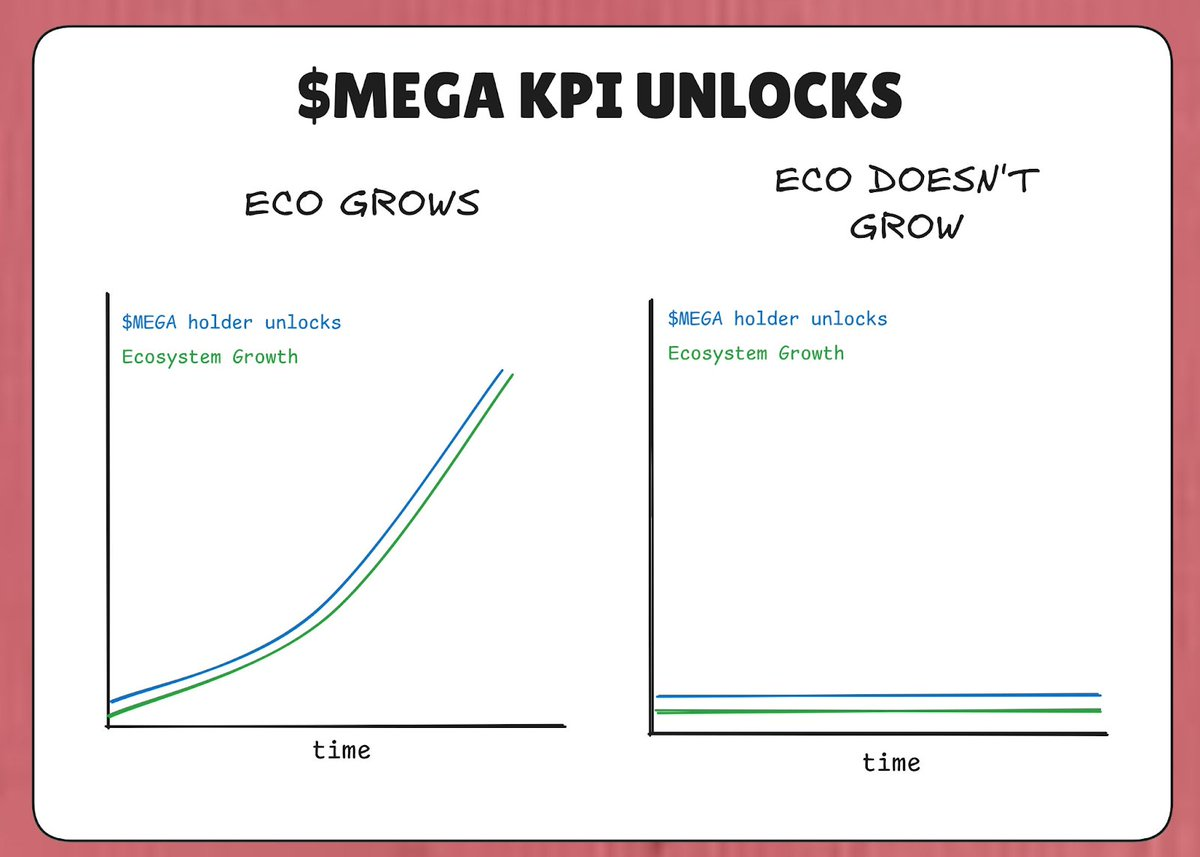
MegaETH has locked 53% of the total MEGA token supply in a "KPI Plan". The logic is: if MegaETH does not achieve its KPIs (Key Performance Indicators), these tokens will not unlock.

Therefore, in a pessimistic scenario where the ecosystem does not grow, at least no additional tokens flood the market to dilute holders. MEGA tokens only enter the market when the MegaETH ecosystem actually achieves growth (as defined by the KPIs).

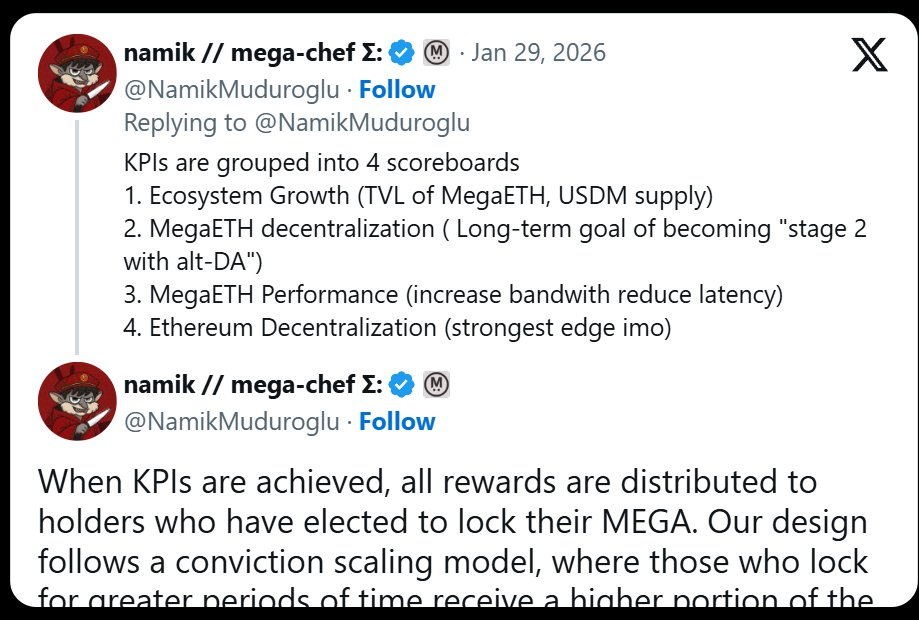
The KPIs for this plan are divided into 4 scoreboards:

  1. Ecosystem Growth (TVL, USDM supply)
  2. MegaETH Decentralization (L2Beat stage progress)
  3. MegaETH Performance (IBRL)
  4. Ethereum Decentralization

Thus, in theory, as MegaETH achieves its KPI targets, the value of MegaETH should grow correspondingly, mitigating the negative price impact of MEGA dilution on the market.
This strategy is very similar to Tesla's "pay for performance" compensation philosophy for Elon Musk. In 2018, Tesla granted Musk an equity compensation package that vested in tranches, only payable if Tesla simultaneously achieved increasing market capitalization targets and revenue targets. Elon Musk only gets paid if Tesla's revenue grows AND its market capitalization grows.

MegaETH is trying to transplant the same logic into its tokenomics. "More supply" is not a given—it's something the protocol must earn by scoring real points on meaningful scoreboards.

Unlike Musk's Tesla benchmarks, I don't see anything in Namik's KPI targets about MEGA market cap as a KPI target—perhaps for legal reasons. But as a public MEGA investor, this KPI is very interesting to me. 👀

Who Gets the Unlock Matters

Another interesting factor of this KPI plan is: who gets the MEGA when KPIs are met. According to Namik's tweet, the recipients of the unlocked MEGA are those who stake MEGA into the locking contract.

Those who lock more MEGA for longer periods receive a larger share of the 53% MEGA tokens entering the market.
The logic behind this is simple: allocate MEGA dilution to those who have already proven themselves as MEGA holders and are interested in holding more MEGA—those least likely to become MEGA sellers.

Alignment and Trade-offs

It's worth emphasizing that this also introduces risks. We have seen historical cases where similar structures went seriously wrong. Look at this excerpt from Cobie's article: "(content)"
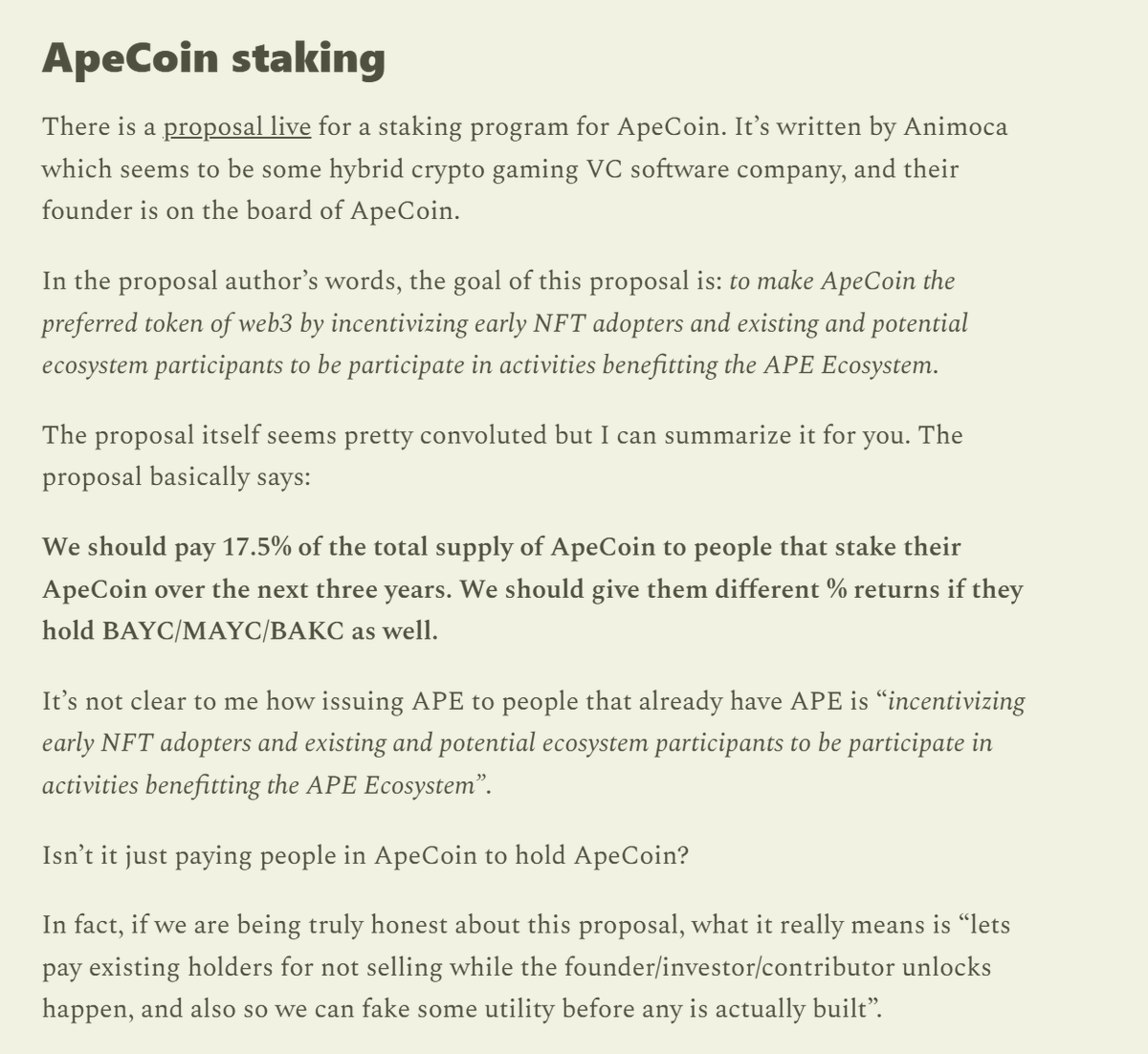
If you are a token pessimist, a crypto nihilist, or just bearish, this alignment problem is what you worry about.

Or, from the same article: "Staking mechanisms should be designed to support the goals of the ecosystem"
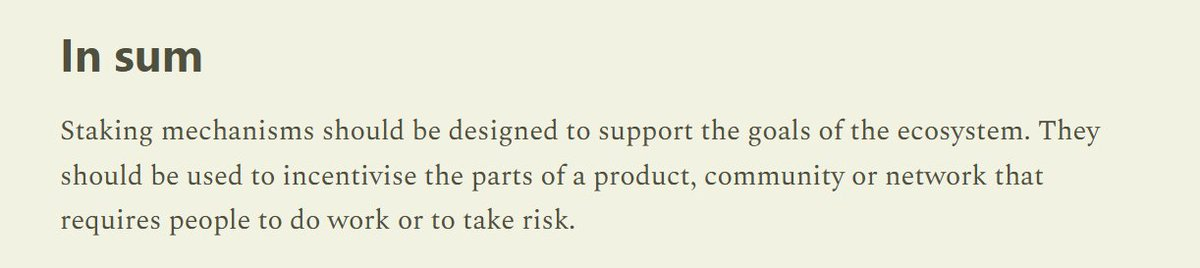
Locking token dilution behind KPIs that should actually reflect growth in the value of the MegaETH ecosystem is a much better mechanism than any vanilla staking mechanism we saw in the 2020-2022 liquidity mining era. In that era, tokens were being issued regardless of the team's fundamental progress or ecosystem growth.

Therefore, the net effect is that MEGA dilution is:

  • Conditionally constrained by corresponding MegaETH ecosystem growth
  • Diluted into the hands of those least likely to sell MEGA

This does not guarantee that MEGA value will rise as a result—the market will do what the market wants. But it is an effective and honest attempt to fix a core underlying problem that seems to plague the entire crypto token industrial complex.

Treating Tokens as Equity

Historically, teams have been "spraying and praying" their tokens across the ecosystem. Airdrops, mining rewards, grants, etc.—teams would not engage in these activities if they were distributing something truly valuable.

Because teams distributed tokens like worthless governance tokens, the market priced them as worthless governance tokens.

You can see the same philosophy in MegaETH's stance on CEX listings after Binance opened MEGA token futures on its platform (historically Binance's attempt to extort teams):
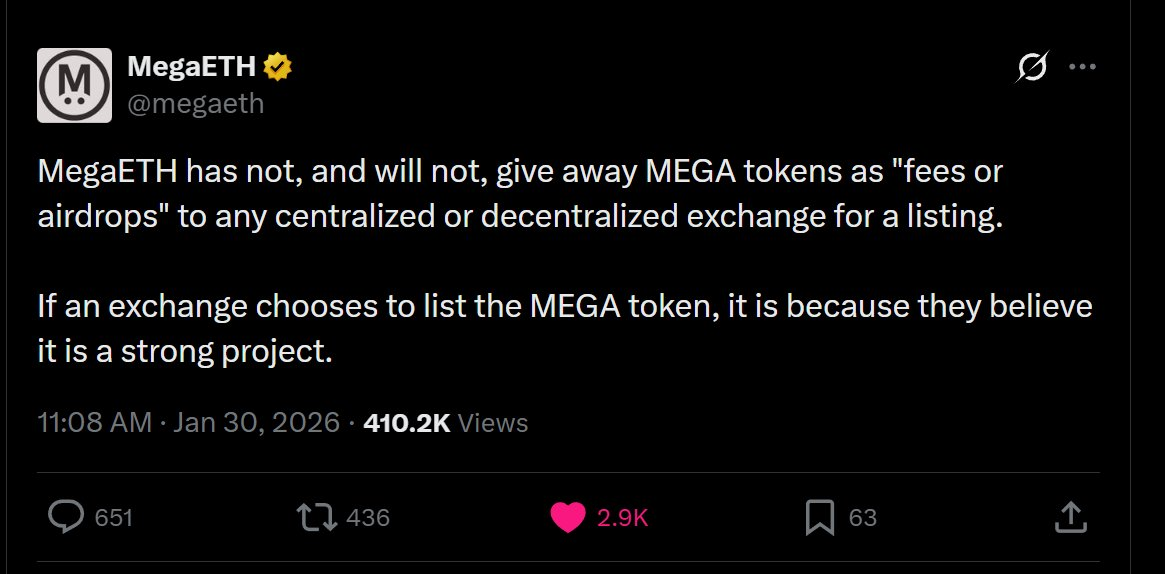
Hopefully, teams will start being more selective with their token distribution. If teams start treating their tokens as precious, perhaps the market will respond in kind.

Cap's Stablecoin Airdrop

The stablecoin protocol Cap introduced a "stablecoin airdrop" (stabledrop) instead of a traditional airdrop. Instead of airdropping the native governance token CAP, they distributed the native stablecoin cUSD to users who earned Cap points.

This approach rewards points farmers with real value, thus fulfilling the social contract. Users who deposited USDC into Cap's supply side accepted smart contract risk and opportunity cost, and the stablecoin airdrop compensated them accordingly.

For those who want CAP itself, Cap is conducting a token sale via a Uniswap CCA. Anyone seeking CAP tokens must become a real investor and commit real capital.

Filtering for Committed Holders

The combination of a stablecoin airdrop plus a token sale filters for committed holders. A traditional CAP airdrop would flow to speculative farmers likely to sell immediately. By requiring a capital investment through the token sale, Cap ensures CAP flows to participants willing to accept full downside risk for upside potential—a group more likely to hold long-term.

The theory is that this structure gives CAP a higher probability of success by creating a concentrated holder base aligned with the protocol's long-term vision, rather than a less precise airdrop mechanism that puts tokens into the hands of those focused solely on short-term profits.

Watch this video:

https://x.com/DeFiDave22/status/2013641379038081113

Token Design is Maturing

Protocols are getting smarter and more precise with their token distribution mechanisms. No more shotgun spray-and-pray token issuance—MegaETH and Cap are choosing to be highly selective about who gets their tokens.

"Optimizing for distribution" is no longer the thing—perhaps a toxic hangover from the Gensler era. Instead, these two teams are optimizing for concentration to provide a stronger foundational holder base.

I hope that as more apps launch in 2026, they can observe and learn from these strategies, and even improve upon them, so the "good coins problem" is no longer a problem, and we are left with only "good coins".

İlgili Sorular

QWhat is the 'good coins problem' mentioned in the article, and why does it exist?

AThe 'good coins problem' refers to the issue that most tokens are considered garbage because they haven't been treated with the same legal and strategic seriousness as equity by teams. Historically, teams did not respect tokens as much as equity in traditional companies, and the market reflected this through token prices.

QHow does MegaETH's KPI plan work to conditionally unlock its tokens?

AMegaETH locks 53% of its MEGA tokens in a 'KPI plan,' where tokens only unlock if specific Key Performance Indicators are met. These KPIs include ecosystem growth (TVL, USDM supply), MegaETH decentralization (L2Beat stage progress), MegaETH performance (IBRL), and Ethereum decentralization. This ensures tokens enter the market only when real growth occurs, reducing dilution for holders.

QWhat is Cap Protocol's 'stabledrop' and how does it differ from traditional airdrops?

ACap Protocol's 'stabledrop' distributes its native stablecoin cUSD to users who earned Cap points, instead of airdropping the governance token CAP. This rewards users with real value for their participation. Those who want CAP tokens must become real investors by purchasing them through a Uniswap CCA token sale, ensuring committed holders.

QWhy does the article suggest that token design is evolving towards more selective distribution mechanisms?

AToken design is evolving because teams like MegaETH and Cap are moving away from 'spray-and-pray' distribution methods (e.g., indiscriminate airdrops) to highly selective mechanisms. These strategies, such as KPI-based unlocks and stabledrops, aim to distribute tokens only to committed holders, aligning incentives and creating a stronger base for long-term success.

QHow does MegaETH's approach to token distribution resemble Elon Musk's Tesla compensation plan?

AMegaETH's KPI plan is similar to Elon Musk's Tesla compensation philosophy, where Musk's equity grants vested only when Tesla achieved increasing market cap and revenue targets. Similarly, MegaETH's tokens unlock only when the protocol meets specific growth and performance KPIs, tying token issuance to tangible ecosystem progress.

İlgili Okumalar

Robinhood Ventures into L2, Focusing on RWA Tokenization

In late January 2026, Robinhood CEO Vlad Tenev highlighted that the GameStop short squeeze incident five years earlier could have been avoided with blockchain’s real-time settlement capabilities. Shortly after, Robinhood launched the testnet of Robinhood Chain, an Arbitrum-based Layer 2 network focused on tokenizing real-world assets (RWA), including stocks, ETFs, and private assets. Built on Arbitrum Orbit, Robinhood Chain leverages Ethereum for data availability and uses ETH as its native gas token. The platform combines Ethereum’s security with custom compliance features, allowing Robinhood to enforce regulatory rules while maintaining interoperability with existing DeFi infrastructure. Prior to the testnet, Robinhood had already been testing tokenized stocks in Europe for eight months. These assets are structured as derivative contracts pegged to the price of underlying equities—not as direct ownership claims. The system supports features like dividend pass-through and on-chain minting/burning tied to user positions. Robinhood acquired necessary regulatory licenses, including MiCA and MiFID approvals, partly through its acquisition of Bitstamp. The platform aims to enable 24/7 trading, instant settlement, and global accessibility with low fees. However, challenges remain, including legal ambiguity around asset representation, centralization risks (with Robinhood Europe as the sole counterparty), and potential pushback from traditional institutions. Robinhood Chain represents a significant step in blurring the lines between traditional finance and crypto, though its balance between compliance and decentralization remains a key point of observation.

marsbit23 dk önce

Robinhood Ventures into L2, Focusing on RWA Tokenization

marsbit23 dk önce

RootData Transparency Bounty Activities Report for Rounds 3 and 4

RootData Transparency Bounty Program Reports for Rounds 3 and 4 From January 30 to February 8, 2026, RootData, a Web3 asset data platform, conducted its third and fourth transparency bounty programs. The initiatives focused on due diligence around recently listed projects on major exchanges, covering key financial metrics such as funding structure, team background, token unlocks, and major timelines. The programs reviewed two main categories: Binance-listed projects from the past year and projects listed on major exchanges in 2026. Over 160 users participated, contributing to 190 tag optimizations, 364 token unlock data updates, 235 key calendar entries, and 396 general information improvements. Notably, the overall approval rate was below 30%, reflecting structural challenges in Web3 project transparency. Common issues included incomplete unlock schedules, denial of historical documentation by official sources, complex inflationary token models, and unverified AI-generated content. To date, RootData has hosted four rounds of bounty programs, covering 526 unique projects. Some, like River and Audiera, were repeatedly submitted, showing sustained community interest and gradual transparency improvement. RootData emphasizes that transparency is an ongoing process rather than a one-time goal. The platform remains committed to factual, neutral, and third-party validated data disclosure, avoiding value judgments. It aims to enhance Web3's data infrastructure through community-driven verification and open bounty mechanisms.

marsbit32 dk önce

RootData Transparency Bounty Activities Report for Rounds 3 and 4

marsbit32 dk önce

İşlemler

Spot
Futures

Popüler Makaleler

AR Nasıl Satın Alınır

HTX.com’a hoş geldiniz! Arweave (AR) satın alma işlemlerini basit ve kullanışlı bir hâle getirdik. Adım adım açıkladığımız rehberimizi takip ederek kripto yolculuğunuza başlayın. 1. Adım: HTX Hesabınızı OluşturunHTX'te ücretsiz bir hesap açmak için e-posta adresinizi veya telefon numaranızı kullanın. Sorunsuzca kaydolun ve tüm özelliklerin kilidini açın. Hesabımı Aç2. Adım: Kripto Satın Al Bölümüne Gidin ve Ödeme Yönteminizi SeçinKredi/Banka Kartı: Visa veya Mastercard'ınızı kullanarak anında Arweave (AR) satın alın.Bakiye: Sorunsuz bir şekilde işlem yapmak için HTX hesap bakiyenizdeki fonları kullanın.Üçüncü Taraflar: Kullanımı kolaylaştırmak için Google Pay ve Apple Pay gibi popüler ödeme yöntemlerini ekledik.P2P: HTX'teki diğer kullanıcılarla doğrudan işlem yapın.Borsa Dışı (OTC): Yatırımcılar için kişiye özel hizmetler ve rekabetçi döviz kurları sunuyoruz.3. Adım: Arweave (AR) Varlıklarınızı SaklayınArweave (AR) satın aldıktan sonra HTX hesabınızda saklayın. Alternatif olarak, blok zinciri transferi yoluyla başka bir yere gönderebilir veya diğer kripto para birimlerini takas etmek için kullanabilirsiniz.4. Adım: Arweave (AR) Varlıklarınızla İşlem YapınHTX'in spot piyasasında Arweave (AR) ile kolayca işlemler yapın.Hesabınıza erişin, işlem çiftinizi seçin, işlemlerinizi gerçekleştirin ve gerçek zamanlı olarak izleyin. Hem yeni başlayanlar hem de deneyimli yatırımcılar için kullanıcı dostu bir deneyim sunuyoruz.

463 Toplam GörüntülenmeYayınlanma 2024.12.11Güncellenme 2025.03.21

Tartışmalar

HTX Topluluğuna hoş geldiniz. Burada, en son platform gelişmeleri hakkında bilgi sahibi olabilir ve profesyonel piyasa görüşlerine erişebilirsiniz. Kullanıcıların AR (AR) fiyatı hakkındaki görüşleri aşağıda sunulmaktadır.

活动图片