Litecoin ETF’s Slow Start Shows Altcoin Funds Still Face A Demand Test

bitcoinist2026-06-19 tarihinde yayınlandı2026-06-19 tarihinde güncellendi

Özet

The Canary Capital spot Litecoin ETF (LTCC) has had a slow start, with reported inflows of around $9.3 million since launch and assets under management at a lower level. This highlights the significant gap in institutional demand compared to Bitcoin and Ethereum ETFs. While Litecoin has an established history, its more modest narrative around payments and longevity hasn't yet made it a must-own institutional product. The case demonstrates that regulatory approval alone does not guarantee strong investor allocation. For the broader altcoin ETF thesis, future products may see different demand, but Bitcoin and Ethereum are likely to remain the primary institutional channels for the foreseeable future.

Canary Capital’s LTCC fund page confirms the spot Litecoin ETF product, while flow tracking cited in market reports shows a slow demand profile compared with Bitcoin and Ethereum ETF giants.

TL;DR

  • Canary Capital’s LTCC is an early test of secondary crypto ETF demand.
  • Reported trailing inflows are around $9.3 million, while AUM is lower due to market movement and fund activity.
  • The slow start highlights how far altcoin ETF demand trails BTC and ETH products.
  • ETF approval alone does not guarantee institutional allocation.

A Slow Start For A Secondary Crypto ETF

Canary Capital’s Litecoin ETF, LTCC, has become an early test of how much investor demand exists beyond Bitcoin and Ethereum products. The official fund page confirms the product structure, while flow tracking cited by The Defiant puts trailing inflows around $9.3 million since launch. That is a small number compared with the scale of spot Bitcoin ETFs and even Ethereum products.

The contrast matters. For years, crypto investors have argued that approval of Bitcoin ETFs would open the door for a wider altcoin ETF market. LTCC gives that thesis an early real-world data point, and so far the signal looks cautious rather than explosive.

Flows And AUM Tell Slightly Different Stories

The flow picture needs careful handling. The reported $9.3 million in trailing inflows is not the same thing as current assets under management. Canary’s fund page lists net assets at a lower level, around $5.43 million in the source pack, which can reflect price movement in Litecoin, redemptions, trading activity, and the difference between cumulative flows and present fund value.

That discrepancy should not be treated as a contradiction. ETF flows and AUM often move differently, especially when the underlying asset is volatile. The point is that both numbers tell the same broad story: institutional demand for a spot Litecoin product remains limited compared with BTC and ETH.

Why Litecoin Demand Is Different

Litecoin has long been one of crypto’s most established proof-of-work assets, and it has often been discussed as a commodity-like network in regulatory conversations. But that history does not automatically translate into institutional demand. For allocators, liquidity, narrative strength, derivatives depth, custody familiarity, and portfolio fit all matter.

Bitcoin has the strongest macro store-of-value pitch. Ethereum has the smart-contract and staking economy narrative. Litecoin’s case is more modest: longevity, payments history, and a relatively clean regulatory profile. That may be enough for a niche ETF, but the early flow data suggests it has not yet become a must-own product for institutions.

What This Means For Altcoin ETFs

The LTCC numbers do not kill the altcoin ETF thesis, but they do make it more selective. Future products tied to Solana, XRP, or other larger narratives may see different demand. Still, the Litecoin example shows that approval alone is not enough. Investors need a reason to allocate.

For traders, the message is straightforward. ETF availability can improve access, but it does not create demand by itself. Until secondary crypto products show stronger flows, Bitcoin and Ethereum are likely to remain the main institutional ETF lanes, while smaller altcoin funds fight for more specialized capital.

This article was written by the News Desk and edited by Samuel Rae.

This report is based on information from Canary Capital and The Defiant. at Canary Capital

Trend Kriptolar

İlgili Sorular

QWhat is the LTCC ETF and what does its early performance indicate about investor demand for altcoin ETFs?

AThe LTCC ETF is Canary Capital's spot Litecoin exchange-traded fund. Its early performance, with reported trailing inflows of around $9.3 million and lower assets under management (AUM), indicates that investor demand for altcoin ETFs currently lags far behind that for Bitcoin and Ethereum ETF products. This slow start suggests the market for secondary crypto ETFs is selective and not automatically driven by regulatory approval alone.

QAccording to the article, what is the difference between the reported $9.3 million in inflows and the fund's lower AUM, and why does this discrepancy occur?

AThe reported $9.3 million represents cumulative trailing inflows since the ETF's launch. The lower Assets Under Management (AUM) figure reflects the fund's current net value. The discrepancy occurs due to factors like price movement in Litecoin, investor redemptions, trading activity, and the general volatility of the underlying asset. Both metrics, however, tell the same story of limited institutional demand relative to major crypto ETFs.

QWhat are the key factors that the article suggests explain the different demand levels for Bitcoin, Ethereum, and Litecoin ETFs?

AThe article suggests that institutional demand is driven by liquidity, narrative strength, derivatives depth, custody familiarity, and portfolio fit. Bitcoin has a strong macro store-of-value narrative. Ethereum has the smart-contract and staking economy narrative. Litecoin's case is more modest, based on its longevity, payments history, and relatively clean regulatory profile, which makes it a niche product rather than a must-own for institutions.

QWhat does the Litecoin ETF's 'slow start' imply for the broader thesis that Bitcoin ETF approval would open doors for other altcoin ETFs?

AThe Litecoin ETF's slow start implies that while Bitcoin ETF approval may open regulatory doors for other altcoin ETFs, it does not guarantee significant investor demand or institutional capital allocation. The thesis becomes more selective, indicating that future altcoin ETFs will need a strong, compelling narrative and utility to attract substantial flows, rather than relying solely on regulatory clearance.

QWhat is the key takeaway for traders regarding ETF availability and demand for altcoins like Litecoin?

AThe key takeaway for traders is that ETF availability improves access to an asset but does not create demand by itself. For secondary crypto products like the Litecoin ETF, stronger investor flows are not automatic. Bitcoin and Ethereum are likely to remain the primary institutional ETF investment channels, while smaller altcoin funds will compete for more specialized and niche capital.

İlgili Okumalar

A Guide to Grayscale’s ‘Bottom Fishing’: Using Cash Flow to Assess Cryptocurrency Value

**Title:** Grayscale's Guide to Bottom-Fishing: Valuing Cryptoassets Using Cash Flows **Summary:** This report by Grayscale Research presents a fundamental valuation framework for cryptocurrency assets, moving beyond pure speculation to analyze those with underlying cash flows. It distinguishes between "commodity-like" assets (e.g., Bitcoin) and "cash-flow" assets, primarily within DeFi. Using the leading decentralized lending protocol Aave as a case study, the analysis applies traditional financial methodologies like Discounted Cash Flow (DCF) and Price-to-Earnings (P/E) multiples. Key findings indicate that AAVE tokens are currently undervalued. Despite recent challenges, the protocol's strong revenue growth, ~50% net profit margin, and diversified treasury support a fundamental valuation range of $80-$100 per token (compared to a ~$75 market price at the time of writing). In a base-case scenario driven by stablecoin adoption and regulatory clarity, the fair value could rise to around $175 within a year. The report emphasizes that protocol success does not automatically translate to token value. It critically examines the "value capture" mechanisms—such as buybacks, burns, and staking rewards—that channel protocol profits to token holders. Furthermore, it addresses the legal and governance complexities of Decentralized Autonomous Organizations (DAOs), noting their difference from traditional corporate equity but highlighting how robust, transparent governance can align protocol economics with holder interests. The conclusion is that the crypto market is maturing, with capital increasingly flowing towards projects with demonstrable fundamentals, real adoption, and disciplined capital allocation, creating opportunities for value-based investors.

marsbit27 dk önce

A Guide to Grayscale’s ‘Bottom Fishing’: Using Cash Flow to Assess Cryptocurrency Value

marsbit27 dk önce

After semiconductors lead the gains, are funds buying into AI orders or a macroeconomic rebound?

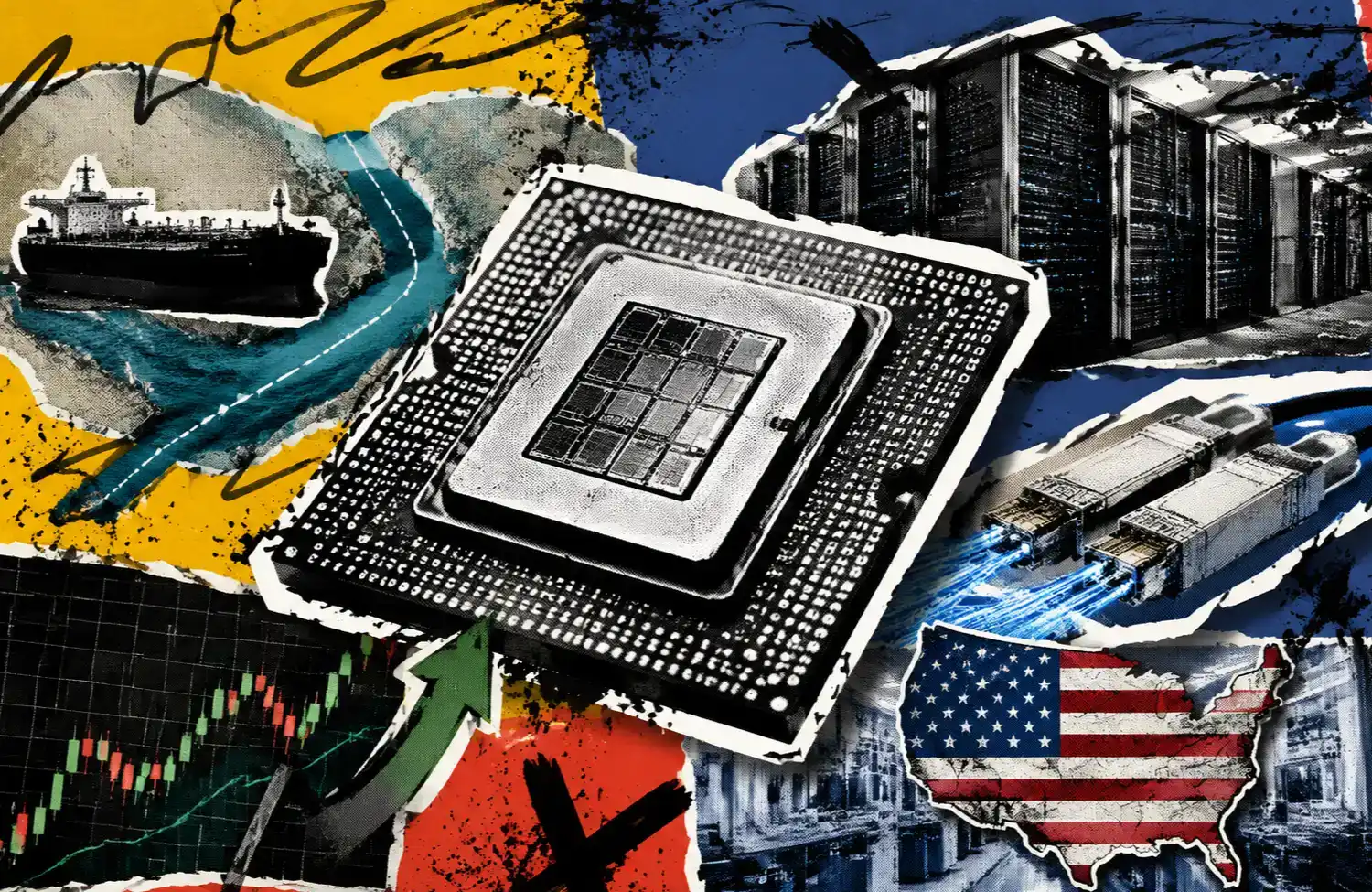
After US-Iran talks led to a temporary ceasefire and framework for reopening the strategic Strait of Hormuz, U.S. stocks rose on June 18, with the Nasdaq gaining 1.9%. The semiconductor and AI hardware sectors outperformed. This rally stemmed primarily from reduced geopolitical risk, which lowered oil prices and inflation expectations, easing discount rate pressure on high-valuation growth stocks like tech. The key question is not whether tech rebounded, but the nature of the rebound. The market appears to be selectively repricing AI infrastructure plays rather than broadly chasing AI narratives. Gains were concentrated in chips, optical interconnects, memory, and domestic manufacturing—segments tied to tangible data center build-outs and capital expenditure. Intel's ~10% surge, fueled by a Trump statement about potential Apple collaboration, exemplifies this mixed dynamic. It reflects policy catalysts and domestic manufacturing sentiment more than confirmed fundamentals. Meanwhile, strong earnings from companies like Astera Labs (revenue up 93% YoY) provided concrete evidence of AI-driven demand in hardware. In essence, the rally represents a risk-premium recalibration. Lower Middle East tensions opened a valuation repair window, and capital flowed first into AI infrastructure segments with visible near-term revenue streams. The sustainability of this move hinges on upcoming Q2 earnings, specifically continued strength in cloud provider capex, AI server orders, and hardware company guidance. Policy hopes alone are insufficient; the cycle needs validation from orders and financials.

marsbit32 dk önce

After semiconductors lead the gains, are funds buying into AI orders or a macroeconomic rebound?

marsbit32 dk önce

The Entire Internet Hails Noam's Joining, But OpenAI's Loss Bill Just Got Thicker

While the AI community celebrates Noam Shazeer, co-author of the "Attention Is All You Need" paper, joining OpenAI as Head of Architectural Research, the company's audited financials reveal a starkly different reality. In 2025, OpenAI reported $13.07 billion in revenue but a massive $20.92 billion operating loss. Even excluding a one-time accounting charge, the cash burn is severe, with $3.7 billion consumed in Q1 2026 alone. This high-profile hiring occurs against a backdrop of significant internal research talent drain, with key founders and researchers departing as the company's focus shifts from exploratory research to product iteration. Meanwhile, OpenAI's fundamental business model faces a deep crisis. It paid Microsoft $10.59 billion for compute in 2025, while its vast user base of 9 billion weekly actives includes only 50 million paying customers, making growth a direct driver of escalating costs. The article argues Shazeer's recruitment is less about technical necessity and more about crafting a compelling narrative for OpenAI's upcoming IPO, aiming to justify a rumored $1 trillion valuation to future public market investors. It contrasts OpenAI's strategy with Anthropic's reported path to profitability, which relies on a strong enterprise customer base and cost control, rather than star-powered narratives. Ultimately, the piece concludes that while Shazeer's architectural work may take 1-2 years to materialize, OpenAI's financial clock is ticking much faster, with its massive losses undercutting the celebratory headlines.

marsbit2 saat önce

The Entire Internet Hails Noam's Joining, But OpenAI's Loss Bill Just Got Thicker

marsbit2 saat önce

İşlemler

Spot
Futures

Popüler Makaleler

LTC Nasıl Satın Alınır

HTX.com’a hoş geldiniz! Litecoin (LTC) satın alma işlemlerini basit ve kullanışlı bir hâle getirdik. Adım adım açıkladığımız rehberimizi takip ederek kripto yolculuğunuza başlayın. 1. Adım: HTX Hesabınızı OluşturunHTX'te ücretsiz bir hesap açmak için e-posta adresinizi veya telefon numaranızı kullanın. Sorunsuzca kaydolun ve tüm özelliklerin kilidini açın. Hesabımı Aç2. Adım: Kripto Satın Al Bölümüne Gidin ve Ödeme Yönteminizi SeçinKredi/Banka Kartı: Visa veya Mastercard'ınızı kullanarak anında Litecoin (LTC) satın alın.Bakiye: Sorunsuz bir şekilde işlem yapmak için HTX hesap bakiyenizdeki fonları kullanın.Üçüncü Taraflar: Kullanımı kolaylaştırmak için Google Pay ve Apple Pay gibi popüler ödeme yöntemlerini ekledik.P2P: HTX'teki diğer kullanıcılarla doğrudan işlem yapın.Borsa Dışı (OTC): Yatırımcılar için kişiye özel hizmetler ve rekabetçi döviz kurları sunuyoruz.3. Adım: Litecoin (LTC) Varlıklarınızı SaklayınLitecoin (LTC) satın aldıktan sonra HTX hesabınızda saklayın. Alternatif olarak, blok zinciri transferi yoluyla başka bir yere gönderebilir veya diğer kripto para birimlerini takas etmek için kullanabilirsiniz.4. Adım: Litecoin (LTC) Varlıklarınızla İşlem YapınHTX'in spot piyasasında Litecoin (LTC) ile kolayca işlemler yapın.Hesabınıza erişin, işlem çiftinizi seçin, işlemlerinizi gerçekleştirin ve gerçek zamanlı olarak izleyin. Hem yeni başlayanlar hem de deneyimli yatırımcılar için kullanıcı dostu bir deneyim sunuyoruz.

843 Toplam GörüntülenmeYayınlanma 2024.12.11Güncellenme 2026.06.02

LTC Nasıl Satın Alınır

Tartışmalar

HTX Topluluğuna hoş geldiniz. Burada, en son platform gelişmeleri hakkında bilgi sahibi olabilir ve profesyonel piyasa görüşlerine erişebilirsiniz. Kullanıcıların LTC (LTC) fiyatı hakkındaki görüşleri aşağıda sunulmaktadır.

活动图片