Odaily Editorial Team Tea Talk (June 17)

Odaily星球日报2026-06-17 tarihinde yayınlandı2026-06-17 tarihinde güncellendi

Özet

Odaily Editorial Team Casual Chat (June 17) This is an informal column sharing real-time thoughts from Odaily's editorial team on industry news, data, and events. The content is based on actual investment and observations, does not constitute investment advice, and aims to expand perspectives. Azuma shared recent operations: small-scale buys in crypto (mainly BTC) at relatively high levels, a small addition to HOOD stock, and participation in World Cup prediction markets. He also discussed Hyperliquid, noting that while its token HYPE has performed well, its high price may hinder the expansion of its HIP-3 ecosystem by making market creation cost-prohibitive, potentially limiting the platform to just one major market (trade.xyz). Suzz emphasized the importance of a calm mindset in investing, stating that markets offer perpetual opportunities. He warned against "hindsight bias," where past opportunities seem obvious, and stressed that the present always holds new chances for those with the right knowledge and temperament. Golem analyzed SpaceX's acquisition of AI tool Cursor's parent company, Anysphere, for $60 billion paid entirely in SpaceX stock. He speculated whether Musk's interests might work to keep SpaceX's trading volume and market cap high in the short term to reduce the actual equity cost of the deal, noting current high retail investor enthusiasm. Wenser shared a market outlook: cautiously bullish on BTC, monitoring SpaceX stock post-IPO for a potential rise, ...

This is an 'informal' column from within the Odaily editorial department. Here, the author shares immediate thoughts and different perspectives on industry news, data, hot events, and their peripheral details; expands upon investment ideas and opportunity hypotheses still under verification—they are not necessarily direct wealth passwords, they could just be questions themselves; shares observations gained from communicating with industry practitioners; and shares materials that have genuinely enhanced our understanding, whether internal or external.

This column's content is based on the real investment and observation experiences of Odaily editorial team members. It does not accept any form of commercial advertising, nor does it constitute investment advice (after all, we are equally experienced in losing money). Its purpose is solely to broaden perspectives and supplement sources of information, not to manufacture consensus. Welcome to join the Odaily community (Telegram discussion group, X official account) to exchange ideas, raise doubts, and banter together.

Azuma(@azuma_eth)

Introduction: Novice, learning more.

Sharing: 1. Recent trading has been slightly more frequent than before. In Crypto, took the opportunity during the recent dip to make some small-scale buys (mainly BTC), but the entry points were generally high (6.2-6.6k), so there's basically no profit; In US stocks, added a small amount to HOOD, the logic was explained in an article a couple of days ago; Also, playing the World Cup on prediction markets, simultaneously doing small-scale, high-frequency copy trading (testing a new tool, feeling good for now, will recommend after a few more days) + large-scale, low-frequency active orders.

2. HYPE has performed well recently, but I increasingly feel that 'the more expensive HYPE becomes, the more detrimental it is to Hyperliquid'. The reason is that Hyperliquid's most imaginative narrative was building a multi-asset trading ecosystem around HIP-3. However, now trade.xyz dominates the HIP-3 project, while Felix, Ventuals have shut down one after another... The excessively high HYPE price has in fact become an obstacle to the expansion of the HIP-3 blueprint (building a custom market based on HIP-3 has a 500k HYPE staking requirement, which translates to over $35 million at the current price). The market's previous vision was 'Hyperliquid + countless custom markets', but the current situation is 'Hyperliquid + trade.xyz'. If the upper-layer market solidifies with only trade.xyz, it obviously doesn't align with the market's previous expectations in terms of user reach and imaginative prospects.

Suzz (@aidongshoupai)

Introduction: Just sold SK Hynix too early.

Sharing: The market is never short of opportunities, but it is always scarce in calm capital and mindset. The capital market is perpetually flowing; market trends won't end just because you miss one opportunity. The short-term moonshot you missed today, the hot sector you missed, the bottom-fishing opportunity you missed, are all just minuscule among the countless opportunities in the market. The market operates day after day, with old and new themes alternating, and boom-bust cycles repeating. Missing this bus, the next opportunity will arrive soon. Investing doesn't require catching every single market move; we only need to grasp opportunities within our cognitive scope and with controllable risks. Obsessing over missed opportunities and being trapped by anxiety is the biggest pitfall in investing. Instead of internalizing FOMO (fear of missing out), it's better to settle down, improve your cognition, and wait for the next timing that belongs to you.

Additionally, reviewing past trading history, I discovered a very interesting phenomenon: When we look back from a post-hoc perspective, we can easily find that there were excellent opportunities everywhere. Looking back at the market from last year, last month, even a few weeks ago, we can always clearly see which assets were at lows, which sectors were about to explode, which trends deserved heavy positions, as if there were easily attainable profit opportunities everywhere.

But this falls into 'hindsight bias', always seeing the market clearly in retrospect, yet feeling lost in the present. Actually, this phenomenon precisely confirms a core truth: History is full of opportunities, and the present is never short of them either. Past opportunities never disappeared; it's just that our cognitive ability was insufficient, our mindset was浮躁, preventing us from recognizing or daring to seize them. Similarly, the market at this very moment still contains countless investment opportunities at different levels and with varying risk grades.

golem(@web3_golem)

Introduction: Golem's whimsical thoughts.

Sharing: On June 16, SpaceX announced the acquisition of Anysphere, the parent company of AI programming tool Cursor, for $60 billion. This acquisition is essentially a case of mutual need. Musk needs Cursor's developer data to train his AI model Grok, while Anysphere needs the massive computing power behind SpaceX to support training its own AI model Composer to compete against its former partner Anthropic's models.

But beyond the strategic significance for both parties, a detail easily overlooked in this acquisition is its impact on SpaceX's stock price, because Musk didn't actually spend a single penny—the funds for acquiring Cursor were entirely paid using SpaceX's Class A common stock.

According to SEC filing documents, SpaceX implemented the merger with Anysphere through its wholly-owned subsidiary X67 Inc. X67 Inc. will merge into Anysphere, with Cursor as the surviving entity becoming a wholly-owned subsidiary of SpaceX. Upon completion of the merger, all common and preferred stock of Anysphere will be converted into SpaceX Class A common stock, with the exchange ratio calculated based on the volume-weighted average price over the 7 consecutive trading days prior to closing.

Clearly, in this acquisition, Musk got the better deal. Paying with SpaceX stock allows Musk to leverage the company's currently extremely high market valuation to complete the acquisition by giving up relatively little equity. Therefore, the actual cost of the acquisition is much lower; most of what was given was bubble...

So, here's the key point: As of June 16 when the merger agreement was signed, only 3 trading days had passed since SpaceX's IPO. Therefore, the earliest stock transfer will occur next week. To acquire Cursor more cheaply and with less equity given up, will the 'Musk interest group' proactively stabilize SpaceX's trading volume and keep its market cap at a high level?

Of course, there's no strong causal relationship between these two, it's just an analytical speculation regarding factors affecting SPCX's stock price.

SPCX's current price is mainly driven by market sentiment. According to Vanda Track's recent data, SpaceX remains the individual stock most favored by retail investor funds in the US, topping the list of net retail inflows for multiple consecutive days. However, retail enthusiasm is bound to wane; 'faith' does have its price. By then, institutions will need to take over as the main force stabilizing the SPCX price.

Wenser(@wenser2010)

Introduction: Tea-serving junior, crypto酱油党 (casual observer), media observer.

Sharing: 1. BTC had a small rebound, US-Iran tensions eased, still bullish for now, will consider testing short positions around 68k-69k;

2. SpaceX IPO concluded, but didn't close above a $2.2 trillion market cap on the first day, angrily lost $10, but looking above $250 after entering the Nasdaq in July;

3. Small-scale testing in World Cup betting ongoing. Many upsets or draws in the first two days of group stage, especially Spain vs Cape Verde 0:0 probably made many jump. Win rates for strong teams have picked up these past two days. Currently看好 France, Argentina, Germany, Norway, can focus on these later.

4. Japanese and Korean stock markets continue to surge higher, the trend of the strong getting stronger remains evident. The next landmark events now are the Fed rate hike or the Anthropic/OpenAI IPO. Personally, I believe Anthropic has the potential to be another historically largest IPO after SpaceX, with market cap potentially rising to the $2-3 trillion scale. Saw a post shared by a group friend these past two days saying 'The AI industry, like the real estate industry, is a capital-intensive industry', which felt very insightful. Therefore,布局 (positioning in) picks-and-shovels plays for defensive investment is a good strategy.

Qin Xiaofeng(@QinXiaofeng888)

Introduction: Options enthusiast, Meme bag holder.

Sharing: Regarding operations, bought the dip on HYPE around $56 last week to go long, gradually sold after it reached $70. Selling doesn't mean I'm not bullish, just that I think a major breakthrough is difficult in the short term. However, long-term, the $50~60 range will become an important support zone. Plan to continue buying at this level for two reasons: First, in this wave of traditional asset tokenization trading, Hyperliquid has basically captured the biggest红利 (dividends), with transaction fees持续飙升 (continuously soaring) and HYPE buybacks剧增 (dramatically increasing). The average monthly buyback over the past six months exceeded $60 million. It needs to be clarified that 97-99% of Hyperliquid platform's transaction fee revenue is directly used to repurchase HYPE in the open market. Currently, no other exchange does this, and this is the biggest growth flywheel. The second reason is, since the HYPE现货 ETF (spot ETF)上市 (listed), cumulative net inflows reached $180 million, with日均 (daily average) net inflows of $7.5 million. Traditional capital's favor for HYPE is obvious, a待遇 (treatment) not seen with other crypto ETFs after listing.

Regarding ETH, the market now presents a very bizarre situation. Pure crypto investors are utterly失望透顶 (disappointed) with ETH—because its price performance has been very拉胯 (lacking) over the past few years, leading to lost opportunity cost; traditional investors, especially Wall Street figures represented by Tom Lee, are反而 (instead)持续加码 (continuously increasing positions) in ETH with real money, believing it's an undervalued 'Amazon'. Neither side can convince the other, so let time tell. Personally, I think ETH has really跌到了 (fallen to) '白菜价' (dirt-cheap price). Getting on board now costs less than Bitmine.


İlgili Sorular

QWhat are the main concerns Azuma raises about the high price of HYPE in relation to Hyperliquid's HIP-3 ecosystem?

AAzuma argues that the high price of HYPE is becoming detrimental to Hyperliquid's HIP-3 ecosystem expansion. A core requirement to build a custom market on HIP-3 is staking 500,000 HYPE, which currently costs over $35 million. This prohibitive cost has led to the shutdown of projects like Felix and Ventuals, leaving trade.xyz as the dominant, and potentially sole, player. This concentration contradicts the initial vision of 'Hyperliquid + countless custom markets' and reduces the platform's user reach and future potential.

QAccording to Suzz, what is a major pitfall for investors, and what mindset should they adopt instead?

ASuzz identifies the obsession with missed opportunities and the resulting anxiety as a major trap for investors. He advises against this 'hindsight bias,' where past opportunities seem obvious. Instead, investors should remain calm and understand that the market is perpetual, with new opportunities constantly emerging. The key is to focus on improving one's own cognition and discipline, waiting for opportunities that fall within one's own understanding and risk tolerance, rather than chasing every trend.

QWhat theory does golem propose regarding the impact of SpaceX's stock-for-stock acquisition of Cursor on its share price (SPCX)?

AGolem suggests that 'Musk's interest group' might have an incentive to actively maintain SpaceX's trading volume and market capitalization at high levels before the deal's final share exchange. Since the acquisition was paid entirely with SpaceX A-class common stock, and the exchange ratio is based on the average price from the 7 trading days before closing, a higher stock price allows Musk to acquire Cursor by giving up a smaller percentage of SpaceX equity. Therefore, stabilizing the price could make the acquisition cheaper for SpaceX.

QWhat are the two main reasons cited by Qin Xiaofeng for considering HYPE a long-term buy in the $50-$60 range?

AQin Xiaofeng provides two reasons: 1) Fundamental Growth: Hyperliquid has captured the lion's share of the traditional asset on-chain trading trend, leading to soaring transaction fees. Crucially, 97-99% of the platform's fee revenue is used to buy back HYPE from the open market, creating a powerful growth flywheel. 2) Institutional Demand: Since its ETF listing, the HYPE ETF has seen a net inflow of $180 million, averaging $7.5 million daily. This strong and sustained interest from traditional finance is a unique advantage not seen with other crypto ETFs.

QHow does Wenser describe the current market sentiment divide regarding ETH (Ethereum)?

AWenser describes a stark divide in ETH sentiment. On one side, pure crypto investors are deeply disappointed with ETH due to its poor price performance in recent years, which has led to significant opportunity cost. On the other side, traditional investors, exemplified by figures like Tom Lee from Wall Street, are actively buying ETH, viewing it as an undervalued asset akin to 'Amazon.' Both sides hold firm in their opposing views, leaving the outcome to be determined by time.

İlgili Okumalar

Gate Research Institute: ETF Outflows Suppress Risk Appetite, Two-Way System Navigates Weak Market

Gate Institute Research Report: May 2026 Crypto Market Review & Strategy Analysis In May 2026, the crypto market shifted from an early-month rally to a mid-month correction, concluding with low-volatility consolidation. BTC, ETH, and SOL peaked in early May before declining. The primary market dynamic was a divergence between weakening spot ETF inflows and persistently high leverage-driven perpetual trading volume. A dual-direction moving average cluster breakout strategy outperformed, returning +2.11% for an equally-weighted BTC/ETH/SOL portfolio. This contrasted with a -6.09% return for buy-and-hold and -3.65% for a long-only version of the strategy. Profits were primarily generated from short positions on ETH and SOL during the mid-to-late May downtrend, demonstrating the month's suitability for two-way trend trading. Market structure evolved in three phases: an initial surge (May 1-6), a failure and reversal (starting May 7), and low-volatility compression (May 22 onward). While stablecoin supply remained stable, significant outflows from mainstream BTC and ETH ETFs created selling pressure. Concurrently, high correlation with the S&P 500 (~0.6) and stronger performance from AI equities like Nvidia highlighted crypto's position as a high-beta risk asset within a broader risk-budget framework, lacking independent momentum. The successful strategy employed a 4-hour chart system using a cluster of six moving averages (EMA6,12,24 & SMA6,12,24). A breakout signal was triggered after the cluster width compressed below 2.2%. Trades were managed with a 2.5% fixed stop-loss, a 3:1 Risk/Reward (7.5%) take-profit, and an EMA12-based exit rule to control losses from false breakouts. The strategy's low win rate but high payoff from a few large trend moves was effective in May's conditions. The report concludes that for June, a disciplined, bidirectional approach remains superior to subjective directional bets. The framework should adapt signal weighting based on BTC's position relative to key EMAs, ETF flow trends, and the relative strength of the Nasdaq, prioritizing risk management and trend preservation.

marsbit17 dk önce

Gate Research Institute: ETF Outflows Suppress Risk Appetite, Two-Way System Navigates Weak Market

marsbit17 dk önce

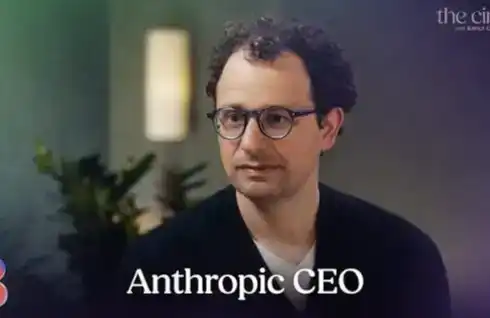
Anthropic CEO's Latest Interview: On Technological Explosion, Safety Red Lines, and the Civilization Contract

Interview with Anthropic CEO Dario Amodei covers the intense pressures and ethical dilemmas of leading AI development. He describes the experience as "exponential growth," feeling constant acceleration akin to relativistic time dilation. The discussion delves into his departure from OpenAI, rooted in a fundamental loss of trust and divergent values rather than mere technical disagreements. Amodei emphasizes Anthropic's enterprise-focused business model, arguing it aligns better with safety and responsible deployment than consumer-facing, ad-driven models. He addresses critical issues like AI's impact on employment, advocating for proactive macroeconomic policies and a shift towards "doing more with the same resources" to avoid widespread job displacement. On safety and governance, he details Anthropic's cautious approach, including delaying the release of the powerful "Mythos" model due to its advanced cyber capabilities. He stresses the need for "human-in-the-loop" principles in military applications, setting red lines against autonomous weapons and mass surveillance. Amodei calls for industry collaboration among trustworthy actors to establish standards and advocates for a balanced regulatory framework with checks and balances, such as Anthropic's Long-term Benefit Trust, rather than corporate or government monopoly over the technology. He expresses geopolitical concerns, particularly regarding China, and a belief that AI should bolster liberal democracies. While acknowledging a non-zero risk of civilizational catastrophe from advanced AI, he asserts Anthropic's actions are aimed at significantly reducing that probability. The interview concludes with Amodei arguing that trust must be earned through concrete actions, like sacrificing commercial gain for safety, to distinguish Anthropic in a Silicon Valley landscape he criticizes for eroded public trust.

marsbit21 dk önce

Anthropic CEO's Latest Interview: On Technological Explosion, Safety Red Lines, and the Civilization Contract

marsbit21 dk önce

The Brutal Truth Behind CARDS' $535M FDV: Only $43M in Net Revenue and Halved Profit Margins

The article titled "The Brutal Truth Behind CARDS' $535 Million FDV: Only $43 Million Net Revenue, Profit Margins Halved" provides a critical analysis of Collector Crypt (CC), a platform combining physical collectible cards with NFTs in a gacha-style system. Key findings include: * CC has generated $635 million in total user deposits. However, 90.6% ($576 million) is instantly returned to users via automatic card buybacks, resulting in only $43 million in net platform revenue (6.7% retention). * Activity is highly concentrated among dozens of high-frequency wallets, with an average of only ~420 daily active players. * There is minimal secondary market activity for the cards (under $5 million total), indicating the platform functions more as a gambling casino than a collector's marketplace. eBay sales as a percentage of gacha volume have declined for six consecutive quarters. * Despite a tripling in transaction volume, net profit margins have been halved from 11.2% to 5.8% as activity shifts to higher-priced card packs with lower margins. * Value captured by the CARDS token is minimal: only $140,000 (from burns and recent buybacks), representing just 3.4% of CC's cumulative net revenue. In contrast, wallets linked to operational infrastructure have off-ramped $45.7 million in USDC. * The token's ~$535 million Fully Diluted Valuation (FDV) represents a 7.3x multiple of annualized net revenue. Only 20.5% of the token supply is floating, with 72% allocated to insiders and locked until November 2027. The conclusion is that CC has found product-market fit as a high-speed gambling platform for a niche user base, not as a growing collector economy. The token currently captures a negligible share of the platform's revenue.

Foresight News46 dk önce

The Brutal Truth Behind CARDS' $535M FDV: Only $43M in Net Revenue and Halved Profit Margins

Foresight News46 dk önce

İşlemler

Spot
Futures
活动图片