Same Election Question, Two Different Odds: Predictions.io Launches Free Cross-Venue Comparison Tools

TheNewsCrypto2026-08-28 tarihinde yayınlandı2026-08-28 tarihinde güncellendi

Özet

Prediction market platform Predictions.io has launched free tools to compare prices and fees across different venues, highlighting significant price discrepancies for identical political questions. In August 2026, record market volumes coincided with increased regulatory scrutiny. Predictions.io's analysis of over 9,700 markets from Kalshi, Polymarket, and Manifold found that identically worded questions, such as "Blue tsunami in 2026?", traded with price gaps as wide as 8.5 percentage points between platforms. The company argues that the spread between venues provides crucial information often missed when citing a single price. Its new tools include a fee calculator to compare costs across platforms and an odds converter. Predictions.io is a data aggregator and does not operate its own markets.

Washington, United States, August 28th, 2026, Chainwire

As prediction-market volume hits record highs and regulators circle, identically worded midterm questions are trading several points apart depending on the venue. Predictions.io now tracks 9,700+ markets across Kalshi, Polymarket and Manifold in one place – with free fee and odds calculators so traders can see what a price actually costs them.

Prediction markets have never been bigger, or more contested. Kalshi, Polymarket and Polymarket US together posted a record $50.59 billion in combined volume in July, with Kalshi accounting for roughly 74.5% of the total. In the same month, New York City opened a probe into both leading venues, a Washington judge ordered Kalshi to halt most wagers in the state, and the CFTC began an internal review of so-called “mention markets.”

Amid that scrutiny, a simpler question has gone largely unexamined: when two venues list the same question, do they agree on the answer?

Often, they do not. On identically worded midterm markets tracked by Predictions.io, “Blue tsunami in 2026?” was priced at 44.5% on Polymarket and 36.0% on Kalshi. “Blue wave in 2026?” showed 82.5% against 74.0%. Both gaps are 8.5 percentage points — on questions whose wording is identical on the two venues. Across a sample of directly comparable binary markets live on more than one venue, the median gap was more than four points, and nearly half of the pairs differed by five points or more. (Prices as of 05:08 UTC on 28 August 2026; both venues’ live prices are shown side by side on Predictions.io.)

Those gaps matter to anyone quoting a single number. A market priced at 44.5% on one venue and 36.0% on another does not have one “market-implied probability” – it has two, and which one gets cited is arbitrary unless the reader is told both.

“A single venue’s price is a data point. The spread between venues is the information. When the two biggest markets in the world disagree by seven points on the same sentence, that disagreement is the story – and nobody who runs one of those markets is in a position to report it.” said spokesperson of Predictions.io

Predictions.io aggregates markets from Kalshi, Polymarket and Manifold, matching equivalent questions across venues so the same event can be compared directly. The platform currently tracks more than 9,700 event pages across 23 categories including US politics, economics, crypto, sport and geopolitics.

Alongside the comparison pages, Predictions.io publishes two free tools:

Fee Calculator — enter any trade and see the fee, total outlay and effective all-in price on each venue, including Kalshi’s 0.07 × P × (1−P) taker formula and maker discount against Polymarket’s zero-fee standard markets.

https://predictions.io/tools/fee-calculator

Odds Converter — convert American, decimal and fractional odds into implied probability and prediction-market prices, and see the vig-free line.

https://predictions.io/tools/odds-converter

A direct venue comparison is available at https://predictions.io/compare/polymarket-vs-kalshi, and live midterms markets at https://predictions.io/lobby/us-politics.

Predictions.io operates no market and takes no position in any contract. It is a data and comparison service, not an exchange, broker or investment adviser.

About Predictions.io

Predictions.io is an independent aggregator of prediction markets, bringing prices from Kalshi, Polymarket and Manifold into a single view so the same question can be compared across venues. It publishes free tools for traders and journalists, including a cross-venue fee calculator and odds converter.

Users can learn more about Predictions.io here: https://predictions.io/

Predictions.io socials: https://bio.site/predictions.io

Contact

Spokesperson
Predictions.io
support@predictions.io

İlgili Sorular

QWhat is the primary function of Predictions.io according to the article?

APredictions.io is an independent aggregator and comparison service for prediction markets. It tracks over 9,700 markets from Kalshi, Polymarket, and Manifold, matching equivalent questions across these venues to allow direct price comparison. It does not operate its own market.

QWhat significant price discrepancy between venues is highlighted in the article for the 'Blue tsunami in 2026?' market?

AFor the identically worded 'Blue tsunami in 2026?' market, the price was 44.5% on Polymarket and 36.0% on Kalshi, a gap of 8.5 percentage points.

QWhat two free tools does Predictions.io publish to assist traders and journalists?

APredictions.io publishes a Fee Calculator (to see fees and effective prices on each venue) and an Odds Converter (to convert between odds formats, implied probability, and market prices).

QWhat regulatory and legal challenges were mentioned regarding prediction markets in July 2026?

AIn July 2026, New York City opened a probe into leading venues, a Washington judge ordered Kalshi to halt most wagers in the state, and the CFTC began an internal review of 'mention markets.'

QWhat was the combined trading volume for Kalshi, Polymarket, and Polymarket US in July, and which platform dominated?

AThe combined volume for Kalshi, Polymarket, and Polymarket US in July was a record $50.59 billion. Kalshi accounted for roughly 74.5% of that total volume.

İlgili Okumalar

Solana's Historic First Governance Vote Concludes: Why Did SGP-003 Spark Massive Controversy?

Solana has completed its first-ever formal on-chain governance vote, marking a shift towards decentralized decision-making. Three proposals, SGP-0001, SGP-0002, and SGP-0003, were voted on. SGP-0001, establishing the foundational governance framework, and SGP-0002, accelerating the reduction of SOL's inflation rate, both passed. However, the most contentious proposal, SGP-0003, failed to reach the required supermajority. SGP-0003 proposed a significant change to Solana's fee structure, introducing a variable "Resource Fee" based on computational unit (CU) consumption, which would be entirely burned. Supporters, including some core developers, argued it would create fairer resource pricing and increase SOL's deflationary pressure. Opponents, led by major DeFi applications like Jupiter and Drift, criticized it as an effective tax on complex applications, warning it would unpredictably increase operational costs and undermine business models built on Solana's low fees. The vote outcome highlights a critical tension within Solana's growing ecosystem: balancing the interests of SOL holders (through deflationary mechanisms), validators (through rewards), and application developers (through cost predictability). As Solana evolves from a high-performance blockchain to one hosting substantial economic activity, governance is becoming central to its future development and competitiveness.

marsbit19 dk önce

Solana's Historic First Governance Vote Concludes: Why Did SGP-003 Spark Massive Controversy?

marsbit19 dk önce

Wash's Jackson Hole Debut: Bidding Farewell to 'Forward Guidance', Reshaping Fed Discipline Amidst the Squeeze Between AI and Inflation

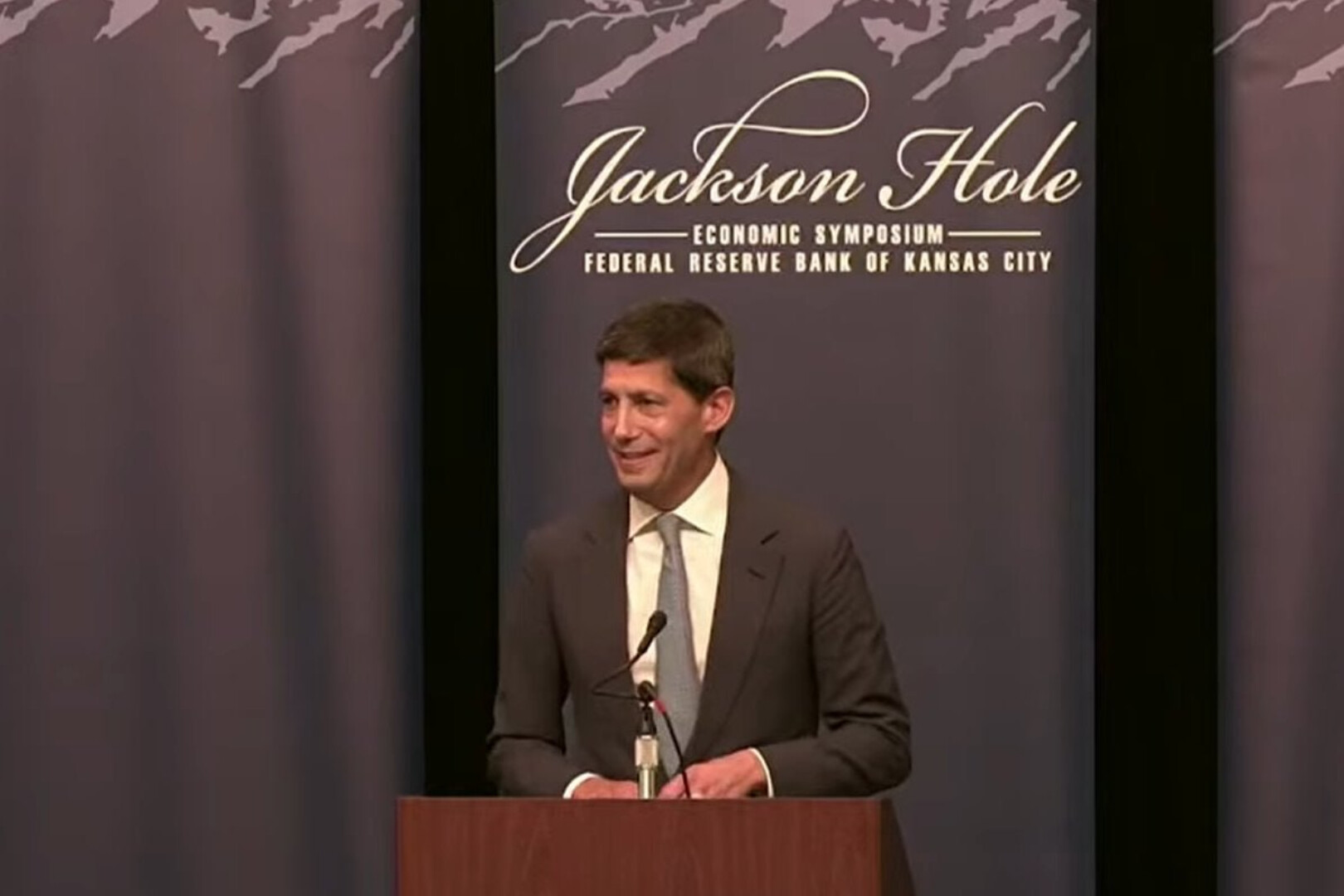
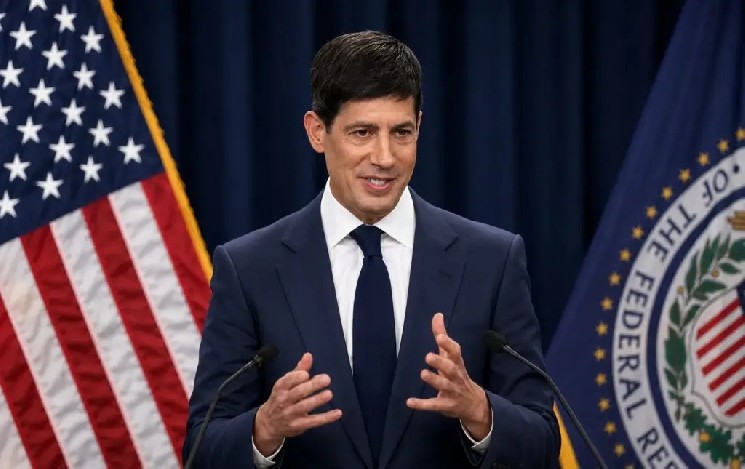
In his first Jackson Hole speech, new Fed Chair Kevin Warsh signaled a significant shift in monetary policy communication. He declared that "forward guidance," a tool heavily used since the financial crisis, has outlived its usefulness in normal times and should be retired. He cautioned that over-reliance on it can distort market signals and constrain the Fed's flexibility. Instead, Warsh emphasized a return to data-dependence and decision-making discipline. Warsh outlined seven key principles to guide policy: anchoring the 2% inflation target, pursuing the employment mandate, using short-term rates as the primary tool, acknowledging the importance of money, and maintaining purposeful, restrained communication. He stressed that policy should focus on trends, not single data points. On the current economic outlook, Warsh noted that the labor market is consistent with full employment but inflation remains "far above" the Fed's target. He highlighted that over half of the PCE basket's components are still rising above 3% annually. While acknowledging AI's transformative potential for productivity and capital allocation, he admitted its full economic impact remains uncertain and is not a factor in current policy decisions. His core message was a commitment to policy discipline rather than pre-set decisions. Warsh stated the Fed's primary focus must be on restoring price stability, vowing, "We still have work to do," until there is clear evidence inflation is moving decisively toward 2%. He concluded by framing effective monetary policy as crucial for economic prosperity and U.S. global leadership.

Odaily星球日报1 saat önce

Wash's Jackson Hole Debut: Bidding Farewell to 'Forward Guidance', Reshaping Fed Discipline Amidst the Squeeze Between AI and Inflation

Odaily星球日报1 saat önce

İşlemler

Spot
活动图片