AI Debt Flood Peaks: September is the True Test for U.S. Treasuries

marsbit2026-08-20 tarihinde yayınlandı2026-08-20 tarihinde güncellendi

Özet

As U.S. Treasury yields show temporary signs of stabilizing, a more significant stress test looms. Following the Treasury's recent announcement to expand its buyback program for long-term bonds, easing market concerns, analysts warn the relief may be short-lived. The core challenge is a massive wave of investment-grade corporate bond issuance—estimated to reach $200 billion in September alone after the Labor Day holiday—driven primarily by Big Tech firms financing AI infrastructure. Companies like Microsoft, Alphabet, and Amazon are aggressively raising long-term debt to fund data centers, advanced chips, and AI services. This AI-related issuance is reaching record levels, competing directly with long-term Treasury bonds due to the tech firms' strong credit ratings and extended maturities. While Treasury buybacks provided a psychological boost, their scale remains small relative to overall debt. The AI financing surge, combined with persistent U.S. fiscal deficits, sticky inflation, and Federal Reserve uncertainty, is reshaping fixed-income supply and demand dynamics. Risks are building. Analysts caution that if Treasury yields stabilize, corporate bond spreads could widen, increasing market volatility. Some investors see parallels with the pre-2008 era of off-balance-sheet financing, raising concerns about capital deployment outpacing business model viability. With inflation pressures lingering globally and the total U.S. debt exceeding $40 trillion, the delicate balance b...

Original Author: Xu Chao

Original Source: Wall Street News

As the U.S. Treasury market catches a brief respite, a more significant stress test is quietly approaching.

The U.S. Treasury Department yesterday announced an expansion of its long-term Treasury buyback program, temporarily easing market jitters that had pushed the 30-year bond yield above 5.3%. However, market participants warn that the effectiveness of this intervention may be short-lived—the AI infrastructure financing wave driven by tech giants is set to surge after the Labor Day holiday in September. At that time, U.S. investment-grade corporate bond issuance is expected to hit $200 billion, potentially posing a new round of pressure on the already strained Treasury market.

Nicholas Elfner, Co-Head of Research at Breckinridge Capital Advisors, stated: "The period after Labor Day and the back-to-school season has historically been a busy time for the U.S. investment-grade corporate bond primary market." He noted:

With the growth of mega-deals among hyperscalers, a total issuance of $200 billion in September seems achievable, although this will depend on the delicate balance between supply and demand, and a degree of stability in the Treasury market.

Several asset managers pointed out that U.S. investment-grade corporate bond issuance has already increased by 38% year-to-date and is on track to reach a record $2.1 trillion for the full year. A significant portion of this is flowing into AI-related capital expenditures. Andrzej Skiba, Head of Fixed Income at RBC Global Asset Management, said that the current supply of AI-related bonds is already "close to the limit of not disrupting the market." This wave of supply, combined with the expansion of the U.S. fiscal deficit, rising inflation expectations, and uncertainty around Fed policy, is reshaping the supply-demand dynamics of the fixed income market.

Treasury Steps In, But Efficacy Questioned

The U.S. Treasury Department announced this week that it will significantly expand its long-term Treasury buyback program, launched in 2024, starting next month. The move provided an immediate boost to market sentiment—stocks rebounded from a three-day losing streak, gold and bitcoin rose in tandem, and the 10-year Treasury yield retreated slightly.

However, several analysts remain cautious about the intervention's effectiveness. John Briggs, Head of U.S. Rates Strategy at Natixis, noted that the planned Treasury purchase size is less than 3% of outstanding long-term bonds and below 30% of this year's projected issuance. "More important is the signaling effect—the market now knows some of the Treasury's pain points," he said, "But the long-term structural pressures have not changed and will continue to push yields higher."

Some market participants see the buyback as an attempt by authorities to suppress long-end rates. Even so, the 10-year Treasury yield remains around 4.64%, well above the 4% level seen in early March when the Iran conflict erupted.

AI Financing Wave Reshapes Corporate Bond Market

The AI infrastructure arms race has become the core driver of this round of corporate bond issuance frenzy. Microsoft, Alphabet, Amazon, Meta, and Oracle have been issuing large-scale long-term corporate bonds since last fall to fund investments in data centers, advanced chips, and AI services.

According to Goldman Sachs analysts' projections, AI-related debt (including investment-grade, high-yield, and leveraged loan markets) could reach $322 billion by 2026. However, by late July, this total had already approached $500 billion. JPMorgan, meanwhile, forecasts that hyperscale cloud and data center financing will reach $400 billion in 2026, a significant increase from the $320 billion expected at the end of last year.

These tech giants are also extending their reach into markets they typically don't frequent, including the euro-denominated investment-grade bond market. According to Goldman Sachs data, hyperscale cloud companies now account for 21% of the total issuance of Canadian investment-grade bonds and 19% of Swiss franc-denominated investment-grade corporate bonds. Steve Boothe, Global Investment-Grade Bond Portfolio Manager at T. Rowe Price, warns: "If next year repeats this year's scenario, bond market volatility in the second half will intensify further, and yields will also continue to climb."

Supply-Demand Imbalance and Competitive Pressure

The massive supply of AI corporate bonds is forming direct competition with long-term Treasuries.

Skiba points out that AI corporate bonds are typically long-term, and the issuing entities sometimes have credit ratings even higher than that of the U.S. federal government, creating a substitution effect for long-term Treasuries. Skiba also notes that tech companies are exploring off-balance-sheet financing channels, including large-scale financings for specific data center projects and innovative structures like chip-secured financing.

Brij Khurana, Fixed Income Portfolio Manager at Wellington Management, uses the term "flood" to describe the current situation—new deals are emerging daily, not only from the hyperscalers themselves but also from various companies across the AI supply chain. Khurana also notes that as these companies pour massive financing into AI capital expenditures, it's "hard for the macroeconomy to fall into a recession," which favors stock market sentiment but diminishes the appeal of the bond market.

Henry Song, Portfolio Manager at Diamond Hill, directly addresses the core current contradiction: "From a bond investor's perspective, the key question is where to put money to generate value."

Risk Accumulation, Historical Shadows Emerge

Beneath the surface of market exuberance, risk signals are accumulating. Although this year's yield increases have somewhat contained the widening of credit spreads, once the upward trend in Treasury yields is halted, the risk of corporate bond sell-offs will rise accordingly, pushing credit spreads higher.

Some investors have expressed concerns about the similarities between the AI financing boom and the dot-com bubble of the 2000s, warning that the pace of capital deployment may outstrip the business models' ability to generate returns. Hank Smith, Chief Investment Strategist at Haverford Trust, is particularly concerned about the resurgence of off-balance-sheet financing models, saying it reminds him of the banking industry in the mid-2000s—which "ended up costing a heavy price."

Additionally, inflation pressure cannot be ignored. Driven by higher energy prices due to the Iran conflict, UK inflation rose to 2.9% in July, and Eurozone inflation similarly climbed to 2.9%. Market expectations for a 25-basis-point rate hike by the European Central Bank in September have reached 96%. In the U.S., the policy stance of new Federal Reserve Chair Kevin Warsh remains highly uncertain, compounded by the U.S. total debt exceeding $40 trillion. These factors all constitute ongoing pressure sources for long-end rates.

Breckinridge Capital Advisors' Co-Head of Research Nicholas Elfner concludes that whether corporate bond issuance reaches the expected $200 billion in September "will depend on the delicate balance between supply and demand, and the overall stability of the Treasury market." Against the backdrop of unclear prospects for AI investment returns, the fragility of this balance may face a true market test in September.


İlgili Sorular

QAccording to the article, what is the main factor expected to drive a surge in US investment-grade corporate bond issuance after Labor Day in September?

AThe main factor is the wave of AI infrastructure financing by major tech giants, driven by their capital expenditure on data centers, advanced chips, and AI services.

QWhat specific action did the US Treasury take recently to address pressure in the bond market, and what is a key criticism regarding its effectiveness?

AThe US Treasury announced a significant expansion of its long-term Treasury bond repurchase program. A key criticism is that the planned purchase size is too small, amounting to less than 3% of the outstanding long-term Treasuries and below 30% of this year's expected issuance, thus failing to address long-term structural pressures.

QWhy do AI-related corporate bonds pose a competitive threat to long-term US Treasury bonds, according to the fixed income experts cited?

AAI-related corporate bonds often have long maturities, and the issuing companies sometimes have credit ratings even higher than the US federal government. This creates a substitution effect, making them direct competitors for investor capital that might otherwise go into long-term Treasuries.

QWhat historical financial period do some investors compare the current AI financing boom to, and what specific practice raises concerns?

ASome investors compare it to the internet bubble of the 2000s. The specific concern is the resurgence of off-balance-sheet financing models, which reminds them of the banking practices in the mid-2000s that ended badly.

QWhat are the two critical conditions that Nicholas Elfner says will determine if the September corporate bond issuance reaches the expected $200 billion?

AThe two conditions are: 1) the delicate balance between supply and demand, and 2) a certain degree of stability in the Treasury market.

İlgili Okumalar

Jameson Lopp's BIP-110 Postmortem: Bitcoin Is Driven by Game Theory, Not Morality

Jameson Lopp's analysis concludes that BIP-110, a proposal to restrict arbitrary data (like inscriptions) on Bitcoin, failed due to economic and technical realities, not moral arguments. The proposal, championed by Luke Dashjr and others, aimed to "cleanse" the chain but never reached its 55% miner activation threshold. Upon its forced signaling deadline in August, only the OCEAN pool (with ~1% hash rate) supported it, creating a short-lived fork that quickly died as miners faced unredeemable block rewards. Lopp's earlier predictions about its economic infeasibility were proven correct. Technically, BIP-110 was flawed; workarounds to embed data compliant with its rules were demonstrated almost immediately, proving it couldn't achieve its stated goal. The debate often devolved into moralistic rhetoric, with supporters accusing opponents of supporting child exploitation material—a tactic Lopp criticizes as ineffective for building consensus. Lopp argues Bitcoin is driven by incentives and game theory, not morality. Past forks like Bitcoin Cash promised economic benefits, while BIP-110 offered only restrictions and reduced miner fees, gaining no substantial support from major economic players. He predicts the "puritans" behind the failed fork will continue complaining but their new chain will remain insignificant. The episode reaffirms that attempting to censor data on a permissionless, anti-censorship network like Bitcoin is a futile battle.

marsbit7 dk önce

Jameson Lopp's BIP-110 Postmortem: Bitcoin Is Driven by Game Theory, Not Morality

marsbit7 dk önce

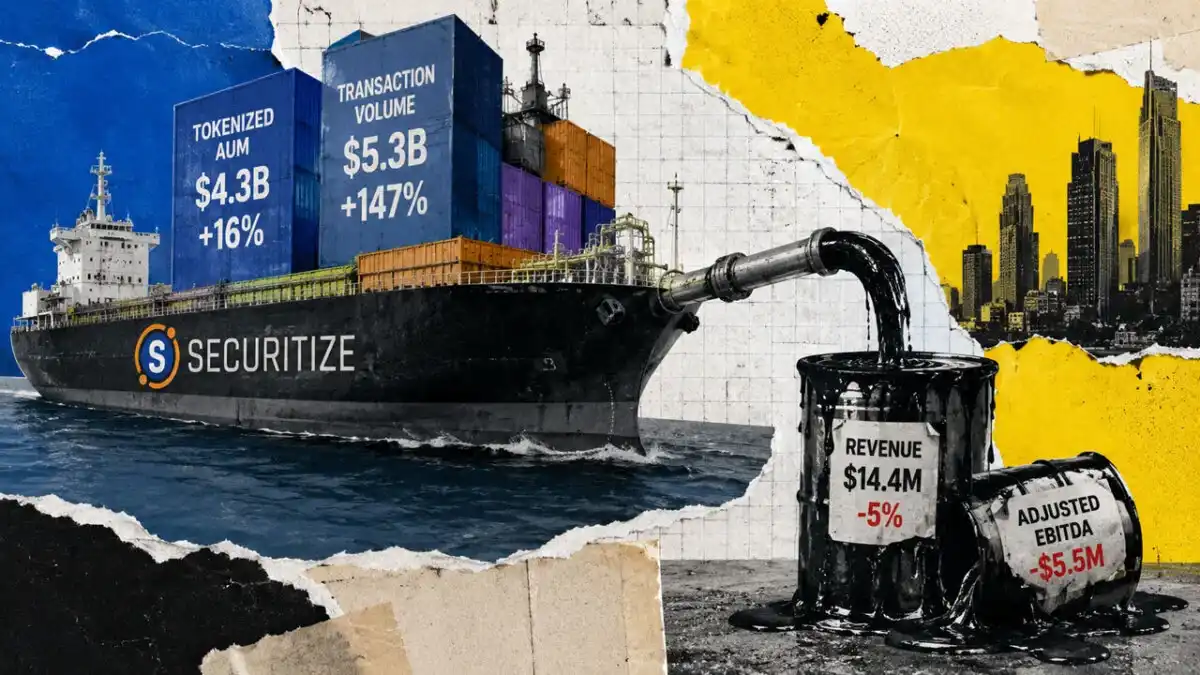
Tokenization Scale Soars to $4.3 Billion, But Why Did Securitize Incur a $5.5 Million Loss?

Securitize's first quarterly report post-IPO reveals a paradox: while its tokenized assets under management hit a record $4.3 billion (up 16% YoY) and platform trading volume surged 147% to $5.3 billion, total revenue fell 5% to $14.4 million. Tokenization revenue specifically dropped ~12% to $7.8 million, leading to an adjusted EBITDA loss of $5.5 million. CFO Francisco Flores explained that most trading volume is not yet monetized, with the majority of tokenization revenue still coming from one-time projects like new protocol integrations. In contrast, asset servicing revenue, a more recurring stream, grew slightly to $6.6 million. The company has lowered its full-year revenue guidance to $70-$80 million from an initial projection of $110 million. Industry experts note this highlights a structural challenge for the tokenization sector. Scaling assets on-chain doesn't automatically scale a profitable business model. Current implementations often rely on costly, customized projects for each new asset or jurisdiction. The future, they argue, lies in building standardized infrastructure that generates recurring "infrastructure revenue" from post-issuance activities like compliance, distributions, and secondary trading—similar to enterprise software. Analysts caution against misinterpreting high trading volumes as indicative of a mature fee-based model, as Securitize's broad volume metric includes many non-monetized actions. The key test for the industry is whether adding billions in new assets can generate sustainable revenue without constant new custom projects.

marsbit9 dk önce

Tokenization Scale Soars to $4.3 Billion, But Why Did Securitize Incur a $5.5 Million Loss?

marsbit9 dk önce

The Five Paradoxes of Artificial Intelligence

**Five Paradoxes of Artificial Intelligence** Artificial intelligence (AI) is an era filled with paradoxes, which we navigate as we advance. **1. The Prediction Paradox** AI experts, from pioneers like Marvin Minsky to contemporary figures like Geoffrey Hinton and Demis Hassabis, have a history of inaccurate forecasts regarding AI's capabilities and timelines, such as achieving human-level machine intelligence or surpassing radiologists. Predictions about Artificial General Intelligence (AGI) vary wildly between optimistic entrepreneurs and skeptical academics, highlighting the inherent unpredictability of technological futures. **2. The Employment Quantification Paradox** Despite numerous studies from institutions like the OECD, IMF, and McKinsey attempting to quantify AI's impact on jobs, estimates of affected employment range from 0.4% to 67%, revealing vast inconsistencies. This paradox arises because isolating AI's effect from other economic, social, and technological factors is virtually impossible, and forecasts depend on static assumptions about a dynamically evolving technology. **3. The Productivity Paradox** While AI is a transformative General Purpose Technology, significant productivity growth has not yet materialized in major economies like the EU and has only matched historical averages in the US. This disconnect between rapid innovation and slow productivity gains, reminiscent of the "Solow Paradox" from the computer age, is often explained by time lags. History shows it takes decades for such technologies to diffuse and trigger complementary innovations that boost productivity. **4. The Data Value Paradox** Data is hailed as the "new oil" and critical for AI, yet its economic value is paradoxical. Its worth is realized only in use, not in straightforward trade. Despite policy emphasis and initiatives for data asset recognition on corporate balance sheets in China, the monetized value remains negligible—accounting for only about 0.06% of major telecom operators' total assets—highlighting the gap between perceived utility and financial valuation. **5. The Industrial Revolution Paradox** For decades, nearly every major new technology, from the internet and nanotechnology to blockchain and now AI, has been proclaimed as the driver of a "Fourth Industrial Revolution." This constant reassignment suggests prior labels were premature. True industrial revolutions are typically identified in hindsight, not in real-time. Furthermore, the coexistence of such a proclaimed transformative revolution with ongoing economic crises would be historically anomalous. Whether AI truly defines a new industrial revolution remains a narrative for the future to decide.

marsbit12 dk önce

The Five Paradoxes of Artificial Intelligence

marsbit12 dk önce

İşlemler

Spot
活动图片